How...? What...? When...? Where...?
Which…? Who...? Why...?
Demonstrate knowledge and understanding
of…
❑ Video-based sound elements.
Be able to apply knowledge to…
• Video-based texts (film / TV / music videos /
video games).
What are the main
and of
each SOUND technique?
The use in video-based media
❑ The variety of sounds create a balance between
verisimilitude and drama.
Sound for verisimilitude = Sound that adds to the
believable logic of the text’s world, which appears
real.
Sound for drama = Sounds that tell the audience to
feel a certain way (scared, happy, tense, romantic,
amused, etc.).
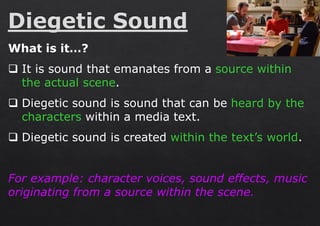
What is it…?
❑ It is sound that emanates from a source within
the actual scene.
❑ Diegetic sound is sound that can be heard by the
characters within a media text.
❑ Diegetic sound is created within the text’s world.
For example: character voices, sound effects, music
originating from a source within the scene.
What is it…?
❑ Non-diegetic sound emanates or originates from a
source outside of the text’s world.
❑ Non-diegetic sound is sound that [theoretically]
cannot be heard by the characters.
For example: commentary, music, narration, etc.
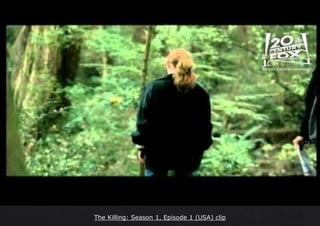
The Killing: Season 1, Episode 1 (USA) clip
What is it…?
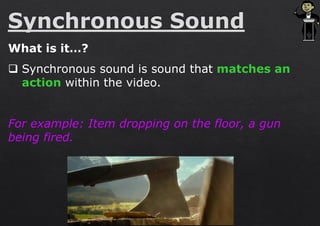
❑ Synchronous sound is sound that matches an
action within the video.
For example: Item dropping on the floor, a gun
being fired.
What is it…?
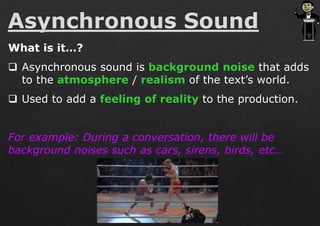
❑ Asynchronous sound is background noise that adds
to the atmosphere / realism of the text’s world.
❑ Used to add a feeling of reality to the production.
For example: During a conversation, there will be
background noises such as cars, sirens, birds, etc…
What is it…?
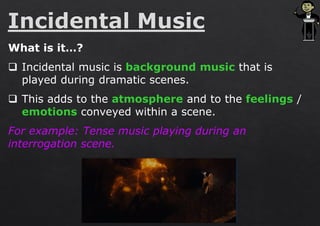
❑ Incidental music is background music that is
played during dramatic scenes.
❑ This adds to the atmosphere and to the feelings /
emotions conveyed within a scene.
For example: Tense music playing during an
interrogation scene.
Jurassic World (2015) clip
What is it…?
❑ Mode of address is the manner in which a media
text ‘speaks’ to the audience.
❑ This can be through the characters’ dialogue and
/ or appearance, through the setting, or,
through the representations offered.
For example: A character speaking directly to the
camera / audience (“breaking the fourth wall”) can
change the whole meaning / message being offered by
the producer.
❑ You will be played an extract of a video.
❑ The first screening will consist of only sound –
no image will be screened.
❑ Individually, note down what you think the
programme is about (genre, emotions, actions,
themes / storylines, types of sound, etc).
❑ You may want to explain the impacts or effects
of these sounds.
Video
Notes
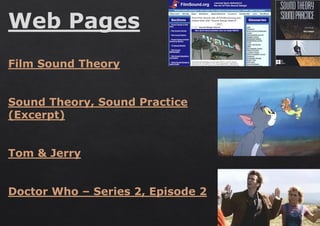
Film Sound Theory
Sound Theory, Sound Practice
(Excerpt)
Tom & Jerry
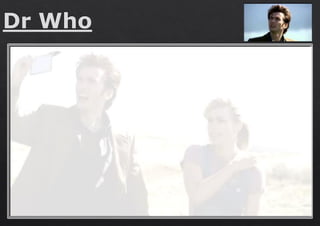
Doctor Who – Series 2, Episode 2
Web Pages

Sound Presentation----------------------

  • 1.
    How...? What...? When...?Where...? Which…? Who...? Why...?
  • 2.
    Demonstrate knowledge andunderstanding of… ❑ Video-based sound elements. Be able to apply knowledge to… • Video-based texts (film / TV / music videos / video games).
  • 3.
    What are themain and of each SOUND technique?
  • 4.
    The use invideo-based media ❑ The variety of sounds create a balance between verisimilitude and drama. Sound for verisimilitude = Sound that adds to the believable logic of the text’s world, which appears real. Sound for drama = Sounds that tell the audience to feel a certain way (scared, happy, tense, romantic, amused, etc.).
  • 5.
    What is it…? ❑It is sound that emanates from a source within the actual scene. ❑ Diegetic sound is sound that can be heard by the characters within a media text. ❑ Diegetic sound is created within the text’s world. For example: character voices, sound effects, music originating from a source within the scene.
  • 6.
    What is it…? ❑Non-diegetic sound emanates or originates from a source outside of the text’s world. ❑ Non-diegetic sound is sound that [theoretically] cannot be heard by the characters. For example: commentary, music, narration, etc.
  • 7.
    The Killing: Season1, Episode 1 (USA) clip
  • 8.
    What is it…? ❑Synchronous sound is sound that matches an action within the video. For example: Item dropping on the floor, a gun being fired.
  • 9.
    What is it…? ❑Asynchronous sound is background noise that adds to the atmosphere / realism of the text’s world. ❑ Used to add a feeling of reality to the production. For example: During a conversation, there will be background noises such as cars, sirens, birds, etc…
  • 10.
    What is it…? ❑Incidental music is background music that is played during dramatic scenes. ❑ This adds to the atmosphere and to the feelings / emotions conveyed within a scene. For example: Tense music playing during an interrogation scene.
  • 11.
  • 12.
    What is it…? ❑Mode of address is the manner in which a media text ‘speaks’ to the audience. ❑ This can be through the characters’ dialogue and / or appearance, through the setting, or, through the representations offered. For example: A character speaking directly to the camera / audience (“breaking the fourth wall”) can change the whole meaning / message being offered by the producer.
  • 13.
    ❑ You willbe played an extract of a video. ❑ The first screening will consist of only sound – no image will be screened. ❑ Individually, note down what you think the programme is about (genre, emotions, actions, themes / storylines, types of sound, etc). ❑ You may want to explain the impacts or effects of these sounds.
  • 14.
  • 17.
    Film Sound Theory SoundTheory, Sound Practice (Excerpt) Tom & Jerry Doctor Who – Series 2, Episode 2 Web Pages