“ The NEXT Evangelicalism” Soong-Chan Rah Milton B. Engebretson Associate Professor of Church Growth and Evangelism North Park Theological Seminary [email_address] www.profrah.com
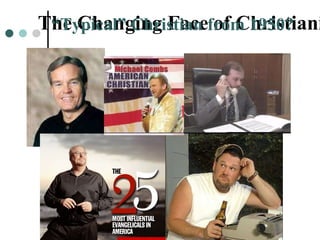
The Changing Face of Christianity “ Typical” Christian from 1950?
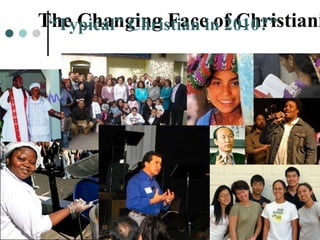
The Changing Face of Christianity “ Typical” Christian in 2010?”
Western Christianity “ Over the past five centuries or so, the story of Christianity has been inextricably bound up with that of Europe and . . . North America.  Until recently, the overwhelming majority of Christians have lived in White nations, allowing theorists to speak of a . . . ‘European Christian’ civilization.” The Next Christendom Philip Jenkins
Shift in Global Christianity “ Over the past century, however, the center of gravity in the Christian world has shifted inexorably southward to Africa, Asia, and Latin America. . . . Christianity should enjoy a worldwide boom in the new century, but the vast majority of believers will be neither white nor European, nor Euro-American.” The Next Christendom Philip Jenkins
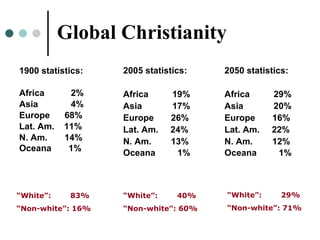
Global Christianity 1900 statistics: Africa   2% Asia   4% Europe  68% Lat. Am.  11% N. Am.  14% Oceana  1% “ White”:  83% “ Non-white”: 16% “ White”:  40% “ Non-white”: 60% “ White”:  29% “ Non-white”: 71% 2005 statistics: Africa   19% Asia   17% Europe  26% Lat. Am.  24% N. Am.  13% Oceana  1% 2050 statistics: Africa   29% Asia   20% Europe  16% Lat. Am.  22% N. Am.  12% Oceana  1%
Shift in American Evangelicalism “ The passage of the Immigration Reform Act in 1965 increasingly looks like the most significant single event of that much-balleyhooed decade.” “ [The U.S.’s] ethnic character will become less European and less White, with all that implies for religious and cultural patterns.” Jenkins
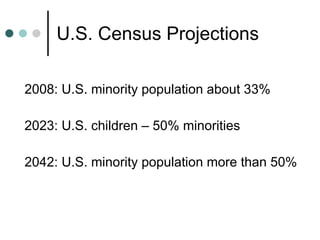
U.S. Census Projections 2008: U.S. minority population about 33% 2023: U.S. children – 50% minorities 2042: U.S. minority population more than 50%
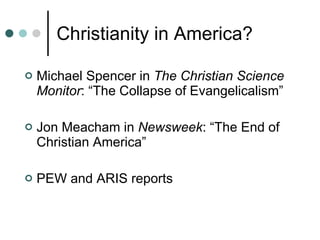
Christianity in America? Michael Spencer in  The Christian Science Monitor : “The Collapse of Evangelicalism” Jon Meacham in  Newsweek : “The End of Christian America” PEW and ARIS reports
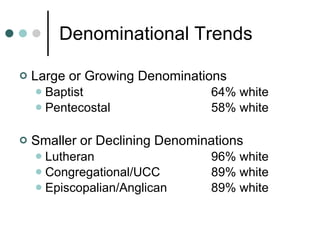
Denominational Trends Large or Growing Denominations Baptist 64% white Pentecostal 58% white Smaller or Declining Denominations Lutheran 96% white Congregational/UCC 89% white Episcopalian/Anglican 89% white


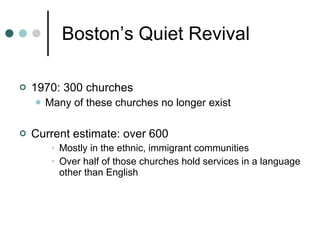
Boston’s Quiet Revival 1970: 300 churches Many of these churches no longer exist Current estimate: over 600 Mostly in the ethnic, immigrant communities Over half of those churches hold services in a language other than English
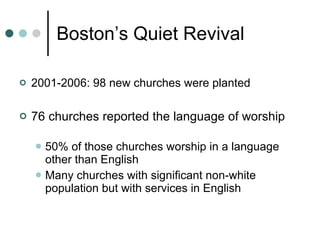
Boston’s Quiet Revival 2001-2006: 98 new churches were planted 76 churches reported the language of worship 50% of those churches worship in a language other than English Many churches with significant non-white population but with services in English
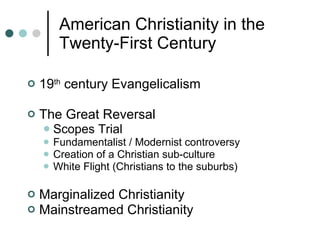
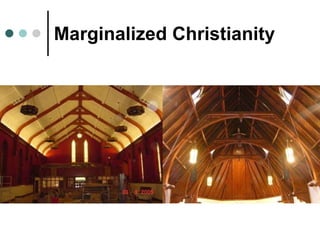
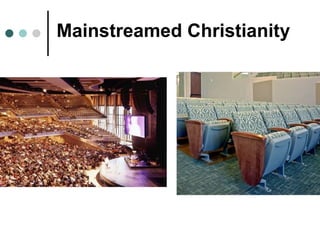
American Christianity in the  Twenty-First Century 19 th  century Evangelicalism The Great Reversal Scopes Trial Fundamentalist / Modernist controversy Creation of a Christian sub-culture White Flight (Christians to the suburbs) Marginalized Christianity Mainstreamed Christianity
Marginalized Christianity
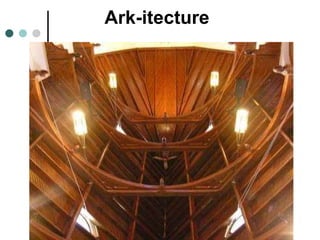
Ark-itecture
Mainstreamed Christianity
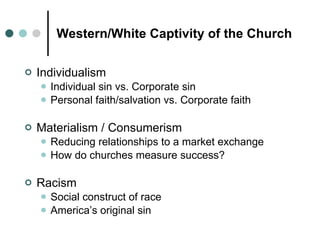
Western/White Captivity of the Church Individualism Individual sin vs. Corporate sin Personal faith/salvation vs. Corporate faith Materialism / Consumerism Reducing relationships to a market exchange How do churches measure success? Racism Social construct of race America’s original sin
Creation of “THE OTHER” Orientalism  by Edward Said “ Orientalism can be discussed and analyzed as the corporate institution for dealing with the Orient – dealing with it by making statements about it, authorizing views of it, describing it, by teaching it, settling it, ruling over it: in short, Orientalism as a Western style of dominating, restructuring, and having authority over the Orient.” “ European culture gained in strength and identity by setting itself off against the Orient as a sort of surrogate and even underground self” Creation of “THE OTHER” you are different from us / you are not like us we will marginalize you
“ Lawmaker suggests Asian-descendant voters should adopt names "easier for Americans to deal with" During public hearings on the voter identification legislation in the House, state Rep. Betty Brown, R-Terrell, suggested that Asian-Americans might want to adopt names that are " easier for Americans to deal with " when they want to vote so their names will match what is on registration rolls. “ Do you think that it would behoove  you and your citizens  to adopt a name that  we   could deal with more readily here?" Brown later tells Ko: "Can't  you  see that this is something that would make it a lot easier for  you  and the people who are poll workers if  you could adopt a name  just for identification purposes that's  easier for Americans to deal with ?"
 
Wax on, wax off, get your rickshaw ready Swervin', curvin', hold your rickshaw steady
 

Soong-Chan Rah - The Next Evangelicalism

  • 1.
    “ The NEXTEvangelicalism” Soong-Chan Rah Milton B. Engebretson Associate Professor of Church Growth and Evangelism North Park Theological Seminary [email_address] www.profrah.com
  • 2.
    The Changing Faceof Christianity “ Typical” Christian from 1950?
  • 3.
    The Changing Faceof Christianity “ Typical” Christian in 2010?”
  • 4.
    Western Christianity “Over the past five centuries or so, the story of Christianity has been inextricably bound up with that of Europe and . . . North America. Until recently, the overwhelming majority of Christians have lived in White nations, allowing theorists to speak of a . . . ‘European Christian’ civilization.” The Next Christendom Philip Jenkins
  • 5.
    Shift in GlobalChristianity “ Over the past century, however, the center of gravity in the Christian world has shifted inexorably southward to Africa, Asia, and Latin America. . . . Christianity should enjoy a worldwide boom in the new century, but the vast majority of believers will be neither white nor European, nor Euro-American.” The Next Christendom Philip Jenkins
  • 6.
    Global Christianity 1900statistics: Africa 2% Asia 4% Europe 68% Lat. Am. 11% N. Am. 14% Oceana 1% “ White”: 83% “ Non-white”: 16% “ White”: 40% “ Non-white”: 60% “ White”: 29% “ Non-white”: 71% 2005 statistics: Africa 19% Asia 17% Europe 26% Lat. Am. 24% N. Am. 13% Oceana 1% 2050 statistics: Africa 29% Asia 20% Europe 16% Lat. Am. 22% N. Am. 12% Oceana 1%
  • 7.
    Shift in AmericanEvangelicalism “ The passage of the Immigration Reform Act in 1965 increasingly looks like the most significant single event of that much-balleyhooed decade.” “ [The U.S.’s] ethnic character will become less European and less White, with all that implies for religious and cultural patterns.” Jenkins
  • 8.
    U.S. Census Projections2008: U.S. minority population about 33% 2023: U.S. children – 50% minorities 2042: U.S. minority population more than 50%
  • 9.
    Christianity in America?Michael Spencer in The Christian Science Monitor : “The Collapse of Evangelicalism” Jon Meacham in Newsweek : “The End of Christian America” PEW and ARIS reports
  • 10.
    Denominational Trends Largeor Growing Denominations Baptist 64% white Pentecostal 58% white Smaller or Declining Denominations Lutheran 96% white Congregational/UCC 89% white Episcopalian/Anglican 89% white
  • 11.
  • 12.
  • 13.
  • 14.
    Boston’s Quiet Revival1970: 300 churches Many of these churches no longer exist Current estimate: over 600 Mostly in the ethnic, immigrant communities Over half of those churches hold services in a language other than English
  • 15.
    Boston’s Quiet Revival2001-2006: 98 new churches were planted 76 churches reported the language of worship 50% of those churches worship in a language other than English Many churches with significant non-white population but with services in English
  • 16.
    American Christianity inthe Twenty-First Century 19 th century Evangelicalism The Great Reversal Scopes Trial Fundamentalist / Modernist controversy Creation of a Christian sub-culture White Flight (Christians to the suburbs) Marginalized Christianity Mainstreamed Christianity
  • 17.
  • 18.
  • 19.
  • 20.
    Western/White Captivity ofthe Church Individualism Individual sin vs. Corporate sin Personal faith/salvation vs. Corporate faith Materialism / Consumerism Reducing relationships to a market exchange How do churches measure success? Racism Social construct of race America’s original sin
  • 21.
    Creation of “THEOTHER” Orientalism by Edward Said “ Orientalism can be discussed and analyzed as the corporate institution for dealing with the Orient – dealing with it by making statements about it, authorizing views of it, describing it, by teaching it, settling it, ruling over it: in short, Orientalism as a Western style of dominating, restructuring, and having authority over the Orient.” “ European culture gained in strength and identity by setting itself off against the Orient as a sort of surrogate and even underground self” Creation of “THE OTHER” you are different from us / you are not like us we will marginalize you
  • 22.
    “ Lawmaker suggestsAsian-descendant voters should adopt names "easier for Americans to deal with" During public hearings on the voter identification legislation in the House, state Rep. Betty Brown, R-Terrell, suggested that Asian-Americans might want to adopt names that are " easier for Americans to deal with " when they want to vote so their names will match what is on registration rolls. “ Do you think that it would behoove you and your citizens to adopt a name that we could deal with more readily here?" Brown later tells Ko: "Can't you see that this is something that would make it a lot easier for you and the people who are poll workers if you could adopt a name just for identification purposes that's easier for Americans to deal with ?"
  • 23.
  • 24.
    Wax on, waxoff, get your rickshaw ready Swervin', curvin', hold your rickshaw steady
  • 25.