Welcome
to
My presentation
Presentation On: Soil solidification, acidification, alkalinization,
and pollution.
Course Name: Environmental Geochemistry
Course code: ESE-2203
Presented to:
Professor Dr. Ashraf Ali Seddique
Dept. of Environmental Science & Engineering
Jatiya Kabi kazi Nazrul Islam University.
Presented by:
Yasir Arafat
ID No: 20103403
Session: 2019-20
Dept. of Environmental Science & Engineering
Jatiya Kabi Kazi Nazrul Islam University.
Soil
Definition
Soil is the loose surface material
that covers most land. It consists
of inorganic particles and
organic matter. Soil provides the
structural support to plants used
in agriculture and is also their
source of water and nutrients.
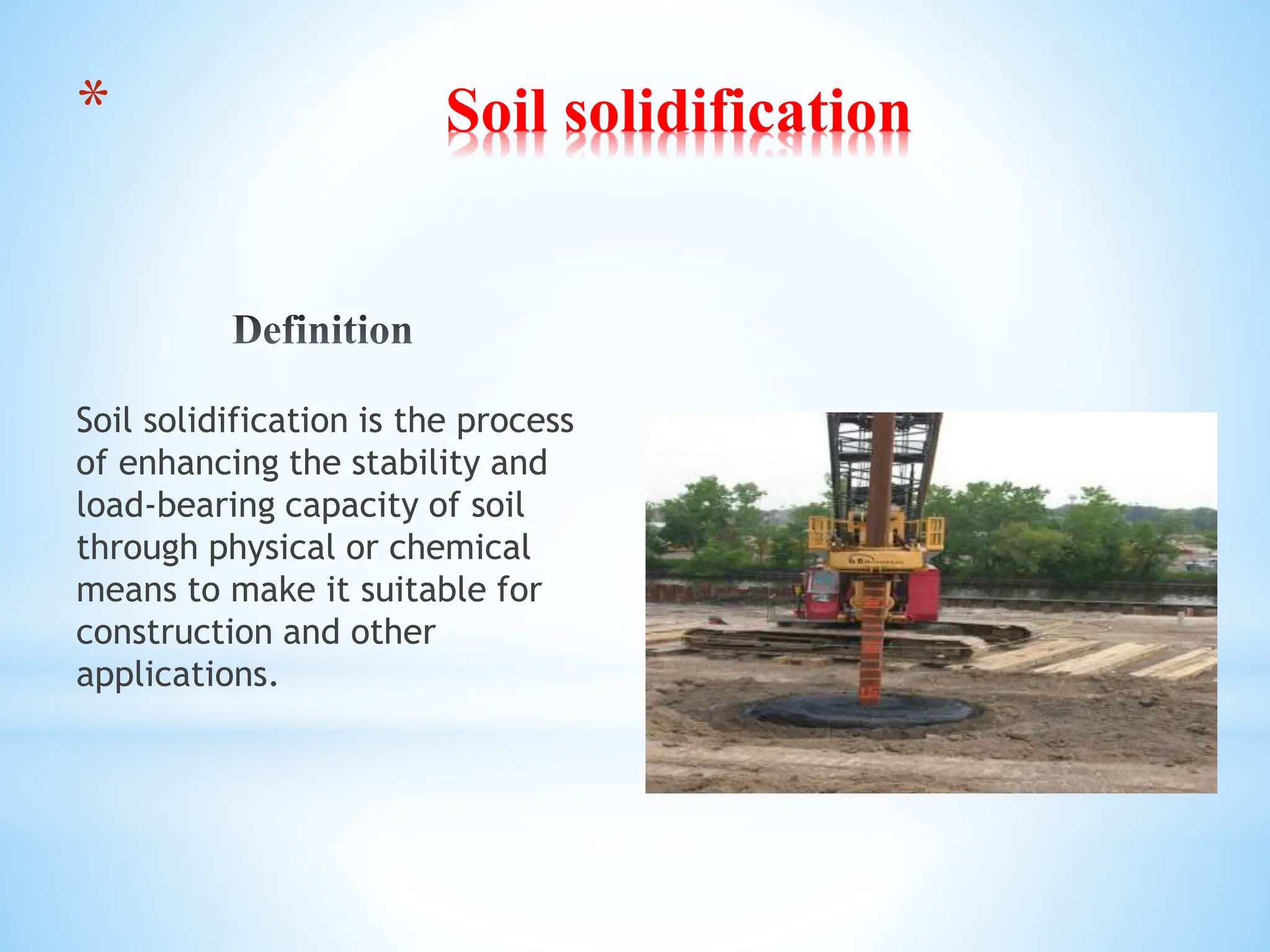
Soil solidification is the process
of enhancing the stability and
load-bearing capacity of soil
through physical or chemical
means to make it suitable for
construction and other
applications.
* Soil solidification
Improving load-bearing capacity
Reducing settlement
And controlling groundwater flow.
Stabilization of foundations for
buildings, bridges, and other
structures.
Construction of embankments and
roadways.
Creation of solidified barriers for
groundwater control and
containment of hazardous
substances.
* Soil solidification
Additives like cement, lime, or
chemical binders mixed with the
soil.
Chemical reactions are occur,
resulting in the formation of
cementitious or solidified soil.
The solidified soil gains strength
and improved stability.
Various mechanical techniques
like compaction, dynamic
compaction, and vibro-compaction
are employed.
These techniques exert pressure
and vibration to increase soil
density and improve stability.
Compaction rollers, vibratory
plates, or impact devices are
commonly used equipment.
* Methods of soil solidification
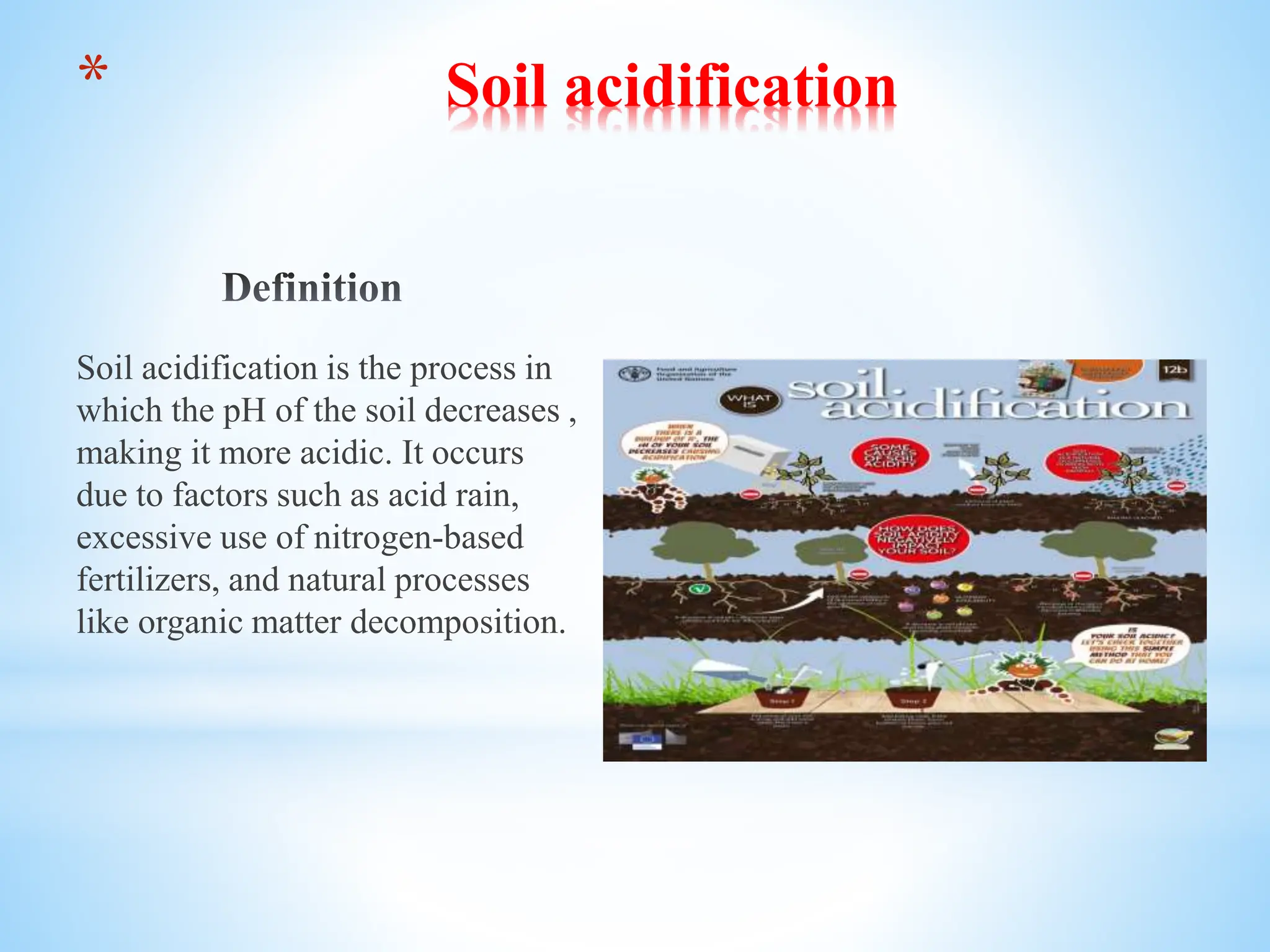
Soil acidification is the process in
which the pH of the soil decreases ,
making it more acidic. It occurs
due to factors such as acid rain,
excessive use of nitrogen-based
fertilizers, and natural processes
like organic matter decomposition.
* Soil acidification
Acid deposition: Emission of
sulfur and nitrogen oxides from
industrial activities and combustion
of fossil fuels leading to acid rain.
Agricultural practices: Excessive
use of nitrogen-based fertilizers,
leading to the release of nitric and
sulfuric acids.
Natural processes: Weathering of
certain rocks and organic matter
decomposition contributing to
acidification over time.
Reducing nutrient activity:
Acidic soil limits the availibility of
essential nutrients, such as
phosphorus, calcium, and
magnesium, affecting plant growth.
Toxicity and imbalances:
Increased solubility of toxic
elements like aluminum and heavy
metals, which can harm plants and
soil organisms.
Impaired microbial activity:
Acidic conditions hinder the
activity of beneficial soil
microorganisms, affecting nutrient
cycling and soil health.
* Soil acidification
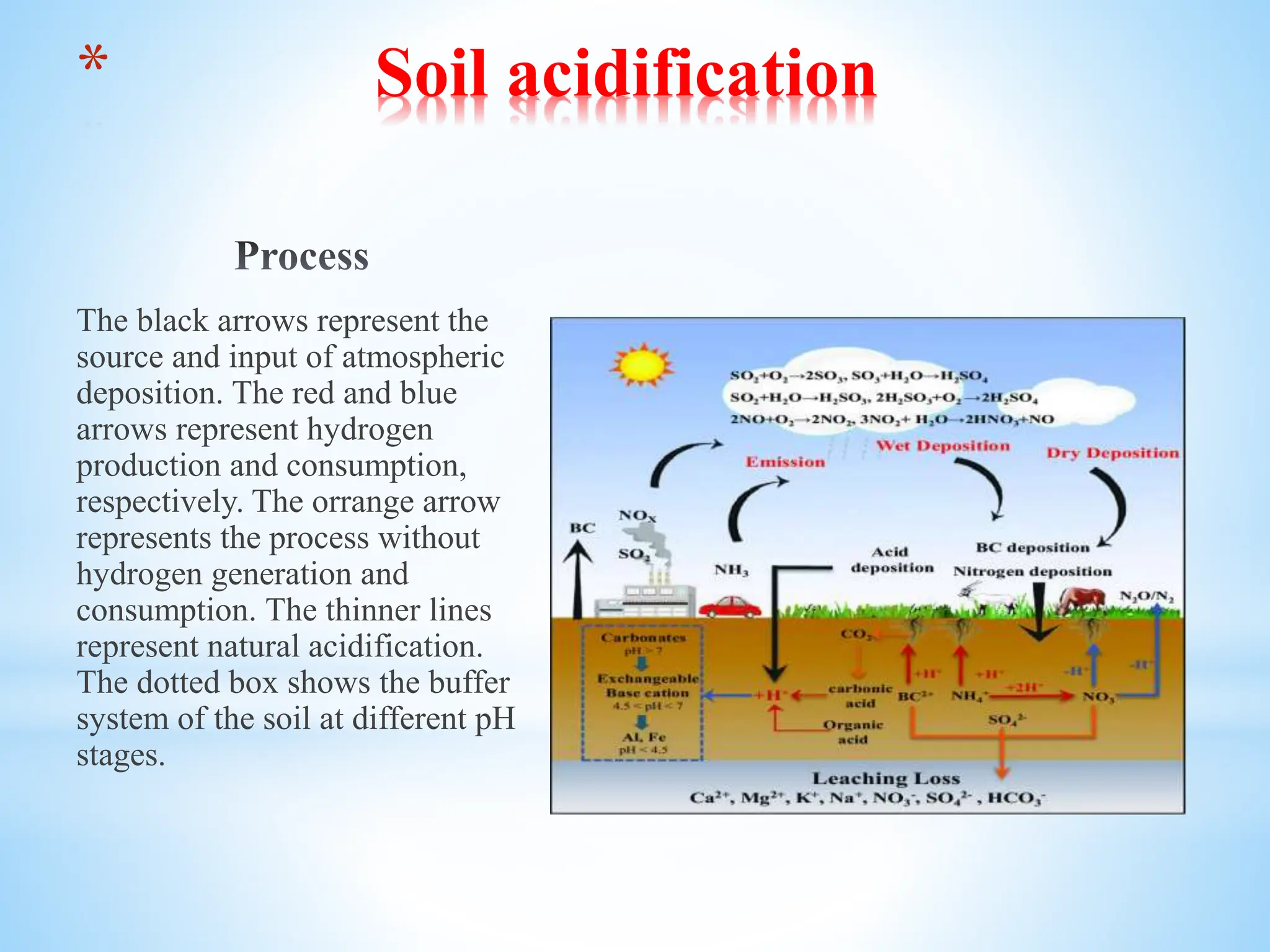
The black arrows represent the
source and input of atmospheric
deposition. The red and blue
arrows represent hydrogen
production and consumption,
respectively. The orrange arrow
represents the process without
hydrogen generation and
consumption. The thinner lines
represent natural acidification.
The dotted box shows the buffer
system of the soil at different pH
stages.
* Soil acidification
Liming: Application of lime (calcium carbonate on
calcium hydroxide) to neutralize soil activity and raise pH
levels.
Nutrient management: Balanced fertilizer application to
reduce the use of acidic fertilizers and maintain optimal
nutrient levels.
Sustainable practices: Conservation tillage, crop rotation,
and cover cropping to improve soil organic matter and
enhance nutrient retention.
* Soil acidification
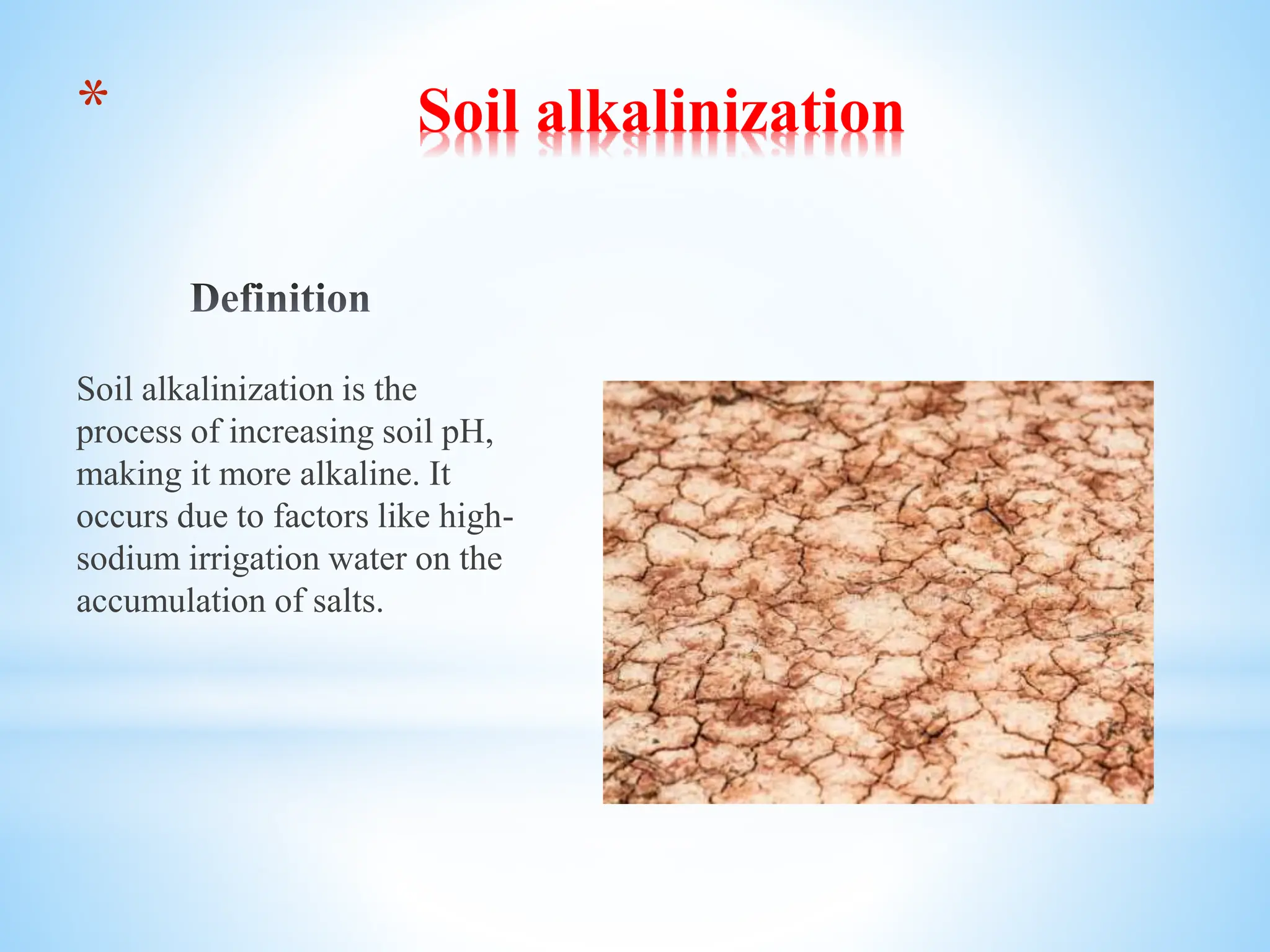
Soil alkalinization is the
process of increasing soil pH,
making it more alkaline. It
occurs due to factors like high-
sodium irrigation water on the
accumulation of salts.
* Soil alkalinization
Irrigation with high sodium water
Arid and semi-arid environments
Alkaline substances in the soil
Nutrient imbalances
Reduced water infiltration
Altered microbial activity
* Soil alkalinization
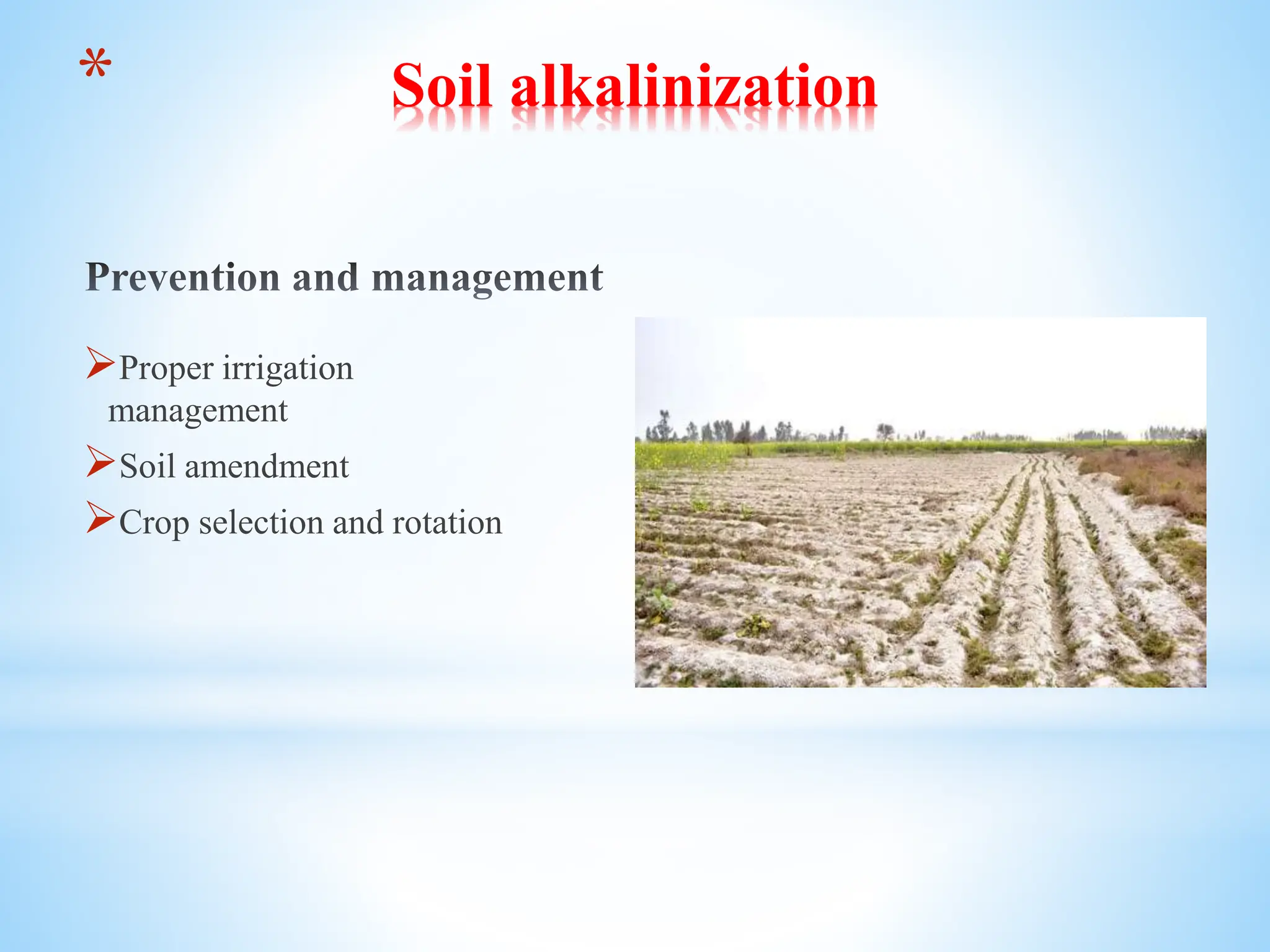
Proper irrigation
management
Soil amendment
Crop selection and rotation
* Soil alkalinization
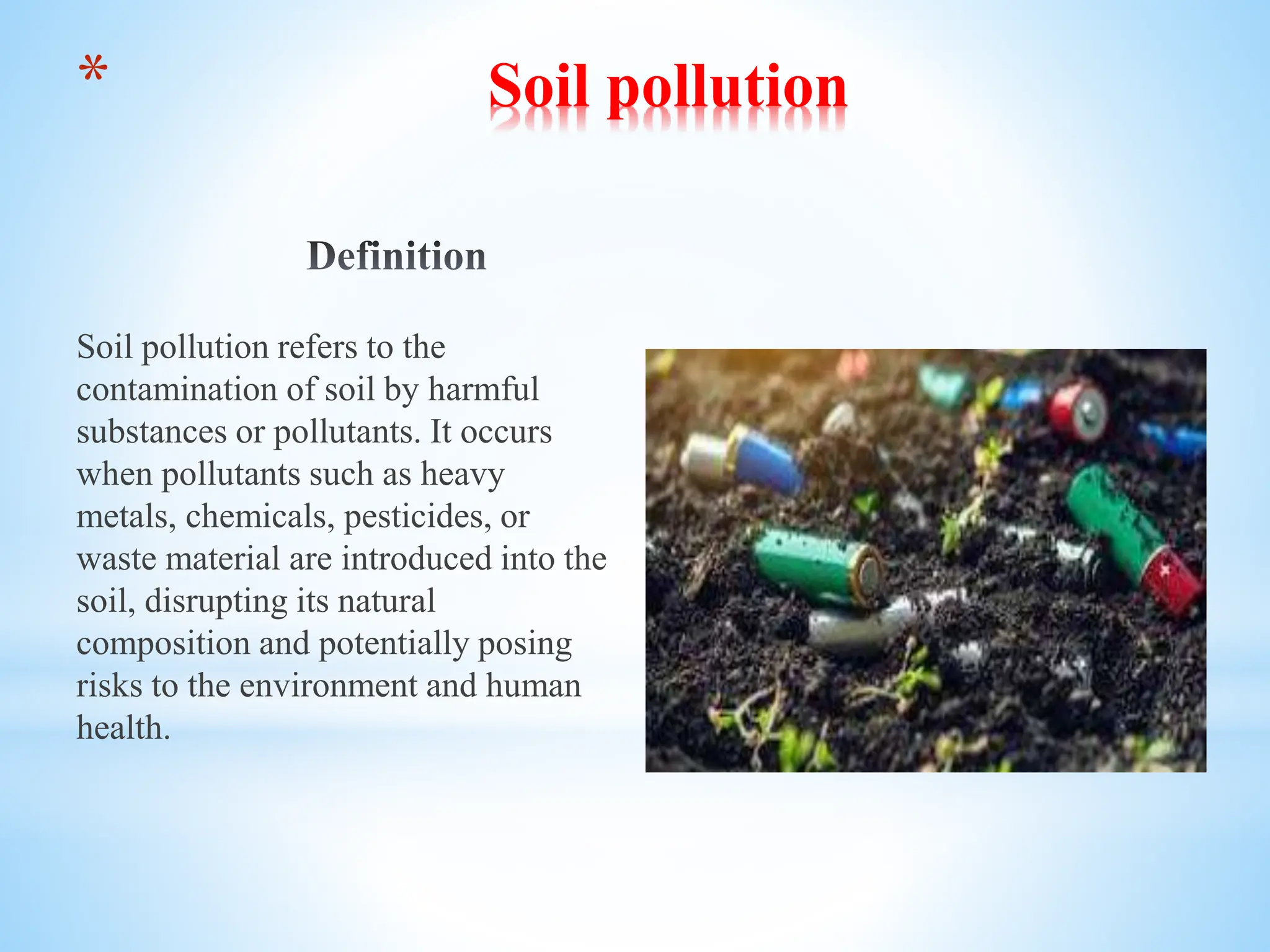
Soil pollution refers to the
contamination of soil by harmful
substances or pollutants. It occurs
when pollutants such as heavy
metals, chemicals, pesticides, or
waste material are introduced into the
soil, disrupting its natural
composition and potentially posing
risks to the environment and human
health.
* Soil pollution
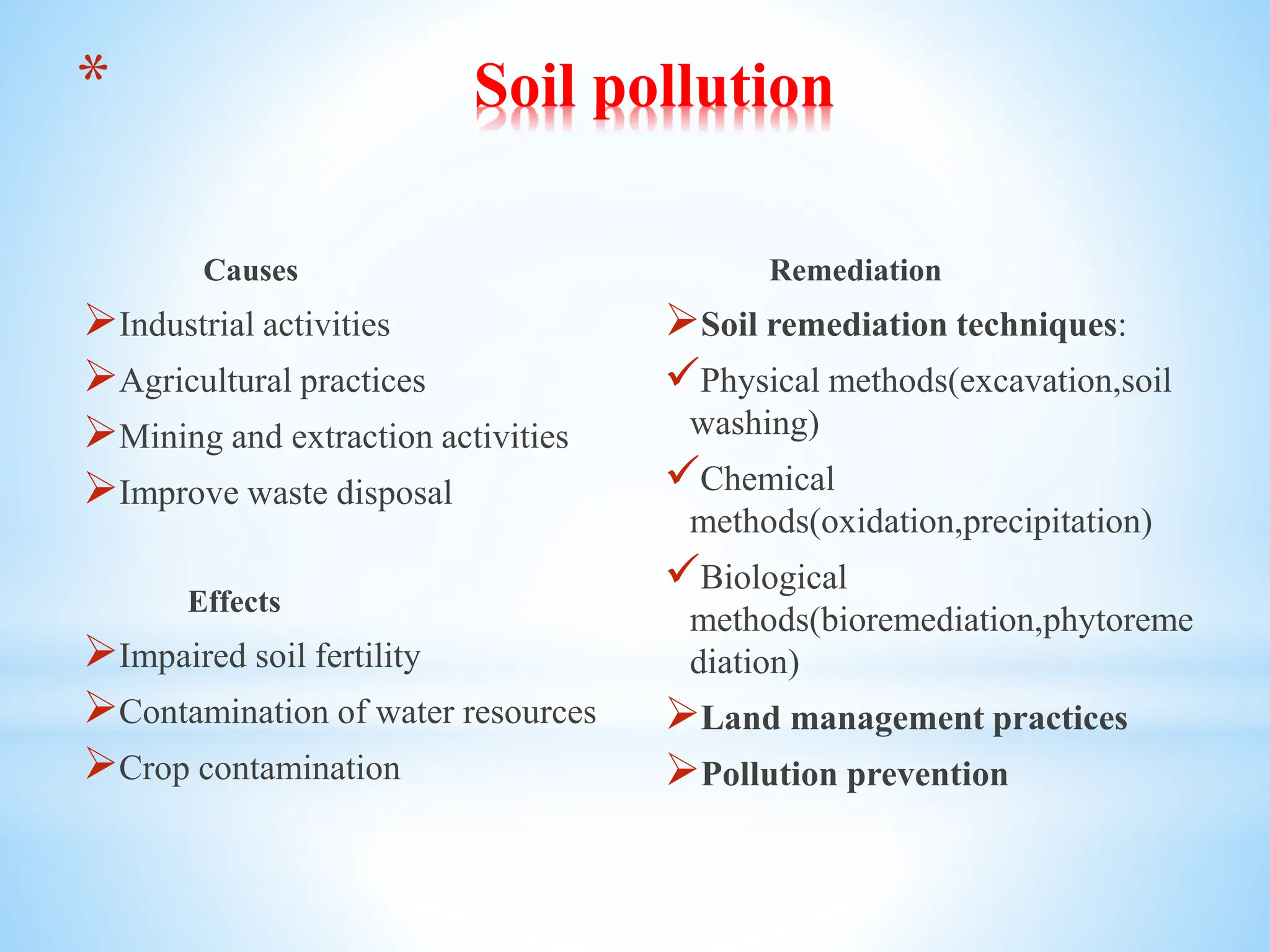
Causes
Industrial activities
Agricultural practices
Mining and extraction activities
Improve waste disposal
Effects
Impaired soil fertility
Contamination of water resources
Crop contamination
Remediation
Soil remediation techniques:
Physical methods(excavation,soil
washing)
Chemical
methods(oxidation,precipitation)
Biological
methods(bioremediation,phytoreme
diation)
Land management practices
Pollution prevention
* Soil pollution
Thank you

Soil solidification, acidification, alkalization and pollution

  • 1.
  • 2.
    Presentation On: Soilsolidification, acidification, alkalinization, and pollution. Course Name: Environmental Geochemistry Course code: ESE-2203 Presented to: Professor Dr. Ashraf Ali Seddique Dept. of Environmental Science & Engineering Jatiya Kabi kazi Nazrul Islam University. Presented by: Yasir Arafat ID No: 20103403 Session: 2019-20 Dept. of Environmental Science & Engineering Jatiya Kabi Kazi Nazrul Islam University.
  • 3.
    Soil Definition Soil is theloose surface material that covers most land. It consists of inorganic particles and organic matter. Soil provides the structural support to plants used in agriculture and is also their source of water and nutrients.
  • 4.
    Soil solidification isthe process of enhancing the stability and load-bearing capacity of soil through physical or chemical means to make it suitable for construction and other applications. * Soil solidification
  • 5.
    Improving load-bearing capacity Reducingsettlement And controlling groundwater flow. Stabilization of foundations for buildings, bridges, and other structures. Construction of embankments and roadways. Creation of solidified barriers for groundwater control and containment of hazardous substances. * Soil solidification
  • 6.
    Additives like cement,lime, or chemical binders mixed with the soil. Chemical reactions are occur, resulting in the formation of cementitious or solidified soil. The solidified soil gains strength and improved stability. Various mechanical techniques like compaction, dynamic compaction, and vibro-compaction are employed. These techniques exert pressure and vibration to increase soil density and improve stability. Compaction rollers, vibratory plates, or impact devices are commonly used equipment. * Methods of soil solidification
  • 7.
    Soil acidification isthe process in which the pH of the soil decreases , making it more acidic. It occurs due to factors such as acid rain, excessive use of nitrogen-based fertilizers, and natural processes like organic matter decomposition. * Soil acidification
  • 8.
    Acid deposition: Emissionof sulfur and nitrogen oxides from industrial activities and combustion of fossil fuels leading to acid rain. Agricultural practices: Excessive use of nitrogen-based fertilizers, leading to the release of nitric and sulfuric acids. Natural processes: Weathering of certain rocks and organic matter decomposition contributing to acidification over time. Reducing nutrient activity: Acidic soil limits the availibility of essential nutrients, such as phosphorus, calcium, and magnesium, affecting plant growth. Toxicity and imbalances: Increased solubility of toxic elements like aluminum and heavy metals, which can harm plants and soil organisms. Impaired microbial activity: Acidic conditions hinder the activity of beneficial soil microorganisms, affecting nutrient cycling and soil health. * Soil acidification
  • 9.
    The black arrowsrepresent the source and input of atmospheric deposition. The red and blue arrows represent hydrogen production and consumption, respectively. The orrange arrow represents the process without hydrogen generation and consumption. The thinner lines represent natural acidification. The dotted box shows the buffer system of the soil at different pH stages. * Soil acidification
  • 10.
    Liming: Application oflime (calcium carbonate on calcium hydroxide) to neutralize soil activity and raise pH levels. Nutrient management: Balanced fertilizer application to reduce the use of acidic fertilizers and maintain optimal nutrient levels. Sustainable practices: Conservation tillage, crop rotation, and cover cropping to improve soil organic matter and enhance nutrient retention. * Soil acidification
  • 11.
    Soil alkalinization isthe process of increasing soil pH, making it more alkaline. It occurs due to factors like high- sodium irrigation water on the accumulation of salts. * Soil alkalinization
  • 12.
    Irrigation with highsodium water Arid and semi-arid environments Alkaline substances in the soil Nutrient imbalances Reduced water infiltration Altered microbial activity * Soil alkalinization
  • 13.
    Proper irrigation management Soil amendment Cropselection and rotation * Soil alkalinization
  • 14.
    Soil pollution refersto the contamination of soil by harmful substances or pollutants. It occurs when pollutants such as heavy metals, chemicals, pesticides, or waste material are introduced into the soil, disrupting its natural composition and potentially posing risks to the environment and human health. * Soil pollution
  • 15.
    Causes Industrial activities Agricultural practices Miningand extraction activities Improve waste disposal Effects Impaired soil fertility Contamination of water resources Crop contamination Remediation Soil remediation techniques: Physical methods(excavation,soil washing) Chemical methods(oxidation,precipitation) Biological methods(bioremediation,phytoreme diation) Land management practices Pollution prevention * Soil pollution
  • 16.