Software product management
“Companies win or fail
depending on their
product managers.”
(Ebert, 2007)
Agenda
• Software Product Management
• SPM Competence Model
2
What is Software Product Management?
Software product management (SPM) is the
discipline that governs a software product
over its whole life cycle, from its inception
to customer delivery, in order to generate
the biggest possible value to the business.
3
What is a product manager?
“A product manager is a „mini CEO‟ representing
the enterprise or business unit in strategy
definition and operational execution.”
Ebert (2007)
4
What about the other managers?
• Ebert (2007):
– “a product manager leads and manages one or several
products from the inception to the phase-out in order to
maximize business value”
– “a marketing manager determines how to sell a product
or service”
– “a project manager determines how to best execute a
project or contract”
5
SPM and the life cycle
Ebert (2007)
6
Origins of (S)PM
• 19th century: manufacturing industry (Product
Lifecycle Management – PLM)
• Last decades: Microsoft, Sony Ericsson, SAP
7
What’s so special about Spm?
• High frequency of releases
• Complex requirements organization & tracking
• Product manager has many responsibilities but
little authority over development
• Interaction with many stakeholders
8
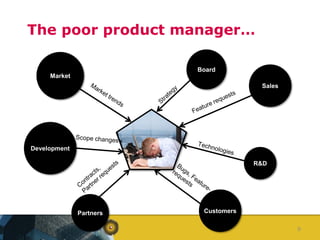
The poor product manager…
Board
Market
Sales
Development
Partners Customers
R&D
9
Agenda
• Software Product Management
• SPM Competence Model
10
Competence model for SPM
• Why a competence model?
– To aid product managers in their work
– To structure education in SPM
– To structure research in SPM
• Based on deliverable structure of a product
software company
11
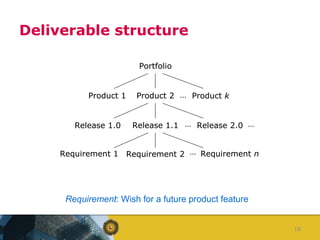
Deliverable structure
Portfolio
Product 2
Release 1.1
Requirement 2
Product k
Release 2.0
Requirement n
Product 1
Release 1.0
Requirement 1 …
…
…
…
Portfolio
Product 2
Release 1.1
Requirement 2
Product k
Release 2.0
Requirement n
Product 1
Release 1.0
Requirement 1 …
…
…
…
Portfolio: The complete set of products of a company
12
Deliverable structure
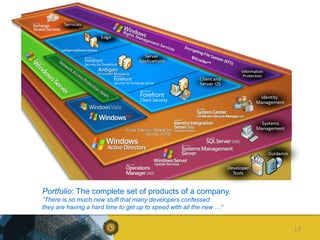
Portfolio: The complete set of products of a company.
“There is so much new stuff that many developers confessed
they are having a hard time to get up to speed with all the new …”
13
Deliverable structure
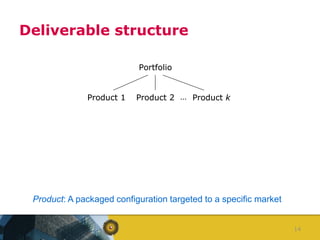
Portfolio
Product 2
Release 1.1
Requirement 2
Product k
Release 2.0
Requirement n
Product 1
Release 1.0
Requirement 1 …
…
…
…
Portfolio
Product 2
Release 1.1
Requirement 2
Product k
Release 2.0
Requirement n
Product 1
Release 1.0
Requirement 1 …
…
…
…
Product: A packaged configuration targeted to a specific market
14
Product: A packaged configuration targeted to a specific market
15
Deliverable structure
Portfolio
Product 2
Release 1.1
Requirement 2
Product k
Release 2.0
Requirement n
Product 1
Release 1.0
Requirement 1 …
…
…
…
Portfolio
Product 2
Release 1.1
Requirement 2
Product k
Release 2.0
Requirement n
Product 1
Release 1.0
Requirement 1 …
…
…
…
Release: A formalized sellable version
16
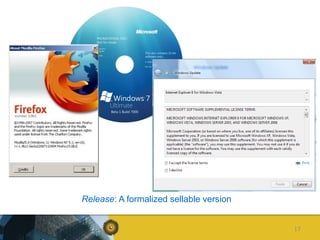
Release: A formalized sellable version
17
Deliverable structure
Portfolio
Product 2
Release 1.1
Requirement 2
Product k
Release 2.0
Requirement n
Product 1
Release 1.0
Requirement 1 …
…
…
…
Portfolio
Product 2
Release 1.1
Requirement 2
Product k
Release 2.0
Requirement n
Product 1
Release 1.0
Requirement 1 …
…
…
…
Requirement: Wish for a future product feature
18
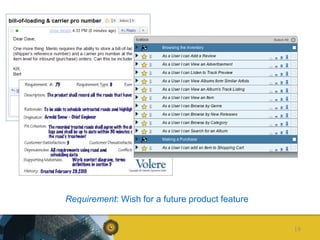
Requirement: Wish for a future product feature
19
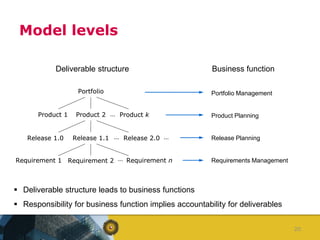
Model levels
Portfolio
Product 2
Release 1.1
Requirement 2
Product k
Release 2.0
Requirement n
Product 1
Release 1.0
Requirement 1 …
…
…
…
Portfolio
Product 2
Release 1.1
Requirement 2
Product k
Release 2.0
Requirement n
Product 1
Release 1.0
Requirement 1 …
…
…
…
Portfolio Management
Product Planning
Release Planning
Requirements Management
Deliverable structure Business function
 Deliverable structure leads to business functions
 Responsibility for business function implies accountability for deliverables
20
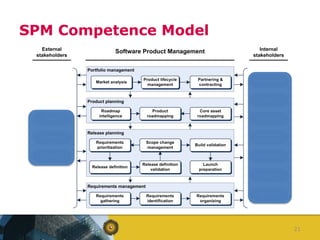
SPM Competence Model
21
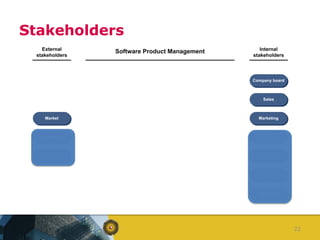
Stakeholders
22
Internal functions
23
Requirements management (1)
24
Requirements management (2)
• “to deal with the content and administrative data of each
individual requirement”
• 3 processes
– Requirement gathering
– Requirements identification
– Requirements organizing
25
Requirements management (3)
• Requirement gathering
– Stakeholder interviews
– Customer interaction programs
– Joint Requirement Development groups
• Requirements identification
– Market requirements vs. product requirements
– Functional requirements quality requirements & constraints
• Requirements organizing
– Product or release
– Theme or core asset
– Linking requirements, dependability, traceability
26
Release planning (1)
27
Release planning (2)
• “to deal with the set of requirements of each release”
• 6 processes
– Requirements prioritization
– Release definition
– Release definition validation
– Scope change management
– Build validation
– Launch preparation
28
Release planning (3)
• Prioritization techniques
• Business case / ROI estimation
to validate release definition
• Communicating the new launch
29
Product planning (1)
30
Product planning (2)
• “to deal with the different releases each product has”
• 3 processes
– Roadmap intelligence (markets, competitors, technologies)
– Product roadmapping (adapted to type of stakeholder)
– Roadmapping of core assets (i.e. components shared by
multiple products)
31
Product planning (3)
• Product roadmap
– A high-level sketch of where the company’s products are
going
– giving internal and external stakeholders the ability to
plan accordingly
32
Portfolio management (1)
33
Portfolio management (2)
• “to deal with all products in the product portfolio”
• 3 processes
– Market analysis
– Product lifecycle management (coverage gaps, areas of
overlap; strategy)
– Partnering & contracting
34
Portfolio management (3)
35
Configuration Management for Software Product Lines
Competence model
36
• All info on the SPM competence model can
be found at:
www.softwareproductmanagement.org
SPM Website
37

SoftwareProductManagement.pdf

  • 1.
    Software product management “Companieswin or fail depending on their product managers.” (Ebert, 2007)
  • 2.
    Agenda • Software ProductManagement • SPM Competence Model 2
  • 3.
    What is SoftwareProduct Management? Software product management (SPM) is the discipline that governs a software product over its whole life cycle, from its inception to customer delivery, in order to generate the biggest possible value to the business. 3
  • 4.
    What is aproduct manager? “A product manager is a „mini CEO‟ representing the enterprise or business unit in strategy definition and operational execution.” Ebert (2007) 4
  • 5.
    What about theother managers? • Ebert (2007): – “a product manager leads and manages one or several products from the inception to the phase-out in order to maximize business value” – “a marketing manager determines how to sell a product or service” – “a project manager determines how to best execute a project or contract” 5
  • 6.
    SPM and thelife cycle Ebert (2007) 6
  • 7.
    Origins of (S)PM •19th century: manufacturing industry (Product Lifecycle Management – PLM) • Last decades: Microsoft, Sony Ericsson, SAP 7
  • 8.
    What’s so specialabout Spm? • High frequency of releases • Complex requirements organization & tracking • Product manager has many responsibilities but little authority over development • Interaction with many stakeholders 8
  • 9.
    The poor productmanager… Board Market Sales Development Partners Customers R&D 9
  • 10.
    Agenda • Software ProductManagement • SPM Competence Model 10
  • 11.
    Competence model forSPM • Why a competence model? – To aid product managers in their work – To structure education in SPM – To structure research in SPM • Based on deliverable structure of a product software company 11
  • 12.
    Deliverable structure Portfolio Product 2 Release1.1 Requirement 2 Product k Release 2.0 Requirement n Product 1 Release 1.0 Requirement 1 … … … … Portfolio Product 2 Release 1.1 Requirement 2 Product k Release 2.0 Requirement n Product 1 Release 1.0 Requirement 1 … … … … Portfolio: The complete set of products of a company 12
  • 13.
    Deliverable structure Portfolio: Thecomplete set of products of a company. “There is so much new stuff that many developers confessed they are having a hard time to get up to speed with all the new …” 13
  • 14.
    Deliverable structure Portfolio Product 2 Release1.1 Requirement 2 Product k Release 2.0 Requirement n Product 1 Release 1.0 Requirement 1 … … … … Portfolio Product 2 Release 1.1 Requirement 2 Product k Release 2.0 Requirement n Product 1 Release 1.0 Requirement 1 … … … … Product: A packaged configuration targeted to a specific market 14
  • 15.
    Product: A packagedconfiguration targeted to a specific market 15
  • 16.
    Deliverable structure Portfolio Product 2 Release1.1 Requirement 2 Product k Release 2.0 Requirement n Product 1 Release 1.0 Requirement 1 … … … … Portfolio Product 2 Release 1.1 Requirement 2 Product k Release 2.0 Requirement n Product 1 Release 1.0 Requirement 1 … … … … Release: A formalized sellable version 16
  • 17.
    Release: A formalizedsellable version 17
  • 18.
    Deliverable structure Portfolio Product 2 Release1.1 Requirement 2 Product k Release 2.0 Requirement n Product 1 Release 1.0 Requirement 1 … … … … Portfolio Product 2 Release 1.1 Requirement 2 Product k Release 2.0 Requirement n Product 1 Release 1.0 Requirement 1 … … … … Requirement: Wish for a future product feature 18
  • 19.
    Requirement: Wish fora future product feature 19
  • 20.
    Model levels Portfolio Product 2 Release1.1 Requirement 2 Product k Release 2.0 Requirement n Product 1 Release 1.0 Requirement 1 … … … … Portfolio Product 2 Release 1.1 Requirement 2 Product k Release 2.0 Requirement n Product 1 Release 1.0 Requirement 1 … … … … Portfolio Management Product Planning Release Planning Requirements Management Deliverable structure Business function  Deliverable structure leads to business functions  Responsibility for business function implies accountability for deliverables 20
  • 21.
  • 22.
  • 23.
  • 24.
  • 25.
    Requirements management (2) •“to deal with the content and administrative data of each individual requirement” • 3 processes – Requirement gathering – Requirements identification – Requirements organizing 25
  • 26.
    Requirements management (3) •Requirement gathering – Stakeholder interviews – Customer interaction programs – Joint Requirement Development groups • Requirements identification – Market requirements vs. product requirements – Functional requirements quality requirements & constraints • Requirements organizing – Product or release – Theme or core asset – Linking requirements, dependability, traceability 26
  • 27.
  • 28.
    Release planning (2) •“to deal with the set of requirements of each release” • 6 processes – Requirements prioritization – Release definition – Release definition validation – Scope change management – Build validation – Launch preparation 28
  • 29.
    Release planning (3) •Prioritization techniques • Business case / ROI estimation to validate release definition • Communicating the new launch 29
  • 30.
  • 31.
    Product planning (2) •“to deal with the different releases each product has” • 3 processes – Roadmap intelligence (markets, competitors, technologies) – Product roadmapping (adapted to type of stakeholder) – Roadmapping of core assets (i.e. components shared by multiple products) 31
  • 32.
    Product planning (3) •Product roadmap – A high-level sketch of where the company’s products are going – giving internal and external stakeholders the ability to plan accordingly 32
  • 33.
  • 34.
    Portfolio management (2) •“to deal with all products in the product portfolio” • 3 processes – Market analysis – Product lifecycle management (coverage gaps, areas of overlap; strategy) – Partnering & contracting 34
  • 35.
    Portfolio management (3) 35 ConfigurationManagement for Software Product Lines
  • 36.
  • 37.
    • All infoon the SPM competence model can be found at: www.softwareproductmanagement.org SPM Website 37