Software
Development
Process & Agile
Methodologies
Introduction to Software
Development
 Software development is the process of
designing, creating, testing, and maintaining
software applications.
 It involves transforming user requirements into a
functional software system.
 Used in various domains such as education,
healthcare, banking, AI, IoT, and enterprise
systems.
 Focuses on quality, efficiency, scalability, and
maintainability.
Software Development
Process (SDP)
 A structured approach used to develop software
systematically.
 Defines phases, activities, roles, and deliverables.
 Helps manage complexity and reduce project
risks.
 Ensures timely delivery and better quality
software.
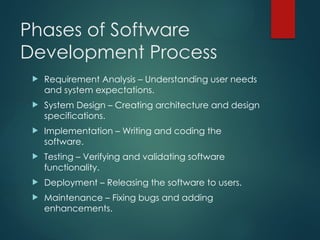
Phases of Software
Development Process
 Requirement Analysis – Understanding user needs
and system expectations.
 System Design – Creating architecture and design
specifications.
 Implementation – Writing and coding the
software.
 Testing – Verifying and validating software
functionality.
 Deployment – Releasing the software to users.
 Maintenance – Fixing bugs and adding
enhancements.
Software Engineering
Principles
 Focus on quality and reliability.
 Modularity – Divide the system into manageable
components.
 Abstraction – Show only essential features and
hide complexity.
 Reusability – Use existing components to save
time and cost.
 Maintainability – Easy to modify and enhance the
software.
 Scalability – Ability to handle growth and
increased load.
Importance of Software
Engineering Principles
 Improves software quality and performance.
 Reduces development and maintenance cost.
 Ensures consistency and standardization.
 Enhances team collaboration and productivity.
 Supports long-term sustainability of software
systems.
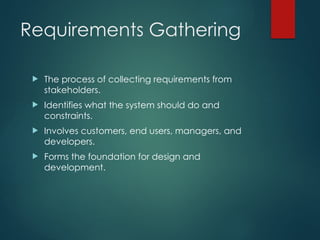
Requirements Gathering
 The process of collecting requirements from
stakeholders.
 Identifies what the system should do and
constraints.
 Involves customers, end users, managers, and
developers.
 Forms the foundation for design and
development.
Techniques for
Requirements Gathering
 Interviews – One-to-one discussions with
stakeholders.
 Questionnaires – Structured data collection.
 Observation – Understanding existing systems.
 Workshops – Group discussions and brainstorming.
 Document Analysis – Studying existing documents
and systems.
Requirements Analysis
 Analyzing and refining gathered requirements.
 Identifying functional and non-functional
requirements.
 Removing ambiguity and conflicts.
 Creating Software Requirement Specification
(SRS).
Types of Requirements
 Functional Requirements – What the system
should do.
 Non-Functional Requirements – Performance,
security, usability, reliability.
 Business Requirements – Organizational goals.
 User Requirements – End-user expectations.
Overview of Programming
Languages
 Programming languages are used to instruct
computers.
 Enable developers to implement algorithms and
logic.
 Different languages are suitable for different
applications.
 Chosen based on performance, platform, and
requirements.
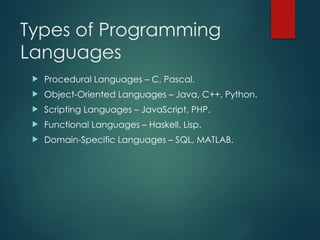
Types of Programming
Languages
 Procedural Languages – C, Pascal.
 Object-Oriented Languages – Java, C++, Python.
 Scripting Languages – JavaScript, PHP.
 Functional Languages – Haskell, Lisp.
 Domain-Specific Languages – SQL, MATLAB.
Traditional Software
Development Models
 Waterfall Model
 V-Model
 Spiral Model
 Incremental Model
 Big Bang Model
Waterfall Model
 Linear and sequential approach.
 Each phase must be completed before moving
to the next.
 Easy to understand and manage.
 Difficult to handle changes.
 Suitable for small and well-defined projects.
Agile Software
Development
 Agile is an iterative and incremental approach.
 Focuses on customer collaboration and flexibility.
 Delivers working software frequently.
 Responds quickly to changing requirements.
Agile Principles
 Customer satisfaction through early delivery.
 Welcome changing requirements.
 Frequent delivery of working software.
 Close collaboration between business and
developers.
 Continuous improvement.
Scrum Framework
 Popular Agile framework.
 Uses time-boxed iterations called Sprints.
 Key roles: Product Owner, Scrum Master,
Development Team.
 Artifacts: Product Backlog, Sprint Backlog,
Increment.
 Ceremonies: Sprint Planning, Daily Stand-up,
Review, Retrospective.
Kanban Methodology
 Visual workflow management method.
 Uses Kanban board to track tasks.
 Limits work in progress (WIP).
 Focuses on continuous delivery.
 Improves efficiency and flow.
DevOps Practices
 Combines Development and Operations.
 Encourages collaboration and automation.
 Continuous Integration (CI).
 Continuous Deployment (CD).
 Infrastructure as Code (IaC).
 Monitoring and feedback.
Benefits of DevOps
 Faster software delivery.
 Improved collaboration.
 Higher deployment frequency.
 Reduced failure rate of releases.
 Quick recovery from failures.
Comparison of
Methodologies
 Traditional Models – Rigid, sequential,
documentation-heavy.
 Agile – Flexible, iterative, customer-focused.
 DevOps – Automation-driven, continuous delivery.
 Traditional suits stable requirements.
 Agile & DevOps suit dynamic environments.
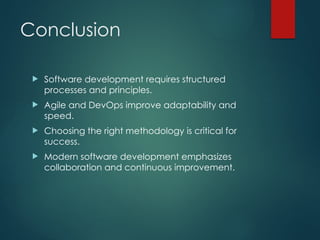
Conclusion
 Software development requires structured
processes and principles.
 Agile and DevOps improve adaptability and
speed.
 Choosing the right methodology is critical for
success.
 Modern software development emphasizes
collaboration and continuous improvement.

Software_Development_and_Agile_Methodolo

  • 1.
  • 2.
    Introduction to Software Development Software development is the process of designing, creating, testing, and maintaining software applications.  It involves transforming user requirements into a functional software system.  Used in various domains such as education, healthcare, banking, AI, IoT, and enterprise systems.  Focuses on quality, efficiency, scalability, and maintainability.
  • 3.
    Software Development Process (SDP) A structured approach used to develop software systematically.  Defines phases, activities, roles, and deliverables.  Helps manage complexity and reduce project risks.  Ensures timely delivery and better quality software.
  • 4.
    Phases of Software DevelopmentProcess  Requirement Analysis – Understanding user needs and system expectations.  System Design – Creating architecture and design specifications.  Implementation – Writing and coding the software.  Testing – Verifying and validating software functionality.  Deployment – Releasing the software to users.  Maintenance – Fixing bugs and adding enhancements.
  • 5.
    Software Engineering Principles  Focuson quality and reliability.  Modularity – Divide the system into manageable components.  Abstraction – Show only essential features and hide complexity.  Reusability – Use existing components to save time and cost.  Maintainability – Easy to modify and enhance the software.  Scalability – Ability to handle growth and increased load.
  • 6.
    Importance of Software EngineeringPrinciples  Improves software quality and performance.  Reduces development and maintenance cost.  Ensures consistency and standardization.  Enhances team collaboration and productivity.  Supports long-term sustainability of software systems.
  • 7.
    Requirements Gathering  Theprocess of collecting requirements from stakeholders.  Identifies what the system should do and constraints.  Involves customers, end users, managers, and developers.  Forms the foundation for design and development.
  • 8.
    Techniques for Requirements Gathering Interviews – One-to-one discussions with stakeholders.  Questionnaires – Structured data collection.  Observation – Understanding existing systems.  Workshops – Group discussions and brainstorming.  Document Analysis – Studying existing documents and systems.
  • 9.
    Requirements Analysis  Analyzingand refining gathered requirements.  Identifying functional and non-functional requirements.  Removing ambiguity and conflicts.  Creating Software Requirement Specification (SRS).
  • 10.
    Types of Requirements Functional Requirements – What the system should do.  Non-Functional Requirements – Performance, security, usability, reliability.  Business Requirements – Organizational goals.  User Requirements – End-user expectations.
  • 11.
    Overview of Programming Languages Programming languages are used to instruct computers.  Enable developers to implement algorithms and logic.  Different languages are suitable for different applications.  Chosen based on performance, platform, and requirements.
  • 12.
    Types of Programming Languages Procedural Languages – C, Pascal.  Object-Oriented Languages – Java, C++, Python.  Scripting Languages – JavaScript, PHP.  Functional Languages – Haskell, Lisp.  Domain-Specific Languages – SQL, MATLAB.
  • 13.
    Traditional Software Development Models Waterfall Model  V-Model  Spiral Model  Incremental Model  Big Bang Model
  • 14.
    Waterfall Model  Linearand sequential approach.  Each phase must be completed before moving to the next.  Easy to understand and manage.  Difficult to handle changes.  Suitable for small and well-defined projects.
  • 15.
    Agile Software Development  Agileis an iterative and incremental approach.  Focuses on customer collaboration and flexibility.  Delivers working software frequently.  Responds quickly to changing requirements.
  • 16.
    Agile Principles  Customersatisfaction through early delivery.  Welcome changing requirements.  Frequent delivery of working software.  Close collaboration between business and developers.  Continuous improvement.
  • 17.
    Scrum Framework  PopularAgile framework.  Uses time-boxed iterations called Sprints.  Key roles: Product Owner, Scrum Master, Development Team.  Artifacts: Product Backlog, Sprint Backlog, Increment.  Ceremonies: Sprint Planning, Daily Stand-up, Review, Retrospective.
  • 18.
    Kanban Methodology  Visualworkflow management method.  Uses Kanban board to track tasks.  Limits work in progress (WIP).  Focuses on continuous delivery.  Improves efficiency and flow.
  • 19.
    DevOps Practices  CombinesDevelopment and Operations.  Encourages collaboration and automation.  Continuous Integration (CI).  Continuous Deployment (CD).  Infrastructure as Code (IaC).  Monitoring and feedback.
  • 20.
    Benefits of DevOps Faster software delivery.  Improved collaboration.  Higher deployment frequency.  Reduced failure rate of releases.  Quick recovery from failures.
  • 21.
    Comparison of Methodologies  TraditionalModels – Rigid, sequential, documentation-heavy.  Agile – Flexible, iterative, customer-focused.  DevOps – Automation-driven, continuous delivery.  Traditional suits stable requirements.  Agile & DevOps suit dynamic environments.
  • 22.
    Conclusion  Software developmentrequires structured processes and principles.  Agile and DevOps improve adaptability and speed.  Choosing the right methodology is critical for success.  Modern software development emphasizes collaboration and continuous improvement.