Department of Computer Science and
Applications
Presentation on – SRS (Software Requirement Specification)
Atal Bihari Vajpayee Vishwavidyalaya, Koni,
Bilaspur, Chhattisgarh
Presented to – Kamal Kumar Gavel
Assistant Professor
(Guest Faculty)
Presented by – Kishan Kumar Kaushik
B.Sc. (Hons.) 4th Semester, Computer
Science
Roll No. - 2111805
Table of Contents:
This presentation provides:
● An introduction to Software Requirement
Specification (SRS)
● Purpose of SRS.
● Format of SRS.
● Types of readers in SRS.
● Characteristics SRS.
● Benefits of SRS.
● Examples of SRS.
What is SRS?
● SRS is the official statement of what the system
developers should implement.
● SRS is a complete description of the behavior of the
system to be developed.
● SRS should include both a definition of user
requirements and a specification of the system
requirements.
● The SRS fully describes what the software will do and
how it will be expected to perform.
Purpose of SRS (Software Requirement
Specification)
● The SRS precisely defines the software product that
will be built.
● SRS used to know all the requirements for the
software development and thus that will help in
designing the software.
● It provides feedback to the customer.
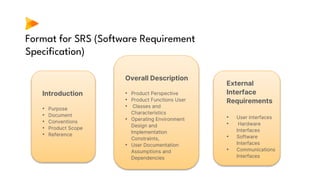
Format for SRS (Software Requirement
Specification)
Introduction
• Purpose
• Document
• Conventions
• Product Scope
• Reference
Overall Description
• Product Perspective
• Product Functions User
• Classes and
Characteristics
• Operating Environment
Design and
Implementation
Constraints,
• User Documentation
Assumptions and
Dependencies
External
Interface
Requirements
• User interfaces
• Hardware
Interfaces
• Software
Interfaces
• Communications
Interfaces
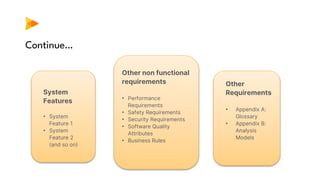
Continue…
System
Features
• System
Feature 1
• System
Feature 2
(and so on)
Other non functional
requirements
• Performance
Requirements
• Safety Requirements
• Security Requirements
• Software Quality
Attributes
• Business Rules
Other
Requirements
• Appendix A:
Glossary
• Appendix B:
Analysis
Models
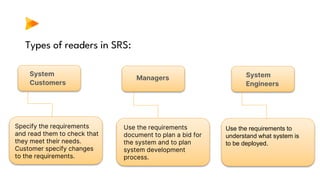
Types of readers in SRS:
System
Customers
Specify the requirements
and read them to check that
they meet their needs.
Customer specify changes
to the requirements.
Managers
Use the requirements
document to plan a bid for
the system and to plan
system development
process.
Use the requirements to
understand what system is
to be deployed.
System
Engineers
Continue…
System test
Engineers
Use the requirements to
develop validation tests for
the system.
Managers
Use the requirements to
understand the system and
the relationship between its
parts
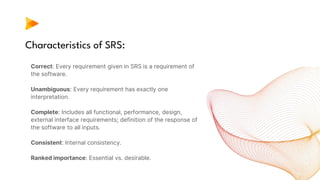
Characteristics of SRS:
Correct: Every requirement given in SRS is a requirement of
the software.
Unambiguous: Every requirement has exactly one
interpretation.
Complete: Includes all functional, performance, design,
external interface requirements; definition of the response of
the software to all inputs.
Consistent: Internal consistency.
Ranked importance: Essential vs. desirable.
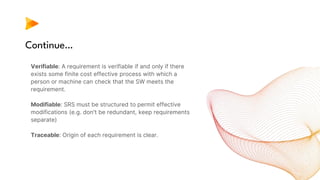
Continue…
Verifiable: A requirement is verifiable if and only if there
exists some finite cost effective process with which a
person or machine can check that the SW meets the
requirement.
Modifiable: SRS must be structured to permit effective
modifications (e.g. don't be redundant, keep requirements
separate)
Traceable: Origin of each requirement is clear.
What are the benefits of a great SRS?
The IEEE 830 standard defines the benefits of a good
SRS:
Establish the basis for agreement between the
customers and the suppliers on what the software
product is to do.
• Reduce the development effort.
• Provide a basis for estimating costs and schedules.
• Provide a baseline for validation and verification.
• Serve as a basis for enhancement.
Example - Building a Social Media
Platform
Functional Requirements:
• User Registration: Users can create accounts with unique
usernames and passwords.
• User Profile: Users can manage their profile information,
including bio, profile picture, and privacy settings.
• Content Creation: Users can create and publish posts,
including text, images, and videos.
• Content Sharing: Users can share posts created by
themselves or others on their own feed or with specific
users or groups.
• User Interaction: Users can like, comment on, and share
posts. They can also follow other users and receive
notifications.
Summary
● we have introduced the concept of a Software
Requirements Specification (SRS). An SRS is a
document that outlines the requirements and
specifications for a software project.
● It serves as a guide for software development teams,
helping them understand what needs to be built and
how it should function. We have discussed the purpose
and benefits of an SRS, its key components, and the
importance of clear and well-defined requirements.
● By the end of this presentation, now we have a better
understanding of how an SRS plays a vital role in
successful software development projects.
Thank you, please feel free to ask any
questions.

Software Requirement Specification

  • 1.
    Department of ComputerScience and Applications Presentation on – SRS (Software Requirement Specification) Atal Bihari Vajpayee Vishwavidyalaya, Koni, Bilaspur, Chhattisgarh Presented to – Kamal Kumar Gavel Assistant Professor (Guest Faculty) Presented by – Kishan Kumar Kaushik B.Sc. (Hons.) 4th Semester, Computer Science Roll No. - 2111805
  • 2.
    Table of Contents: Thispresentation provides: ● An introduction to Software Requirement Specification (SRS) ● Purpose of SRS. ● Format of SRS. ● Types of readers in SRS. ● Characteristics SRS. ● Benefits of SRS. ● Examples of SRS.
  • 3.
    What is SRS? ●SRS is the official statement of what the system developers should implement. ● SRS is a complete description of the behavior of the system to be developed. ● SRS should include both a definition of user requirements and a specification of the system requirements. ● The SRS fully describes what the software will do and how it will be expected to perform.
  • 4.
    Purpose of SRS(Software Requirement Specification) ● The SRS precisely defines the software product that will be built. ● SRS used to know all the requirements for the software development and thus that will help in designing the software. ● It provides feedback to the customer.
  • 5.
    Format for SRS(Software Requirement Specification) Introduction • Purpose • Document • Conventions • Product Scope • Reference Overall Description • Product Perspective • Product Functions User • Classes and Characteristics • Operating Environment Design and Implementation Constraints, • User Documentation Assumptions and Dependencies External Interface Requirements • User interfaces • Hardware Interfaces • Software Interfaces • Communications Interfaces
  • 6.
    Continue… System Features • System Feature 1 •System Feature 2 (and so on) Other non functional requirements • Performance Requirements • Safety Requirements • Security Requirements • Software Quality Attributes • Business Rules Other Requirements • Appendix A: Glossary • Appendix B: Analysis Models
  • 7.
    Types of readersin SRS: System Customers Specify the requirements and read them to check that they meet their needs. Customer specify changes to the requirements. Managers Use the requirements document to plan a bid for the system and to plan system development process. Use the requirements to understand what system is to be deployed. System Engineers
  • 8.
    Continue… System test Engineers Use therequirements to develop validation tests for the system. Managers Use the requirements to understand the system and the relationship between its parts
  • 9.
    Characteristics of SRS: Correct:Every requirement given in SRS is a requirement of the software. Unambiguous: Every requirement has exactly one interpretation. Complete: Includes all functional, performance, design, external interface requirements; definition of the response of the software to all inputs. Consistent: Internal consistency. Ranked importance: Essential vs. desirable.
  • 10.
    Continue… Verifiable: A requirementis verifiable if and only if there exists some finite cost effective process with which a person or machine can check that the SW meets the requirement. Modifiable: SRS must be structured to permit effective modifications (e.g. don't be redundant, keep requirements separate) Traceable: Origin of each requirement is clear.
  • 11.
    What are thebenefits of a great SRS? The IEEE 830 standard defines the benefits of a good SRS: Establish the basis for agreement between the customers and the suppliers on what the software product is to do. • Reduce the development effort. • Provide a basis for estimating costs and schedules. • Provide a baseline for validation and verification. • Serve as a basis for enhancement.
  • 12.
    Example - Buildinga Social Media Platform Functional Requirements: • User Registration: Users can create accounts with unique usernames and passwords. • User Profile: Users can manage their profile information, including bio, profile picture, and privacy settings. • Content Creation: Users can create and publish posts, including text, images, and videos. • Content Sharing: Users can share posts created by themselves or others on their own feed or with specific users or groups. • User Interaction: Users can like, comment on, and share posts. They can also follow other users and receive notifications.
  • 13.
    Summary ● we haveintroduced the concept of a Software Requirements Specification (SRS). An SRS is a document that outlines the requirements and specifications for a software project. ● It serves as a guide for software development teams, helping them understand what needs to be built and how it should function. We have discussed the purpose and benefits of an SRS, its key components, and the importance of clear and well-defined requirements. ● By the end of this presentation, now we have a better understanding of how an SRS plays a vital role in successful software development projects.
  • 14.
    Thank you, pleasefeel free to ask any questions.