Software Design Notes
Diego Pacheco
@diego_pacheco
❏ Cat's Father
❏ Principal Software Architect
❏ Agile Coach
❏ SOA/Microservices Expert
❏ DevOps Practitioner
❏ Speaker
❏ Author
diegopacheco
http://diego-pacheco.blogspot.com.br/
About me...
https://diegopacheco.github.io/
Software Design References (for me)
Best Software Design Book in long time(2018)
Movement vs Anti-Moviment
❏ SOA
❏ Agile
❏ REST
❏ Docker
❏ Clean Code
❏ ...
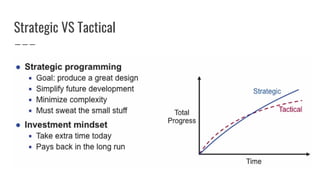
Strategic VS Tactical
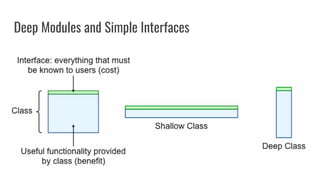
Deep Modules and Simple Interfaces
Notes
- Modules are Deep
- Classes are modules == Classes are Deep
- Deep Modules are better than shallow modules
- Classitis when you have too many classes disease
- FAT classes hide Information, therefore, creates abstractions
- When an interface is similar to implementation means its shallow thus leaking or poor.
- Decorator Pattern creates shallow modules - Therefore should be avoided.
- Global Context Variable instead of pass-through variables.
- Is more important to have a simple interface than a simple implementation
- Shallow/lots of private methods are also bad
- Exceptions are easy to throw but hard to handle
- Better avoid Exceptions as much as possible.
Notes
- Pull Complexity downward not upward(configuration) avoid exposing configs that won't change
- Comment what is not obvious
- Comments are part of the design
- Comment on interfaces should describe just how to use - this should not have comments of the impl.
- Comments need to be close to the code otherwise they will get outdated
- Long Variable Names VS Short Ones(Go prog Style)
- Obscurity is one of the main causes of complexity.
- Solution to obscurity is always written code that makes it obvious.
- Obvious code means:
- Read quickly without much thought
- Easily guess meaning or what it does
- Guess should be write
Notes
- If the Code is not obvious:
- You spend lots of energy to understand.
- So its hard to understand and its likely to increase misunderstanding, therefore, creating more bugs
- Code Review is the best tool to determine if the code is obvious
- Precise and meaningful names make the code more obvious.
- 2 Effect that's is important is consistency; Same names == Same Patterns easy to recognize things.
- Things that make the code less obvious:
- event-driven code
- generic objects == containers
Notes
- OOP = Composition over inheritance.
- Agile could easily lead to tactical programming.
- TDD focus on getting some specific features working rather than have a better design.
- Great risk of design patterns - over-application.
- More Design Patterns don't mean better design.
- Getters / Setters are shallow and should be avoided as much as possible.
Design Principles
Red Flags
Closing Thoughts
❏ The Book is amazing.
❏ It's great that the book challenge ideas/assumptions.
❏ I'm not 100% into Comments.
❏ The Book don't cover Functional programing in detail :(
❏ The Book don't cover DevOps Engineering :(
❏ Some sample examples are not practical: Text Editor.
Software Design Notes
Diego Pacheco

Software Design Notes

  • 1.
  • 2.
    @diego_pacheco ❏ Cat's Father ❏Principal Software Architect ❏ Agile Coach ❏ SOA/Microservices Expert ❏ DevOps Practitioner ❏ Speaker ❏ Author diegopacheco http://diego-pacheco.blogspot.com.br/ About me... https://diegopacheco.github.io/
  • 3.
  • 4.
  • 5.
    Best Software DesignBook in long time(2018)
  • 6.
    Movement vs Anti-Moviment ❏SOA ❏ Agile ❏ REST ❏ Docker ❏ Clean Code ❏ ...
  • 7.
  • 8.
    Deep Modules andSimple Interfaces
  • 9.
    Notes - Modules areDeep - Classes are modules == Classes are Deep - Deep Modules are better than shallow modules - Classitis when you have too many classes disease - FAT classes hide Information, therefore, creates abstractions - When an interface is similar to implementation means its shallow thus leaking or poor. - Decorator Pattern creates shallow modules - Therefore should be avoided. - Global Context Variable instead of pass-through variables. - Is more important to have a simple interface than a simple implementation - Shallow/lots of private methods are also bad - Exceptions are easy to throw but hard to handle - Better avoid Exceptions as much as possible.
  • 10.
    Notes - Pull Complexitydownward not upward(configuration) avoid exposing configs that won't change - Comment what is not obvious - Comments are part of the design - Comment on interfaces should describe just how to use - this should not have comments of the impl. - Comments need to be close to the code otherwise they will get outdated - Long Variable Names VS Short Ones(Go prog Style) - Obscurity is one of the main causes of complexity. - Solution to obscurity is always written code that makes it obvious. - Obvious code means: - Read quickly without much thought - Easily guess meaning or what it does - Guess should be write
  • 11.
    Notes - If theCode is not obvious: - You spend lots of energy to understand. - So its hard to understand and its likely to increase misunderstanding, therefore, creating more bugs - Code Review is the best tool to determine if the code is obvious - Precise and meaningful names make the code more obvious. - 2 Effect that's is important is consistency; Same names == Same Patterns easy to recognize things. - Things that make the code less obvious: - event-driven code - generic objects == containers
  • 12.
    Notes - OOP =Composition over inheritance. - Agile could easily lead to tactical programming. - TDD focus on getting some specific features working rather than have a better design. - Great risk of design patterns - over-application. - More Design Patterns don't mean better design. - Getters / Setters are shallow and should be avoided as much as possible.
  • 13.
  • 14.
  • 15.
    Closing Thoughts ❏ TheBook is amazing. ❏ It's great that the book challenge ideas/assumptions. ❏ I'm not 100% into Comments. ❏ The Book don't cover Functional programing in detail :( ❏ The Book don't cover DevOps Engineering :( ❏ Some sample examples are not practical: Text Editor.
  • 16.