SOCIOLOGICAL STUDY OFGANGSFREMAN J. MURPHY
Gangs- socially excluded, alienated individuals loosely organized with informal leadershipGangs have been part of US culture since 19th century
Bound by ethnicity, race, social class
Defined by a system of rules, rituals, and codes of behavior19th Century GangsGangs were a means of economic survival
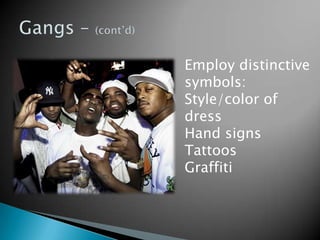
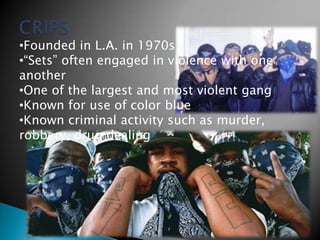
Seen as normal adolescent peer activity from conventional to wild behaviorGangs – (cont’d)Employ distinctive symbols:Style/color of dressHand signsTattoosGraffiti
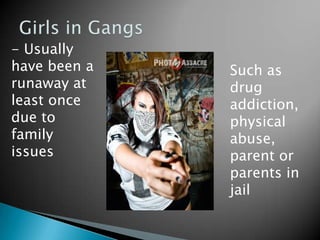
Girls in Gangs- Usually have been a runaway at least once due to family issues Such as drug addiction, physical abuse, parent or parents in jail
GangsServe as a substitute family to members that join
Consist of a sense of empowerment amongst members defending a neighborhood, street, or territory
Financial gain through violent acts, criminal and delinquentGangs- (cont’d)Prevalent in neighborhoods where community network is weak
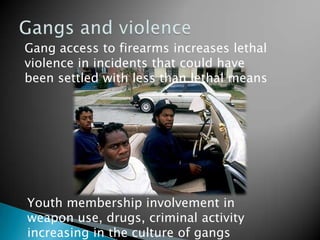
The absence of positive male role models is best predictor of gang membershipGangs and violenceGang access to firearms increases lethal violence in incidents that could have been settled with less than lethal meansYouth membership involvement in weapon use, drugs, criminal activity increasing in the culture of gangs
BLOODSFounded in Los Angeles in 1970s
Initially formed to compete with the CRIPS
Identified by the color red
Made up of various sub groups known as “sets”
Each differ depending on colors, clothing, operations, political ideas
Have branched out across the US, including throughout the US military

Sociological Study Of

  • 1.
  • 2.
    Gangs- socially excluded,alienated individuals loosely organized with informal leadershipGangs have been part of US culture since 19th century
  • 3.
    Bound by ethnicity,race, social class
  • 4.
    Defined by asystem of rules, rituals, and codes of behavior19th Century GangsGangs were a means of economic survival
  • 5.
    Seen as normaladolescent peer activity from conventional to wild behaviorGangs – (cont’d)Employ distinctive symbols:Style/color of dressHand signsTattoosGraffiti
  • 6.
    Girls in Gangs-Usually have been a runaway at least once due to family issues Such as drug addiction, physical abuse, parent or parents in jail
  • 7.
    GangsServe as asubstitute family to members that join
  • 8.
    Consist of asense of empowerment amongst members defending a neighborhood, street, or territory
  • 9.
    Financial gain throughviolent acts, criminal and delinquentGangs- (cont’d)Prevalent in neighborhoods where community network is weak
  • 10.
    The absence ofpositive male role models is best predictor of gang membershipGangs and violenceGang access to firearms increases lethal violence in incidents that could have been settled with less than lethal meansYouth membership involvement in weapon use, drugs, criminal activity increasing in the culture of gangs
  • 11.
    BLOODSFounded in LosAngeles in 1970s
  • 12.
    Initially formed tocompete with the CRIPS
  • 13.
  • 14.
    Made up ofvarious sub groups known as “sets”
  • 15.
    Each differ dependingon colors, clothing, operations, political ideas
  • 16.
    Have branched outacross the US, including throughout the US military