1
BEST PRACTICES FOR IMPLEMENTING A
SOCIAL MEDIA PLAN
Michelle Harper
michelle.lynn.harper@gmail.com
2
Social Media has become all pervasive —
72% of all internet users are active on social
Social media has become part of our everyday lives
• 74% of B2B marketing companies use Twitter to
distribute content (Content Marketing Institute)
• 58% of marketers who have been using social media
for more than 3 years report it has helped them
improve sales (Social Media Examiner)
Social is now the top of internet activity: Americans
spend more time on social media than any other major
Internet activity, including email.
Social-mobile rules: 60% or so of social media time is
spent not on not on desktop computers but on
smartphones and tablets.
3
• Low engagement/following
• Brand and sub-brand misalignment/confusion (customer-
facing)
• Brand inconsistency and low visibility on major channels
#1 Lack of a Social Plan
4
Step 1. Identify your Target Audience and Their
Channels.
Step 2. Consolidate and Link Your Social Profiles for
Amplification.
Step 3: Work with Partners and Influencers
Goal: A social footprint that is strategic,
centralized, and sustained
5
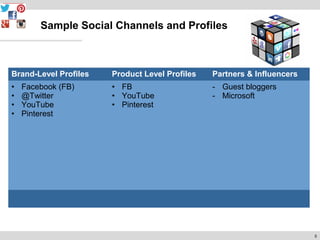
Brand-Level Profiles Product Level Profiles Partners & Influencers
• Facebook (FB)
• @Twitter
• YouTube
• Pinterest
• FB
• YouTube
• Pinterest
- Guest bloggers
- Microsoft
Sample Social Channels and Profiles
6
Channel Tactical Priorities Rationale (why?) Purpose/Goal
Brand communication, product
awareness, consumer
engagement/loyalty
Audience size and visibility,
revenue generation potential
Educate customers;
establish brand and
product voice
Channel maintenance and
account consolidation; content
curation; evaluate performance
for future strategic applications
Inherited profiles, inconsistent
content, divided user
community
Broaden reach;
share content;
improve SEO
Event enhancement, technique
refinement, portfolio building
Ease of use, accessibility,
popularity within industry
Industry/customer
engagement;
content syndication
Cross-channel engagement,
content syndication, activate
contributors
Educational presence, growing
community, continuous
sharing, new markets
(homeschool)
Teacher
engagement;
expanded content
reach
Targeting Channels and Tactical Priorities
7
Content Strategy
• Org. announcements
• Thought leadership
artifacts/events
• Partnership and affiliate
activities
• Major product
announcements
• Contest kickoffs
• Key sales campaigns
• Market news/media
•7
• Product announcements
• Contests and promotions
• Training events and resources
• Segment-specific news and
media
• Author awareness/updates
• Articles, reviews, samples
Brand-level profiles Product-level profiles
8
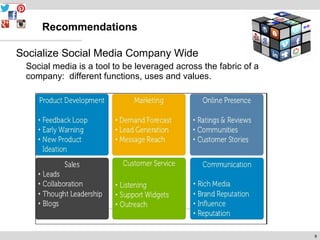
Recommendations
Socialize Social Media Company Wide
Social media is a tool to be leveraged across the fabric of a
company: different functions, uses and values.
9
Recommendations
• Recruit SMEs to be content producers,
moderators, etc
• Facilitate employees and co-workers in
the Use of Social Media
• Amplify through the use of partners
10
.
Create a Listening Culture
To Create a Winning Culture

Socialmediaplan (2)

  • 1.
    1 BEST PRACTICES FORIMPLEMENTING A SOCIAL MEDIA PLAN Michelle Harper michelle.lynn.harper@gmail.com
  • 2.
    2 Social Media hasbecome all pervasive — 72% of all internet users are active on social Social media has become part of our everyday lives • 74% of B2B marketing companies use Twitter to distribute content (Content Marketing Institute) • 58% of marketers who have been using social media for more than 3 years report it has helped them improve sales (Social Media Examiner) Social is now the top of internet activity: Americans spend more time on social media than any other major Internet activity, including email. Social-mobile rules: 60% or so of social media time is spent not on not on desktop computers but on smartphones and tablets.
  • 3.
    3 • Low engagement/following •Brand and sub-brand misalignment/confusion (customer- facing) • Brand inconsistency and low visibility on major channels #1 Lack of a Social Plan
  • 4.
    4 Step 1. Identifyyour Target Audience and Their Channels. Step 2. Consolidate and Link Your Social Profiles for Amplification. Step 3: Work with Partners and Influencers Goal: A social footprint that is strategic, centralized, and sustained
  • 5.
    5 Brand-Level Profiles ProductLevel Profiles Partners & Influencers • Facebook (FB) • @Twitter • YouTube • Pinterest • FB • YouTube • Pinterest - Guest bloggers - Microsoft Sample Social Channels and Profiles
  • 6.
    6 Channel Tactical PrioritiesRationale (why?) Purpose/Goal Brand communication, product awareness, consumer engagement/loyalty Audience size and visibility, revenue generation potential Educate customers; establish brand and product voice Channel maintenance and account consolidation; content curation; evaluate performance for future strategic applications Inherited profiles, inconsistent content, divided user community Broaden reach; share content; improve SEO Event enhancement, technique refinement, portfolio building Ease of use, accessibility, popularity within industry Industry/customer engagement; content syndication Cross-channel engagement, content syndication, activate contributors Educational presence, growing community, continuous sharing, new markets (homeschool) Teacher engagement; expanded content reach Targeting Channels and Tactical Priorities
  • 7.
    7 Content Strategy • Org.announcements • Thought leadership artifacts/events • Partnership and affiliate activities • Major product announcements • Contest kickoffs • Key sales campaigns • Market news/media •7 • Product announcements • Contests and promotions • Training events and resources • Segment-specific news and media • Author awareness/updates • Articles, reviews, samples Brand-level profiles Product-level profiles
  • 8.
    8 Recommendations Socialize Social MediaCompany Wide Social media is a tool to be leveraged across the fabric of a company: different functions, uses and values.
  • 9.
    9 Recommendations • Recruit SMEsto be content producers, moderators, etc • Facilitate employees and co-workers in the Use of Social Media • Amplify through the use of partners
  • 10.
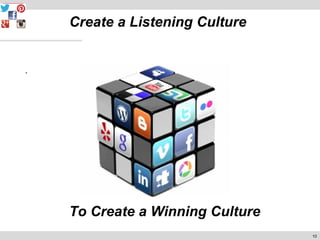
    10 . Create a ListeningCulture To Create a Winning Culture

Editor's Notes

  • #3 Social Media has become all pervasive—72% of all internet users are active on social media. This change in behavior has forever altered the customer buying journey. Smart companies spend their time listening to the conversations that customers are having with each other. This is what social media is really about, listening to and engaging with customers. It is not another mechanism just to push out content through blogs, Twitter, or Facebook but a reciprocal conversation. Having a clearly defined social media strategy is no longer optionalfor organizations– it is essential.   93% of B2B buyers start their search for a product or service on a search engine, not a company website. Search engines are the new home page for companies. While organizations might update their website monthly, they will often post to a blog once or twice a week and Facebook or Twitter once or twice a day. Social media creates opportunities to show up in customer’s search results because search engines favor fresh content. The top benefit of social media is generating more business exposure, followed by increasing web traffic and providing marketplace insight. Several studies show that 90% of people trust recommendations from known people and only 70% trust brands websites. Social media gives your organization a chance to be the “known” brand and to increase customer trust. It humanizes your company, allowing your experts in design, sales, product marketing and product management to form relationships with customers, participate in online discussions, and helps your organization build a reputation as a thought leader. It’s an old adage but true: People buy from people they like and with whom they engaged. As the world shifts a transaction to an engagement model, organizations and product marketers must discover how to mix social media into marketing efforts, create content for social media, leverage key social media sites, and use social media in the sales cycle from product launch to capturing sales leads. This research brief provides marketers with actionable strategies for creating a successful social media program. Read more: http://www.businessinsider.com/social-media-engagement-statistics-2013-12#ixzz39SJInXeA
  • #5 Raise Awareness Demonstrates Thought Leadership Generates Leads
  • #6 Channels: Facebook, YouTube. Pinterest, Blog, Webinars, Twitter The first step is to identify and quantify social profiles by counting fans, followers, and likes. Engagement can be measured by quantifying likes, comments, shares, retweets, mentions, replies, or clicks. How recently have these profiles have been populated with fresh content? A constant stream of fresh, relevant content will attract customer engagement and loyalty.
  • #10 Bottom Line: Create a Listening Culture
  • #11 Arguably, you are not taking advantage of the reciprocal and amplification value of social media unless you incorporate into other marketing activities. For instance, if your organization is hosting a webinar, the webinar should be promoted on social media with a registration link. Registrants can be funneled back to the email marketing department to ensure that they receive company updates and other email communication regularly. Social media can also be invaluable in supporting a product launch or recruiting participants for a pilot or a focus group. Finally, thanks to social media, organizations now have greater access to more publicly available information about customers than ever before. Don’t forget the greatest opportunity of social media and that is to turn customer insights into actionable business data.