Chapter 4
Socialization
Socialization
 Socialization is knowing a culture and being
able to live in it. It is also a process wherein
individuals learn and get new ideas from
others surrounding them.
Internalization
 The process in which people take as their
own and accept as binding the norms,
values, beliefs, and language needed to
participate in the larger community.
Nature and Nurture
 The process of socialization involves both.
 Nature is the human genetic makeup or
biological inheritance.
 Nurture is the environment or the
interaction experiences that make up every
individual’s life.
Primary Groups
 A primary group is a social group
characterized by face-to-face contact and
strong emotional ties among its members.
 Families are key example.
Other Agents of Socialization
 School
 Has a mandate to socialize children to societal
norms
 Functionalists indicate schools fulfill function of
socialization leading to social cohesion
 Conflict theorists suggest schools reinforce
divisive aspects of social classes (e.g. Teachers
praising boys may reinforce sexist attitudes)
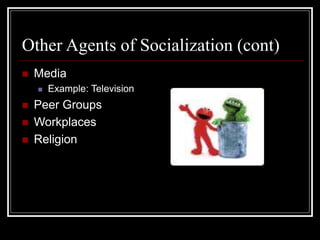
Other Agents of Socialization (cont)
 Media
 Example: Television
 Peer Groups
 Workplaces
 Religion
Social Interactions
 Everyday events in which at least two
people communicate and respond through
language and symbolic gestures to affect
one another’s behavior and thinking.
Context and Content
 When sociologists study social interaction,
they seek to understand and explain the
forces of context and content.
Context
 The larger historical circumstances and
social forces that bring people together for
social interaction.
Content
 The cultural frameworks (norms, values,
beliefs, material culture) that guide social
interactions, specifically behavior dialogue,
and interpretations of events.
Social Status
 Social status A position in a social
structure.
 Social structure Two or more people
occupying social statuses and enacting
roles.
Social Roles
 A role is the behavior expected of a status
in relationship to another status.
 People occupy statuses but they enact
roles.
 A role set is an array of roles.
Rights and Obligations
 Role expectations include both rights and
obligations.
 Rights are the behaviors that a person
assuming a role can demand or expect
from others.
 Obligations are the relationship and
behavior that the person enacting a role
must assume toward others in a particular
status.
Role Strain and Conflict
 Role strain is a predicament in which
contradictory or conflicting expectations are
associated with a single role that a person
is enacting.
 Role conflict is a predicament in which the
expectations associated with two or more
roles in a role set contradict one another.
The Dramaturgical Model
 A model in which social interaction is
viewed as though it were theater, people as
though they were actors, and roles as
though they were performances presented
before an audience in a particular setting.
Impression Management
 The process by which people in social
situations manage the setting and their
dress, words, and gestures to correspond
to the impressions they are trying to make
or the image they are trying to project.
Staging Behavior
 The division between front stage and back
stage is found in nearly every social setting.
Front Stage
 The region where people take care to
create an maintain the images and
behavior an audience has come to expect.
Back Stage
 The region out of an audience’s sight
where individuals can do things that would
be inappropriate or unexpected on the front
stage.
Quick Quiz
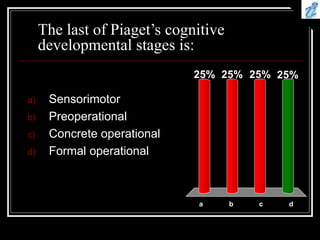
The last of Piaget’s cognitive
developmental stages is:
a b c d
25% 25%
25%
25%
a) Sensorimotor
b) Preoperational
c) Concrete operational
d) Formal operational
Answer: d
 The formal operational stage is the last of
the cognitive developmental stages that
Piaget defined.
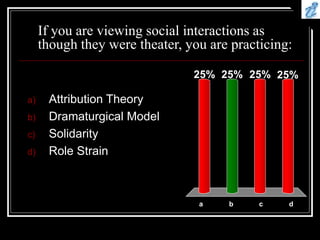
If you are viewing social interactions as
though they were theater, you are practicing:
a b c d
25% 25%
25%
25%
a) Attribution Theory
b) Dramaturgical Model
c) Solidarity
d) Role Strain
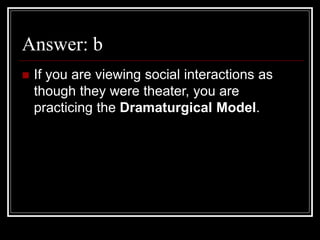
Answer: b
 If you are viewing social interactions as
though they were theater, you are
practicing the Dramaturgical Model.
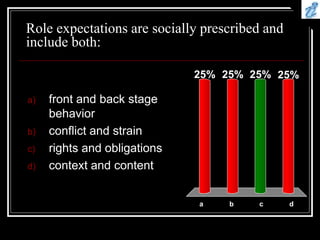
Role expectations are socially prescribed and
include both:
a b c d
25% 25%
25%
25%
a) front and back stage
behavior
b) conflict and strain
c) rights and obligations
d) context and content
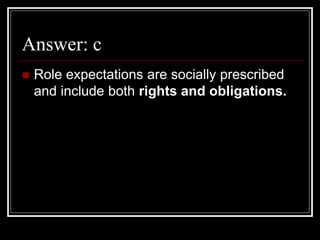
Answer: c
 Role expectations are socially prescribed
and include both rights and obligations.
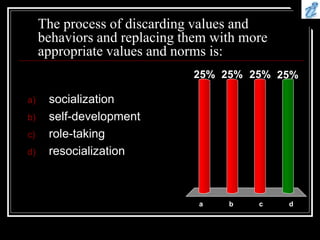
The process of discarding values and
behaviors and replacing them with more
appropriate values and norms is:
a b c d
25% 25%
25%
25%
a) socialization
b) self-development
c) role-taking
d) resocialization
Answer: d
 Resocialization is the process of
discarding values and behaviors and
replacing them with more appropriate
values and norms.
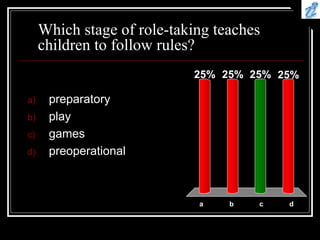
Which stage of role-taking teaches
children to follow rules?
a b c d
25% 25%
25%
25%
a) preparatory
b) play
c) games
d) preoperational
Answer: c
 The games stage of role-taking teaches
children to follow rules.

Socialization.ppt

  • 1.
  • 2.
    Socialization  Socialization isknowing a culture and being able to live in it. It is also a process wherein individuals learn and get new ideas from others surrounding them.
  • 3.
    Internalization  The processin which people take as their own and accept as binding the norms, values, beliefs, and language needed to participate in the larger community.
  • 4.
    Nature and Nurture The process of socialization involves both.  Nature is the human genetic makeup or biological inheritance.  Nurture is the environment or the interaction experiences that make up every individual’s life.
  • 5.
    Primary Groups  Aprimary group is a social group characterized by face-to-face contact and strong emotional ties among its members.  Families are key example.
  • 6.
    Other Agents ofSocialization  School  Has a mandate to socialize children to societal norms  Functionalists indicate schools fulfill function of socialization leading to social cohesion  Conflict theorists suggest schools reinforce divisive aspects of social classes (e.g. Teachers praising boys may reinforce sexist attitudes)
  • 7.
    Other Agents ofSocialization (cont)  Media  Example: Television  Peer Groups  Workplaces  Religion
  • 8.
    Social Interactions  Everydayevents in which at least two people communicate and respond through language and symbolic gestures to affect one another’s behavior and thinking.
  • 9.
    Context and Content When sociologists study social interaction, they seek to understand and explain the forces of context and content.
  • 10.
    Context  The largerhistorical circumstances and social forces that bring people together for social interaction.
  • 11.
    Content  The culturalframeworks (norms, values, beliefs, material culture) that guide social interactions, specifically behavior dialogue, and interpretations of events.
  • 12.
    Social Status  Socialstatus A position in a social structure.  Social structure Two or more people occupying social statuses and enacting roles.
  • 13.
    Social Roles  Arole is the behavior expected of a status in relationship to another status.  People occupy statuses but they enact roles.  A role set is an array of roles.
  • 14.
    Rights and Obligations Role expectations include both rights and obligations.  Rights are the behaviors that a person assuming a role can demand or expect from others.  Obligations are the relationship and behavior that the person enacting a role must assume toward others in a particular status.
  • 15.
    Role Strain andConflict  Role strain is a predicament in which contradictory or conflicting expectations are associated with a single role that a person is enacting.  Role conflict is a predicament in which the expectations associated with two or more roles in a role set contradict one another.
  • 16.
    The Dramaturgical Model A model in which social interaction is viewed as though it were theater, people as though they were actors, and roles as though they were performances presented before an audience in a particular setting.
  • 17.
    Impression Management  Theprocess by which people in social situations manage the setting and their dress, words, and gestures to correspond to the impressions they are trying to make or the image they are trying to project.
  • 18.
    Staging Behavior  Thedivision between front stage and back stage is found in nearly every social setting.
  • 19.
    Front Stage  Theregion where people take care to create an maintain the images and behavior an audience has come to expect.
  • 20.
    Back Stage  Theregion out of an audience’s sight where individuals can do things that would be inappropriate or unexpected on the front stage.
  • 21.
  • 22.
    The last ofPiaget’s cognitive developmental stages is: a b c d 25% 25% 25% 25% a) Sensorimotor b) Preoperational c) Concrete operational d) Formal operational
  • 23.
    Answer: d  Theformal operational stage is the last of the cognitive developmental stages that Piaget defined.
  • 24.
    If you areviewing social interactions as though they were theater, you are practicing: a b c d 25% 25% 25% 25% a) Attribution Theory b) Dramaturgical Model c) Solidarity d) Role Strain
  • 25.
    Answer: b  Ifyou are viewing social interactions as though they were theater, you are practicing the Dramaturgical Model.
  • 26.
    Role expectations aresocially prescribed and include both: a b c d 25% 25% 25% 25% a) front and back stage behavior b) conflict and strain c) rights and obligations d) context and content
  • 27.
    Answer: c  Roleexpectations are socially prescribed and include both rights and obligations.
  • 28.
    The process ofdiscarding values and behaviors and replacing them with more appropriate values and norms is: a b c d 25% 25% 25% 25% a) socialization b) self-development c) role-taking d) resocialization
  • 29.
    Answer: d  Resocializationis the process of discarding values and behaviors and replacing them with more appropriate values and norms.
  • 30.
    Which stage ofrole-taking teaches children to follow rules? a b c d 25% 25% 25% 25% a) preparatory b) play c) games d) preoperational
  • 31.
    Answer: c  Thegames stage of role-taking teaches children to follow rules.