



ATMOSPHERE
•
•
•
•

From the word ‘atmo’ which means gas or vapor
The layer of gases surrounding the earth
Makes life possible on earth
Gives man air, water, heat, and protects him
against harmful rays of the sun and against
meteorites
• Consists of 78 percent nitrogen, 21 percent
oxygen, 0.93 percent argon , 0.03 percent carbon
dioxide and 0.04 percent of other gases.
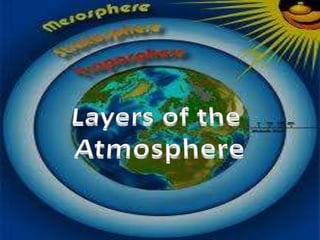
Troposphere
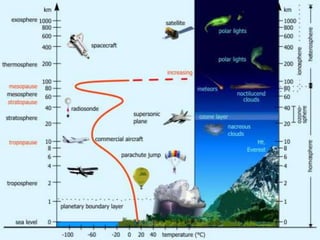
• The troposphere is the first layer above the surface and
contains half of the Earth's atmosphere. Weather occurs in
this layer.
• The troposphere begins at the Earth's surface and extends
up to 4-12 miles (6-20 km) high. This is where we live. As
the gases in this layer decrease with height, the air become
thinner. Therefore, the temperature in the troposphere also
decreases with height. As you climb higher, the
temperature drops from about 62°F (17°C) to -60°F (-51°C).
Almost all weather occurs in this region.
Stratosphere
• Many jet aircrafts fly in the stratosphere because
it is very stable. Also, the ozone layer absorbs
harmful rays from the Sun.

• The Stratosphere extends from the tropopause
up to 31 miles above the Earth's surface. This
layer holds 19 percent of the atmosphere's gases
and but very little water vapor.
Mesosphere
• Meteors or rock fragments burn up in the
mesosphere.
• The mesosphere extends from the stratopause to
about 53 miles (85 km) above the earth. The
gases, including the oxygen molecules, continue
to become thinner and thinner with height. As
such, the effect of the warming by ultraviolet
radiation also becomes less and less leading to a
decrease in temperature with height.
Thermosphere
• The thermosphere is a layer with auroras. It is
also where the space shuttle orbits.
• The Thermosphere extends from the
mesopause to 430 miles (690 km) above the
earth. This layer is known as the upper
atmosphere.
Exosphere
• The atmosphere merges into space in the extremely
thin exosphere. This is the upper limit of our
atmosphere.
• The Exosphere is the outermost layer of the
atmosphere and extends from the thermopause to
6200 miles (10,000 km) above the earth. In this layer,
atoms and molecules escape into space and satellites
orbit the earth. The transition boundary which
separates the exosphere from the thermosphere below
it is called the thermopause.
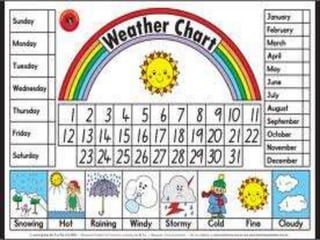
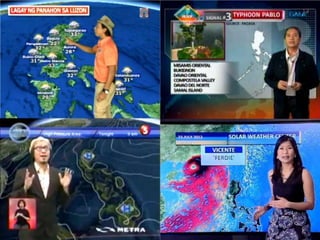
Weather
• A local and temporary condition in
the air or the atmosphere.
• Heat, moisture and the wind in
different combinations produce the
different atmospheric conditions
known as weather
Climate
• Associated with place
• Includes daily, seasonal, and yearly variations
in the weather
Elements of Climate
1. Temperature- refers to the quantity of heat present n a
particular mass.
2. Precipitation- refers to the descent of all forms of
moisture from the atmosphere

3. Humidity- refers to the presence of water vapor in the air
4. Atmospheric Pressure- refers to the mass weight of a
column of air above a given point
5. Wind- refers to the air in horizontal motion
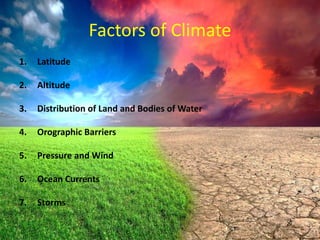
Factors of Climate
1.

Latitude

2.

Altitude

3.

Distribution of Land and Bodies of Water

4.

Orographic Barriers

5.

Pressure and Wind

6.

Ocean Currents

7.

Storms
Brought to you by:

Geography 2 Report- The Earth's Atmosphere presentation

  • 8.
    ATMOSPHERE • • • • From the word‘atmo’ which means gas or vapor The layer of gases surrounding the earth Makes life possible on earth Gives man air, water, heat, and protects him against harmful rays of the sun and against meteorites • Consists of 78 percent nitrogen, 21 percent oxygen, 0.93 percent argon , 0.03 percent carbon dioxide and 0.04 percent of other gases.
  • 11.
    Troposphere • The troposphereis the first layer above the surface and contains half of the Earth's atmosphere. Weather occurs in this layer. • The troposphere begins at the Earth's surface and extends up to 4-12 miles (6-20 km) high. This is where we live. As the gases in this layer decrease with height, the air become thinner. Therefore, the temperature in the troposphere also decreases with height. As you climb higher, the temperature drops from about 62°F (17°C) to -60°F (-51°C). Almost all weather occurs in this region.
  • 12.
    Stratosphere • Many jetaircrafts fly in the stratosphere because it is very stable. Also, the ozone layer absorbs harmful rays from the Sun. • The Stratosphere extends from the tropopause up to 31 miles above the Earth's surface. This layer holds 19 percent of the atmosphere's gases and but very little water vapor.
  • 13.
    Mesosphere • Meteors orrock fragments burn up in the mesosphere. • The mesosphere extends from the stratopause to about 53 miles (85 km) above the earth. The gases, including the oxygen molecules, continue to become thinner and thinner with height. As such, the effect of the warming by ultraviolet radiation also becomes less and less leading to a decrease in temperature with height.
  • 14.
    Thermosphere • The thermosphereis a layer with auroras. It is also where the space shuttle orbits. • The Thermosphere extends from the mesopause to 430 miles (690 km) above the earth. This layer is known as the upper atmosphere.
  • 15.
    Exosphere • The atmospheremerges into space in the extremely thin exosphere. This is the upper limit of our atmosphere. • The Exosphere is the outermost layer of the atmosphere and extends from the thermopause to 6200 miles (10,000 km) above the earth. In this layer, atoms and molecules escape into space and satellites orbit the earth. The transition boundary which separates the exosphere from the thermosphere below it is called the thermopause.
  • 19.
    Weather • A localand temporary condition in the air or the atmosphere. • Heat, moisture and the wind in different combinations produce the different atmospheric conditions known as weather
  • 21.
    Climate • Associated withplace • Includes daily, seasonal, and yearly variations in the weather
  • 22.
    Elements of Climate 1.Temperature- refers to the quantity of heat present n a particular mass. 2. Precipitation- refers to the descent of all forms of moisture from the atmosphere 3. Humidity- refers to the presence of water vapor in the air 4. Atmospheric Pressure- refers to the mass weight of a column of air above a given point 5. Wind- refers to the air in horizontal motion
  • 23.
    Factors of Climate 1. Latitude 2. Altitude 3. Distributionof Land and Bodies of Water 4. Orographic Barriers 5. Pressure and Wind 6. Ocean Currents 7. Storms
  • 26.