Downloaded 51 times
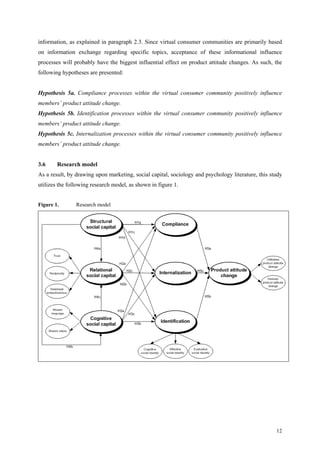
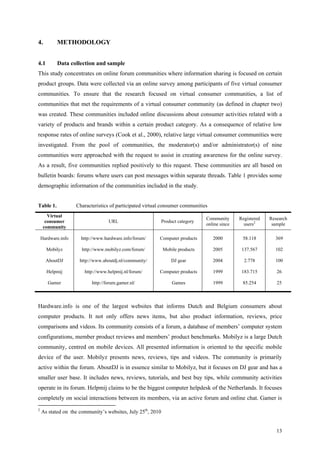
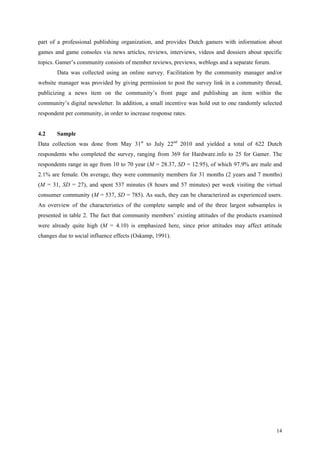
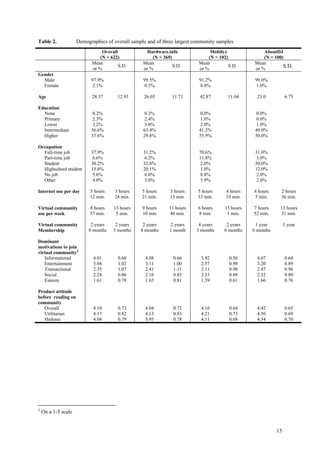
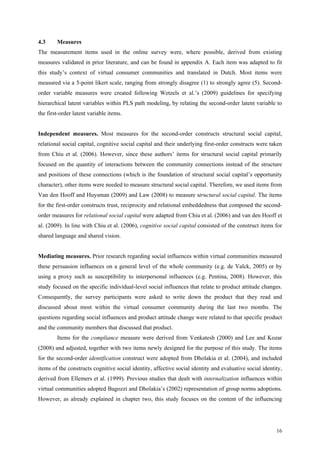
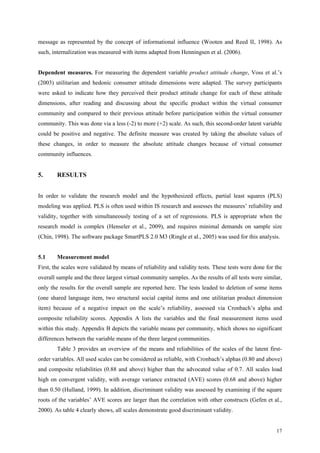
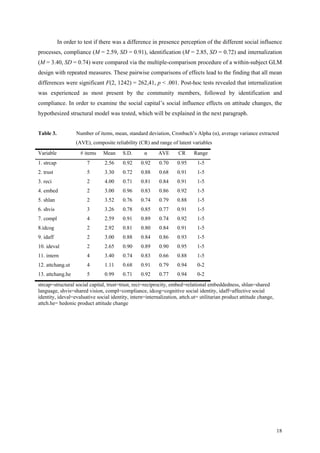
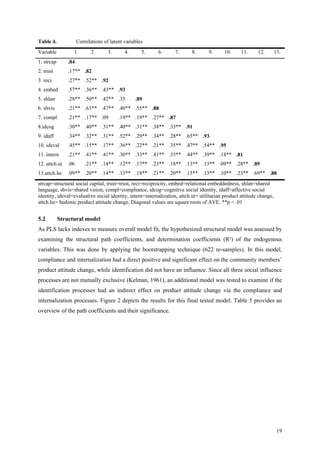
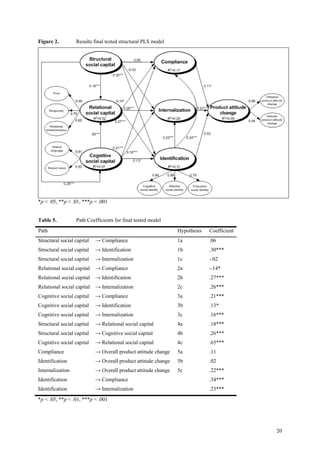
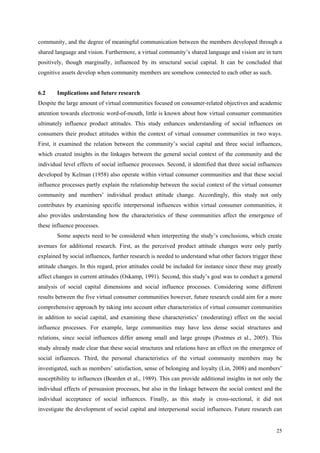
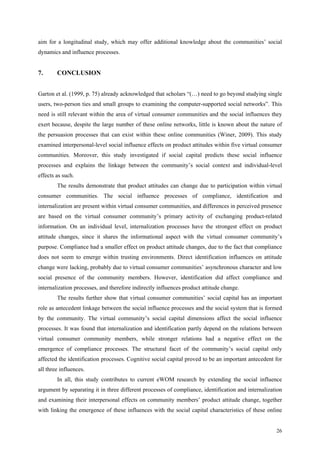

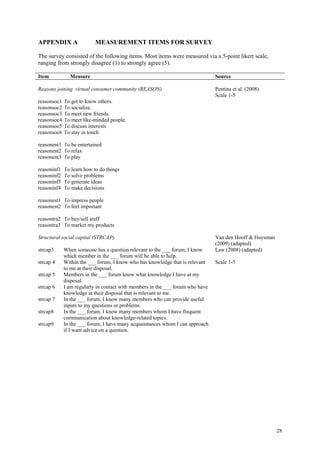
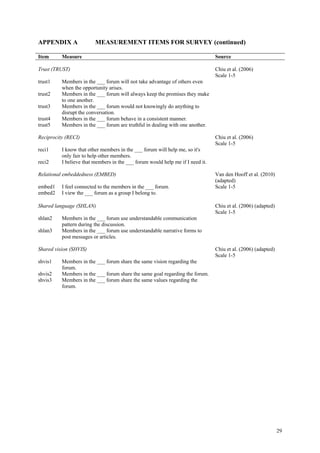
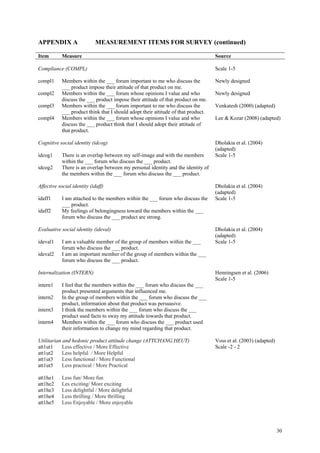
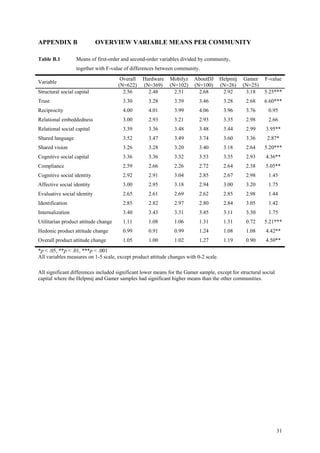

This thesis investigates how social influence within virtual consumer communities affects product attitudes, emphasizing processes of compliance, identification, and internalization, with social capital as a key antecedent. The research reveals that internalization has the strongest impact on attitude change, followed by compliance, while identification shows only an indirect effect. Data collected from five communities indicates that the social context of these communities significantly shapes interpersonal persuasion processes and product attitudes.


