School of Commoning cic
  Education for Commons Culture & Social Renewal


Commons Workshops
         on behalf of Schumacher North
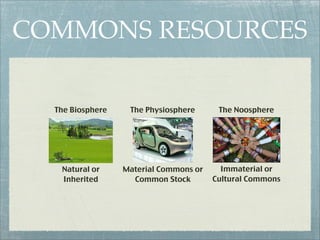
COMMONS RESOURCES

  The Biosphere    The Physiosphere      The Noosphere


   Natural or     Material Commons or     Immaterial or
   Inherited        Common Stock        Cultural Commons
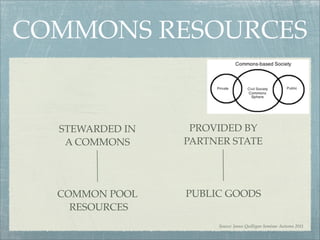
COMMONS RESOURCES


  STEWARDED IN    PROVIDED BY
   A COMMONS     PARTNER STATE


  COMMON POOL    PUBLIC GOODS
    RESOURCES
                      Source: James Quilligan Seminar Autumn 2011
KEY FEATURES

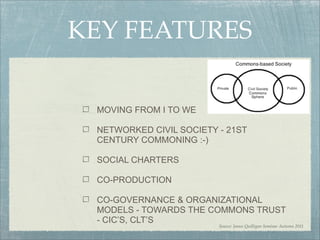
 MOVING FROM I TO WE

 NETWORKED CIVIL SOCIETY - 21ST
 CENTURY COMMONING :-)

 SOCIAL CHARTERS

 CO-PRODUCTION

 CO-GOVERNANCE & ORGANIZATIONAL
 MODELS - TOWARDS THE COMMONS TRUST
 - CIC’S, CLT’S
                         Source: James Quilligan Seminar Autumn 2011
KEY FEATURES


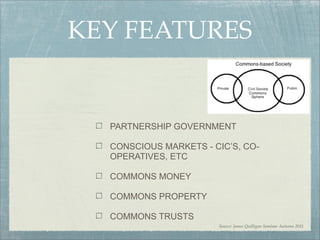
  PARTNERSHIP GOVERNMENT

  CONSCIOUS MARKETS - CIC’S, CO-
  OPERATIVES, ETC

  COMMONS MONEY

  COMMONS PROPERTY

  COMMONS TRUSTS
                       Source: James Quilligan Seminar Autumn 2011
PRINCIPLES


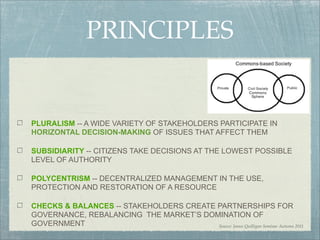
PLURALISM -- A WIDE VARIETY OF STAKEHOLDERS PARTICIPATE IN
HORIZONTAL DECISION-MAKING OF ISSUES THAT AFFECT THEM

SUBSIDIARITY -- CITIZENS TAKE DECISIONS AT THE LOWEST POSSIBLE
LEVEL OF AUTHORITY

POLYCENTRISM -- DECENTRALIZED MANAGEMENT IN THE USE,
PROTECTION AND RESTORATION OF A RESOURCE

CHECKS & BALANCES -- STAKEHOLDERS CREATE PARTNERSHIPS FOR
GOVERNANCE, REBALANCING THE MARKET’S DOMINATION OF
GOVERNMENT                               Source: James Quilligan Seminar Autumn 2011
PRINCIPLES


   RESOURCE USERS

BECOME THE PRODUCERS

OF THEIR OWN RESOURCES
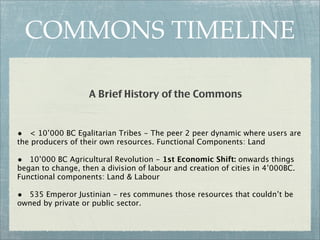
COMMONS TIMELINE

                   A Brief History of the Commons


• < 10’000 BC Egalitarian Tribes - The peer 2 peer dynamic where users are
the producers of their own resources. Functional Components: Land

• 10’000 BC Agricultural Revolution - 1st Economic Shift: onwards things
began to change, then a division of labour and creation of cities in 4’000BC.
Functional components: Land & Labour

• 535 Emperor Justinian - res communes those resources that couldn’t be
owned by private or public sector.
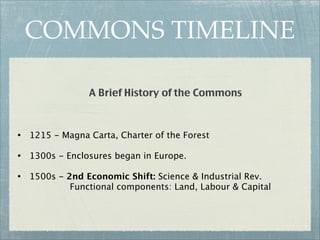
COMMONS TIMELINE

                A Brief History of the Commons


• 1215 - Magna Carta, Charter of the Forest
• 1300s - Enclosures began in Europe.
• 1500s - 2nd Economic Shift: Science & Industrial Rev.
           Functional components: Land, Labour & Capital
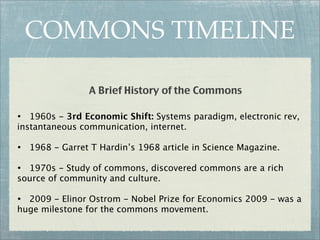
COMMONS TIMELINE

                A Brief History of the Commons

• 1960s - 3rd Economic Shift: Systems paradigm, electronic rev,
instantaneous communication, internet.

• 1968 - Garret T Hardin’s 1968 article in Science Magazine.
• 1970s - Study of commons, discovered commons are a rich
source of community and culture.

• 2009 - Elinor Ostrom - Nobel Prize for Economics 2009 - was a
huge milestone for the commons movement.
THE END OF AN ERA


            When we look at the long history
            of the commons we can see that:

Todays economy is not a recession. It is the end of an era
EXAMPLES - LOCAL

                    COMMUNITY BILL OF RIGHTS

            Community Environmental Legal Defense Fund (CELDF)

             e.g, Ecuador adding Rights for Nature to its Constitution

e.g., Pittsburgh stripping drilling corporations of corporate constitutional “rights,”
                          such as corporate “personhood”
EXAMPLES - LOCAL


 FOOD COMMONS / FOOD SOVEREIGNTY
EXAMPLES - LOCAL


  COMMUNITY MANAGED FORESTS
EXAMPLES - LOCAL


 COMMUNITY MANAGED WATER SYSTEMS
EXAMPLES - LOCAL


    TRANSITION TOWNS
EXAMPLES - REGIONAL


      WANA FORUM CHARTER
EXAMPLES - REGIONAL


    GREAT LAKES COMMONS TRUSTS
EXAMPLES - REGIONAL


     ALASKA PERMANENT FUND
EXAMPLES - GLOBAL
          (PROPOSED)


   EARTH CLIMATE COMMONS TRUST
EXAMPLES - GLOBAL
              (PROPOSED)


 GLOBAL FINANCING OF COMMONS RESTORATION
EXAMPLES - GLOCAL


 OPEN SOURCE, FREE SOFTWARE, OPEN DESIGN
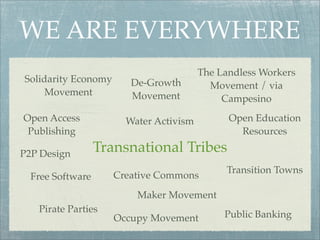
WE ARE EVERYWHERE
                                        The Landless Workers
Solidarity Economy      De-Growth         Movement / via
     Movement           Movement             Campesino
Open Access            Water Activism         Open Education
 Publishing                                     Resources

P2P Design        Transnational Tribes
                                             Transition Towns
  Free Software      Creative Commons
                         Maker Movement
   Pirate Parties
                     Occupy Movement         Public Banking

So c schumacher north workshop

  • 1.
    School of Commoningcic Education for Commons Culture & Social Renewal Commons Workshops on behalf of Schumacher North
  • 2.
    COMMONS RESOURCES The Biosphere The Physiosphere The Noosphere Natural or Material Commons or Immaterial or Inherited Common Stock Cultural Commons
  • 3.
    COMMONS RESOURCES STEWARDED IN PROVIDED BY A COMMONS PARTNER STATE COMMON POOL PUBLIC GOODS RESOURCES Source: James Quilligan Seminar Autumn 2011
  • 4.
    KEY FEATURES MOVINGFROM I TO WE NETWORKED CIVIL SOCIETY - 21ST CENTURY COMMONING :-) SOCIAL CHARTERS CO-PRODUCTION CO-GOVERNANCE & ORGANIZATIONAL MODELS - TOWARDS THE COMMONS TRUST - CIC’S, CLT’S Source: James Quilligan Seminar Autumn 2011
  • 5.
    KEY FEATURES PARTNERSHIP GOVERNMENT CONSCIOUS MARKETS - CIC’S, CO- OPERATIVES, ETC COMMONS MONEY COMMONS PROPERTY COMMONS TRUSTS Source: James Quilligan Seminar Autumn 2011
  • 6.
    PRINCIPLES PLURALISM -- AWIDE VARIETY OF STAKEHOLDERS PARTICIPATE IN HORIZONTAL DECISION-MAKING OF ISSUES THAT AFFECT THEM SUBSIDIARITY -- CITIZENS TAKE DECISIONS AT THE LOWEST POSSIBLE LEVEL OF AUTHORITY POLYCENTRISM -- DECENTRALIZED MANAGEMENT IN THE USE, PROTECTION AND RESTORATION OF A RESOURCE CHECKS & BALANCES -- STAKEHOLDERS CREATE PARTNERSHIPS FOR GOVERNANCE, REBALANCING THE MARKET’S DOMINATION OF GOVERNMENT Source: James Quilligan Seminar Autumn 2011
  • 7.
    PRINCIPLES RESOURCE USERS BECOME THE PRODUCERS OF THEIR OWN RESOURCES
  • 8.
    COMMONS TIMELINE A Brief History of the Commons • < 10’000 BC Egalitarian Tribes - The peer 2 peer dynamic where users are the producers of their own resources. Functional Components: Land • 10’000 BC Agricultural Revolution - 1st Economic Shift: onwards things began to change, then a division of labour and creation of cities in 4’000BC. Functional components: Land & Labour • 535 Emperor Justinian - res communes those resources that couldn’t be owned by private or public sector.
  • 9.
    COMMONS TIMELINE A Brief History of the Commons • 1215 - Magna Carta, Charter of the Forest • 1300s - Enclosures began in Europe. • 1500s - 2nd Economic Shift: Science & Industrial Rev. Functional components: Land, Labour & Capital
  • 10.
    COMMONS TIMELINE A Brief History of the Commons • 1960s - 3rd Economic Shift: Systems paradigm, electronic rev, instantaneous communication, internet. • 1968 - Garret T Hardin’s 1968 article in Science Magazine. • 1970s - Study of commons, discovered commons are a rich source of community and culture. • 2009 - Elinor Ostrom - Nobel Prize for Economics 2009 - was a huge milestone for the commons movement.
  • 11.
    THE END OFAN ERA When we look at the long history of the commons we can see that: Todays economy is not a recession. It is the end of an era
  • 12.
    EXAMPLES - LOCAL COMMUNITY BILL OF RIGHTS Community Environmental Legal Defense Fund (CELDF) e.g, Ecuador adding Rights for Nature to its Constitution e.g., Pittsburgh stripping drilling corporations of corporate constitutional “rights,” such as corporate “personhood”
  • 13.
    EXAMPLES - LOCAL FOOD COMMONS / FOOD SOVEREIGNTY
  • 14.
    EXAMPLES - LOCAL COMMUNITY MANAGED FORESTS
  • 15.
    EXAMPLES - LOCAL COMMUNITY MANAGED WATER SYSTEMS
  • 16.
    EXAMPLES - LOCAL TRANSITION TOWNS
  • 17.
    EXAMPLES - REGIONAL WANA FORUM CHARTER
  • 18.
    EXAMPLES - REGIONAL GREAT LAKES COMMONS TRUSTS
  • 19.
    EXAMPLES - REGIONAL ALASKA PERMANENT FUND
  • 20.
    EXAMPLES - GLOBAL (PROPOSED) EARTH CLIMATE COMMONS TRUST
  • 21.
    EXAMPLES - GLOBAL (PROPOSED) GLOBAL FINANCING OF COMMONS RESTORATION
  • 22.
    EXAMPLES - GLOCAL OPEN SOURCE, FREE SOFTWARE, OPEN DESIGN
  • 23.
    WE ARE EVERYWHERE The Landless Workers Solidarity Economy De-Growth Movement / via Movement Movement Campesino Open Access Water Activism Open Education Publishing Resources P2P Design Transnational Tribes Transition Towns Free Software Creative Commons Maker Movement Pirate Parties Occupy Movement Public Banking