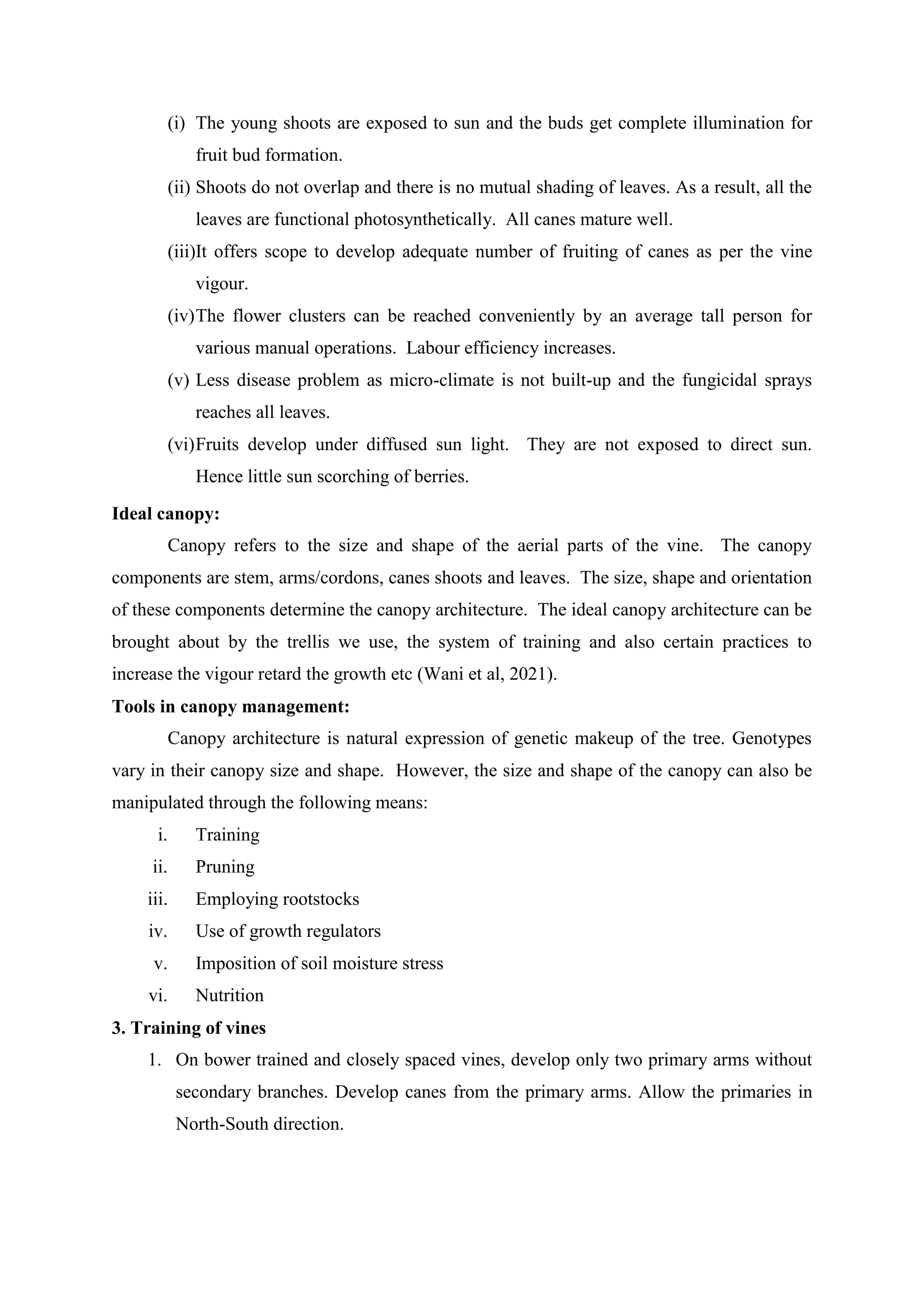
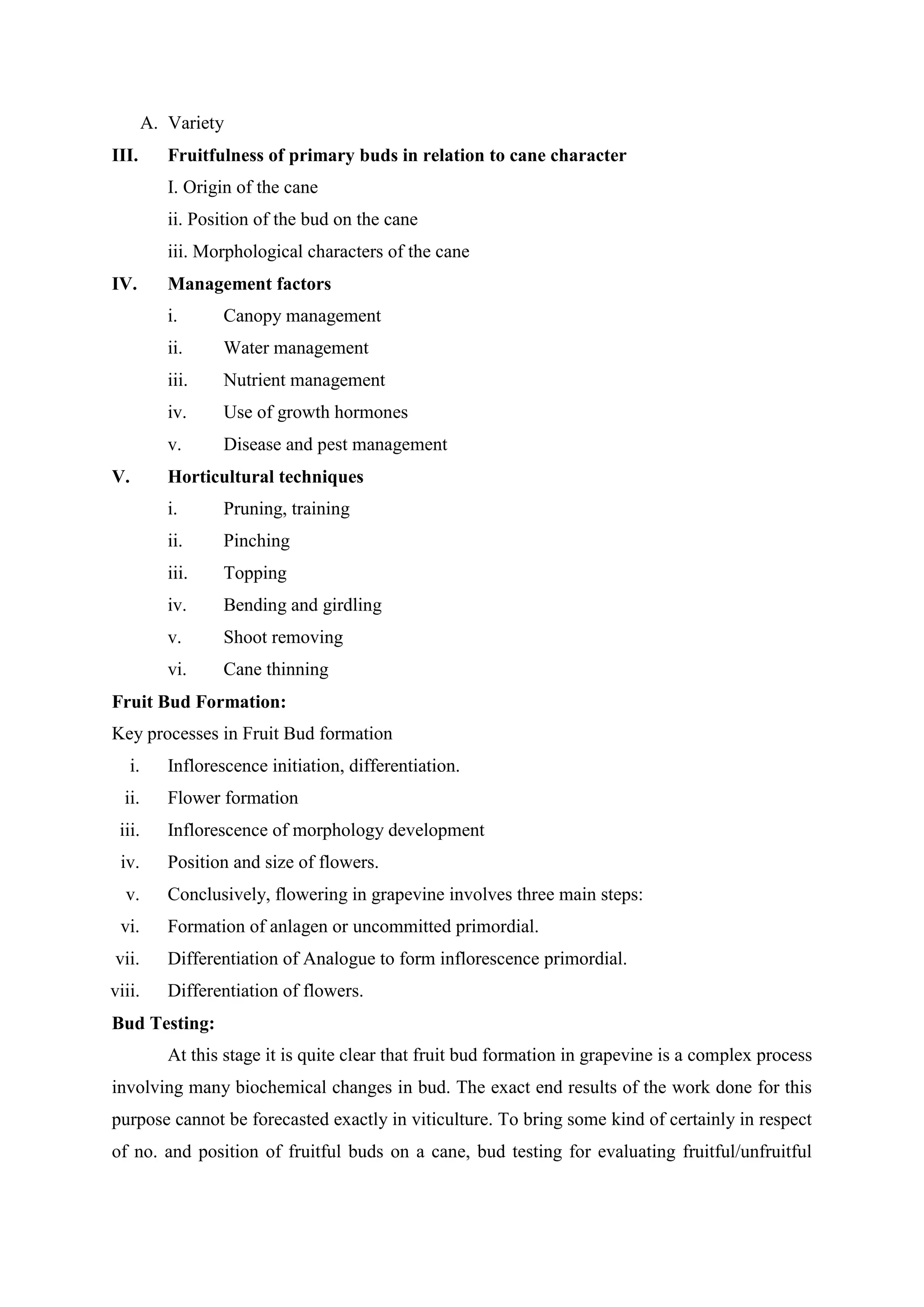
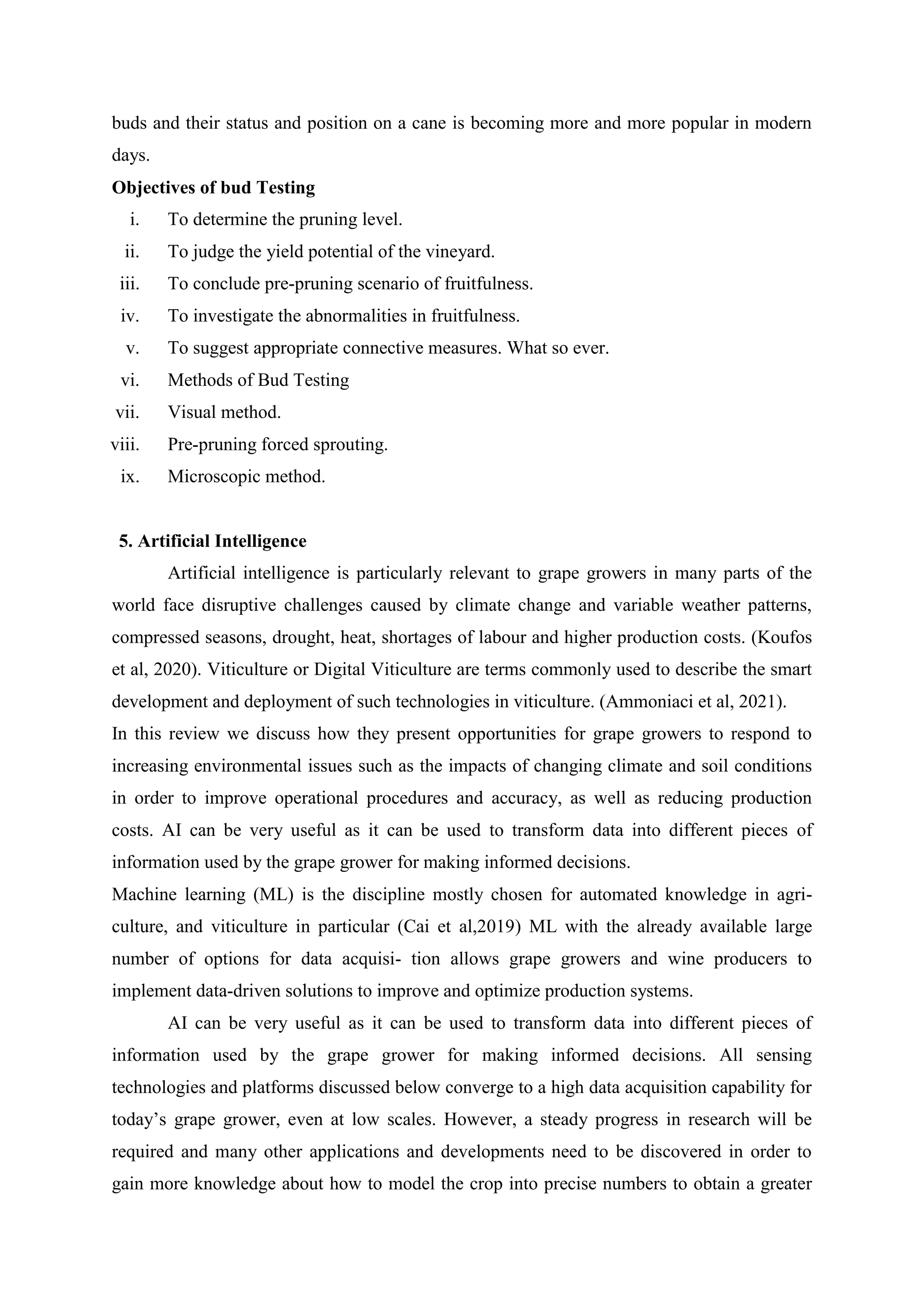
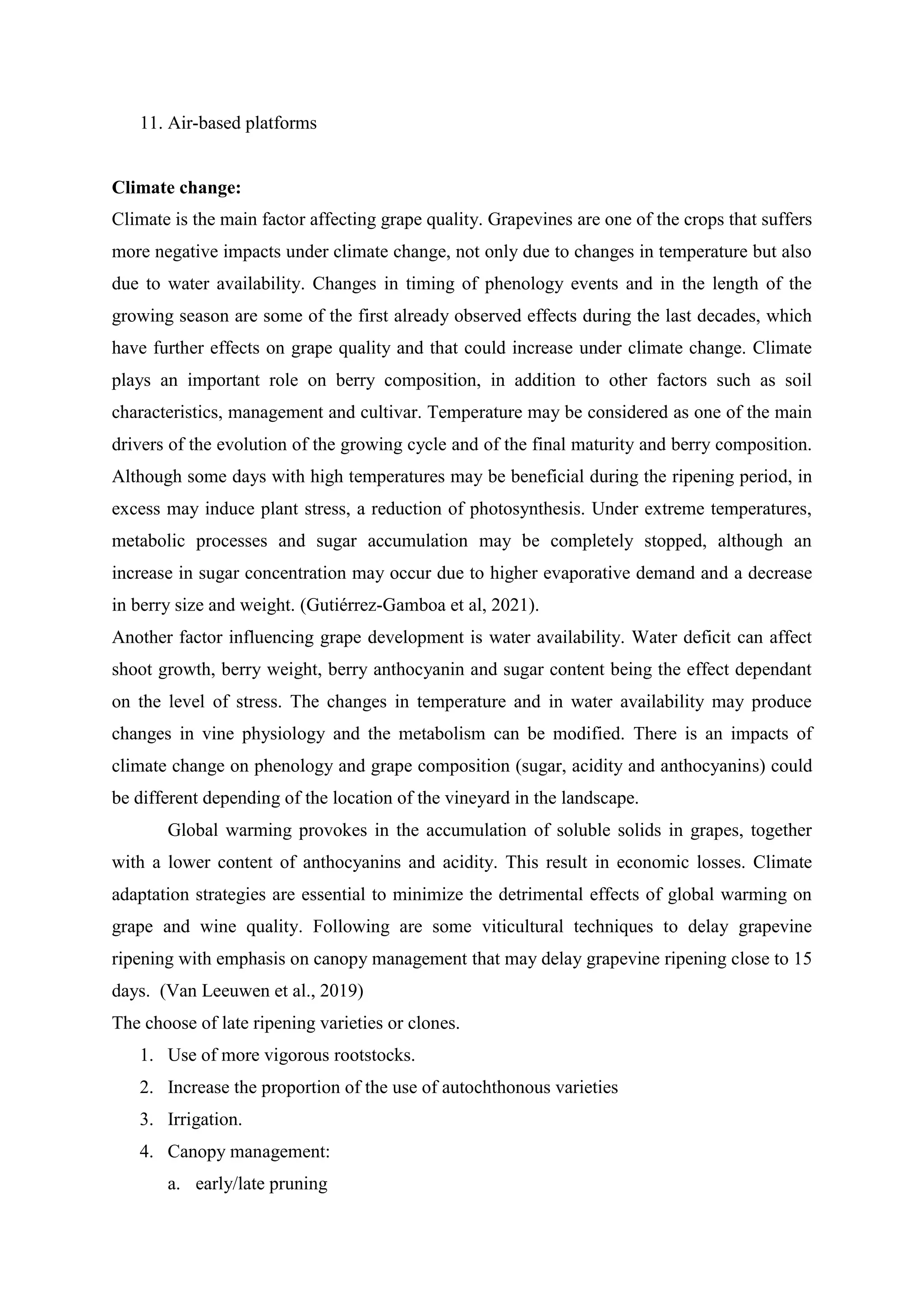
Smart viticulture practices such as efficient use of rootstocks, canopy management, and bud testing can help produce higher quality grapes by balancing the vine, improving light harvesting, and minimizing stresses. These practices aim to close the gap between potential and actual yields impacted by drought, salinity, and climate variation. Adopting techniques enabled by artificial intelligence and digital platforms can further help combat biotic and abiotic stresses and sustain grape production under changing climatic conditions.