SSI 3013
INFORMATION AND COMMUNICATION
     TECHNOLOGY IN SCIENCE

AHMAD NUR FAIZ BIN ABU BAKAR
          D20101037414
MUHAMMAD SHAMIM BIN ZULKEFLI
          D20101037460
   SITI RUKAIYAH ABD FATAH
          D20101037479
PROBLEM BASE LEARNING
         (PBL)
The Malaysian Smart
    School ( MSS )
What are the component
  of the smart school
        concept?
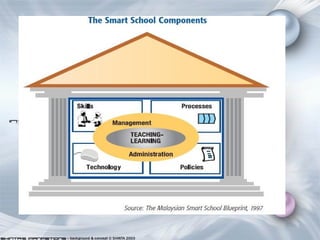
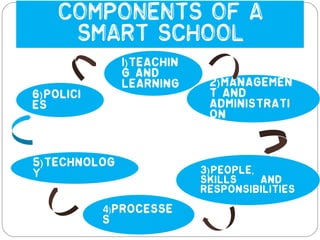
Components of a
      Smart School
                 1 ) Teachin
                 g and
                 Learning       2 ) Managemen
6 ) Polici                      t and
es                              Administrati
                                on


5 ) Technolog
y                              3 ) People ,
                               Skills       and
                               Responsibilities

             4)Processe
             s
1)Teaching and learning materials
Teaching-Learning Materials Interactive courseware and
  printed materials for Mathematics, Science, English and
  Bahasa Melayu that enables students to practice self-paced,
  self-accessed and self-directed learning.
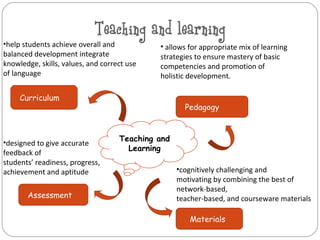
Teaching and learning
•help students achieve overall and           • allows for appropriate mix of learning
balanced development integrate               strategies to ensure mastery of basic
knowledge, skills, values, and correct use   competencies and promotion of
of language                                  holistic development.

     Curriculum
                                                     Pedagogy


•designed to give accurate          Teaching and
                                      Learning
feedback of
students’ readiness, progress,
achievement and aptitude                           •cognitively challenging and
                                                   motivating by combining the best of
                                                   network-based,
       Assessment                                  teacher-based, and courseware materials

                                                      Materials
2. Management and Administration
which represents the driver or the “brain” of the Smart
 School, is computerised.
Management software helps the Smart School principals and
 headmasters to manage more efficiently and effectively the
 resources and processes required to support the teaching-
 learning functions.
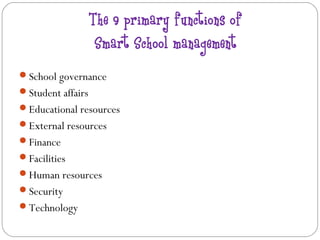
The 9 primary functions of
                    Smart School management
School governance
Student affairs
Educational resources
External resources
Finance
Facilities
Human resources
Security
Technology
3. People, Skills and Responsibilities
.


        •Stakeholders involved in the
        implementation of Smart Schools
        will be equipped with specific skills
        and requisite knowledge base to
        enable them to play their roles
        effectively.
4. Processes

•The Smart School processes are viewed as a
system.
•These processes have been and will
continuously be studied reviewed carefully to
ensure that the system provides accurate
and functional input to produce the desired
output.
5. Technology

      Technology is used as an enabler
      for Smart School
      practices in teaching-learning,
      management, and communications
      with external constituencies
6. Policies


 To ensure the successful implementation of
 the Smart School, changes in existing
 policies and regulations, as well as
 the formulation of new policies and
 regulations, have to be conducted.
THANK YOU

Smart school slides

  • 1.
    SSI 3013 INFORMATION ANDCOMMUNICATION TECHNOLOGY IN SCIENCE AHMAD NUR FAIZ BIN ABU BAKAR D20101037414 MUHAMMAD SHAMIM BIN ZULKEFLI D20101037460 SITI RUKAIYAH ABD FATAH D20101037479
  • 2.
    PROBLEM BASE LEARNING (PBL) The Malaysian Smart School ( MSS )
  • 3.
    What are thecomponent of the smart school concept?
  • 5.
    Components of a Smart School 1 ) Teachin g and Learning 2 ) Managemen 6 ) Polici t and es Administrati on 5 ) Technolog y 3 ) People , Skills and Responsibilities 4)Processe s
  • 6.
    1)Teaching and learningmaterials Teaching-Learning Materials Interactive courseware and printed materials for Mathematics, Science, English and Bahasa Melayu that enables students to practice self-paced, self-accessed and self-directed learning.
  • 7.
    Teaching and learning •helpstudents achieve overall and • allows for appropriate mix of learning balanced development integrate strategies to ensure mastery of basic knowledge, skills, values, and correct use competencies and promotion of of language holistic development. Curriculum Pedagogy •designed to give accurate Teaching and Learning feedback of students’ readiness, progress, achievement and aptitude •cognitively challenging and motivating by combining the best of network-based, Assessment teacher-based, and courseware materials Materials
  • 8.
    2. Management andAdministration which represents the driver or the “brain” of the Smart School, is computerised. Management software helps the Smart School principals and headmasters to manage more efficiently and effectively the resources and processes required to support the teaching- learning functions.
  • 9.
    The 9 primaryfunctions of Smart School management School governance Student affairs Educational resources External resources Finance Facilities Human resources Security Technology
  • 10.
    3. People, Skillsand Responsibilities . •Stakeholders involved in the implementation of Smart Schools will be equipped with specific skills and requisite knowledge base to enable them to play their roles effectively.
  • 11.
    4. Processes •The SmartSchool processes are viewed as a system. •These processes have been and will continuously be studied reviewed carefully to ensure that the system provides accurate and functional input to produce the desired output.
  • 12.
    5. Technology Technology is used as an enabler for Smart School practices in teaching-learning, management, and communications with external constituencies
  • 13.
    6. Policies Toensure the successful implementation of the Smart School, changes in existing policies and regulations, as well as the formulation of new policies and regulations, have to be conducted.
  • 20.