SMART GRID
TECHNOLOGY
Impact on Power Distribution
INTRODUCTION
This electric grid delivers electricity from points of generation to consumers, and the electricity delivery network functions via
two primary systems: the transmission system and the distribution system.
The transmission system delivers electricity from power plants to distribution substations, while the distribution system delivers
electricity from distribution substations to consumers.
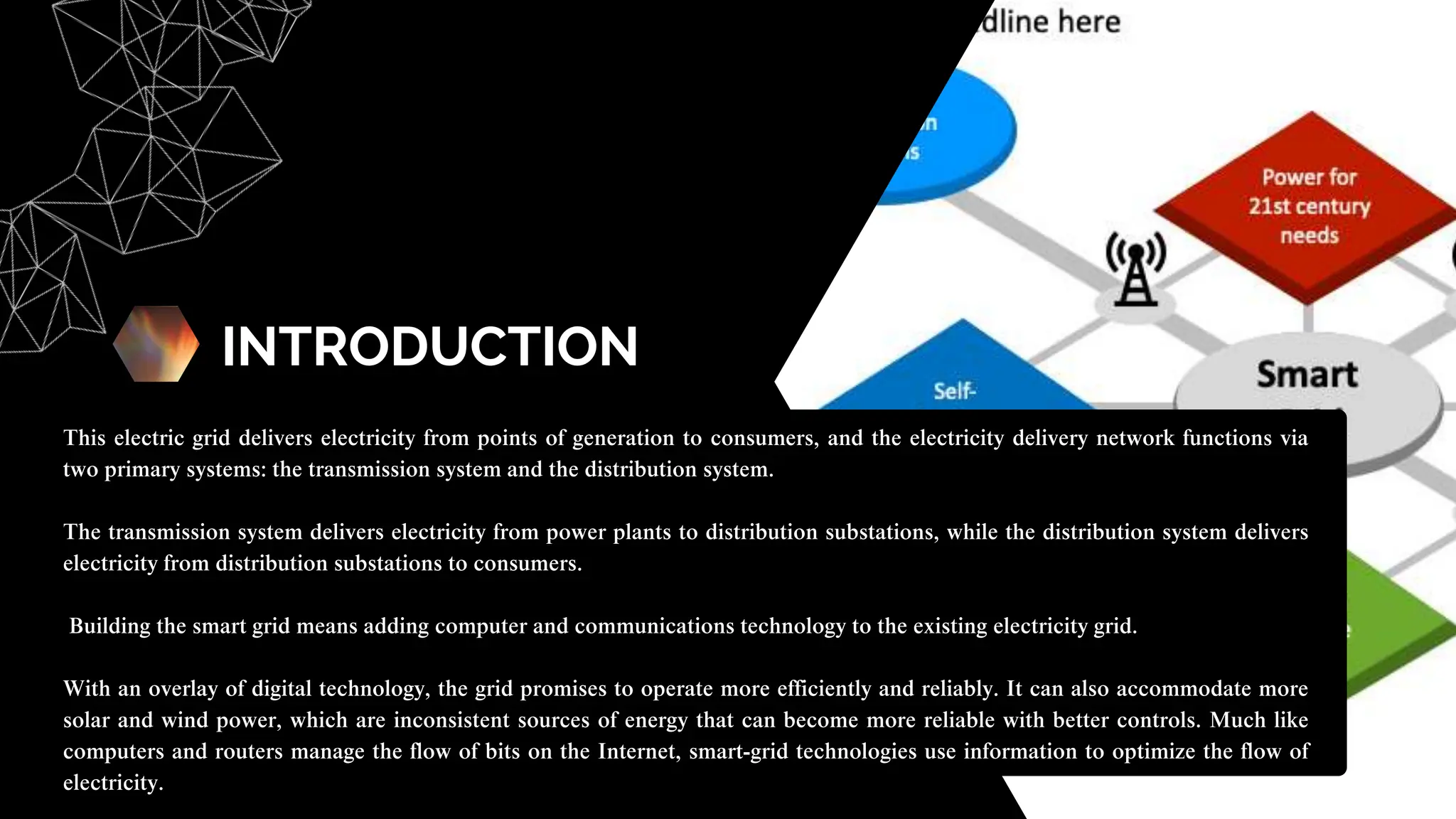
Building the smart grid means adding computer and communications technology to the existing electricity grid.
With an overlay of digital technology, the grid promises to operate more efficiently and reliably. It can also accommodate more
solar and wind power, which are inconsistent sources of energy that can become more reliable with better controls. Much like
computers and routers manage the flow of bits on the Internet, smart-grid technologies use information to optimize the flow of
electricity.
KEY FEATURES
—
1. Automated fault detection and isolation
—
2. Real-time monitoring and control
—
3. Integration of renewable energy sources
—
4. Advanced metering infrastructure (AMI)
SMART METERS
—
Smart meters provide detailed information about energy
consumption and enable two-way communication between
consumers and the utility.
ADVANCED METERING
INFRASTRUCTURE (AMI)
AMI includes smart meters, communication networks,
and data management systems that enable two-way
communication between utilities and customers.
ENERGY
MANAGEMENT
SYSTEMS (EMS)
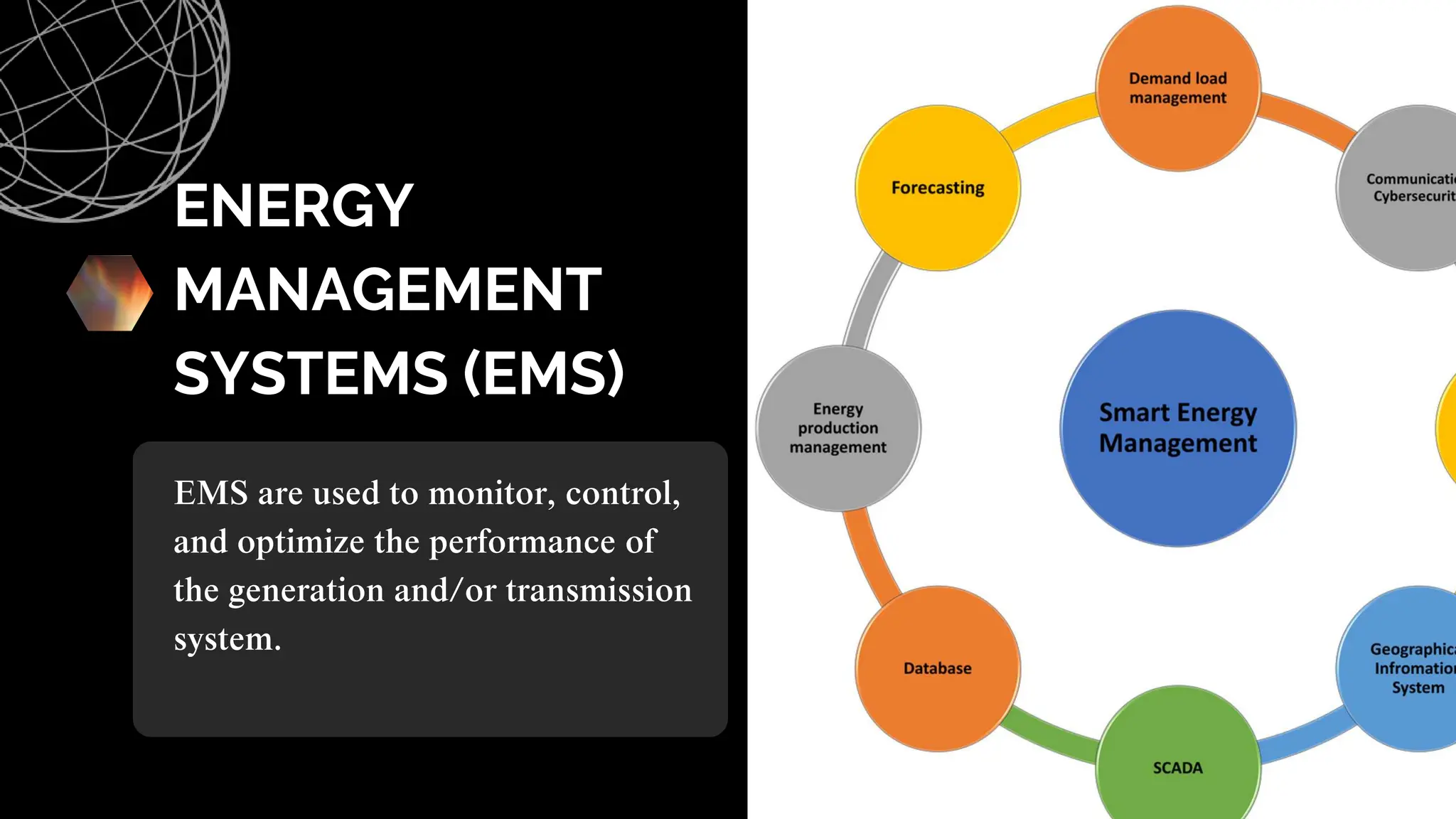
EMS are used to monitor, control,
and optimize the performance of
the generation and/or transmission
system.
DISTRIBUTION MANAGEMENT
SYSTEMS (DMS)
DMS are used to monitor and control the distribution system,
improve reliability, and optimize performance
RENEWABLE ENERGY
INTEGRATION
Smart grids facilitate the integration of renewable energy
sources such as wind and solar by providing the necessary
infrastructure and technology to manage variability and
maintain grid stability.
INFOGRAPHIC ABOUT
SALESBENEFITS OF SMART GRIDS
—
1. Improved reliability and efficiency
—
2. Enhanced security and resilience
—
3. Reduced energy losses
—
4. Empowerment of consumers
—
5. Better integration of renewable energy sources
IMPROVED RELIABILITY
Smart grids use advanced technologies to detect and respond to faults
quickly, reducing the duration and impact of outages.
Enhanced Security
Smart grids enhance the security of the power grid
by using advanced monitoring and control systems to
detect and respond to threats in real-time.
Reduced Energy Losses
Smart grids reduce energy losses by optimizing the
flow of electricity and minimizing transmission and
distribution losses.
Consumer Empowerment
Smart grids empower consumers by providing them with
detailed information about their energy usage and enabling
them to make informed decisions about their energy
consumption.
Better Renewable Integration
Smart grids provide the necessary infrastructure and
technology to integrate renewable energy sources more
effectively, ensuring a stable and reliable supply of electricity.
Impact on Power Distribution
—
1. Real-time monitoring and control
—
2. Improved fault detection and resolution
—
3. Dynamic load balancing
—
4. Enhanced grid flexibility
—
5. Support for distributed generation
Real-time Monitoring
Smart grids use sensors and communication
networks to provide real-time monitoring of the
power grid, enabling quick identification and
resolution of issues.
Fault Detection and
Resolution
Advanced fault detection and resolution capabilities
help minimize the impact of outages and improve the
reliability of the power grid.
Dynamic Load Balancing
Smart grids use dynamic load balancing to optimize
the flow of electricity and ensure that supply meets
demand in real-time.
Enhanced Grid Flexibility
Smart grids enhance the flexibility of the power grid
by enabling the integration of distributed energy
resources and improving the ability to respond to
changing demand patterns.
Support for Distributed
Generation
Smart grids support distributed generation by
providing the necessary infrastructure and
technology to integrate small-scale energy sources,
such as rooftop solar panels and wind turbines.
Challenge
s
—
1. High initial costs
—
2. Cybersecurity risks
—
3. Integration with existing infrastructure
Solutions
—
1. Government incentives and funding
—
2. Advanced security measures
—
3. Gradual implementation and upgrades
Future Trends
—
1. Increased use of AI and machine learning
—
2. Greater adoption of renewable energy
—
3. Development of microgrids
—
4. Enhanced consumer participation
—
5. Ongoing advancements in grid technology
Conclusion
Smart grid technology represents a significant
advancement in power distribution. It offers
numerous benefits, including improved reliability,
efficiency, and integration of renewable energy
sources. While challenges remain, continued
innovation and investment will drive the future of
smart grids, making electricity distribution more
efficient, reliable, and sustainable.
Question
s

Smart Grid Technology and It's Impact On Power Distribution

  • 1.
  • 2.
    INTRODUCTION This electric griddelivers electricity from points of generation to consumers, and the electricity delivery network functions via two primary systems: the transmission system and the distribution system. The transmission system delivers electricity from power plants to distribution substations, while the distribution system delivers electricity from distribution substations to consumers. Building the smart grid means adding computer and communications technology to the existing electricity grid. With an overlay of digital technology, the grid promises to operate more efficiently and reliably. It can also accommodate more solar and wind power, which are inconsistent sources of energy that can become more reliable with better controls. Much like computers and routers manage the flow of bits on the Internet, smart-grid technologies use information to optimize the flow of electricity.
  • 3.
    KEY FEATURES — 1. Automatedfault detection and isolation — 2. Real-time monitoring and control — 3. Integration of renewable energy sources — 4. Advanced metering infrastructure (AMI)
  • 4.
    SMART METERS — Smart metersprovide detailed information about energy consumption and enable two-way communication between consumers and the utility.
  • 5.
    ADVANCED METERING INFRASTRUCTURE (AMI) AMIincludes smart meters, communication networks, and data management systems that enable two-way communication between utilities and customers.
  • 6.
    ENERGY MANAGEMENT SYSTEMS (EMS) EMS areused to monitor, control, and optimize the performance of the generation and/or transmission system.
  • 7.
    DISTRIBUTION MANAGEMENT SYSTEMS (DMS) DMSare used to monitor and control the distribution system, improve reliability, and optimize performance
  • 8.
    RENEWABLE ENERGY INTEGRATION Smart gridsfacilitate the integration of renewable energy sources such as wind and solar by providing the necessary infrastructure and technology to manage variability and maintain grid stability.
  • 9.
    INFOGRAPHIC ABOUT SALESBENEFITS OFSMART GRIDS — 1. Improved reliability and efficiency — 2. Enhanced security and resilience — 3. Reduced energy losses — 4. Empowerment of consumers — 5. Better integration of renewable energy sources
  • 10.
    IMPROVED RELIABILITY Smart gridsuse advanced technologies to detect and respond to faults quickly, reducing the duration and impact of outages.
  • 11.
    Enhanced Security Smart gridsenhance the security of the power grid by using advanced monitoring and control systems to detect and respond to threats in real-time.
  • 12.
    Reduced Energy Losses Smartgrids reduce energy losses by optimizing the flow of electricity and minimizing transmission and distribution losses.
  • 13.
    Consumer Empowerment Smart gridsempower consumers by providing them with detailed information about their energy usage and enabling them to make informed decisions about their energy consumption.
  • 14.
    Better Renewable Integration Smartgrids provide the necessary infrastructure and technology to integrate renewable energy sources more effectively, ensuring a stable and reliable supply of electricity.
  • 15.
    Impact on PowerDistribution — 1. Real-time monitoring and control — 2. Improved fault detection and resolution — 3. Dynamic load balancing — 4. Enhanced grid flexibility — 5. Support for distributed generation
  • 16.
    Real-time Monitoring Smart gridsuse sensors and communication networks to provide real-time monitoring of the power grid, enabling quick identification and resolution of issues.
  • 17.
    Fault Detection and Resolution Advancedfault detection and resolution capabilities help minimize the impact of outages and improve the reliability of the power grid.
  • 18.
    Dynamic Load Balancing Smartgrids use dynamic load balancing to optimize the flow of electricity and ensure that supply meets demand in real-time.
  • 19.
    Enhanced Grid Flexibility Smartgrids enhance the flexibility of the power grid by enabling the integration of distributed energy resources and improving the ability to respond to changing demand patterns.
  • 20.
    Support for Distributed Generation Smartgrids support distributed generation by providing the necessary infrastructure and technology to integrate small-scale energy sources, such as rooftop solar panels and wind turbines.
  • 21.
    Challenge s — 1. High initialcosts — 2. Cybersecurity risks — 3. Integration with existing infrastructure
  • 22.
    Solutions — 1. Government incentivesand funding — 2. Advanced security measures — 3. Gradual implementation and upgrades
  • 23.
    Future Trends — 1. Increaseduse of AI and machine learning — 2. Greater adoption of renewable energy — 3. Development of microgrids — 4. Enhanced consumer participation — 5. Ongoing advancements in grid technology
  • 24.
    Conclusion Smart grid technologyrepresents a significant advancement in power distribution. It offers numerous benefits, including improved reliability, efficiency, and integration of renewable energy sources. While challenges remain, continued innovation and investment will drive the future of smart grids, making electricity distribution more efficient, reliable, and sustainable.
  • 25.