SMART ANTENNAS IN AD-HOC
NETWORKS
Abstract
 Build up channel limit.
 Critical effect on the effective utilization of the range.
 The minimization of the expense of building new remote
systems.
 enhancement of administration quality.
Table of Contents
 Problem Statement.
 Proposed Solution.
 Performance Analysis.
 Conclusion.
 References.
Problem Statement
 Quality of service may not be consistent for
every user.
 Hidden terminal problems occurs due to
unheard RTS/CTS or due to asymmetry in
gain.
Proposed Solution
 Adding smart antennas to ad-hoc networks
increases the efficiency the networks.
 Two lobe antenna pattern can be used to
overcome hidden terminal problem due to
unheard RTS/CTS.
Two Lobe Antenna Pattern
(for unheard RTS/CTS frames)
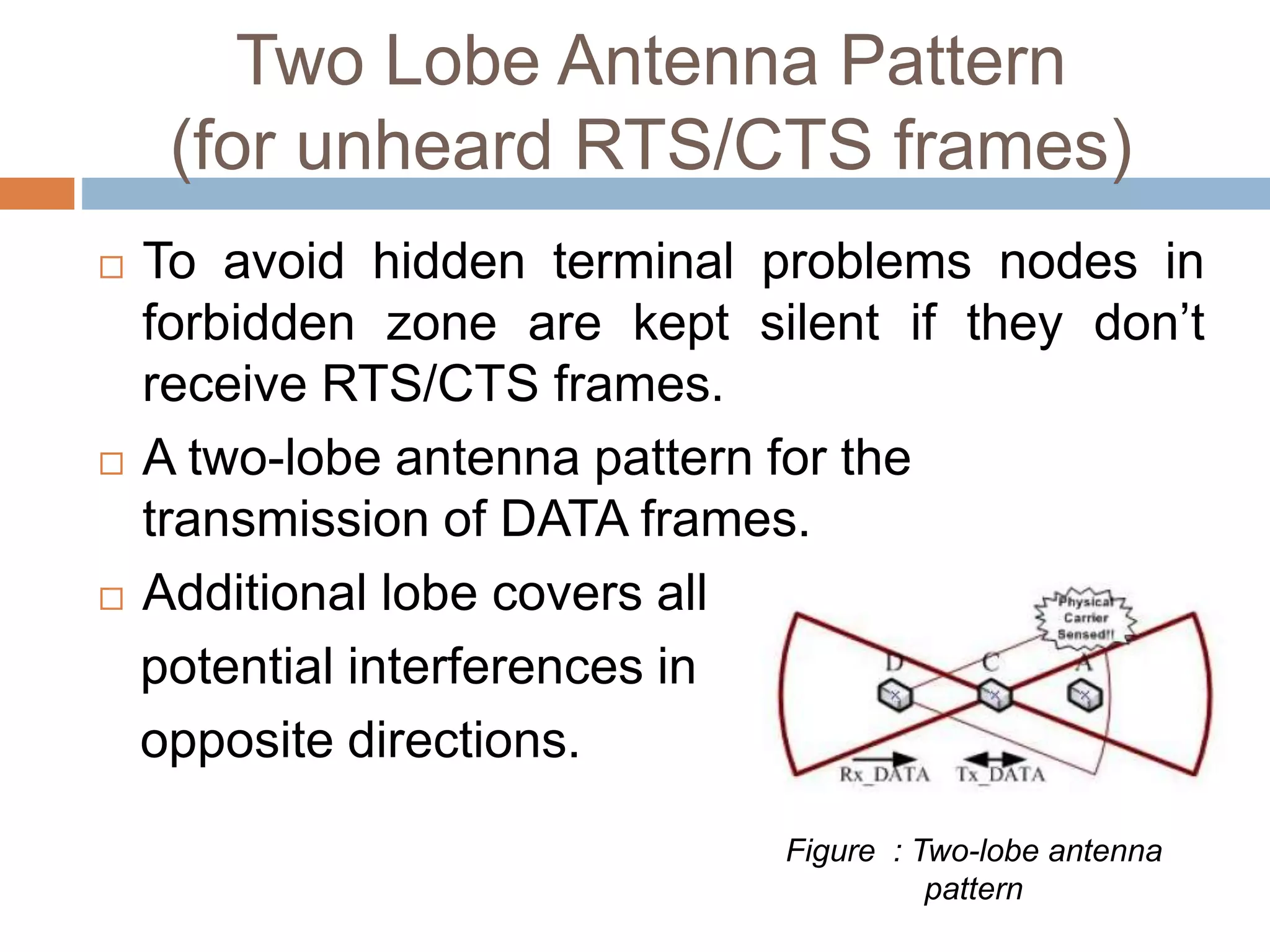
 To avoid hidden terminal problems nodes in
forbidden zone are kept silent if they don’t
receive RTS/CTS frames.
 A two-lobe antenna pattern for the
transmission of DATA frames.
 Additional lobe covers all
potential interferences in
opposite directions.
Figure : Two-lobe antenna
pattern
Increasing antenna gain
(asymmetry in gain)
 If hidden terminal is due to asymmetry in gain
then increasing the gain of antenna to extent
that nodes in forbidden zone can receive
RTS/CTS frames solves the problem.
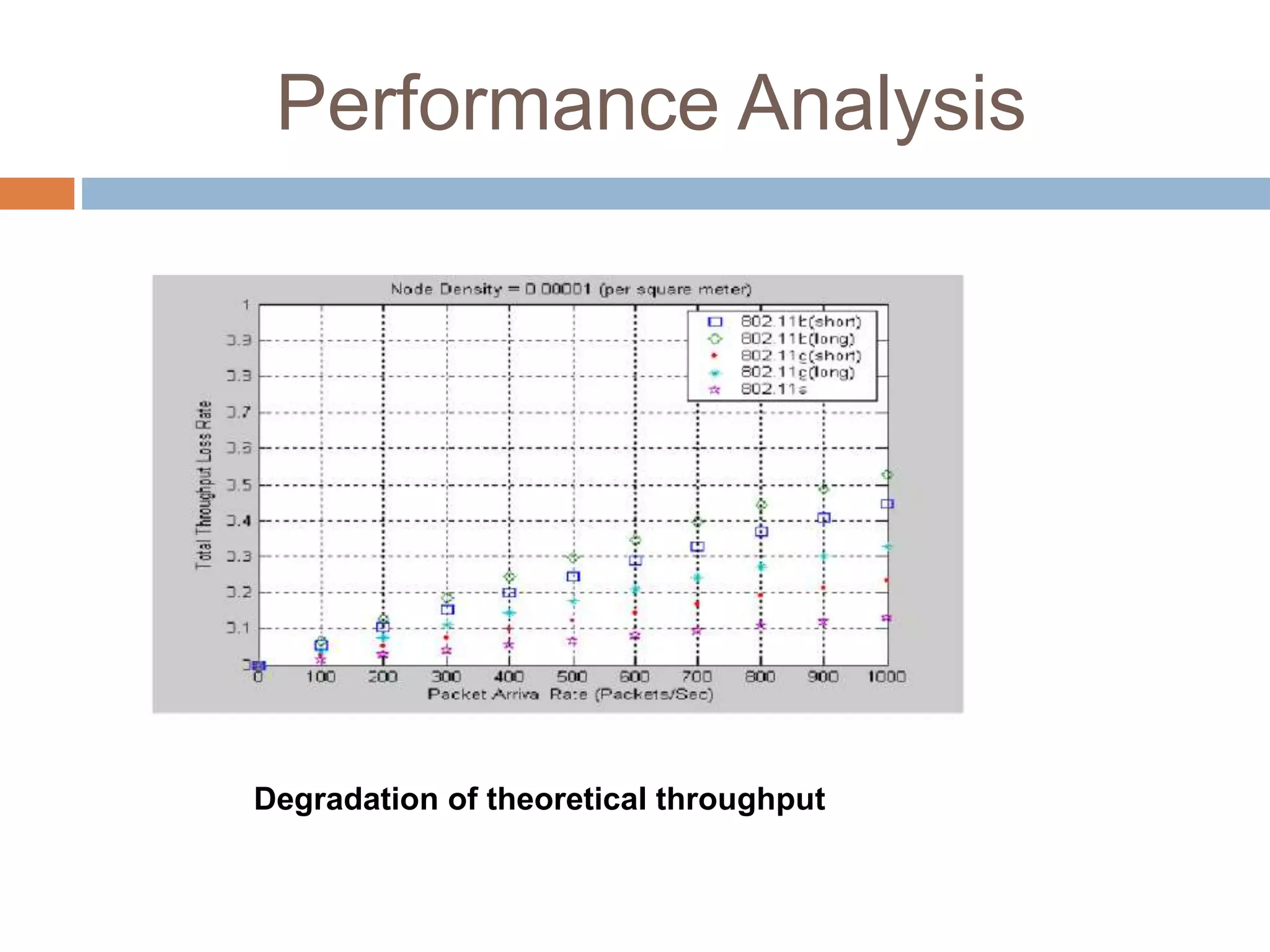
Performance Analysis
Degradation of theoretical throughput
Conclusion
 Use of smart antenna in ad-hoc networks
enhances their performance, providing a gain
greater than the sum of gains of each
technique.
References
 [1] Jack H. Winters, “Smart antenna technologies and their application to
wireless ad-hoc networks.”
 [2] Wen-Tsuen Chen, “An MAC Protocol for Wireless Ad-hoc Networks
Using Smart Antennas.”
 [3] R.S. Kawitkar, “Design of Smart Antenna Testbed Prototype.”
 [4] Angeliki Alexiou, Bell Laboratories, Lucent Technologies Martin Haardt,
Ilmenau University of Technology, “Smart Antenna Technologies for Future
Wireless Systems: Trends and Challenges.”
 [5] M. Takai, J. Martin, A. Ren and R. Bagrodia, “Directional Virtual Carrier
Sensing for Directional Antennas in Mobile Ad Hoc Networks,” ACM
MobiHoc, June 2002.
 [6] T. Korakis, G. Jakllari and L. Tassiulas, “A MAC Protocol for Full
Exploitation of Directional Antennas in Ad-hoc Wireless Networks,” ACM
MobiHoc, June 2003.
 [7] S. Roy, D. Saha, S. Bandyopadhyay, T. Ueda and S. Tanaka, “A
Network-Aware MAC and Routing Protocol for Effective Load Balancing in
Ad Hoc Wireless Networks with Directional Antenna,” ACM MobiHoc, June
2003.
 [8] A. Acharya, A. Misra and S. Bansal, “High-Performance Architectures

Smart antennas in ad hoc networks

  • 1.
    SMART ANTENNAS INAD-HOC NETWORKS
  • 2.
    Abstract  Build upchannel limit.  Critical effect on the effective utilization of the range.  The minimization of the expense of building new remote systems.  enhancement of administration quality.
  • 3.
    Table of Contents Problem Statement.  Proposed Solution.  Performance Analysis.  Conclusion.  References.
  • 4.
    Problem Statement  Qualityof service may not be consistent for every user.  Hidden terminal problems occurs due to unheard RTS/CTS or due to asymmetry in gain.
  • 5.
    Proposed Solution  Addingsmart antennas to ad-hoc networks increases the efficiency the networks.  Two lobe antenna pattern can be used to overcome hidden terminal problem due to unheard RTS/CTS.
  • 6.
    Two Lobe AntennaPattern (for unheard RTS/CTS frames)  To avoid hidden terminal problems nodes in forbidden zone are kept silent if they don’t receive RTS/CTS frames.  A two-lobe antenna pattern for the transmission of DATA frames.  Additional lobe covers all potential interferences in opposite directions. Figure : Two-lobe antenna pattern
  • 7.
    Increasing antenna gain (asymmetryin gain)  If hidden terminal is due to asymmetry in gain then increasing the gain of antenna to extent that nodes in forbidden zone can receive RTS/CTS frames solves the problem.
  • 8.
  • 9.
    Conclusion  Use ofsmart antenna in ad-hoc networks enhances their performance, providing a gain greater than the sum of gains of each technique.
  • 10.
    References  [1] JackH. Winters, “Smart antenna technologies and their application to wireless ad-hoc networks.”  [2] Wen-Tsuen Chen, “An MAC Protocol for Wireless Ad-hoc Networks Using Smart Antennas.”  [3] R.S. Kawitkar, “Design of Smart Antenna Testbed Prototype.”  [4] Angeliki Alexiou, Bell Laboratories, Lucent Technologies Martin Haardt, Ilmenau University of Technology, “Smart Antenna Technologies for Future Wireless Systems: Trends and Challenges.”  [5] M. Takai, J. Martin, A. Ren and R. Bagrodia, “Directional Virtual Carrier Sensing for Directional Antennas in Mobile Ad Hoc Networks,” ACM MobiHoc, June 2002.  [6] T. Korakis, G. Jakllari and L. Tassiulas, “A MAC Protocol for Full Exploitation of Directional Antennas in Ad-hoc Wireless Networks,” ACM MobiHoc, June 2003.  [7] S. Roy, D. Saha, S. Bandyopadhyay, T. Ueda and S. Tanaka, “A Network-Aware MAC and Routing Protocol for Effective Load Balancing in Ad Hoc Wireless Networks with Directional Antenna,” ACM MobiHoc, June 2003.  [8] A. Acharya, A. Misra and S. Bansal, “High-Performance Architectures