Small Island
Developing
states(SIDS)
Presenter : 替代役張庭瑋
Outline
• Introduction
• History of small island developing states
• Samoa pathway
Introduction
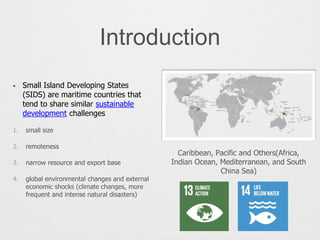
• Small Island Developing States
(SIDS) are maritime countries that
tend to share similar sustainable
development challenges
1. small size
2. remoteness
3. narrow resource and export base
4. global environmental changes and external
economic shocks (climate changes, more
frequent and intense natural disasters)
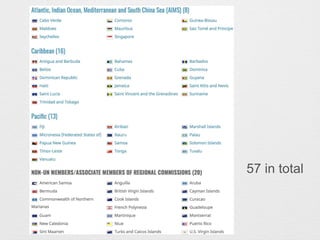
Caribbean, Pacific and Others(Africa,
Indian Ocean, Mediterranean, and South
China Sea)
57 in total
History
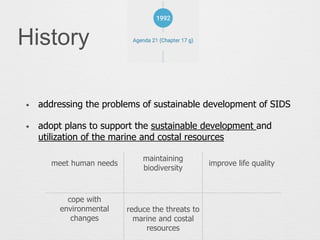
• addressing the problems of sustainable development of SIDS
• adopt plans to support the sustainable development and
utilization of the marine and costal resources
meet human needs
maintaining
biodiversity
improve life quality
cope with
environmental
changes
reduce the threats to
marine and costal
resources
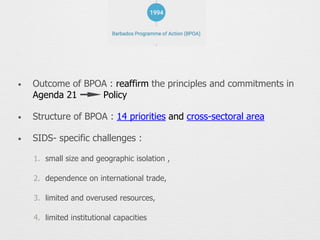
• Outcome of BPOA : reaffirm the principles and commitments in
Agenda 21 Policy
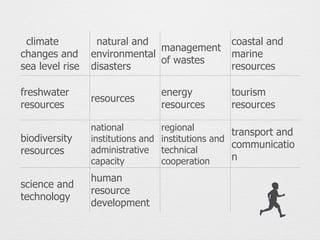
• Structure of BPOA : 14 priorities and cross-sectoral area
• SIDS- specific challenges :
1. small size and geographic isolation ,
2. dependence on international trade,
3. limited and overused resources,
4. limited institutional capacities
climate
changes and
sea level rise
natural and
environmental
disasters
management
of wastes
coastal and
marine
resources
freshwater
resources
resources
energy
resources
tourism
resources
biodiversity
resources
national
institutions and
administrative
capacity
regional
institutions and
technical
cooperation
transport and
communicatio
n
science and
technology
human
resource
development
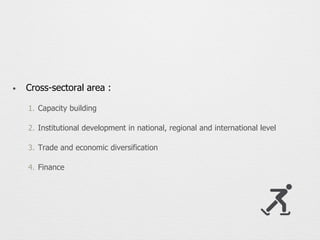
• Cross-sectoral area :
1. Capacity building
2. Institutional development in national, regional and international level
3. Trade and economic diversification
4. Finance
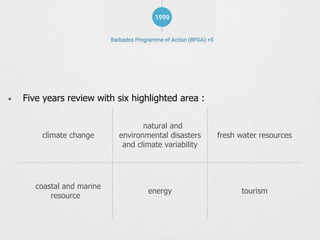
• Five years review with six highlighted area :
climate change
natural and
environmental disasters
and climate variability
coastal and marine
resource
• Focus on means of implementation :
✦ resource mobilization
✦ finance
✦ capacity building
✦ globalization and trade liberalization
✦ a vulnerability index
✦ information management through strengthening the SIDS Network and
international cooperation and partnership.
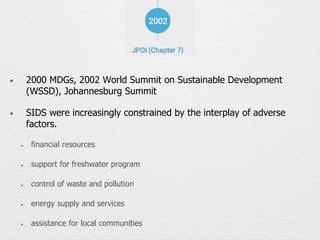
• 2000 MDGs, 2002 World Summit on Sustainable Development
(WSSD), Johannesburg Summit
• SIDS were increasingly constrained by the interplay of adverse
factors.
✦ financial resources
✦ support for freshwater program
✦ control of waste and pollution
✦ energy supply and services
✦ assistance for local communities
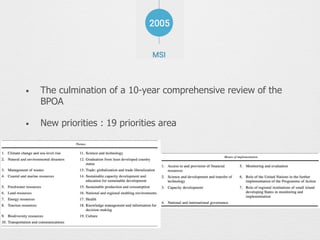
• The culmination of a 10-year comprehensive review of the
BPOA
• New priorities : 19 priorities area
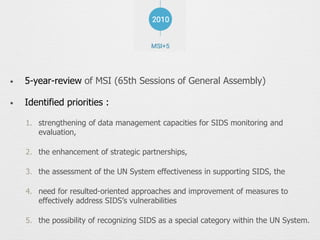
• 5-year-review of MSI (65th Sessions of General Assembly)
• Identified priorities :
1. strengthening of data management capacities for SIDS monitoring and
evaluation,
2. the enhancement of strategic partnerships,
3. the assessment of the UN System effectiveness in supporting SIDS, the
4. need for resulted-oriented approaches and improvement of measures to
effectively address SIDS’s vulnerabilities
5. the possibility of recognizing SIDS as a special category within the UN System.
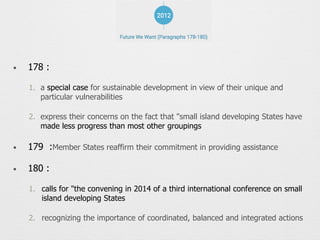
• 178 :
1. a special case for sustainable development in view of their unique and
particular vulnerabilities
2. express their concerns on the fact that "small island developing States have
made less progress than most other groupings
• 179 :Member States reaffirm their commitment in providing assistance
• 180 :
1. calls for "the convening in 2014 of a third international conference on small
island developing States
2. recognizing the importance of coordinated, balanced and integrated actions
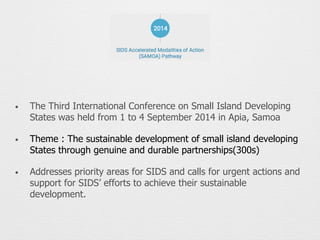
• The Third International Conference on Small Island Developing
States was held from 1 to 4 September 2014 in Apia, Samoa
• Theme : The sustainable development of small island developing
States through genuine and durable partnerships(300s)
• Addresses priority areas for SIDS and calls for urgent actions and
support for SIDS’ efforts to achieve their sustainable
development.
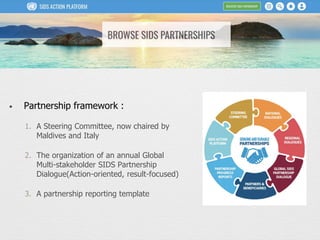
• Partnership framework :
1. A Steering Committee, now chaired by
Maldives and Italy
2. The organization of an annual Global
Multi-stakeholder SIDS Partnership
Dialogue(Action-oriented, result-focused)
3. A partnership reporting template
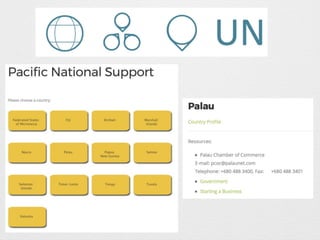
• A platform for international business and SIDS
• Not only resources but also strengthen inter-regional business
alliance
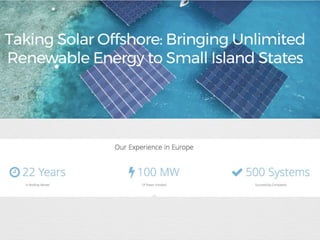
• Thematic area : Ocean and Marine resources, Connectivity,
Sustainable agriculture, Sustainable tourism, Disaster risk
reduction, Renewable energy, Financing
Take home message
• Small Island Developing States (SIDS) are maritime countries
that tend to share similar sustainable development challenges
• 1994 Barbados Programme of action 2005 Mauritius
Strategy Implementation 2014 Samoa Pathway
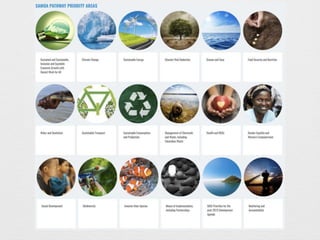
• Samoa Pathway : 18 priorities area and Partnerships Platform
Thank you for your
listening !!!

Small Island Developing States(SIDS)

  • 1.
  • 2.
    Outline • Introduction • Historyof small island developing states • Samoa pathway
  • 3.
    Introduction • Small IslandDeveloping States (SIDS) are maritime countries that tend to share similar sustainable development challenges 1. small size 2. remoteness 3. narrow resource and export base 4. global environmental changes and external economic shocks (climate changes, more frequent and intense natural disasters) Caribbean, Pacific and Others(Africa, Indian Ocean, Mediterranean, and South China Sea)
  • 4.
  • 5.
    History • addressing theproblems of sustainable development of SIDS • adopt plans to support the sustainable development and utilization of the marine and costal resources meet human needs maintaining biodiversity improve life quality cope with environmental changes reduce the threats to marine and costal resources
  • 6.
    • Outcome ofBPOA : reaffirm the principles and commitments in Agenda 21 Policy • Structure of BPOA : 14 priorities and cross-sectoral area • SIDS- specific challenges : 1. small size and geographic isolation , 2. dependence on international trade, 3. limited and overused resources, 4. limited institutional capacities
  • 7.
    climate changes and sea levelrise natural and environmental disasters management of wastes coastal and marine resources freshwater resources resources energy resources tourism resources biodiversity resources national institutions and administrative capacity regional institutions and technical cooperation transport and communicatio n science and technology human resource development
  • 8.
    • Cross-sectoral area: 1. Capacity building 2. Institutional development in national, regional and international level 3. Trade and economic diversification 4. Finance
  • 9.
    • Five yearsreview with six highlighted area : climate change natural and environmental disasters and climate variability coastal and marine resource
  • 10.
    • Focus onmeans of implementation : ✦ resource mobilization ✦ finance ✦ capacity building ✦ globalization and trade liberalization ✦ a vulnerability index ✦ information management through strengthening the SIDS Network and international cooperation and partnership.
  • 11.
    • 2000 MDGs,2002 World Summit on Sustainable Development (WSSD), Johannesburg Summit • SIDS were increasingly constrained by the interplay of adverse factors. ✦ financial resources ✦ support for freshwater program ✦ control of waste and pollution ✦ energy supply and services ✦ assistance for local communities
  • 12.
    • The culminationof a 10-year comprehensive review of the BPOA • New priorities : 19 priorities area
  • 13.
    • 5-year-review ofMSI (65th Sessions of General Assembly) • Identified priorities : 1. strengthening of data management capacities for SIDS monitoring and evaluation, 2. the enhancement of strategic partnerships, 3. the assessment of the UN System effectiveness in supporting SIDS, the 4. need for resulted-oriented approaches and improvement of measures to effectively address SIDS’s vulnerabilities 5. the possibility of recognizing SIDS as a special category within the UN System.
  • 14.
    • 178 : 1.a special case for sustainable development in view of their unique and particular vulnerabilities 2. express their concerns on the fact that "small island developing States have made less progress than most other groupings • 179 :Member States reaffirm their commitment in providing assistance • 180 : 1. calls for "the convening in 2014 of a third international conference on small island developing States 2. recognizing the importance of coordinated, balanced and integrated actions
  • 15.
    • The ThirdInternational Conference on Small Island Developing States was held from 1 to 4 September 2014 in Apia, Samoa • Theme : The sustainable development of small island developing States through genuine and durable partnerships(300s) • Addresses priority areas for SIDS and calls for urgent actions and support for SIDS’ efforts to achieve their sustainable development.
  • 17.
    • Partnership framework: 1. A Steering Committee, now chaired by Maldives and Italy 2. The organization of an annual Global Multi-stakeholder SIDS Partnership Dialogue(Action-oriented, result-focused) 3. A partnership reporting template
  • 18.
    • A platformfor international business and SIDS • Not only resources but also strengthen inter-regional business alliance • Thematic area : Ocean and Marine resources, Connectivity, Sustainable agriculture, Sustainable tourism, Disaster risk reduction, Renewable energy, Financing
  • 22.
    Take home message •Small Island Developing States (SIDS) are maritime countries that tend to share similar sustainable development challenges • 1994 Barbados Programme of action 2005 Mauritius Strategy Implementation 2014 Samoa Pathway • Samoa Pathway : 18 priorities area and Partnerships Platform
  • 23.
    Thank you foryour listening !!!