Everything you need to know
							 about choosing the right running shoes
2015 TRENDS
New colors, better performance, improved technology -
here are the biggest sneaker trends for 2015!
TRENDING COLOURS
2015 TRENDS
TECHNOLOGY
TRENDS
BETTER
PERFORMANCE
BETTER
FIT
WATER
RESISTANCE
BETTER
TRACTION
REFLECTIVE
FABRICS
increased stability
improved
for outdoor running
for day to night wear
ONE
UPPER PIECE
for streamlined
comfort and
support
KNITTING
TECHNIQUES:
less stitches,
overlays &
Seams
BREATHABLE
4-WAY STRETCH
MESH
for flexibility and
durable comfort
MAXIMAL
CUSHIONING
for protection
and shock
absorbtion
CARBON
FIBRE SPRING
for an added
boost
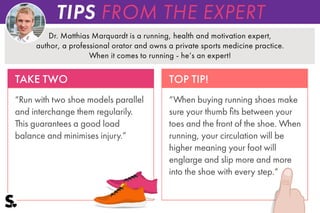
TIPS FROM THE EXPERT
Dr. Matthias Marquardt is a running, health and motivation expert,
author, a professional orator and owns a private sports medicine practice.
When it comes to running - he‘s an expert!
TAKE TWO
“Run with two shoe models parallel
and interchange them regularily.
This guarantees a good load
balance and minimises injury.”
“When buying running shoes make
sure your thumb fits between your
toes and the front of the shoe. When
running, your circulation will be
higher meaning your foot will
englarge and slip more and more
into the shoe with every step.“
TOP TIP!
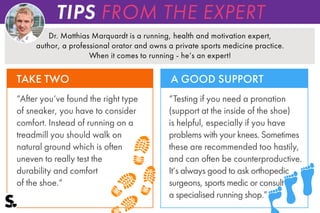
Dr. Matthias Marquardt is a running, health and motivation expert,
author, a professional orator and owns a private sports medicine practice.
When it comes to running - he‘s an expert!
“After you‘ve found the right type
of sneaker, you have to consider
comfort. Instead of running on a
treadmill you should walk on
natural ground which is often
uneven to really test the
durability and comfort
of the shoe.“
“Testing if you need a pronation
(support at the inside of the shoe)
is helpful, especially if you have
problems with your knees. Sometimes
these are recommended too hastily,
and can often be counterproductive.
It‘s always good to ask orthopedic
surgeons, sports medic or consult
a specialised running shop.”
TAKE TWO A GOOD SUPPORT
TIPS FROM THE EXPERT
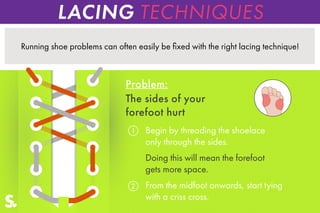
Running shoe problems can often easily be fixed with the right lacing technique!
Problem:
LACING TECHNIQUES
Begin by threading the shoelace
only through the sides.
Doing this will mean the forefoot
gets more space.
From the midfoot onwards, start tying
with a criss cross.
The sides of your
forefoot hurt
1
2
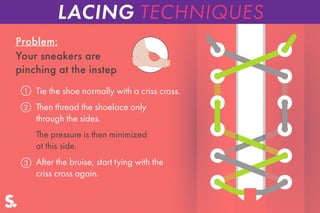
Problem:
Tie the shoe normally with a criss cross.
Then thread the shoelace only
through the sides.
The pressure is then minimized
at this side.
After the bruise, start tying with the
criss cross again.
Your sneakers are
pinching at the instep
1
2
3
LACING TECHNIQUES
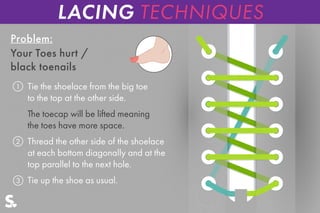
Problem:
Tie the shoelace from the big toe
to the top at the other side.
The toecap will be lifted meaning
the toes have more space.
Thread the other side of the shoelace
at each bottom diagonally and at the
top parallel to the next hole.
Tie up the shoe as usual.
Your Toes hurt /
black toenails
1
2
3
LACING TECHNIQUES
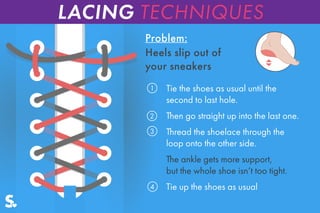
Problem:
Tie the shoes as usual until the
second to last hole.
Then go straight up into the last one.
Thread the shoelace through the
loop onto the other side.
The ankle gets more support,
but the whole shoe isn‘t too tight.
Tie up the shoes as usual
Heels slip out of
your sneakers
2
3
4
1
LACING TECHNIQUES
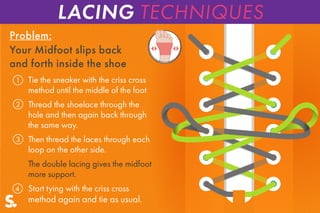
Problem:
Tie the sneaker with the criss cross
method until the middle of the foot
Thread the shoelace through the
hole and then again back through
the same way.
Then thread the laces through each
loop on the other side.
The double lacing gives the midfoot
more support.
Start tying with the criss cross
method again and tie as usual.
Your Midfoot slips back
and forth inside the shoe
1
2
3
4
LACING TECHNIQUES
CARE TIPS
Your running shoes get more and more saturated by sweat, rain and dirt with every
kilometer you run. You can keep them in the box-fresh condition with the right care.
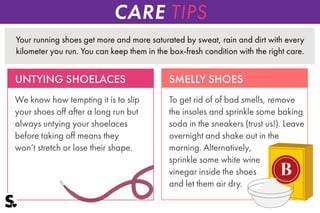
UNTYING SHOELACES
We know how tempting it is to slip
your shoes off after a long run but
always untying your shoelaces
before taking off means they
won‘t stretch or lose their shape.
To get rid of of bad smells, remove
the insoles and sprinkle some baking
soda in the sneakers (trust us!). Leave
overnight and shake out in the
morning. Alternatively,
sprinkle some white wine
vinegar inside the shoes
and let them air dry.
SMELLY SHOES
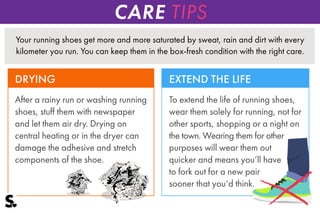
DRYING
After a rainy run or washing running
shoes, stuff them with newspaper
and let them air dry. Drying on
central heating or in the dryer can
damage the adhesive and stretch
components of the shoe.
To extend the life of running shoes,
wear them solely for running, not for
other sports, shopping or a night on
the town. Wearing them for other
purposes will wear them out
quicker and means you‘ll have
to fork out for a new pair
sooner that you‘d think.
EXTEND THE LIFE
CARE TIPS
Your running shoes get more and more saturated by sweat, rain and dirt with every
kilometer you run. You can keep them in the box-fresh condition with the right care.
S T Y L I G H T . C O M . A U
C o n t e n t & D e s i g n:
Find more info and the whole interview
here

Slideshow running-shoes-aus

  • 1.
    Everything you needto know about choosing the right running shoes
  • 2.
    2015 TRENDS New colors,better performance, improved technology - here are the biggest sneaker trends for 2015! TRENDING COLOURS
  • 3.
    2015 TRENDS TECHNOLOGY TRENDS BETTER PERFORMANCE BETTER FIT WATER RESISTANCE BETTER TRACTION REFLECTIVE FABRICS increased stability improved foroutdoor running for day to night wear ONE UPPER PIECE for streamlined comfort and support KNITTING TECHNIQUES: less stitches, overlays & Seams BREATHABLE 4-WAY STRETCH MESH for flexibility and durable comfort MAXIMAL CUSHIONING for protection and shock absorbtion CARBON FIBRE SPRING for an added boost
  • 4.
    TIPS FROM THEEXPERT Dr. Matthias Marquardt is a running, health and motivation expert, author, a professional orator and owns a private sports medicine practice. When it comes to running - he‘s an expert! TAKE TWO “Run with two shoe models parallel and interchange them regularily. This guarantees a good load balance and minimises injury.” “When buying running shoes make sure your thumb fits between your toes and the front of the shoe. When running, your circulation will be higher meaning your foot will englarge and slip more and more into the shoe with every step.“ TOP TIP!
  • 5.
    Dr. Matthias Marquardtis a running, health and motivation expert, author, a professional orator and owns a private sports medicine practice. When it comes to running - he‘s an expert! “After you‘ve found the right type of sneaker, you have to consider comfort. Instead of running on a treadmill you should walk on natural ground which is often uneven to really test the durability and comfort of the shoe.“ “Testing if you need a pronation (support at the inside of the shoe) is helpful, especially if you have problems with your knees. Sometimes these are recommended too hastily, and can often be counterproductive. It‘s always good to ask orthopedic surgeons, sports medic or consult a specialised running shop.” TAKE TWO A GOOD SUPPORT TIPS FROM THE EXPERT
  • 6.
    Running shoe problemscan often easily be fixed with the right lacing technique! Problem: LACING TECHNIQUES Begin by threading the shoelace only through the sides. Doing this will mean the forefoot gets more space. From the midfoot onwards, start tying with a criss cross. The sides of your forefoot hurt 1 2
  • 7.
    Problem: Tie the shoenormally with a criss cross. Then thread the shoelace only through the sides. The pressure is then minimized at this side. After the bruise, start tying with the criss cross again. Your sneakers are pinching at the instep 1 2 3 LACING TECHNIQUES
  • 8.
    Problem: Tie the shoelacefrom the big toe to the top at the other side. The toecap will be lifted meaning the toes have more space. Thread the other side of the shoelace at each bottom diagonally and at the top parallel to the next hole. Tie up the shoe as usual. Your Toes hurt / black toenails 1 2 3 LACING TECHNIQUES
  • 9.
    Problem: Tie the shoesas usual until the second to last hole. Then go straight up into the last one. Thread the shoelace through the loop onto the other side. The ankle gets more support, but the whole shoe isn‘t too tight. Tie up the shoes as usual Heels slip out of your sneakers 2 3 4 1 LACING TECHNIQUES
  • 10.
    Problem: Tie the sneakerwith the criss cross method until the middle of the foot Thread the shoelace through the hole and then again back through the same way. Then thread the laces through each loop on the other side. The double lacing gives the midfoot more support. Start tying with the criss cross method again and tie as usual. Your Midfoot slips back and forth inside the shoe 1 2 3 4 LACING TECHNIQUES
  • 11.
    CARE TIPS Your runningshoes get more and more saturated by sweat, rain and dirt with every kilometer you run. You can keep them in the box-fresh condition with the right care. UNTYING SHOELACES We know how tempting it is to slip your shoes off after a long run but always untying your shoelaces before taking off means they won‘t stretch or lose their shape. To get rid of of bad smells, remove the insoles and sprinkle some baking soda in the sneakers (trust us!). Leave overnight and shake out in the morning. Alternatively, sprinkle some white wine vinegar inside the shoes and let them air dry. SMELLY SHOES
  • 12.
    DRYING After a rainyrun or washing running shoes, stuff them with newspaper and let them air dry. Drying on central heating or in the dryer can damage the adhesive and stretch components of the shoe. To extend the life of running shoes, wear them solely for running, not for other sports, shopping or a night on the town. Wearing them for other purposes will wear them out quicker and means you‘ll have to fork out for a new pair sooner that you‘d think. EXTEND THE LIFE CARE TIPS Your running shoes get more and more saturated by sweat, rain and dirt with every kilometer you run. You can keep them in the box-fresh condition with the right care.
  • 13.
    S T YL I G H T . C O M . A U C o n t e n t & D e s i g n: Find more info and the whole interview here