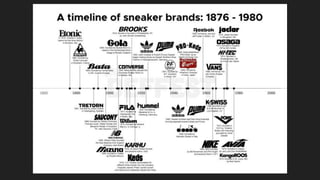
HISTORY OF ATHLETIC FOOTWEAR
This is a non
professional history
investigation done by
Paulo Silva
HISTORY OF ATHLETIC FOOTWEAR
HISTORICAL EVENTS OR STYLES
OUT OF TIME INNOVATIONS OR CURIOSITIES- marked with-
SHOE: Old English scoh "shoe," from Proto-Germanic *skokhaz (source also of Old Norse skor, Danish
and Swedish sko, Old Frisian skoch, Old Saxon skoh, Middle Dutch scoe, Dutch schoen, Old High
German scuoh, German Schuh, Gothic skoh). No known cognates outside Germanic, unless it somehow
is connected with PIE root *skeu- "cover" (source also of second element in Latin ob-scurus).
FOOTWEAR: An Americanism dating back to 1880–85; foot + wear
FROM PRE HISTORY TO MODERN AGE
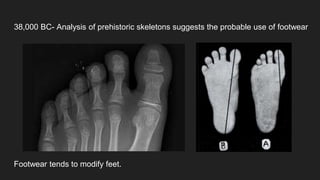
38,000 BC- Analysis of prehistoric skeletons suggests the probable use of footwear
Footwear tends to modify feet.
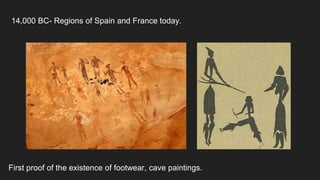
14,000 BC- Regions of Spain and France today.
First proof of the existence of footwear, cave paintings.
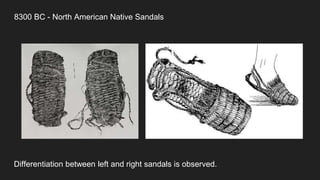
8300 BC - North American Native Sandals
Differentiation between left and right sandals is observed.
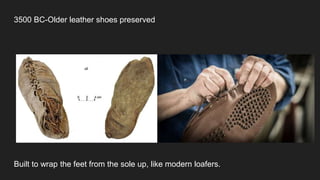
3500 BC-Older leather shoes preserved
Built to wrap the feet from the sole up, like modern loafers.
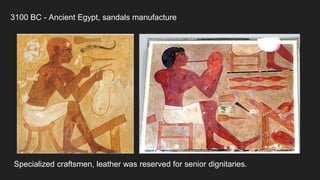
3100 BC - Ancient Egypt, sandals manufacture
Specialized craftsmen, leather was reserved for senior dignitaries.
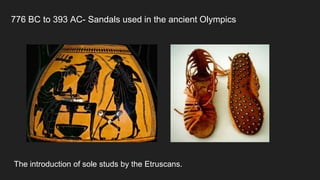
776 BC to 393 AC- Sandals used in the ancient Olympics
The introduction of sole studs by the Etruscans.
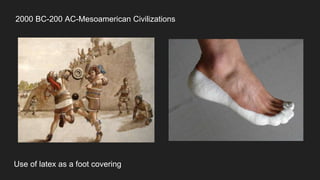
2000 BC-200 AC-Mesoamerican Civilizations
Use of latex as a foot covering
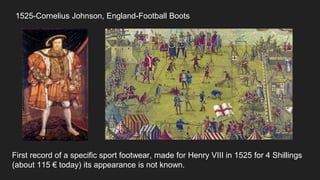
1525-Cornelius Johnson, England-Football Boots
First record of a specific sport footwear, made for Henry VIII in 1525 for 4 Shillings
(about 115 € today) its appearance is not known.
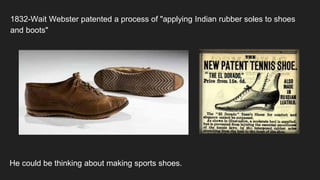
1832-Wait Webster patented a process of "applying Indian rubber soles to shoes
and boots"
He could be thinking about making sports shoes.
MASS PRODUCTION
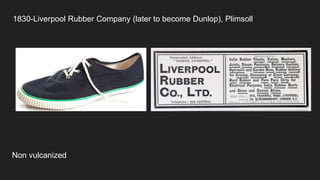
1830-Liverpool Rubber Company (later to become Dunlop), Plimsoll
Non vulcanized
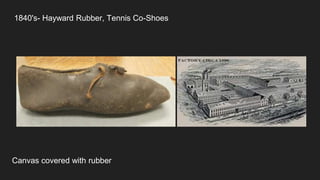
1840's- Hayward Rubber, Tennis Co-Shoes
Canvas covered with rubber
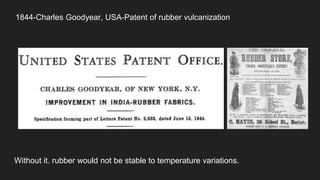
1844-Charles Goodyear, USA-Patent of rubber vulcanization
Without it. rubber would not be stable to temperature variations.
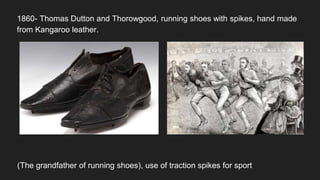
1860- Thomas Dutton and Thorowgood, running shoes with spikes, hand made
from Kangaroo leather.
(The grandfather of running shoes), use of traction spikes for sport
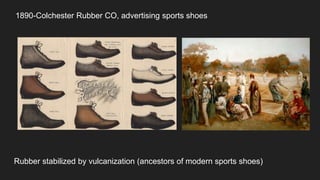
1890-Colchester Rubber CO, advertising sports shoes
Rubber stabilized by vulcanization (ancestors of modern sports shoes)
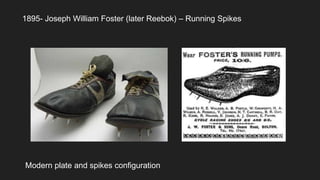
1895- Joseph William Foster (later Reebok) – Running Spikes
Modern plate and spikes configuration
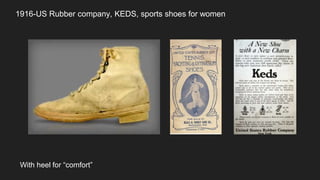
1916-US Rubber company, KEDS, sports shoes for women
With heel for “comfort”
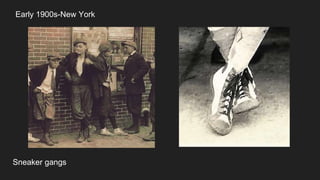
Early 1900s-New York
Sneaker gangs
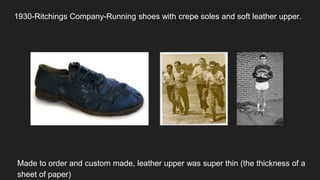
1930-Ritchings Company-Running shoes with crepe soles and soft leather upper.
Made to order and custom made, leather upper was super thin (the thickness of a
sheet of paper)
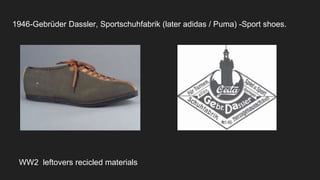
1946-Gebrüder Dassler, Sportschuhfabrik (later adidas / Puma) -Sport shoes.
WW2 leftovers recicled materials
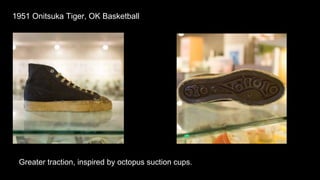
1951 Onitsuka Tiger, OK Basketball
Greater traction, inspired by octopus suction cups.
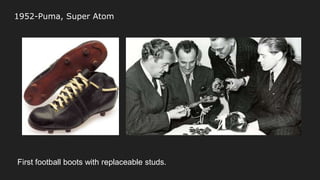
1952-Puma, Super Atom
First football boots with replaceable studs.
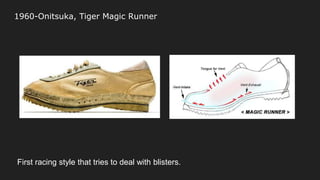
1960-Onitsuka, Tiger Magic Runner
First racing style that tries to deal with blisters.
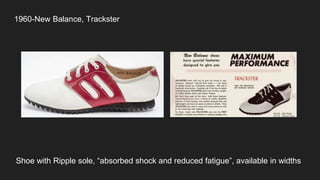
1960-New Balance, Trackster
Shoe with Ripple sole, “absorbed shock and reduced fatigue”, available in widths
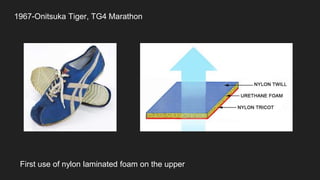
1967-Onitsuka Tiger, TG4 Marathon
First use of nylon laminated foam on the upper
THE MARKETING STRENGTH (GOLDEN AGE)
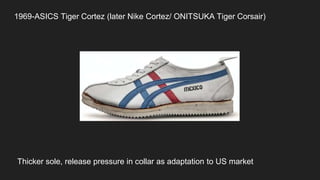
1969-ASICS Tiger Cortez (later Nike Cortez/ ONITSUKA Tiger Corsair)
Thicker sole, release pressure in collar as adaptation to US market
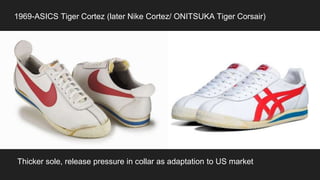
1969-ASICS Tiger Cortez (later Nike Cortez/ ONITSUKA Tiger Corsair)
Thicker sole, release pressure in collar as adaptation to US market
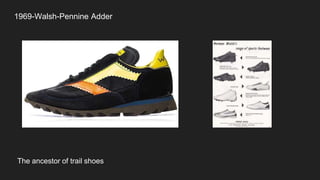
1969-Walsh-Pennine Adder
The ancestor of trail shoes
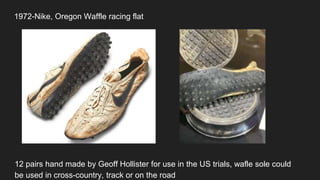
1972-Nike, Oregon Waffle racing flat
12 pairs hand made by Geoff Hollister for use in the US trials, wafle sole could
be used in cross-country, track or on the road
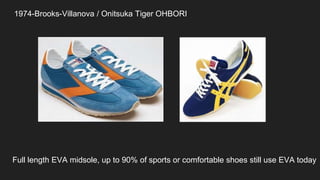
1974-Brooks-Villanova / Onitsuka Tiger OHBORI
Full length EVA midsole, up to 90% of sports or comfortable shoes still use EVA today
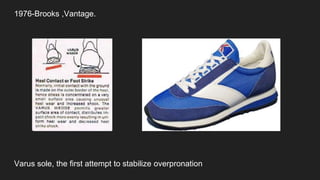
1976-Brooks ,Vantage.
Varus sole, the first attempt to stabilize overpronation
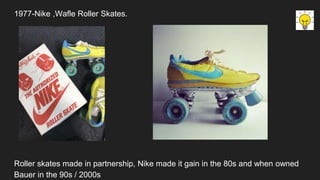
1977-Nike ,Wafle Roller Skates.
Roller skates made in partnership, Nike made it gain in the 80s and when owned
Bauer in the 90s / 2000s
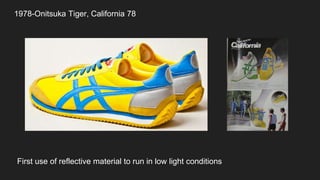
1978-Onitsuka Tiger, California 78
First use of reflective material to run in low light conditions
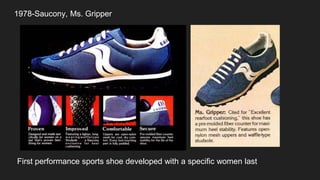
1978-Saucony, Ms. Gripper
First performance sports shoe developed with a specific women last
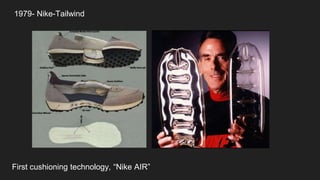
1979- Nike-Tailwind
First cushioning technology, “Nike AIR”
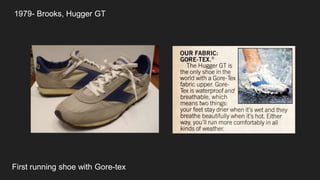
1979- Brooks, Hugger GT
First running shoe with Gore-tex
1979- Kangaroos
Running shoes with pockets
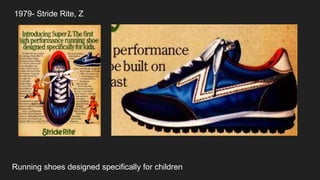
1979- Stride Rite, Z
Running shoes designed specifically for children
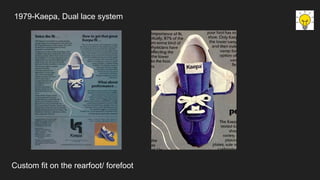
1979-Kaepa, Dual lace system
Custom fit on the rearfoot/ forefoot
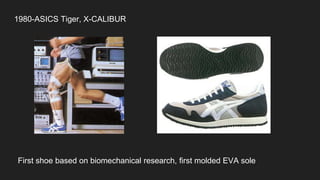
1980-ASICS Tiger, X-CALIBUR
First shoe based on biomechanical research, first molded EVA sole
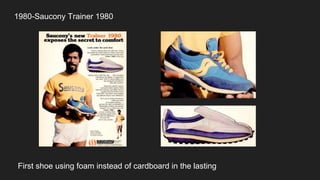
1980-Saucony Trainer 1980
First shoe using foam instead of cardboard in the lasting
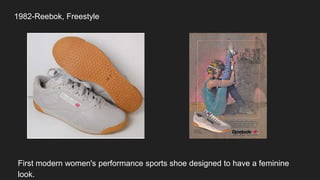
1982-Reebok, Freestyle
First modern women's performance sports shoe designed to have a feminine
look.
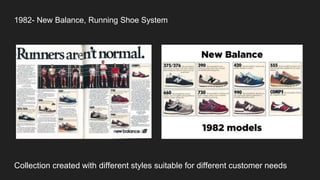
1982- New Balance, Running Shoe System
Collection created with different styles suitable for different customer needs
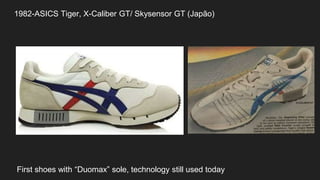
1982-ASICS Tiger, X-Caliber GT/ Skysensor GT (Japão)
First shoes with “Duomax” sole, technology still used today
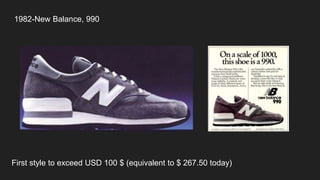
1982-New Balance, 990
First style to exceed USD 100 $ (equivalent to $ 267.50 today)
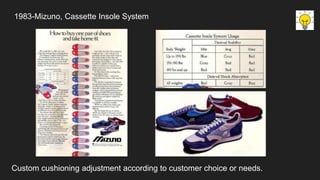
1983-Mizuno, Cassette Insole System
Custom cushioning adjustment according to customer choice or needs.
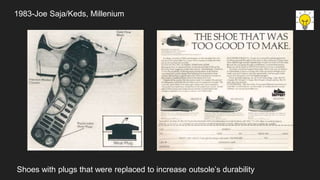
1983-Joe Saja/Keds, Millenium
Shoes with plugs that were replaced to increase outsole’s durability
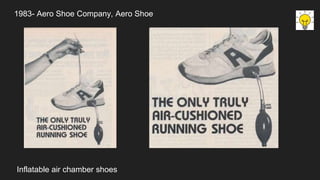
1983- Aero Shoe Company, Aero Shoe
Inflatable air chamber shoes
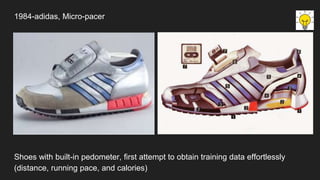
1984-adidas, Micro-pacer
Shoes with built-in pedometer, first attempt to obtain training data effortlessly
(distance, running pace, and calories)
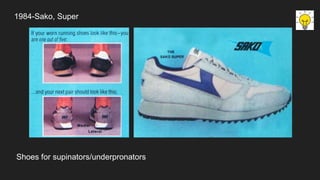
1984-Sako, Super
Shoes for supinators/underpronators
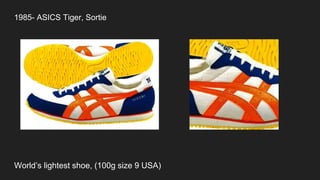
1985- ASICS Tiger, Sortie
World’s lightest shoe, (100g size 9 USA)
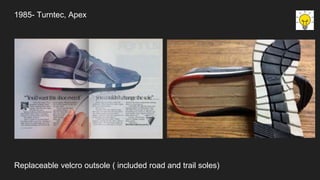
1985- Turntec, Apex
Replaceable velcro outsole ( included road and trail soles)
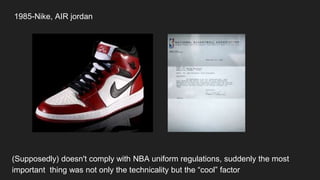
1985-Nike, AIR jordan
(Supposedly) doesn't comply with NBA uniform regulations, suddenly the most
important thing was not only the technicality but the “cool” factor
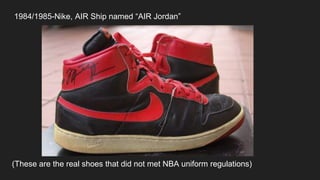
1984/1985-Nike, AIR Ship named “AIR Jordan”
(These are the real shoes that did not met NBA uniform regulations)
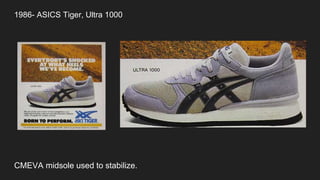
1986- ASICS Tiger, Ultra 1000
CMEVA midsole used to stabilize.
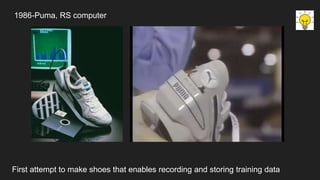
1986-Puma, RS computer
First attempt to make shoes that enables recording and storing training data
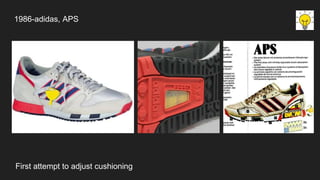
1986-adidas, APS
First attempt to adjust cushioning
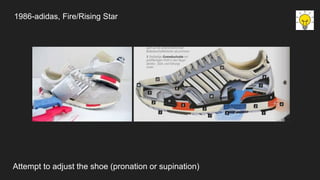
1986-adidas, Fire/Rising Star
Attempt to adjust the shoe (pronation or supination)
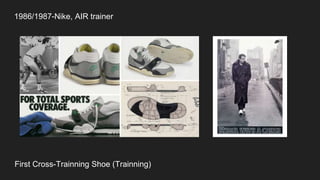
1986/1987-Nike, AIR trainer
First Cross-Trainning Shoe (Trainning)
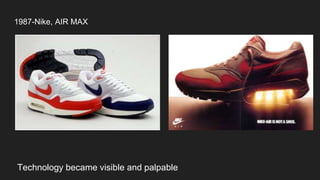
1987-Nike, AIR MAX
Technology became visible and palpable
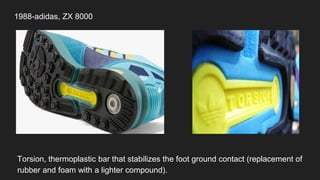
1988-adidas, ZX 8000
Torsion, thermoplastic bar that stabilizes the foot ground contact (replacement of
rubber and foam with a lighter compound).
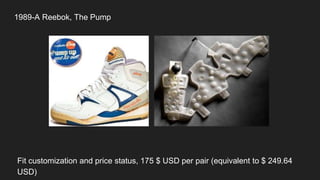
1989-A Reebok, The Pump
Fit customization and price status, 175 $ USD per pair (equivalent to $ 249.64
USD)
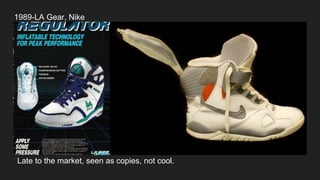
1989-LA Gear, Nike
Late to the market, seen as copies, not cool.
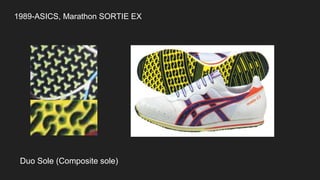
1989-ASICS, Marathon SORTIE EX
Duo Sole (Composite sole)
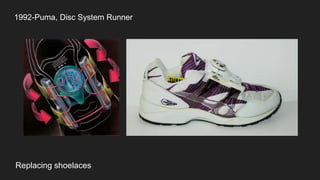
1992-Puma, Disc System Runner
Replacing shoelaces
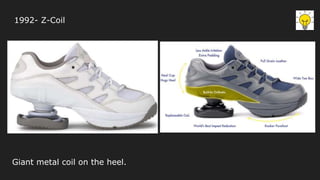
1992- Z-Coil
Giant metal coil on the heel.
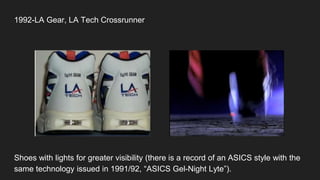
1992-LA Gear, LA Tech Crossrunner
Shoes with lights for greater visibility (there is a record of an ASICS style with the
same technology issued in 1991/92, “ASICS Gel-Night Lyte”).
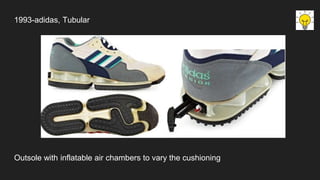
1993-adidas, Tubular
Outsole with inflatable air chambers to vary the cushioning
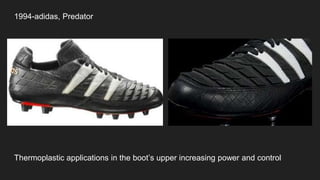
1994-adidas, Predator
Thermoplastic applications in the boot’s upper increasing power and control
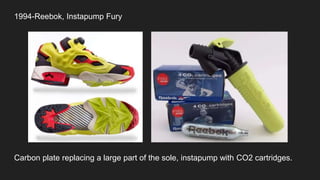
1994-Reebok, Instapump Fury
Carbon plate replacing a large part of the sole, instapump with CO2 cartridges.
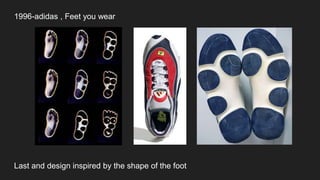
1996-adidas , Feet you wear
Last and design inspired by the shape of the foot
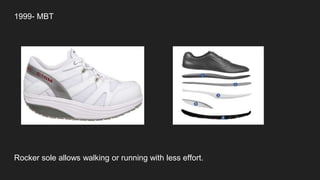
1999- MBT
Rocker sole allows walking or running with less effort.
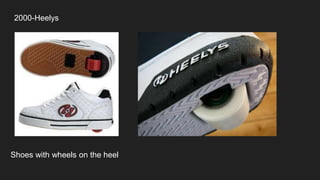
2000-Heelys
Shoes with wheels on the heel
BACK TO ORIGINS (NATURAL RUNNING)
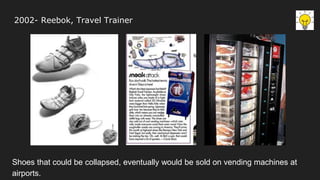
2002- Reebok, Travel Trainer
Shoes that could be collapsed, eventually would be sold on vending machines at
airports.
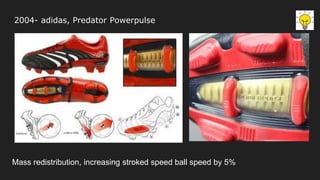
2004- adidas, Predator Powerpulse
Mass redistribution, increasing stroked speed ball speed by 5%
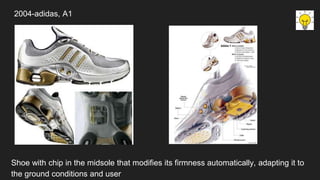
2004-adidas, A1
Shoe with chip in the midsole that modifies its firmness automatically, adapting it to
the ground conditions and user
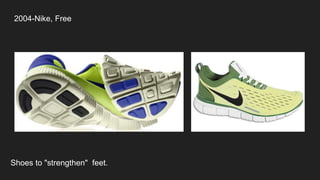
2004-Nike, Free
Shoes to "strengthen" feet.
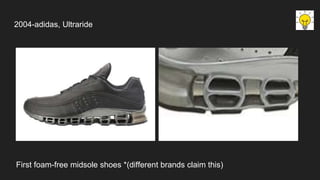
2004-adidas, Ultraride
First foam-free midsole shoes *(different brands claim this)
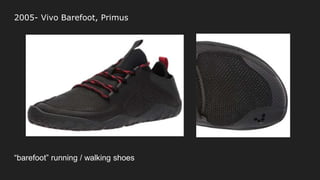
2005- Vivo Barefoot, Primus
“barefoot” running / walking shoes
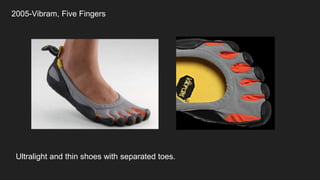
2005-Vibram, Five Fingers
Ultralight and thin shoes with separated toes.
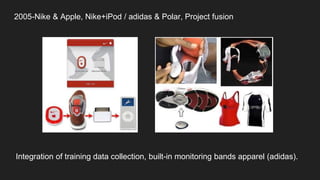
2005-Nike & Apple, Nike+iPod / adidas & Polar, Project fusion
Integration of training data collection, built-in monitoring bands apparel (adidas).
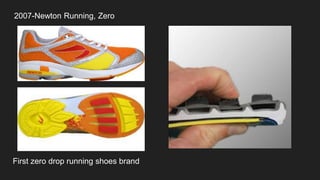
2007-Newton Running, Zero
First zero drop running shoes brand
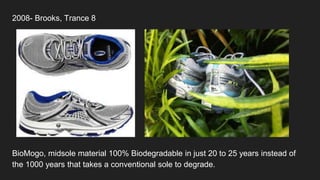
2008- Brooks, Trance 8
BioMogo, midsole material 100% Biodegradable in just 20 to 25 years instead of
the 1000 years that takes a conventional sole to degrade.
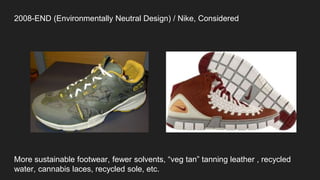
2008-END (Environmentally Neutral Design) / Nike, Considered
More sustainable footwear, fewer solvents, “veg tan” tanning leather , recycled
water, cannabis laces, recycled sole, etc.
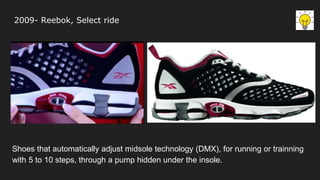
2009- Reebok, Select ride
Shoes that automatically adjust midsole technology (DMX), for running or trainning
with 5 to 10 steps, through a pump hidden under the insole.
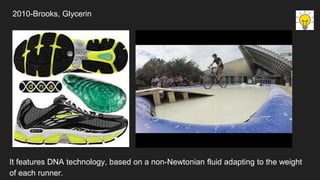
2010-Brooks, Glycerin
It features DNA technology, based on a non-Newtonian fluid adapting to the weight
of each runner.
MODERN ERA (ENTERS SCIENCE)
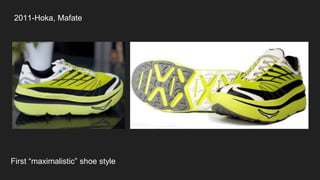
2011-Hoka, Mafate
First “maximalistic” shoe style
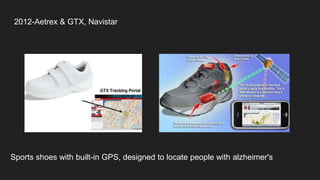
2012-Aetrex & GTX, Navistar
Sports shoes with built-in GPS, designed to locate people with alzheimer's
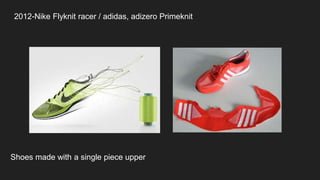
2012-Nike Flyknit racer / adidas, adizero Primeknit
Shoes made with a single piece upper
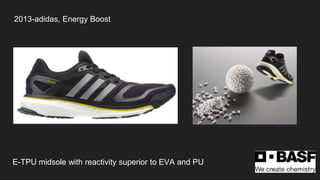
2013-adidas, Energy Boost
E-TPU midsole with reactivity superior to EVA and PU
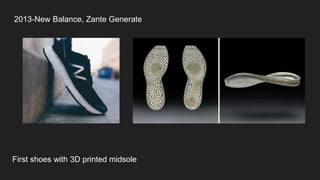
2013-New Balance, Zante Generate
First shoes with 3D printed midsole
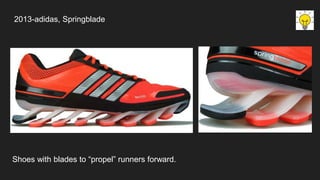
2013-adidas, Springblade
Shoes with blades to “propel” runners forward.
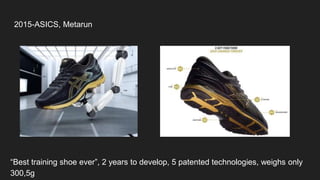
2015-ASICS, Metarun
“Best training shoe ever”, 2 years to develop, 5 patented technologies, weighs only
300,5g
2016-adidas, UltraBOOST Uncaged Parley
Upper made from recycled polyester
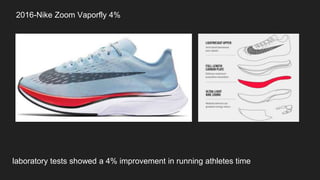
2016-Nike Zoom Vaporfly 4%
laboratory tests showed a 4% improvement in running athletes time
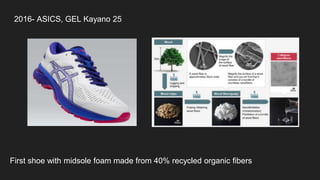
2016- ASICS, GEL Kayano 25
First shoe with midsole foam made from 40% recycled organic fibers
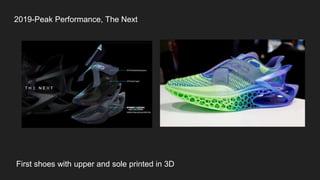
2019-Peak Performance, The Next
First shoes with upper and sole printed in 3D
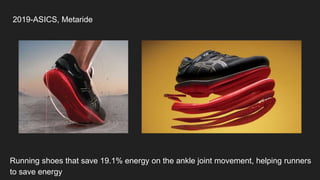
2019-ASICS, Metaride
Running shoes that save 19.1% energy on the ankle joint movement, helping runners
to save energy
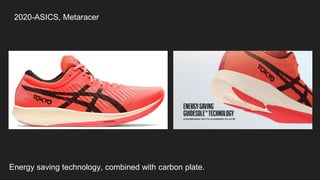
2020-ASICS, Metaracer
Energy saving technology, combined with carbon plate.
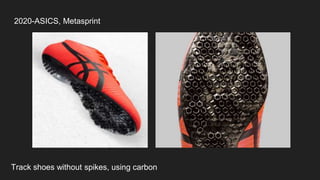
2020-ASICS, Metasprint
Track shoes without spikes, using carbon
FUTURE?
The athletic shoes industry its a
materials industry.
Some possibilities
Smart fabrics
Self repairing materials
Nano materials

History