WHAT IS CONVEYANCING?
In the context of law, conveyancing is defined as transfer
of title of a property from one individual to another. In
addition, it is also used when describing transfer of such
amenities as electricity, gas or even sewerage.
The conveyancing process used in England and Wales is
divided into three broad stages. These stages include;
letter of instruction, Exchange of contracts and completion.
The first stage involves 3 main
actions concerning the property.
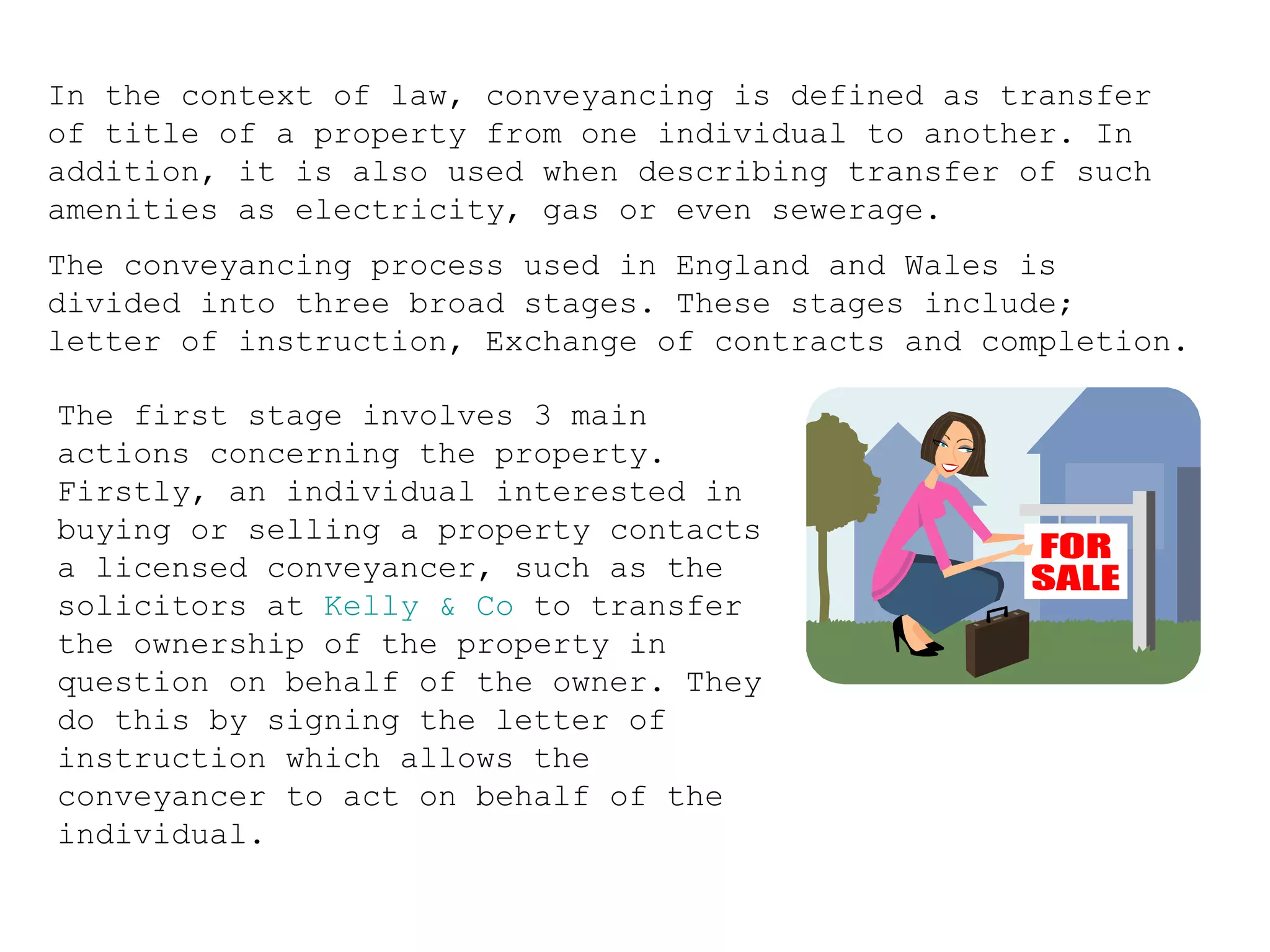
Firstly, an individual interested in
buying or selling a property contacts
a licensed conveyancer, such as the
solicitors at Kelly & Co to transfer
the ownership of the property in
question on behalf of the owner. They
do this by signing the letter of
instruction which allows the
conveyancer to act on behalf of the
individual.
The second step in this stage involves a local authority
investigation on the property to find out if there are any
complaints against the property like breach of property laws.
A scrutiny is done on the property documents to ensure they
are genuine besides scrutinizing the contract document. The
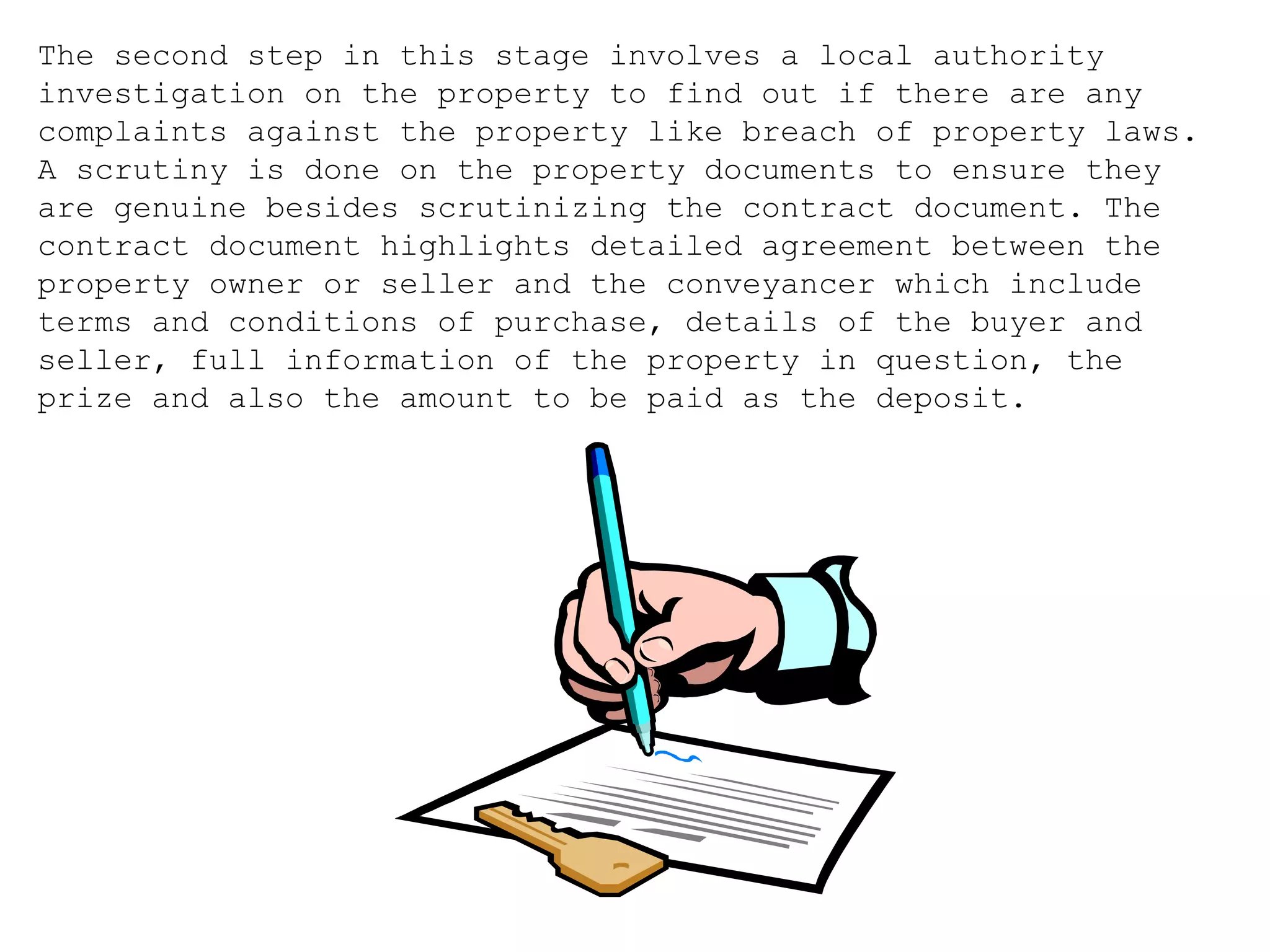
contract document highlights detailed agreement between the
property owner or seller and the conveyancer which include
terms and conditions of purchase, details of the buyer and
seller, full information of the property in question, the
prize and also the amount to be paid as the deposit.
The second stage involves exchanging contract documents. It is
at this stage that issues arising from the Title are looked
into and addressed and the conveyancer is informed on all
relevant matters arising from the title. Once this is done,
the conveyancer signs the contract and returns it for exchange
with the other party.
After exchanging the contract document, the conveyancer is
required to sign another important form; the Fixtures and
fittings and contents form. This is after he has gone through
it. The next step is to sign the deed of transfer form. This
is a form that will transfer ownership of the property and the
conveyancer also signs it. This stage is followed by issuance
of Mortgage deed, a document that will enable the purchaser to
secure loan on the property. But all this is possible once the
document is signed by the conveyancer and in presence of a
witness.
The statement of completion is a document that will indicate
the balance remaining for completion of the purchase plus the
stamp duty required. After this step, once the deposit is
made and date of completion set for the settlement of the
remaining balance are done the contract is exchanged and the
individual has agreed legally to buy or sell the property.
Afterwards, the purchaser must take a building insurance.
The final stage is completion, only final payment is to be
made. Once the conveyancer receives the remaining balance, he
will issue the title deed. The conveyance process is over and
the property is under new owner.
The statement of completion is a document that will indicate
the balance remaining for completion of the purchase plus the
stamp duty required. After this step, once the deposit is
made and date of completion set for the settlement of the
remaining balance are done the contract is exchanged and the
individual has agreed legally to buy or sell the property.
Afterwards, the purchaser must take a building insurance.
The final stage is completion, only final payment is to be
made. Once the conveyancer receives the remaining balance, he
will issue the title deed. The conveyance process is over and
the property is under new owner.

What is Conveyancing?

  • 1.
  • 2.
    In the contextof law, conveyancing is defined as transfer of title of a property from one individual to another. In addition, it is also used when describing transfer of such amenities as electricity, gas or even sewerage. The conveyancing process used in England and Wales is divided into three broad stages. These stages include; letter of instruction, Exchange of contracts and completion. The first stage involves 3 main actions concerning the property. Firstly, an individual interested in buying or selling a property contacts a licensed conveyancer, such as the solicitors at Kelly & Co to transfer the ownership of the property in question on behalf of the owner. They do this by signing the letter of instruction which allows the conveyancer to act on behalf of the individual.
  • 3.
    The second stepin this stage involves a local authority investigation on the property to find out if there are any complaints against the property like breach of property laws. A scrutiny is done on the property documents to ensure they are genuine besides scrutinizing the contract document. The contract document highlights detailed agreement between the property owner or seller and the conveyancer which include terms and conditions of purchase, details of the buyer and seller, full information of the property in question, the prize and also the amount to be paid as the deposit.
  • 4.
    The second stageinvolves exchanging contract documents. It is at this stage that issues arising from the Title are looked into and addressed and the conveyancer is informed on all relevant matters arising from the title. Once this is done, the conveyancer signs the contract and returns it for exchange with the other party. After exchanging the contract document, the conveyancer is required to sign another important form; the Fixtures and fittings and contents form. This is after he has gone through it. The next step is to sign the deed of transfer form. This is a form that will transfer ownership of the property and the conveyancer also signs it. This stage is followed by issuance of Mortgage deed, a document that will enable the purchaser to secure loan on the property. But all this is possible once the document is signed by the conveyancer and in presence of a witness.
  • 5.
    The statement ofcompletion is a document that will indicate the balance remaining for completion of the purchase plus the stamp duty required. After this step, once the deposit is made and date of completion set for the settlement of the remaining balance are done the contract is exchanged and the individual has agreed legally to buy or sell the property. Afterwards, the purchaser must take a building insurance. The final stage is completion, only final payment is to be made. Once the conveyancer receives the remaining balance, he will issue the title deed. The conveyance process is over and the property is under new owner.
  • 6.
    The statement ofcompletion is a document that will indicate the balance remaining for completion of the purchase plus the stamp duty required. After this step, once the deposit is made and date of completion set for the settlement of the remaining balance are done the contract is exchanged and the individual has agreed legally to buy or sell the property. Afterwards, the purchaser must take a building insurance. The final stage is completion, only final payment is to be made. Once the conveyancer receives the remaining balance, he will issue the title deed. The conveyance process is over and the property is under new owner.