THE SKULL
2 Divisions
Cranium
Face
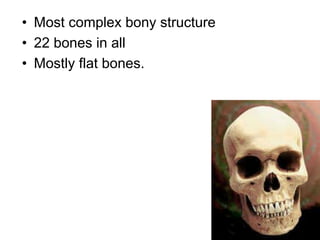
• Most complex bony structure
• 22 bones in all
• Mostly flat bones.
Cranial Bones: 8
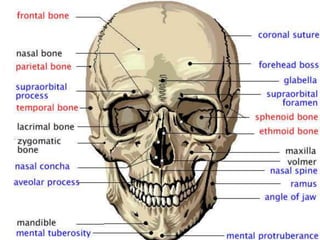
• 1. frontal bone
• 2. occipital bone
• 3. sphenoid bone
• 4. ethmoid bone
• 5. parietal bones (2)
• 6. temporal bones (2)
Functions of Cranial Bones
• Enclose and protect the brain
• Attachment sites for head and neck
muscles
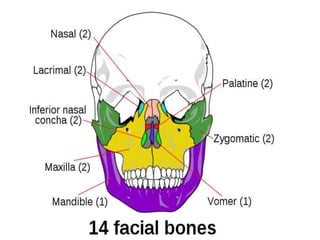
Facial Bones: 14
• The bones of the facial skeleton(14) are
– The vomer
– Two nasal conchae,
– two nasal bones
– Two maxilla
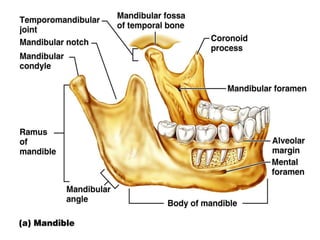
– The mandible
– Two palatine bones
– Two zygomatic bones and
– Two lacrimal bones.
Functions of Facial Bones
• 1. form framework of face
• 2. contain cavities for special sense
organs
• 3. openings for food/air passage
• 4. secure the teeth
• 5. anchor the facial muscles of expression
• ALL BONES OF THE SKULL ARE
FIRMLY LOCKED IN PLACE BY JOINTS
CALLED SUTURES
• Four major sutures:
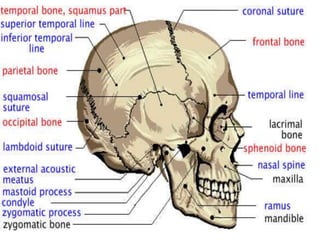
– Coronal suture
– Sagittal suture
– Lambdoid suture
– Squamosal or squamous suture
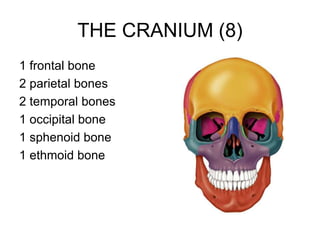
THE CRANIUM (8)
1 frontal bone
2 parietal bones
2 temporal bones
1 occipital bone
1 sphenoid bone
1 ethmoid bone
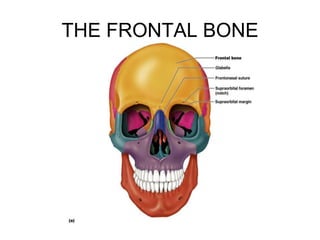
THE FRONTAL BONE
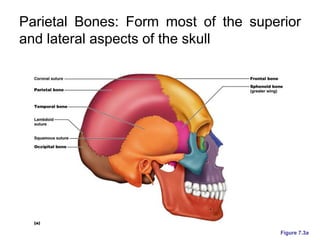
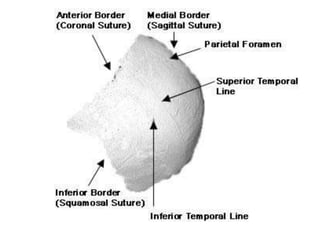
Parietal Bones: Form most of the superior
and lateral aspects of the skull
Figure 7.3a
Parietal Bones
• Curved, rectangular bones forming
majority of the cranium
• All four major sutures articulate with this
bone
Parietal Bones and Major Associated Sutures
• Four sutures mark the articulations of the
parietal bones
– Coronal suture – articulation between
parietal bones and frontal bone anteriorly
– Sagittal suture – where right and left parietal
bones meet superiorly
– Lambdoid suture – where parietal bones
meet the occipital bone posteriorly
– Squamosal or squamous suture – where
parietal and temporal bones meet
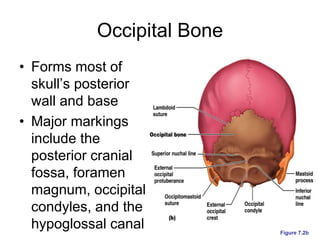
Occipital Bone
• Forms most of
skull’s posterior
wall and base
• Major markings
include the
posterior cranial
fossa, foramen
magnum, occipital
condyles, and the
hypoglossal canal Figure 7.2b
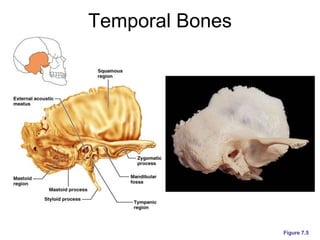
Temporal Bones
• Lateral sides of the skull
• Zygomatic process connects with
zygomatic arch
• External auditory meatus (external ear)
• Styloid process muscle attachment for
tongue and neck
• Mastoid process neck muscles
Temporal Bones
Figure 7.5
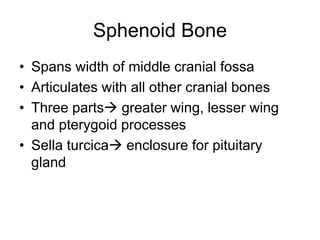
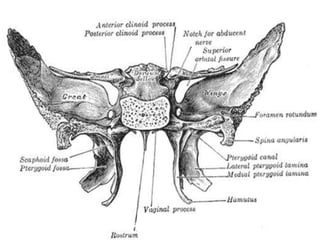
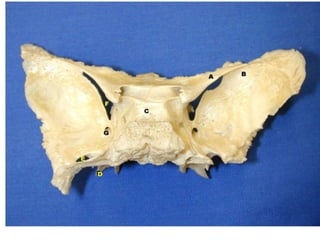
Sphenoid Bone
• Spans width of middle cranial fossa
• Articulates with all other cranial bones
• Three parts greater wing, lesser wing
and pterygoid processes
• Sella turcica enclosure for pituitary
gland
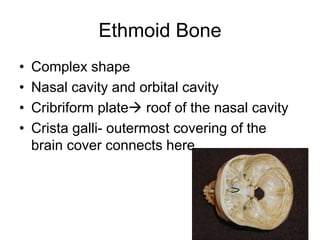
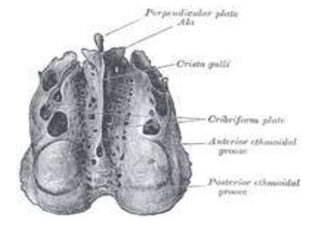
Ethmoid Bone
• Complex shape
• Nasal cavity and orbital cavity
• Cribriform plate roof of the nasal cavity
• Crista galli- outermost covering of the
brain cover connects here
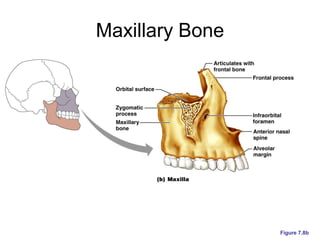
Maxillary Bones
• Medially fused bones that make up the
upper jaw and the central portion of the
facial skeleton
• Facial keystone bones that articulate with
all other facial bones except the mandible
• Their major markings include palatine,
frontal, and zygomatic processes, the
alveolar margins, inferior orbital fissure,
and the maxillary sinuses
Maxillary Bone
Figure 7.8b

Skull.ppt

  • 1.
  • 2.
    • Most complexbony structure • 22 bones in all • Mostly flat bones.
  • 5.
    Cranial Bones: 8 •1. frontal bone • 2. occipital bone • 3. sphenoid bone • 4. ethmoid bone • 5. parietal bones (2) • 6. temporal bones (2)
  • 6.
    Functions of CranialBones • Enclose and protect the brain • Attachment sites for head and neck muscles
  • 7.
    Facial Bones: 14 •The bones of the facial skeleton(14) are – The vomer – Two nasal conchae, – two nasal bones – Two maxilla – The mandible – Two palatine bones – Two zygomatic bones and – Two lacrimal bones.
  • 9.
    Functions of FacialBones • 1. form framework of face • 2. contain cavities for special sense organs • 3. openings for food/air passage • 4. secure the teeth • 5. anchor the facial muscles of expression
  • 10.
    • ALL BONESOF THE SKULL ARE FIRMLY LOCKED IN PLACE BY JOINTS CALLED SUTURES • Four major sutures: – Coronal suture – Sagittal suture – Lambdoid suture – Squamosal or squamous suture
  • 11.
    THE CRANIUM (8) 1frontal bone 2 parietal bones 2 temporal bones 1 occipital bone 1 sphenoid bone 1 ethmoid bone
  • 12.
  • 13.
    Parietal Bones: Formmost of the superior and lateral aspects of the skull Figure 7.3a
  • 14.
    Parietal Bones • Curved,rectangular bones forming majority of the cranium • All four major sutures articulate with this bone
  • 15.
    Parietal Bones andMajor Associated Sutures • Four sutures mark the articulations of the parietal bones – Coronal suture – articulation between parietal bones and frontal bone anteriorly – Sagittal suture – where right and left parietal bones meet superiorly – Lambdoid suture – where parietal bones meet the occipital bone posteriorly – Squamosal or squamous suture – where parietal and temporal bones meet
  • 17.
    Occipital Bone • Formsmost of skull’s posterior wall and base • Major markings include the posterior cranial fossa, foramen magnum, occipital condyles, and the hypoglossal canal Figure 7.2b
  • 18.
    Temporal Bones • Lateralsides of the skull • Zygomatic process connects with zygomatic arch • External auditory meatus (external ear) • Styloid process muscle attachment for tongue and neck • Mastoid process neck muscles
  • 19.
  • 20.
    Sphenoid Bone • Spanswidth of middle cranial fossa • Articulates with all other cranial bones • Three parts greater wing, lesser wing and pterygoid processes • Sella turcica enclosure for pituitary gland
  • 23.
    Ethmoid Bone • Complexshape • Nasal cavity and orbital cavity • Cribriform plate roof of the nasal cavity • Crista galli- outermost covering of the brain cover connects here
  • 26.
    Maxillary Bones • Mediallyfused bones that make up the upper jaw and the central portion of the facial skeleton • Facial keystone bones that articulate with all other facial bones except the mandible • Their major markings include palatine, frontal, and zygomatic processes, the alveolar margins, inferior orbital fissure, and the maxillary sinuses
  • 27.