ANIMALS,
INCLUDING HUMANS
Science - Year 3 - Skeletons and Muscles
To know that a skeleton is needed for
support, protection and movement
1
To understand how muscles work in pairs to
allow movement and maintain posture
2
LEARNING
OUTCOMES
TYPES OF ANIMALS
Vertebrates are creatures
with a spine (backbone)
located inside their body.
Humans fall into the
category of vertebrates.
Invertebrates are creatures
without a spine or backbone
in their bodies. Some
invertebrates are tiny
animals but some can be
large, like the giant squid!
All animals can be separated into two basic groups: vertebrates or
invertebrates.
Invertebrates can be divided into 5 main groups:
INSECTS
Beetles, ants and flies
CRUSTACEANS
Shrimps, crabs and lobsters
ARACHNIDS
Spiders and scorpions
SNAILS AND
SLUGS
WORMS
INVERTEBRATE
S
DO INVERTEBRATES HAVE A SKELETON?
INVERTEBRAT
ES
Invertebrates do
not have a spine,
bones or an
internal skeleton.
However, they still
need something to
protect their
bodies and keep
them safe.
EXOSKELETON
S
Some invertebrates, like snails, have shells to protect
themselves
SHELLS
Some creatures have a tough outer layer known as an
exoskeleton. Animals like crabs, woodlice and spiders rely
on their exoskeletons for protection. The prefix ‘exo’ means
‘outside’ so the word exoskeleton really means ‘outside
skeleton’!
How do invertebrates move if they do not have bones?
• Invertebrates do not need bones inside them to help them move - they have muscles
instead!
• Their shells or exoskeletons protect them from any harm that affects the outside of their
body. However, to move their body, they use lots of muscles to move or thrust forward.
HOW DO INVERTEBRATES MOVE?
VERTEBRATES
SKELETONS AND
BONES
All vertebrates have skeletons
to support and protect their
body and to help their body
move.
The human skeleton is made of
bones. These bones grow as
we grow. Some bones in the
human body are big, like in
your legs, but some are tiny -
especially in your ears!
FUNCTIONS OF THE SKELETON
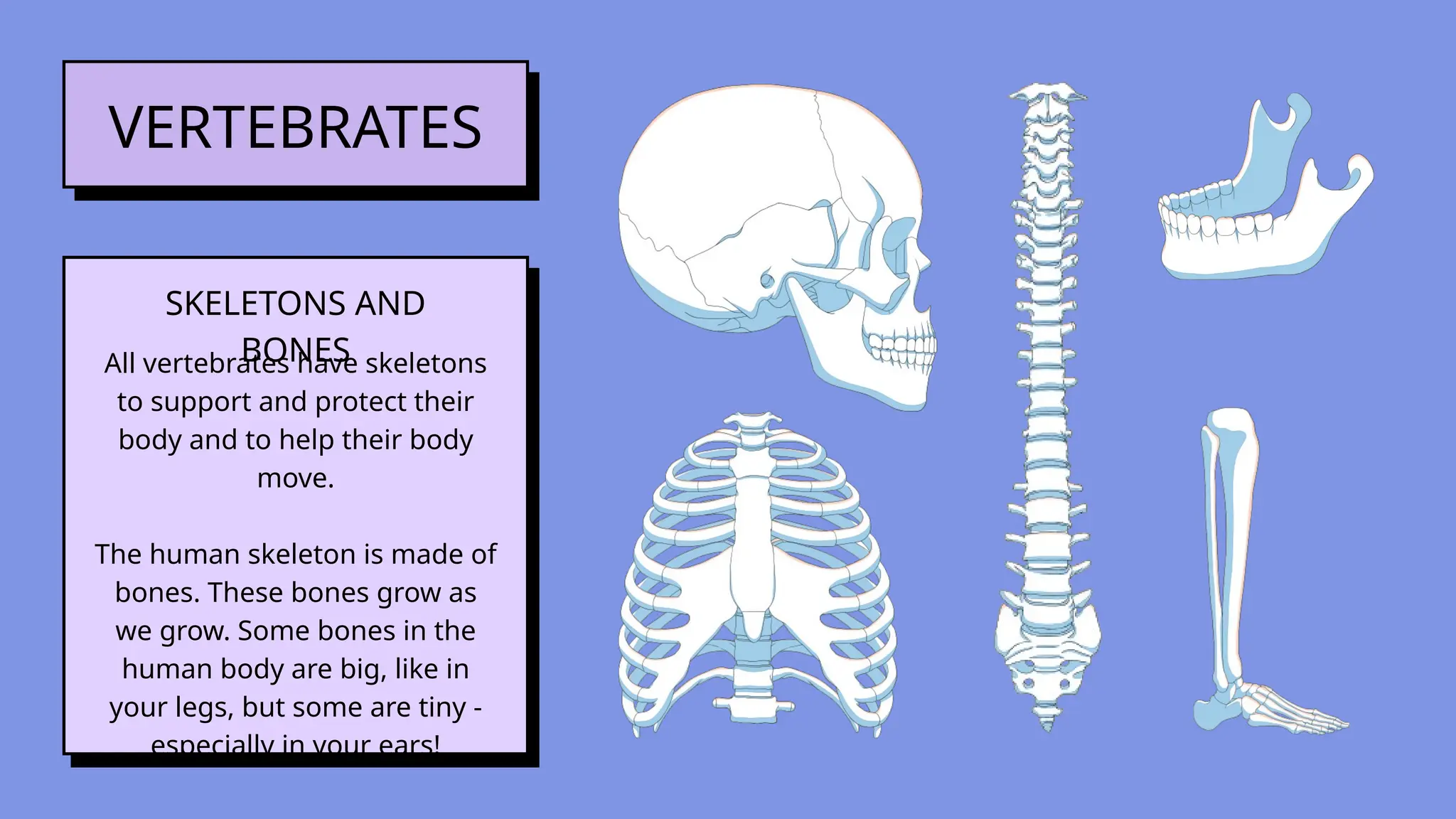
The skull protects an
animal’s brain, while
the ribs shield the
heart, lungs, and other
essential organs.
The leg and back
bones provide the
support needed to
keep an animal
standing on all fours or
upright.
An animal’s muscles
pull on their bones
helping them to move.
The joints connecting
bones, such as elbows
and knees, make this
easier.
PROTECTION SUPPORT MOVEMENT
All of the bones in an animal’s body have a specific purpose. They help an animal with protection,
support and movement. It’s important for humans to keep their bones healthy by eating a
healthy diet with enough calcium. This can be found in dairy products like milk or cheese.
Different parts of the human skeleton protect vital organs such as the brain,
heart and lungs. The spine (and other bones) hold our body upright and help us
to move.
The skull is made up of
different bones that have
fused together. It protects
the brain.
The rib cage protects a
human’s heart and lungs.
Humans usually have 24 ribs
in total.
The spine is
made up of 33
stacked bones.
The spine is a
human’s
backbone. It
helps you walk,
twist and
move.
THE HUMAN SKELETON
• Muscles are made from thousands of fibres (like threads) which are stretchy. When they stretch
and tighten, they help us to make movements.
• The muscles in our body help us have good posture and to circulate blood around the body.
All vertebrates have muscles throughout their body. Muscles help animals to make movements,
whether they are small or big movements. Did you know, the smallest muscle in your body is only
6mm long in your ear!
WHAT ARE MUSCLES?
• Some muscles work independently without us consciously thinking about moving them.
Your heart is a muscle that beats independently (on its own). These are called
involuntary muscles.
• Other muscles move when your brain thinks about moving them. For example, when we
throw a ball, your brain will send signals to your arm muscles telling them to move.
These are called voluntary muscles.
INVOLUNTARY
MUSCLES
VOLUNTARY
MUSCLES
TYPES OF MUSCLES
SKELETAL SMOOTH CARDIAC
There are 3 types of muscles in the human body:
THREE TYPES OF MUSCLES
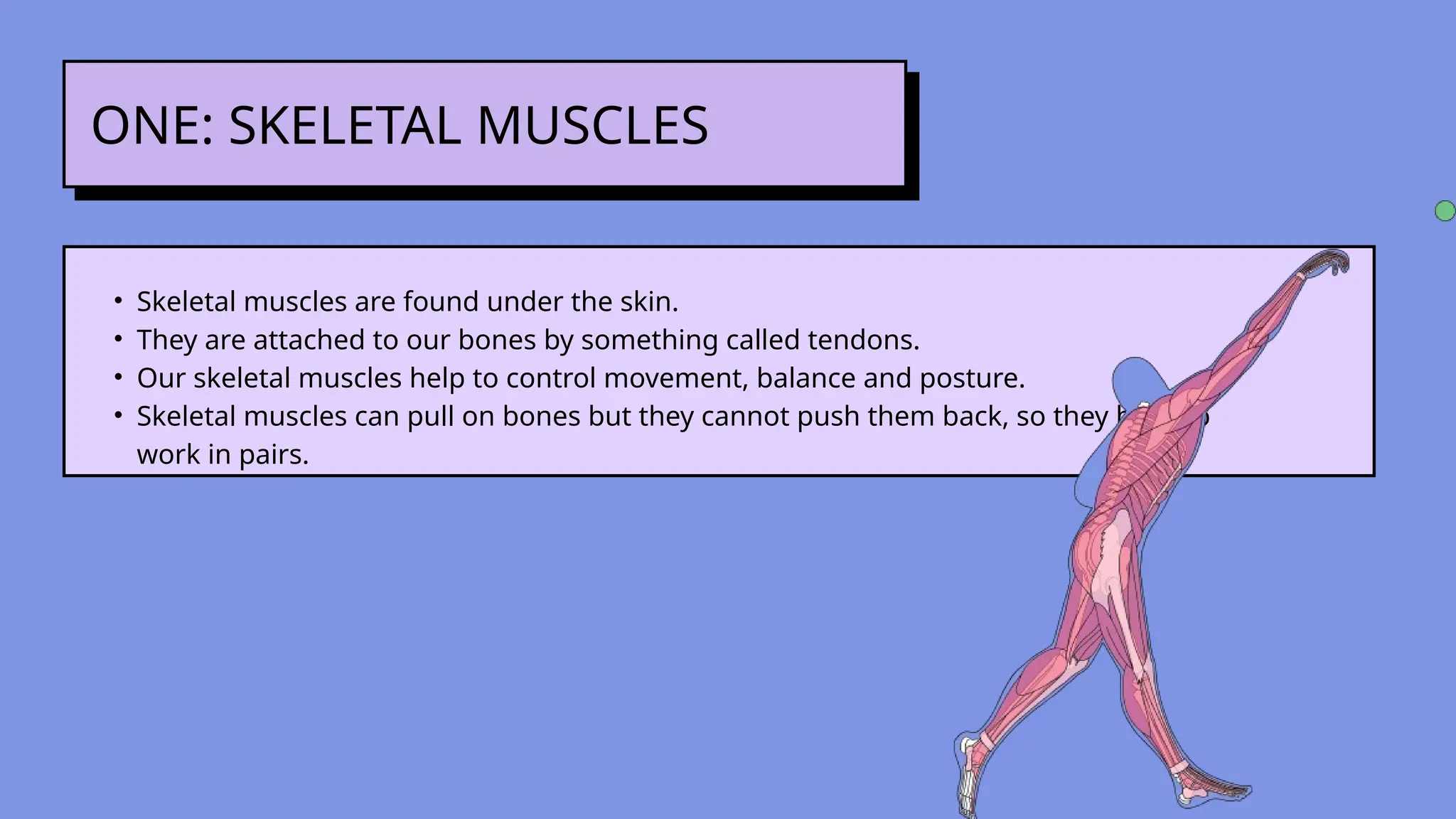
• Skeletal muscles are found under the skin.
• They are attached to our bones by something called tendons.
• Our skeletal muscles help to control movement, balance and posture.
• Skeletal muscles can pull on bones but they cannot push them back, so they have to
work in pairs.
ONE: SKELETAL MUSCLES
HOW DO MUSCLE PAIRS WORK?
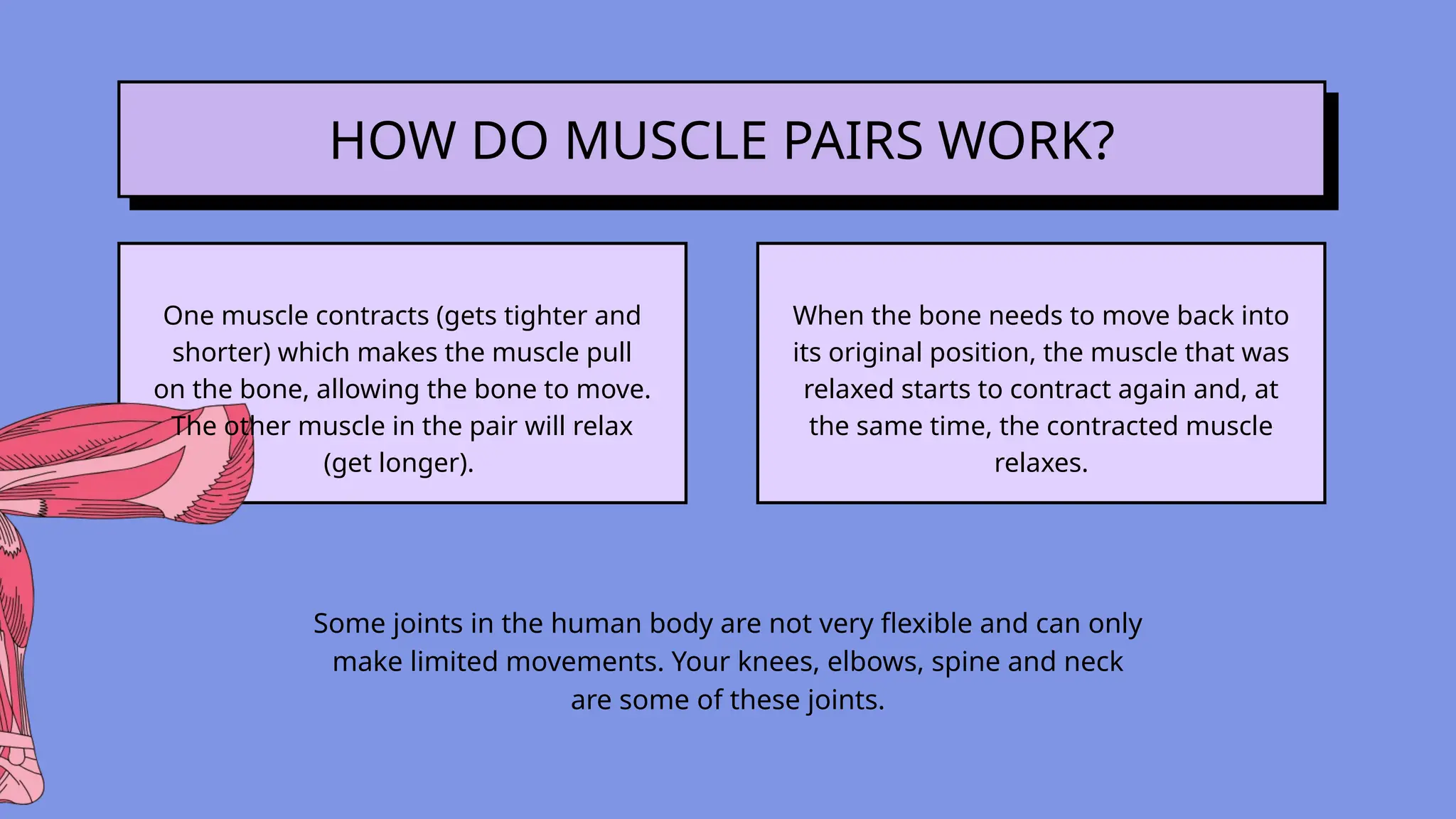
One muscle contracts (gets tighter and
shorter) which makes the muscle pull
on the bone, allowing the bone to move.
The other muscle in the pair will relax
(get longer).
Some joints in the human body are not very flexible and can only
make limited movements. Your knees, elbows, spine and neck
are some of these joints.
When the bone needs to move back into
its original position, the muscle that was
relaxed starts to contract again and, at
the same time, the contracted muscle
relaxes.
To bend the arm, the biceps contract (get tighter) and pull on
the bone.
At the same time, the triceps relax. This allows the elbow to
bend.
To straighten the arm again, the triceps contract and the
biceps relax.
biceps
triceps
MUSCLE PAIRS: BICEPS AND TRICEPS
• Smooth muscles are involuntary muscles (this means that we do not need to think about
moving them or remind them to move).
• They are in the walls of some of our internal organs and they help those organs to work
properly.
• The intestine (inside your tummy) and diaphragm (under your lungs) are both types of
smooth muscles. This means the muscles in your digestive system keep doing their thing
without any reminders!
intestines
TWO: SMOOTH MUSCLES
• The cardiac muscle is the muscle within the heart.
• The heart is made up of 3 layers - the thickest layer is the cardiac muscle.
• We need our heart to pump blood around the body.
• It’s the most important muscle in the body!
• The cardiac muscle is an involuntary muscle (meaning it works on its own without any
reminders).
THREE: CARDIAC MUSCLES
Vertebrates need their skeletons for three
things: support, protection and movement.
1
There are three types of muscles: skeletal,
smooth and cardiac. All three help the body
to function.
2
Skeletal muscles need to work in pairs to help
bones to move. These muscles also help the
body to stay upright and to maintain good
posture.
3
LET’S RECAP

Skeletons and Muscles Educational Presentation in a Blue Purple Lined Style.pptx

  • 1.
    ANIMALS, INCLUDING HUMANS Science -Year 3 - Skeletons and Muscles
  • 2.
    To know thata skeleton is needed for support, protection and movement 1 To understand how muscles work in pairs to allow movement and maintain posture 2 LEARNING OUTCOMES
  • 3.
    TYPES OF ANIMALS Vertebratesare creatures with a spine (backbone) located inside their body. Humans fall into the category of vertebrates. Invertebrates are creatures without a spine or backbone in their bodies. Some invertebrates are tiny animals but some can be large, like the giant squid! All animals can be separated into two basic groups: vertebrates or invertebrates.
  • 4.
    Invertebrates can bedivided into 5 main groups: INSECTS Beetles, ants and flies CRUSTACEANS Shrimps, crabs and lobsters ARACHNIDS Spiders and scorpions SNAILS AND SLUGS WORMS INVERTEBRATE S
  • 5.
    DO INVERTEBRATES HAVEA SKELETON? INVERTEBRAT ES Invertebrates do not have a spine, bones or an internal skeleton. However, they still need something to protect their bodies and keep them safe. EXOSKELETON S Some invertebrates, like snails, have shells to protect themselves SHELLS Some creatures have a tough outer layer known as an exoskeleton. Animals like crabs, woodlice and spiders rely on their exoskeletons for protection. The prefix ‘exo’ means ‘outside’ so the word exoskeleton really means ‘outside skeleton’!
  • 6.
    How do invertebratesmove if they do not have bones? • Invertebrates do not need bones inside them to help them move - they have muscles instead! • Their shells or exoskeletons protect them from any harm that affects the outside of their body. However, to move their body, they use lots of muscles to move or thrust forward. HOW DO INVERTEBRATES MOVE?
  • 7.
    VERTEBRATES SKELETONS AND BONES All vertebrateshave skeletons to support and protect their body and to help their body move. The human skeleton is made of bones. These bones grow as we grow. Some bones in the human body are big, like in your legs, but some are tiny - especially in your ears!
  • 8.
    FUNCTIONS OF THESKELETON The skull protects an animal’s brain, while the ribs shield the heart, lungs, and other essential organs. The leg and back bones provide the support needed to keep an animal standing on all fours or upright. An animal’s muscles pull on their bones helping them to move. The joints connecting bones, such as elbows and knees, make this easier. PROTECTION SUPPORT MOVEMENT All of the bones in an animal’s body have a specific purpose. They help an animal with protection, support and movement. It’s important for humans to keep their bones healthy by eating a healthy diet with enough calcium. This can be found in dairy products like milk or cheese.
  • 9.
    Different parts ofthe human skeleton protect vital organs such as the brain, heart and lungs. The spine (and other bones) hold our body upright and help us to move. The skull is made up of different bones that have fused together. It protects the brain. The rib cage protects a human’s heart and lungs. Humans usually have 24 ribs in total. The spine is made up of 33 stacked bones. The spine is a human’s backbone. It helps you walk, twist and move. THE HUMAN SKELETON
  • 10.
    • Muscles aremade from thousands of fibres (like threads) which are stretchy. When they stretch and tighten, they help us to make movements. • The muscles in our body help us have good posture and to circulate blood around the body. All vertebrates have muscles throughout their body. Muscles help animals to make movements, whether they are small or big movements. Did you know, the smallest muscle in your body is only 6mm long in your ear! WHAT ARE MUSCLES?
  • 11.
    • Some muscleswork independently without us consciously thinking about moving them. Your heart is a muscle that beats independently (on its own). These are called involuntary muscles. • Other muscles move when your brain thinks about moving them. For example, when we throw a ball, your brain will send signals to your arm muscles telling them to move. These are called voluntary muscles. INVOLUNTARY MUSCLES VOLUNTARY MUSCLES TYPES OF MUSCLES
  • 12.
    SKELETAL SMOOTH CARDIAC Thereare 3 types of muscles in the human body: THREE TYPES OF MUSCLES
  • 13.
    • Skeletal musclesare found under the skin. • They are attached to our bones by something called tendons. • Our skeletal muscles help to control movement, balance and posture. • Skeletal muscles can pull on bones but they cannot push them back, so they have to work in pairs. ONE: SKELETAL MUSCLES
  • 14.
    HOW DO MUSCLEPAIRS WORK? One muscle contracts (gets tighter and shorter) which makes the muscle pull on the bone, allowing the bone to move. The other muscle in the pair will relax (get longer). Some joints in the human body are not very flexible and can only make limited movements. Your knees, elbows, spine and neck are some of these joints. When the bone needs to move back into its original position, the muscle that was relaxed starts to contract again and, at the same time, the contracted muscle relaxes.
  • 15.
    To bend thearm, the biceps contract (get tighter) and pull on the bone. At the same time, the triceps relax. This allows the elbow to bend. To straighten the arm again, the triceps contract and the biceps relax. biceps triceps MUSCLE PAIRS: BICEPS AND TRICEPS
  • 16.
    • Smooth musclesare involuntary muscles (this means that we do not need to think about moving them or remind them to move). • They are in the walls of some of our internal organs and they help those organs to work properly. • The intestine (inside your tummy) and diaphragm (under your lungs) are both types of smooth muscles. This means the muscles in your digestive system keep doing their thing without any reminders! intestines TWO: SMOOTH MUSCLES
  • 17.
    • The cardiacmuscle is the muscle within the heart. • The heart is made up of 3 layers - the thickest layer is the cardiac muscle. • We need our heart to pump blood around the body. • It’s the most important muscle in the body! • The cardiac muscle is an involuntary muscle (meaning it works on its own without any reminders). THREE: CARDIAC MUSCLES
  • 18.
    Vertebrates need theirskeletons for three things: support, protection and movement. 1 There are three types of muscles: skeletal, smooth and cardiac. All three help the body to function. 2 Skeletal muscles need to work in pairs to help bones to move. These muscles also help the body to stay upright and to maintain good posture. 3 LET’S RECAP