COLLABORATIVE EXPERTISE
EDGAR L. JARDELEZA
Principal II
EDGAR L. JARDELEZA
Principal II
Collaborative Expertise Sessions are structured
meetings or workshops where professionals from
various fields, departments, or areas of knowledge
come together to address complex problems,
generate ideas, or make decisions by pooling their
expertise. The core idea is that diverse
perspectives and experiences can produce more
comprehensive, innovative, and effective solutions
than individuals working in isolation.
Background of Collaborative Expertise Sessions
These sessions are used in a variety of settings:
 Education: Teachers and subject matter experts
collaborate to improve curriculum design.
 Healthcare: Doctors, nurses, and specialists plan
integrated patient care.
 Business: Cross-functional teams work on strategic
planning, product development, or troubleshooting.
 Government or NGOs: Stakeholders collaborate to
address policy or community issues.
How Collaborative Expertise Sessions Are Done
Here’s a step-by-step overview of how such a session typically works:
1. Planning the Session
 Define the goal: Clearly identify the problem or objective. (e.g.,
"Improve customer satisfaction in after-sales service.")
 Select participants: Choose individuals with relevant and
diverse expertise.
 Prepare materials: Background data, case studies, current
processes, etc.
 Assign roles: Facilitator, note-taker, timekeeper, etc.
2. Setting the Stage
 Introduction and objectives: The facilitator introduces the
session, clarifies the goals, and sets ground rules.
Relationship-building: Short icebreakers or team introductions to
foster trust and openness.
3. Knowledge Sharing
 Each participant shares insights or relevant information
based on their expertise.
 Use of tools like visual maps, whiteboards, or shared
documents for real-time collaboration.
4. Joint Problem Solving or Ideation
 Participants analyze issues, identify gaps, and brainstorm solutions together.
 Techniques: SWOT analysis, brainstorming, mind mapping, or design thinking.
 Use breakout groups if the session is large.
5. Decision-Making and Action Planning
 Narrow down ideas into actionable steps.
 Assign responsibilities and timelines.
 Agree on follow-up mechanisms.
6. Closing the Session
 Summary of key points and decisions made.
 Evaluation or feedback from participants.
 Documentation and sharing of notes or outcomes.
Best Practices
Keep the group size manageable (ideally 6–12 people).
Encourage equal participation—avoid dominance by a
few voices.
Stay focused on the objective.
Use visuals or collaborative tools (Miro, Google Docs,
etc.) if remote.
Follow up with participants to keep the momentum
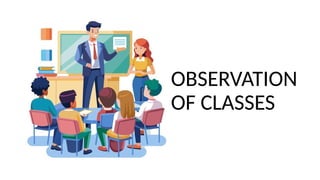
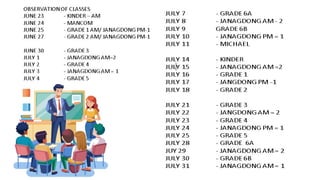
OBSERVATION
OF CLASSES
Sir Edu's Presentation for our Collab.pptx

Sir Edu's Presentation for our Collab.pptx

  • 1.
    COLLABORATIVE EXPERTISE EDGAR L.JARDELEZA Principal II EDGAR L. JARDELEZA Principal II
  • 2.
    Collaborative Expertise Sessionsare structured meetings or workshops where professionals from various fields, departments, or areas of knowledge come together to address complex problems, generate ideas, or make decisions by pooling their expertise. The core idea is that diverse perspectives and experiences can produce more comprehensive, innovative, and effective solutions than individuals working in isolation. Background of Collaborative Expertise Sessions
  • 3.
    These sessions areused in a variety of settings:  Education: Teachers and subject matter experts collaborate to improve curriculum design.  Healthcare: Doctors, nurses, and specialists plan integrated patient care.  Business: Cross-functional teams work on strategic planning, product development, or troubleshooting.  Government or NGOs: Stakeholders collaborate to address policy or community issues.
  • 4.
    How Collaborative ExpertiseSessions Are Done Here’s a step-by-step overview of how such a session typically works: 1. Planning the Session  Define the goal: Clearly identify the problem or objective. (e.g., "Improve customer satisfaction in after-sales service.")  Select participants: Choose individuals with relevant and diverse expertise.  Prepare materials: Background data, case studies, current processes, etc.  Assign roles: Facilitator, note-taker, timekeeper, etc.
  • 5.
    2. Setting theStage  Introduction and objectives: The facilitator introduces the session, clarifies the goals, and sets ground rules. Relationship-building: Short icebreakers or team introductions to foster trust and openness. 3. Knowledge Sharing  Each participant shares insights or relevant information based on their expertise.  Use of tools like visual maps, whiteboards, or shared documents for real-time collaboration.
  • 6.
    4. Joint ProblemSolving or Ideation  Participants analyze issues, identify gaps, and brainstorm solutions together.  Techniques: SWOT analysis, brainstorming, mind mapping, or design thinking.  Use breakout groups if the session is large. 5. Decision-Making and Action Planning  Narrow down ideas into actionable steps.  Assign responsibilities and timelines.  Agree on follow-up mechanisms. 6. Closing the Session  Summary of key points and decisions made.  Evaluation or feedback from participants.  Documentation and sharing of notes or outcomes.
  • 7.
    Best Practices Keep thegroup size manageable (ideally 6–12 people). Encourage equal participation—avoid dominance by a few voices. Stay focused on the objective. Use visuals or collaborative tools (Miro, Google Docs, etc.) if remote. Follow up with participants to keep the momentum
  • 9.