07-01-2024 1
ICIRSTM-2017
NATIONAL UNIVERSITY OF SINGPORE
National Institute of Technology Warangal (NITW)
Telangana State, INDIA
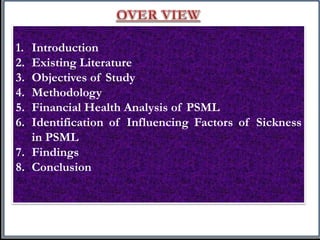
1. Introduction
2. Existing Literature
3. Objectives of Study
4. Methodology
5. Financial Health Analysis of PSML
6. Identification of Influencing Factors of Sickness
in PSML
7. Findings
8. Conclusion
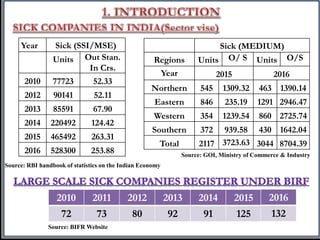
Year Sick (SSI/MSE)
Units Out Stan.
In Crs.
2010 77723 52.33
2012 90141 52.11
2013 85591 67.90
2014 220492 124.42
2015 465492 263.31
2016 528300 253.88
Sick (MEDIUM)
Regions Units O/ S Units O/S
Year 2015 2016
Northern 545 1309.32 463 1390.14
Eastern 846 235.19 1291 2946.47
Western 354 1239.54 860 2725.74
Southern 372 939.58 430 1642.04
Total 2117 3723.63 3044 8704.39
2010 2011 2012 2013 2014 2015
72 73 80 92 91 125
Source: BIFR Website
Source: GOI, Ministry of Commerce & Industry
Source: RBI handbook of statistics on the Indian Economy
2016
132
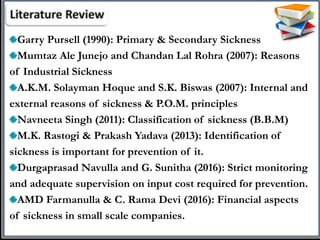
Garry Pursell (1990): Primary & Secondary Sickness
Mumtaz Ale Junejo and Chandan Lal Rohra (2007): Reasons
of Industrial Sickness
A.K.M. Solayman Hoque and S.K. Biswas (2007): Internal and
external reasons of sickness & P.O.M. principles
Navneeta Singh (2011): Classification of sickness (B.B.M)
M.K. Rastogi & Prakash Yadava (2013): Identification of
sickness is important for prevention of it.
Durgaprasad Navulla and G. Sunitha (2016): Strict monitoring
and adequate supervision on input cost required for prevention.
AMD Farmanulla & C. Rama Devi (2016): Financial aspects
of sickness in small scale companies.
To study the financial health position of the Priyadarshini
Company with comparison of peer competitors
To identify the most influencing factors of sickness in
Priyadarshini Spinning Mills Ltd.
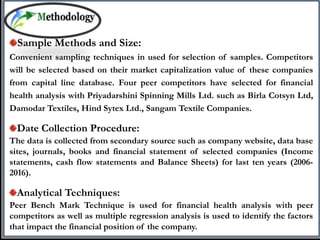
Sample Methods and Size:
Convenient sampling techniques in used for selection of samples. Competitors
will be selected based on their market capitalization value of these companies
from capital line database. Four peer competitors have selected for financial
health analysis with Priyadarshini Spinning Mills Ltd. such as Birla Cotsyn Ltd,
Damodar Textiles, Hind Sytex Ltd., Sangam Textile Companies.
Date Collection Procedure:
The data is collected from secondary source such as company website, data base
sites, journals, books and financial statement of selected companies (Income
statements, cash flow statements and Balance Sheets) for last ten years (2006-
2016).
Analytical Techniques:
Peer Bench Mark Technique is used for financial health analysis with peer
competitors as well as multiple regression analysis is used to identify the factors
that impact the financial position of the company.
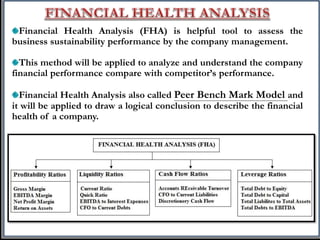
Financial Health Analysis (FHA) is helpful tool to assess the
business sustainability performance by the company management.
This method will be applied to analyze and understand the company
financial performance compare with competitor’s performance.
Financial Health Analysis also called Peer Bench Mark Model and
it will be applied to draw a logical conclusion to describe the financial
health of a company.
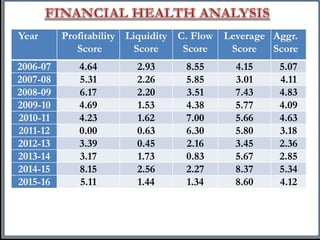
Year Profitability
Score
Liquidity
Score
C. Flow
Score
Leverage
Score
Aggr.
Score
2006-07 4.64 2.93 8.55 4.15 5.07
2007-08 5.31 2.26 5.85 3.01 4.11
2008-09 6.17 2.20 3.51 7.43 4.83
2009-10 4.69 1.53 4.38 5.77 4.09
2010-11 4.23 1.62 7.00 5.66 4.63
2011-12 0.00 0.63 6.30 5.80 3.18
2012-13 3.39 0.45 2.16 3.45 2.36
2013-14 3.17 1.73 0.83 5.67 2.85
2014-15 8.15 2.56 2.27 8.37 5.34
2015-16 5.11 1.44 1.34 8.60 4.12
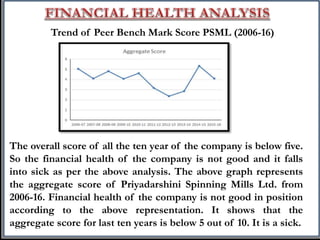
Trend of Peer Bench Mark Score PSML (2006-16)
The overall score of all the ten year of the company is below five.
So the financial health of the company is not good and it falls
into sick as per the above analysis. The above graph represents
the aggregate score of Priyadarshini Spinning Mills Ltd. from
2006-16. Financial health of the company is not good in position
according to the above representation. It shows that the
aggregate score for last ten years is below 5 out of 10. It is a sick.
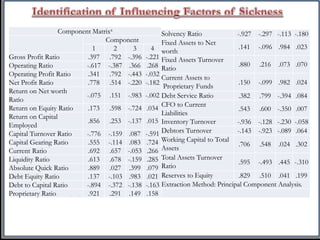
Component Matrixa
Component
1 2 3 4
Gross Profit Ratio .397 .792 -.396 -.221
Operating Ratio -.617 -.387 .366 .268
Operating Profit Ratio .341 .792 -.443 -.032
Net Profit Ratio .778 .514 -.220 -.182
Return on Net worth
Ratio
-.075 .151 -.983 -.002
Return on Equity Ratio .173 .598 -.724 .034
Return on Capital
Employed
.856 .253 -.137 .015
Capital Turnover Ratio -.776 -.159 .087 -.591
Capital Gearing Ratio .555 -.114 .083 .724
Current Ratio .692 .657 -.053 .266
Liquidity Ratio .613 .678 -.159 .285
Absolute Quick Ratio .889 .027 .399 .079
Debt Equity Ratio .137 -.103 .983 .021
Debt to Capital Ratio -.894 -.372 -.138 -.163
Proprietary Ratio .921 .291 .149 .158
Solvency Ratio -.927 -.297 -.113 -.180
Fixed Assets to Net
worth
.141 -.096 .984 .023
Fixed Assets Turnover
Ratio
.880 .216 .073 .070
Current Assets to
Proprietary Funds
.150 -.099 .982 .024
Debt Service Ratio .382 .799 -.394 .084
CFO to Current
Liabilities
.543 .600 -.350 .007
Inventory Turnover -.936 -.128 -.230 -.058
Debtors Turnover -.143 -.923 -.089 .064
Working Capital to Total
Assets
.706 .548 .024 .302
Total Assets Turnover
Ratio
.595 -.493 .445 -.310
Reserves to Equity .829 .510 .041 .199
Extraction Method: Principal Component Analysis.
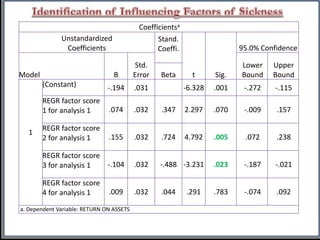
Coefficientsa
Unstandardized
Coefficients
Stand.
Coeffi.
t Sig.
95.0% Confidence
Model B
Std.
Error
Lower
Bound
Upper
Bound
Beta
1
(Constant) -.194 .031 -6.328 .001 -.272 -.115
REGR factor score
1 for analysis 1 .074 .032 .347 2.297 .070 -.009 .157
REGR factor score
2 for analysis 1 .155 .032 .724 4.792 .005 .072 .238
REGR factor score
3 for analysis 1 -.104 .032 -.488 -3.231 .023 -.187 -.021
REGR factor score
4 for analysis 1 .009 .032 .044 .291 .783 -.074 .092
a. Dependent Variable: RETURN ON ASSETS
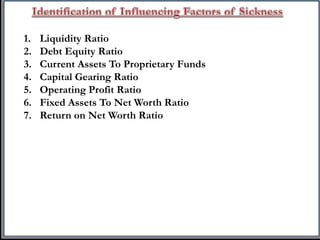
1. Liquidity Ratio
2. Debt Equity Ratio
3. Current Assets To Proprietary Funds
4. Capital Gearing Ratio
5. Operating Profit Ratio
6. Fixed Assets To Net Worth Ratio
7. Return on Net Worth Ratio
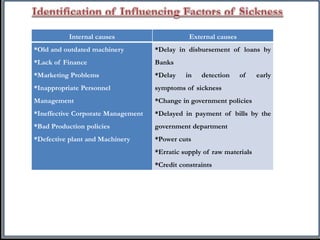
Internal causes External causes
*Old and outdated machinery
*Lack of Finance
*Marketing Problems
*Inappropriate Personnel
Management
*Ineffective Corporate Management
*Bad Production policies
*Defective plant and Machinery
*Delay in disbursement of loans by
Banks
*Delay in detection of early
symptoms of sickness
*Change in government policies
*Delayed in payment of bills by the
government department
*Power cuts
*Erratic supply of raw materials
*Credit constraints
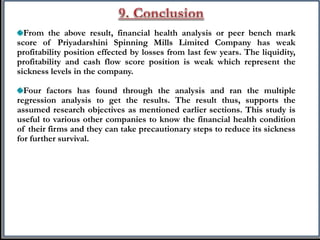
From the above result, financial health analysis or peer bench mark
score of Priyadarshini Spinning Mills Limited Company has weak
profitability position effected by losses from last few years. The liquidity,
profitability and cash flow score position is weak which represent the
sickness levels in the company.
Four factors has found through the analysis and ran the multiple
regression analysis to get the results. The result thus, supports the
assumed research objectives as mentioned earlier sections. This study is
useful to various other companies to know the financial health condition
of their firms and they can take precautionary steps to reduce its sickness
for further survival.
07-01-2024 17

Singpore Priya .ppt

  • 1.
    07-01-2024 1 ICIRSTM-2017 NATIONAL UNIVERSITYOF SINGPORE National Institute of Technology Warangal (NITW) Telangana State, INDIA
  • 2.
    1. Introduction 2. ExistingLiterature 3. Objectives of Study 4. Methodology 5. Financial Health Analysis of PSML 6. Identification of Influencing Factors of Sickness in PSML 7. Findings 8. Conclusion
  • 3.
    Year Sick (SSI/MSE) UnitsOut Stan. In Crs. 2010 77723 52.33 2012 90141 52.11 2013 85591 67.90 2014 220492 124.42 2015 465492 263.31 2016 528300 253.88 Sick (MEDIUM) Regions Units O/ S Units O/S Year 2015 2016 Northern 545 1309.32 463 1390.14 Eastern 846 235.19 1291 2946.47 Western 354 1239.54 860 2725.74 Southern 372 939.58 430 1642.04 Total 2117 3723.63 3044 8704.39 2010 2011 2012 2013 2014 2015 72 73 80 92 91 125 Source: BIFR Website Source: GOI, Ministry of Commerce & Industry Source: RBI handbook of statistics on the Indian Economy 2016 132
  • 4.
    Garry Pursell (1990):Primary & Secondary Sickness Mumtaz Ale Junejo and Chandan Lal Rohra (2007): Reasons of Industrial Sickness A.K.M. Solayman Hoque and S.K. Biswas (2007): Internal and external reasons of sickness & P.O.M. principles Navneeta Singh (2011): Classification of sickness (B.B.M) M.K. Rastogi & Prakash Yadava (2013): Identification of sickness is important for prevention of it. Durgaprasad Navulla and G. Sunitha (2016): Strict monitoring and adequate supervision on input cost required for prevention. AMD Farmanulla & C. Rama Devi (2016): Financial aspects of sickness in small scale companies.
  • 5.
    To study thefinancial health position of the Priyadarshini Company with comparison of peer competitors To identify the most influencing factors of sickness in Priyadarshini Spinning Mills Ltd.
  • 6.
    Sample Methods andSize: Convenient sampling techniques in used for selection of samples. Competitors will be selected based on their market capitalization value of these companies from capital line database. Four peer competitors have selected for financial health analysis with Priyadarshini Spinning Mills Ltd. such as Birla Cotsyn Ltd, Damodar Textiles, Hind Sytex Ltd., Sangam Textile Companies. Date Collection Procedure: The data is collected from secondary source such as company website, data base sites, journals, books and financial statement of selected companies (Income statements, cash flow statements and Balance Sheets) for last ten years (2006- 2016). Analytical Techniques: Peer Bench Mark Technique is used for financial health analysis with peer competitors as well as multiple regression analysis is used to identify the factors that impact the financial position of the company.
  • 7.
    Financial Health Analysis(FHA) is helpful tool to assess the business sustainability performance by the company management. This method will be applied to analyze and understand the company financial performance compare with competitor’s performance. Financial Health Analysis also called Peer Bench Mark Model and it will be applied to draw a logical conclusion to describe the financial health of a company.
  • 8.
    Year Profitability Score Liquidity Score C. Flow Score Leverage Score Aggr. Score 2006-074.64 2.93 8.55 4.15 5.07 2007-08 5.31 2.26 5.85 3.01 4.11 2008-09 6.17 2.20 3.51 7.43 4.83 2009-10 4.69 1.53 4.38 5.77 4.09 2010-11 4.23 1.62 7.00 5.66 4.63 2011-12 0.00 0.63 6.30 5.80 3.18 2012-13 3.39 0.45 2.16 3.45 2.36 2013-14 3.17 1.73 0.83 5.67 2.85 2014-15 8.15 2.56 2.27 8.37 5.34 2015-16 5.11 1.44 1.34 8.60 4.12
  • 9.
    Trend of PeerBench Mark Score PSML (2006-16) The overall score of all the ten year of the company is below five. So the financial health of the company is not good and it falls into sick as per the above analysis. The above graph represents the aggregate score of Priyadarshini Spinning Mills Ltd. from 2006-16. Financial health of the company is not good in position according to the above representation. It shows that the aggregate score for last ten years is below 5 out of 10. It is a sick.
  • 11.
    Component Matrixa Component 1 23 4 Gross Profit Ratio .397 .792 -.396 -.221 Operating Ratio -.617 -.387 .366 .268 Operating Profit Ratio .341 .792 -.443 -.032 Net Profit Ratio .778 .514 -.220 -.182 Return on Net worth Ratio -.075 .151 -.983 -.002 Return on Equity Ratio .173 .598 -.724 .034 Return on Capital Employed .856 .253 -.137 .015 Capital Turnover Ratio -.776 -.159 .087 -.591 Capital Gearing Ratio .555 -.114 .083 .724 Current Ratio .692 .657 -.053 .266 Liquidity Ratio .613 .678 -.159 .285 Absolute Quick Ratio .889 .027 .399 .079 Debt Equity Ratio .137 -.103 .983 .021 Debt to Capital Ratio -.894 -.372 -.138 -.163 Proprietary Ratio .921 .291 .149 .158 Solvency Ratio -.927 -.297 -.113 -.180 Fixed Assets to Net worth .141 -.096 .984 .023 Fixed Assets Turnover Ratio .880 .216 .073 .070 Current Assets to Proprietary Funds .150 -.099 .982 .024 Debt Service Ratio .382 .799 -.394 .084 CFO to Current Liabilities .543 .600 -.350 .007 Inventory Turnover -.936 -.128 -.230 -.058 Debtors Turnover -.143 -.923 -.089 .064 Working Capital to Total Assets .706 .548 .024 .302 Total Assets Turnover Ratio .595 -.493 .445 -.310 Reserves to Equity .829 .510 .041 .199 Extraction Method: Principal Component Analysis.
  • 12.
    Coefficientsa Unstandardized Coefficients Stand. Coeffi. t Sig. 95.0% Confidence ModelB Std. Error Lower Bound Upper Bound Beta 1 (Constant) -.194 .031 -6.328 .001 -.272 -.115 REGR factor score 1 for analysis 1 .074 .032 .347 2.297 .070 -.009 .157 REGR factor score 2 for analysis 1 .155 .032 .724 4.792 .005 .072 .238 REGR factor score 3 for analysis 1 -.104 .032 -.488 -3.231 .023 -.187 -.021 REGR factor score 4 for analysis 1 .009 .032 .044 .291 .783 -.074 .092 a. Dependent Variable: RETURN ON ASSETS
  • 13.
    1. Liquidity Ratio 2.Debt Equity Ratio 3. Current Assets To Proprietary Funds 4. Capital Gearing Ratio 5. Operating Profit Ratio 6. Fixed Assets To Net Worth Ratio 7. Return on Net Worth Ratio
  • 14.
    Internal causes Externalcauses *Old and outdated machinery *Lack of Finance *Marketing Problems *Inappropriate Personnel Management *Ineffective Corporate Management *Bad Production policies *Defective plant and Machinery *Delay in disbursement of loans by Banks *Delay in detection of early symptoms of sickness *Change in government policies *Delayed in payment of bills by the government department *Power cuts *Erratic supply of raw materials *Credit constraints
  • 15.
    From the aboveresult, financial health analysis or peer bench mark score of Priyadarshini Spinning Mills Limited Company has weak profitability position effected by losses from last few years. The liquidity, profitability and cash flow score position is weak which represent the sickness levels in the company. Four factors has found through the analysis and ran the multiple regression analysis to get the results. The result thus, supports the assumed research objectives as mentioned earlier sections. This study is useful to various other companies to know the financial health condition of their firms and they can take precautionary steps to reduce its sickness for further survival.
  • 17.