SINGLE CELL PROTEIN
SUDHARSAN T
1ST M.PHARM
[PHARMACOGNOSY]
CONTENT
 INTRODUCTION
 SCP BRIEF
 ADVANTAGES
 ADVANTAGES OF USING MICROORGANISMS FOR SCP PRODUCTION
 SAFETY, ACCEPTABILITY AND TOXICOLOGY
2
INTRODUCTION
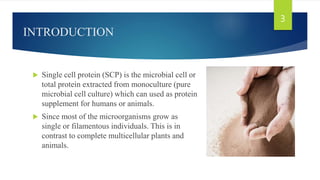
 Single cell protein (SCP) is the microbial cell or
total protein extracted from monoculture (pure
microbial cell culture) which can used as protein
supplement for humans or animals.
 Since most of the microorganisms grow as
single or filamentous individuals. This is in
contrast to complete multicellular plants and
animals.
3
SCP BRIEF
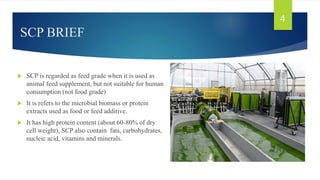
 SCP is regarded as feed grade when it is used as
animal feed supplement, but not suitable for human
consumption (not food grade)
 It is refers to the microbial biomass or protein
extracts used as food or feed additive.
 It has high protein content (about 60-80% of dry
cell weight), SCP also contain fats, carbohydrates,
nucleic acid, vitamins and minerals.
4
ADVANTAGES
 It is rich in essential amino acids (lysine, methionine
which are limiting in most plant and animal foods.
 SCP also contain high nutritional value for human or
animal consumption.
 About 25% of the world’s malnutrition. Most of the
people live in developing countries. In that SCP plays
major role in feed or food supplement.
 In addition to utility as a nutritional supplement, SCP can
also be used for the isolation of several compounds.
 Eg: carbohydrates, fats, vitamins, minerals.
5
ADVANTAGES OF USING
MICROORGANISMS FOR SCP PRODUCTION
 When 250kg of cow can produce 200g of protein per day.
As from other side 250g of microorganisms, theoretically
when grown under ideal conditions, could produce about
20-25 tonnes of protein.
 Some microbes double their mass in less than 30 mins.
 Quality and quantity of protein content is higher.
 Culture conditions and fermentation are very simple.
 Easily handled and subjected to genetic manipulations.
6
7
SAFETY, ACCEPTABILITY AND
TOXICOLOGY
 When SCP is considered for human consumption, there are
several limitations.
 Nucleic acid content of microbial biomass is very high (4-6%
algae; 10-15% bacteria; 5-10% yeast). This is highly
hazardous, since humans have a limited capacity to degrade
nucleic acid.
 Carcinogenic and toxic substances are often observed with
SCP including HCs, heavy metals, etc based on the nature of
raw materials used.
 Contamination by pathogenic microbes is possible.
8
 Food grade production of SCP is more expensive than other sources of proteins. e.g. soy meal,
which mainly depend on the cost of raw materials.
 Digestion of microbial cells can be slow due to indigestion as well as allergic reaction in
individuals.
9
10

SINGLE CELL PROTEIN.pptx

  • 1.
    SINGLE CELL PROTEIN SUDHARSANT 1ST M.PHARM [PHARMACOGNOSY]
  • 2.
    CONTENT  INTRODUCTION  SCPBRIEF  ADVANTAGES  ADVANTAGES OF USING MICROORGANISMS FOR SCP PRODUCTION  SAFETY, ACCEPTABILITY AND TOXICOLOGY 2
  • 3.
    INTRODUCTION  Single cellprotein (SCP) is the microbial cell or total protein extracted from monoculture (pure microbial cell culture) which can used as protein supplement for humans or animals.  Since most of the microorganisms grow as single or filamentous individuals. This is in contrast to complete multicellular plants and animals. 3
  • 4.
    SCP BRIEF  SCPis regarded as feed grade when it is used as animal feed supplement, but not suitable for human consumption (not food grade)  It is refers to the microbial biomass or protein extracts used as food or feed additive.  It has high protein content (about 60-80% of dry cell weight), SCP also contain fats, carbohydrates, nucleic acid, vitamins and minerals. 4
  • 5.
    ADVANTAGES  It isrich in essential amino acids (lysine, methionine which are limiting in most plant and animal foods.  SCP also contain high nutritional value for human or animal consumption.  About 25% of the world’s malnutrition. Most of the people live in developing countries. In that SCP plays major role in feed or food supplement.  In addition to utility as a nutritional supplement, SCP can also be used for the isolation of several compounds.  Eg: carbohydrates, fats, vitamins, minerals. 5
  • 6.
    ADVANTAGES OF USING MICROORGANISMSFOR SCP PRODUCTION  When 250kg of cow can produce 200g of protein per day. As from other side 250g of microorganisms, theoretically when grown under ideal conditions, could produce about 20-25 tonnes of protein.  Some microbes double their mass in less than 30 mins.  Quality and quantity of protein content is higher.  Culture conditions and fermentation are very simple.  Easily handled and subjected to genetic manipulations. 6
  • 7.
  • 8.
    SAFETY, ACCEPTABILITY AND TOXICOLOGY When SCP is considered for human consumption, there are several limitations.  Nucleic acid content of microbial biomass is very high (4-6% algae; 10-15% bacteria; 5-10% yeast). This is highly hazardous, since humans have a limited capacity to degrade nucleic acid.  Carcinogenic and toxic substances are often observed with SCP including HCs, heavy metals, etc based on the nature of raw materials used.  Contamination by pathogenic microbes is possible. 8
  • 9.
     Food gradeproduction of SCP is more expensive than other sources of proteins. e.g. soy meal, which mainly depend on the cost of raw materials.  Digestion of microbial cells can be slow due to indigestion as well as allergic reaction in individuals. 9
  • 10.