This document provides an overview of simple present tense grammar rules in English, including:
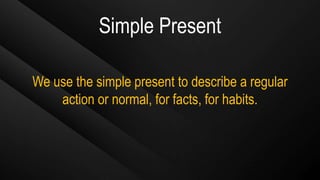
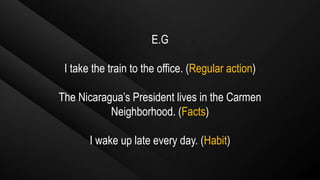
- The simple present is used to describe regular or habitual actions, facts, and habits.
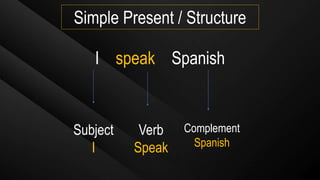
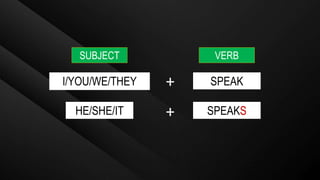
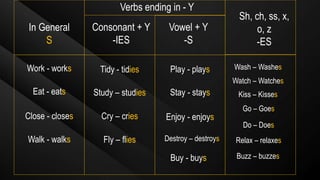
- Its basic structure is subject + verb + complement. Verb endings vary depending on the subject and whether the verb ends in a consonant, vowel, 'y' etc.
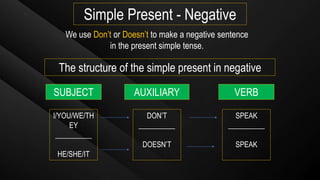
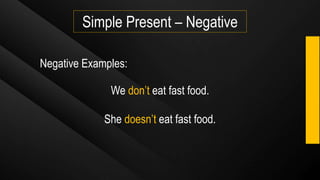
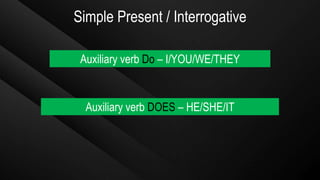
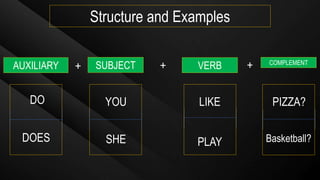
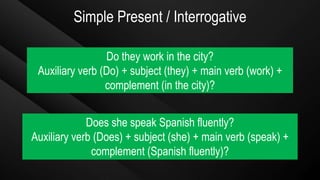
- To form negatives, "don't" or "doesn't" are used with the subject before the base verb. Questions are formed using auxiliary verbs "do" or "does" before the subject and base verb.
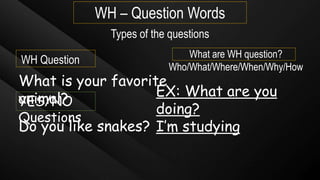
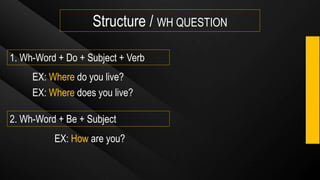
- WH questions start with interrogative words (who, what, where etc.) followed by the subject and verb.