SIMPLE GOITRE
&
THYROIDITIS
SIMPLE GOITRE
 Other names:-
 Diffuse non-toxic
 Colloid
 Juvenile (teenagers)
 Characteristics:-
 Soft, symmetrical, diffuse
 NO nodularity, tenderness, bruit, LNE
 TFT normal
 NO anti-thyroid Ab
SIMPLE GOITRE
 Age group:-
 15-25 years most common
 Causes:-
 Pregnancy
 Puberty
 Iodine deficiency
 Goitrogen intake – Cabbage, cauliflower
 Inherited thyroid hormone dysgenesis:-
 Iodine transport, thyroglob synthesis, organification,
coupling, iodide regeneration
SIMPLE GOITRE
 Clinical features:-
 Asymptomatic mainly
 Noticed by others, self
 Cosmetic concern
 Localised pain & swelling (Spont bleed)
 Large goitre -
 Tracheal compression
 Esophageal compression
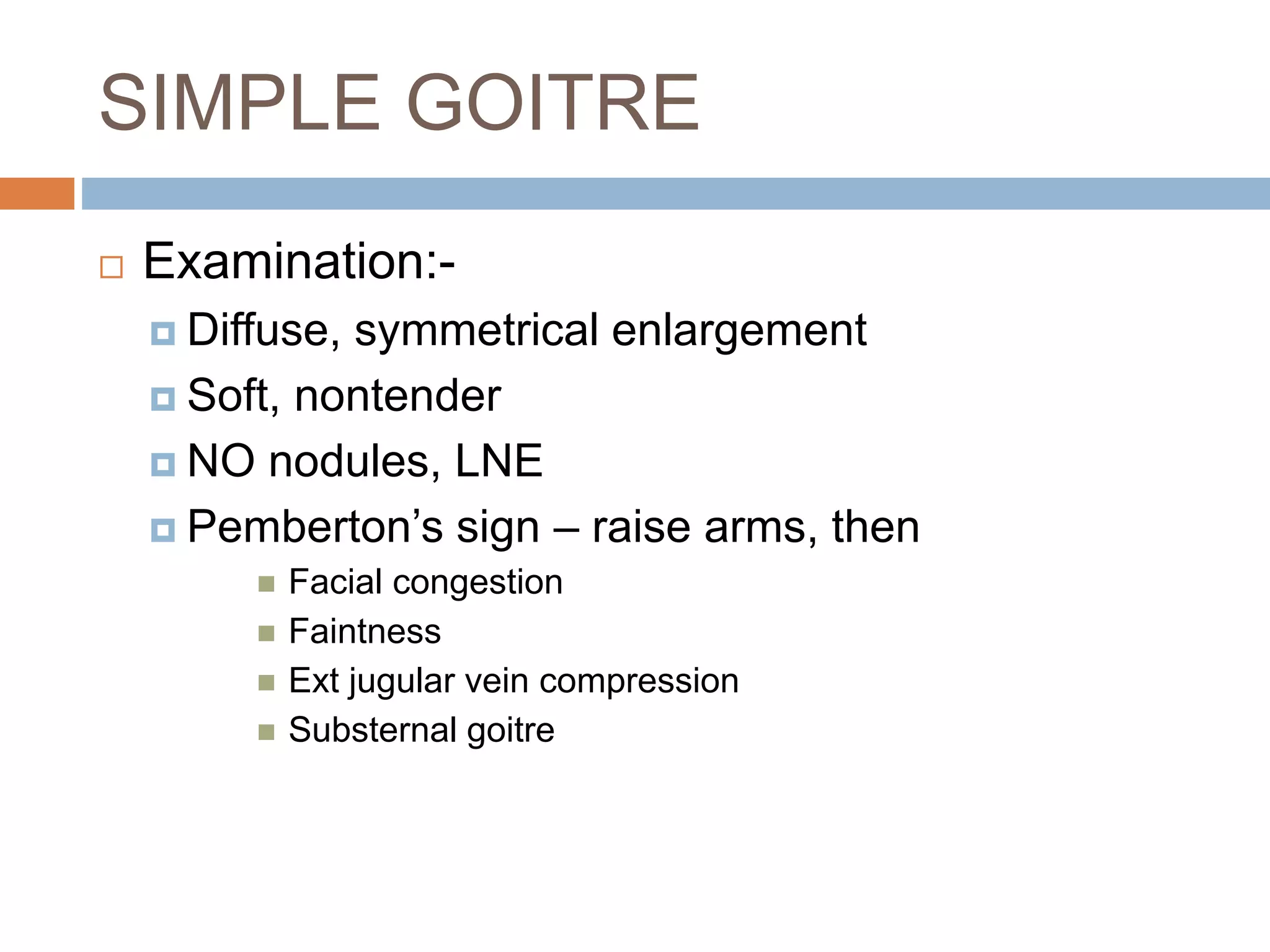
SIMPLE GOITRE
 Examination:-
 Diffuse, symmetrical enlargement
 Soft, nontender
 NO nodules, LNE
 Pemberton’s sign – raise arms, then
 Facial congestion
 Faintness
 Ext jugular vein compression
 Substernal goitre
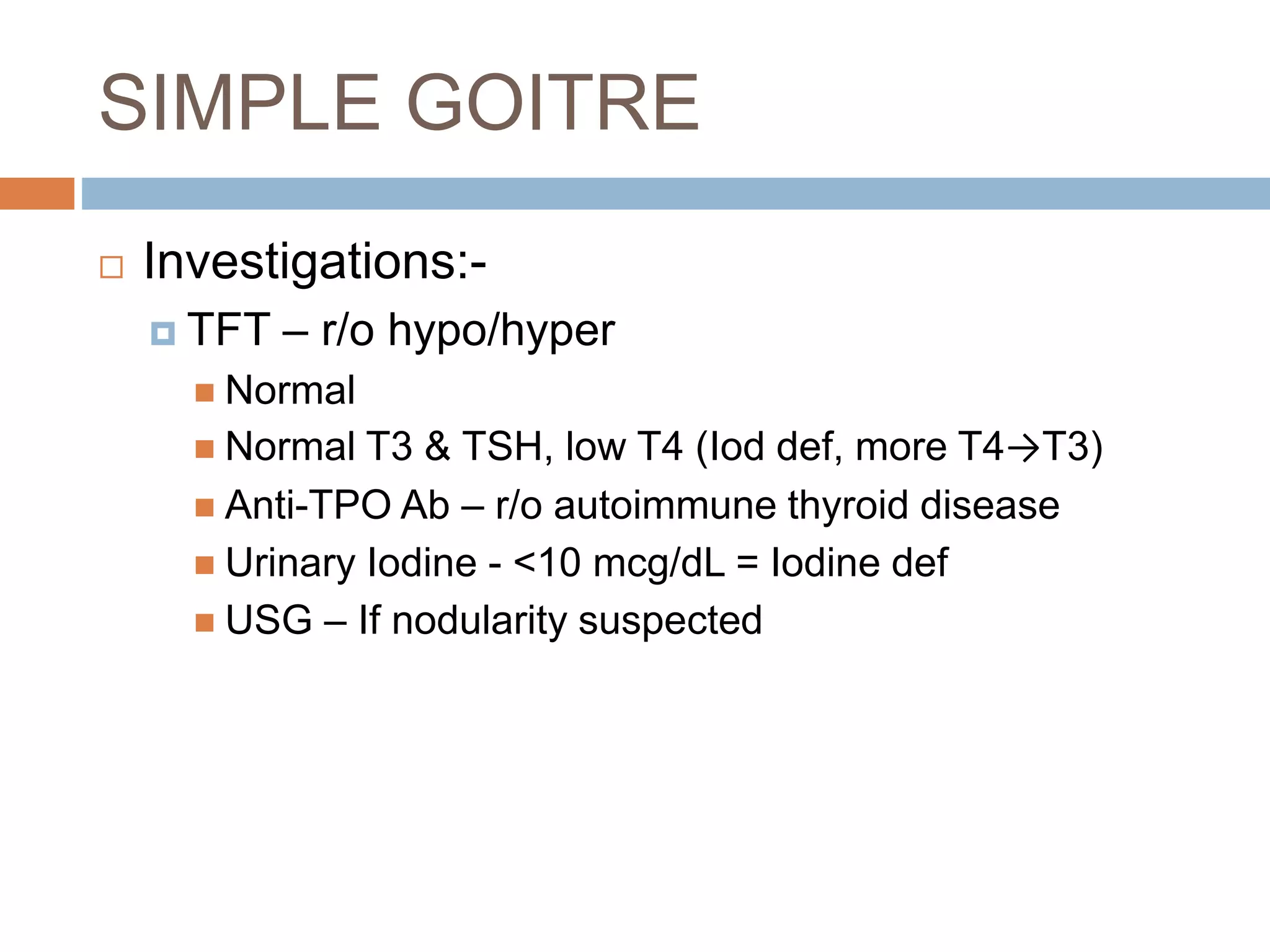
SIMPLE GOITRE
 Investigations:-
 TFT – r/o hypo/hyper
 Normal
 Normal T3 & TSH, low T4 (Iod def, more T4→T3)
 Anti-TPO Ab – r/o autoimmune thyroid disease
 Urinary Iodine - <10 mcg/dL = Iodine def
 USG – If nodularity suspected
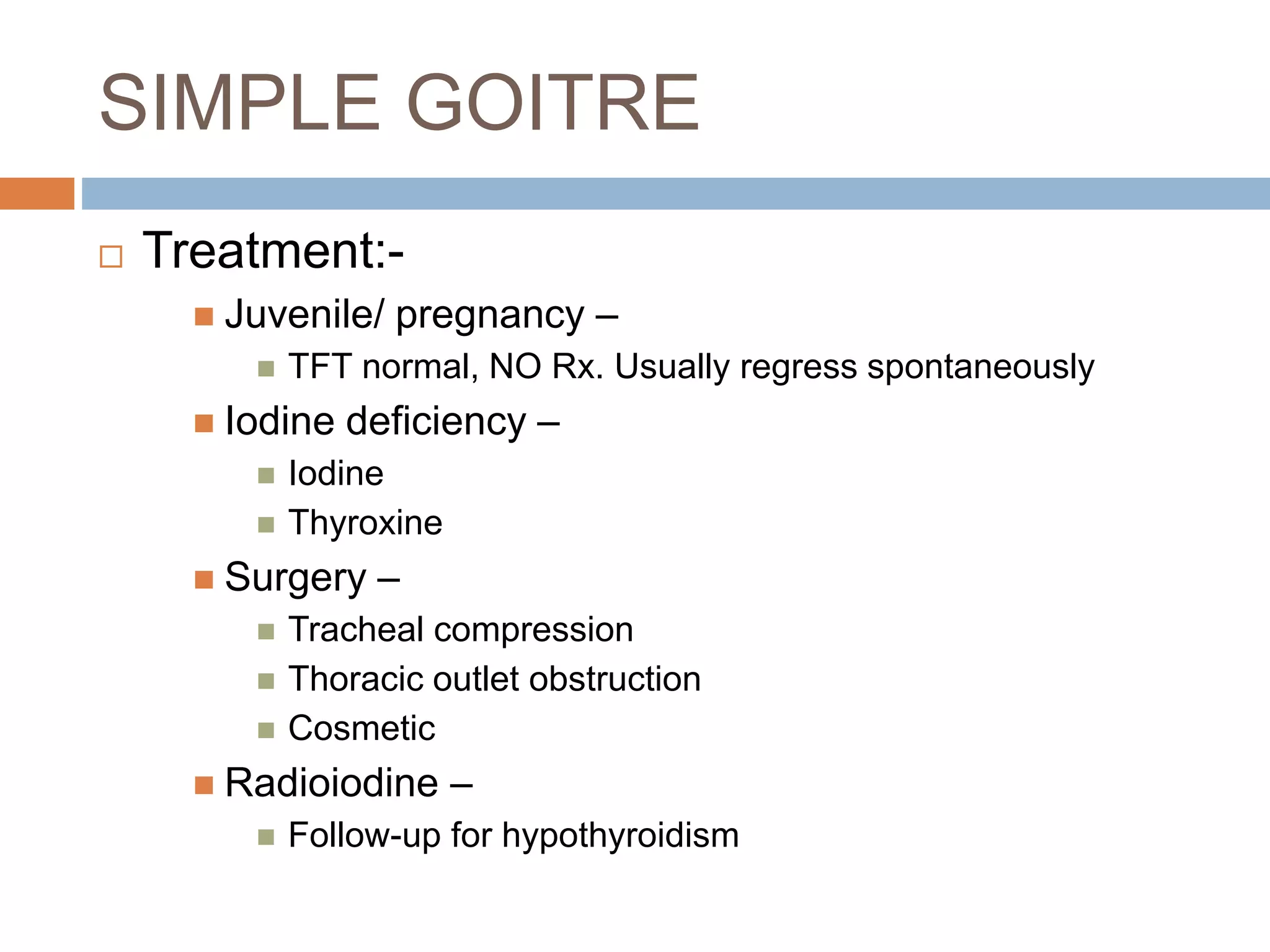
SIMPLE GOITRE
 Treatment:-
 Juvenile/ pregnancy –
 TFT normal, NO Rx. Usually regress spontaneously
 Iodine deficiency –
 Iodine
 Thyroxine
 Surgery –
 Tracheal compression
 Thoracic outlet obstruction
 Cosmetic
 Radioiodine –
 Follow-up for hypothyroidism
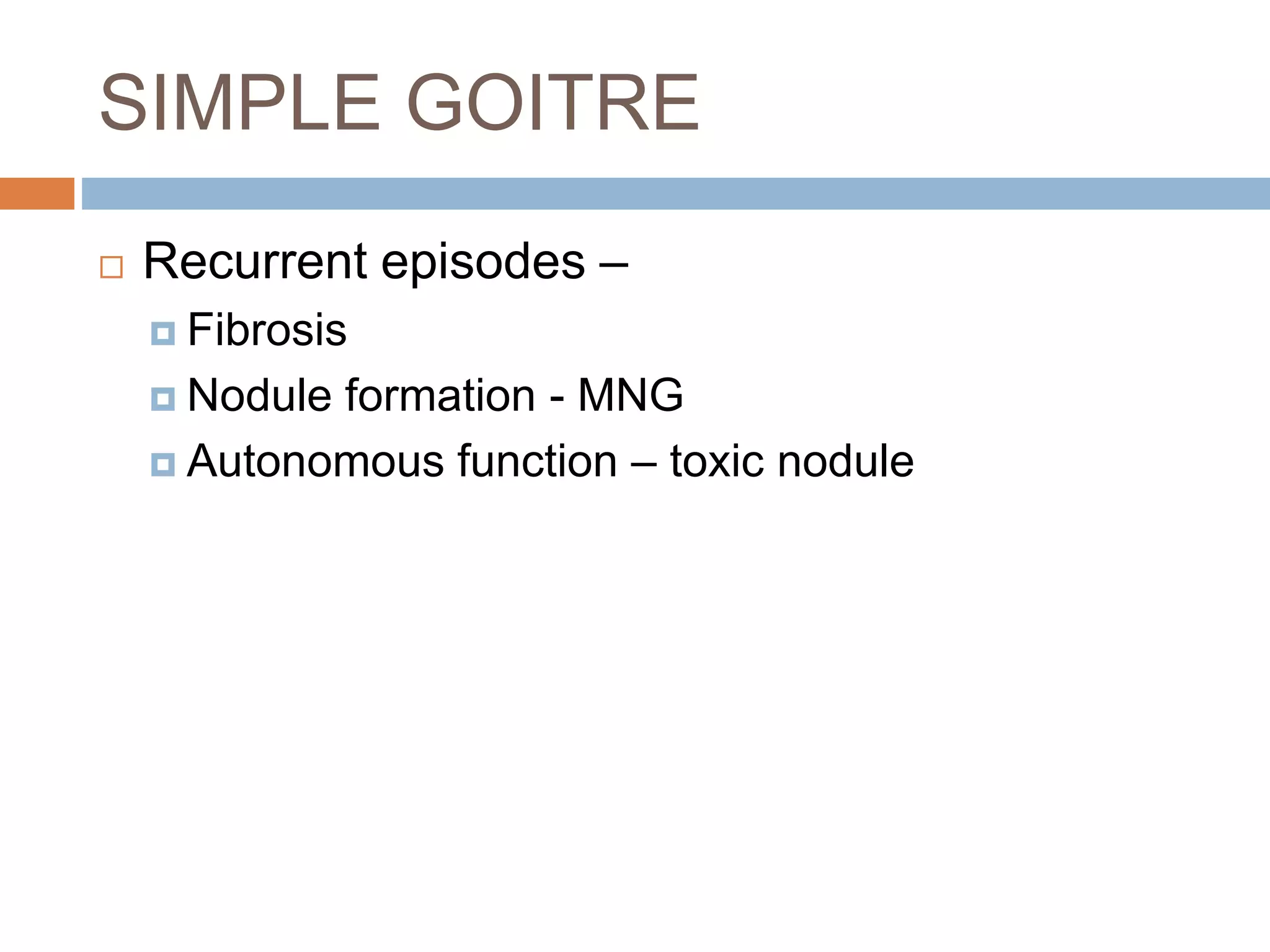
SIMPLE GOITRE
 Recurrent episodes –
 Fibrosis
 Nodule formation - MNG
 Autonomous function – toxic nodule
THYROIDITIS
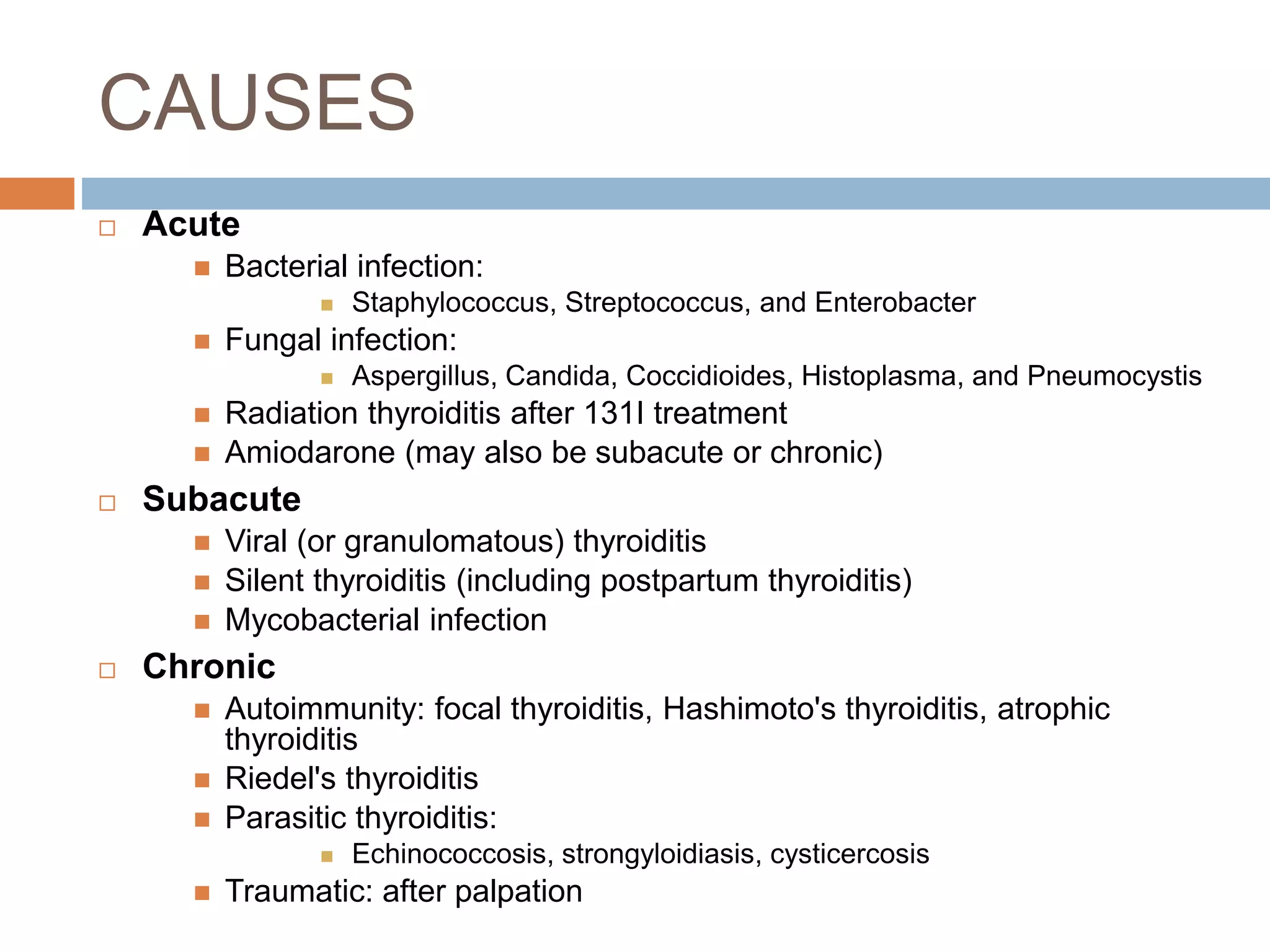
CAUSES
 Acute
 Bacterial infection:
 Staphylococcus, Streptococcus, and Enterobacter
 Fungal infection:
 Aspergillus, Candida, Coccidioides, Histoplasma, and Pneumocystis
 Radiation thyroiditis after 131I treatment
 Amiodarone (may also be subacute or chronic)
 Subacute
 Viral (or granulomatous) thyroiditis
 Silent thyroiditis (including postpartum thyroiditis)
 Mycobacterial infection
 Chronic
 Autoimmunity: focal thyroiditis, Hashimoto's thyroiditis, atrophic
thyroiditis
 Riedel's thyroiditis
 Parasitic thyroiditis:
 Echinococcosis, strongyloidiasis, cysticercosis
 Traumatic: after palpation
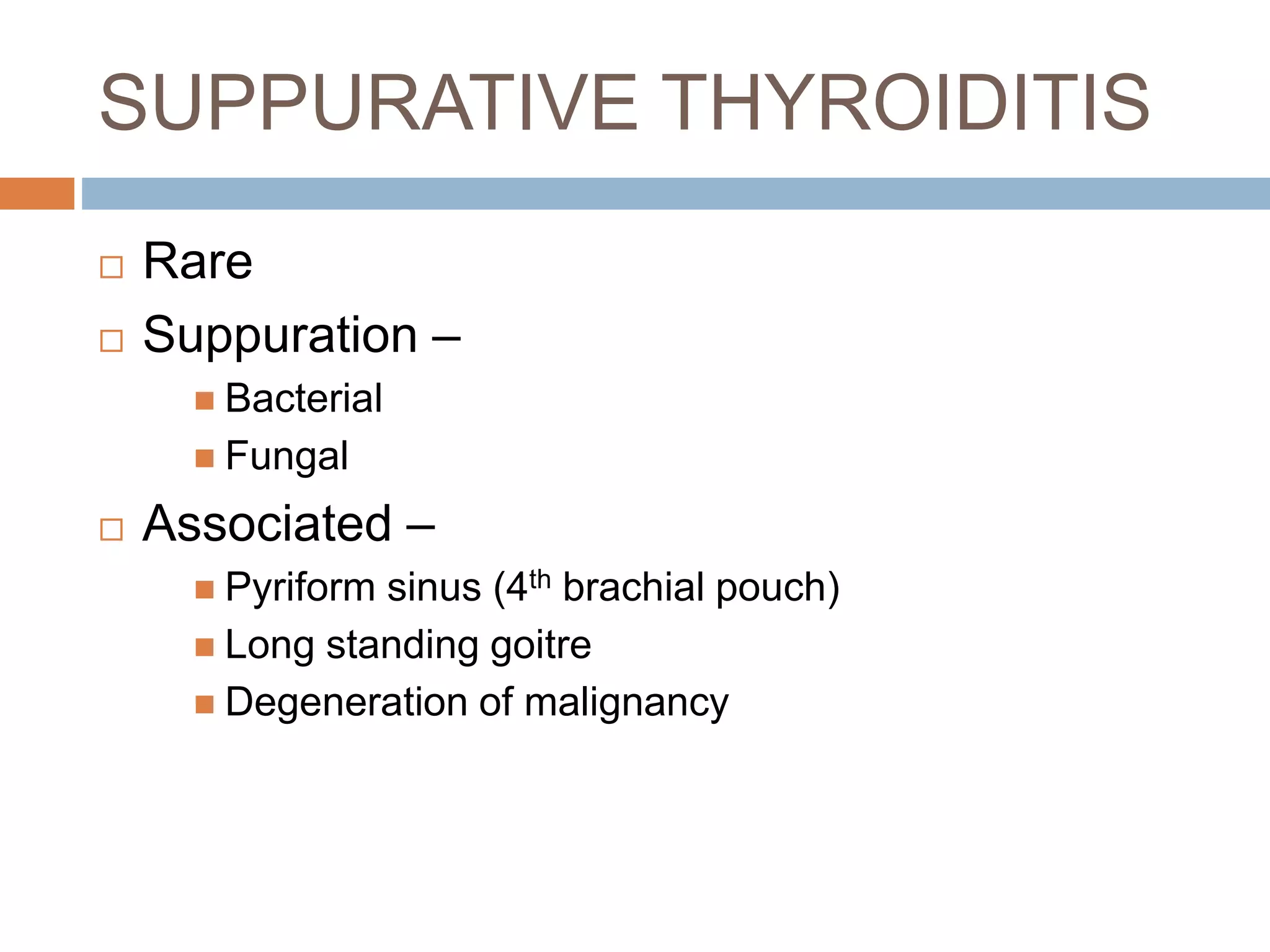
SUPPURATIVE THYROIDITIS
 Rare
 Suppuration –
 Bacterial
 Fungal
 Associated –
 Pyriform sinus (4th brachial pouch)
 Long standing goitre
 Degeneration of malignancy
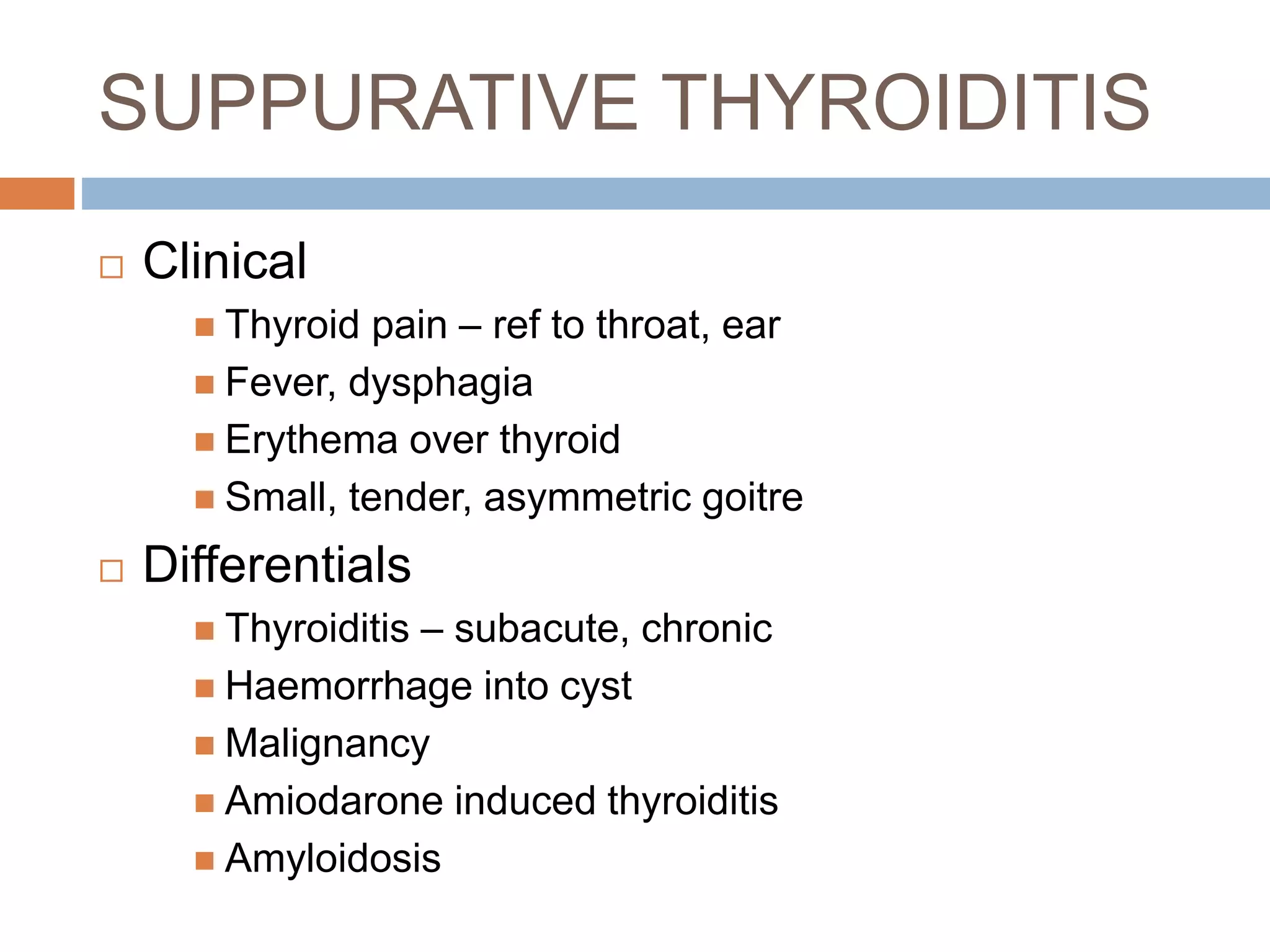
SUPPURATIVE THYROIDITIS
 Clinical
 Thyroid pain – ref to throat, ear
 Fever, dysphagia
 Erythema over thyroid
 Small, tender, asymmetric goitre
 Differentials
 Thyroiditis – subacute, chronic
 Haemorrhage into cyst
 Malignancy
 Amiodarone induced thyroiditis
 Amyloidosis
SUPPURATIVE THYROIDITIS
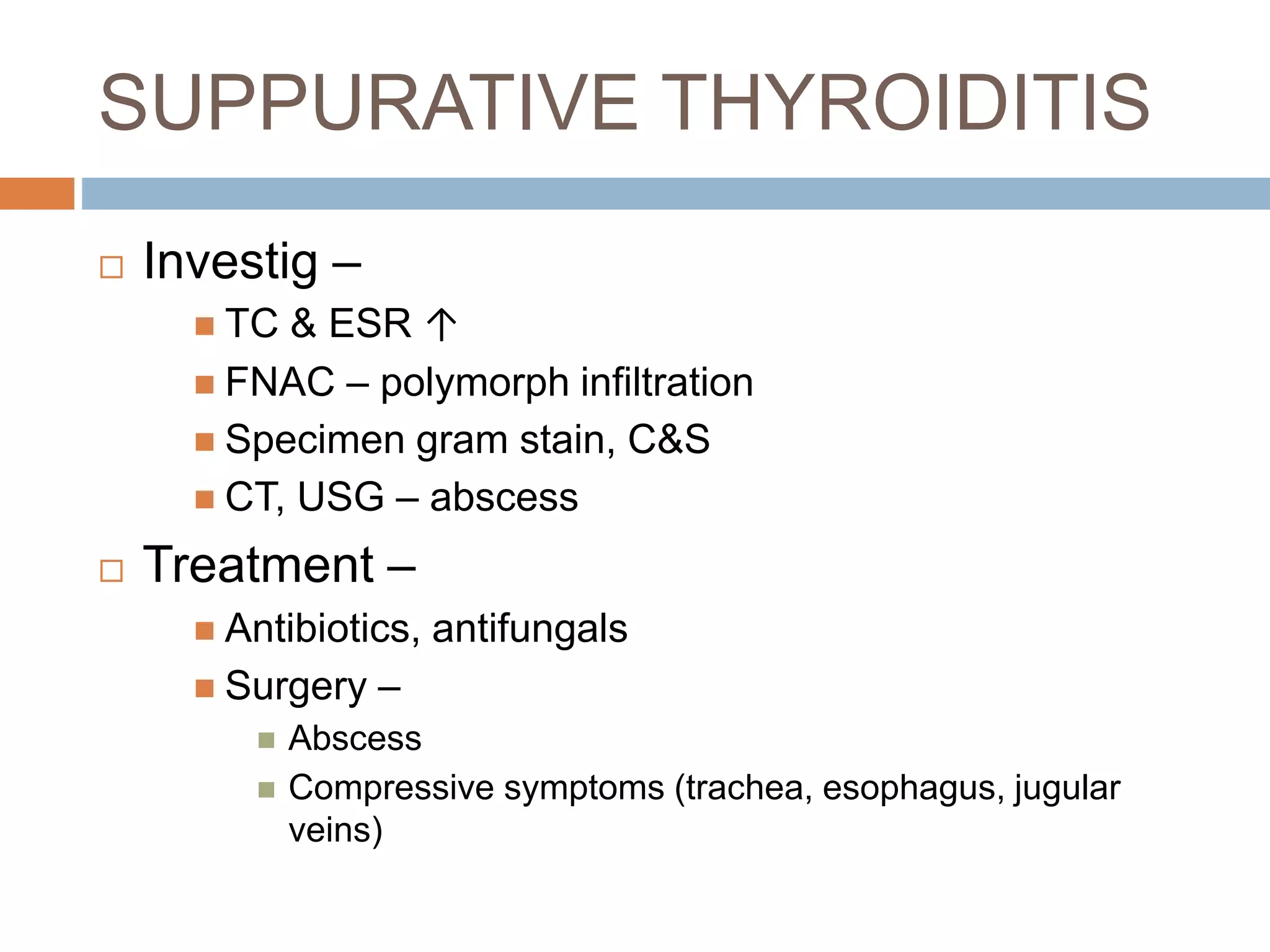
 Investig –
 TC & ESR ↑
 FNAC – polymorph infiltration
 Specimen gram stain, C&S
 CT, USG – abscess
 Treatment –
 Antibiotics, antifungals
 Surgery –
 Abscess
 Compressive symptoms (trachea, esophagus, jugular
veins)
SUPPURATIVE THYROIDITIS
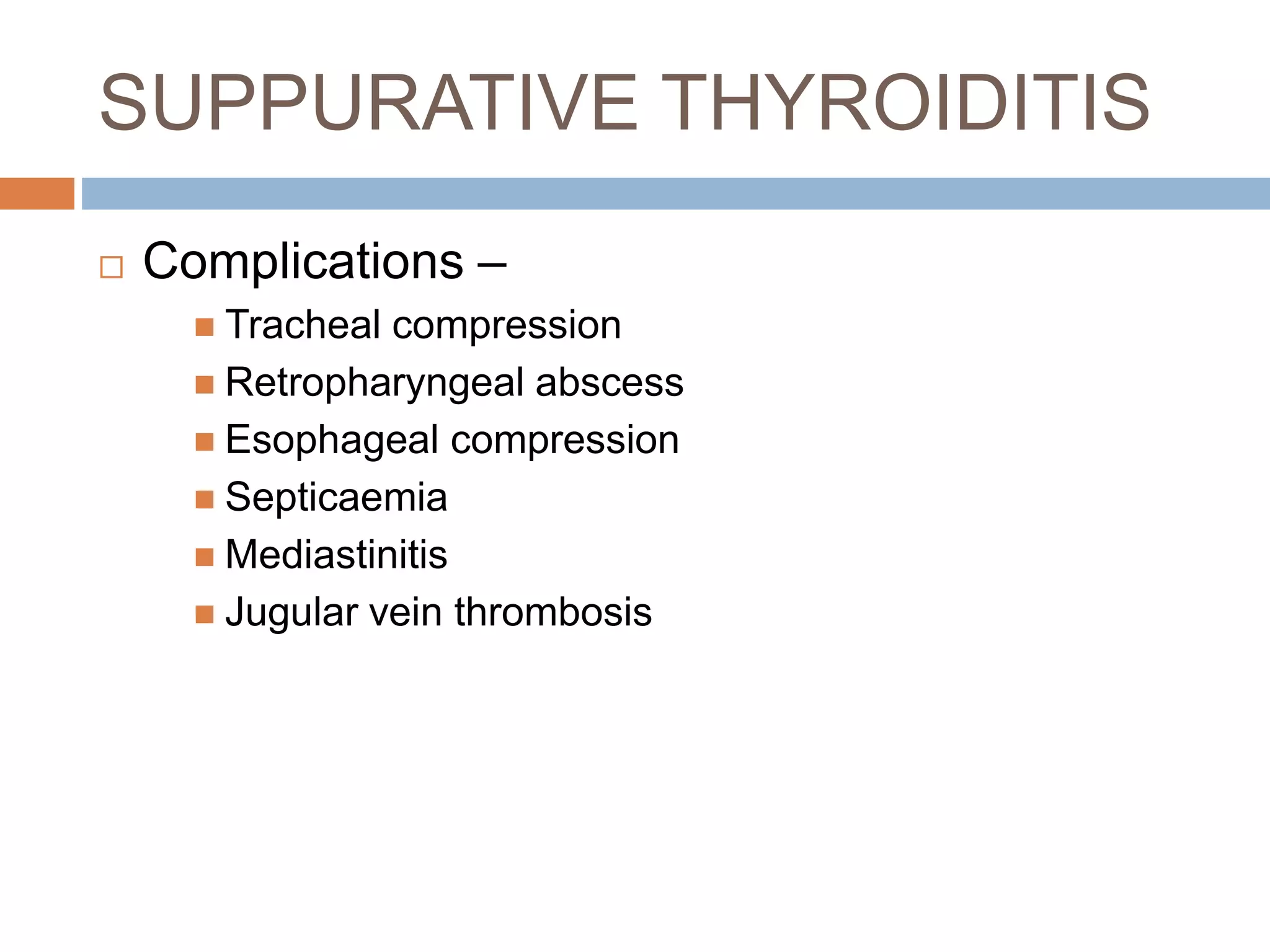
 Complications –
 Tracheal compression
 Retropharyngeal abscess
 Esophageal compression
 Septicaemia
 Mediastinitis
 Jugular vein thrombosis
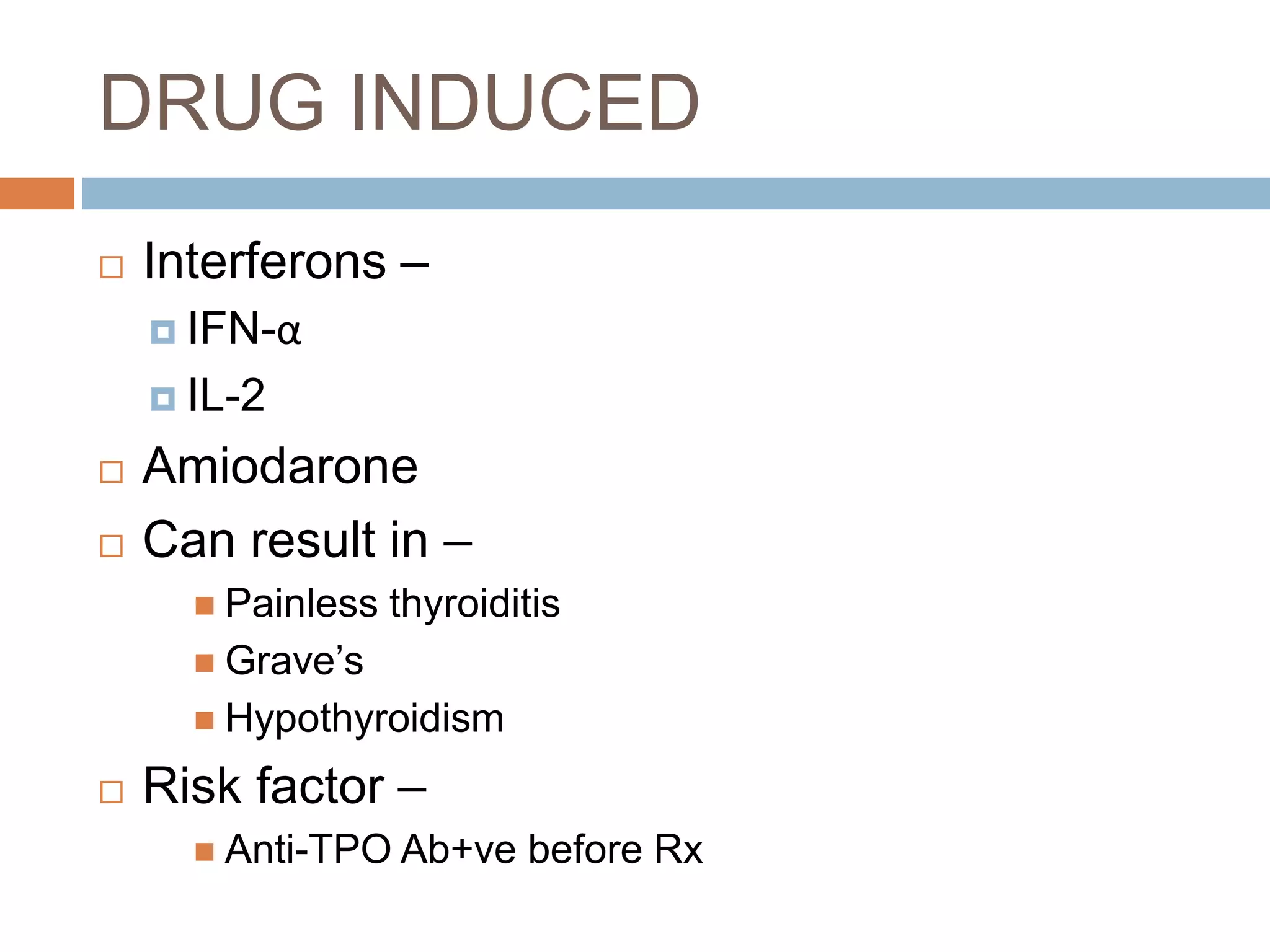
DRUG INDUCED
 Interferons –
 IFN-α
 IL-2
 Amiodarone
 Can result in –
 Painless thyroiditis
 Grave’s
 Hypothyroidism
 Risk factor –
 Anti-TPO Ab+ve before Rx
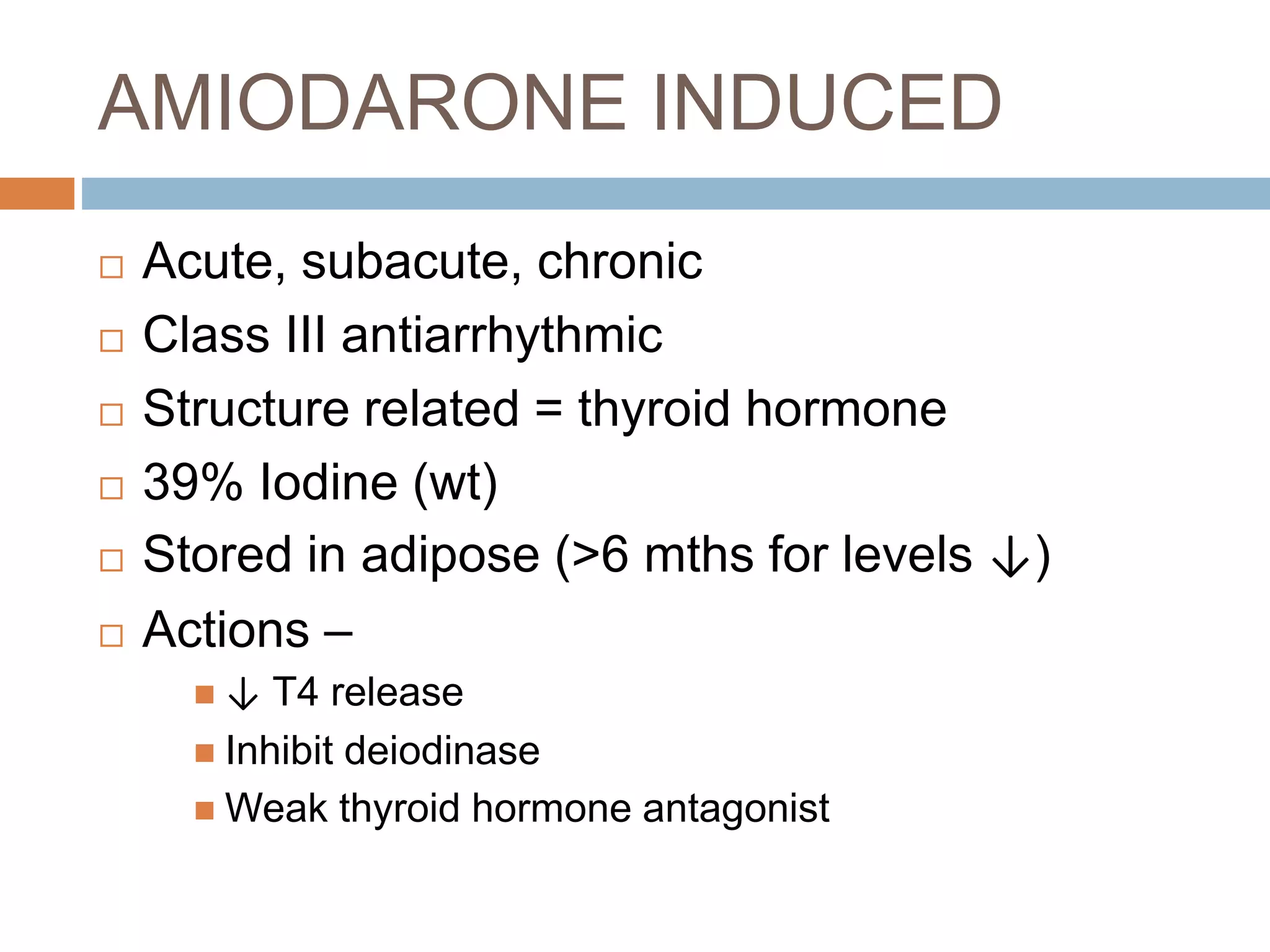
AMIODARONE INDUCED
 Acute, subacute, chronic
 Class III antiarrhythmic
 Structure related = thyroid hormone
 39% Iodine (wt)
 Stored in adipose (>6 mths for levels ↓)
 Actions –
 ↓ T4 release
 Inhibit deiodinase
 Weak thyroid hormone antagonist
AMIODARONE INDUCED
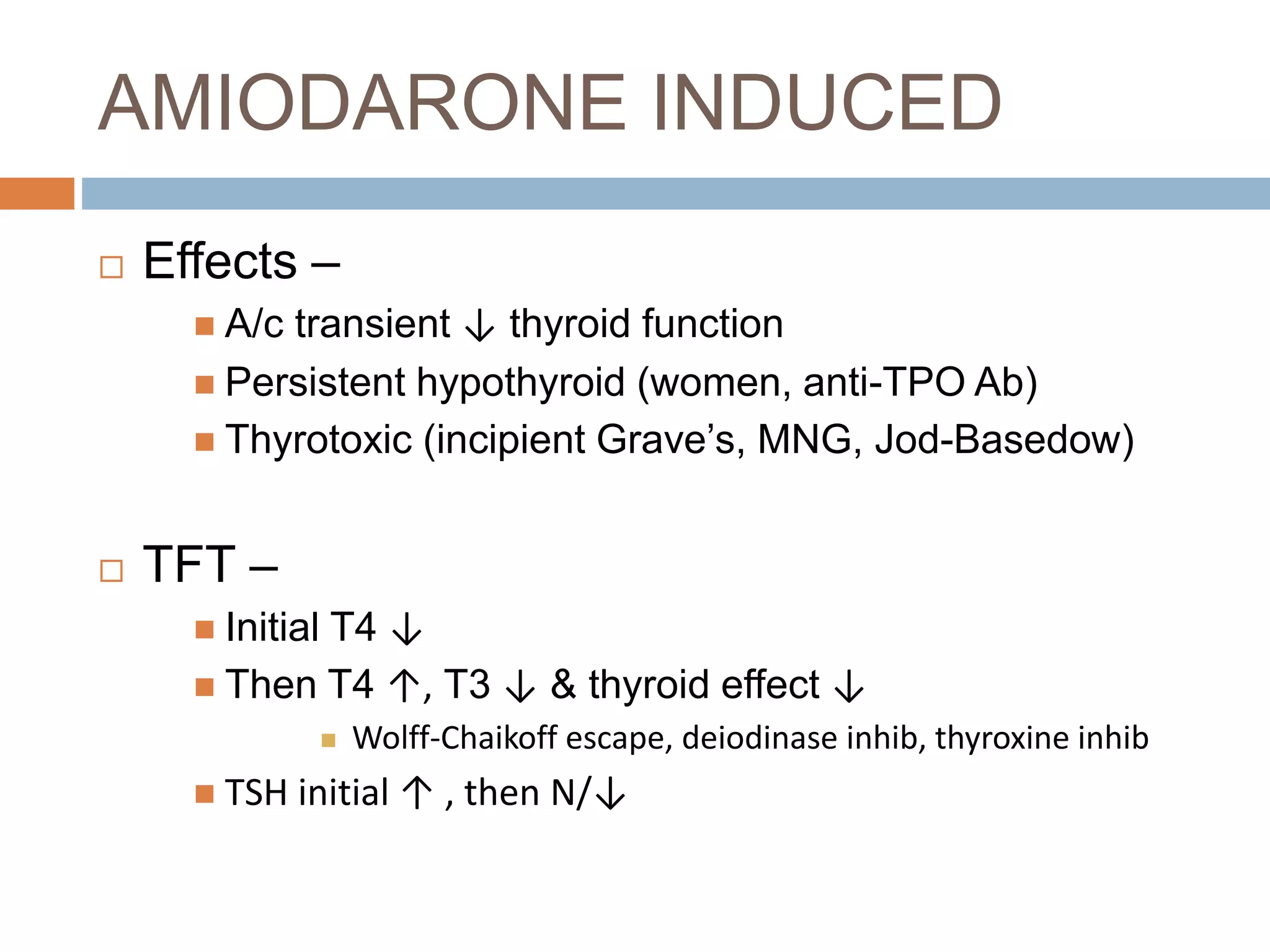
 Effects –
 A/c transient ↓ thyroid function
 Persistent hypothyroid (women, anti-TPO Ab)
 Thyrotoxic (incipient Grave’s, MNG, Jod-Basedow)
 TFT –
 Initial T4 ↓
 Then T4 ↑, T3 ↓ & thyroid effect ↓
 Wolff-Chaikoff escape, deiodinase inhib, thyroxine inhib
 TSH initial ↑ , then N/↓
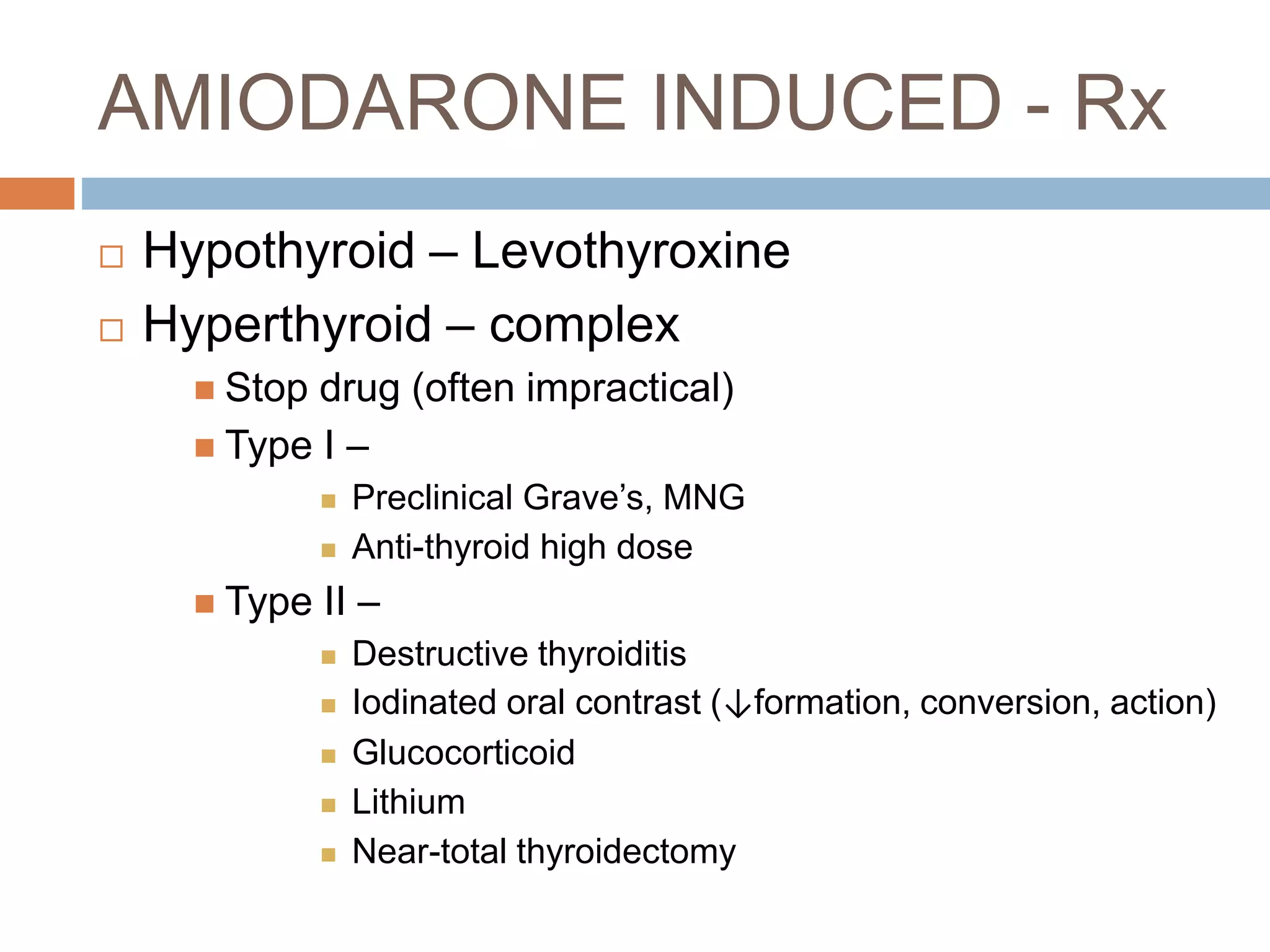
AMIODARONE INDUCED - Rx
 Hypothyroid – Levothyroxine
 Hyperthyroid – complex
 Stop drug (often impractical)
 Type I –
 Preclinical Grave’s, MNG
 Anti-thyroid high dose
 Type II –
 Destructive thyroiditis
 Iodinated oral contrast (↓formation, conversion, action)
 Glucocorticoid
 Lithium
 Near-total thyroidectomy
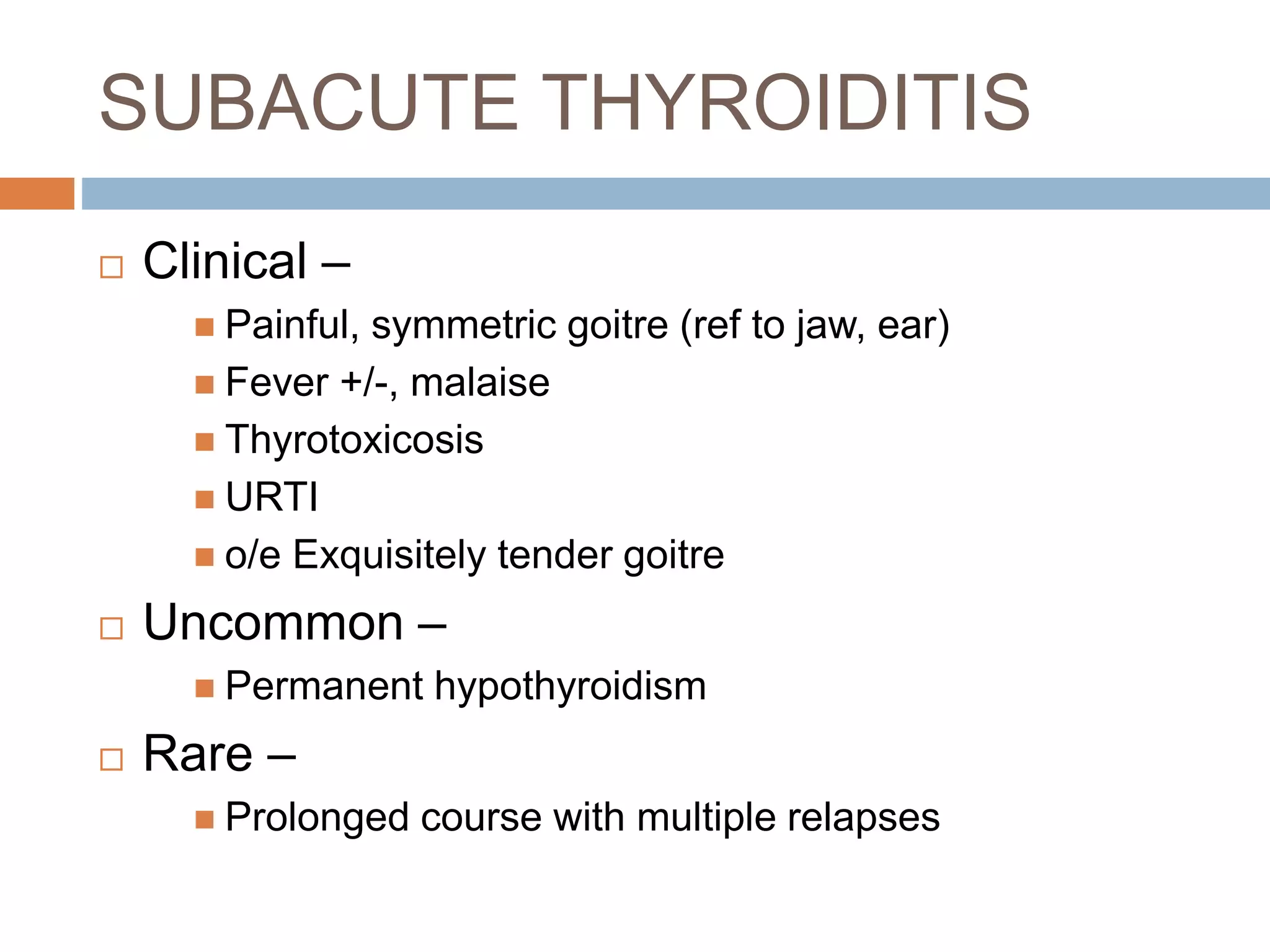
SUBACUTE THYROIDITIS
 Synonyms –
 de Quervain’s
 Granulomatous
 Viral (lots of viruses)
 Mimic pharyngitis
 30-50 years, women:men = 3:1
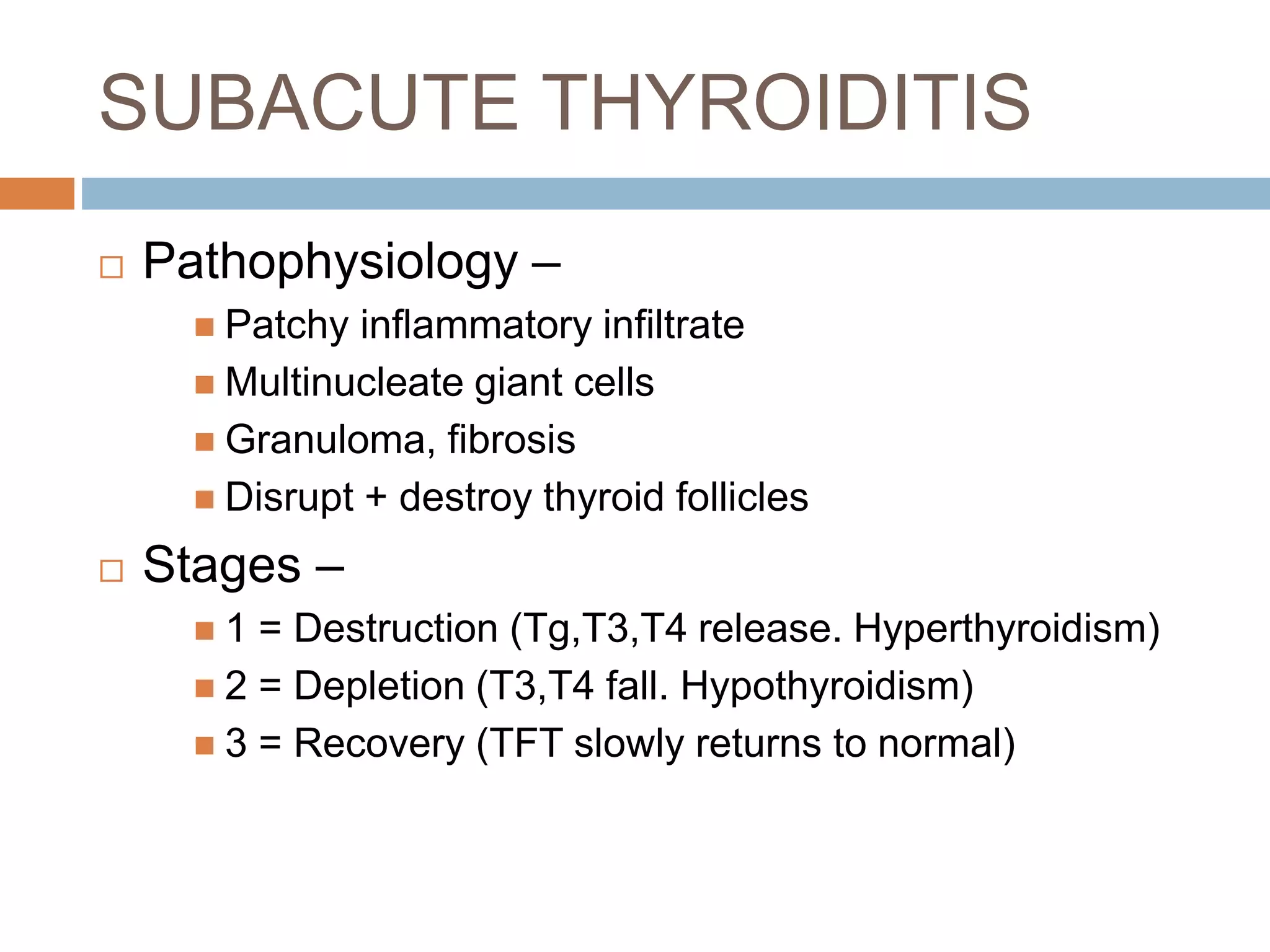
SUBACUTE THYROIDITIS
 Pathophysiology –
 Patchy inflammatory infiltrate
 Multinucleate giant cells
 Granuloma, fibrosis
 Disrupt + destroy thyroid follicles
 Stages –
 1 = Destruction (Tg,T3,T4 release. Hyperthyroidism)
 2 = Depletion (T3,T4 fall. Hypothyroidism)
 3 = Recovery (TFT slowly returns to normal)
SUBACUTE THYROIDITIS
 Clinical –
 Painful, symmetric goitre (ref to jaw, ear)
 Fever +/-, malaise
 Thyrotoxicosis
 URTI
 o/e Exquisitely tender goitre
 Uncommon –
 Permanent hypothyroidism
 Rare –
 Prolonged course with multiple relapses
SUBACUTE THYROIDITIS
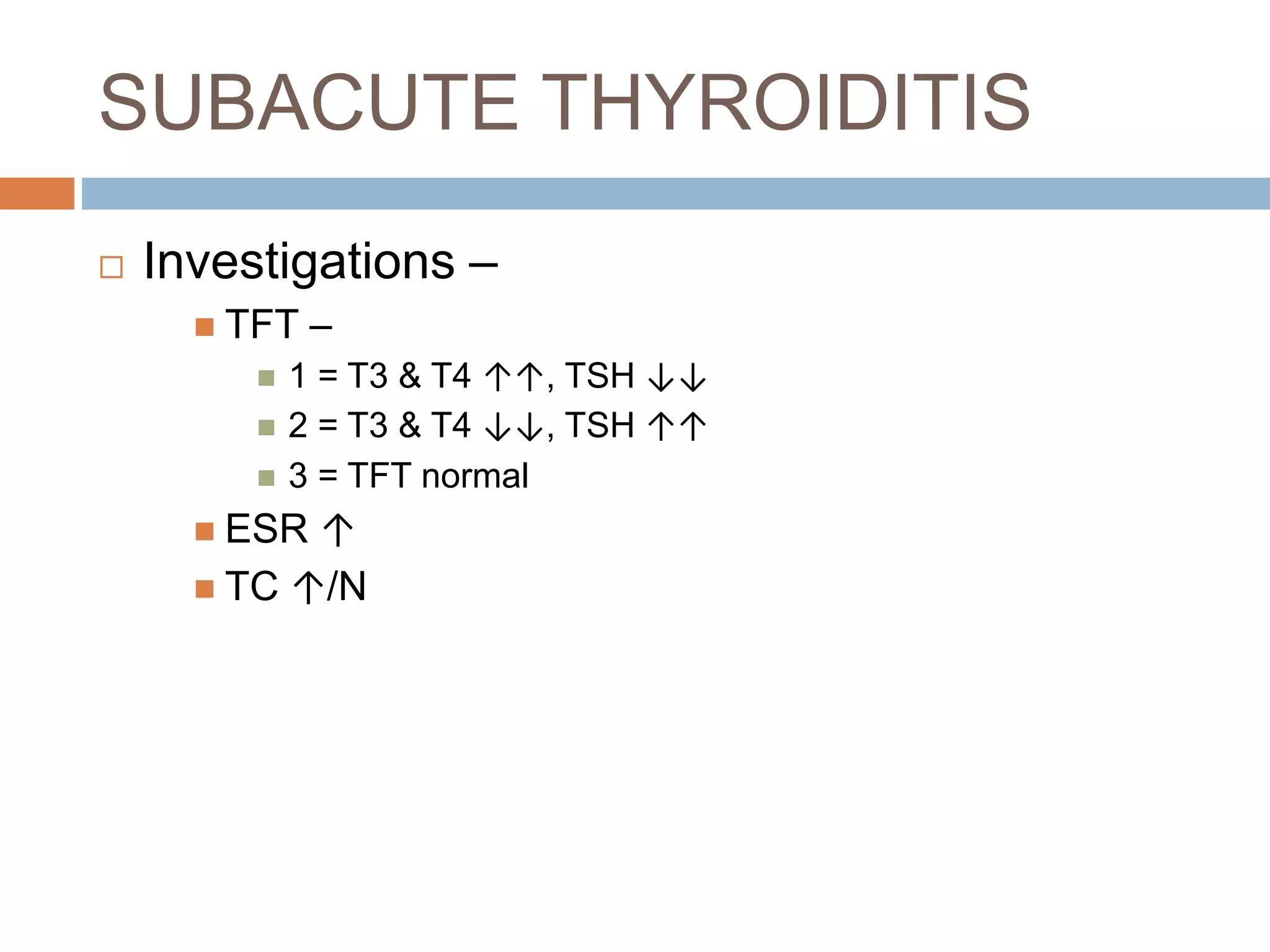
 Investigations –
 TFT –
 1 = T3 & T4 ↑↑, TSH ↓↓
 2 = T3 & T4 ↓↓, TSH ↑↑
 3 = TFT normal
 ESR ↑
 TC ↑/N
SUBACUTE THYROIDITIS
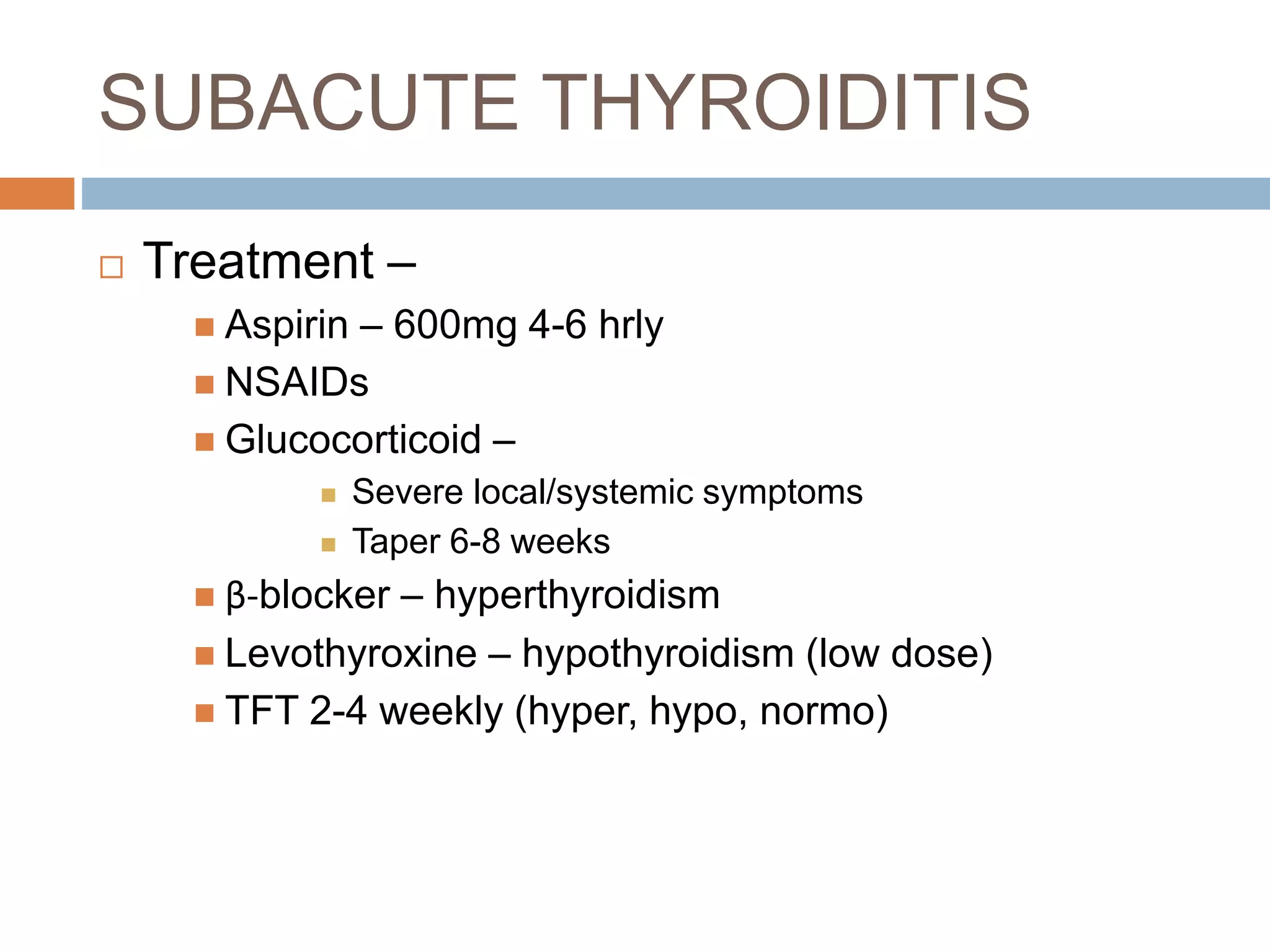
 Treatment –
 Aspirin – 600mg 4-6 hrly
 NSAIDs
 Glucocorticoid –
 Severe local/systemic symptoms
 Taper 6-8 weeks
 β-blocker – hyperthyroidism
 Levothyroxine – hypothyroidism (low dose)
 TFT 2-4 weekly (hyper, hypo, normo)
SUBACUTE THYROIDITIS
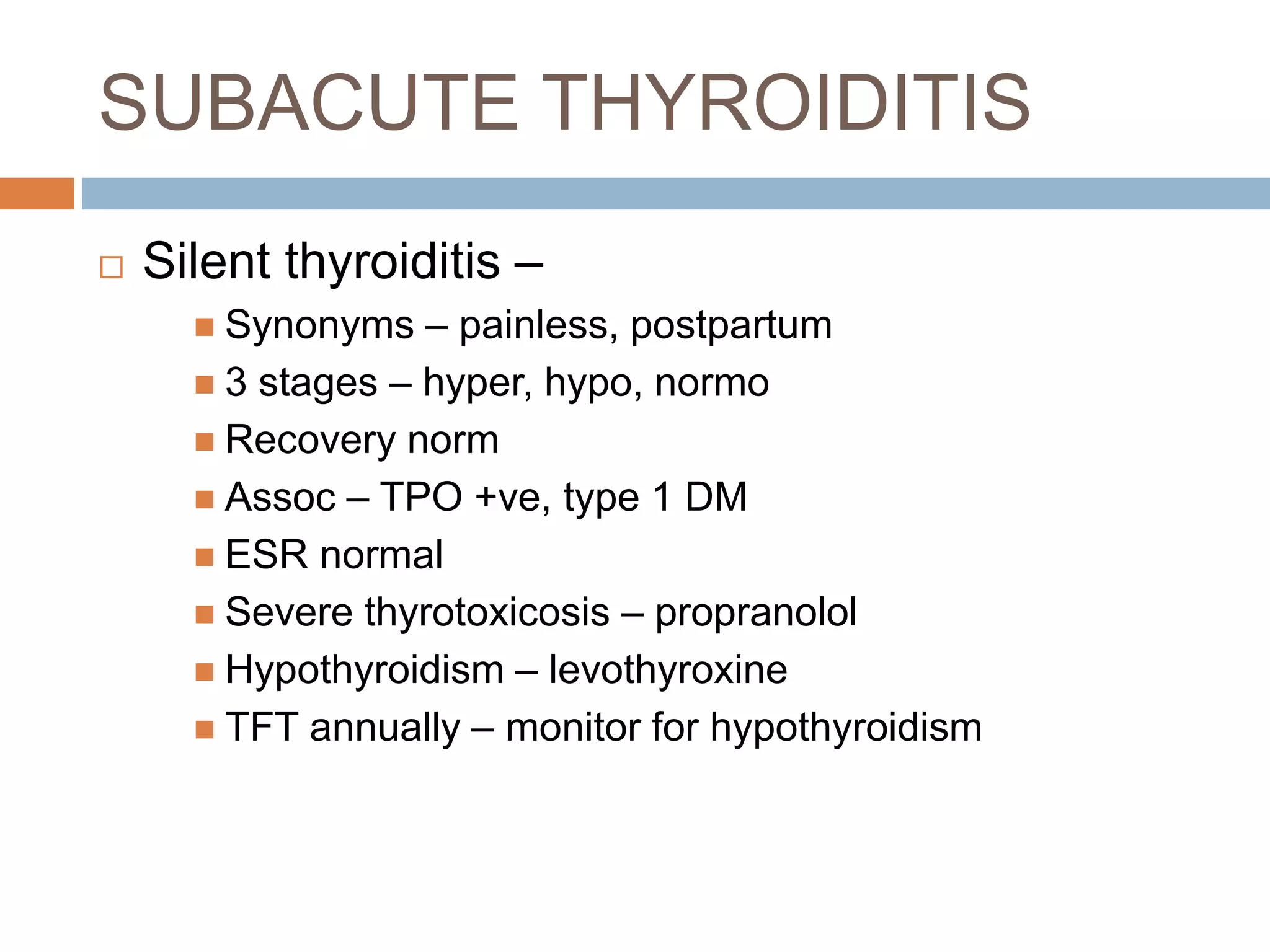
 Silent thyroiditis –
 Synonyms – painless, postpartum
 3 stages – hyper, hypo, normo
 Recovery norm
 Assoc – TPO +ve, type 1 DM
 ESR normal
 Severe thyrotoxicosis – propranolol
 Hypothyroidism – levothyroxine
 TFT annually – monitor for hypothyroidism
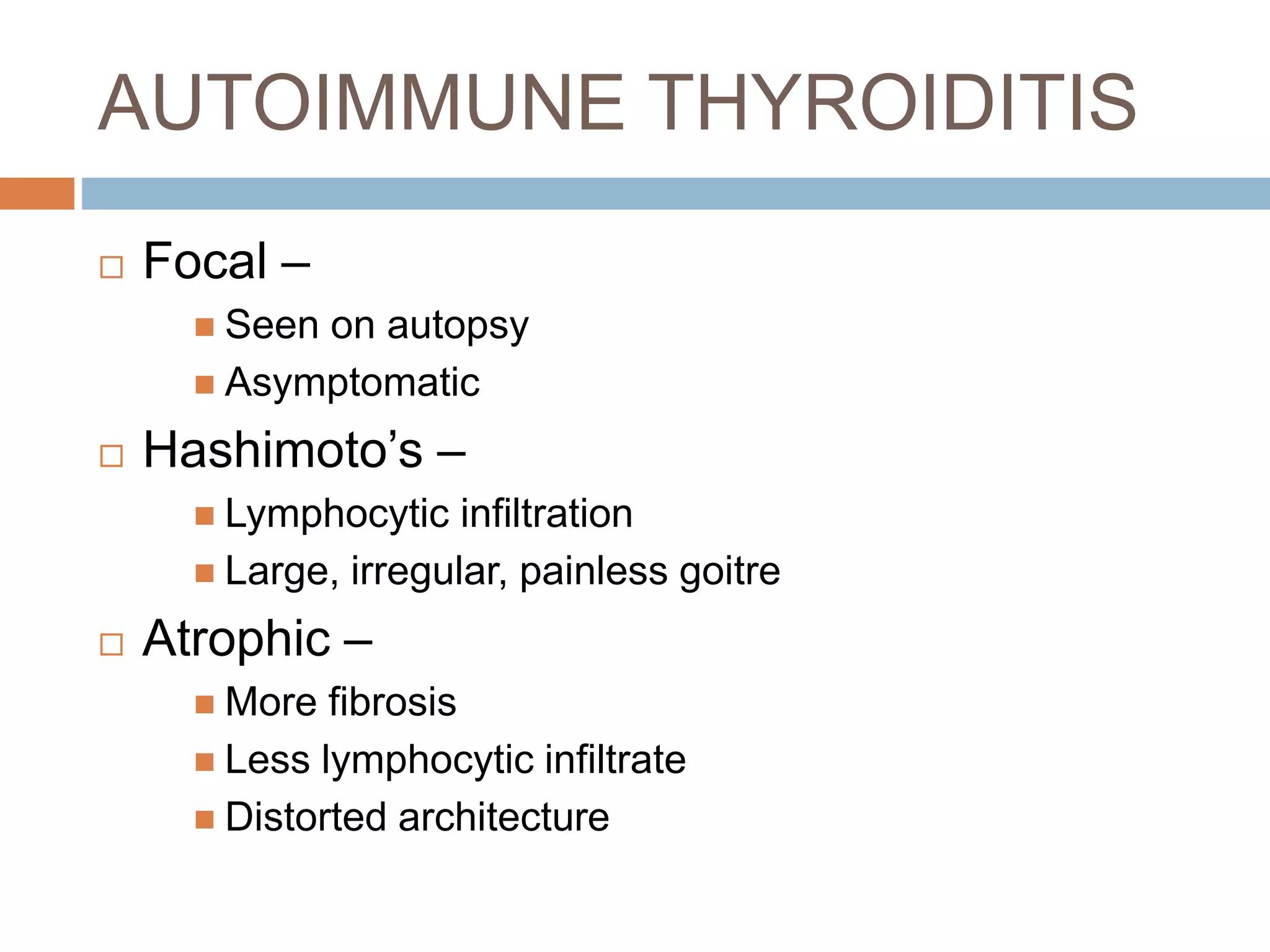
AUTOIMMUNE THYROIDITIS
 Focal –
 Seen on autopsy
 Asymptomatic
 Hashimoto’s –
 Lymphocytic infiltration
 Large, irregular, painless goitre
 Atrophic –
 More fibrosis
 Less lymphocytic infiltrate
 Distorted architecture
AUTOIMMUNE THYROIDITIS
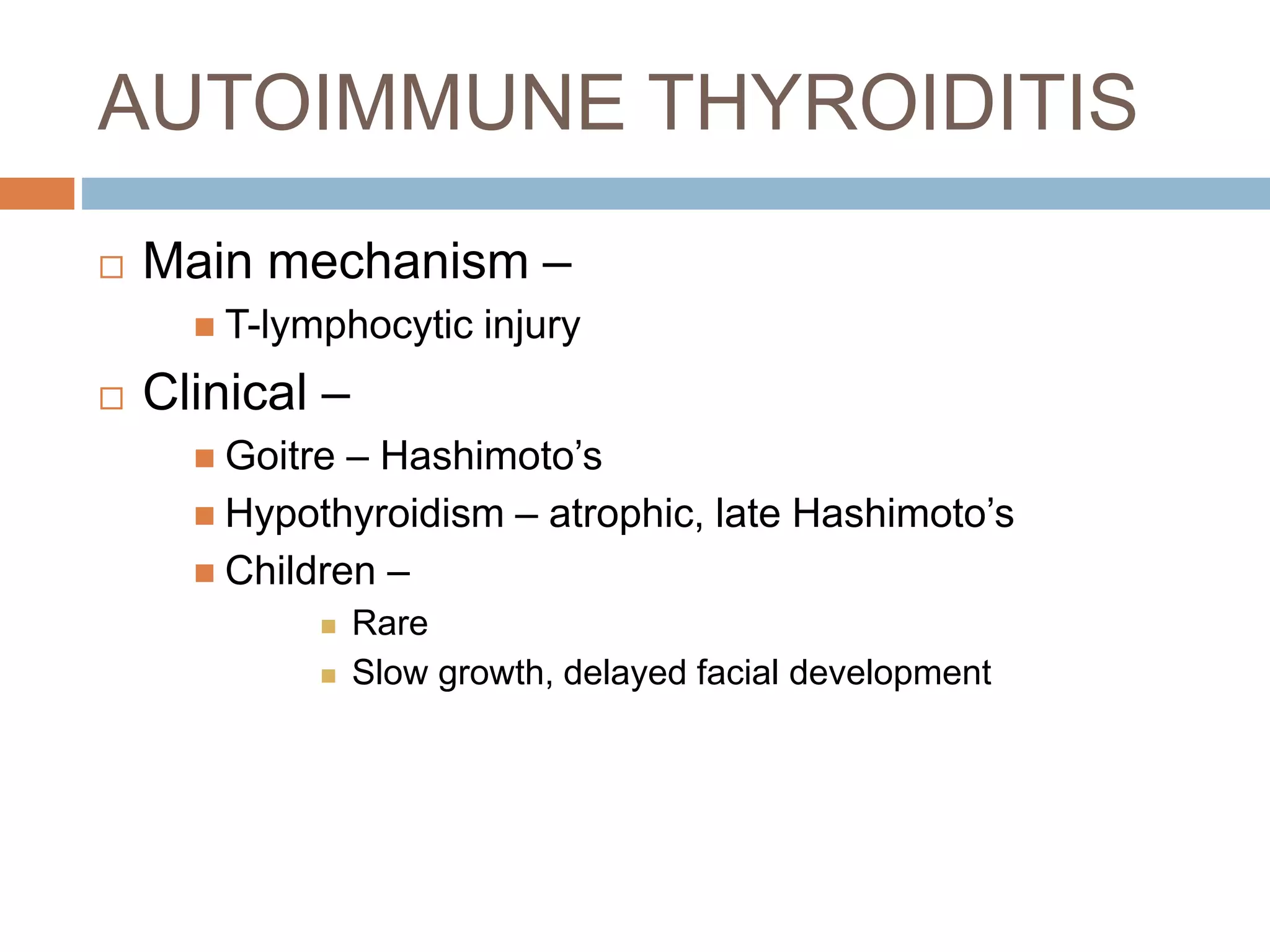
 Main mechanism –
 T-lymphocytic injury
 Clinical –
 Goitre – Hashimoto’s
 Hypothyroidism – atrophic, late Hashimoto’s
 Children –
 Rare
 Slow growth, delayed facial development
AUTOIMMUNE THYROIDITIS
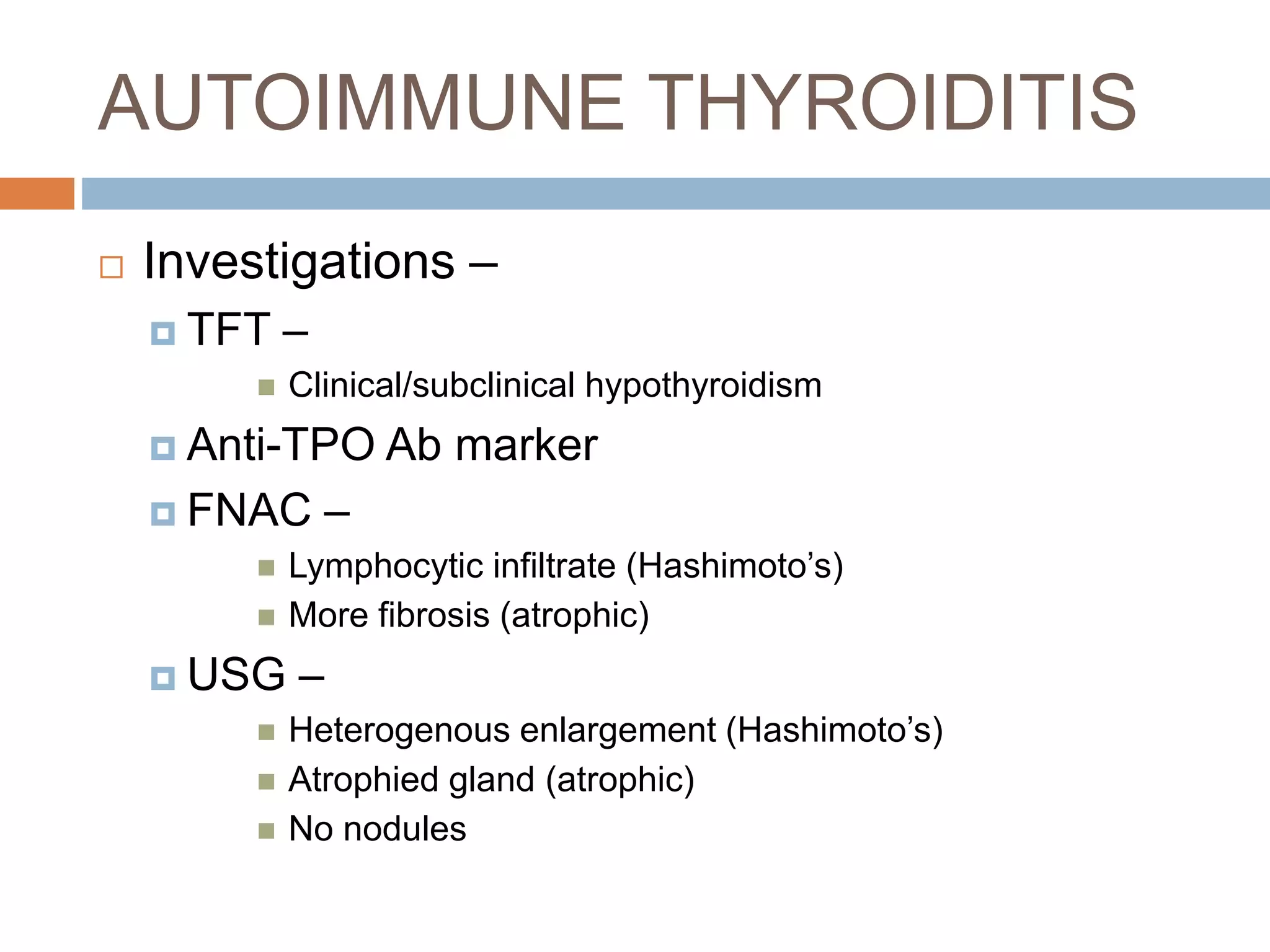
 Investigations –
 TFT –
 Clinical/subclinical hypothyroidism
 Anti-TPO Ab marker
 FNAC –
 Lymphocytic infiltrate (Hashimoto’s)
 More fibrosis (atrophic)
 USG –
 Heterogenous enlargement (Hashimoto’s)
 Atrophied gland (atrophic)
 No nodules
AUTOIMMUNE THYROIDITIS
 Treatment –
 Monitor TFT regularly
 Levothyroxine if hypothyroid
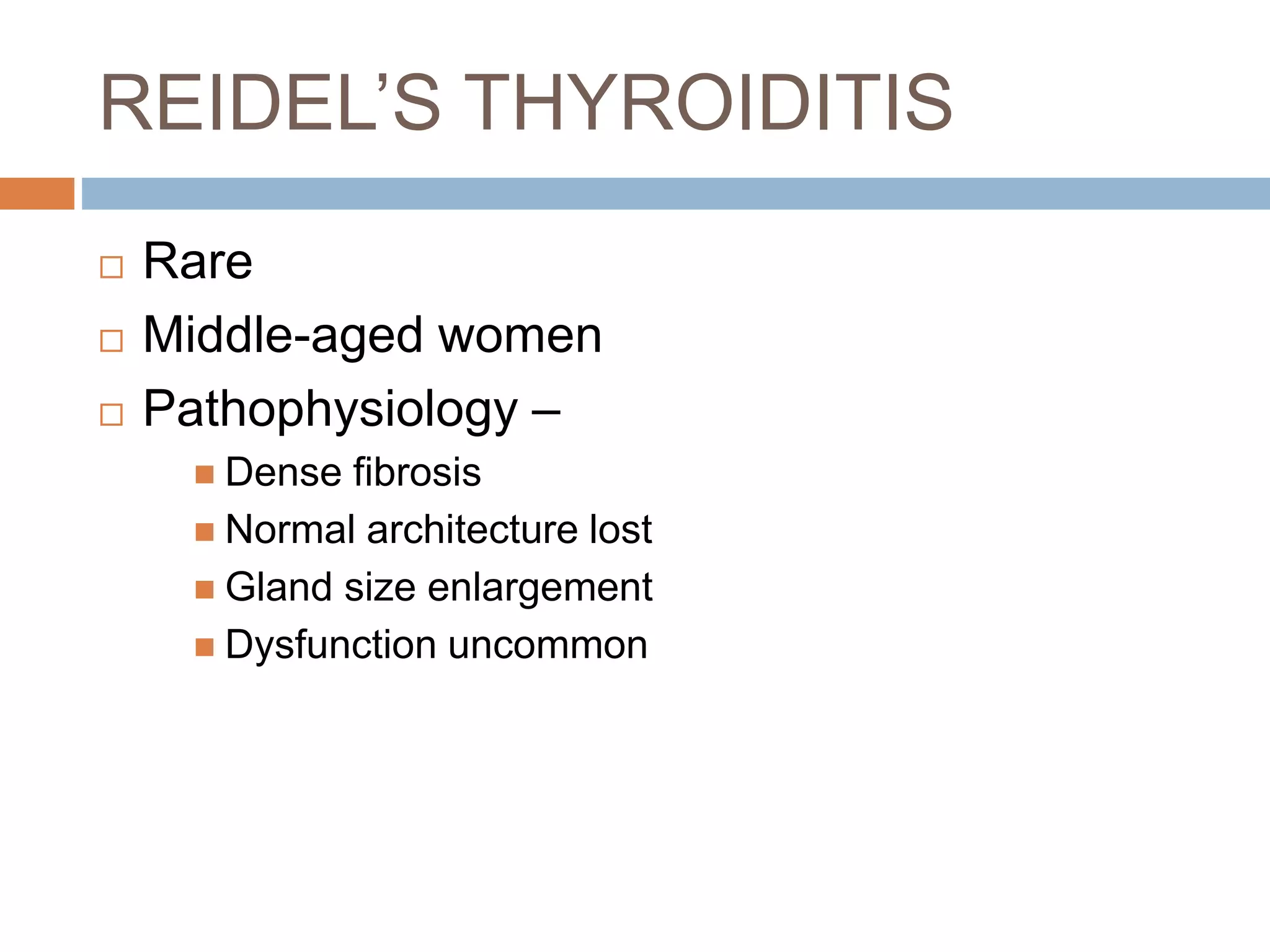
REIDEL’S THYROIDITIS
 Rare
 Middle-aged women
 Pathophysiology –
 Dense fibrosis
 Normal architecture lost
 Gland size enlargement
 Dysfunction uncommon
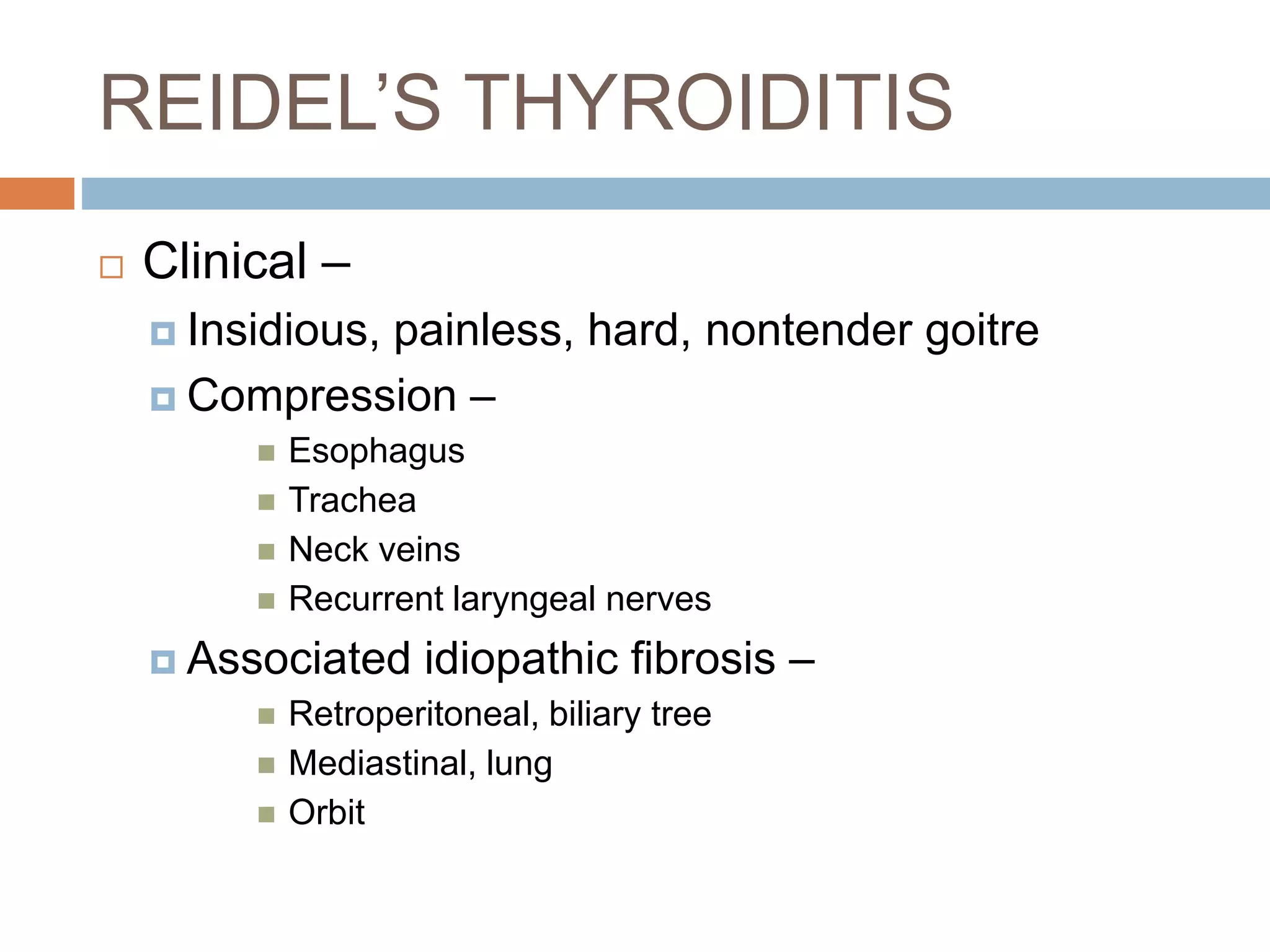
REIDEL’S THYROIDITIS
 Clinical –
 Insidious, painless, hard, nontender goitre
 Compression –
 Esophagus
 Trachea
 Neck veins
 Recurrent laryngeal nerves
 Associated idiopathic fibrosis –
 Retroperitoneal, biliary tree
 Mediastinal, lung
 Orbit
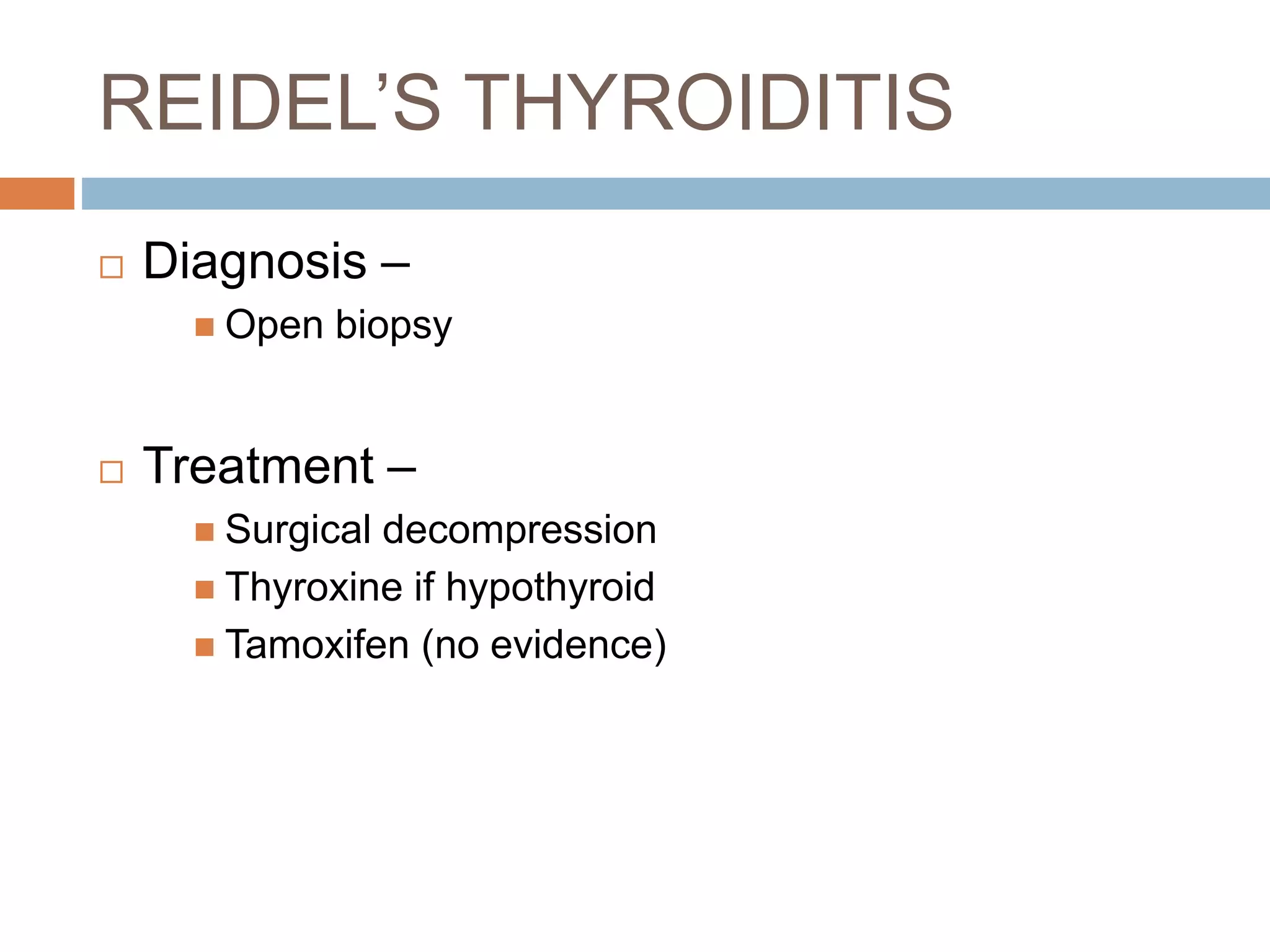
REIDEL’S THYROIDITIS
 Diagnosis –
 Open biopsy
 Treatment –
 Surgical decompression
 Thyroxine if hypothyroid
 Tamoxifen (no evidence)
Simple goitre and thyroiditis

Simple goitre and thyroiditis

  • 1.
  • 2.
    SIMPLE GOITRE  Othernames:-  Diffuse non-toxic  Colloid  Juvenile (teenagers)  Characteristics:-  Soft, symmetrical, diffuse  NO nodularity, tenderness, bruit, LNE  TFT normal  NO anti-thyroid Ab
  • 3.
    SIMPLE GOITRE  Agegroup:-  15-25 years most common  Causes:-  Pregnancy  Puberty  Iodine deficiency  Goitrogen intake – Cabbage, cauliflower  Inherited thyroid hormone dysgenesis:-  Iodine transport, thyroglob synthesis, organification, coupling, iodide regeneration
  • 4.
    SIMPLE GOITRE  Clinicalfeatures:-  Asymptomatic mainly  Noticed by others, self  Cosmetic concern  Localised pain & swelling (Spont bleed)  Large goitre -  Tracheal compression  Esophageal compression
  • 5.
    SIMPLE GOITRE  Examination:- Diffuse, symmetrical enlargement  Soft, nontender  NO nodules, LNE  Pemberton’s sign – raise arms, then  Facial congestion  Faintness  Ext jugular vein compression  Substernal goitre
  • 6.
    SIMPLE GOITRE  Investigations:- TFT – r/o hypo/hyper  Normal  Normal T3 & TSH, low T4 (Iod def, more T4→T3)  Anti-TPO Ab – r/o autoimmune thyroid disease  Urinary Iodine - <10 mcg/dL = Iodine def  USG – If nodularity suspected
  • 7.
    SIMPLE GOITRE  Treatment:- Juvenile/ pregnancy –  TFT normal, NO Rx. Usually regress spontaneously  Iodine deficiency –  Iodine  Thyroxine  Surgery –  Tracheal compression  Thoracic outlet obstruction  Cosmetic  Radioiodine –  Follow-up for hypothyroidism
  • 8.
    SIMPLE GOITRE  Recurrentepisodes –  Fibrosis  Nodule formation - MNG  Autonomous function – toxic nodule
  • 9.
  • 10.
    CAUSES  Acute  Bacterialinfection:  Staphylococcus, Streptococcus, and Enterobacter  Fungal infection:  Aspergillus, Candida, Coccidioides, Histoplasma, and Pneumocystis  Radiation thyroiditis after 131I treatment  Amiodarone (may also be subacute or chronic)  Subacute  Viral (or granulomatous) thyroiditis  Silent thyroiditis (including postpartum thyroiditis)  Mycobacterial infection  Chronic  Autoimmunity: focal thyroiditis, Hashimoto's thyroiditis, atrophic thyroiditis  Riedel's thyroiditis  Parasitic thyroiditis:  Echinococcosis, strongyloidiasis, cysticercosis  Traumatic: after palpation
  • 11.
    SUPPURATIVE THYROIDITIS  Rare Suppuration –  Bacterial  Fungal  Associated –  Pyriform sinus (4th brachial pouch)  Long standing goitre  Degeneration of malignancy
  • 12.
    SUPPURATIVE THYROIDITIS  Clinical Thyroid pain – ref to throat, ear  Fever, dysphagia  Erythema over thyroid  Small, tender, asymmetric goitre  Differentials  Thyroiditis – subacute, chronic  Haemorrhage into cyst  Malignancy  Amiodarone induced thyroiditis  Amyloidosis
  • 13.
    SUPPURATIVE THYROIDITIS  Investig–  TC & ESR ↑  FNAC – polymorph infiltration  Specimen gram stain, C&S  CT, USG – abscess  Treatment –  Antibiotics, antifungals  Surgery –  Abscess  Compressive symptoms (trachea, esophagus, jugular veins)
  • 14.
    SUPPURATIVE THYROIDITIS  Complications–  Tracheal compression  Retropharyngeal abscess  Esophageal compression  Septicaemia  Mediastinitis  Jugular vein thrombosis
  • 15.
    DRUG INDUCED  Interferons–  IFN-α  IL-2  Amiodarone  Can result in –  Painless thyroiditis  Grave’s  Hypothyroidism  Risk factor –  Anti-TPO Ab+ve before Rx
  • 16.
    AMIODARONE INDUCED  Acute,subacute, chronic  Class III antiarrhythmic  Structure related = thyroid hormone  39% Iodine (wt)  Stored in adipose (>6 mths for levels ↓)  Actions –  ↓ T4 release  Inhibit deiodinase  Weak thyroid hormone antagonist
  • 17.
    AMIODARONE INDUCED  Effects–  A/c transient ↓ thyroid function  Persistent hypothyroid (women, anti-TPO Ab)  Thyrotoxic (incipient Grave’s, MNG, Jod-Basedow)  TFT –  Initial T4 ↓  Then T4 ↑, T3 ↓ & thyroid effect ↓  Wolff-Chaikoff escape, deiodinase inhib, thyroxine inhib  TSH initial ↑ , then N/↓
  • 18.
    AMIODARONE INDUCED -Rx  Hypothyroid – Levothyroxine  Hyperthyroid – complex  Stop drug (often impractical)  Type I –  Preclinical Grave’s, MNG  Anti-thyroid high dose  Type II –  Destructive thyroiditis  Iodinated oral contrast (↓formation, conversion, action)  Glucocorticoid  Lithium  Near-total thyroidectomy
  • 19.
    SUBACUTE THYROIDITIS  Synonyms–  de Quervain’s  Granulomatous  Viral (lots of viruses)  Mimic pharyngitis  30-50 years, women:men = 3:1
  • 20.
    SUBACUTE THYROIDITIS  Pathophysiology–  Patchy inflammatory infiltrate  Multinucleate giant cells  Granuloma, fibrosis  Disrupt + destroy thyroid follicles  Stages –  1 = Destruction (Tg,T3,T4 release. Hyperthyroidism)  2 = Depletion (T3,T4 fall. Hypothyroidism)  3 = Recovery (TFT slowly returns to normal)
  • 21.
    SUBACUTE THYROIDITIS  Clinical–  Painful, symmetric goitre (ref to jaw, ear)  Fever +/-, malaise  Thyrotoxicosis  URTI  o/e Exquisitely tender goitre  Uncommon –  Permanent hypothyroidism  Rare –  Prolonged course with multiple relapses
  • 22.
    SUBACUTE THYROIDITIS  Investigations–  TFT –  1 = T3 & T4 ↑↑, TSH ↓↓  2 = T3 & T4 ↓↓, TSH ↑↑  3 = TFT normal  ESR ↑  TC ↑/N
  • 23.
    SUBACUTE THYROIDITIS  Treatment–  Aspirin – 600mg 4-6 hrly  NSAIDs  Glucocorticoid –  Severe local/systemic symptoms  Taper 6-8 weeks  β-blocker – hyperthyroidism  Levothyroxine – hypothyroidism (low dose)  TFT 2-4 weekly (hyper, hypo, normo)
  • 24.
    SUBACUTE THYROIDITIS  Silentthyroiditis –  Synonyms – painless, postpartum  3 stages – hyper, hypo, normo  Recovery norm  Assoc – TPO +ve, type 1 DM  ESR normal  Severe thyrotoxicosis – propranolol  Hypothyroidism – levothyroxine  TFT annually – monitor for hypothyroidism
  • 25.
    AUTOIMMUNE THYROIDITIS  Focal–  Seen on autopsy  Asymptomatic  Hashimoto’s –  Lymphocytic infiltration  Large, irregular, painless goitre  Atrophic –  More fibrosis  Less lymphocytic infiltrate  Distorted architecture
  • 26.
    AUTOIMMUNE THYROIDITIS  Mainmechanism –  T-lymphocytic injury  Clinical –  Goitre – Hashimoto’s  Hypothyroidism – atrophic, late Hashimoto’s  Children –  Rare  Slow growth, delayed facial development
  • 27.
    AUTOIMMUNE THYROIDITIS  Investigations–  TFT –  Clinical/subclinical hypothyroidism  Anti-TPO Ab marker  FNAC –  Lymphocytic infiltrate (Hashimoto’s)  More fibrosis (atrophic)  USG –  Heterogenous enlargement (Hashimoto’s)  Atrophied gland (atrophic)  No nodules
  • 28.
    AUTOIMMUNE THYROIDITIS  Treatment–  Monitor TFT regularly  Levothyroxine if hypothyroid
  • 29.
    REIDEL’S THYROIDITIS  Rare Middle-aged women  Pathophysiology –  Dense fibrosis  Normal architecture lost  Gland size enlargement  Dysfunction uncommon
  • 30.
    REIDEL’S THYROIDITIS  Clinical–  Insidious, painless, hard, nontender goitre  Compression –  Esophagus  Trachea  Neck veins  Recurrent laryngeal nerves  Associated idiopathic fibrosis –  Retroperitoneal, biliary tree  Mediastinal, lung  Orbit
  • 31.
    REIDEL’S THYROIDITIS  Diagnosis–  Open biopsy  Treatment –  Surgical decompression  Thyroxine if hypothyroid  Tamoxifen (no evidence)