Silence No MoreMarama Pala
Three Decades of HIV and AIDSIndigenous peoples globally are over-represented in the HIV/AIDS epidemic. Despite the astonishing diversity between and among us, indigenous peoples share a common experience of poverty, marginalization, and colonization that renders us acutely vulnerable to HIV. Indigenous peoples working globally have designed and delivered several community-driven initiatives to address their common concerns. However, the global epidemic of HIV among indigenous peoples continues to attract little attention domestically or internationally.
Social Determinants of Health for Indigenous Peoples - VulnerabilitiesColonisationPovertyMental Health, addictionsHealth disparities, Discrimination,RacismIncarceration
What we know in ĀotearoaLack of accurate surveillance dataMāori women make up one third of all women diagnosed with HIV in Āotearoa since 1996Māori children have borne a greater burden compared to the European child population. Eg. 1.0 – European ref., Māori – 4.5.Māori women are at a higher risk of infection in Āotearoa compared to European women with the incidence ratio of women infected in Āotearoa is 1.0 – European ref., Māori – 2.8.More AIDS or CD4<200 late testers with 40.6% MāoriSocial and cultural taboos prevent Māori from disclosing, The impact of stigma and discrimination cripples HIV education.
Issues for HIV Positive Indigenous peoplesStigma and discriminationLack of acknowledgment of the changing pattern of the HIV pandemicLack of knowledge around social determinants of health and the vulnerability to HIVLimited community leadership on HIVNo resourcing for culturally specific programmesDiffering world views on HIV, sex and impact on whānau/fānau, hapū and iwi (Family and Community)Human and Indigenous rights?
Mahi TōnuWork to dateHealth Canada supported an Indigenous project to respond to HIV & AIDS 2006Three pre-conferences held before the International AIDS Conferences and one policy dialogue attended by Indigenous Peoples from Australia, Bolivia, Canada, Chile, Guatemala, Mexico, New Zealand and the United States. Toronto 2006, Mexico 2008, Ottawa 2009 and Vienna 2010.The Toronto Charter: An Indigenous Peoples’ Action Plan on HIV & AIDS 2006A report was completed on the above held meetingsThe International Indigenous Working Group on HIV & AIDS was launched in Vienna 2010. www.iiwgha.com
International Indigenous Working Group on HIV and AIDS
Ngā Mea TautokoUN Declaration on the Rights of Indigenous Peoples;Improve areas of healthRight to determining and developing health programmesThat programmes are supported by States to restore the health of Indigenous peoplesRight to traditional Knowledge – medicines, flora, fauna, animals and mineralsThe Toronto Charter;We have shared experiencesthat the AIDS epidemic continues to have a devastating effect on our people.That we have the right to determine our own healthPriorities and HIV programmesGreater Involvement of people living with HIV & AIDS;Include meaningful participation of PLWHA in all decision making areas.Involve PLWHA in developing funding priorities and in the choice design, implementation, monitoring and evaluation of programmes
Ngā mea hangaRaise awareness of indigenous HIV & AIDS globally, regionally and locallyHave decolonising, Indigenous research URGENTLYEngage international bodies, governments and NGO’s in the fight against indigenous HIV & AIDSGuide international policy and practice response to Indigenous HIV & AIDSContinue beyond 2011, with support and funding from the international community

Silence no more m. pala

  • 1.
  • 2.
    Three Decades ofHIV and AIDSIndigenous peoples globally are over-represented in the HIV/AIDS epidemic. Despite the astonishing diversity between and among us, indigenous peoples share a common experience of poverty, marginalization, and colonization that renders us acutely vulnerable to HIV. Indigenous peoples working globally have designed and delivered several community-driven initiatives to address their common concerns. However, the global epidemic of HIV among indigenous peoples continues to attract little attention domestically or internationally.
  • 3.
    Social Determinants ofHealth for Indigenous Peoples - VulnerabilitiesColonisationPovertyMental Health, addictionsHealth disparities, Discrimination,RacismIncarceration
  • 4.
    What we knowin ĀotearoaLack of accurate surveillance dataMāori women make up one third of all women diagnosed with HIV in Āotearoa since 1996Māori children have borne a greater burden compared to the European child population. Eg. 1.0 – European ref., Māori – 4.5.Māori women are at a higher risk of infection in Āotearoa compared to European women with the incidence ratio of women infected in Āotearoa is 1.0 – European ref., Māori – 2.8.More AIDS or CD4<200 late testers with 40.6% MāoriSocial and cultural taboos prevent Māori from disclosing, The impact of stigma and discrimination cripples HIV education.
  • 5.
    Issues for HIVPositive Indigenous peoplesStigma and discriminationLack of acknowledgment of the changing pattern of the HIV pandemicLack of knowledge around social determinants of health and the vulnerability to HIVLimited community leadership on HIVNo resourcing for culturally specific programmesDiffering world views on HIV, sex and impact on whānau/fānau, hapū and iwi (Family and Community)Human and Indigenous rights?
  • 6.
    Mahi TōnuWork todateHealth Canada supported an Indigenous project to respond to HIV & AIDS 2006Three pre-conferences held before the International AIDS Conferences and one policy dialogue attended by Indigenous Peoples from Australia, Bolivia, Canada, Chile, Guatemala, Mexico, New Zealand and the United States. Toronto 2006, Mexico 2008, Ottawa 2009 and Vienna 2010.The Toronto Charter: An Indigenous Peoples’ Action Plan on HIV & AIDS 2006A report was completed on the above held meetingsThe International Indigenous Working Group on HIV & AIDS was launched in Vienna 2010. www.iiwgha.com
  • 7.
  • 8.
    Ngā Mea TautokoUNDeclaration on the Rights of Indigenous Peoples;Improve areas of healthRight to determining and developing health programmesThat programmes are supported by States to restore the health of Indigenous peoplesRight to traditional Knowledge – medicines, flora, fauna, animals and mineralsThe Toronto Charter;We have shared experiencesthat the AIDS epidemic continues to have a devastating effect on our people.That we have the right to determine our own healthPriorities and HIV programmesGreater Involvement of people living with HIV & AIDS;Include meaningful participation of PLWHA in all decision making areas.Involve PLWHA in developing funding priorities and in the choice design, implementation, monitoring and evaluation of programmes
  • 9.
    Ngā mea hangaRaiseawareness of indigenous HIV & AIDS globally, regionally and locallyHave decolonising, Indigenous research URGENTLYEngage international bodies, governments and NGO’s in the fight against indigenous HIV & AIDSGuide international policy and practice response to Indigenous HIV & AIDSContinue beyond 2011, with support and funding from the international community

Editor's Notes

  • #3 Dr Clive Aspin, InternationalIndigenous Working Group on HIV and AIDS
  • #4 Poverty and low socio economic backgroundsLack of political or social powerFragmentation of Whānau/Fānau, Hapū &amp; IwiGeographic islolationUrbanisation - dispossessedLow literacy and numeracyMisinformation on HIV risks, no access to culturally appropriate informationPoor general health – limited access to health care and resourcesHighest STI’s recorded population with repeat infectionsThe discrimination towards sexual diversityInstitutionalised racismIncarceration
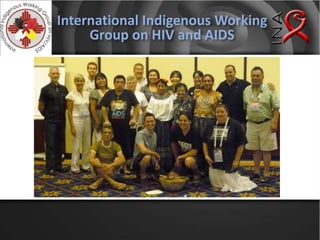
  • #8 Clive Aspin (New Zealand), Liz (Vienna), Trevor Stratton (Canada), Doris Peltier (Canada), Willy Morales (Chile), Geri Bailey(Canada), Art Zoccole (Canada), Nicole Callihoo(Canada), Melissa Deleary(Canada), Paulina Bol (Guatemala), Marjorie White(Canada), Lisa Hayes (New Zealand), Amaranta Gomez (Mexico), Michael Costello (Australia), Ken Clement(Canada), FRONT; Randy Jackson(Canada), Robert Foley (U.S.A.), Troy Myers(Canada), Marama Pala (New Zealand) – missing Merv Thomas(Canada), Tracey Prentice(Canada), Elisa Canqui (Bolivia), Renee Masching(Canada), Carlos Enrique Lix (Guatemala), Corena(Canada), Denise Lambert(Canada),FlavioNunes (Brazil), Silvio Kawai (Brazil), Apihaka Mack
  • #10 Kaupapa + Tikanga