







SH&T
MARKETERS
(SHOULD) SAY
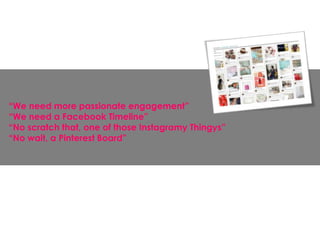
“We need more passionate engagement”
“We need a Facebook Timeline”
“No scratch that, one of those Instagramy Thingys”
“No wait, a Pinterest Board”
It seems, somewhere along the
way, marketers have forgotten about the
fundamentals of marketing in favour of
the next shiny object.

Oooh. Ahhh.
And can you blame them? It’s a crazy world
out there. It’s become so easy to get
distracted.
Here’s a little secret.
If you’re looking for the next big thing to solve your
marketing woes – it doesn’t exist.

Sorry.

Might as well close this presentation now, the rest
focuses on something fairly unsexy – marketing
fundamentals.
Marketing fundamentals don’t change.
It still is and always will be about attracting and retaining
customers. This is the core function of every business.
3 Essential Marketing Laws
Every Marketer Should Know
Double Jeopardy Law of Marketing
Smaller brands get hit twice – they have a smaller customer base
compared to their larger competitors and these customers are
slightly less loyal.

Seem obvious?
In theory
You could have two brands of equal size: one with lots of buyers who
buy the brand occasionally while the other that has half the number of
buyers who buy it twice as often. In theory, these two brands would
have the same market share.
Never happens in reality.
This is called the Double Jeopardy Law of Marketing.
Implications
Does the Double Jeopardy Law of Marketing apply to your
brand?
(It probably does if you’re not the largest brand in your category)

If it applies and your marketing objective is increasing loyalty in
hopes of growing your brand you’re likely wasting your time.

You should probably focus on market penetration instead.
TIME-OUT!
What’s the difference between market
share and market penetration?
Market Share
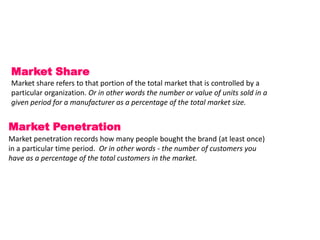
Market share refers to that portion of the total market that is controlled by a
particular organization. Or in other words the number or value of units sold in a
given period for a manufacturer as a percentage of the total market size.


Market Penetration
Market penetration records how many people bought the brand (at least once)
in a particular time period. Or in other words - the number of customers you
have as a percentage of the total customers in the market.
OK! GOT IT.
Please continue with the next law…
Purchase Duplication Law
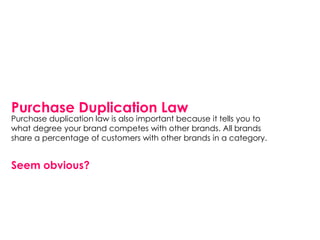
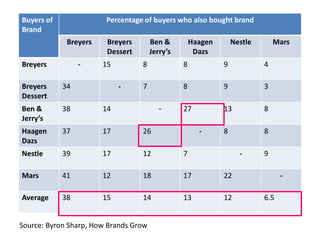
Purchase duplication law is also important because it tells you to
what degree your brand competes with other brands. All brands
share a percentage of customers with other brands in a category.


Seem obvious?
Buyers of               Percentage of buyers who also bought brand
Brand
             Breyers    Breyers        Ben &         Haagen       Nestle       Mars
                        Dessert        Jerry’s        Dazs
Breyers          -     15         8              8            9            4

Breyers     34              -     7              8            9            3
Dessert
Ben &       38         14                 -      27           13           8
Jerry’s
Haagen      37         17         26                   -      8            8
Dazs
Nestle      39         17         12             7                  -      9

Mars        41         12         18             17           22                 -

Average     38         15         14             13           12           6.5


Source: Byron Sharp, How Brands Grow
Questions you should be asking:
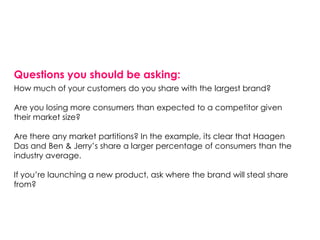
How much of your customers do you share with the largest brand?

Are you losing more consumers than expected to a competitor given
their market size?

Are there any market partitions? In the example, its clear that Haagen
Das and Ben & Jerry’s share a larger percentage of consumers than the
industry average.

If you’re launching a new product, ask where the brand will steal share
from?
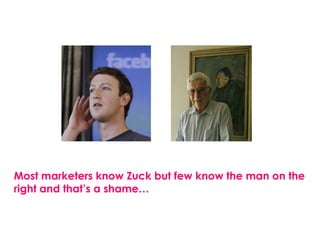
Most marketers know Zuck but few know the man on the
right and that’s a shame…
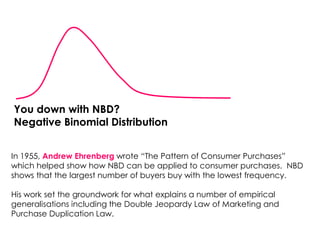
You down with NBD?
Negative Binomial Distribution


In 1955, Andrew Ehrenberg wrote “The Pattern of Consumer Purchases”
which helped show how NBD can be applied to consumer purchases. NBD
shows that the largest number of buyers buy with the lowest frequency.

His work set the groundwork for what explains a number of empirical
generalisations including the Double Jeopardy Law of Marketing and
Purchase Duplication Law.
Why should you care
about these
marketing laws?
It will help you understand how your consumers REALLY

1
    buy - almost every brand, regardless of market or size
    follows an NBD pattern.
2
    Know what you can control vs. what you can’t – will
    help you avoid fantasy marketing strategies i.e. all we
    have to do is increase loyalty
R-E-S-P-E-C-T


3
    If we want marketing to have respect in the boardroom
    we need to stop jumping around when something new
    appears and apply the same rigor to marketing as other
    functions do. These laws can help.
THANKS FOR READING.
collidelabs.com | nish@collidelabs.com

Sh&t Marketers (Should) Say

  • 1.
  • 2.
    “We need morepassionate engagement” “We need a Facebook Timeline” “No scratch that, one of those Instagramy Thingys” “No wait, a Pinterest Board”
  • 3.
    It seems, somewherealong the way, marketers have forgotten about the fundamentals of marketing in favour of the next shiny object. Oooh. Ahhh.
  • 4.
    And can youblame them? It’s a crazy world out there. It’s become so easy to get distracted.
  • 5.
    Here’s a littlesecret. If you’re looking for the next big thing to solve your marketing woes – it doesn’t exist. Sorry. Might as well close this presentation now, the rest focuses on something fairly unsexy – marketing fundamentals.
  • 6.
    Marketing fundamentals don’tchange. It still is and always will be about attracting and retaining customers. This is the core function of every business.
  • 7.
    3 Essential MarketingLaws Every Marketer Should Know
  • 8.
    Double Jeopardy Lawof Marketing Smaller brands get hit twice – they have a smaller customer base compared to their larger competitors and these customers are slightly less loyal. Seem obvious?
  • 9.
    In theory You couldhave two brands of equal size: one with lots of buyers who buy the brand occasionally while the other that has half the number of buyers who buy it twice as often. In theory, these two brands would have the same market share. Never happens in reality. This is called the Double Jeopardy Law of Marketing.
  • 10.
    Implications Does the DoubleJeopardy Law of Marketing apply to your brand? (It probably does if you’re not the largest brand in your category) If it applies and your marketing objective is increasing loyalty in hopes of growing your brand you’re likely wasting your time. You should probably focus on market penetration instead.
  • 11.
    TIME-OUT! What’s the differencebetween market share and market penetration?
  • 12.
    Market Share Market sharerefers to that portion of the total market that is controlled by a particular organization. Or in other words the number or value of units sold in a given period for a manufacturer as a percentage of the total market size. Market Penetration Market penetration records how many people bought the brand (at least once) in a particular time period. Or in other words - the number of customers you have as a percentage of the total customers in the market.
  • 13.
    OK! GOT IT. Pleasecontinue with the next law…
  • 14.
    Purchase Duplication Law Purchaseduplication law is also important because it tells you to what degree your brand competes with other brands. All brands share a percentage of customers with other brands in a category. Seem obvious?
  • 15.
    Buyers of Percentage of buyers who also bought brand Brand Breyers Breyers Ben & Haagen Nestle Mars Dessert Jerry’s Dazs Breyers - 15 8 8 9 4 Breyers 34 - 7 8 9 3 Dessert Ben & 38 14 - 27 13 8 Jerry’s Haagen 37 17 26 - 8 8 Dazs Nestle 39 17 12 7 - 9 Mars 41 12 18 17 22 - Average 38 15 14 13 12 6.5 Source: Byron Sharp, How Brands Grow
  • 16.
    Questions you shouldbe asking: How much of your customers do you share with the largest brand? Are you losing more consumers than expected to a competitor given their market size? Are there any market partitions? In the example, its clear that Haagen Das and Ben & Jerry’s share a larger percentage of consumers than the industry average. If you’re launching a new product, ask where the brand will steal share from?
  • 17.
    Most marketers knowZuck but few know the man on the right and that’s a shame…
  • 18.
    You down withNBD? Negative Binomial Distribution In 1955, Andrew Ehrenberg wrote “The Pattern of Consumer Purchases” which helped show how NBD can be applied to consumer purchases. NBD shows that the largest number of buyers buy with the lowest frequency. His work set the groundwork for what explains a number of empirical generalisations including the Double Jeopardy Law of Marketing and Purchase Duplication Law.
  • 19.
    Why should youcare about these marketing laws?
  • 20.
    It will helpyou understand how your consumers REALLY 1 buy - almost every brand, regardless of market or size follows an NBD pattern.
  • 21.
    2 Know what you can control vs. what you can’t – will help you avoid fantasy marketing strategies i.e. all we have to do is increase loyalty
  • 22.
    R-E-S-P-E-C-T 3 If we want marketing to have respect in the boardroom we need to stop jumping around when something new appears and apply the same rigor to marketing as other functions do. These laws can help.
  • 23.