Should 
Shouldn’t 
Function: giving advice 
or suggestions in English
Should is a modal auxiliary that 
we use very frequently in English: 
To give advice or a 
recommendation: 
Example: 
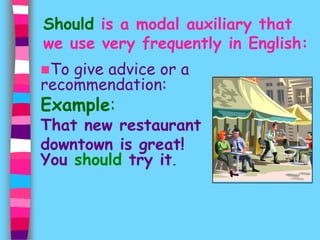
That new restaurant 
downtown is great! 
You should try it.
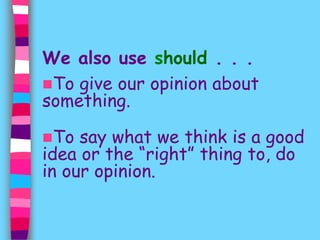
We also use should . . . 
To give our opinion about 
something. 
To say what we think is a good 
idea or the “right” thing to, do 
in our opinion.
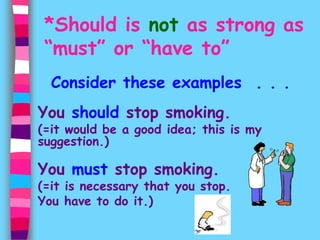
*Should is not as strong as 
“must” or “have to” 
Consider these examples . . . 
You should stop smoking. 
(=it would be a good idea; this is my 
suggestion.) 
You must stop smoking. 
(=it is necessary that you stop. 
You have to do it.)
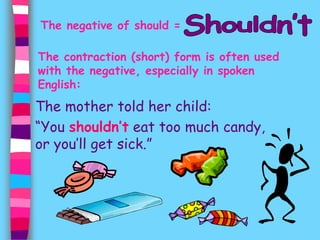
The negative of should = 
The contraction (short) form is often used 
with the negative, especially in spoken 
English: 
The mother told her child: 
“You shouldn’t eat too much candy, 
or you’ll get sick.”
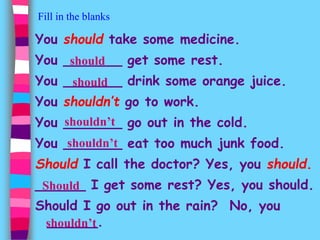
Fill in the blanks 
You should take some medicine. 
You _______ should 
get some rest. 
You _______ should 
drink some orange juice. 
You shouldn’t go to work. 
You _______ shouldn’t 
go out in the cold. 
You _______ shouldn’t 
eat too much junk food. 
Should I call the doctor? Yes, you should. 
______ Should 
I get some rest? Yes, you should. 
Should I go out in the rain? No, you 
shouldn’t 
______.
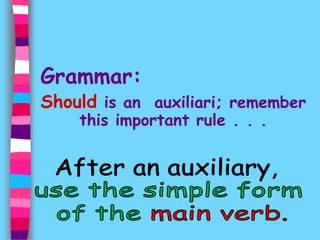
Grammar: 
Should is an auxiliari; remember 
this important rule . . .
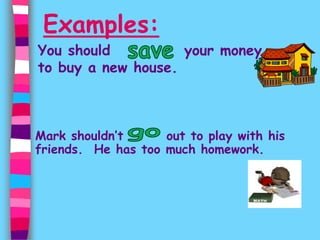
Examples: 
You should your money 
to buy a new house. 
Mark shouldn’t out to play with his 
friends. He has too much homework.
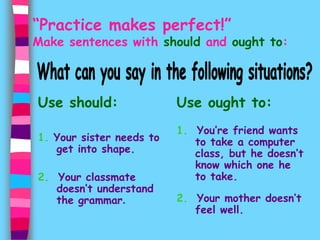
“Practice makes perfect!” 
Make sentences with should and ought to: 
Use should: 
1. Your sister needs to 
get into shape. 
2. Your classmate 
doesn’t understand 
the grammar. 
Use ought to: 
1. You’re friend wants 
to take a computer 
class, but he doesn’t 
know which one he 
to take. 
2. Your mother doesn’t 
feel well.
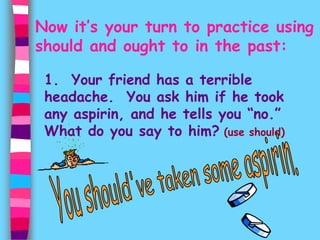
Now it’s your turn to practice using 
should and ought to in the past: 
1. Your friend has a terrible 
headache. You ask him if he took 
any aspirin, and he tells you “no.” 
What do you say to him? (use should)

Shouldshouldnt do phpapp_

  • 2.
    Should Shouldn’t Function:giving advice or suggestions in English
  • 3.
    Should is amodal auxiliary that we use very frequently in English: To give advice or a recommendation: Example: That new restaurant downtown is great! You should try it.
  • 4.
    We also useshould . . . To give our opinion about something. To say what we think is a good idea or the “right” thing to, do in our opinion.
  • 5.
    *Should is notas strong as “must” or “have to” Consider these examples . . . You should stop smoking. (=it would be a good idea; this is my suggestion.) You must stop smoking. (=it is necessary that you stop. You have to do it.)
  • 6.
    The negative ofshould = The contraction (short) form is often used with the negative, especially in spoken English: The mother told her child: “You shouldn’t eat too much candy, or you’ll get sick.”
  • 7.
    Fill in theblanks You should take some medicine. You _______ should get some rest. You _______ should drink some orange juice. You shouldn’t go to work. You _______ shouldn’t go out in the cold. You _______ shouldn’t eat too much junk food. Should I call the doctor? Yes, you should. ______ Should I get some rest? Yes, you should. Should I go out in the rain? No, you shouldn’t ______.
  • 8.
    Grammar: Should isan auxiliari; remember this important rule . . .
  • 9.
    Examples: You shouldyour money to buy a new house. Mark shouldn’t out to play with his friends. He has too much homework.
  • 10.
    “Practice makes perfect!” Make sentences with should and ought to: Use should: 1. Your sister needs to get into shape. 2. Your classmate doesn’t understand the grammar. Use ought to: 1. You’re friend wants to take a computer class, but he doesn’t know which one he to take. 2. Your mother doesn’t feel well.
  • 11.
    Now it’s yourturn to practice using should and ought to in the past: 1. Your friend has a terrible headache. You ask him if he took any aspirin, and he tells you “no.” What do you say to him? (use should)