Shikimic
acid
pathway
 By:A.R.G
 Dr. R.N.Lahoti Institute of
Pharmaceutical Education and
Research Center
1.DAHP Synthesis :Phosphoenolpyruvate + erythrose-4-phosphate =2-keto-3-deoxy-7-
phosphoglucoheptonic acid
1. Enzyme :DAHP synthase.
2.3-dehydroquinate (DHQ) from DAHP / cyclization reaction
1. 2nd
carbon ketone group converted to hydroxyl group.
2. Phosphate group from 7th
carbon get released as phosphoric acid .
3. 6th
carbon oxidation to form ketone group.
4. Enzyme : 3-DHQ synthase.
5. Co factor :
1. NAD is required but regenerated, so no net NAD is consumed.
2. Cobalt
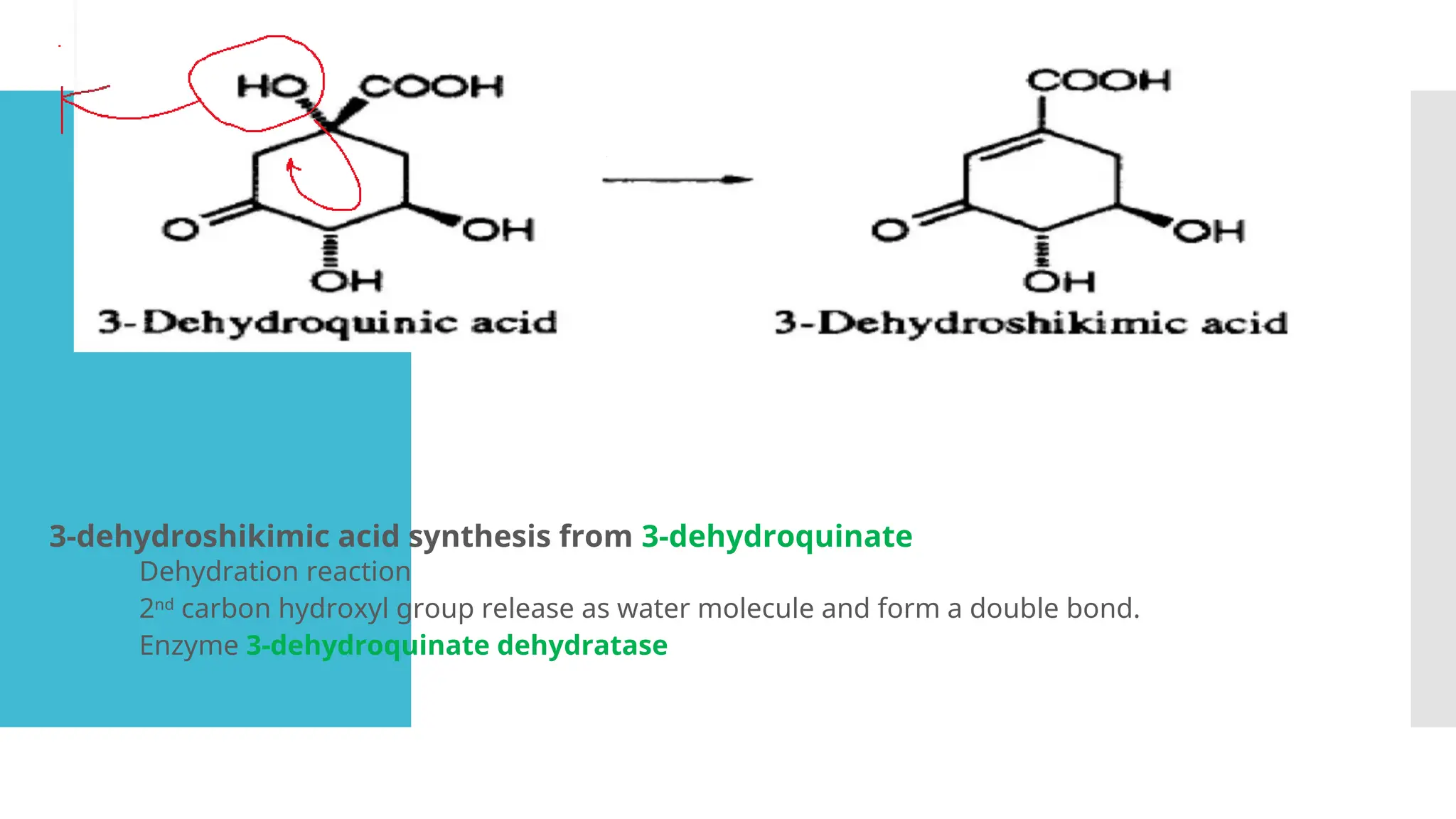
1.3-dehydroshikimic acid synthesis from 3-dehydroquinate
1. Dehydration reaction
2. 2nd
carbon hydroxyl group release as water molecule and form a double bond.
3. Enzyme 3-dehydroquinate dehydratase
1.Formation of shikimic acid
1. Co Enzyme shikimate dehydrogenase using NADPH.
2. At 6th
carbon ketone group converted to hydroxyl group
3. Hydrogen atom is obtained from NADPH to from NAD.
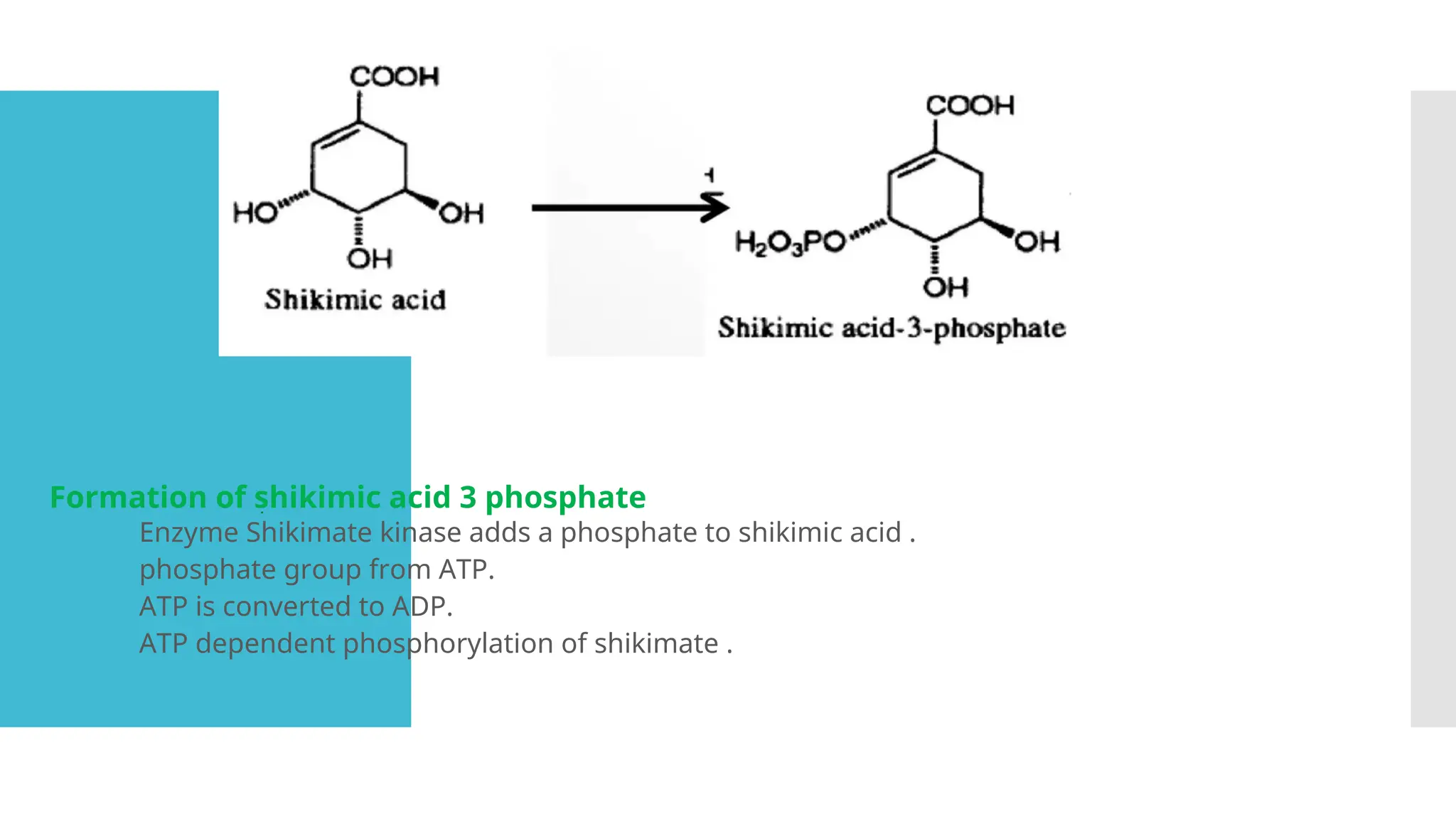
1.Formation of shikimic acid 3 phosphate
1. Enzyme Shikimate kinase adds a phosphate to shikimic acid .
2. phosphate group from ATP.
3. ATP is converted to ADP.
4. ATP dependent phosphorylation of shikimate .
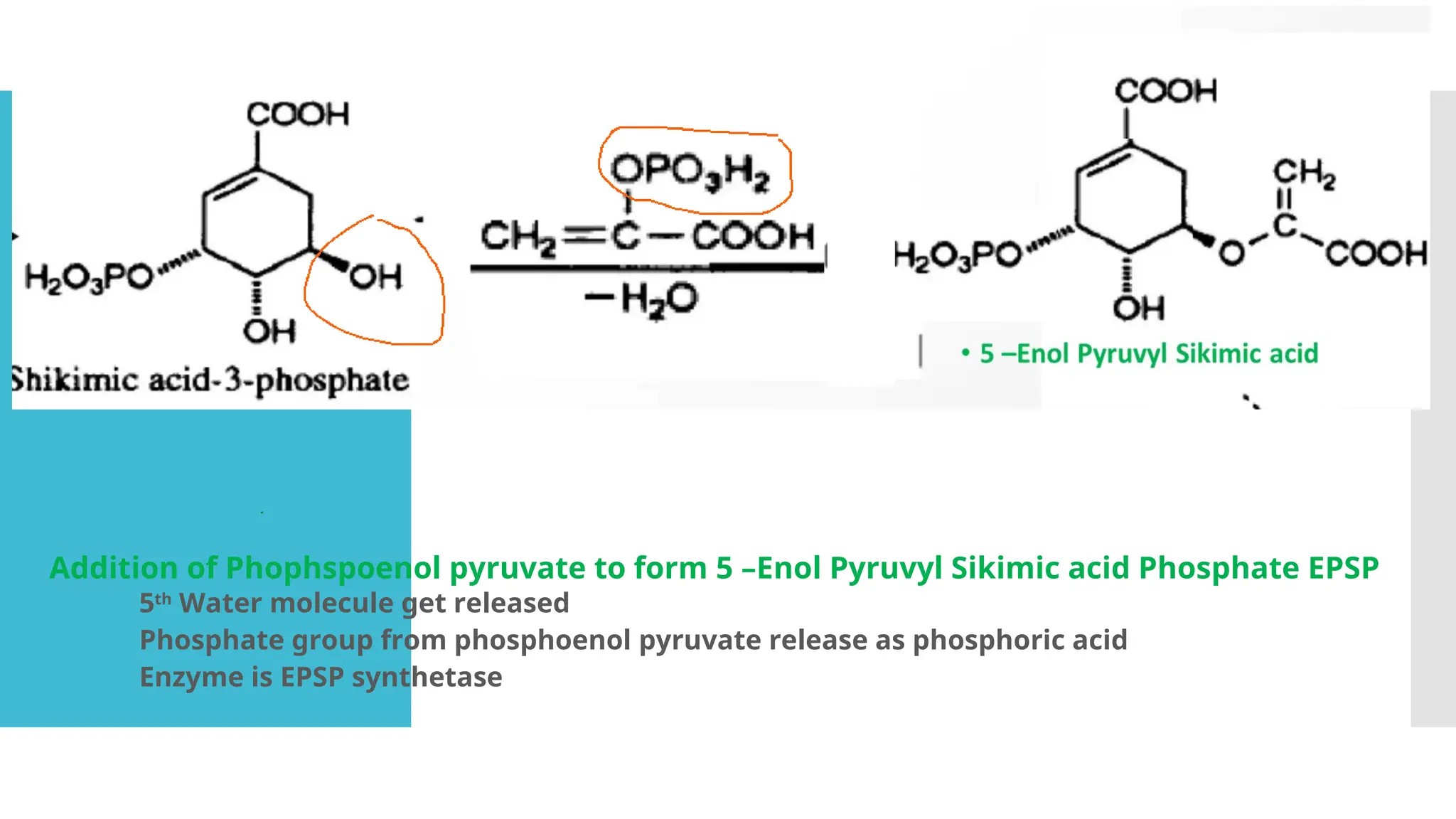
1.Addition of Phophspoenol pyruvate to form 5 –Enol Pyruvyl Sikimic acid Phosphate EPSP
1. 5th
Water molecule get released
2. Phosphate group from phosphoenol pyruvate release as phosphoric acid
3. Enzyme is EPSP synthetase
1.Formation of Chorisimic acid
1. Phosphate group get released to form a double bond
2. Enzyme chorismic acid synthetase
3. Branching point
1. Antharnilic acid
2. Prephanic acid
1.Formation of prephenate
2.Enzyme Chorismate mutase
3.Claisen rearrangement.
1. formation of phenyl pyruvic acid
2. Enxyme Prephenate dehydrogenase
3. then oxidatively decarboxylates prephenate, keeping the hydroxyl group,
1. -HCOO as CO2
2. OH as Water get released
4. Ring aromatization , benzene ring is formed
 This compound is transaminated with glutamate, producing tyrosine and α-
ketoglutarate
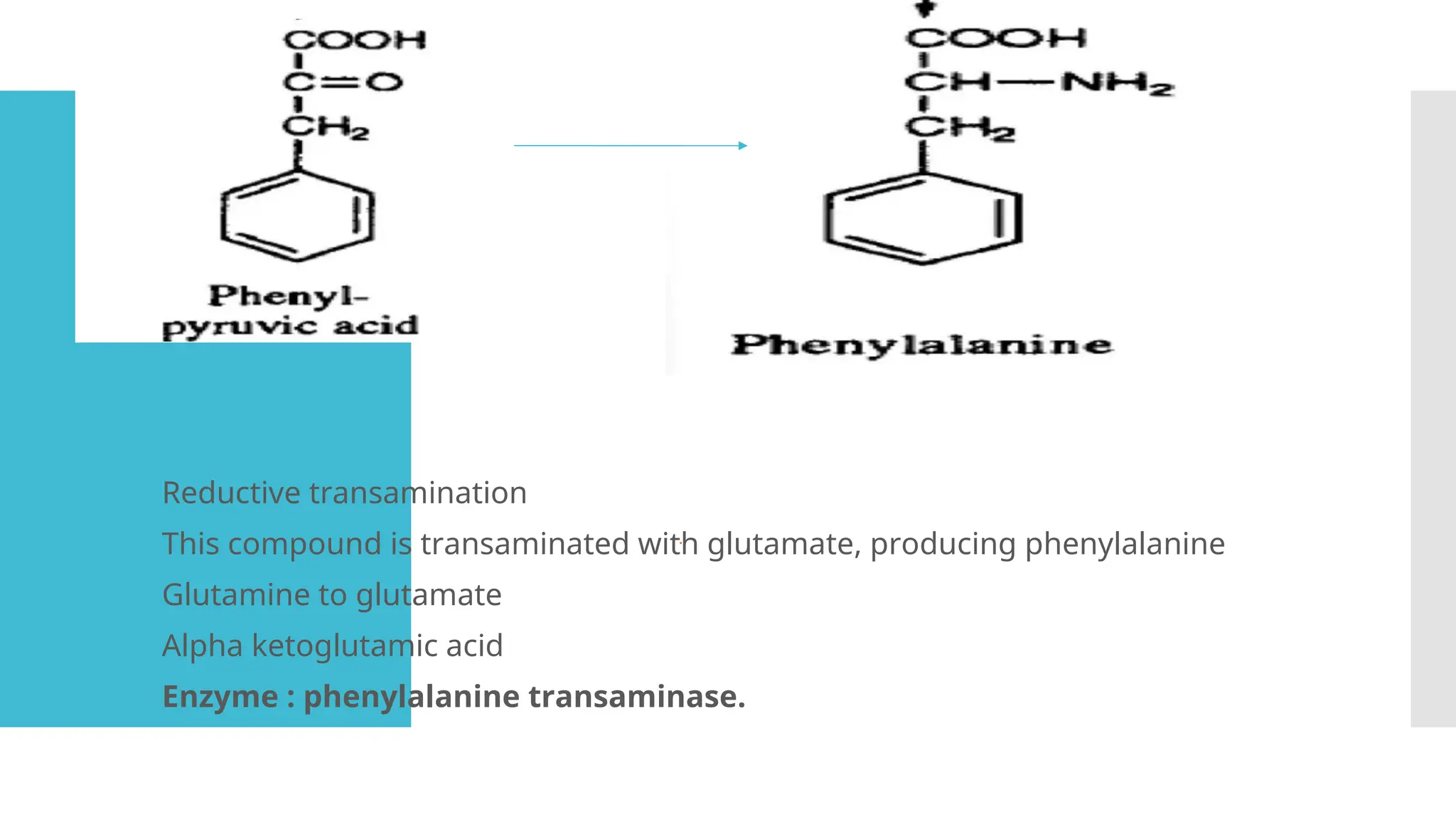
1. Reductive transamination
2. This compound is transaminated with glutamate, producing phenylalanine
3. Glutamine to glutamate
4. Alpha ketoglutamic acid
5. Enzyme : phenylalanine transaminase.
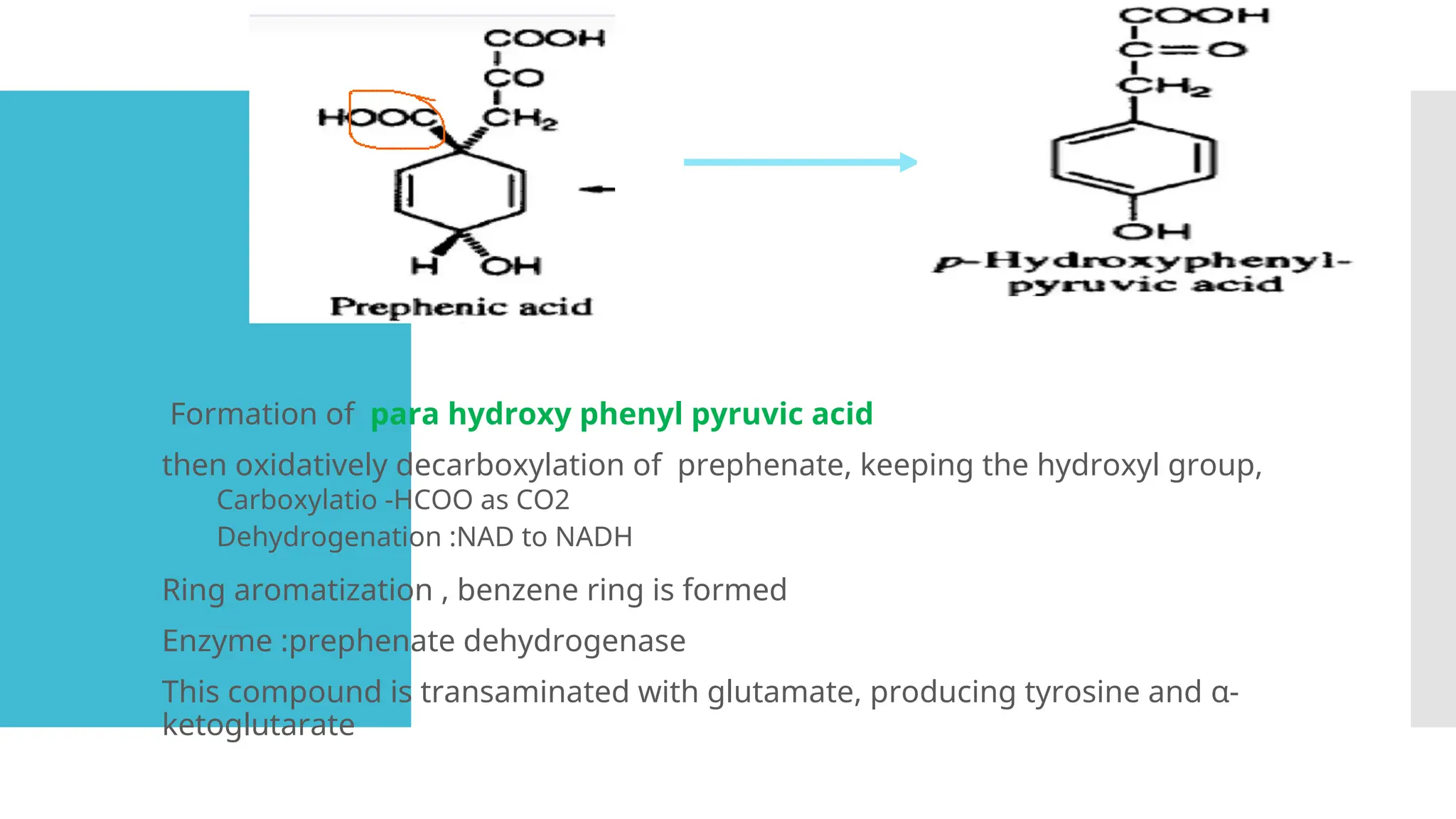
1. Formation of para hydroxy phenyl pyruvic acid
2. then oxidatively decarboxylation of prephenate, keeping the hydroxyl group,
1. Carboxylatio -HCOO as CO2
2. Dehydrogenation :NAD to NADH
3. Ring aromatization , benzene ring is formed
4. Enzyme :prephenate dehydrogenase
 This compound is transaminated with glutamate, producing tyrosine and α-
ketoglutarate
1. Reductive transamination
2. This compound is transaminated with glutamate, producing Tyrosine
3. Glutamine to glutamate
4. Alpha ketoglutamic acid
Applications
of shikimic
acid
pathway
1. Biosynthesis of Aromatic Amino Acids
 Produces phenylalanine, tyrosine, and tryptophan, essential for protein
synthesis.
 These amino acids are precursors for neurotransmitters, hormones, and other
bioactive molecules.
2.Leads to the formation of:
• Flavonoids – antioxidants and UV protectants.
• Lignin – structural polymer in plant cell walls.
• Tannins – defense compounds with astringent properties.
• Coumarins and alkaloids – involved in plant defense and pigmentation
3. Shikimic acid from Chinese star anise is used to make oseltamivir (Tamiflu) in
pharma.
4. Glyphosate, in Roundup herbicide, kills plants by blocking the shikimate pathway
enzyme EPSPS. "Roundup Ready" GM crops resist this.

shikimic acid pathway Aromatic amino acid pathway , phenyl propanoid pathway

  • 1.
    Shikimic acid pathway  By:A.R.G  Dr.R.N.Lahoti Institute of Pharmaceutical Education and Research Center
  • 2.
    1.DAHP Synthesis :Phosphoenolpyruvate+ erythrose-4-phosphate =2-keto-3-deoxy-7- phosphoglucoheptonic acid 1. Enzyme :DAHP synthase. 2.3-dehydroquinate (DHQ) from DAHP / cyclization reaction 1. 2nd carbon ketone group converted to hydroxyl group. 2. Phosphate group from 7th carbon get released as phosphoric acid . 3. 6th carbon oxidation to form ketone group. 4. Enzyme : 3-DHQ synthase. 5. Co factor : 1. NAD is required but regenerated, so no net NAD is consumed. 2. Cobalt
  • 3.
    1.3-dehydroshikimic acid synthesisfrom 3-dehydroquinate 1. Dehydration reaction 2. 2nd carbon hydroxyl group release as water molecule and form a double bond. 3. Enzyme 3-dehydroquinate dehydratase
  • 4.
    1.Formation of shikimicacid 1. Co Enzyme shikimate dehydrogenase using NADPH. 2. At 6th carbon ketone group converted to hydroxyl group 3. Hydrogen atom is obtained from NADPH to from NAD.
  • 5.
    1.Formation of shikimicacid 3 phosphate 1. Enzyme Shikimate kinase adds a phosphate to shikimic acid . 2. phosphate group from ATP. 3. ATP is converted to ADP. 4. ATP dependent phosphorylation of shikimate .
  • 6.
    1.Addition of Phophspoenolpyruvate to form 5 –Enol Pyruvyl Sikimic acid Phosphate EPSP 1. 5th Water molecule get released 2. Phosphate group from phosphoenol pyruvate release as phosphoric acid 3. Enzyme is EPSP synthetase
  • 7.
    1.Formation of Chorisimicacid 1. Phosphate group get released to form a double bond 2. Enzyme chorismic acid synthetase 3. Branching point 1. Antharnilic acid 2. Prephanic acid
  • 8.
    1.Formation of prephenate 2.EnzymeChorismate mutase 3.Claisen rearrangement.
  • 9.
    1. formation ofphenyl pyruvic acid 2. Enxyme Prephenate dehydrogenase 3. then oxidatively decarboxylates prephenate, keeping the hydroxyl group, 1. -HCOO as CO2 2. OH as Water get released 4. Ring aromatization , benzene ring is formed  This compound is transaminated with glutamate, producing tyrosine and α- ketoglutarate
  • 10.
    1. Reductive transamination 2.This compound is transaminated with glutamate, producing phenylalanine 3. Glutamine to glutamate 4. Alpha ketoglutamic acid 5. Enzyme : phenylalanine transaminase.
  • 11.
    1. Formation ofpara hydroxy phenyl pyruvic acid 2. then oxidatively decarboxylation of prephenate, keeping the hydroxyl group, 1. Carboxylatio -HCOO as CO2 2. Dehydrogenation :NAD to NADH 3. Ring aromatization , benzene ring is formed 4. Enzyme :prephenate dehydrogenase  This compound is transaminated with glutamate, producing tyrosine and α- ketoglutarate
  • 12.
    1. Reductive transamination 2.This compound is transaminated with glutamate, producing Tyrosine 3. Glutamine to glutamate 4. Alpha ketoglutamic acid
  • 13.
    Applications of shikimic acid pathway 1. Biosynthesisof Aromatic Amino Acids  Produces phenylalanine, tyrosine, and tryptophan, essential for protein synthesis.  These amino acids are precursors for neurotransmitters, hormones, and other bioactive molecules. 2.Leads to the formation of: • Flavonoids – antioxidants and UV protectants. • Lignin – structural polymer in plant cell walls. • Tannins – defense compounds with astringent properties. • Coumarins and alkaloids – involved in plant defense and pigmentation 3. Shikimic acid from Chinese star anise is used to make oseltamivir (Tamiflu) in pharma. 4. Glyphosate, in Roundup herbicide, kills plants by blocking the shikimate pathway enzyme EPSPS. "Roundup Ready" GM crops resist this.