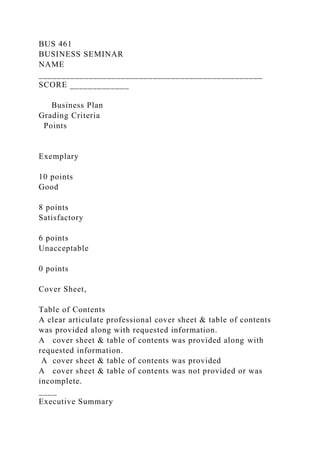
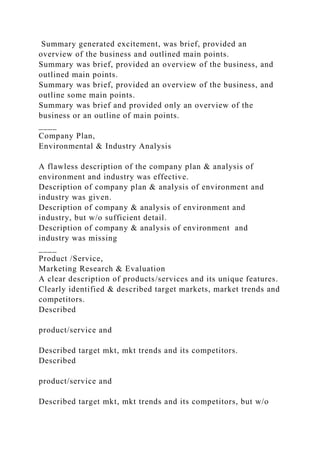
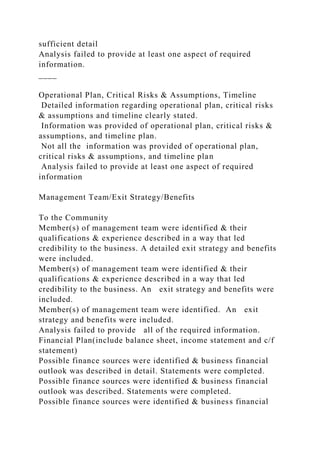
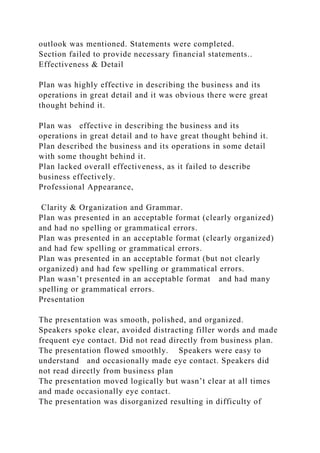
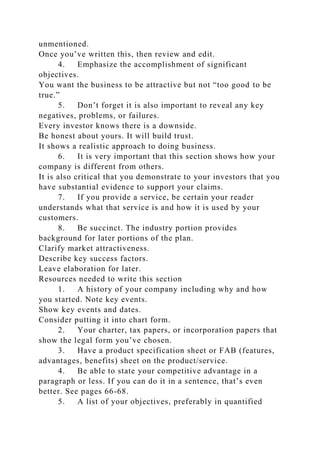
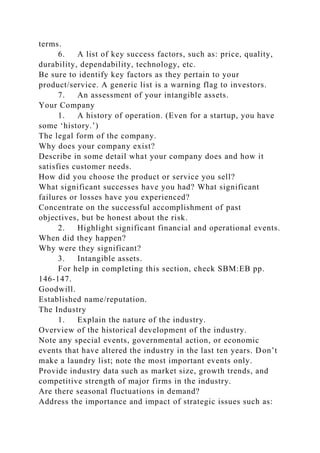
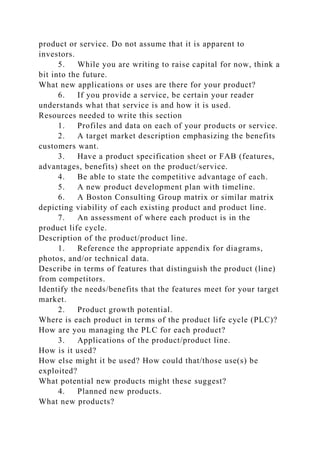
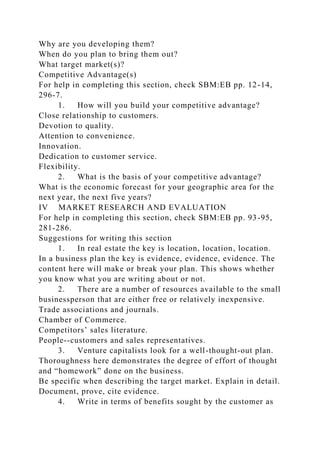
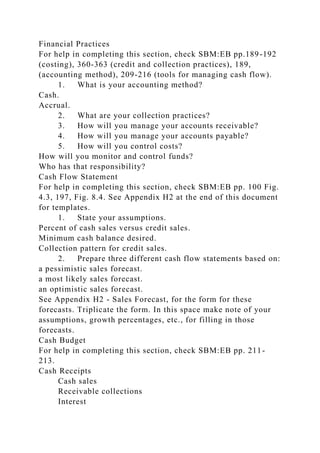
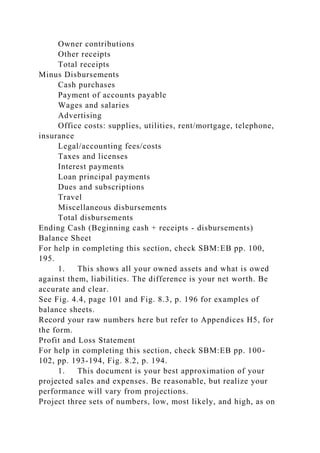
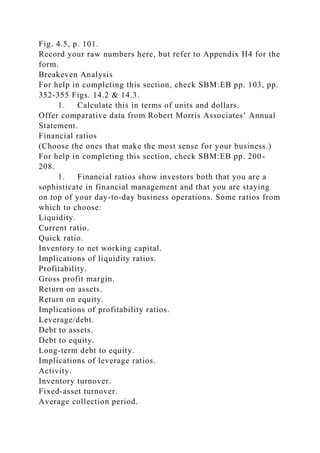
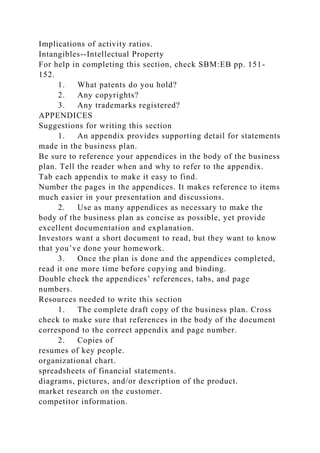
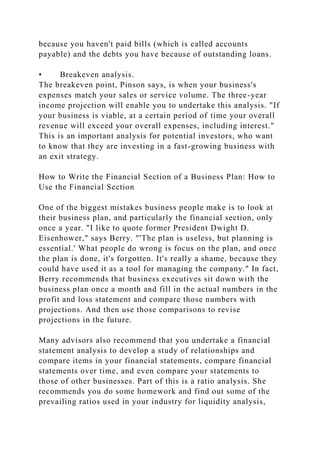
Sheet1Balance Sheet (Projected)Company
XYZBeginningProjectedProjectedProjectedas of
mm/dd/yyyy12/31/1912/31/2012/31/21AssetsCurrent
AssetsCash in bank$ -$ -Accounts receivable--Inventory--
Prepaid expenses--Other current assets--Total Current Assets$
-$ -Fixed AssetsMachinery & equipment$ -$ -Furniture &
fixtures--Leasehold improvements--Land & buildings--Other
fixed assets--(LESS accumulated depreciation on all fixed
assets)--Total Fixed Assets (net of depreciation)$ -$ -Other
AssetsIntangibles$ -$ -Deposits--Goodwill--Other--Total
Other Assets$ -$ -TOTAL Assets$ -$ -Liabilities and
EquityCurrent LiabilitiesAccounts payable$ -$ -Interest
payable--Taxes payable--Notes, short-term (due within 12
months)--Current part, long-term debt--Other current liabilities-
-Total Current Liabilities$ -$ -Long-term DebtBank loans
payable$ -$ -Notes payable to stockholders--LESS: Short-
term portion--Other long term debt--Total Long-term Debt$ -$
-Total Liabilities$ -$ -Owners' EquityInvested capital$ -$
-Retained earnings - beginning--Retained earnings - current--
Total Owners' Equity$ -$ -Total Liabilities & Equity$ -$ -
Totals are calculated automatically.
Make sure to enter this as a negative number!
Sheet2
Sheet3
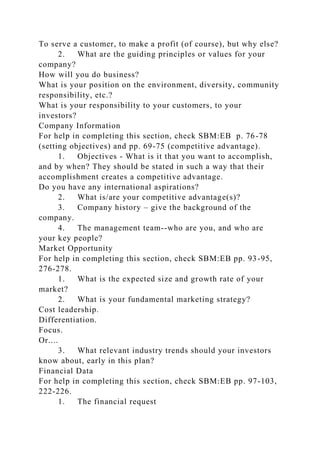
Twelve-month cash flowCash Flow (12 months)Enter Company
Name HereFiscal Year Begins:Jan-18Pre-Startup ESTJan-
19Feb-19Mar-19Apr-19May-19Jun-19Jul-19Aug-19Sep-19Oct-
19Nov-19Dec-19Total Item ESTCash on Hand (beginning of
month)0000000000000CASH RECEIPTSCash SalesCollections
fm CR accountsLoan/ other cash inj.TOTAL CASH
RECEIPTS00000000000000Total Cash Available (before cash
out)00000000000000CASH PAID OUTPurchases
(merchandise)Purchases (specify)Purchases (specify)Gross
wages (exact withdrawal)Payroll expenses (taxes, etc.)Outside
servicesSupplies (office & oper.)Repairs &
maintenanceAdvertisingCar, delivery & travelAccounting &
legalRentTelephoneUtilitiesInsuranceTaxes (real estate,
etc.)InterestOther expenses (specify)Other (specify)Other
(specify)MiscellaneousSUBTOTAL00000000000000Loan
principal paymentCapital purchase (specify)Other startup
costsReserve and/or EscrowOwners' WithdrawalTOTAL CASH
PAID OUT00000000000000Cash Position (end of
month)00000000000000ESSENTIAL OPERATING DATA (non
cash flow information)Sales Volume (dollars)Accounts
ReceivableBad Debt (end of month)Inventory on hand
(eom)Accounts Payable (eom)Depreciation
Totals are calculated automatically.
Instructions
Notes on Preparation
Note: You may want to print this information to use as
reference later. To delete these instructions, click the border of
this text box and then press the DELETE key.
Refer back to your Profit & Loss Projection. Line-by-line ask
yourself when you should expect cash to come and go. You have
already done a sales projection, now you must predict when you
will actually collect from customers. On the expense side, you
have previously projected expenses; now predict when you will
actually have to write the check to pay those bills. Most items
will be the same as on the Profit & Loss Projection. Rent and
utility bills, for instance, are usually paid in the month they are
incurred. Other items will differ from the Profit & Loss view.
Insurance and some types of taxes, for example, may actually be
payable quarterly or semiannually, even though you recognize
them as monthly expenses. Just try to make the Cash Flow as
realistic as you can line by line. The payoff for you will be an
ability to manage and forecast working capital needs. Change
the category labels in the left column as needed to fit your
accounting system.
Note that lines for 'Loan principal payment' through 'Owners'
Withdrawal' are for items that always are different on the Cash
Flow than on the Profit & Loss. Loan Principal Payment,
Capital Purchases, and Owner's Draw simply do not, by the
rules of accounting, show up on the Profit & Loss Projection.
They do, however, definitely take cash out of the business, and
so need to be included in your Cash plan. On the other hand,
you will not find Depreciation on the Cash Flow because you
never write a check for Depreciation. Cash from Loans
Received and Owners' Injections go in the "Loan/ other cash
inj." row. The "Pre-Startup" column is for cash outlays prior to
the time covered by the Cash Flow. It is intended primarily for
new business startups or major expansion projects where a great
deal of cash must go out before operations commence. The
bottom section, "ESSENTIAL OPERATING DATA", is not
actually part of the Cash model, but it allows you to track items
which have a heavy impact on cash. The Cash Flow Projection
is the best way to forecast working capital needs. Begin with
the amount of Cash on Hand you expect to have. Project all the
Receipts and Paid Outs for the year. If CASH POSITION gets
dangerously low or negative, you will need to pump in more
cash to keep the operation afloat. Many profitable businesses
have gone under because they could not pay the bills while
waiting for money to flow in. Your creditors do not care about
profit; they want to be paid with cash. Cash is the financial
lifeblood of your business.
TABLE OF CONTENTS
i. EXECUTIVE Summary #
Company Information #
Market Opportunity #
financial data #
11. Company InFORmaTION #
111. EnvirnomentaL & Industry Analysis #
Environmental #
Industry #
1V. Product or Service #
V. Marketing Research & Evaluation #
Target Markets & Evaluation #
Market Trends #
Competition #
Market Share #
Marketing Plan-explain marketing strategy #
Pricing #
Promotion #
Distribution/place #
Service policy’s #
VI. Manufacturing & Operations Plan #
Geographic Location #
Facilities#
Make or Buy Policy #
Control Systems #
Labor Force #
V11. management Team #
Vi11. Timeline #
1X. Critical Risks & Assumptions #
X. Benefits to Community #
X1. Exit Stratgey #
XII. Financial Plan #
Sources & Uses of Funds #
Cashflow Statement #
Balance Sheet #
Profit & Loss statement (INCOME Statement) #
Dix Hills, New York 11746
BUS 461
BUSINESS SEMINAR
NAME
_________________________________________________
SCORE _____________
Business Plan
Grading Criteria
Points
Exemplary
10 points
Good
8 points
Satisfactory
6 points
Unacceptable
0 points
Cover Sheet,
Table of Contents
A clear articulate professional cover sheet & table of contents
was provided along with requested information.
A cover sheet & table of contents was provided along with
requested information.
A cover sheet & table of contents was provided
A cover sheet & table of contents was not provided or was
incomplete.
____
Executive Summary
Summary generated excitement, was brief, provided an
overview of the business and outlined main points.
Summary was brief, provided an overview of the business, and
outlined main points.
Summary was brief, provided an overview of the business, and
outline some main points.
Summary was brief and provided only an overview of the
business or an outline of main points.
____
Company Plan,
Environmental & Industry Analysis
A flawless description of the company plan & analysis of
environment and industry was effective.
Description of company plan & analysis of environment and
industry was given.
Description of company & analysis of environment and
industry, but w/o sufficient detail.
Description of company & analysis of environment and
industry was missing
____
Product /Service,
Marketing Research & Evaluation
A clear description of products/services and its unique features.
Clearly identified & described target markets, market trends and
competitors.
Described
product/service and
Described target mkt, mkt trends and its competitors.
Described
product/service and
Described target mkt, mkt trends and its competitors, but w/o
sufficient detail
Analysis failed to provide at least one aspect of required
information.
____
Operational Plan, Critical Risks & Assumptions, Timeline
Detailed information regarding operational plan, critical risks
& assumptions and timeline clearly stated.
Information was provided of operational plan, critical risks &
assumptions, and timeline plan.
Not all the information was provided of operational plan,
critical risks & assumptions, and timeline plan
Analysis failed to provide at least one aspect of required
information
Management Team/Exit Strategy/Benefits
To the Community
Member(s) of management team were identified & their
qualifications & experience described in a way that led
credibility to the business. A detailed exit strategy and benefits
were included.
Member(s) of management team were identified & their
qualifications & experience described in a way that led
credibility to the business. An exit strategy and benefits were
included.
Member(s) of management team were identified. An exit
strategy and benefits were included.
Analysis failed to provide all of the required information.
Financial Plan(include balance sheet, income statement and c/f
statement)
Possible finance sources were identified & business financial
outlook was described in detail. Statements were completed.
Possible finance sources were identified & business financial
outlook was described. Statements were completed.
Possible finance sources were identified & business financial
outlook was mentioned. Statements were completed.
Section failed to provide necessary financial statements..
Effectiveness & Detail
Plan was highly effective in describing the business and its
operations in great detail and it was obvious there were great
thought behind it.
Plan was effective in describing the business and its
operations in great detail and to have great thought behind it.
Plan described the business and its operations in some detail
with some thought behind it.
Plan lacked overall effectiveness, as it failed to describe
business effectively.
Professional Appearance,
Clarity & Organization and Grammar.
Plan was presented in an acceptable format (clearly organized)
and had no spelling or grammatical errors.
Plan was presented in an acceptable format (clearly organized)
and had few spelling or grammatical errors.
Plan was presented in an acceptable format (but not clearly
organized) and had few spelling or grammatical errors.
Plan wasn’t presented in an acceptable format and had many
spelling or grammatical errors.
Presentation
The presentation was smooth, polished, and organized.
Speakers spoke clear, avoided distracting filler words and made
frequent eye contact. Did not read directly from business plan.
The presentation flowed smoothly. Speakers were easy to
understand and occasionally made eye contact. Speakers did
not read directly from business plan
The presentation moved logically but wasn’t clear at all times
and made occasionally eye contact.
The presentation was disorganized resulting in difficulty of
understanding business. Speech was rushed or inarticulate.
Total Score
Dix Hills, New York 11746BUS 461
BUSINESS SEMINAR
BUSINESS PLAN BASICS
Business plans are the preferred mode of communication
between entrepreneurs and potential investors. Experienced
owners and managers of closely held businesses know that
business plans can also be an indispensable management tool.
Many entrepreneurs/business owners have found that just
completing the steps required to develop a business plan forces
them to introduce discipline and a logical thought process into
all of their planning activities. They have found that a properly
prepared business plan can greatly improve their company’s
ability to consistently establish and meet goals and objectives in
a way that best serves the companies owners, employees, and
investors.
A business plan should be a simply written representation of
where a company is going, how it will get there and what it will
look like once it arrives.
Not only should entrepreneurs write business plans but so
should all companies. Most companies who value business plans
are used at a minimum to:
1. Set goals and objectives for the company’s performance
2. Provide a basis for evaluating and controlling the company’s
performance.
3. Communicate a company’s message to middle managers,
outside directors, lenders and potential investors.
COVER SHEET: Serves as the title page of your business
plan.
· Name, address, and phone number of the company.
· Name, title, address, phone number of owners/corporate
officers.
· Month and year your plan was prepared.
· Name of preparer.
· Copy number of the plan.
TABLE OF CONTENTS (Quick reference to major topics
covered in your plan)
· You want the business plan to be as easy to read as possible.
An orderly table of contents will allow the reader to turn to the
desired section as needed.
I.
EXECUTIVE SUMMARY (or Statement of Purpose)
This is the thesis statement and states business plan objectives.
Should be 4 paragraphs 1 to 2 pages). Use the key word
approach (who, what, where, when, why, how, how much) to
summarize the following:
· Your Company (who, what, where, when).
· Who your management is and What their strengths are.
· What your objectives are and Why you will be successful.
· If you need a financing, why you need it, how much you need
and how you intend to repay the loan or benefit the investor.
Note: Do not write the executive summary (statement of
purpose) until you have completed your business plan! It is a
summary and reflects the contents of the finished plan.
I1.
THE COMPANY INFORMATION
What is included? This section should include a "summary
description of your business" statement followed by information
on the "administrative" end of your company.
A. SUMMARY DESCRIPTION OF THE BUSINESS
In a paragraph or two give a broad overview of the nature of
your business, telling when and
why the company was formed. Then complete the summary by
briefly addressing:
· mission (projecting short- and long-term goals)
· business model (describe your company's model and why it is
unique to your industry)
· strategy (give an overview of the strategy, focusing on short-
and long-term objectives)
· strategic relationships (tell about any existing strategic
relationships)
· SWOT Analysis (strengths, weaknesses, opportunities, and
threats that your company will face, both internal and external)
B. INTELLECTUAL PROPERTY
· Address Copyrights, Trademarks, and Patents
· Back up in Supporting Documents with registrations, photos,
diagrams, etc.
C. LOCATION
· Describe your projected or current location.
· Project costs associated with the location.
· Include legal agreements, utilities forecasts, etc. in Supporting
Documents.
D. LEGAL STRUCTURE
· Describe your legal structure and why it is advantageous for
your company.
· List owners and/or corporate officers describing strengths
(include resumes).
E. ACCOUNTING & LEGAL
· Accounting: What system will you set up for daily accounting?
Who will you use for a tax accountant? Who will be responsible
for periodic financial statement analysis?
· Legal: Who will you retain for an attorney? (Keep 'Murphy's
Law' in mind.)
F. INSURANCE
· What kinds of insurance will you carry? (Property & Liability,
Life & Health)
· What will it cost and who will you use for a carrier?
G. SECURITY
· Address security in terms of inventory control and theft of
information (online and off).
· Project related costs.
III.
ENVIRONMENTAL AND INDUSTRY ANALYSIS
What is included? This section should include how your
business fits into larger contexts.
A. ENVIRONMENTAL
· Identify trends and changes happening at the national and
international level that may influence the future. Describe any
trends that are going on in your industry.
· Describe the opportunities that you have for your business.
Describe how your business can take advantage of
opportunities.
B. INDUSTRY ANALYSIS
· Target Market (identify with demographics, psychographics,
and niche market specifics).
· Industry demand
· Competition –identify major competitors (including their
locations) assessing their strengths and weaknesses or include a
SWOT analysis.
· Market Trends (identify industry trends and customer trends).
IV. PRODUCTS OR SERVICES
What is included? This section should include a "summary
description of your business describing your product or service.
· If you are the manufacturer and/or wholesale distributor of a
product: Describe your products. Tell briefly about your
manufacturing process. Include information on suppliers and
availability of materials.
· If you are a retailer and/or an e-tailer: Describe the products
you sell. Include information about your sources and handling
of inventory and fulfillment.
· If you provide a service: Describe your services List future
products or services you plan to provide.
V. MARKETING RESEARCH AND EVALUATION
What is research and evaluation? This section presents evidence
that a market exists for your business.
A. TARGET MARKETS & MARKET SEGMENTATION
· Target Market (identify with demographics, psychographics,
and niche market specifics).
B. MARKET TRENDS
· Market Trends (identify industry trends and customer trends).
1.
C. COMPETITION
· Competition –identify major competitors (including their
locations) assessing their strengths and weaknesses or include a
SWOT analysis
D. MARKET SHARE
· Target Market (identify with demographics, psychographics,
and niche market specifics).
· Competition (describe major competitors assessing their
strengths and weaknesses.
· Market Trends (identify industry trends and customer trends).
· Market Research (describe methods of research, database
analysis, and results summary).
E. MARKETING PLAN
· General Description (budget % allocations on- and off-line
with expected ROIs).
· Method of Sales and Distribution (stores, offices, kiosks,
catalogs, d/mail, website).
· Packaging (quality considerations and packaging).
· Pricing (price strategy and competitive position.
· Branding.
· Database Marketing (Personalization).
· Sales Strategies (direct sales, direct mail, email, affiliate,
reciprocal, and viral marketing).
· Sales Incentives/Promotions (samples, coupons, online promo,
add-ons, rebates, etc.).
· Advertising Strategies (traditional, web/new media, long-term
sponsorships).
· Public Relations (online presence, events, press releases,
interviews).
· Networking (memberships and leadership positions).
· Description of Customer Service Activities.
· Expected Outcomes of Achieving Excellence.
VI. MANUFACTORING AND OPERATIONAL PLAN
What is included? This section should include detailed
information regarding operational plan including geographic
location, facilitates, control systems and labor force. .
VII.
MANAGEMENT TEAM
What is included? This section should state key individuals that
will help transform your vision into a successful business. An
organizational chart can be included.
A. MANAGEMENT
· List the people who are (or will be) running the business.
· Describe their responsibilities and abilities.
· Project their salaries.
· (Include resumes in Supporting Documents)
B. PERSONNEL
· How many employees will you have in what positions?
· What are the necessary qualifications?
· How many hours will they work and at what wage?
· Project future needs for adding employees.
VIII.
TIMELINE
What is included? This section should outline the
interrelationships and timing of the major events planned for
your business.
IX.
CRITICAL RISKS & ASSUMPTIONS
What is included? This section should include implicit
assumptions.
X.
BENEFITS TO COMMUNITY
What is included? This section should include (if any) the
economic impact, human development, and community
development.
XI.
EXIT STRATEGY
What is included? This section should include your succession
plan..
XII.
FINANCIAL DOCUMENTS
The quantitative part of your plan. This section of the business
plan is the quantitative interpretation of everything you stated
in the organizational and marketing plans. Do not do this part of
your plan until you have finished those two sections.
Financial documents are the records used to show past, current,
and projected finances. The following are the major documents
you will want to include in your Business Plan. The work is
much easier if they are done in the order presented because they
build on each other, utilizing information from the ones
previously developed.
A. SUMMARY OF FINANCIAL NEEDS (needed only if you
are seeking financing)
This is an outline of the following information:
(1) Why you are applying for financing.
(2) How Much capital you need.
B. LOAN FUND DISPERSAL STATEMENT (needed only if
you are seeking financing)
You should:
(1) Tell How you intend to disperse the loan funds.
(2) Back Up your statement with supporting data.
C. PROJECTED BALANCE SHEET -THREEYEAR INCOME
PROJECTION
Projection of Assets, Liabilities, and Net Worth of your
company at end of next fiscal year.
Shows the condition of the business as of a fixed date. It is a
picture of your firm's financial condition at a particular moment
and will show you whether your financial position is strong or
weak. It is usually done at the close of an accounting period.
Contains: (1) Assets, (2) Liabilities and (3) Net Worth.
D. PROFIT AND LOSS STATEMENT (INCOME
STATEMENT)- THREE-YEAR INCOME PROJECTION
Shows your business financial activity over a period of time
(monthly, annually). It is a moving picture showing what has
happened in your business and is an excellent tool for assessing
your business. Your ledger is closed and balanced and the
revenue and expense totals transferred to this statement.
E. CASH FLOW STATEMENT- THREE-YEAR PROJECTION
Shows the amount of cash generated and used by a company in a
given period.
XIII.
APPENDIX (SUPPORTING DOCUMENTS)-this section isn’t
included in the grading criteria. Not crucial to the business plan
but can be of interest to potential investors and creditors.
This section of your plan will contain all of the records that
back up the statements and decisions made in the three main
parts of your business plan. The most common supporting
documents are:
A. PERSONAL RESUMES
Include resumes for owners and management. A resume should
be a one-page document. Include: work history, educational
background, professional affiliations and honors, and a focus on
special skills relating to the company position.
B. OWNERS' FINANCIAL STATEMENTS
A statement of personal assets and liabilities. For a new
business owner, this will be part of your financial section.
C. CREDIT REPORTS
Business and personal from suppliers or wholesalers, credit
bureaus, and banks.
D. COPIES OF LEASES, MORTGAGES, PURCHASE
AGREEMENTS, ETC.
All agreements currently in force between your company and a
leasing agency, mortgage company or other agency.
E. LETTERS OF REFERENCE
Letters recommending you as being a reputable and reliable
business person worthy of being considered a good risk. (both
business and personal references)
F. CONTRACTS
Include all business contracts, both completed and currently in
force.
G. OTHER LEGAL DOCUMENTS
All legal papers pertaining to your legal structure, proprietary
rights, insurance, etc. Limited partnership agreements, shipping
contracts, etc.
H. MISCELLANEOUS DOCUMENTS
All other documents which have been referred to, but not
included in the main body of the plan. (For example, location
plans, demographics, competition analysis, advertising rate
sheets, cost analysis, etc.).
PUTTING YOUR PLAN TOGETHER
When You Are Finished: Your Business Plan should look
professional, but the potential lender or investor needs to know
that it was done by you. A business plan will be the best
indicator that can be used to judge your potential for success. It
should be no more than 30 to 40 pages in length, excluding
supporting documents. If you are seeking a lender or investor:
Include only the supporting documents that will be of
immediate interest to the person examining your plan. Keep the
others with your own copy where they will be available on short
notice. Have your plan neatly bound at your local print shop or
in blue, black or brown covers purchased from the stationery
store. Make copies for each lender or investor you wish to
approach. Do not give out too many copies at once, and keep
track of each copy. If you are turned down for financing, be
sure to retrieve your business plan.
KEEP YOUR BUSINESS PLAN UP-TO-DATE
Your plan will be beneficial only if you update it frequently to
reflect what is happening within your business. Measure your
projections against what actually happens in your company. Use
the results to analyze the effectiveness of your operation. You
can then implement changes that will give you a competitive
edge and make your business more profitable.
Business Plan Guide - 8
Business Plan Guide
to accompany
Small Business Management:
Entrepreneurship and Beyond
6th Edition
Timothy S. Hatten
Colorado Mesa University
Elements of the Business Plan
Suggested length
Cover Page 1 page
Table of Contents 1-2 pages
I. Executive Summary 1-2 pages
A. Mission Statement
B. Company Information
C. Market Opportunity
D. Financial Data
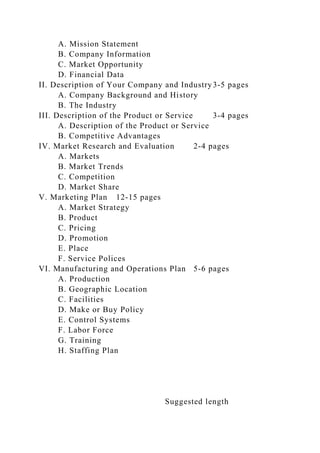
II. Description of Your Company and Industry3-5 pages
A. Company Background and History
B. The Industry
III. Description of the Product or Service 3-4 pages
A. Description of the Product or Service
B. Competitive Advantages
IV. Market Research and Evaluation 2-4 pages
A. Markets
B. Market Trends
C. Competition
D. Market Share
V. Marketing Plan 12-15 pages
A. Market Strategy
B. Product
C. Pricing
D. Promotion
E. Place
F. Service Polices
VI. Manufacturing and Operations Plan 5-6 pages
A. Production
B. Geographic Location
C. Facilities
D. Make or Buy Policy
E. Control Systems
F. Labor Force
G. Training
H. Staffing Plan
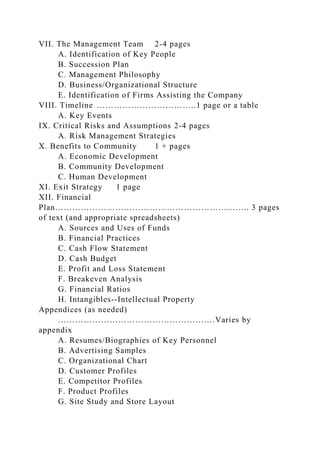
Suggested length
VII. The Management Team 2-4 pages
A. Identification of Key People
B. Succession Plan
C. Management Philosophy
D. Business/Organizational Structure
E. Identification of Firms Assisting the Company
VIII. Timeline ……………………………..1 page or a table
A. Key Events
IX. Critical Risks and Assumptions 2-4 pages
A. Risk Management Strategies
X. Benefits to Community 1 + pages
A. Economic Development
B. Community Development
C. Human Development
XI. Exit Strategy 1 page
XII. Financial
Plan………………………………………………………….. 3 pages
of text (and appropriate spreadsheets)
A. Sources and Uses of Funds
B. Financial Practices
C. Cash Flow Statement
D. Cash Budget
E. Profit and Loss Statement
F. Breakeven Analysis
G. Financial Ratios
H. Intangibles--Intellectual Property
Appendices (as needed)
……………………………………………….Varies by
appendix
A. Resumes/Biographies of Key Personnel
B. Advertising Samples
C. Organizational Chart
D. Customer Profiles
E. Competitor Profiles
F. Product Profiles
G. Site Study and Store Layout
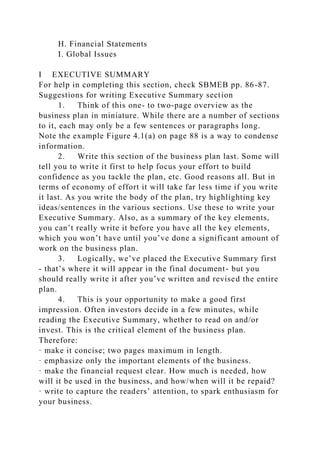
H. Financial Statements
I. Global Issues
I EXECUTIVE SUMMARY
For help in completing this section, check SBMEB pp. 86-87.
Suggestions for writing Executive Summary section
1. Think of this one- to two-page overview as the
business plan in miniature. While there are a number of sections
to it, each may only be a few sentences or paragraphs long.
Note the example Figure 4.1(a) on page 88 is a way to condense
information.
2. Write this section of the business plan last. Some will
tell you to write it first to help focus your effort to build
confidence as you tackle the plan, etc. Good reasons all. But in
terms of economy of effort it will take far less time if you write
it last. As you write the body of the plan, try highlighting key
ideas/sentences in the various sections. Use these to write your
Executive Summary. Also, as a summary of the key elements,
you can’t really write it before you have all the key elements,
which you won’t have until you’ve done a significant amount of
work on the business plan.
3. Logically, we’ve placed the Executive Summary first
- that’s where it will appear in the final document- but you
should really write it after you’ve written and revised the entire
plan.
4. This is your opportunity to make a good first
impression. Often investors decide in a few minutes, while
reading the Executive Summary, whether to read on and/or
invest. This is the critical element of the business plan.
Therefore:
· make it concise; two pages maximum in length.
· emphasize only the important elements of the business.
· make the financial request clear. How much is needed, how
will it be used in the business, and how/when will it be repaid?
· write to capture the readers’ attention, to spark enthusiasm for
your business.
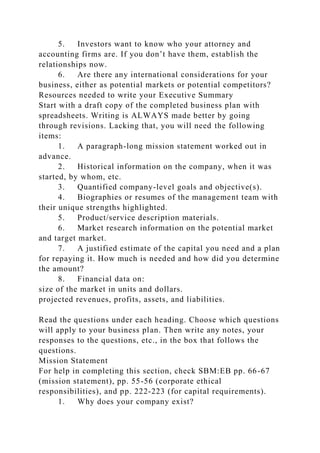
5. Investors want to know who your attorney and
accounting firms are. If you don’t have them, establish the
relationships now.
6. Are there any international considerations for your
business, either as potential markets or potential competitors?
Resources needed to write your Executive Summary
Start with a draft copy of the completed business plan with
spreadsheets. Writing is ALWAYS made better by going
through revisions. Lacking that, you will need the following
items:
1. A paragraph-long mission statement worked out in
advance.
2. Historical information on the company, when it was
started, by whom, etc.
3. Quantified company-level goals and objective(s).
4. Biographies or resumes of the management team with
their unique strengths highlighted.
5. Product/service description materials.
6. Market research information on the potential market
and target market.
7. A justified estimate of the capital you need and a plan
for repaying it. How much is needed and how did you determine
the amount?
8. Financial data on:
size of the market in units and dollars.
projected revenues, profits, assets, and liabilities.
Read the questions under each heading. Choose which questions
will apply to your business plan. Then write any notes, your
responses to the questions, etc., in the box that follows the
questions.
Mission Statement
For help in completing this section, check SBM:EB pp. 66-67
(mission statement), pp. 55-56 (corporate ethical
responsibilities), and pp. 222-223 (for capital requirements).
1. Why does your company exist?
To serve a customer, to make a profit (of course), but why else?
2. What are the guiding principles or values for your
company?
How will you do business?
What is your position on the environment, diversity, community
responsibility, etc.?
What is your responsibility to your customers, to your
investors?
Company Information
For help in completing this section, check SBM:EB p. 76-78
(setting objectives) and pp. 69-75 (competitive advantage).
1. Objectives - What is it that you want to accomplish,
and by when? They should be stated in such a way that their
accomplishment creates a competitive advantage.
Do you have any international aspirations?
2. What is/are your competitive advantage(s)?
3. Company history – give the background of the
company.
4. The management team--who are you, and who are
your key people?
Market Opportunity
For help in completing this section, check SBM:EB pp. 93-95,
276-278.
1. What is the expected size and growth rate of your
market?
2. What is your fundamental marketing strategy?
Cost leadership.
Differentiation.
Focus.
Or....
3. What relevant industry trends should your investors
know about, early in this plan?
Financial Data
For help in completing this section, check SBM:EB pp. 97-103,
222-226.
1. The financial request
How much do you want? How will you use it?
How much debt and equity? Number of investors sought?
What are the terms of the deal you are offering investors?
What return are you offering?
2. Tables
Summary of 3 years actual, 3 years projected
Actual 20xx Projected 20xx
Revenue _____ _____
Net Income _____ _____
Assets _____ _____
Liabilities_____ _____
Net Worth _____ _____
Summary of Financing
Current Amount Amount Needed
Debt _____ _____
Debt with Warrants _____ _____
Convertible Debentures _____ _____
Stock--Preferred and Common _____ _____
II DESCRIPTION OF THE COMPANY AND INDUSTRY
For help in completing this section, check SBM:EB pp. 92-93,
91-92.
Suggestions for writing this section
1. The following sections are where you elaborate and
explain the information provided in the Executive Summary. Be
sure to cover in more depth everything you raise in the
Executive Summary.
2. Accuracy and realism are important here.
Do you know how your company and your product/services are
perceived relative to competitors? Describe the areas that are
rock solid and those that are shaky.
3. Write this section of the business plan first. Use it to
remind yourself of where you’ve done well and what didn’t
work.
Your initial draft should be thorough, with no detail left
unmentioned.
Once you’ve written this, then review and edit.
4. Emphasize the accomplishment of significant
objectives.
You want the business to be attractive but not “too good to be
true.”
5. Don’t forget it is also important to reveal any key
negatives, problems, or failures.
Every investor knows there is a downside.
Be honest about yours. It will build trust.
It shows a realistic approach to doing business.
6. It is very important that this section shows how your
company is different from others.
It is also critical that you demonstrate to your investors that you
have substantial evidence to support your claims.
7. If you provide a service, be certain your reader
understands what that service is and how it is used by your
customers.
8. Be succinct. The industry portion provides
background for later portions of the plan.
Clarify market attractiveness.
Describe key success factors.
Leave elaboration for later.
Resources needed to write this section
1. A history of your company including why and how
you started. Note key events.
Show key events and dates.
Consider putting it into chart form.
2. Your charter, tax papers, or incorporation papers that
show the legal form you’ve chosen.
3. Have a product specification sheet or FAB (features,
advantages, benefits) sheet on the product/service.
4. Be able to state your competitive advantage in a
paragraph or less. If you can do it in a sentence, that’s even
better. See pages 66-68.
5. A list of your objectives, preferably in quantified
terms.
6. A list of key success factors, such as: price, quality,
durability, dependability, technology, etc.
Be sure to identify key factors as they pertain to your
product/service. A generic list is a warning flag to investors.
7. An assessment of your intangible assets.
Your Company
1. A history of operation. (Even for a startup, you have
some ‘history.’)
The legal form of the company.
Why does your company exist?
Describe in some detail what your company does and how it
satisfies customer needs.
How did you choose the product or service you sell?
What significant successes have you had? What significant
failures or losses have you experienced?
Concentrate on the successful accomplishment of past
objectives, but be honest about the risk.
2. Highlight significant financial and operational events.
When did they happen?
Why were they significant?
3. Intangible assets.
For help in completing this section, check SBM:EB pp.
146-147.
Goodwill.
Established name/reputation.
The Industry
1. Explain the nature of the industry.
Overview of the historical development of the industry.
Note any special events, governmental action, or economic
events that have altered the industry in the last ten years. Don’t
make a laundry list; note the most important events only.
Provide industry data such as market size, growth trends, and
competitive strength of major firms in the industry.
Are there seasonal fluctuations in demand?
Address the importance and impact of strategic issues such as:
ease of entry and exit, ability to achieve economies of scale,
cyclical nature of the economy or sales cycle, etc.
What are industry trends regarding the use of technology?
How does the future look for the entire industry?
Are there any international issues? Are companies moving
offshore? Are international competitors coming into the
industry?
2. Who could compete with you by offering either a
competitive product or by offering a substitute for your
product?
3. What is the current state of the art in the industry?
How does your product/service reflect this current state or
exceed it?
What do you need: what will you do to succeed in your chosen
market?
What are the current applications of your product/service?
What are the potential applications of your product/service?
III DESCRIPTION OF THE PRODUCT OR SERVICE
For help in completing this section, check SBM:EB pp. 291-
295.
Suggestions for writing this section
1. This is what your business is all about, the product or
service that you offer the market.
Describe all products or services in terms of benefits customers
seek.
2. Investors want to know what makes your products
different, why customers will buy from you.
Price.
Differentiation.
Quality.
3. Along with product or service differences investors
want to know what gives you an edge, a competitive edge
regarding your products. This topic is covered later as well, but
write here how your products or product line contributes to your
competitive advantage.
4. Be careful to explain how your customers use your
product or service. Do not assume that it is apparent to
investors.
5. While you are writing to raise capital for now, think a
bit into the future.
What new applications or uses are there for your product?
6. If you provide a service, be certain your reader
understands what that service is and how it is used.
Resources needed to write this section
1. Profiles and data on each of your products or service.
2. A target market description emphasizing the benefits
customers want.
3. Have a product specification sheet or FAB (features,
advantages, benefits) sheet on the product/service.
4. Be able to state the competitive advantage of each.
5. A new product development plan with timeline.
6. A Boston Consulting Group matrix or similar matrix
depicting viability of each existing product and product line.
7. An assessment of where each product is in the
product life cycle.
Description of the product/product line.
1. Reference the appropriate appendix for diagrams,
photos, and/or technical data.
Describe in terms of features that distinguish the product (line)
from competitors.
Identify the needs/benefits that the features meet for your target
market.
2. Product growth potential.
Where is each product in terms of the product life cycle (PLC)?
How are you managing the PLC for each product?
3. Applications of the product/product line.
How is it used?
How else might it be used? How could that/those use(s) be
exploited?
What potential new products might these suggest?
4. Planned new products.
What new products?
Why are you developing them?
When do you plan to bring them out?
What target market(s)?
Competitive Advantage(s)
For help in completing this section, check SBM:EB pp. 12-14,
296-7.
1. How will you build your competitive advantage?
Close relationship to customers.
Devotion to quality.
Attention to convenience.
Innovation.
Dedication to customer service.
Flexibility.
2. What is the basis of your competitive advantage?
What is the economic forecast for your geographic area for the
next year, the next five years?
IV MARKET RESEARCH AND EVALUATION
For help in completing this section, check SBM:EB pp. 93-95,
281-286.
Suggestions for writing this section
1. In real estate the key is location, location, location.
In a business plan the key is evidence, evidence, evidence. The
content here will make or break your plan. This shows whether
you know what you are writing about or not.
2. There are a number of resources available to the small
businessperson that are either free or relatively inexpensive.
Trade associations and journals.
Chamber of Commerce.
Competitors’ sales literature.
People--customers and sales representatives.
3. Venture capitalists look for a well-thought-out plan.
Thoroughness here demonstrates the degree of effort of thought
and “homework” done on the business.
Be specific when describing the target market. Explain in detail.
Document, prove, cite evidence.
4. Write in terms of benefits sought by the customer as
much as possible. Customers buy benefits.
5. Be enthusiastic and realistic when describing the
potential market. No one can capture 100% of any market.
6. The market research you present here is critical. You
need solid evidence to back up your business plan. While
market research may be a relatively brief part of this section, it
is the backbone of your plan.
Don’t hesitate to use others’ studies. There are numerous
marketing publications, journals, and government/academic
studies available in local libraries on almost any market
segment.
Your local Chamber of Commerce may have a
demographic/economic/socio-graphic study for your community
or region as a service to local small business.
7. You may identify your market a number of ways. Be
sure the way you choose fits your business and product/service.
Demographics--quantifiable characteristics: age, income,
education, gender, etc.
Psychographics--interests, values, beliefs, etc.
Sociological--family structure, ethnic values, etc.
Geographics--location, location, location.
8. What you write here will be important to your
marketing plan, your timeline, and the explanation of critical
risks sections of the rest of your plan.
9. Don’t forget to do a thorough job of competitor
analysis as well as looking at your markets.
10. Your responses to the competitors should be
customer-focused responses.
Resources needed to write this section
1. A copy of your Executive Summary, to ensure that
you now detail everything you mentioned there and that you
don’t add anything that should also be referenced in the
Executive Summary.
2. Any market research studies you’ve conducted or
secondary market research you’ve collected about your business
and market.
3. A customer profile consisting of a picture or verbal
description of your target market. Advertising professionals
often create a portfolio, complete with a picture of their
‘”typical customer” in order to keep focused and in tune with
the customer.
4. A copy of your company goals and objectives, to
ensure your marketing effort stays in line with your company
strategy.
5. An outline of your competitive advantage(s).
6. A competitive profile on each important competitor
which includes:
Why they are a competitor.
Sales volume in units and dollars and market share.
Their apparent market strategies.
A SWOT analysis of each competitor.
Their competitive style--aggressive, conservative, etc.
Probable future actions in your market.
7. An analysis of your competitors’ advantages over you
in the following categories:
Price.
Performance.
Durability and versatility.
Speed or accuracy.
Ease of: a) use; b) maintenance; and c) installation--including
cost of installation.
Product features including size or weight and styling or
appearance.
8. An analysis of your advantages over your competitors
in the same categories listed above.
Markets
For help in completing this section, check SBM:EB pp. 273-
281.
1. What market research have you conducted or found
about your customer?
Detail either the sources of your information or how you
deduced it.
2. Who are the potential buyers for your products?
Describe the customer according to any of the following or any
combination:
demographics.
psychographics.
sociologically.
geographics.
3. How many potential customers are there?
What percentage can you realistically capture?
This is critically important to the justification of the financial
forecasts that will follow.
4. Why do they buy?
What is their primary purchase criterion: price, quality,
availability, convenience, or...?
Are there price tiers in the target market?
What features do they seek? What benefits do they want?
Do they have a preference as to how and where they buy? How
strong is it? How will you change it?
5. What are the potential annual purchases?
How do the customers decide to buy?
How often do they buy?
What is the buying cycle? Is there seasonality to your market?
Is demand tied to any other product/service, i.e. online music
sales to MP3 player sales?
6. What do they buy?
Price--how much will changes in price affect your customers’
purchases? Important to know in advance.
Quality--will they pay more for better quality?
Image-- is brand name important?
Are customers brand loyal?
7. Describe the overall market
Does the research show a profitable market for your business,
product/service? (Remember size or lack of service to a market
does not automatically imply opportunity. No one may be
serving that market for a reason.)
Location and size, in number of customers and sales dollars. Is
the market growing?
Growth rate, trends.
Provide a table of projected industry sales in this market.
Project your market share, best case, worst case, most likely
case. (This is important to your financial forecasts later.)
Year Year Year Year Year
20XX 20XX 20XX 20XX 20XX
Revenues _____ _____ _____ _____ _____
Best Case Percent Growth
Revenues _____ _____ _____ _____ _____
Most Likely Case Percent Growth
Revenues _____ _____ _____ _____ _____
Worst Case Percent Growth
Projected ____ _____ _____ _____ _____
Market Share
Market Trends
For help in completing this section, check SBM:EB pp. 93, 96-
97, 322-327 .
1. How might the economy affect sales of your
product/service?
What is the economic forecast for your geographic area for the
next year, the next five years?
2. How might government programs, policies, or
legislation affect your industry, business, or product/service?
3. How might technological factors affect your
product/service sales?
4. What social/cultural factors might impact your sales?
Changing demographics of market segment: aging, moving,
increasing/decreasing incomes.
Changing social structure, i.e., increase in single working
parents, might result in an increased need for quick, inexpensive
prepared meals that can be heated and eaten.
Changing values.
5. How will you track these trends? How will you
continually evaluate customer needs?
Competition
For help in completing this section, check SBM:EB pp. 63, 69-
75.
1. Who are your primary existing competitors?
List the top 3 or 4, with a sentence explanation of why each is a
competitor. (Region, price, similar product, etc.) to accompany
Figure 3.3 in SBM:EB p. 70.
Identify the price leader, quality leader, and service leader.
2. Conduct a Strength and Weakness Analysis on each
primary competitor.
How will you counter their advantages/strengths, exploit their
weaknesses?
3. What distinguishes their product/service from yours?
Features and Benefits.
Price.
Product performance.
Other relevant product attributes.
4. What are their apparent strategies in developing the
market? Product development.
Pricing.
Distribution.
Promotion.
5. What are your company’s comparative strengths and
weaknesses?
6. Who are your potential competitors?
Why would they enter your market(s)?
When would they enter your market(s)?
How might they enter, position themselves?
7. What are the barriers to entry for new competitors?
(Not all will apply: which are key?)
Economies of scale--a new company will not have the cost
efficiencies of an established firm.
Product differentiation--strong brand identification or customer
loyalty can be a problem.
Capital requirements--is there a significant up-front cost:
physical plant, inventory, equipment, etc.?
Switching costs--to the customer. Sometimes with system-type
products, the customer must change more than just one item.
Regulatory environment--are there regulations, federal, state, or
local, that are difficult to meet?
Market Share
For help in completing this section, check SBM:EB p. 274-278.
1. Quantify, where possible and appropriate, i.e.,
amount of revenue, size of market share, etc.
2. Sales forecast
What is the nature of the sales cycle: long or short, simple or
complex?
Provide, in chart form, your sales forecasts for the current year,
next year, for a total of five years out.
What is the average sale?
Forecast projections in terms of best case, worst case, most
likely case.
Project sales in terms of units, revenues--gross and net.
See Appendix H1 at the end of this document for templates.
Sales Forecast Table
Year Year Year Year Year
20XX 20XX 20XX 20XX 20XX
Best Case
Dollars _____ _____ _____ _____ _____
Units _____ _____ _____ _____ _____
Most Likely Case
Dollars _____ _____ _____ _____ _____
Units _____ _____ _____ _____ _____
Worst Case
Dollars _____ _____ _____ _____ _____
Units _____ _____ _____ _____ ____
V MARKETING PLAN
For help in completing this section, check SBM:EB pp. 346-
351.
Suggestions for writing this section
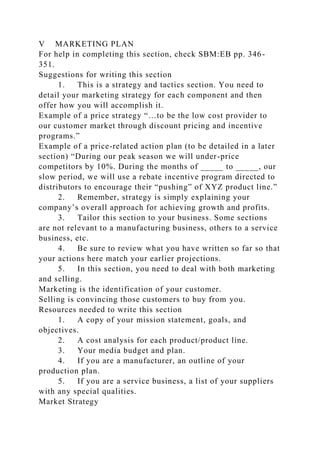
1. This is a strategy and tactics section. You need to
detail your marketing strategy for each component and then
offer how you will accomplish it.
Example of a price strategy “…to be the low cost provider to
our customer market through discount pricing and incentive
programs.”
Example of a price-related action plan (to be detailed in a later
section) “During our peak season we will under-price
competitors by 10%. During the months of _____ to _____, our
slow period, we will use a rebate incentive program directed to
distributors to encourage their “pushing” of XYZ product line.”
2. Remember, strategy is simply explaining your
company’s overall approach for achieving growth and profits.
3. Tailor this section to your business. Some sections
are not relevant to a manufacturing business, others to a service
business, etc.
4. Be sure to review what you have written so far so that
your actions here match your earlier projections.
5. In this section, you need to deal with both marketing
and selling.
Marketing is the identification of your customer.
Selling is convincing those customers to buy from you.
Resources needed to write this section
1. A copy of your mission statement, goals, and
objectives.
2. A cost analysis for each product/product line.
3. Your media budget and plan.
4. If you are a manufacturer, an outline of your
production plan.
5. If you are a service business, a list of your suppliers
with any special qualities.
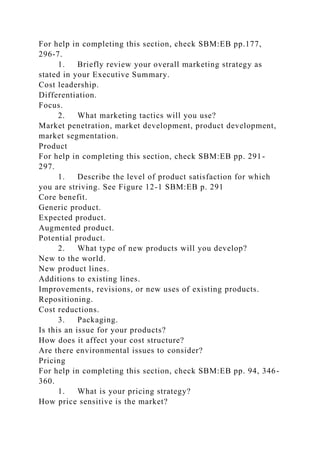
Market Strategy
For help in completing this section, check SBM:EB pp.177,
296-7.
1. Briefly review your overall marketing strategy as
stated in your Executive Summary.
Cost leadership.
Differentiation.
Focus.
2. What marketing tactics will you use?
Market penetration, market development, product development,
market segmentation.
Product
For help in completing this section, check SBM:EB pp. 291-
297.
1. Describe the level of product satisfaction for which
you are striving. See Figure 12-1 SBM:EB p. 291
Core benefit.
Generic product.
Expected product.
Augmented product.
Potential product.
2. What type of new products will you develop?
New to the world.
New product lines.
Additions to existing lines.
Improvements, revisions, or new uses of existing products.
Repositioning.
Cost reductions.
3. Packaging.
Is this an issue for your products?
How does it affect your cost structure?
Are there environmental issues to consider?
Pricing
For help in completing this section, check SBM:EB pp. 94, 346-
360.
1. What is your pricing strategy?
How price sensitive is the market?
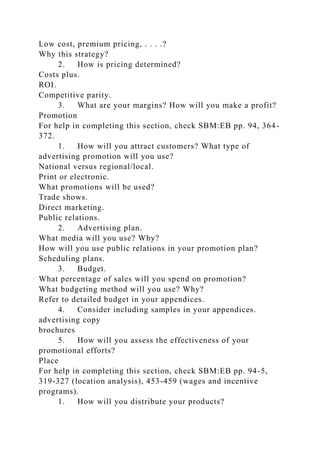
Low cost, premium pricing, . . . .?
Why this strategy?
2. How is pricing determined?
Costs plus.
ROI.
Competitive parity.
3. What are your margins? How will you make a profit?
Promotion
For help in completing this section, check SBM:EB pp. 94, 364-
372.
1. How will you attract customers? What type of
advertising promotion will you use?
National versus regional/local.
Print or electronic.
What promotions will be used?
Trade shows.
Direct marketing.
Public relations.
2. Advertising plan.
What media will you use? Why?
How will you use public relations in your promotion plan?
Scheduling plans.
3. Budget.
What percentage of sales will you spend on promotion?
What budgeting method will you use? Why?
Refer to detailed budget in your appendices.
4. Consider including samples in your appendices.
advertising copy
brochures
5. How will you assess the effectiveness of your
promotional efforts?
Place
For help in completing this section, check SBM:EB pp. 94-5,
319-327 (location analysis), 453-459 (wages and incentive
programs).
1. How will you distribute your products?
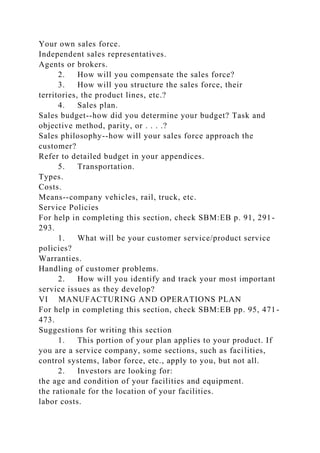
Your own sales force.
Independent sales representatives.
Agents or brokers.
2. How will you compensate the sales force?
3. How will you structure the sales force, their
territories, the product lines, etc.?
4. Sales plan.
Sales budget--how did you determine your budget? Task and
objective method, parity, or . . . .?
Sales philosophy--how will your sales force approach the
customer?
Refer to detailed budget in your appendices.
5. Transportation.
Types.
Costs.
Means--company vehicles, rail, truck, etc.
Service Policies
For help in completing this section, check SBM:EB p. 91, 291-
293.
1. What will be your customer service/product service
policies?
Warranties.
Handling of customer problems.
2. How will you identify and track your most important
service issues as they develop?
VI MANUFACTURING AND OPERATIONS PLAN
For help in completing this section, check SBM:EB pp. 95, 471-
473.
Suggestions for writing this section
1. This portion of your plan applies to your product. If
you are a service company, some sections, such as facilities,
control systems, labor force, etc., apply to you, but not all.
2. Investors are looking for:
the age and condition of your facilities and equipment.
the rationale for the location of your facilities.
labor costs.
potential labor issues.
3. Investors prefer as little overhead and inventory as
possible. Money tied into physical plant or inventory isn’t
making money. But they will invest in equipment and facilities
that make money.
4. Control systems are key to holding down costs. Be
thorough and clear as to your control systems and why you
chose those systems.
Resources needed to write this section
1. Description of your facilities.
2. Data on wage rates, taxes, etc., for the area and
comparative data for other areas to show how effective your
decisions were.
3. Maps showing locations of key markets in respect to
your facilities’ locations.
4. Labor contract if your workforce is unionized.
5. Any demographic study of the local labor force.
To help you plan for any diversity issues in your workforce.
If you become a federal contractor or are seeking federal funds
for your company, you may have to show how the diversity of
your workforce matches the local economy.
Production
1. What is your production process?
Do you produce, or is the product produced for you?
What are your production requirements in terms of:
a. Labor.
b. Equipment.
c. Facilities.
d. Materials.
e. Transportation/shipping.
Consider offering a flow chart.
2. How will production levels be determined?
Explain your production forecasting.
Your purchasing control processes.
Geographic Location
For help in completing this section, check SBM:EB pp. 94, 317-
342.
1. Where will your plant be located?
Explain the advantages and disadvantages in terms of labor
costs, proximity, taxes, utilities, etc.
Stress the advantages key to your business.
Facilities
1. What are your requirements of a building – amount of
square footage in office, production, storage, parts inventory,
specialized area?
Make or Buy Policy
1. What will you produce, and what will you buy? Why?
2. Describe your suppliers or subcontractors here.
What are their terms?
What percentage of their business do your orders represent?
Control systems
For help in completing this section, check SBM:EB pp. 78-79,
94, 469-70, 306-311 (inventory control).
1. What is your quality control process for quality
checking suppliers’ deliveries?
2. What is your inventory philosophy?
How fast can your suppliers deliver?
How much inventory will you carry, and what statistical tools
will you use to manage it?
3. What is your quality control process?
For help in completing this section, check SBM:EB pp.
483-487.
Labor Force
For help in completing this section, check SBM:EB pp. 421-424
(motivating employees), pp. 249-255 (legal considerations).
1. What is the state of the labor pool?
Training
1. What kinds of employee training will you provide?
For help in completing this section, check SBM:EB pp.
434-442.
2. Training costs/budget.
Staffing Plan
For help in completing this section, check SBM:EB pp. 438-445
(recruiting and selection 453-460 (wages and benefits), 249-255
(employment law).
1. Current employees.
Number, level of experience, education, and training.
Compensation and benefit plan.
Labor relations issues.
What union representation?
If nonunion, union avoidance strategy.
2. Proposed hires.
When will you add personnel?
Identify positions in order of priority.
Where will you find these employees--local, regional, etc.?
Training programs.
Compensation and benefit plan.
Labor relations issues.
EEOC issues.
a. Is diversity likely to be an issue?
b. Does ADA impact your company? If so, how are you
ensuring compliance?
VII THE MANAGEMENT TEAM
For help in completing this section, check SBM:EB pp. 406-
425.
Suggestions for writing this section
1. People, not ideas or products, make a company
successful. This is probably the most important section of your
plan, since most small businesses fail due to poor management.
2. Show your team’s balance of technical skills,
business skills, and experience.
3. Anyone with 20% or more ownership in the company
needs to be included.
4. Investors prefer experienced managers who have a
significant stake in the success of the business.
5. When addressing the management team’s skills and
abilities, be sure to tailor your comments to address each of the
major reasons small businesses fail [SBM:EB pp 17-21].
Show that the firm has the right people organized in the right
way to do the job.
Resources needed to write this section
1. An organizational chart.
2. Job descriptions for key positions.
3. Resumes of key officers. Each officer’s age.
4. Financial statements on each officer detailing his/her
personal finances and stake in the company.
5. The compensation plan including stock options,
buyout, etc.
6. A written copy of your philosophy of management.
7. A list of the members of your board.
Names.
Current employers and titles.
Experience.
What they bring to the company or why they are on the board.
Their individual stakes in the company.
8. The names and addresses of your:
Accountant.
Attorney.
Bank.
Insurance company.
Advertising agency.
Consultants, if any.
Other non-officers who are assisting in directing your company.
9. Succession plan; critical if this is a family-owned
business or if company success rests on any one officer.
Identification of Key People
For help in completing this section, check SBM:EB pp. 95-96,
442-447.
1. Include the resumes of the officers, the key directors,
and anyone with 20% or more interest in the business in an
appendix. Reference their location in this section of the plan.
Provide summary information here.
Emphasize job experience relevant to this venture.
2. Show the strength of the team and the variety of its
members’ skills.
3. How will you retain these people?
Contracts.
Compensation plan and perks.
Ownership.
4. Identify your board of directors, providing the same
information as for your key officers.
Succession Plan/Exit Strategy
For help in completing this section, check SBM:EB pp. 155-156
(family business succession) pp. 412-414 (exit strategy). Exit
strategy covered in more detail in a late section.
1. Who succeeds each of your key officers?
2. Do you have key employee insurance? With whom?
Detail the coverage.
3. What is your plan for developing successor(s),
especially if this is a family-owned business?
What are your general family policies; hiring family members,
supervising family members, etc.?
4. What is your exit strategy? How do you plan to
remove yourself from the business at some point in the future?
Management Philosophy
For help in completing this section, check SBM:EB pp. 95-96;
406-409.
1. What is your management philosophy?
What are the company’s responsibilities to employees?
What are the company’s responsibilities to the community?
What are the company’s responsibilities to the environment?
2. How will decisions be made? How will you keep the
entrepreneurial focus as your company grows?
Business Organization/Structure
For help in completing this section, check SBM:EB pp. 39-51
(various forms of ownership and their advantages and
disadvantages.)
1. Provide a complete organizational chart in an
appendix, but reference it here.
Name of the individual.
Title of position.
Age of individual.
2. Form of ownership.
Sole proprietorship.
S-corporation.
Partnership.
3. Charter or licensing issues.
Where is the corporation chartered?
If licensing is required, where is the business licensed to do
business?
Identification of Firms Assisting the Company
1. Name the following:
Accountant.
Attorney.
Banker.
Insurance company/agent.
Advertising agency.
VIII TIMELINE
For help in completing this section, check SBM:EB p. 96.
Suggestions for writing this section
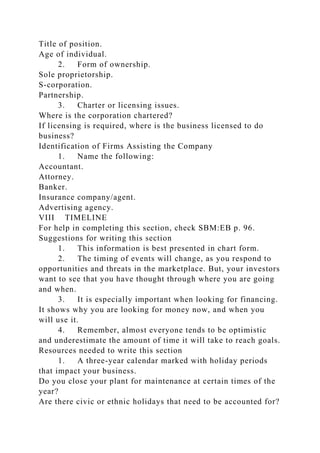
1. This information is best presented in chart form.
2. The timing of events will change, as you respond to
opportunities and threats in the marketplace. But, your investors
want to see that you have thought through where you are going
and when.
3. It is especially important when looking for financing.
It shows why you are looking for money now, and when you
will use it.
4. Remember, almost everyone tends to be optimistic
and underestimate the amount of time it will take to reach goals.
Resources needed to write this section
1. A three-year calendar marked with holiday periods
that impact your business.
Do you close your plant for maintenance at certain times of the
year?
Are there civic or ethnic holidays that need to be accounted for?
2. Time estimates for key events. Be realistic.
Key Events
1. What are the key events for your business?
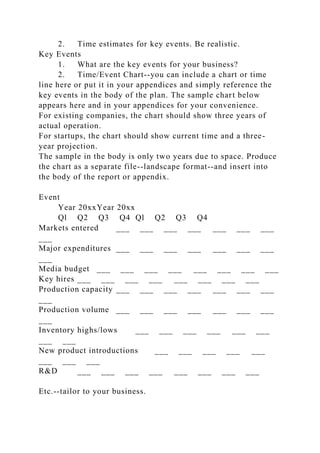
2. Time/Event Chart--you can include a chart or time
line here or put it in your appendices and simply reference the
key events in the body of the plan. The sample chart below
appears here and in your appendices for your convenience.
For existing companies, the chart should show three years of
actual operation.
For startups, the chart should show current time and a three-
year projection.
The sample in the body is only two years due to space. Produce
the chart as a separate file--landscape format--and insert into
the body of the report or appendix.
Event
Year 20xxYear 20xx
Ql Q2 Q3 Q4 Ql Q2 Q3 Q4
Markets entered ___ ___ ___ ___ ___ ___ ___
___
Major expenditures ___ ___ ___ ___ ___ ___ ___
___
Media budget ___ ___ ___ ___ ___ ___ ___ ___
Key hires ___ ___ ___ ___ ___ ___ ___ ___
Production capacity ___ ___ ___ ___ ___ ___ ___
___
Production volume ___ ___ ___ ___ ___ ___ ___
___
Inventory highs/lows ___ ___ ___ ___ ___ ___
___ ___
New product introductions ___ ___ ___ ___ ___
___ ___ ___
R&D ___ ___ ___ ___ ___ ___ ___ ___
Etc.--tailor to your business.
IX CRITICAL RISKS/ASSUMPTIONS
For help in completing this section, check SBM:EB p. 96.
Suggestions for writing this section
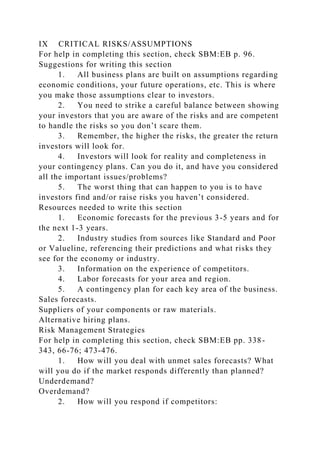
1. All business plans are built on assumptions regarding
economic conditions, your future operations, etc. This is where
you make those assumptions clear to investors.
2. You need to strike a careful balance between showing
your investors that you are aware of the risks and are competent
to handle the risks so you don’t scare them.
3. Remember, the higher the risks, the greater the return
investors will look for.
4. Investors will look for reality and completeness in
your contingency plans. Can you do it, and have you considered
all the important issues/problems?
5. The worst thing that can happen to you is to have
investors find and/or raise risks you haven’t considered.
Resources needed to write this section
1. Economic forecasts for the previous 3-5 years and for
the next 1-3 years.
2. Industry studies from sources like Standard and Poor
or Valueline, referencing their predictions and what risks they
see for the economy or industry.
3. Information on the experience of competitors.
4. Labor forecasts for your area and region.
5. A contingency plan for each key area of the business.
Sales forecasts.
Suppliers of your components or raw materials.
Alternative hiring plans.
Risk Management Strategies
For help in completing this section, check SBM:EB pp. 338-
343, 66-76; 473-476.
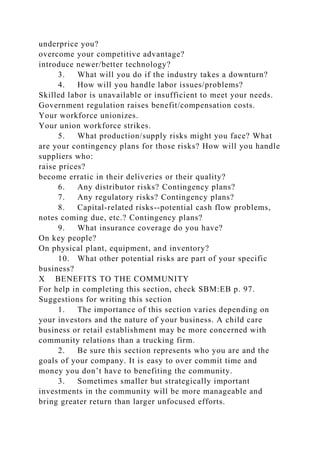
1. How will you deal with unmet sales forecasts? What
will you do if the market responds differently than planned?
Underdemand?
Overdemand?
2. How will you respond if competitors:
underprice you?
overcome your competitive advantage?
introduce newer/better technology?
3. What will you do if the industry takes a downturn?
4. How will you handle labor issues/problems?
Skilled labor is unavailable or insufficient to meet your needs.
Government regulation raises benefit/compensation costs.
Your workforce unionizes.
Your union workforce strikes.
5. What production/supply risks might you face? What
are your contingency plans for those risks? How will you handle
suppliers who:
raise prices?
become erratic in their deliveries or their quality?
6. Any distributor risks? Contingency plans?
7. Any regulatory risks? Contingency plans?
8. Capital-related risks--potential cash flow problems,
notes coming due, etc.? Contingency plans?
9. What insurance coverage do you have?
On key people?
On physical plant, equipment, and inventory?
10. What other potential risks are part of your specific
business?
X BENEFITS TO THE COMMUNITY
For help in completing this section, check SBM:EB p. 97.
Suggestions for writing this section
1. The importance of this section varies depending on
your investors and the nature of your business. A child care
business or retail establishment may be more concerned with
community relations than a trucking firm.
2. Be sure this section represents who you are and the
goals of your company. It is easy to over commit time and
money you don’t have to benefiting the community.
3. Sometimes smaller but strategically important
investments in the community will be more manageable and
bring greater return than larger unfocused efforts.
4. Find out what the interests of your investors are. Can
you direct your community benefits in a way compatible with
and of interest to your investors?
5. This section reflects your commitment to social
responsibility. Make your decisions thoughtfully.
Resources needed to write this section
1. Economic data on the local area and region.
2. Chamber of Commerce studies on the local area.
3. A source such as “Places Rated Almanac” (if you are
in a metropolitan area) can provide an overview of schools,
community facilities, etc.
4. Training and development plan or recommendation
from your HR professional for your employees.
5. Names and addresses of local suppliers who can
service your business needs.
6. Contact with the local civic organizations.
Economic Development
1. How does your proposed business positively impact
your local community?
How many jobs will be created: skilled, unskilled?
What local suppliers will you use? If none, why not?
Community Development
1. How will you be a good corporate neighbor in your
local community?
Do you provide products or services needed locally?
How will you contribute directly to the community? Sponsor
local events, donate money or equipment to a local civic or
community organization, give your time to & particular cause,
or . . . ?
Human Development
For help in completing this section, check SBM:EB pp.495-
498(training), 499-503 (benefits).
1. What are your training and development plans for
your workforce?
How does your compensation plan compare in the local
economy?
Are you offering any family-friendly benefits or plans?
XI EXIT STRATEGY
For help in completing this section, check SBM:EB pp. 97, 412-
414 .
Suggestions for writing this section
This is a short but important section of your business plan. This
is where you tell lenders/investors how you have thought all the
way through the life of your business.
Resources needed to write this section
Inc. magazine publishes an edition each year that features
business valuation. You will be well served in writing this
section by finding one (or more) of these issues.
Exit options:
You could sell your business to a) a financial buyer, b) a
strategic buyer), c) key employees, d) all employees via an
ESOP employee stock ownership plan.
You could take your company public via an IPO initial public
offering (if you meet the difficult criteria).
You could transition the business to a family member.
You could complete a planned liquidation – sell off all the
pieces of your business.
XII FINANCIAL PLAN
For help in completing this section, check SBM:EB pp. 97-103
186-216.
Suggestions for writing this section
1. Remember, this is a working plan. Few, if any,
companies ever meet their projected earnings, but they need
targets to shoot at.
Once you’ve calculated your costs, double them.
Take your sales revenue estimates and cut them in half
2. Strive for realism be able to explain and document
your numbers.
Investors want to know what your assumptions were for your
forecasts. Make them clear.
Include an evaluation of the risks. There are always risks. Be
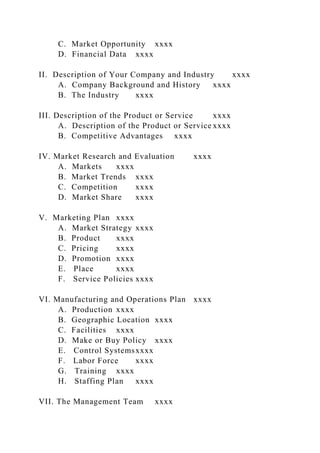
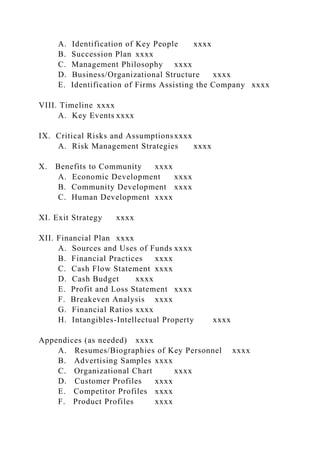
sure you address them, or investors may think you aren’t
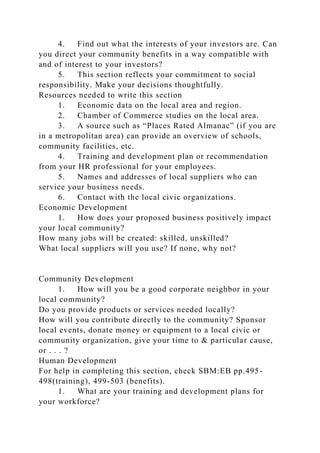
properly prepared or are hiding something.
3. If this is a brand new startup, you can get budget
estimates to work from through:
Robert Morris Associates’ Annual Statement Studies.
Dun & Bradstreet’s Cost of Doing Business.
4. Choose a few key ratios to present. Your text
provides 12 important ratios. Choose the ones most relevant to
your business, and be able to justify why you track those and
not others.
Know which ratios are strong and why.
Know which ratios are weak, and be able to explain what you
will do/are doing about it.
5. Be clear about how much money you want and what it
will be used for.
Tie the request to your marketing and production plans.
Be realistic.
Plan on using the money to grow the business. Paying off debts,
while needful at times, is not growing the business.
6. Provide audited statements on request. Be sure they
support your business plan projections.
7. While this tends to be a section on the financial and
tangible assets of a company, don’t forget to consider the value
of intangible assets: patents, trademarks, goodwill, and
contracts.
Resources needed to write this section
1. Have at least three years’ history of your financial
data and three years of projections.
2. To create your cash flow statement, you need:
to determine an adequate minimum cash balance.
a forecast of your sales.
a forecast of your cash receipts.
a forecast of cash disbursements.
3. Pro forma financial statements.
4. Breakeven analysis and key ratios: liquidity,
profitability, leverage, and activity.
A great deal of this section will take the form of financial
statements. There are some issues that must be dealt with in
narrative. The following headings cover both narrative and
numerical issues. Refer to the appendices referenced for
examples of the financial form.
Sources and Uses of Funds
For help in completing this section, check SBM:EB pp. 99 Fig.
4.2.
1. Where is your money coming from?
How will it be used?
Sources of Funds
Debt:
Term Loans $ __________
Refinancing of old debt $ __________
Lines of credit
Line 1 $ __________
Line 2 $ __________
Mortgage $ __________
Equity:
Investments $ __________
Uses of Funds:
Property $ __________
Inventory $ __________
Equipment (itemized)
1. $ __________
2. $ __________
Etc. $ __________
Working capital $ __________
Cash reserve $ __________
2. What will be the return for investors?
When can investors cash out?
In what form?
Financial Practices
For help in completing this section, check SBM:EB pp.189-192
(costing), 360-363 (credit and collection practices), 189,
(accounting method), 209-216 (tools for managing cash flow).
1. What is your accounting method?
Cash.
Accrual.
2. What are your collection practices?
3. How will you manage your accounts receivable?
4. How will you manage your accounts payable?
5. How will you control costs?
How will you monitor and control funds?
Who has that responsibility?
Cash Flow Statement
For help in completing this section, check SBM:EB pp. 100 Fig.
4.3, 197, Fig. 8.4. See Appendix H2 at the end of this document
for templates.
1. State your assumptions.
Percent of cash sales versus credit sales.
Minimum cash balance desired.
Collection pattern for credit sales.
2. Prepare three different cash flow statements based on:
a pessimistic sales forecast.
a most likely sales forecast.
an optimistic sales forecast.
See Appendix H2 - Sales Forecast, for the form for these
forecasts. Triplicate the form. In this space make note of your
assumptions, growth percentages, etc., for filling in those
forecasts.
Cash Budget
For help in completing this section, check SBM:EB pp. 211-
213.
Cash Receipts
Cash sales
Receivable collections
Interest
Owner contributions
Other receipts
Total receipts
Minus Disbursements
Cash purchases
Payment of accounts payable
Wages and salaries
Advertising
Office costs: supplies, utilities, rent/mortgage, telephone,
insurance
Legal/accounting fees/costs
Taxes and licenses
Interest payments
Loan principal payments
Dues and subscriptions
Travel
Miscellaneous disbursements
Total disbursements
Ending Cash (Beginning cash + receipts - disbursements)
Balance Sheet
For help in completing this section, check SBM:EB pp. 100,
195.
1. This shows all your owned assets and what is owed
against them, liabilities. The difference is your net worth. Be
accurate and clear.
See Fig. 4.4, page 101 and Fig. 8.3, p. 196 for examples of
balance sheets.
Record your raw numbers here but refer to Appendices H5, for
the form.
Profit and Loss Statement
For help in completing this section, check SBM:EB pp. 100-
102, pp. 193-194, Fig. 8.2, p. 194.
1. This document is your best approximation of your
projected sales and expenses. Be reasonable, but realize your
performance will vary from projections.
Project three sets of numbers, low, most likely, and high, as on
Fig. 4.5, p. 101.
Record your raw numbers here, but refer to Appendix H4 for the
form.
Breakeven Analysis
For help in completing this section, check SBM:EB pp. 103, pp.
352-355 Figs. 14.2 & 14.3.
1. Calculate this in terms of units and dollars.
Offer comparative data from Robert Morris Associates’ Annual
Statement.
Financial ratios
(Choose the ones that make the most sense for your business.)
For help in completing this section, check SBM:EB pp. 200-
208.
1. Financial ratios show investors both that you are a
sophisticate in financial management and that you are staying
on top of your day-to-day business operations. Some ratios from
which to choose:
Liquidity.
Current ratio.
Quick ratio.
Inventory to net working capital.
Implications of liquidity ratios.
Profitability.
Gross profit margin.
Return on assets.
Return on equity.
Implications of profitability ratios.
Leverage/debt.
Debt to assets.
Debt to equity.
Long-term debt to equity.
Implications of leverage ratios.
Activity.
Inventory turnover.
Fixed-asset turnover.
Average collection period.
Implications of activity ratios.
Intangibles--Intellectual Property
For help in completing this section, check SBM:EB pp. 151-
152.
1. What patents do you hold?
2. Any copyrights?
3. Any trademarks registered?
APPENDICES
Suggestions for writing this section
1. An appendix provides supporting detail for statements
made in the business plan.
Be sure to reference your appendices in the body of the business
plan. Tell the reader when and why to refer to the appendix.
Tab each appendix to make it easy to find.
Number the pages in the appendices. It makes reference to items
much easier in your presentation and discussions.
2. Use as many appendices as necessary to make the
body of the business plan as concise as possible, yet provide
excellent documentation and explanation.
Investors want a short document to read, but they want to know
that you’ve done your homework.
3. Once the plan is done and the appendices completed,
read it one more time before copying and binding.
Double check the appendices’ references, tabs, and page
numbers.
Resources needed to write this section
1. The complete draft copy of the business plan. Cross
check to make sure that references in the body of the document
correspond to the correct appendix and page number.
2. Copies of
resumes of key people.
organizational chart.
spreadsheets of financial statements.
diagrams, pictures, and/or description of the product.
market research on the customer.
competitor information.
In this section, each heading has categories of information and
format rather than questions. You have already answered the
appropriate questions in the body of the business plan. Now,
document your plan with easy-to-read charts, graphs, financial
statements, etc. The letter in front of each section title
designates the tab this information should be behind.
Materials that could be included in appendices follow.
A. Resumes, Biographies of Key Personnel
Resume
For business plan, keep to one page.
1. Name and address.
2. Title.
3. Experience.
Chronology format shows duration and recentness of
experience.
Responsibility format highlights skills and experience.
4. Education.
When--this might reveal your age range. It is necessary to
verify your age range.
Where--in some cases your investors may recognize and value
the institution.
What type.
List degrees and important professional development during
career. You may need to offer a sentence or two of explanation
if the title of the program does not reveal its content.
5. Professional.
Memberships in relevant associations.
Avoid listings that reveal gender, race, ethnicity, age, etc.
Certifications.
Awards.
Biography
Elaborates on key events. Should support the resume and flesh
it out. No more them one page. Can include personal data such
as family information if relevant.
B. Advertising Samples
1. Company logo.
2. Sample brochure(s).
3. Sample print ads.
4. Media budget.
C. Organizational Chart
Shows who holds what position, reports to whom, and where
specific responsibilities lie.
D. Customer Profiles
1. Benefits sought--product/service features that meet
benefits.
2. Consumer or business.
3. Distribution.
By industry.
By region.
By size.
By use/application.
4. Use patterns--industry.
5. Specific applications--individual customer.
6. Purchase patterns--Buying style: leader, late-adopter,
etc.
7. Demographics/psychographics/geographics.
8. Media preferences.
9. Price sensitivity
Ideal price, price range.
10. Specific benefits sought.
11. Probability of purchase.
12. Percentage of market share.
By industry.
By customer--percentage of their business that is yours.
E. Competitor Profiles
For help in completing this section, check SBM:EB pp. 69-71.
1. List competitors either in order of importance or
alphabetically if they are all relatively equal.
2. Include the following elements:
Name and location.
Key management people.
Product line description and differentiation.
Pricing strategy, pricing information.
Promotional strategy.
Distribution channels.
3. Categorize as aggressive, passive, etc., and why.
4. Why they are a competitor?
5. Their target markets.
6. SWOT analysis.
Strengths – positive internal factors.
Weaknesses – negative internal factors.
Opportunities - positive external factors.
Threats – negative external factors.
7. Their market share.
8. Their position in the market.
F. Product Profiles
1. Narrative description.
2. Technical description--diagrams, photographs, line
art of the product.
3. Charts showing needs met by particular features.
4. Comparison/contrast with key competitive products.
Features.
Benefits for customer of each feature.
Pricing.
5. Any proprietary aspects that provide a competitive
edge.
6. Differentiation from market.
Competitive advantage.
7. Positioning in the market.
8. Pricing strategy.
9. Promotion strategy.
10. Distribution strategy.
11. What target market is each product/product line
directed towards?
12. New product consideration, improvements planned.
G. Site Study and Store Layout
For help in completing this section, check SBEB pp. 327-330
(site selection), 334-339 (store layout), 255-257 (licensing and
zoning issues).
A. Site study.
1. How site was selected.
2. Why site was selected.
3. Zoning issues, if any.
4. Infrastructure.
Utilities, access, phone.
If plant--supplier access: rail lines, major highways, etc.
If retail--customer access: relationship to major roads,
intersections, etc.
5. Parking.
6. Signage plan.
7. Location of competitors.
B. Store Layout.
1. Pictures or diagram--exterior.
2. Pictures or diagram--interior.
Explain the choice of layout.
3. Signage plan—if not covered above.
4. Remodeling costs.
5. Building costs.
6. ADA compliance.
H. Financial Statements
1. Sales forecast.
2. Cash flow statement.
3. Startup costs.
4. Current and projected profit and loss statement.
5. Current and projected balance sheet.
Financial statement templates follow: [ON SEPARATE EXCEL
WORKSHEETS]
Appendix HI
Forecasts-- You need three sales forecasts: Optimistic, Most
Likely, Pessimistic
Appendix H2
Cash Flow Statement- You need three cash flows: Optimistic,
Most Likely, Pessimistic.
Appendix H3
Table of Startup Costs--Retail Store
Appendix H4
Current and Projected Profit and Loss Statement--Example is
for three years: profit and loss should be prepared for five
years, current plus four.
Appendix H5
Current and Projected Balance Sheet
I. Global Issues
For help in completing this section, check SBEB pp. 377-401.
A. Are you prepared to go global if necessary?
1. How would your business plan be modified?
B. How would you enter global markets?
1. Exporting.
2. Indirect exporting.
Agents and brokers.
Export management company.
Export trade company.
Piggybacking.
Foreign-based distributors or agents.
3. Direct exporting.
4. Licensing.
C. How will you identify potential markets?
D. International financial matters.
1. Funding.
2. Managing payment.
Letters of credit.
Methods of payment.
E. What expertise do you have in understanding other cultures?
1. Language skills amongst the management team.
2. Cross-cultural experiences.
F. What, if any, trading regions/trade agreements will affect
your company?
1. NAFTA
2. European Union.
3. Andean Common Market.
G. Are you ISO 9000 qualified?
Business Plan Template
[Company Logo]
[The Company Name]
Established [date]
[Name, Address, Phone
and Fax Numbers, and e-mail address
of
Contact Person]
A Business Plan
This business plan contains proprietary information that may
not be shared, copied, disclosed, or otherwise compromised
without the consent of [Company Name].
Table of Contents
Cover page xxxx
Table of Contents xxxx
I. Executive Summary xxxx
A. Mission Statement xxxx
B. Company Information xxxx
C. Market Opportunity xxxx
D. Financial Data xxxx
II. Description of Your Company and Industry xxxx
A. Company Background and History xxxx
B. The Industry xxxx
III. Description of the Product or Service xxxx
A. Description of the Product or Service xxxx
B. Competitive Advantages xxxx
IV. Market Research and Evaluation xxxx
A. Markets xxxx
B. Market Trends xxxx
C. Competition xxxx
D. Market Share xxxx
V. Marketing Plan xxxx
A. Market Strategy xxxx
B. Product xxxx
C. Pricing xxxx
D. Promotion xxxx
E. Place xxxx
F. Service Policies xxxx
VI. Manufacturing and Operations Plan xxxx
A. Production xxxx
B. Geographic Location xxxx
C. Facilities xxxx
D. Make or Buy Policy xxxx
E. Control Systemsxxxx
F. Labor Force xxxx
G. Training xxxx
H. Staffing Plan xxxx
VII. The Management Team xxxx
A. Identification of Key People xxxx
B. Succession Plan xxxx
C. Management Philosophy xxxx
D. Business/Organizational Structure xxxx
E. Identification of Firms Assisting the Company xxxx
VIII. Timeline xxxx
A. Key Events xxxx
IX. Critical Risks and Assumptionsxxxx
A. Risk Management Strategies xxxx
X. Benefits to Community xxxx
A. Economic Development xxxx
B. Community Development xxxx
C. Human Development xxxx
XI. Exit Strategy xxxx
XII. Financial Plan xxxx
A. Sources and Uses of Funds xxxx
B. Financial Practices xxxx
C. Cash Flow Statement xxxx
D. Cash Budget xxxx
E. Profit and Loss Statement xxxx
F. Breakeven Analysis xxxx
G. Financial Ratios xxxx
H. Intangibles-Intellectual Property xxxx
Appendices (as needed) xxxx
A. Resumes/Biographies of Key Personnel xxxx
B. Advertising Samples xxxx
C. Organizational Chart xxxx
D. Customer Profiles xxxx
E. Competitor Profiles xxxx
F. Product Profiles xxxx
G. Site Study and Store Layout xxxx
H. Financial Statements xxxx
I. Global Issues xxxx
SECTION I – EXECUTIVE SUMMARY
Mission Statement
[Insert here]
Business Objective(s)
[Insert here]
Company Information
[Insert here]
Market Opportunity
[Insert here]
The Financials
Summary of 3 years actual, 3 years projected. [Insert your
summary financial tables here. The data is easiest to read if in
table rather than narrative format.]
Actual 20__ Projected 20__ Etc.
• Revenue
• Net Income
• Assets
• Liabilities
• Net Worth
Summary of Financing
Current Amount Amount Needed
Debt _____________ _____________
Debt with Warrants _____________ _____________
Convertible Debentures _____________ _____________
Stock--Preferred and Common _____________
_____________
SECTION II – DESCRIPTION OF THE BUSINESS AND
INDUSTRY
Company Background and History
[If this is a startup, not all elements apply to you.]
The Industry
[Insert here]
SECTION III – DESCRIPTION OF THE PRODUCT OR
SERVICE
Description of the Product or Service
[Insert here]
[Reference the appropriate appendix where your detailed
product profile is located with accompanying diagrams, etc.]
Competitive Advantages
[Insert here]
[Frame in terms of your customers’ desire benefits. Consider
referencing your customer profile in the appropriate appendix as
support for your competitive advantages.]
SECTION IV – MARKET RESEARCH AND EVALUATION
Target Markets
[Insert here]
[Reference the appropriate appendix where your customer
profiles are.]
Market Trends
[Insert here]
Competition
[Insert here]
Market Share
[Insert here]
[Sales Summary Forecast Table]
SECTION V – MARKETING PLAN
Market Strategy
[Insert here]
Product
[Insert here]
Pricing
[Insert here]
Promotion
[Insert here]
Place
[Insert here]
Service Policies
[Insert here]
SECTION VI – MANUFACTURING AND OPERATIONS
PLAN
Production
[Insert here]
Geographic Location
[Insert here]
Facilities
[Insert here]
Make or Buy Policy
[Insert here]
Control Systems
[Insert here]
Labor Force
[Insert here]
Training
[Insert here]
Staffing Plan
[Insert here]
SECTION VII – THE MANAGEMENT TEAM
Identification of Key People
[Insert here]
[Reference the appropriate appendix where key peoples’
resumes and biographies are located.]
Succession Plan
[Insert here]
Management Philosophy
[Insert here]
Business/Organizational Structure
[Insert here]
[Include the organizational chart here or provide a narrative
description and reference the appropriate appendix.]
Identification of Firms Assisting the Company
[Insert here]
SECTION VIII – TIMELINE
Key Events
[Insert here]
SECTION IX – CRITICAL RISKS AND ASSUMPTIONS
Risk Management Strategies
[Insert here]
SECTION X – BENEFITS TO THE COMMUNITY
Economic Development
[Insert here]
Community Development
[Insert here]
Human Development
[Insert here]
SECTION XI – EXIT STRATEGY
SECTION XII – FINANCIAL PLAN
Sources and Uses of Funds
[Insert here]
Financial Practices
[Insert here]
Cash Flow Statement
[Insert here]
Cash Budget
[Insert here]
Profit and Loss Statement
[Insert here]
Breakeven Analysis
[Insert here]
Financial Ratios
[Insert here]
[Refer to your textbook for the formulas to calculate these
ratios.]
Intangibles-Intellectual Property
[Insert here]
Appendix A
Resumes and Biographies of Key Personnel
[Insert here]
Appendix B
Advertising Samples
[Insert here]
Appendix C
Organizational Chart
[If not included in body of the plan.]
[Insert here]
Appendix D
Customer Profiles
[Insert here]
Appendix E
Competitor Profiles
[Insert here]
Appendix F
Product Profiles
[Insert here]
Appendix G
Site Study and/or Store Layout
Site Study
[Insert here]
Store Layout
[Insert here]
© 2016 Cengage Learning. All Rights Reserved. May not be
scanned, copied or duplicated, or posted to a publicly accessible
website, in whole or in part.
How to Write the Financial Section of a Business Plan: The
Components of a Financial Section
A financial forecast isn't necessarily compiled in sequence. And
you most likely won't present it in the final document in the
same sequence you compile the figures and documents. Berry
says that it's typical to start in one place and jump back and
forth. For example, what you see in the cash-flow plan might
mean going back to change estimates for sales and expenses.
Still, he says that it's easier to explain in sequence, as long as
you understand that you don't start at step one and go to step six
without looking back--a lot--in between.
• Start with a sales forecast.
Set up a spreadsheet projecting your sales over the course of
three years. Set up different sections for different lines of sales
and columns for every month for the first year and either on a
monthly or quarterly basis for the second and third years.
"Ideally you want to project in spreadsheet blocks that include
one block for unit sales, one block for pricing, a third block that
multiplies units’ times price to calculate sales, a fourth block
that has unit costs, and a fifth that multiplies units times unit
cost to calculate cost of sales (also called COGS or direct
costs)," Berry says. "Why do you want cost of sales in a sales
forecast? Because you want to calculate gross margin. Gross
margin is sales less cost of sales, and it's a useful number for
comparing with different standard industry ratios." If it's a new
product or a new line of business, you have to make an educated
guess. The best way to do that, Berry says, is to look at past
results.
• Create an expenses budget.
You're going to need to understand how much it's going to cost
you to actually make the sales you have forecast. Berry likes to
differentiate between fixed costs (i.e., rent and payroll) and
variable costs (i.e., most advertising and promotional expenses),
because it's a good thing for a business to know. "Lower fixed
costs mean less risk, which might be theoretical in business
schools but are very concrete when you have rent and payroll
checks to sign," Berry says. "Most of your variable costs are in
those direct costs that belong in your sales forecast, but there
are also some variable expenses, like ads and rebates and such."
Once again, this is a forecast, not accounting, and you're going
to have to estimate things like interest and taxes. Berry
recommends you go with simple math. He says multiply
estimated profits times your best-guess tax percentage rate to
estimate taxes. And then multiply your estimated debts balance
times an estimated interest rate to estimate interest.
• Develop a cash-flow statement.
This is the statement that shows physical dollars moving in and
out of the business. "Cash flow is king," Pinson says. You base
this partly on your sales forecasts, balance sheet items, and
other assumptions. If you are operating an existing business,
you should have historical documents, such as profit and loss
statements and balance sheets from years past to base these
forecasts on. If you are starting a new business and do not have
these historical financial statements, you start by projecting a
cash-flow statement broken down into 12 months. Pinson says
that it's important to understand when compiling this cash-flow
projection that you need to choose a realistic ratio for how
many of your invoices will be paid in cash, 30 days, 60 days, 90
days and so on. You don't want to be surprised that you only
collect 80 percent of your invoices in the first 30 days when you
are counting on 100 percent to pay your expenses, she says.
Some business planning software programs will have these
formulas built in to help you make these projections.
• Income projections.
This is your pro forma profit and loss statement, detailing
forecasts for your business for the coming three years. Use the
numbers that you put in your sales forecast, expense
projections, and cash flow statement. "Sales, lest cost of sales,
is gross margin," Berry says. "Gross margin, less expenses,
interest, and taxes, is net profit."
• Deal with assets and liabilities.
You also need a projected balance sheet. You have to deal with
assets and liabilities that aren't in the profits and loss statement
and project the net worth of your business at the end of the
fiscal year. Some of those are obvious and affect you at only the
beginning, like startup assets. A lot are not obvious. "Interest is
in the profit and loss, but repayment of principle isn't," Berry
says. "Taking out a loan, giving out a loan, and inventory show
up only in assets--until you pay for them." So the way to
compile this is to start with assets, and estimate what you'll
have on hand, month by month for cash, accounts receivable
(money owed to you), inventory if you have it, and substantial
assets like land, buildings, and equipment. Then figure out what
you have as liabilities--meaning debts. That's money you owe
because you haven't paid bills (which is called accounts
payable) and the debts you have because of outstanding loans.
• Breakeven analysis.
The breakeven point, Pinson says, is when your business's
expenses match your sales or service volume. The three-year
income projection will enable you to undertake this analysis. "If
your business is viable, at a certain period of time your overall
revenue will exceed your overall expenses, including interest."
This is an important analysis for potential investors, who want
to know that they are investing in a fast-growing business with
an exit strategy.
How to Write the Financial Section of a Business Plan: How to
Use the Financial Section
One of the biggest mistakes business people make is to look at
their business plan, and particularly the financial section, only
once a year. "I like to quote former President Dwight D.
Eisenhower," says Berry. "'The plan is useless, but planning is
essential.' What people do wrong is focus on the plan, and once
the plan is done, it's forgotten. It's really a shame, because they
could have used it as a tool for managing the company." In fact,
Berry recommends that business executives sit down with the
business plan once a month and fill in the actual numbers in the
profit and loss statement and compare those numbers with
projections. And then use those comparisons to revise
projections in the future.
Many advisors also recommend that you undertake a financial
statement analysis to develop a study of relationships and
compare items in your financial statements, compare financial
statements over time, and even compare your statements to
those of other businesses. Part of this is a ratio analysis. She
recommends you do some homework and find out some of the
prevailing ratios used in your industry for liquidity analysis,
profitability analysis, and debt and compare those standard
ratios with your own.
"This is all for your benefit," she says. "That's what financial
statements are for. You should be utilizing your financial
statements to measure your business against what you did in
prior years or to measure your business against another business
like yours."
If you are using your business plan to attract investment or get a
loan, you may also include a business financial history as part
of the financial section. This is a summary of your business
from its start to the present. Sometimes a bank might have a
section like this on a loan application. If you are seeking a loan,
you may need to add supplementary documents to the financial
section, such as the owner's financial statements, listing assets
and liabilities.
All of the various calculations you need to assemble the
financial section of a business plan are a good reason to look
for business planning software, so you can have this on your
computer and make sure you get this right. Software programs
also let you use some of your projections in the financial
section to create pie charts or bar graphs that you can use
elsewhere in your business plan to highlight your financials,
your sales history, or your projected income over three
years."It's a pretty well-known fact that if you are going to seek
equity investment from venture capitalists or angel investors,
“many advisors say, "they do like visuals."

Sheet1Balance Sheet (Projected)Company XYZBeginningProjectedProjec.docx

  • 1.
    Sheet1Balance Sheet (Projected)Company XYZBeginningProjectedProjectedProjectedasof mm/dd/yyyy12/31/1912/31/2012/31/21AssetsCurrent AssetsCash in bank$ -$ -Accounts receivable--Inventory-- Prepaid expenses--Other current assets--Total Current Assets$ -$ -Fixed AssetsMachinery & equipment$ -$ -Furniture & fixtures--Leasehold improvements--Land & buildings--Other fixed assets--(LESS accumulated depreciation on all fixed assets)--Total Fixed Assets (net of depreciation)$ -$ -Other AssetsIntangibles$ -$ -Deposits--Goodwill--Other--Total Other Assets$ -$ -TOTAL Assets$ -$ -Liabilities and EquityCurrent LiabilitiesAccounts payable$ -$ -Interest payable--Taxes payable--Notes, short-term (due within 12 months)--Current part, long-term debt--Other current liabilities- -Total Current Liabilities$ -$ -Long-term DebtBank loans payable$ -$ -Notes payable to stockholders--LESS: Short- term portion--Other long term debt--Total Long-term Debt$ -$ -Total Liabilities$ -$ -Owners' EquityInvested capital$ -$ -Retained earnings - beginning--Retained earnings - current-- Total Owners' Equity$ -$ -Total Liabilities & Equity$ -$ - Totals are calculated automatically. Make sure to enter this as a negative number! Make sure to enter this as a negative number! Sheet2 Sheet3 Twelve-month cash flowCash Flow (12 months)Enter Company Name HereFiscal Year Begins:Jan-18Pre-Startup ESTJan- 19Feb-19Mar-19Apr-19May-19Jun-19Jul-19Aug-19Sep-19Oct- 19Nov-19Dec-19Total Item ESTCash on Hand (beginning of month)0000000000000CASH RECEIPTSCash SalesCollections fm CR accountsLoan/ other cash inj.TOTAL CASH RECEIPTS00000000000000Total Cash Available (before cash
  • 2.
    out)00000000000000CASH PAID OUTPurchases (merchandise)Purchases(specify)Purchases (specify)Gross wages (exact withdrawal)Payroll expenses (taxes, etc.)Outside servicesSupplies (office & oper.)Repairs & maintenanceAdvertisingCar, delivery & travelAccounting & legalRentTelephoneUtilitiesInsuranceTaxes (real estate, etc.)InterestOther expenses (specify)Other (specify)Other (specify)MiscellaneousSUBTOTAL00000000000000Loan principal paymentCapital purchase (specify)Other startup costsReserve and/or EscrowOwners' WithdrawalTOTAL CASH PAID OUT00000000000000Cash Position (end of month)00000000000000ESSENTIAL OPERATING DATA (non cash flow information)Sales Volume (dollars)Accounts ReceivableBad Debt (end of month)Inventory on hand (eom)Accounts Payable (eom)Depreciation Totals are calculated automatically. Instructions Notes on Preparation Note: You may want to print this information to use as reference later. To delete these instructions, click the border of this text box and then press the DELETE key. Refer back to your Profit & Loss Projection. Line-by-line ask yourself when you should expect cash to come and go. You have already done a sales projection, now you must predict when you will actually collect from customers. On the expense side, you have previously projected expenses; now predict when you will actually have to write the check to pay those bills. Most items will be the same as on the Profit & Loss Projection. Rent and utility bills, for instance, are usually paid in the month they are incurred. Other items will differ from the Profit & Loss view. Insurance and some types of taxes, for example, may actually be payable quarterly or semiannually, even though you recognize them as monthly expenses. Just try to make the Cash Flow as realistic as you can line by line. The payoff for you will be an
  • 3.
    ability to manageand forecast working capital needs. Change the category labels in the left column as needed to fit your accounting system. Note that lines for 'Loan principal payment' through 'Owners' Withdrawal' are for items that always are different on the Cash Flow than on the Profit & Loss. Loan Principal Payment, Capital Purchases, and Owner's Draw simply do not, by the rules of accounting, show up on the Profit & Loss Projection. They do, however, definitely take cash out of the business, and so need to be included in your Cash plan. On the other hand, you will not find Depreciation on the Cash Flow because you never write a check for Depreciation. Cash from Loans Received and Owners' Injections go in the "Loan/ other cash inj." row. The "Pre-Startup" column is for cash outlays prior to the time covered by the Cash Flow. It is intended primarily for new business startups or major expansion projects where a great deal of cash must go out before operations commence. The bottom section, "ESSENTIAL OPERATING DATA", is not actually part of the Cash model, but it allows you to track items which have a heavy impact on cash. The Cash Flow Projection is the best way to forecast working capital needs. Begin with the amount of Cash on Hand you expect to have. Project all the Receipts and Paid Outs for the year. If CASH POSITION gets dangerously low or negative, you will need to pump in more cash to keep the operation afloat. Many profitable businesses have gone under because they could not pay the bills while waiting for money to flow in. Your creditors do not care about profit; they want to be paid with cash. Cash is the financial lifeblood of your business. TABLE OF CONTENTS i. EXECUTIVE Summary # Company Information # Market Opportunity #
  • 4.
    financial data # 11.Company InFORmaTION # 111. EnvirnomentaL & Industry Analysis # Environmental # Industry # 1V. Product or Service # V. Marketing Research & Evaluation # Target Markets & Evaluation # Market Trends # Competition # Market Share # Marketing Plan-explain marketing strategy # Pricing # Promotion # Distribution/place # Service policy’s # VI. Manufacturing & Operations Plan # Geographic Location # Facilities# Make or Buy Policy # Control Systems # Labor Force # V11. management Team # Vi11. Timeline # 1X. Critical Risks & Assumptions # X. Benefits to Community # X1. Exit Stratgey # XII. Financial Plan # Sources & Uses of Funds # Cashflow Statement # Balance Sheet # Profit & Loss statement (INCOME Statement) # Dix Hills, New York 11746
  • 5.
    BUS 461 BUSINESS SEMINAR NAME _________________________________________________ SCORE_____________ Business Plan Grading Criteria Points Exemplary 10 points Good 8 points Satisfactory 6 points Unacceptable 0 points Cover Sheet, Table of Contents A clear articulate professional cover sheet & table of contents was provided along with requested information. A cover sheet & table of contents was provided along with requested information. A cover sheet & table of contents was provided A cover sheet & table of contents was not provided or was incomplete. ____ Executive Summary
  • 6.
    Summary generated excitement,was brief, provided an overview of the business and outlined main points. Summary was brief, provided an overview of the business, and outlined main points. Summary was brief, provided an overview of the business, and outline some main points. Summary was brief and provided only an overview of the business or an outline of main points. ____ Company Plan, Environmental & Industry Analysis A flawless description of the company plan & analysis of environment and industry was effective. Description of company plan & analysis of environment and industry was given. Description of company & analysis of environment and industry, but w/o sufficient detail. Description of company & analysis of environment and industry was missing ____ Product /Service, Marketing Research & Evaluation A clear description of products/services and its unique features. Clearly identified & described target markets, market trends and competitors. Described product/service and Described target mkt, mkt trends and its competitors. Described product/service and Described target mkt, mkt trends and its competitors, but w/o
  • 7.
    sufficient detail Analysis failedto provide at least one aspect of required information. ____ Operational Plan, Critical Risks & Assumptions, Timeline Detailed information regarding operational plan, critical risks & assumptions and timeline clearly stated. Information was provided of operational plan, critical risks & assumptions, and timeline plan. Not all the information was provided of operational plan, critical risks & assumptions, and timeline plan Analysis failed to provide at least one aspect of required information Management Team/Exit Strategy/Benefits To the Community Member(s) of management team were identified & their qualifications & experience described in a way that led credibility to the business. A detailed exit strategy and benefits were included. Member(s) of management team were identified & their qualifications & experience described in a way that led credibility to the business. An exit strategy and benefits were included. Member(s) of management team were identified. An exit strategy and benefits were included. Analysis failed to provide all of the required information. Financial Plan(include balance sheet, income statement and c/f statement) Possible finance sources were identified & business financial outlook was described in detail. Statements were completed. Possible finance sources were identified & business financial outlook was described. Statements were completed. Possible finance sources were identified & business financial
  • 8.
    outlook was mentioned.Statements were completed. Section failed to provide necessary financial statements.. Effectiveness & Detail Plan was highly effective in describing the business and its operations in great detail and it was obvious there were great thought behind it. Plan was effective in describing the business and its operations in great detail and to have great thought behind it. Plan described the business and its operations in some detail with some thought behind it. Plan lacked overall effectiveness, as it failed to describe business effectively. Professional Appearance, Clarity & Organization and Grammar. Plan was presented in an acceptable format (clearly organized) and had no spelling or grammatical errors. Plan was presented in an acceptable format (clearly organized) and had few spelling or grammatical errors. Plan was presented in an acceptable format (but not clearly organized) and had few spelling or grammatical errors. Plan wasn’t presented in an acceptable format and had many spelling or grammatical errors. Presentation The presentation was smooth, polished, and organized. Speakers spoke clear, avoided distracting filler words and made frequent eye contact. Did not read directly from business plan. The presentation flowed smoothly. Speakers were easy to understand and occasionally made eye contact. Speakers did not read directly from business plan The presentation moved logically but wasn’t clear at all times and made occasionally eye contact. The presentation was disorganized resulting in difficulty of
  • 9.
    understanding business. Speechwas rushed or inarticulate. Total Score Dix Hills, New York 11746BUS 461 BUSINESS SEMINAR BUSINESS PLAN BASICS Business plans are the preferred mode of communication between entrepreneurs and potential investors. Experienced owners and managers of closely held businesses know that business plans can also be an indispensable management tool. Many entrepreneurs/business owners have found that just completing the steps required to develop a business plan forces them to introduce discipline and a logical thought process into all of their planning activities. They have found that a properly prepared business plan can greatly improve their company’s ability to consistently establish and meet goals and objectives in a way that best serves the companies owners, employees, and investors. A business plan should be a simply written representation of where a company is going, how it will get there and what it will look like once it arrives. Not only should entrepreneurs write business plans but so should all companies. Most companies who value business plans are used at a minimum to: 1. Set goals and objectives for the company’s performance 2. Provide a basis for evaluating and controlling the company’s performance. 3. Communicate a company’s message to middle managers, outside directors, lenders and potential investors.
  • 10.
    COVER SHEET: Servesas the title page of your business plan. · Name, address, and phone number of the company. · Name, title, address, phone number of owners/corporate officers. · Month and year your plan was prepared. · Name of preparer. · Copy number of the plan. TABLE OF CONTENTS (Quick reference to major topics covered in your plan) · You want the business plan to be as easy to read as possible. An orderly table of contents will allow the reader to turn to the desired section as needed. I. EXECUTIVE SUMMARY (or Statement of Purpose) This is the thesis statement and states business plan objectives. Should be 4 paragraphs 1 to 2 pages). Use the key word approach (who, what, where, when, why, how, how much) to summarize the following: · Your Company (who, what, where, when).
  • 11.
    · Who yourmanagement is and What their strengths are. · What your objectives are and Why you will be successful. · If you need a financing, why you need it, how much you need and how you intend to repay the loan or benefit the investor. Note: Do not write the executive summary (statement of purpose) until you have completed your business plan! It is a summary and reflects the contents of the finished plan. I1. THE COMPANY INFORMATION What is included? This section should include a "summary description of your business" statement followed by information on the "administrative" end of your company. A. SUMMARY DESCRIPTION OF THE BUSINESS In a paragraph or two give a broad overview of the nature of your business, telling when and why the company was formed. Then complete the summary by briefly addressing: · mission (projecting short- and long-term goals) · business model (describe your company's model and why it is unique to your industry) · strategy (give an overview of the strategy, focusing on short- and long-term objectives) · strategic relationships (tell about any existing strategic
  • 12.
    relationships) · SWOT Analysis(strengths, weaknesses, opportunities, and threats that your company will face, both internal and external) B. INTELLECTUAL PROPERTY · Address Copyrights, Trademarks, and Patents · Back up in Supporting Documents with registrations, photos, diagrams, etc. C. LOCATION · Describe your projected or current location. · Project costs associated with the location. · Include legal agreements, utilities forecasts, etc. in Supporting Documents. D. LEGAL STRUCTURE · Describe your legal structure and why it is advantageous for your company. · List owners and/or corporate officers describing strengths (include resumes). E. ACCOUNTING & LEGAL
  • 13.
    · Accounting: Whatsystem will you set up for daily accounting? Who will you use for a tax accountant? Who will be responsible for periodic financial statement analysis? · Legal: Who will you retain for an attorney? (Keep 'Murphy's Law' in mind.) F. INSURANCE · What kinds of insurance will you carry? (Property & Liability, Life & Health) · What will it cost and who will you use for a carrier? G. SECURITY · Address security in terms of inventory control and theft of information (online and off). · Project related costs. III. ENVIRONMENTAL AND INDUSTRY ANALYSIS What is included? This section should include how your business fits into larger contexts. A. ENVIRONMENTAL · Identify trends and changes happening at the national and
  • 14.
    international level thatmay influence the future. Describe any trends that are going on in your industry. · Describe the opportunities that you have for your business. Describe how your business can take advantage of opportunities. B. INDUSTRY ANALYSIS · Target Market (identify with demographics, psychographics, and niche market specifics). · Industry demand · Competition –identify major competitors (including their locations) assessing their strengths and weaknesses or include a SWOT analysis. · Market Trends (identify industry trends and customer trends). IV. PRODUCTS OR SERVICES What is included? This section should include a "summary description of your business describing your product or service. · If you are the manufacturer and/or wholesale distributor of a product: Describe your products. Tell briefly about your manufacturing process. Include information on suppliers and availability of materials. · If you are a retailer and/or an e-tailer: Describe the products you sell. Include information about your sources and handling of inventory and fulfillment. · If you provide a service: Describe your services List future products or services you plan to provide.
  • 15.
    V. MARKETING RESEARCHAND EVALUATION What is research and evaluation? This section presents evidence that a market exists for your business. A. TARGET MARKETS & MARKET SEGMENTATION · Target Market (identify with demographics, psychographics, and niche market specifics). B. MARKET TRENDS · Market Trends (identify industry trends and customer trends). 1. C. COMPETITION · Competition –identify major competitors (including their locations) assessing their strengths and weaknesses or include a SWOT analysis D. MARKET SHARE · Target Market (identify with demographics, psychographics,
  • 16.
    and niche marketspecifics). · Competition (describe major competitors assessing their strengths and weaknesses. · Market Trends (identify industry trends and customer trends). · Market Research (describe methods of research, database analysis, and results summary). E. MARKETING PLAN · General Description (budget % allocations on- and off-line with expected ROIs). · Method of Sales and Distribution (stores, offices, kiosks, catalogs, d/mail, website). · Packaging (quality considerations and packaging). · Pricing (price strategy and competitive position. · Branding. · Database Marketing (Personalization). · Sales Strategies (direct sales, direct mail, email, affiliate, reciprocal, and viral marketing). · Sales Incentives/Promotions (samples, coupons, online promo, add-ons, rebates, etc.). · Advertising Strategies (traditional, web/new media, long-term sponsorships). · Public Relations (online presence, events, press releases, interviews). · Networking (memberships and leadership positions). · Description of Customer Service Activities. · Expected Outcomes of Achieving Excellence. VI. MANUFACTORING AND OPERATIONAL PLAN
  • 17.
    What is included?This section should include detailed information regarding operational plan including geographic location, facilitates, control systems and labor force. . VII. MANAGEMENT TEAM What is included? This section should state key individuals that will help transform your vision into a successful business. An organizational chart can be included. A. MANAGEMENT · List the people who are (or will be) running the business. · Describe their responsibilities and abilities. · Project their salaries. · (Include resumes in Supporting Documents) B. PERSONNEL · How many employees will you have in what positions? · What are the necessary qualifications? · How many hours will they work and at what wage? · Project future needs for adding employees.
  • 18.
    VIII. TIMELINE What is included?This section should outline the interrelationships and timing of the major events planned for your business. IX. CRITICAL RISKS & ASSUMPTIONS What is included? This section should include implicit assumptions. X. BENEFITS TO COMMUNITY What is included? This section should include (if any) the economic impact, human development, and community development. XI. EXIT STRATEGY What is included? This section should include your succession plan..
  • 19.
    XII. FINANCIAL DOCUMENTS The quantitativepart of your plan. This section of the business plan is the quantitative interpretation of everything you stated in the organizational and marketing plans. Do not do this part of your plan until you have finished those two sections. Financial documents are the records used to show past, current, and projected finances. The following are the major documents you will want to include in your Business Plan. The work is much easier if they are done in the order presented because they build on each other, utilizing information from the ones previously developed. A. SUMMARY OF FINANCIAL NEEDS (needed only if you are seeking financing) This is an outline of the following information: (1) Why you are applying for financing. (2) How Much capital you need. B. LOAN FUND DISPERSAL STATEMENT (needed only if you are seeking financing) You should:
  • 20.
    (1) Tell Howyou intend to disperse the loan funds. (2) Back Up your statement with supporting data. C. PROJECTED BALANCE SHEET -THREEYEAR INCOME PROJECTION Projection of Assets, Liabilities, and Net Worth of your company at end of next fiscal year. Shows the condition of the business as of a fixed date. It is a picture of your firm's financial condition at a particular moment and will show you whether your financial position is strong or weak. It is usually done at the close of an accounting period. Contains: (1) Assets, (2) Liabilities and (3) Net Worth. D. PROFIT AND LOSS STATEMENT (INCOME STATEMENT)- THREE-YEAR INCOME PROJECTION Shows your business financial activity over a period of time (monthly, annually). It is a moving picture showing what has happened in your business and is an excellent tool for assessing your business. Your ledger is closed and balanced and the revenue and expense totals transferred to this statement. E. CASH FLOW STATEMENT- THREE-YEAR PROJECTION
  • 21.
    Shows the amountof cash generated and used by a company in a given period. XIII. APPENDIX (SUPPORTING DOCUMENTS)-this section isn’t included in the grading criteria. Not crucial to the business plan but can be of interest to potential investors and creditors. This section of your plan will contain all of the records that back up the statements and decisions made in the three main parts of your business plan. The most common supporting documents are: A. PERSONAL RESUMES Include resumes for owners and management. A resume should be a one-page document. Include: work history, educational background, professional affiliations and honors, and a focus on special skills relating to the company position. B. OWNERS' FINANCIAL STATEMENTS A statement of personal assets and liabilities. For a new business owner, this will be part of your financial section.
  • 22.
    C. CREDIT REPORTS Businessand personal from suppliers or wholesalers, credit bureaus, and banks. D. COPIES OF LEASES, MORTGAGES, PURCHASE AGREEMENTS, ETC. All agreements currently in force between your company and a leasing agency, mortgage company or other agency. E. LETTERS OF REFERENCE Letters recommending you as being a reputable and reliable business person worthy of being considered a good risk. (both business and personal references) F. CONTRACTS Include all business contracts, both completed and currently in force. G. OTHER LEGAL DOCUMENTS All legal papers pertaining to your legal structure, proprietary
  • 23.
    rights, insurance, etc.Limited partnership agreements, shipping contracts, etc. H. MISCELLANEOUS DOCUMENTS All other documents which have been referred to, but not included in the main body of the plan. (For example, location plans, demographics, competition analysis, advertising rate sheets, cost analysis, etc.). PUTTING YOUR PLAN TOGETHER When You Are Finished: Your Business Plan should look professional, but the potential lender or investor needs to know that it was done by you. A business plan will be the best indicator that can be used to judge your potential for success. It should be no more than 30 to 40 pages in length, excluding supporting documents. If you are seeking a lender or investor: Include only the supporting documents that will be of immediate interest to the person examining your plan. Keep the others with your own copy where they will be available on short notice. Have your plan neatly bound at your local print shop or in blue, black or brown covers purchased from the stationery store. Make copies for each lender or investor you wish to approach. Do not give out too many copies at once, and keep track of each copy. If you are turned down for financing, be sure to retrieve your business plan. KEEP YOUR BUSINESS PLAN UP-TO-DATE
  • 24.
    Your plan willbe beneficial only if you update it frequently to reflect what is happening within your business. Measure your projections against what actually happens in your company. Use the results to analyze the effectiveness of your operation. You can then implement changes that will give you a competitive edge and make your business more profitable. Business Plan Guide - 8 Business Plan Guide to accompany Small Business Management: Entrepreneurship and Beyond 6th Edition Timothy S. Hatten Colorado Mesa University Elements of the Business Plan Suggested length Cover Page 1 page Table of Contents 1-2 pages I. Executive Summary 1-2 pages
  • 25.
    A. Mission Statement B.Company Information C. Market Opportunity D. Financial Data II. Description of Your Company and Industry3-5 pages A. Company Background and History B. The Industry III. Description of the Product or Service 3-4 pages A. Description of the Product or Service B. Competitive Advantages IV. Market Research and Evaluation 2-4 pages A. Markets B. Market Trends C. Competition D. Market Share V. Marketing Plan 12-15 pages A. Market Strategy B. Product C. Pricing D. Promotion E. Place F. Service Polices VI. Manufacturing and Operations Plan 5-6 pages A. Production B. Geographic Location C. Facilities D. Make or Buy Policy E. Control Systems F. Labor Force G. Training H. Staffing Plan Suggested length
  • 26.
    VII. The ManagementTeam 2-4 pages A. Identification of Key People B. Succession Plan C. Management Philosophy D. Business/Organizational Structure E. Identification of Firms Assisting the Company VIII. Timeline ……………………………..1 page or a table A. Key Events IX. Critical Risks and Assumptions 2-4 pages A. Risk Management Strategies X. Benefits to Community 1 + pages A. Economic Development B. Community Development C. Human Development XI. Exit Strategy 1 page XII. Financial Plan………………………………………………………….. 3 pages of text (and appropriate spreadsheets) A. Sources and Uses of Funds B. Financial Practices C. Cash Flow Statement D. Cash Budget E. Profit and Loss Statement F. Breakeven Analysis G. Financial Ratios H. Intangibles--Intellectual Property Appendices (as needed) ……………………………………………….Varies by appendix A. Resumes/Biographies of Key Personnel B. Advertising Samples C. Organizational Chart D. Customer Profiles E. Competitor Profiles F. Product Profiles G. Site Study and Store Layout
  • 27.
    H. Financial Statements I.Global Issues I EXECUTIVE SUMMARY For help in completing this section, check SBMEB pp. 86-87. Suggestions for writing Executive Summary section 1. Think of this one- to two-page overview as the business plan in miniature. While there are a number of sections to it, each may only be a few sentences or paragraphs long. Note the example Figure 4.1(a) on page 88 is a way to condense information. 2. Write this section of the business plan last. Some will tell you to write it first to help focus your effort to build confidence as you tackle the plan, etc. Good reasons all. But in terms of economy of effort it will take far less time if you write it last. As you write the body of the plan, try highlighting key ideas/sentences in the various sections. Use these to write your Executive Summary. Also, as a summary of the key elements, you can’t really write it before you have all the key elements, which you won’t have until you’ve done a significant amount of work on the business plan. 3. Logically, we’ve placed the Executive Summary first - that’s where it will appear in the final document- but you should really write it after you’ve written and revised the entire plan. 4. This is your opportunity to make a good first impression. Often investors decide in a few minutes, while reading the Executive Summary, whether to read on and/or invest. This is the critical element of the business plan. Therefore: · make it concise; two pages maximum in length. · emphasize only the important elements of the business. · make the financial request clear. How much is needed, how will it be used in the business, and how/when will it be repaid? · write to capture the readers’ attention, to spark enthusiasm for your business.
  • 28.
    5. Investors wantto know who your attorney and accounting firms are. If you don’t have them, establish the relationships now. 6. Are there any international considerations for your business, either as potential markets or potential competitors? Resources needed to write your Executive Summary Start with a draft copy of the completed business plan with spreadsheets. Writing is ALWAYS made better by going through revisions. Lacking that, you will need the following items: 1. A paragraph-long mission statement worked out in advance. 2. Historical information on the company, when it was started, by whom, etc. 3. Quantified company-level goals and objective(s). 4. Biographies or resumes of the management team with their unique strengths highlighted. 5. Product/service description materials. 6. Market research information on the potential market and target market. 7. A justified estimate of the capital you need and a plan for repaying it. How much is needed and how did you determine the amount? 8. Financial data on: size of the market in units and dollars. projected revenues, profits, assets, and liabilities. Read the questions under each heading. Choose which questions will apply to your business plan. Then write any notes, your responses to the questions, etc., in the box that follows the questions. Mission Statement For help in completing this section, check SBM:EB pp. 66-67 (mission statement), pp. 55-56 (corporate ethical responsibilities), and pp. 222-223 (for capital requirements). 1. Why does your company exist?
  • 29.
    To serve acustomer, to make a profit (of course), but why else? 2. What are the guiding principles or values for your company? How will you do business? What is your position on the environment, diversity, community responsibility, etc.? What is your responsibility to your customers, to your investors? Company Information For help in completing this section, check SBM:EB p. 76-78 (setting objectives) and pp. 69-75 (competitive advantage). 1. Objectives - What is it that you want to accomplish, and by when? They should be stated in such a way that their accomplishment creates a competitive advantage. Do you have any international aspirations? 2. What is/are your competitive advantage(s)? 3. Company history – give the background of the company. 4. The management team--who are you, and who are your key people? Market Opportunity For help in completing this section, check SBM:EB pp. 93-95, 276-278. 1. What is the expected size and growth rate of your market? 2. What is your fundamental marketing strategy? Cost leadership. Differentiation. Focus. Or.... 3. What relevant industry trends should your investors know about, early in this plan? Financial Data For help in completing this section, check SBM:EB pp. 97-103, 222-226. 1. The financial request
  • 30.
    How much doyou want? How will you use it? How much debt and equity? Number of investors sought? What are the terms of the deal you are offering investors? What return are you offering? 2. Tables Summary of 3 years actual, 3 years projected Actual 20xx Projected 20xx Revenue _____ _____ Net Income _____ _____ Assets _____ _____ Liabilities_____ _____ Net Worth _____ _____ Summary of Financing Current Amount Amount Needed Debt _____ _____ Debt with Warrants _____ _____ Convertible Debentures _____ _____ Stock--Preferred and Common _____ _____ II DESCRIPTION OF THE COMPANY AND INDUSTRY For help in completing this section, check SBM:EB pp. 92-93, 91-92. Suggestions for writing this section 1. The following sections are where you elaborate and explain the information provided in the Executive Summary. Be sure to cover in more depth everything you raise in the Executive Summary. 2. Accuracy and realism are important here. Do you know how your company and your product/services are perceived relative to competitors? Describe the areas that are rock solid and those that are shaky. 3. Write this section of the business plan first. Use it to remind yourself of where you’ve done well and what didn’t work. Your initial draft should be thorough, with no detail left
  • 31.
    unmentioned. Once you’ve writtenthis, then review and edit. 4. Emphasize the accomplishment of significant objectives. You want the business to be attractive but not “too good to be true.” 5. Don’t forget it is also important to reveal any key negatives, problems, or failures. Every investor knows there is a downside. Be honest about yours. It will build trust. It shows a realistic approach to doing business. 6. It is very important that this section shows how your company is different from others. It is also critical that you demonstrate to your investors that you have substantial evidence to support your claims. 7. If you provide a service, be certain your reader understands what that service is and how it is used by your customers. 8. Be succinct. The industry portion provides background for later portions of the plan. Clarify market attractiveness. Describe key success factors. Leave elaboration for later. Resources needed to write this section 1. A history of your company including why and how you started. Note key events. Show key events and dates. Consider putting it into chart form. 2. Your charter, tax papers, or incorporation papers that show the legal form you’ve chosen. 3. Have a product specification sheet or FAB (features, advantages, benefits) sheet on the product/service. 4. Be able to state your competitive advantage in a paragraph or less. If you can do it in a sentence, that’s even better. See pages 66-68. 5. A list of your objectives, preferably in quantified
  • 32.
    terms. 6. A listof key success factors, such as: price, quality, durability, dependability, technology, etc. Be sure to identify key factors as they pertain to your product/service. A generic list is a warning flag to investors. 7. An assessment of your intangible assets. Your Company 1. A history of operation. (Even for a startup, you have some ‘history.’) The legal form of the company. Why does your company exist? Describe in some detail what your company does and how it satisfies customer needs. How did you choose the product or service you sell? What significant successes have you had? What significant failures or losses have you experienced? Concentrate on the successful accomplishment of past objectives, but be honest about the risk. 2. Highlight significant financial and operational events. When did they happen? Why were they significant? 3. Intangible assets. For help in completing this section, check SBM:EB pp. 146-147. Goodwill. Established name/reputation. The Industry 1. Explain the nature of the industry. Overview of the historical development of the industry. Note any special events, governmental action, or economic events that have altered the industry in the last ten years. Don’t make a laundry list; note the most important events only. Provide industry data such as market size, growth trends, and competitive strength of major firms in the industry. Are there seasonal fluctuations in demand? Address the importance and impact of strategic issues such as:
  • 33.
    ease of entryand exit, ability to achieve economies of scale, cyclical nature of the economy or sales cycle, etc. What are industry trends regarding the use of technology? How does the future look for the entire industry? Are there any international issues? Are companies moving offshore? Are international competitors coming into the industry? 2. Who could compete with you by offering either a competitive product or by offering a substitute for your product? 3. What is the current state of the art in the industry? How does your product/service reflect this current state or exceed it? What do you need: what will you do to succeed in your chosen market? What are the current applications of your product/service? What are the potential applications of your product/service? III DESCRIPTION OF THE PRODUCT OR SERVICE For help in completing this section, check SBM:EB pp. 291- 295. Suggestions for writing this section 1. This is what your business is all about, the product or service that you offer the market. Describe all products or services in terms of benefits customers seek. 2. Investors want to know what makes your products different, why customers will buy from you. Price. Differentiation. Quality. 3. Along with product or service differences investors want to know what gives you an edge, a competitive edge regarding your products. This topic is covered later as well, but write here how your products or product line contributes to your competitive advantage. 4. Be careful to explain how your customers use your
  • 34.
    product or service.Do not assume that it is apparent to investors. 5. While you are writing to raise capital for now, think a bit into the future. What new applications or uses are there for your product? 6. If you provide a service, be certain your reader understands what that service is and how it is used. Resources needed to write this section 1. Profiles and data on each of your products or service. 2. A target market description emphasizing the benefits customers want. 3. Have a product specification sheet or FAB (features, advantages, benefits) sheet on the product/service. 4. Be able to state the competitive advantage of each. 5. A new product development plan with timeline. 6. A Boston Consulting Group matrix or similar matrix depicting viability of each existing product and product line. 7. An assessment of where each product is in the product life cycle. Description of the product/product line. 1. Reference the appropriate appendix for diagrams, photos, and/or technical data. Describe in terms of features that distinguish the product (line) from competitors. Identify the needs/benefits that the features meet for your target market. 2. Product growth potential. Where is each product in terms of the product life cycle (PLC)? How are you managing the PLC for each product? 3. Applications of the product/product line. How is it used? How else might it be used? How could that/those use(s) be exploited? What potential new products might these suggest? 4. Planned new products. What new products?
  • 35.
    Why are youdeveloping them? When do you plan to bring them out? What target market(s)? Competitive Advantage(s) For help in completing this section, check SBM:EB pp. 12-14, 296-7. 1. How will you build your competitive advantage? Close relationship to customers. Devotion to quality. Attention to convenience. Innovation. Dedication to customer service. Flexibility. 2. What is the basis of your competitive advantage? What is the economic forecast for your geographic area for the next year, the next five years? IV MARKET RESEARCH AND EVALUATION For help in completing this section, check SBM:EB pp. 93-95, 281-286. Suggestions for writing this section 1. In real estate the key is location, location, location. In a business plan the key is evidence, evidence, evidence. The content here will make or break your plan. This shows whether you know what you are writing about or not. 2. There are a number of resources available to the small businessperson that are either free or relatively inexpensive. Trade associations and journals. Chamber of Commerce. Competitors’ sales literature. People--customers and sales representatives. 3. Venture capitalists look for a well-thought-out plan. Thoroughness here demonstrates the degree of effort of thought and “homework” done on the business. Be specific when describing the target market. Explain in detail. Document, prove, cite evidence. 4. Write in terms of benefits sought by the customer as
  • 36.
    much as possible.Customers buy benefits. 5. Be enthusiastic and realistic when describing the potential market. No one can capture 100% of any market. 6. The market research you present here is critical. You need solid evidence to back up your business plan. While market research may be a relatively brief part of this section, it is the backbone of your plan. Don’t hesitate to use others’ studies. There are numerous marketing publications, journals, and government/academic studies available in local libraries on almost any market segment. Your local Chamber of Commerce may have a demographic/economic/socio-graphic study for your community or region as a service to local small business. 7. You may identify your market a number of ways. Be sure the way you choose fits your business and product/service. Demographics--quantifiable characteristics: age, income, education, gender, etc. Psychographics--interests, values, beliefs, etc. Sociological--family structure, ethnic values, etc. Geographics--location, location, location. 8. What you write here will be important to your marketing plan, your timeline, and the explanation of critical risks sections of the rest of your plan. 9. Don’t forget to do a thorough job of competitor analysis as well as looking at your markets. 10. Your responses to the competitors should be customer-focused responses. Resources needed to write this section 1. A copy of your Executive Summary, to ensure that you now detail everything you mentioned there and that you don’t add anything that should also be referenced in the Executive Summary. 2. Any market research studies you’ve conducted or secondary market research you’ve collected about your business
  • 37.
    and market. 3. Acustomer profile consisting of a picture or verbal description of your target market. Advertising professionals often create a portfolio, complete with a picture of their ‘”typical customer” in order to keep focused and in tune with the customer. 4. A copy of your company goals and objectives, to ensure your marketing effort stays in line with your company strategy. 5. An outline of your competitive advantage(s). 6. A competitive profile on each important competitor which includes: Why they are a competitor. Sales volume in units and dollars and market share. Their apparent market strategies. A SWOT analysis of each competitor. Their competitive style--aggressive, conservative, etc. Probable future actions in your market. 7. An analysis of your competitors’ advantages over you in the following categories: Price. Performance. Durability and versatility. Speed or accuracy. Ease of: a) use; b) maintenance; and c) installation--including cost of installation. Product features including size or weight and styling or appearance. 8. An analysis of your advantages over your competitors in the same categories listed above. Markets For help in completing this section, check SBM:EB pp. 273- 281. 1. What market research have you conducted or found about your customer? Detail either the sources of your information or how you
  • 38.
    deduced it. 2. Whoare the potential buyers for your products? Describe the customer according to any of the following or any combination: demographics. psychographics. sociologically. geographics. 3. How many potential customers are there? What percentage can you realistically capture? This is critically important to the justification of the financial forecasts that will follow. 4. Why do they buy? What is their primary purchase criterion: price, quality, availability, convenience, or...? Are there price tiers in the target market? What features do they seek? What benefits do they want? Do they have a preference as to how and where they buy? How strong is it? How will you change it? 5. What are the potential annual purchases? How do the customers decide to buy? How often do they buy? What is the buying cycle? Is there seasonality to your market? Is demand tied to any other product/service, i.e. online music sales to MP3 player sales? 6. What do they buy? Price--how much will changes in price affect your customers’ purchases? Important to know in advance. Quality--will they pay more for better quality? Image-- is brand name important? Are customers brand loyal? 7. Describe the overall market Does the research show a profitable market for your business, product/service? (Remember size or lack of service to a market does not automatically imply opportunity. No one may be serving that market for a reason.)
  • 39.
    Location and size,in number of customers and sales dollars. Is the market growing? Growth rate, trends. Provide a table of projected industry sales in this market. Project your market share, best case, worst case, most likely case. (This is important to your financial forecasts later.) Year Year Year Year Year 20XX 20XX 20XX 20XX 20XX Revenues _____ _____ _____ _____ _____ Best Case Percent Growth Revenues _____ _____ _____ _____ _____ Most Likely Case Percent Growth Revenues _____ _____ _____ _____ _____ Worst Case Percent Growth Projected ____ _____ _____ _____ _____ Market Share Market Trends For help in completing this section, check SBM:EB pp. 93, 96- 97, 322-327 . 1. How might the economy affect sales of your product/service? What is the economic forecast for your geographic area for the next year, the next five years? 2. How might government programs, policies, or legislation affect your industry, business, or product/service? 3. How might technological factors affect your product/service sales? 4. What social/cultural factors might impact your sales? Changing demographics of market segment: aging, moving, increasing/decreasing incomes. Changing social structure, i.e., increase in single working parents, might result in an increased need for quick, inexpensive prepared meals that can be heated and eaten.
  • 40.
    Changing values. 5. Howwill you track these trends? How will you continually evaluate customer needs? Competition For help in completing this section, check SBM:EB pp. 63, 69- 75. 1. Who are your primary existing competitors? List the top 3 or 4, with a sentence explanation of why each is a competitor. (Region, price, similar product, etc.) to accompany Figure 3.3 in SBM:EB p. 70. Identify the price leader, quality leader, and service leader. 2. Conduct a Strength and Weakness Analysis on each primary competitor. How will you counter their advantages/strengths, exploit their weaknesses? 3. What distinguishes their product/service from yours? Features and Benefits. Price. Product performance. Other relevant product attributes. 4. What are their apparent strategies in developing the market? Product development. Pricing. Distribution. Promotion. 5. What are your company’s comparative strengths and weaknesses? 6. Who are your potential competitors? Why would they enter your market(s)? When would they enter your market(s)? How might they enter, position themselves? 7. What are the barriers to entry for new competitors? (Not all will apply: which are key?) Economies of scale--a new company will not have the cost efficiencies of an established firm. Product differentiation--strong brand identification or customer
  • 41.
    loyalty can bea problem. Capital requirements--is there a significant up-front cost: physical plant, inventory, equipment, etc.? Switching costs--to the customer. Sometimes with system-type products, the customer must change more than just one item. Regulatory environment--are there regulations, federal, state, or local, that are difficult to meet? Market Share For help in completing this section, check SBM:EB p. 274-278. 1. Quantify, where possible and appropriate, i.e., amount of revenue, size of market share, etc. 2. Sales forecast What is the nature of the sales cycle: long or short, simple or complex? Provide, in chart form, your sales forecasts for the current year, next year, for a total of five years out. What is the average sale? Forecast projections in terms of best case, worst case, most likely case. Project sales in terms of units, revenues--gross and net. See Appendix H1 at the end of this document for templates. Sales Forecast Table Year Year Year Year Year 20XX 20XX 20XX 20XX 20XX Best Case Dollars _____ _____ _____ _____ _____ Units _____ _____ _____ _____ _____ Most Likely Case Dollars _____ _____ _____ _____ _____ Units _____ _____ _____ _____ _____ Worst Case Dollars _____ _____ _____ _____ _____ Units _____ _____ _____ _____ ____
  • 42.
    V MARKETING PLAN Forhelp in completing this section, check SBM:EB pp. 346- 351. Suggestions for writing this section 1. This is a strategy and tactics section. You need to detail your marketing strategy for each component and then offer how you will accomplish it. Example of a price strategy “…to be the low cost provider to our customer market through discount pricing and incentive programs.” Example of a price-related action plan (to be detailed in a later section) “During our peak season we will under-price competitors by 10%. During the months of _____ to _____, our slow period, we will use a rebate incentive program directed to distributors to encourage their “pushing” of XYZ product line.” 2. Remember, strategy is simply explaining your company’s overall approach for achieving growth and profits. 3. Tailor this section to your business. Some sections are not relevant to a manufacturing business, others to a service business, etc. 4. Be sure to review what you have written so far so that your actions here match your earlier projections. 5. In this section, you need to deal with both marketing and selling. Marketing is the identification of your customer. Selling is convincing those customers to buy from you. Resources needed to write this section 1. A copy of your mission statement, goals, and objectives. 2. A cost analysis for each product/product line. 3. Your media budget and plan. 4. If you are a manufacturer, an outline of your production plan. 5. If you are a service business, a list of your suppliers with any special qualities. Market Strategy
  • 43.
    For help incompleting this section, check SBM:EB pp.177, 296-7. 1. Briefly review your overall marketing strategy as stated in your Executive Summary. Cost leadership. Differentiation. Focus. 2. What marketing tactics will you use? Market penetration, market development, product development, market segmentation. Product For help in completing this section, check SBM:EB pp. 291- 297. 1. Describe the level of product satisfaction for which you are striving. See Figure 12-1 SBM:EB p. 291 Core benefit. Generic product. Expected product. Augmented product. Potential product. 2. What type of new products will you develop? New to the world. New product lines. Additions to existing lines. Improvements, revisions, or new uses of existing products. Repositioning. Cost reductions. 3. Packaging. Is this an issue for your products? How does it affect your cost structure? Are there environmental issues to consider? Pricing For help in completing this section, check SBM:EB pp. 94, 346- 360. 1. What is your pricing strategy? How price sensitive is the market?
  • 44.
    Low cost, premiumpricing, . . . .? Why this strategy? 2. How is pricing determined? Costs plus. ROI. Competitive parity. 3. What are your margins? How will you make a profit? Promotion For help in completing this section, check SBM:EB pp. 94, 364- 372. 1. How will you attract customers? What type of advertising promotion will you use? National versus regional/local. Print or electronic. What promotions will be used? Trade shows. Direct marketing. Public relations. 2. Advertising plan. What media will you use? Why? How will you use public relations in your promotion plan? Scheduling plans. 3. Budget. What percentage of sales will you spend on promotion? What budgeting method will you use? Why? Refer to detailed budget in your appendices. 4. Consider including samples in your appendices. advertising copy brochures 5. How will you assess the effectiveness of your promotional efforts? Place For help in completing this section, check SBM:EB pp. 94-5, 319-327 (location analysis), 453-459 (wages and incentive programs). 1. How will you distribute your products?
  • 45.
    Your own salesforce. Independent sales representatives. Agents or brokers. 2. How will you compensate the sales force? 3. How will you structure the sales force, their territories, the product lines, etc.? 4. Sales plan. Sales budget--how did you determine your budget? Task and objective method, parity, or . . . .? Sales philosophy--how will your sales force approach the customer? Refer to detailed budget in your appendices. 5. Transportation. Types. Costs. Means--company vehicles, rail, truck, etc. Service Policies For help in completing this section, check SBM:EB p. 91, 291- 293. 1. What will be your customer service/product service policies? Warranties. Handling of customer problems. 2. How will you identify and track your most important service issues as they develop? VI MANUFACTURING AND OPERATIONS PLAN For help in completing this section, check SBM:EB pp. 95, 471- 473. Suggestions for writing this section 1. This portion of your plan applies to your product. If you are a service company, some sections, such as facilities, control systems, labor force, etc., apply to you, but not all. 2. Investors are looking for: the age and condition of your facilities and equipment. the rationale for the location of your facilities. labor costs.
  • 46.
    potential labor issues. 3.Investors prefer as little overhead and inventory as possible. Money tied into physical plant or inventory isn’t making money. But they will invest in equipment and facilities that make money. 4. Control systems are key to holding down costs. Be thorough and clear as to your control systems and why you chose those systems. Resources needed to write this section 1. Description of your facilities. 2. Data on wage rates, taxes, etc., for the area and comparative data for other areas to show how effective your decisions were. 3. Maps showing locations of key markets in respect to your facilities’ locations. 4. Labor contract if your workforce is unionized. 5. Any demographic study of the local labor force. To help you plan for any diversity issues in your workforce. If you become a federal contractor or are seeking federal funds for your company, you may have to show how the diversity of your workforce matches the local economy. Production 1. What is your production process? Do you produce, or is the product produced for you? What are your production requirements in terms of: a. Labor. b. Equipment. c. Facilities. d. Materials. e. Transportation/shipping. Consider offering a flow chart. 2. How will production levels be determined? Explain your production forecasting. Your purchasing control processes. Geographic Location For help in completing this section, check SBM:EB pp. 94, 317-
  • 47.
    342. 1. Where willyour plant be located? Explain the advantages and disadvantages in terms of labor costs, proximity, taxes, utilities, etc. Stress the advantages key to your business. Facilities 1. What are your requirements of a building – amount of square footage in office, production, storage, parts inventory, specialized area? Make or Buy Policy 1. What will you produce, and what will you buy? Why? 2. Describe your suppliers or subcontractors here. What are their terms? What percentage of their business do your orders represent? Control systems For help in completing this section, check SBM:EB pp. 78-79, 94, 469-70, 306-311 (inventory control). 1. What is your quality control process for quality checking suppliers’ deliveries? 2. What is your inventory philosophy? How fast can your suppliers deliver? How much inventory will you carry, and what statistical tools will you use to manage it? 3. What is your quality control process? For help in completing this section, check SBM:EB pp. 483-487. Labor Force For help in completing this section, check SBM:EB pp. 421-424 (motivating employees), pp. 249-255 (legal considerations). 1. What is the state of the labor pool? Training 1. What kinds of employee training will you provide? For help in completing this section, check SBM:EB pp. 434-442. 2. Training costs/budget. Staffing Plan
  • 48.
    For help incompleting this section, check SBM:EB pp. 438-445 (recruiting and selection 453-460 (wages and benefits), 249-255 (employment law). 1. Current employees. Number, level of experience, education, and training. Compensation and benefit plan. Labor relations issues. What union representation? If nonunion, union avoidance strategy. 2. Proposed hires. When will you add personnel? Identify positions in order of priority. Where will you find these employees--local, regional, etc.? Training programs. Compensation and benefit plan. Labor relations issues. EEOC issues. a. Is diversity likely to be an issue? b. Does ADA impact your company? If so, how are you ensuring compliance? VII THE MANAGEMENT TEAM For help in completing this section, check SBM:EB pp. 406- 425. Suggestions for writing this section 1. People, not ideas or products, make a company successful. This is probably the most important section of your plan, since most small businesses fail due to poor management. 2. Show your team’s balance of technical skills, business skills, and experience. 3. Anyone with 20% or more ownership in the company needs to be included. 4. Investors prefer experienced managers who have a significant stake in the success of the business. 5. When addressing the management team’s skills and abilities, be sure to tailor your comments to address each of the major reasons small businesses fail [SBM:EB pp 17-21].
  • 49.
    Show that thefirm has the right people organized in the right way to do the job. Resources needed to write this section 1. An organizational chart. 2. Job descriptions for key positions. 3. Resumes of key officers. Each officer’s age. 4. Financial statements on each officer detailing his/her personal finances and stake in the company. 5. The compensation plan including stock options, buyout, etc. 6. A written copy of your philosophy of management. 7. A list of the members of your board. Names. Current employers and titles. Experience. What they bring to the company or why they are on the board. Their individual stakes in the company. 8. The names and addresses of your: Accountant. Attorney. Bank. Insurance company. Advertising agency. Consultants, if any. Other non-officers who are assisting in directing your company. 9. Succession plan; critical if this is a family-owned business or if company success rests on any one officer. Identification of Key People For help in completing this section, check SBM:EB pp. 95-96, 442-447. 1. Include the resumes of the officers, the key directors, and anyone with 20% or more interest in the business in an appendix. Reference their location in this section of the plan. Provide summary information here. Emphasize job experience relevant to this venture. 2. Show the strength of the team and the variety of its
  • 50.
    members’ skills. 3. Howwill you retain these people? Contracts. Compensation plan and perks. Ownership. 4. Identify your board of directors, providing the same information as for your key officers. Succession Plan/Exit Strategy For help in completing this section, check SBM:EB pp. 155-156 (family business succession) pp. 412-414 (exit strategy). Exit strategy covered in more detail in a late section. 1. Who succeeds each of your key officers? 2. Do you have key employee insurance? With whom? Detail the coverage. 3. What is your plan for developing successor(s), especially if this is a family-owned business? What are your general family policies; hiring family members, supervising family members, etc.? 4. What is your exit strategy? How do you plan to remove yourself from the business at some point in the future? Management Philosophy For help in completing this section, check SBM:EB pp. 95-96; 406-409. 1. What is your management philosophy? What are the company’s responsibilities to employees? What are the company’s responsibilities to the community? What are the company’s responsibilities to the environment? 2. How will decisions be made? How will you keep the entrepreneurial focus as your company grows? Business Organization/Structure For help in completing this section, check SBM:EB pp. 39-51 (various forms of ownership and their advantages and disadvantages.) 1. Provide a complete organizational chart in an appendix, but reference it here. Name of the individual.
  • 51.
    Title of position. Ageof individual. 2. Form of ownership. Sole proprietorship. S-corporation. Partnership. 3. Charter or licensing issues. Where is the corporation chartered? If licensing is required, where is the business licensed to do business? Identification of Firms Assisting the Company 1. Name the following: Accountant. Attorney. Banker. Insurance company/agent. Advertising agency. VIII TIMELINE For help in completing this section, check SBM:EB p. 96. Suggestions for writing this section 1. This information is best presented in chart form. 2. The timing of events will change, as you respond to opportunities and threats in the marketplace. But, your investors want to see that you have thought through where you are going and when. 3. It is especially important when looking for financing. It shows why you are looking for money now, and when you will use it. 4. Remember, almost everyone tends to be optimistic and underestimate the amount of time it will take to reach goals. Resources needed to write this section 1. A three-year calendar marked with holiday periods that impact your business. Do you close your plant for maintenance at certain times of the year? Are there civic or ethnic holidays that need to be accounted for?
  • 52.
    2. Time estimatesfor key events. Be realistic. Key Events 1. What are the key events for your business? 2. Time/Event Chart--you can include a chart or time line here or put it in your appendices and simply reference the key events in the body of the plan. The sample chart below appears here and in your appendices for your convenience. For existing companies, the chart should show three years of actual operation. For startups, the chart should show current time and a three- year projection. The sample in the body is only two years due to space. Produce the chart as a separate file--landscape format--and insert into the body of the report or appendix. Event Year 20xxYear 20xx Ql Q2 Q3 Q4 Ql Q2 Q3 Q4 Markets entered ___ ___ ___ ___ ___ ___ ___ ___ Major expenditures ___ ___ ___ ___ ___ ___ ___ ___ Media budget ___ ___ ___ ___ ___ ___ ___ ___ Key hires ___ ___ ___ ___ ___ ___ ___ ___ Production capacity ___ ___ ___ ___ ___ ___ ___ ___ Production volume ___ ___ ___ ___ ___ ___ ___ ___ Inventory highs/lows ___ ___ ___ ___ ___ ___ ___ ___ New product introductions ___ ___ ___ ___ ___ ___ ___ ___ R&D ___ ___ ___ ___ ___ ___ ___ ___ Etc.--tailor to your business.
  • 53.
    IX CRITICAL RISKS/ASSUMPTIONS Forhelp in completing this section, check SBM:EB p. 96. Suggestions for writing this section 1. All business plans are built on assumptions regarding economic conditions, your future operations, etc. This is where you make those assumptions clear to investors. 2. You need to strike a careful balance between showing your investors that you are aware of the risks and are competent to handle the risks so you don’t scare them. 3. Remember, the higher the risks, the greater the return investors will look for. 4. Investors will look for reality and completeness in your contingency plans. Can you do it, and have you considered all the important issues/problems? 5. The worst thing that can happen to you is to have investors find and/or raise risks you haven’t considered. Resources needed to write this section 1. Economic forecasts for the previous 3-5 years and for the next 1-3 years. 2. Industry studies from sources like Standard and Poor or Valueline, referencing their predictions and what risks they see for the economy or industry. 3. Information on the experience of competitors. 4. Labor forecasts for your area and region. 5. A contingency plan for each key area of the business. Sales forecasts. Suppliers of your components or raw materials. Alternative hiring plans. Risk Management Strategies For help in completing this section, check SBM:EB pp. 338- 343, 66-76; 473-476. 1. How will you deal with unmet sales forecasts? What will you do if the market responds differently than planned? Underdemand? Overdemand? 2. How will you respond if competitors:
  • 54.
    underprice you? overcome yourcompetitive advantage? introduce newer/better technology? 3. What will you do if the industry takes a downturn? 4. How will you handle labor issues/problems? Skilled labor is unavailable or insufficient to meet your needs. Government regulation raises benefit/compensation costs. Your workforce unionizes. Your union workforce strikes. 5. What production/supply risks might you face? What are your contingency plans for those risks? How will you handle suppliers who: raise prices? become erratic in their deliveries or their quality? 6. Any distributor risks? Contingency plans? 7. Any regulatory risks? Contingency plans? 8. Capital-related risks--potential cash flow problems, notes coming due, etc.? Contingency plans? 9. What insurance coverage do you have? On key people? On physical plant, equipment, and inventory? 10. What other potential risks are part of your specific business? X BENEFITS TO THE COMMUNITY For help in completing this section, check SBM:EB p. 97. Suggestions for writing this section 1. The importance of this section varies depending on your investors and the nature of your business. A child care business or retail establishment may be more concerned with community relations than a trucking firm. 2. Be sure this section represents who you are and the goals of your company. It is easy to over commit time and money you don’t have to benefiting the community. 3. Sometimes smaller but strategically important investments in the community will be more manageable and bring greater return than larger unfocused efforts.
  • 55.
    4. Find outwhat the interests of your investors are. Can you direct your community benefits in a way compatible with and of interest to your investors? 5. This section reflects your commitment to social responsibility. Make your decisions thoughtfully. Resources needed to write this section 1. Economic data on the local area and region. 2. Chamber of Commerce studies on the local area. 3. A source such as “Places Rated Almanac” (if you are in a metropolitan area) can provide an overview of schools, community facilities, etc. 4. Training and development plan or recommendation from your HR professional for your employees. 5. Names and addresses of local suppliers who can service your business needs. 6. Contact with the local civic organizations. Economic Development 1. How does your proposed business positively impact your local community? How many jobs will be created: skilled, unskilled? What local suppliers will you use? If none, why not? Community Development 1. How will you be a good corporate neighbor in your local community? Do you provide products or services needed locally? How will you contribute directly to the community? Sponsor local events, donate money or equipment to a local civic or community organization, give your time to & particular cause, or . . . ? Human Development For help in completing this section, check SBM:EB pp.495- 498(training), 499-503 (benefits). 1. What are your training and development plans for your workforce?
  • 56.
    How does yourcompensation plan compare in the local economy? Are you offering any family-friendly benefits or plans? XI EXIT STRATEGY For help in completing this section, check SBM:EB pp. 97, 412- 414 . Suggestions for writing this section This is a short but important section of your business plan. This is where you tell lenders/investors how you have thought all the way through the life of your business. Resources needed to write this section Inc. magazine publishes an edition each year that features business valuation. You will be well served in writing this section by finding one (or more) of these issues. Exit options: You could sell your business to a) a financial buyer, b) a strategic buyer), c) key employees, d) all employees via an ESOP employee stock ownership plan. You could take your company public via an IPO initial public offering (if you meet the difficult criteria). You could transition the business to a family member. You could complete a planned liquidation – sell off all the pieces of your business. XII FINANCIAL PLAN For help in completing this section, check SBM:EB pp. 97-103 186-216. Suggestions for writing this section 1. Remember, this is a working plan. Few, if any, companies ever meet their projected earnings, but they need targets to shoot at. Once you’ve calculated your costs, double them. Take your sales revenue estimates and cut them in half 2. Strive for realism be able to explain and document your numbers. Investors want to know what your assumptions were for your
  • 57.
    forecasts. Make themclear. Include an evaluation of the risks. There are always risks. Be sure you address them, or investors may think you aren’t properly prepared or are hiding something. 3. If this is a brand new startup, you can get budget estimates to work from through: Robert Morris Associates’ Annual Statement Studies. Dun & Bradstreet’s Cost of Doing Business. 4. Choose a few key ratios to present. Your text provides 12 important ratios. Choose the ones most relevant to your business, and be able to justify why you track those and not others. Know which ratios are strong and why. Know which ratios are weak, and be able to explain what you will do/are doing about it. 5. Be clear about how much money you want and what it will be used for. Tie the request to your marketing and production plans. Be realistic. Plan on using the money to grow the business. Paying off debts, while needful at times, is not growing the business. 6. Provide audited statements on request. Be sure they support your business plan projections. 7. While this tends to be a section on the financial and tangible assets of a company, don’t forget to consider the value of intangible assets: patents, trademarks, goodwill, and contracts. Resources needed to write this section 1. Have at least three years’ history of your financial data and three years of projections. 2. To create your cash flow statement, you need: to determine an adequate minimum cash balance. a forecast of your sales. a forecast of your cash receipts. a forecast of cash disbursements. 3. Pro forma financial statements.
  • 58.
    4. Breakeven analysisand key ratios: liquidity, profitability, leverage, and activity. A great deal of this section will take the form of financial statements. There are some issues that must be dealt with in narrative. The following headings cover both narrative and numerical issues. Refer to the appendices referenced for examples of the financial form. Sources and Uses of Funds For help in completing this section, check SBM:EB pp. 99 Fig. 4.2. 1. Where is your money coming from? How will it be used? Sources of Funds Debt: Term Loans $ __________ Refinancing of old debt $ __________ Lines of credit Line 1 $ __________ Line 2 $ __________ Mortgage $ __________ Equity: Investments $ __________ Uses of Funds: Property $ __________ Inventory $ __________ Equipment (itemized) 1. $ __________ 2. $ __________ Etc. $ __________ Working capital $ __________ Cash reserve $ __________ 2. What will be the return for investors? When can investors cash out? In what form?
  • 59.
    Financial Practices For helpin completing this section, check SBM:EB pp.189-192 (costing), 360-363 (credit and collection practices), 189, (accounting method), 209-216 (tools for managing cash flow). 1. What is your accounting method? Cash. Accrual. 2. What are your collection practices? 3. How will you manage your accounts receivable? 4. How will you manage your accounts payable? 5. How will you control costs? How will you monitor and control funds? Who has that responsibility? Cash Flow Statement For help in completing this section, check SBM:EB pp. 100 Fig. 4.3, 197, Fig. 8.4. See Appendix H2 at the end of this document for templates. 1. State your assumptions. Percent of cash sales versus credit sales. Minimum cash balance desired. Collection pattern for credit sales. 2. Prepare three different cash flow statements based on: a pessimistic sales forecast. a most likely sales forecast. an optimistic sales forecast. See Appendix H2 - Sales Forecast, for the form for these forecasts. Triplicate the form. In this space make note of your assumptions, growth percentages, etc., for filling in those forecasts. Cash Budget For help in completing this section, check SBM:EB pp. 211- 213. Cash Receipts Cash sales Receivable collections Interest
  • 60.
    Owner contributions Other receipts Totalreceipts Minus Disbursements Cash purchases Payment of accounts payable Wages and salaries Advertising Office costs: supplies, utilities, rent/mortgage, telephone, insurance Legal/accounting fees/costs Taxes and licenses Interest payments Loan principal payments Dues and subscriptions Travel Miscellaneous disbursements Total disbursements Ending Cash (Beginning cash + receipts - disbursements) Balance Sheet For help in completing this section, check SBM:EB pp. 100, 195. 1. This shows all your owned assets and what is owed against them, liabilities. The difference is your net worth. Be accurate and clear. See Fig. 4.4, page 101 and Fig. 8.3, p. 196 for examples of balance sheets. Record your raw numbers here but refer to Appendices H5, for the form. Profit and Loss Statement For help in completing this section, check SBM:EB pp. 100- 102, pp. 193-194, Fig. 8.2, p. 194. 1. This document is your best approximation of your projected sales and expenses. Be reasonable, but realize your performance will vary from projections. Project three sets of numbers, low, most likely, and high, as on
  • 61.
    Fig. 4.5, p.101. Record your raw numbers here, but refer to Appendix H4 for the form. Breakeven Analysis For help in completing this section, check SBM:EB pp. 103, pp. 352-355 Figs. 14.2 & 14.3. 1. Calculate this in terms of units and dollars. Offer comparative data from Robert Morris Associates’ Annual Statement. Financial ratios (Choose the ones that make the most sense for your business.) For help in completing this section, check SBM:EB pp. 200- 208. 1. Financial ratios show investors both that you are a sophisticate in financial management and that you are staying on top of your day-to-day business operations. Some ratios from which to choose: Liquidity. Current ratio. Quick ratio. Inventory to net working capital. Implications of liquidity ratios. Profitability. Gross profit margin. Return on assets. Return on equity. Implications of profitability ratios. Leverage/debt. Debt to assets. Debt to equity. Long-term debt to equity. Implications of leverage ratios. Activity. Inventory turnover. Fixed-asset turnover. Average collection period.
  • 62.
    Implications of activityratios. Intangibles--Intellectual Property For help in completing this section, check SBM:EB pp. 151- 152. 1. What patents do you hold? 2. Any copyrights? 3. Any trademarks registered? APPENDICES Suggestions for writing this section 1. An appendix provides supporting detail for statements made in the business plan. Be sure to reference your appendices in the body of the business plan. Tell the reader when and why to refer to the appendix. Tab each appendix to make it easy to find. Number the pages in the appendices. It makes reference to items much easier in your presentation and discussions. 2. Use as many appendices as necessary to make the body of the business plan as concise as possible, yet provide excellent documentation and explanation. Investors want a short document to read, but they want to know that you’ve done your homework. 3. Once the plan is done and the appendices completed, read it one more time before copying and binding. Double check the appendices’ references, tabs, and page numbers. Resources needed to write this section 1. The complete draft copy of the business plan. Cross check to make sure that references in the body of the document correspond to the correct appendix and page number. 2. Copies of resumes of key people. organizational chart. spreadsheets of financial statements. diagrams, pictures, and/or description of the product. market research on the customer. competitor information.
  • 63.
    In this section,each heading has categories of information and format rather than questions. You have already answered the appropriate questions in the body of the business plan. Now, document your plan with easy-to-read charts, graphs, financial statements, etc. The letter in front of each section title designates the tab this information should be behind. Materials that could be included in appendices follow. A. Resumes, Biographies of Key Personnel Resume For business plan, keep to one page. 1. Name and address. 2. Title. 3. Experience. Chronology format shows duration and recentness of experience. Responsibility format highlights skills and experience. 4. Education. When--this might reveal your age range. It is necessary to verify your age range. Where--in some cases your investors may recognize and value the institution. What type. List degrees and important professional development during career. You may need to offer a sentence or two of explanation if the title of the program does not reveal its content. 5. Professional. Memberships in relevant associations. Avoid listings that reveal gender, race, ethnicity, age, etc. Certifications. Awards. Biography Elaborates on key events. Should support the resume and flesh it out. No more them one page. Can include personal data such as family information if relevant.
  • 64.
    B. Advertising Samples 1.Company logo. 2. Sample brochure(s). 3. Sample print ads. 4. Media budget. C. Organizational Chart Shows who holds what position, reports to whom, and where specific responsibilities lie. D. Customer Profiles 1. Benefits sought--product/service features that meet benefits. 2. Consumer or business. 3. Distribution. By industry. By region. By size. By use/application. 4. Use patterns--industry. 5. Specific applications--individual customer. 6. Purchase patterns--Buying style: leader, late-adopter, etc. 7. Demographics/psychographics/geographics. 8. Media preferences. 9. Price sensitivity Ideal price, price range. 10. Specific benefits sought. 11. Probability of purchase. 12. Percentage of market share. By industry. By customer--percentage of their business that is yours. E. Competitor Profiles For help in completing this section, check SBM:EB pp. 69-71. 1. List competitors either in order of importance or alphabetically if they are all relatively equal. 2. Include the following elements: Name and location.
  • 65.
    Key management people. Productline description and differentiation. Pricing strategy, pricing information. Promotional strategy. Distribution channels. 3. Categorize as aggressive, passive, etc., and why. 4. Why they are a competitor? 5. Their target markets. 6. SWOT analysis. Strengths – positive internal factors. Weaknesses – negative internal factors. Opportunities - positive external factors. Threats – negative external factors. 7. Their market share. 8. Their position in the market. F. Product Profiles 1. Narrative description. 2. Technical description--diagrams, photographs, line art of the product. 3. Charts showing needs met by particular features. 4. Comparison/contrast with key competitive products. Features. Benefits for customer of each feature. Pricing. 5. Any proprietary aspects that provide a competitive edge. 6. Differentiation from market. Competitive advantage. 7. Positioning in the market. 8. Pricing strategy. 9. Promotion strategy. 10. Distribution strategy. 11. What target market is each product/product line directed towards? 12. New product consideration, improvements planned. G. Site Study and Store Layout
  • 66.
    For help incompleting this section, check SBEB pp. 327-330 (site selection), 334-339 (store layout), 255-257 (licensing and zoning issues). A. Site study. 1. How site was selected. 2. Why site was selected. 3. Zoning issues, if any. 4. Infrastructure. Utilities, access, phone. If plant--supplier access: rail lines, major highways, etc. If retail--customer access: relationship to major roads, intersections, etc. 5. Parking. 6. Signage plan. 7. Location of competitors. B. Store Layout. 1. Pictures or diagram--exterior. 2. Pictures or diagram--interior. Explain the choice of layout. 3. Signage plan—if not covered above. 4. Remodeling costs. 5. Building costs. 6. ADA compliance. H. Financial Statements 1. Sales forecast. 2. Cash flow statement. 3. Startup costs. 4. Current and projected profit and loss statement. 5. Current and projected balance sheet. Financial statement templates follow: [ON SEPARATE EXCEL WORKSHEETS] Appendix HI Forecasts-- You need three sales forecasts: Optimistic, Most Likely, Pessimistic Appendix H2
  • 67.
    Cash Flow Statement-You need three cash flows: Optimistic, Most Likely, Pessimistic. Appendix H3 Table of Startup Costs--Retail Store Appendix H4 Current and Projected Profit and Loss Statement--Example is for three years: profit and loss should be prepared for five years, current plus four. Appendix H5 Current and Projected Balance Sheet I. Global Issues For help in completing this section, check SBEB pp. 377-401. A. Are you prepared to go global if necessary? 1. How would your business plan be modified? B. How would you enter global markets? 1. Exporting. 2. Indirect exporting. Agents and brokers. Export management company. Export trade company. Piggybacking. Foreign-based distributors or agents. 3. Direct exporting. 4. Licensing. C. How will you identify potential markets? D. International financial matters. 1. Funding. 2. Managing payment. Letters of credit. Methods of payment. E. What expertise do you have in understanding other cultures? 1. Language skills amongst the management team. 2. Cross-cultural experiences. F. What, if any, trading regions/trade agreements will affect your company? 1. NAFTA
  • 68.
    2. European Union. 3.Andean Common Market. G. Are you ISO 9000 qualified? Business Plan Template [Company Logo] [The Company Name] Established [date] [Name, Address, Phone and Fax Numbers, and e-mail address of Contact Person] A Business Plan This business plan contains proprietary information that may not be shared, copied, disclosed, or otherwise compromised without the consent of [Company Name]. Table of Contents Cover page xxxx Table of Contents xxxx I. Executive Summary xxxx A. Mission Statement xxxx B. Company Information xxxx
  • 69.
    C. Market Opportunityxxxx D. Financial Data xxxx II. Description of Your Company and Industry xxxx A. Company Background and History xxxx B. The Industry xxxx III. Description of the Product or Service xxxx A. Description of the Product or Service xxxx B. Competitive Advantages xxxx IV. Market Research and Evaluation xxxx A. Markets xxxx B. Market Trends xxxx C. Competition xxxx D. Market Share xxxx V. Marketing Plan xxxx A. Market Strategy xxxx B. Product xxxx C. Pricing xxxx D. Promotion xxxx E. Place xxxx F. Service Policies xxxx VI. Manufacturing and Operations Plan xxxx A. Production xxxx B. Geographic Location xxxx C. Facilities xxxx D. Make or Buy Policy xxxx E. Control Systemsxxxx F. Labor Force xxxx G. Training xxxx H. Staffing Plan xxxx VII. The Management Team xxxx
  • 70.
    A. Identification ofKey People xxxx B. Succession Plan xxxx C. Management Philosophy xxxx D. Business/Organizational Structure xxxx E. Identification of Firms Assisting the Company xxxx VIII. Timeline xxxx A. Key Events xxxx IX. Critical Risks and Assumptionsxxxx A. Risk Management Strategies xxxx X. Benefits to Community xxxx A. Economic Development xxxx B. Community Development xxxx C. Human Development xxxx XI. Exit Strategy xxxx XII. Financial Plan xxxx A. Sources and Uses of Funds xxxx B. Financial Practices xxxx C. Cash Flow Statement xxxx D. Cash Budget xxxx E. Profit and Loss Statement xxxx F. Breakeven Analysis xxxx G. Financial Ratios xxxx H. Intangibles-Intellectual Property xxxx Appendices (as needed) xxxx A. Resumes/Biographies of Key Personnel xxxx B. Advertising Samples xxxx C. Organizational Chart xxxx D. Customer Profiles xxxx E. Competitor Profiles xxxx F. Product Profiles xxxx
  • 71.
    G. Site Studyand Store Layout xxxx H. Financial Statements xxxx I. Global Issues xxxx SECTION I – EXECUTIVE SUMMARY Mission Statement [Insert here] Business Objective(s) [Insert here] Company Information [Insert here] Market Opportunity [Insert here] The Financials Summary of 3 years actual, 3 years projected. [Insert your summary financial tables here. The data is easiest to read if in table rather than narrative format.] Actual 20__ Projected 20__ Etc. • Revenue • Net Income • Assets • Liabilities • Net Worth Summary of Financing Current Amount Amount Needed Debt _____________ _____________ Debt with Warrants _____________ _____________
  • 72.
    Convertible Debentures __________________________ Stock--Preferred and Common _____________ _____________ SECTION II – DESCRIPTION OF THE BUSINESS AND INDUSTRY Company Background and History [If this is a startup, not all elements apply to you.] The Industry [Insert here] SECTION III – DESCRIPTION OF THE PRODUCT OR SERVICE Description of the Product or Service [Insert here] [Reference the appropriate appendix where your detailed product profile is located with accompanying diagrams, etc.] Competitive Advantages [Insert here] [Frame in terms of your customers’ desire benefits. Consider referencing your customer profile in the appropriate appendix as support for your competitive advantages.] SECTION IV – MARKET RESEARCH AND EVALUATION
  • 73.
    Target Markets [Insert here] [Referencethe appropriate appendix where your customer profiles are.] Market Trends [Insert here] Competition [Insert here] Market Share [Insert here] [Sales Summary Forecast Table] SECTION V – MARKETING PLAN Market Strategy [Insert here] Product [Insert here] Pricing [Insert here] Promotion [Insert here] Place [Insert here]
  • 74.
    Service Policies [Insert here] SECTIONVI – MANUFACTURING AND OPERATIONS PLAN Production [Insert here] Geographic Location [Insert here] Facilities [Insert here] Make or Buy Policy [Insert here] Control Systems [Insert here] Labor Force [Insert here] Training [Insert here] Staffing Plan [Insert here] SECTION VII – THE MANAGEMENT TEAM
  • 75.
    Identification of KeyPeople [Insert here] [Reference the appropriate appendix where key peoples’ resumes and biographies are located.] Succession Plan [Insert here] Management Philosophy [Insert here] Business/Organizational Structure [Insert here] [Include the organizational chart here or provide a narrative description and reference the appropriate appendix.] Identification of Firms Assisting the Company [Insert here] SECTION VIII – TIMELINE Key Events [Insert here] SECTION IX – CRITICAL RISKS AND ASSUMPTIONS Risk Management Strategies [Insert here] SECTION X – BENEFITS TO THE COMMUNITY Economic Development
  • 76.
    [Insert here] Community Development [Inserthere] Human Development [Insert here] SECTION XI – EXIT STRATEGY SECTION XII – FINANCIAL PLAN Sources and Uses of Funds [Insert here] Financial Practices [Insert here] Cash Flow Statement [Insert here] Cash Budget [Insert here] Profit and Loss Statement [Insert here] Breakeven Analysis [Insert here] Financial Ratios [Insert here]
  • 77.
    [Refer to yourtextbook for the formulas to calculate these ratios.] Intangibles-Intellectual Property [Insert here] Appendix A Resumes and Biographies of Key Personnel [Insert here] Appendix B Advertising Samples [Insert here] Appendix C Organizational Chart [If not included in body of the plan.] [Insert here] Appendix D Customer Profiles [Insert here] Appendix E Competitor Profiles [Insert here] Appendix F Product Profiles [Insert here] Appendix G
  • 78.
    Site Study and/orStore Layout Site Study [Insert here] Store Layout [Insert here] © 2016 Cengage Learning. All Rights Reserved. May not be scanned, copied or duplicated, or posted to a publicly accessible website, in whole or in part. How to Write the Financial Section of a Business Plan: The Components of a Financial Section A financial forecast isn't necessarily compiled in sequence. And you most likely won't present it in the final document in the same sequence you compile the figures and documents. Berry says that it's typical to start in one place and jump back and forth. For example, what you see in the cash-flow plan might mean going back to change estimates for sales and expenses. Still, he says that it's easier to explain in sequence, as long as you understand that you don't start at step one and go to step six without looking back--a lot--in between. • Start with a sales forecast. Set up a spreadsheet projecting your sales over the course of three years. Set up different sections for different lines of sales and columns for every month for the first year and either on a monthly or quarterly basis for the second and third years.
  • 79.
    "Ideally you wantto project in spreadsheet blocks that include one block for unit sales, one block for pricing, a third block that multiplies units’ times price to calculate sales, a fourth block that has unit costs, and a fifth that multiplies units times unit cost to calculate cost of sales (also called COGS or direct costs)," Berry says. "Why do you want cost of sales in a sales forecast? Because you want to calculate gross margin. Gross margin is sales less cost of sales, and it's a useful number for comparing with different standard industry ratios." If it's a new product or a new line of business, you have to make an educated guess. The best way to do that, Berry says, is to look at past results. • Create an expenses budget. You're going to need to understand how much it's going to cost you to actually make the sales you have forecast. Berry likes to differentiate between fixed costs (i.e., rent and payroll) and variable costs (i.e., most advertising and promotional expenses), because it's a good thing for a business to know. "Lower fixed costs mean less risk, which might be theoretical in business schools but are very concrete when you have rent and payroll checks to sign," Berry says. "Most of your variable costs are in those direct costs that belong in your sales forecast, but there are also some variable expenses, like ads and rebates and such." Once again, this is a forecast, not accounting, and you're going to have to estimate things like interest and taxes. Berry recommends you go with simple math. He says multiply estimated profits times your best-guess tax percentage rate to estimate taxes. And then multiply your estimated debts balance times an estimated interest rate to estimate interest. • Develop a cash-flow statement. This is the statement that shows physical dollars moving in and out of the business. "Cash flow is king," Pinson says. You base this partly on your sales forecasts, balance sheet items, and other assumptions. If you are operating an existing business,
  • 80.
    you should havehistorical documents, such as profit and loss statements and balance sheets from years past to base these forecasts on. If you are starting a new business and do not have these historical financial statements, you start by projecting a cash-flow statement broken down into 12 months. Pinson says that it's important to understand when compiling this cash-flow projection that you need to choose a realistic ratio for how many of your invoices will be paid in cash, 30 days, 60 days, 90 days and so on. You don't want to be surprised that you only collect 80 percent of your invoices in the first 30 days when you are counting on 100 percent to pay your expenses, she says. Some business planning software programs will have these formulas built in to help you make these projections. • Income projections. This is your pro forma profit and loss statement, detailing forecasts for your business for the coming three years. Use the numbers that you put in your sales forecast, expense projections, and cash flow statement. "Sales, lest cost of sales, is gross margin," Berry says. "Gross margin, less expenses, interest, and taxes, is net profit." • Deal with assets and liabilities. You also need a projected balance sheet. You have to deal with assets and liabilities that aren't in the profits and loss statement and project the net worth of your business at the end of the fiscal year. Some of those are obvious and affect you at only the beginning, like startup assets. A lot are not obvious. "Interest is in the profit and loss, but repayment of principle isn't," Berry says. "Taking out a loan, giving out a loan, and inventory show up only in assets--until you pay for them." So the way to compile this is to start with assets, and estimate what you'll have on hand, month by month for cash, accounts receivable (money owed to you), inventory if you have it, and substantial assets like land, buildings, and equipment. Then figure out what you have as liabilities--meaning debts. That's money you owe
  • 81.
    because you haven'tpaid bills (which is called accounts payable) and the debts you have because of outstanding loans. • Breakeven analysis. The breakeven point, Pinson says, is when your business's expenses match your sales or service volume. The three-year income projection will enable you to undertake this analysis. "If your business is viable, at a certain period of time your overall revenue will exceed your overall expenses, including interest." This is an important analysis for potential investors, who want to know that they are investing in a fast-growing business with an exit strategy. How to Write the Financial Section of a Business Plan: How to Use the Financial Section One of the biggest mistakes business people make is to look at their business plan, and particularly the financial section, only once a year. "I like to quote former President Dwight D. Eisenhower," says Berry. "'The plan is useless, but planning is essential.' What people do wrong is focus on the plan, and once the plan is done, it's forgotten. It's really a shame, because they could have used it as a tool for managing the company." In fact, Berry recommends that business executives sit down with the business plan once a month and fill in the actual numbers in the profit and loss statement and compare those numbers with projections. And then use those comparisons to revise projections in the future. Many advisors also recommend that you undertake a financial statement analysis to develop a study of relationships and compare items in your financial statements, compare financial statements over time, and even compare your statements to those of other businesses. Part of this is a ratio analysis. She recommends you do some homework and find out some of the prevailing ratios used in your industry for liquidity analysis,
  • 82.
    profitability analysis, anddebt and compare those standard ratios with your own. "This is all for your benefit," she says. "That's what financial statements are for. You should be utilizing your financial statements to measure your business against what you did in prior years or to measure your business against another business like yours." If you are using your business plan to attract investment or get a loan, you may also include a business financial history as part of the financial section. This is a summary of your business from its start to the present. Sometimes a bank might have a section like this on a loan application. If you are seeking a loan, you may need to add supplementary documents to the financial section, such as the owner's financial statements, listing assets and liabilities. All of the various calculations you need to assemble the financial section of a business plan are a good reason to look for business planning software, so you can have this on your computer and make sure you get this right. Software programs also let you use some of your projections in the financial section to create pie charts or bar graphs that you can use elsewhere in your business plan to highlight your financials, your sales history, or your projected income over three years."It's a pretty well-known fact that if you are going to seek equity investment from venture capitalists or angel investors, “many advisors say, "they do like visuals."