Sheep – 3 - Diseases
 As species, sheep are much better adapted to life
on hills (their natural habitat).
 Therefore, keeping them on lowland farms
causes health conditions that would not
otherwise arise.
 Specifically, lowland sheep suffer more from
maggots, internal parasites and footrot.
 The main reasons these conditions arise on
lowland flocks are climate and stocking rate.
 Maggots are prevented on hills because the harsh
conditions simply do not allow them to thrive.
 Footrot is controlled on farms because sheep’s
hooves are naturally stronger due to more use and
wear.
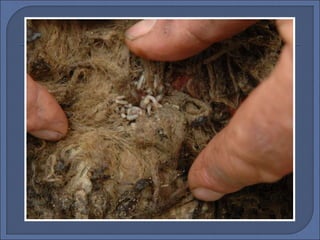
Maggots / Fly Strike
 Maggots are the larvae (young) of the blowfly or
the Green Bottle Fly.
 The fly is attracted to odours in the fleece, and they
lay their eggs on dung–soiled wool.
 Fly strike can be prevented by
◦ Dipping in the Summer
◦ Trimming excess wool around the tail
◦ Tail docking
◦ Grazing management (to prevent scour)
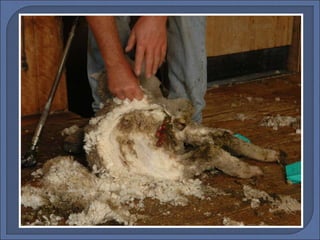
 An affected sheep is usually quite restless and
scratches the affected area frequently.
 The area may appear green and wet.
 Maggots should not be ignored and can often
be fatal!
Worms
 Nearly all sheep carry intestinal parasites /
worms.
 The older / more mature the animal the less
worms.
 This is because older animals develop a certain
immunity to worms.
 Worms can only be controlled effectively with
both drugs and good pasture management.
 All sheep should be dosed regularly and
pastures managed as to prevent the spread of
worms.
Liver Fluke
 This is a “flat worm” which can cause death to
sheep or simply reduce thriftiness and lower
the quality of the carcase.
 Both worms and liver fluke cannot reproduce
inside the sheep (host) so the number of larvae
eaten determine the extent of the disease.
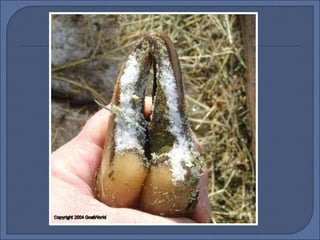
Footrot
 Footrot is a very serious problem on Irish
Farms.
 Footrot is caused by a bacteria, in fact many
different types of bacteria.
 Footrot causes lameness, serious pain, reduced
food intake, in-activity and can lower fertility in
rams.
 You can spot an affected sheep by seeing them
kneeling down while grazing.
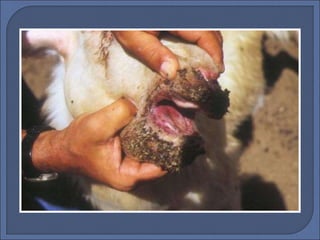
Bluetongue:
 Bluetongue is an insect–transmitted, viral disease of sheep, cattle,
goats, and other ruminants.
 It is particularly damaging in sheep; half the sheep in an infected
flock may die.
 A bluetongue virus infection causes inflammation, swelling, and
haemorrhage of the mucous membranes of the mouth, nose, and
tongue.
 Inflammation and soreness of the feet also are associated with
bluetongue.
 In sheep, the tongue and mucous membranes of the mouth become
swollen, hemorrhagic, and may look red or dirty blue in colour,
giving the disease its name.
 Bluetongue viruses are spread from animal to animal by biting
gnats.
 Animals cannot directly contact the disease from other animals.
Sheep   diseases

Sheep diseases

  • 1.
    Sheep – 3- Diseases
  • 2.
     As species,sheep are much better adapted to life on hills (their natural habitat).  Therefore, keeping them on lowland farms causes health conditions that would not otherwise arise.  Specifically, lowland sheep suffer more from maggots, internal parasites and footrot.  The main reasons these conditions arise on lowland flocks are climate and stocking rate.
  • 3.
     Maggots areprevented on hills because the harsh conditions simply do not allow them to thrive.  Footrot is controlled on farms because sheep’s hooves are naturally stronger due to more use and wear. Maggots / Fly Strike  Maggots are the larvae (young) of the blowfly or the Green Bottle Fly.  The fly is attracted to odours in the fleece, and they lay their eggs on dung–soiled wool.
  • 5.
     Fly strikecan be prevented by ◦ Dipping in the Summer ◦ Trimming excess wool around the tail ◦ Tail docking ◦ Grazing management (to prevent scour)  An affected sheep is usually quite restless and scratches the affected area frequently.  The area may appear green and wet.  Maggots should not be ignored and can often be fatal!
  • 7.
    Worms  Nearly allsheep carry intestinal parasites / worms.  The older / more mature the animal the less worms.  This is because older animals develop a certain immunity to worms.  Worms can only be controlled effectively with both drugs and good pasture management.  All sheep should be dosed regularly and pastures managed as to prevent the spread of worms.
  • 9.
    Liver Fluke  Thisis a “flat worm” which can cause death to sheep or simply reduce thriftiness and lower the quality of the carcase.  Both worms and liver fluke cannot reproduce inside the sheep (host) so the number of larvae eaten determine the extent of the disease. Footrot  Footrot is a very serious problem on Irish Farms.  Footrot is caused by a bacteria, in fact many different types of bacteria.
  • 11.
     Footrot causeslameness, serious pain, reduced food intake, in-activity and can lower fertility in rams.  You can spot an affected sheep by seeing them kneeling down while grazing.
  • 12.
    Bluetongue:  Bluetongue isan insect–transmitted, viral disease of sheep, cattle, goats, and other ruminants.  It is particularly damaging in sheep; half the sheep in an infected flock may die.  A bluetongue virus infection causes inflammation, swelling, and haemorrhage of the mucous membranes of the mouth, nose, and tongue.  Inflammation and soreness of the feet also are associated with bluetongue.  In sheep, the tongue and mucous membranes of the mouth become swollen, hemorrhagic, and may look red or dirty blue in colour, giving the disease its name.  Bluetongue viruses are spread from animal to animal by biting gnats.  Animals cannot directly contact the disease from other animals.