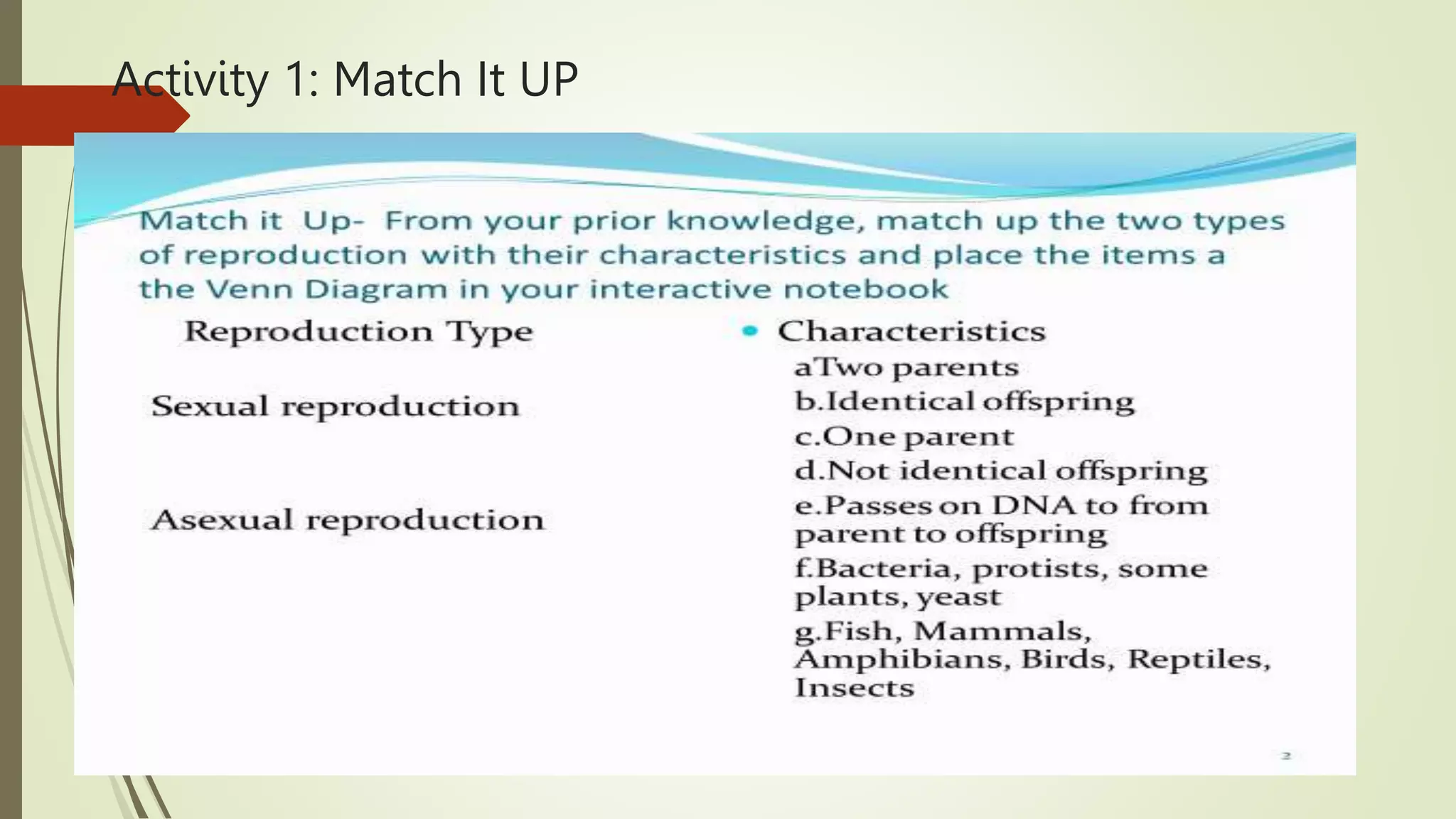
Activity 1: Match It UP
SEXUAL REPRODUCTION
Sexual Reproduction
is when two organisms reproduce
using their gametes the sperm and
egg cell both have a haploid number
of chromosomes.
Sexual Reproduction in animals
-should have Male and Female
-involves sex organs (Gonads) to produce
gametes
Ovaries-Ova or eggs (Haploid)
Testes-Sperm (Haploid
How are gametes made?
- Gametes are made through the
process Gametogenesis.
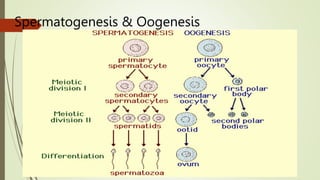
Oogenesis- process for producing
egg cell.
Spermatogenesis-process for
producing sperm cell.
Spermatogenesis & Oogenesis
Hermaphrodites
Ovaries and testes in same animal
In slow or sessile organisms (worm ,hydra
snail)
Self fertilization rare.
Fertilization-the union of egg cell and
sperm cell.
How does fertilization happen?
Sperm swim to egg
Sperm releases enzymes to make hole in egg
Sperm injects nucleus into egg
Fertilization membrane form around egg
No future fertilization
Joining of sperm nucleus and egg nucleus
Form diploid zygote
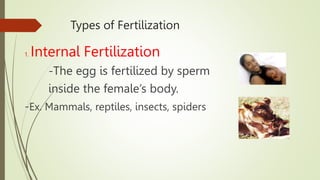
Types of Fertilization
1. Internal Fertilization
-The egg is fertilized by sperm
inside the female’s body.
-Ex. Mammals, reptiles, insects, spiders
2. External Fertilization
The egg is fertilized by sperm outside the
female’s body.
The female lays the eggs and then the male
fertilizes them.
Ex. Fish and some amphibians
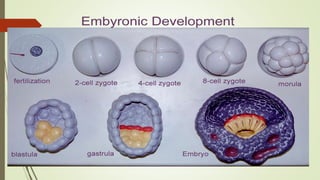
What happens after fertilization?
-The zygote develop.
Could developed inside the female’s body or develop outside.
1. Oviparous animals- animals that lay their eggs, with little or no
other embryonic development within the parent.
Ex. Chicken, birds, lizards, crocodiles
2. Viviparous animals – animals that bring forth live young that have
developed inside the body of the parent.
Ex. Human, monkeys, dogs, cats, dolphins
Embryology=Study of embryo development
SEXUAL REPRODUCTION.pptx

SEXUAL REPRODUCTION.pptx

  • 1.
  • 2.
  • 3.
    Sexual Reproduction is whentwo organisms reproduce using their gametes the sperm and egg cell both have a haploid number of chromosomes.
  • 4.
    Sexual Reproduction inanimals -should have Male and Female -involves sex organs (Gonads) to produce gametes Ovaries-Ova or eggs (Haploid) Testes-Sperm (Haploid
  • 5.
    How are gametesmade? - Gametes are made through the process Gametogenesis. Oogenesis- process for producing egg cell. Spermatogenesis-process for producing sperm cell.
  • 6.
  • 8.
    Hermaphrodites Ovaries and testesin same animal In slow or sessile organisms (worm ,hydra snail) Self fertilization rare.
  • 9.
    Fertilization-the union ofegg cell and sperm cell. How does fertilization happen? Sperm swim to egg Sperm releases enzymes to make hole in egg Sperm injects nucleus into egg Fertilization membrane form around egg No future fertilization Joining of sperm nucleus and egg nucleus Form diploid zygote
  • 10.
    Types of Fertilization 1.Internal Fertilization -The egg is fertilized by sperm inside the female’s body. -Ex. Mammals, reptiles, insects, spiders
  • 11.
    2. External Fertilization Theegg is fertilized by sperm outside the female’s body. The female lays the eggs and then the male fertilizes them. Ex. Fish and some amphibians
  • 12.
    What happens afterfertilization? -The zygote develop. Could developed inside the female’s body or develop outside. 1. Oviparous animals- animals that lay their eggs, with little or no other embryonic development within the parent. Ex. Chicken, birds, lizards, crocodiles 2. Viviparous animals – animals that bring forth live young that have developed inside the body of the parent. Ex. Human, monkeys, dogs, cats, dolphins Embryology=Study of embryo development