


OUTLINES 
1. Definition of Sexual 
Harassment 
2. Types of Sexual 
Harassment 
3. Identifying Sexual 
Harassment 
4. Steps To Filing 
A Complaint 
5. Conclusion
1. DEFINITION OF SEXUAL 
HARASSMENT
SEXUAL HARASSMENT IS.. 
• Unwelcome verbal, 
visual, or physical 
conduct of a sexual 
nature that is severe 
or pervasive & affects 
working conditions or 
creates a hostile work 
environment.
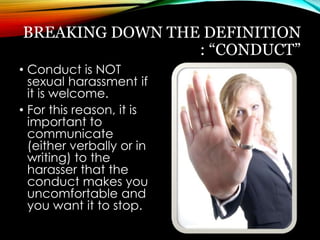
BREAKING DOWN THE DEFINITION 
: “CONDUCT” 
• Conduct is NOT 
sexual harassment if 
it is welcome. 
• For this reason, it is 
important to 
communicate 
(either verbally or in 
writing) to the 
harasser that the 
conduct makes you 
uncomfortable and 
you want it to stop.
2. TYPES OF SEXUAL 
HARASSMENT
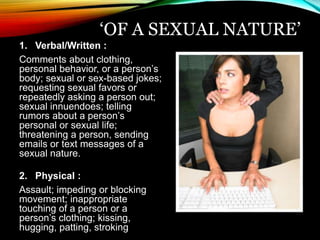
‘OF A SEXUAL NATURE’ 
1. Verbal/Written : 
Comments about clothing, 
personal behavior, or a person’s 
body; sexual or sex-based jokes; 
requesting sexual favors or 
repeatedly asking a person out; 
sexual innuendoes; telling 
rumors about a person’s 
personal or sexual life; 
threatening a person, sending 
emails or text messages of a 
sexual nature. 
2. Physical : 
Assault; impeding or blocking 
movement; inappropriate 
touching of a person or a 
person’s clothing; kissing, 
hugging, patting, stroking
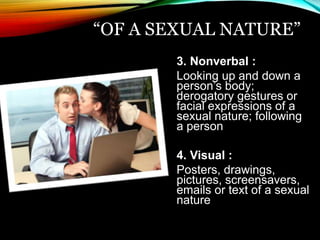
“OF A SEXUAL NATURE” 
3. Nonverbal : 
Looking up and down a 
person’s body; 
derogatory gestures or 
facial expressions of a 
sexual nature; following 
a person 
4. Visual : 
Posters, drawings, 
pictures, screensavers, 
emails or text of a sexual 
nature
‘OF A NON-SEXUAL NATURE’ 
• ** Non-sexual conduct may also be sexual 
harassment if you are harassed because you 
are female, rather than male, or because you 
are male, rather than female. 
• For example, it may be sexual harassment if 
you are a woman working as a carpenter on an 
all-male job, and you are the only one whose 
tools are frequently hidden by your male co-workers.
‘SEVERE OR PERVASIVE’ 
• The conduct of the harasser must be either 
severe or pervasive to be classified as sexual 
harassment. 
• Although a single unwanted request for a date 
or one sexually suggestive comment might 
offend you and/or be inappropriate, it may not 
be sexual harassment. 
• However, a number of relatively minor separate 
incidents may add up to sexual harassment if 
the incidents affect your work environment.
3. IDENTIFYING SEXUAL 
HARASSMENT
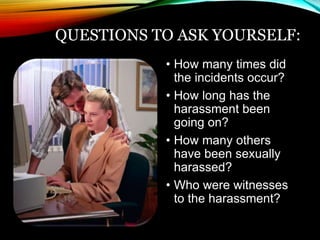
QUESTIONS TO ASK YOURSELF: 
• How many times did 
the incidents occur? 
• How long has the 
harassment been 
going on? 
• How many others 
have been sexually 
harassed? 
• Who were witnesses 
to the harassment?
“AFFECTS WORKING CONDITIONS OR 
CREATES 
A HOSTILE WORK ENVIRONMENT” 
• It may be sexual harassment if the conduct 
unreasonably interferes with your work 
performance or creates an “intimidating, hostile, 
or offensive work environment.” 
• For example, it may be sexual harassment if 
repeated sexual comments make you so 
uncomfortable at work that your performance 
suffers or you decline professional opportunities 
because it will put you in contact with the 
harasser.
• Quid Pro Quo 
(“This for that”) 
A person in a position 
of authority, typically a 
supervisor, demands 
sexual favors as a 
condition to getting or 
keeping a job benefit.
HOSTILE WORK ENVIRONMENT 
• Verbal, physical or visual forms of harassment, 
that are sexual in nature, "sufficiently severe, 
persistent, or pervasive" and unwelcome fall 
under the category of Hostile Environment 
Sexual Harassment. 
• A single, severe incident, such as a sexual 
assault, could create a hostile environment. 
More commonly, a "hostile environment" is 
created by a series of incidents.
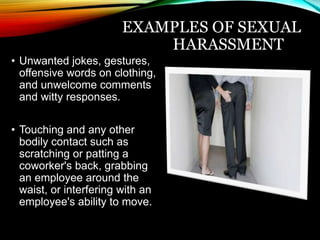
EXAMPLES OF SEXUAL 
HARASSMENT 
• Unwanted jokes, gestures, 
offensive words on clothing, 
and unwelcome comments 
and witty responses. 
• Touching and any other 
bodily contact such as 
scratching or patting a 
coworker's back, grabbing 
an employee around the 
waist, or interfering with an 
employee's ability to move.
EXAMPLES OF SEXUAL 
HARASSMENT 
• Repeated requests for dates that are turned 
down or unwanted flirting. 
• Transmitting or posting emails, texts, or 
pictures of a sexual or other harassment-related 
nature. 
• Displaying sexually suggestive objects, 
pictures, or posters. 
• Playing sexually suggestive music.
4. STEPS TO FILING 
A COMPLAINT
FILING A COMPLAINT 
1. Let the harasser know that his/her conduct is 
unwanted and unwelcome. 
2. Go to a supervisor and explain the 
circumstances. 
3. Be sure to take with you documented dates, 
times, and specific occurrences if you have 
them. 
4. Also, report the incident to Human Resources. 
5. If the appropriate supervisor is unavailable, or is 
the offender, report the incident directly to 
Human Resouces.
5. CONCLUSION
FINAL WORDS… 
• As for conclusion, prevention remains an effective 
way to deal with sexual harassment, such as 
changing the sexist attitudes and belief system of 
society in general 
• This could be achieved through education to 
enhance public awareness of sexual harassment 
among the youths in schools and higher education 
institutes, as well as the working adults in both 
public and private organizations. 
• The government, as the largest employer in the 
country with nearly one million workers, could take 
a major lead by enforcing clear policies and 
procedures on sexual harassment.
THANK YOU!
Q & A 
SESSION

Sexual Harassment Prevention

  • 2.
    OUTLINES 1. Definitionof Sexual Harassment 2. Types of Sexual Harassment 3. Identifying Sexual Harassment 4. Steps To Filing A Complaint 5. Conclusion
  • 3.
    1. DEFINITION OFSEXUAL HARASSMENT
  • 4.
    SEXUAL HARASSMENT IS.. • Unwelcome verbal, visual, or physical conduct of a sexual nature that is severe or pervasive & affects working conditions or creates a hostile work environment.
  • 5.
    BREAKING DOWN THEDEFINITION : “CONDUCT” • Conduct is NOT sexual harassment if it is welcome. • For this reason, it is important to communicate (either verbally or in writing) to the harasser that the conduct makes you uncomfortable and you want it to stop.
  • 6.
    2. TYPES OFSEXUAL HARASSMENT
  • 7.
    ‘OF A SEXUALNATURE’ 1. Verbal/Written : Comments about clothing, personal behavior, or a person’s body; sexual or sex-based jokes; requesting sexual favors or repeatedly asking a person out; sexual innuendoes; telling rumors about a person’s personal or sexual life; threatening a person, sending emails or text messages of a sexual nature. 2. Physical : Assault; impeding or blocking movement; inappropriate touching of a person or a person’s clothing; kissing, hugging, patting, stroking
  • 8.
    “OF A SEXUALNATURE” 3. Nonverbal : Looking up and down a person’s body; derogatory gestures or facial expressions of a sexual nature; following a person 4. Visual : Posters, drawings, pictures, screensavers, emails or text of a sexual nature
  • 9.
    ‘OF A NON-SEXUALNATURE’ • ** Non-sexual conduct may also be sexual harassment if you are harassed because you are female, rather than male, or because you are male, rather than female. • For example, it may be sexual harassment if you are a woman working as a carpenter on an all-male job, and you are the only one whose tools are frequently hidden by your male co-workers.
  • 10.
    ‘SEVERE OR PERVASIVE’ • The conduct of the harasser must be either severe or pervasive to be classified as sexual harassment. • Although a single unwanted request for a date or one sexually suggestive comment might offend you and/or be inappropriate, it may not be sexual harassment. • However, a number of relatively minor separate incidents may add up to sexual harassment if the incidents affect your work environment.
  • 11.
  • 12.
    QUESTIONS TO ASKYOURSELF: • How many times did the incidents occur? • How long has the harassment been going on? • How many others have been sexually harassed? • Who were witnesses to the harassment?
  • 13.
    “AFFECTS WORKING CONDITIONSOR CREATES A HOSTILE WORK ENVIRONMENT” • It may be sexual harassment if the conduct unreasonably interferes with your work performance or creates an “intimidating, hostile, or offensive work environment.” • For example, it may be sexual harassment if repeated sexual comments make you so uncomfortable at work that your performance suffers or you decline professional opportunities because it will put you in contact with the harasser.
  • 14.
    • Quid ProQuo (“This for that”) A person in a position of authority, typically a supervisor, demands sexual favors as a condition to getting or keeping a job benefit.
  • 15.
    HOSTILE WORK ENVIRONMENT • Verbal, physical or visual forms of harassment, that are sexual in nature, "sufficiently severe, persistent, or pervasive" and unwelcome fall under the category of Hostile Environment Sexual Harassment. • A single, severe incident, such as a sexual assault, could create a hostile environment. More commonly, a "hostile environment" is created by a series of incidents.
  • 16.
    EXAMPLES OF SEXUAL HARASSMENT • Unwanted jokes, gestures, offensive words on clothing, and unwelcome comments and witty responses. • Touching and any other bodily contact such as scratching or patting a coworker's back, grabbing an employee around the waist, or interfering with an employee's ability to move.
  • 17.
    EXAMPLES OF SEXUAL HARASSMENT • Repeated requests for dates that are turned down or unwanted flirting. • Transmitting or posting emails, texts, or pictures of a sexual or other harassment-related nature. • Displaying sexually suggestive objects, pictures, or posters. • Playing sexually suggestive music.
  • 18.
    4. STEPS TOFILING A COMPLAINT
  • 19.
    FILING A COMPLAINT 1. Let the harasser know that his/her conduct is unwanted and unwelcome. 2. Go to a supervisor and explain the circumstances. 3. Be sure to take with you documented dates, times, and specific occurrences if you have them. 4. Also, report the incident to Human Resources. 5. If the appropriate supervisor is unavailable, or is the offender, report the incident directly to Human Resouces.
  • 20.
  • 21.
    FINAL WORDS… •As for conclusion, prevention remains an effective way to deal with sexual harassment, such as changing the sexist attitudes and belief system of society in general • This could be achieved through education to enhance public awareness of sexual harassment among the youths in schools and higher education institutes, as well as the working adults in both public and private organizations. • The government, as the largest employer in the country with nearly one million workers, could take a major lead by enforcing clear policies and procedures on sexual harassment.
  • 22.
  • 23.
    Q & A SESSION