Ortho II
Presenter Dr Chimpinde
Moderator Dr yubai
Topic Septic Arthritis
Date 03/08/23
Contents
• Introduction
• Pathogenesis
• Diagnosis
• Investigations
• Treatment
INTRODUCTION:
What is septic arthritis?
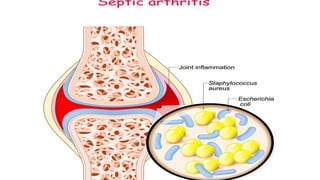
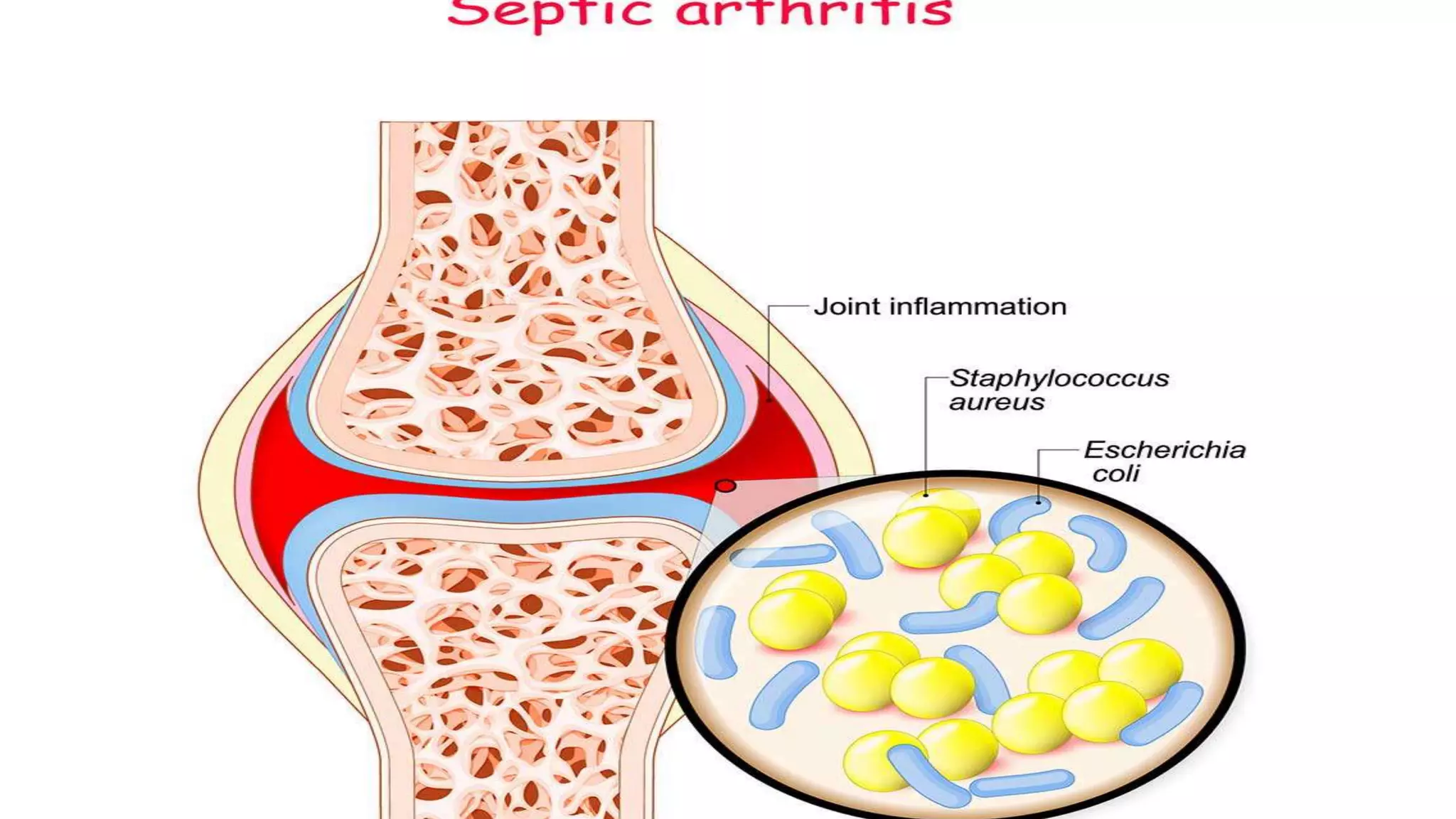
-septic arthritis is an inflammatory joint disorder where bacteria or
other microorganisms enter the joint cavity and cause infection.
-septic arthritis is also called infectious arthritis.
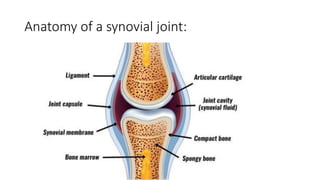
Anatomy of a synovial joint:
-Typically septic arthritis can present as an acute painful arthritis but
may present as subacute or chronic arthritis.
- May be caused by bacterial, viral or fungal.
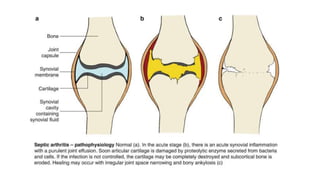
Pathogenesis:
It is more common in children, and Males are more susceptible.
• Staphylococcus aureus is the commonest causative organism;
Other organisms include:Streptococcus, E. Coli, proteus etc.
These organisms reach the joint by one of the following routes:
1. HEMATOGENOUS spread
2. SECONDARY TO NEARBY OSTEOMYELITIS
3. PENETRATING WOUNDS
4. IATROGENIC
5. UMBILICAL CORD SEPSIS
Diagnosis:
Diagnosis is mainly clinical. The patient is usually a child. The knee is the
commonest joint affected. Other joints mainly affected are the hip, shoulder,
elbow etc.
CLINICAL FEATURES;
Presenting complaint:
• In its typical acute form;
-the child with septic arthritis presents with a severe pain, swelling and
redness of the affected joint.
-this is associated with high grade fever and malaise.
-child not able to use the affected limb.
• Subacute or chronic form:
-the parents may notice that the child isn’t allowing anybody to touch
the affected joint.
-child may not be moving it properly.
-if it’s the lower limb joint, a painful limp maybe the first thing to draw
attention.
-this maybe associated with low grade fever.
• In adults:
- Joints are painful, swollen and inflamed.
- Warmth and marked local tenderness & movements restricted.
- Look for gonococcal infections and IV drug abuse
Patients with Rheumatoid arthritis and especially those with on
corticosteroids may develop “silent” infection.
On examination:
• Affected joint is swollen and held in a position of ease.
• Palpitation reveals increased temperature, tenderness.
• Severe limitations in the joint movements in all directions.
• Any attempt at either passive or active movements causes severe
pain and Muscle spasms.
Investigations:
1. Imagining
2. Blood investigation
3. Joint aspiration
Radiological examination:
Diagnosis in early stages is crucial.
• X-rays
• Ultrasound
Blood
• Shows neutrophilic leucocytosis.
• ESR & CRP is markedly elevated.
• Blood culture may grow a causative organism ( may be positive)
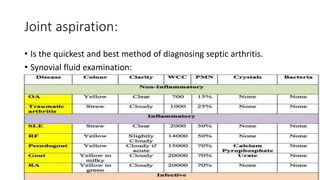
Joint aspiration:
• Is the quickest and best method of diagnosing septic arthritis.
• Synovial fluid examination:
Treatment:
• General supportive care:
-Analgesia
• Antibiotics
-whenever suspected diagnosis of septic arthritis must be confirmed or ruled
out by joint aspiration.
- Broad spectrum antibiotics should be started by parenteral route.
- A combination of ceftriaxone and cloxacillin in appropriate doses is given.
- But changed to specific antibiotics as per aspirate culture and sensitivity
reports.
- Joint must be put to rest in a splint or in a traction.
• SURGICAL MX
-when pus is aspirated the joint should be opened up (arthrotomy),
wash and closed with a suction drain.
septic arthritis-1.pptx

septic arthritis-1.pptx

  • 2.
    Ortho II Presenter DrChimpinde Moderator Dr yubai Topic Septic Arthritis Date 03/08/23
  • 3.
    Contents • Introduction • Pathogenesis •Diagnosis • Investigations • Treatment
  • 4.
    INTRODUCTION: What is septicarthritis? -septic arthritis is an inflammatory joint disorder where bacteria or other microorganisms enter the joint cavity and cause infection. -septic arthritis is also called infectious arthritis.
  • 5.
    Anatomy of asynovial joint:
  • 6.
    -Typically septic arthritiscan present as an acute painful arthritis but may present as subacute or chronic arthritis. - May be caused by bacterial, viral or fungal.
  • 7.
    Pathogenesis: It is morecommon in children, and Males are more susceptible. • Staphylococcus aureus is the commonest causative organism; Other organisms include:Streptococcus, E. Coli, proteus etc. These organisms reach the joint by one of the following routes: 1. HEMATOGENOUS spread 2. SECONDARY TO NEARBY OSTEOMYELITIS 3. PENETRATING WOUNDS 4. IATROGENIC 5. UMBILICAL CORD SEPSIS
  • 9.
    Diagnosis: Diagnosis is mainlyclinical. The patient is usually a child. The knee is the commonest joint affected. Other joints mainly affected are the hip, shoulder, elbow etc. CLINICAL FEATURES; Presenting complaint: • In its typical acute form; -the child with septic arthritis presents with a severe pain, swelling and redness of the affected joint. -this is associated with high grade fever and malaise. -child not able to use the affected limb.
  • 10.
    • Subacute orchronic form: -the parents may notice that the child isn’t allowing anybody to touch the affected joint. -child may not be moving it properly. -if it’s the lower limb joint, a painful limp maybe the first thing to draw attention. -this maybe associated with low grade fever.
  • 11.
    • In adults: -Joints are painful, swollen and inflamed. - Warmth and marked local tenderness & movements restricted. - Look for gonococcal infections and IV drug abuse Patients with Rheumatoid arthritis and especially those with on corticosteroids may develop “silent” infection.
  • 12.
    On examination: • Affectedjoint is swollen and held in a position of ease. • Palpitation reveals increased temperature, tenderness. • Severe limitations in the joint movements in all directions. • Any attempt at either passive or active movements causes severe pain and Muscle spasms.
  • 13.
    Investigations: 1. Imagining 2. Bloodinvestigation 3. Joint aspiration
  • 14.
    Radiological examination: Diagnosis inearly stages is crucial. • X-rays • Ultrasound
  • 15.
    Blood • Shows neutrophilicleucocytosis. • ESR & CRP is markedly elevated. • Blood culture may grow a causative organism ( may be positive)
  • 16.
    Joint aspiration: • Isthe quickest and best method of diagnosing septic arthritis. • Synovial fluid examination:
  • 17.
    Treatment: • General supportivecare: -Analgesia • Antibiotics -whenever suspected diagnosis of septic arthritis must be confirmed or ruled out by joint aspiration. - Broad spectrum antibiotics should be started by parenteral route. - A combination of ceftriaxone and cloxacillin in appropriate doses is given. - But changed to specific antibiotics as per aspirate culture and sensitivity reports. - Joint must be put to rest in a splint or in a traction.
  • 18.
    • SURGICAL MX -whenpus is aspirated the joint should be opened up (arthrotomy), wash and closed with a suction drain.