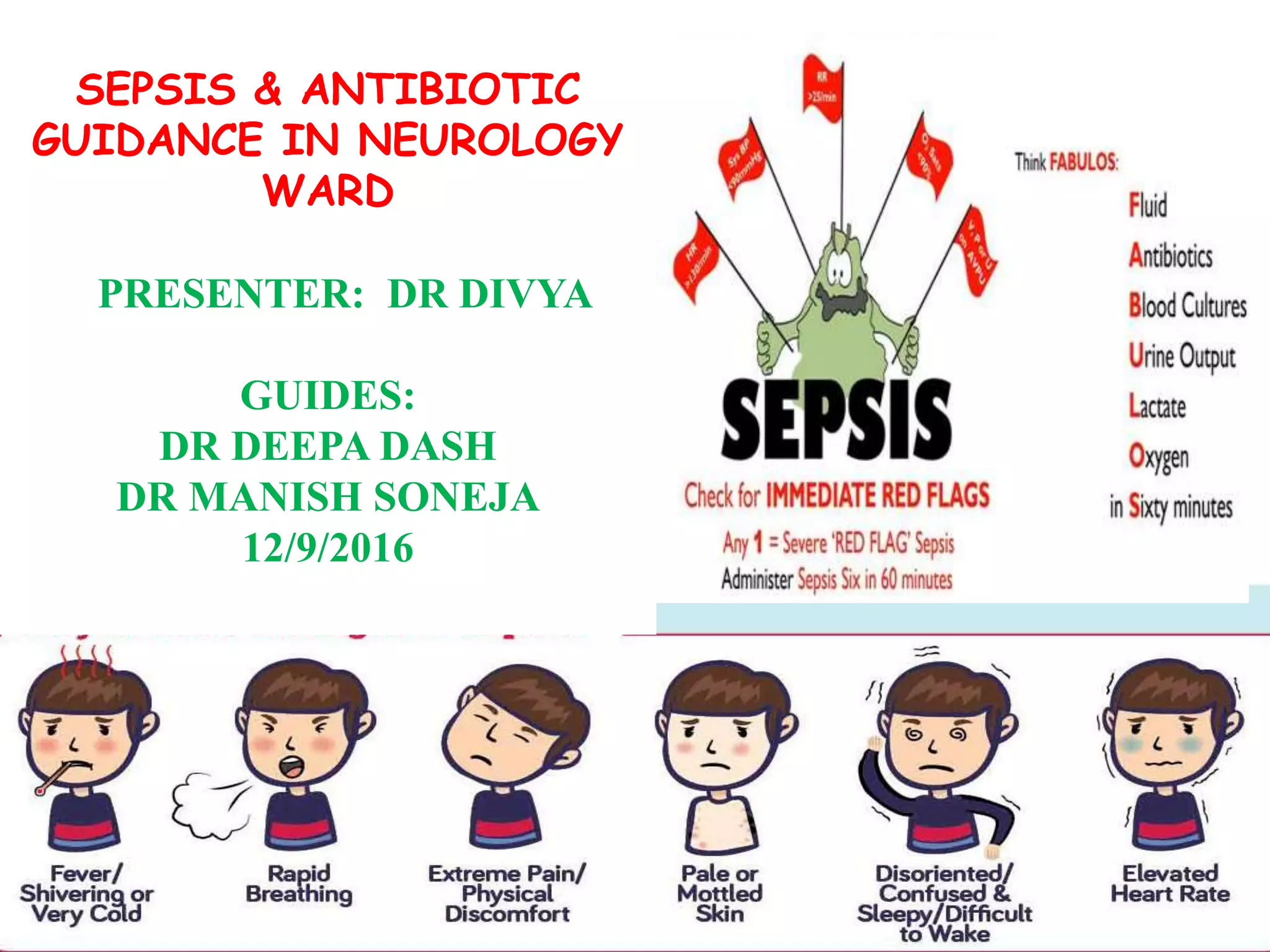
SEPSIS & ANTIBIOTIC
GUIDANCE IN NEUROLOGY
WARD
PRESENTER: DR DIVYA
GUIDES:
DR DEEPA DASH
DR MANISH SONEJA
12/9/2016
Search Strategy
Key Words:
Sepsis, septic shock, antibiotic resistance, neurology ward/ICU,
Neuro surgery, craniotomy, meningitis, VAI, HAI, HAP, VAP, post
stroke infections, guidelines etc
Search engine: Pubmed, Google scholar, Embase , Cochrane data
base etc
Guideline & Recommendation: IDSA, SHEA, CDC etc
>50 articles
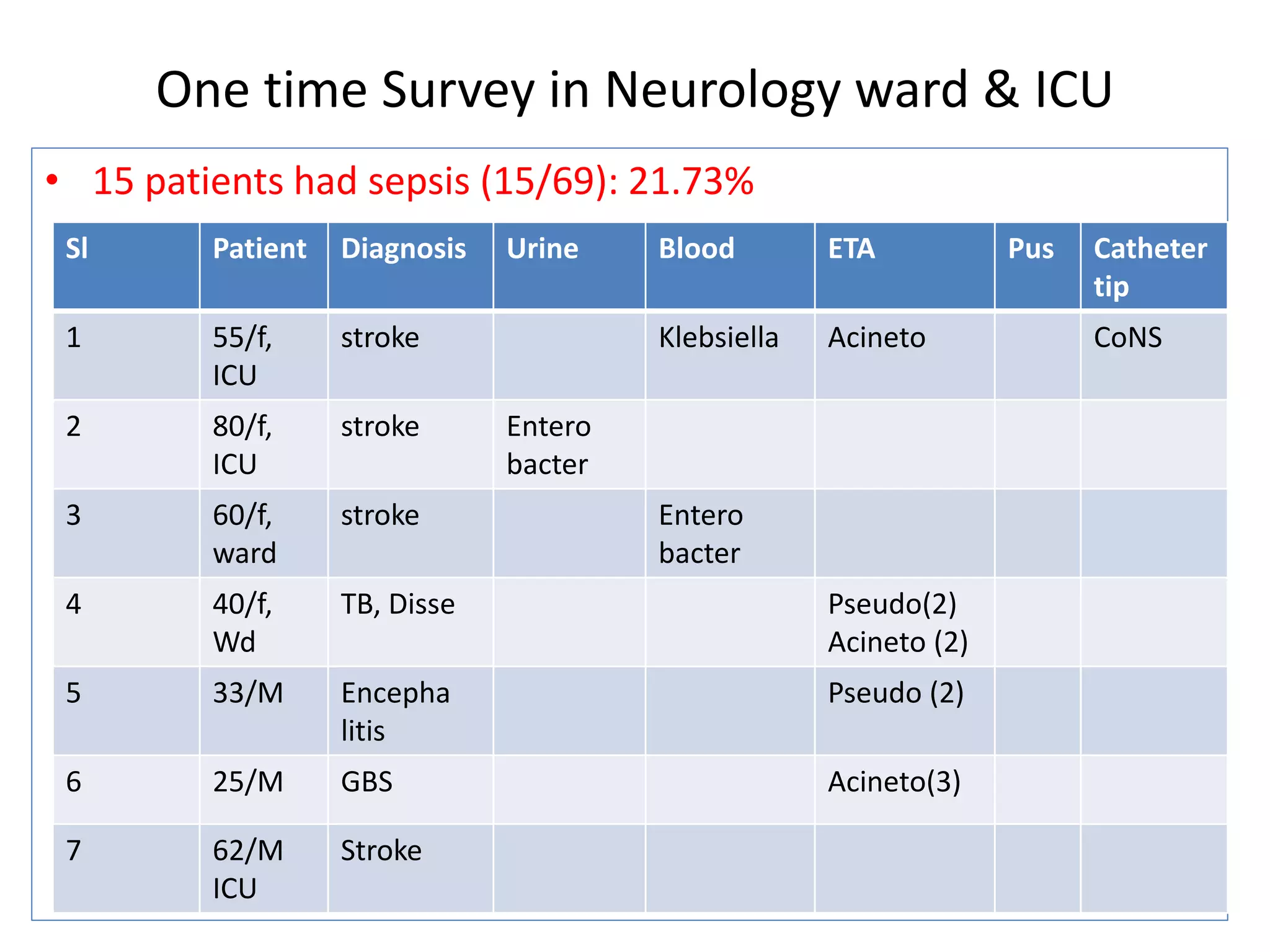
One time Survey in Neurology ward & ICU
• 15 patients had sepsis (15/69): 21.73%
Sl Patient Diagnosis Urine Blood ETA Pus Catheter
tip
1 55/f,
ICU
stroke Klebsiella Acineto CoNS
2 80/f,
ICU
stroke Entero
bacter
3 60/f,
ward
stroke Entero
bacter
4 40/f,
Wd
TB, Disse Pseudo(2)
Acineto (2)
5 33/M Encepha
litis
Pseudo (2)
6 25/M GBS Acineto(3)
7 62/M
ICU
Stroke
Sl Patient Diagnosis Urine Blood ETA Pus others
8 20/f /Wd TBM Entero
coccus(2)
Klebsiella
(2)
9 70/f,/Wd Diss TB E coli
10 32/M/ Wd Status
Epilepticus
Pseudo
Ecoli
Entero
coccus
Acineto (3)
Pseudo (1)
11 57/f, Wd stroke Acineto (1)
12 16/M GBS Pseudo (1)
13 49/M CLD, stroke Acineto(3)
14 17/M Meningo
encephalitis
Entero
bacter
15 25/M Vasculitis Pseudo
Outline
1. Introduction to sepsis: Definition, Sepsis bundle
2. EVD and Ventriculostomy associated infections, (VAI) &
management
4. Post stroke infection & management
5. HAP & VAP
6.IDSA & SHEA, National guidelines
7.AIIMS, HAI surveillance
•Sepsis: Life-threatening organ dysfunction by a dys
regulated host response to infection
•Organ dysfunction : Acute change in total SOFA score 2
points consequent to the infection
• The baseline SOFA assumed to be zero if no preexisting
organ dysfunction
Septic shock: Sepsis with persisting hypotension requiring vaso
pressors to maintain MAP65 mmHg and a serum lactate level
>2 mmol/L (18 mg/dL) despite adequate volume resuscitation
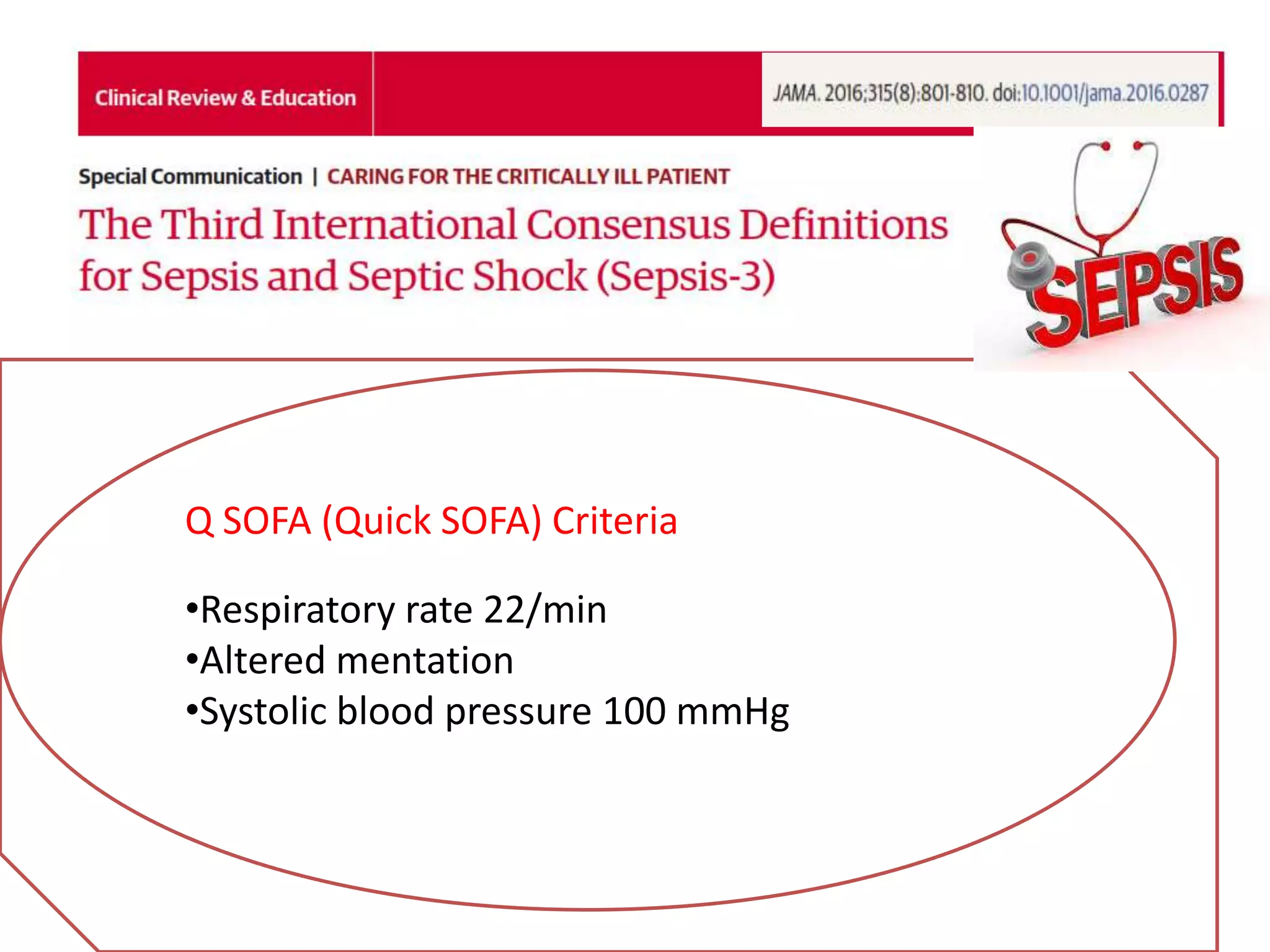
Q SOFA (Quick SOFA) Criteria
•Respiratory rate 22/min
•Altered mentation
•Systolic blood pressure 100 mmHg
• To establish the incidence of HIs in a nICU, and to determine
the most prevalent causative agents and risk factors for HIs
• Cross-sectional study with nested case-control design
• Between 1 July 2009 and 30 June 2010 at an 18-bed ICU,
Serbia
• P : All adult patients hospitalized for > 24 hrs
J Infect Dev Ctries 2012; 6(11):798-805.
Main characteristics of patients in neurological
intensive care unit
J Infect Dev Ctries 2012; 6(11):798-805.
Limitation: Excluded post surgery patients
Conclusion:
Risk factors for development of HIs in patients staying in the nICU
•Co-morbidities,
•Surgical interventions,
•Urinary catheterization longer than 7 days,
•GCS score = 9,
•Prolonged hospitalization
SEPSIS FOLLOWING NEURO SURGICAL
INTERVENTION
Retrospective study
AIIM: to determine typical clinical & laboratory findings & potential
early predictors of EVD-associated infection
Inclusion: Hospitalized patients aged 18 years with EVD associated
infection
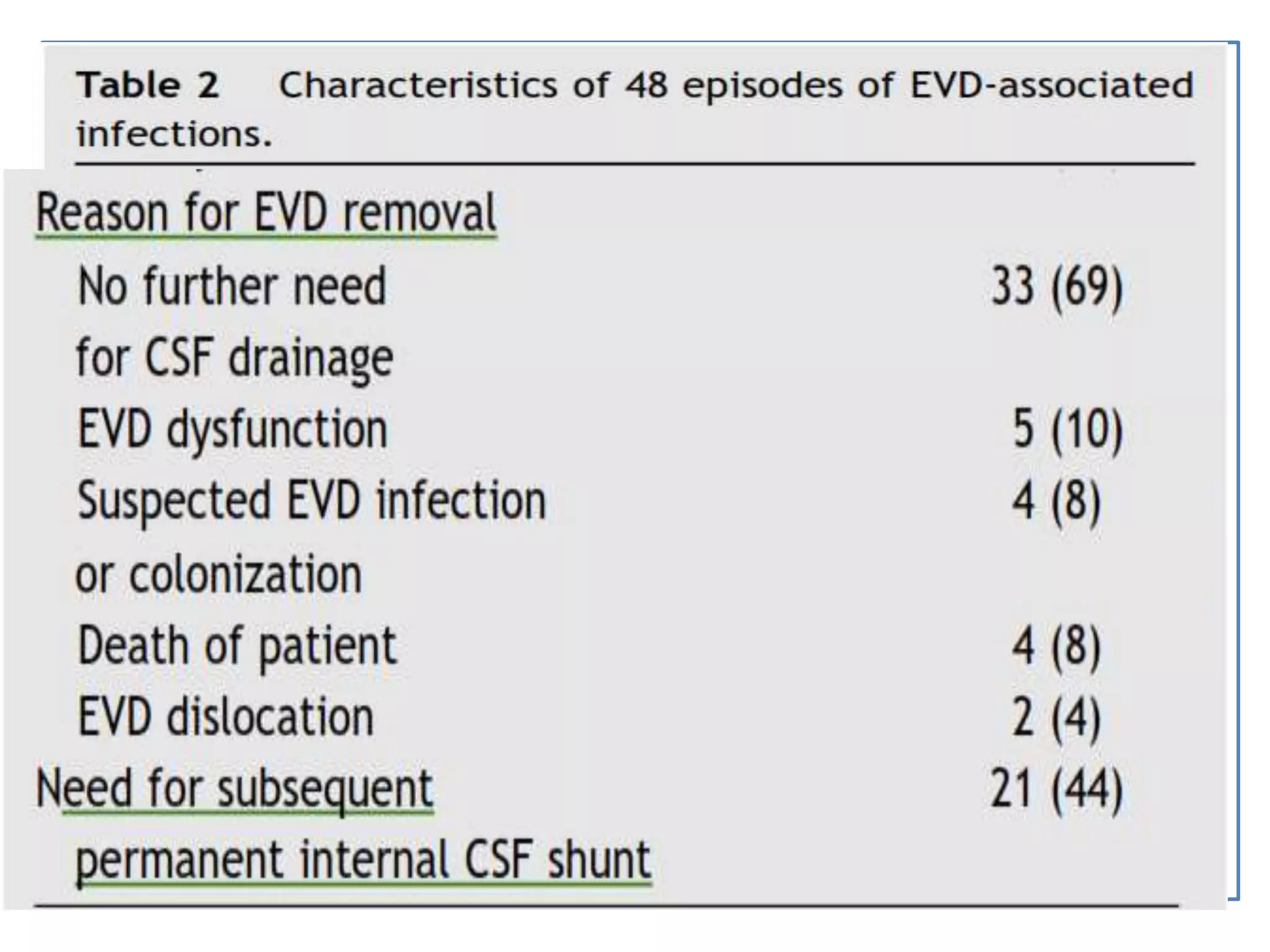
1997 to 2008, 48 infections
Limitation:
No Control group
Specificity, Sensitivity, PPV, NPV not calculated
Conclusions: Fever and increased CSF leukocytes should
raise the suspicion of EVD-associated infection, which may
occur up to 10 days after removal of EVD
• Primary Objective: To determine the pooled incidence rate of
VAI
• Secondary: To explore factors (such as duration of
ventriculostomy treatment, age group, CSF infection
definition, CSF culture frequency) associated with the
incidence rate of VAI
• To describe the microbiological findings associated with VAI
• Patients with ventriculostomies , regardless of diagnosis
•35 Observational studies
•752 VAI’s from 66,707 catheter-days
•6681 patients from 33 studies
• Heterogeneity : Moderate to Significant
•Pooled VAI rate : 11.4/1000 catheter-days (95% CI 9.3 to 13.5)
•523 positive cultures from 25 studies, 64% Gram Positive
•In studies without AIC, GNB 41% (175/425) of positive cultures
• With AIC, GNB 10% (9/83)
Ramanan et al. BMC Infectious Diseases (2015) 15:3
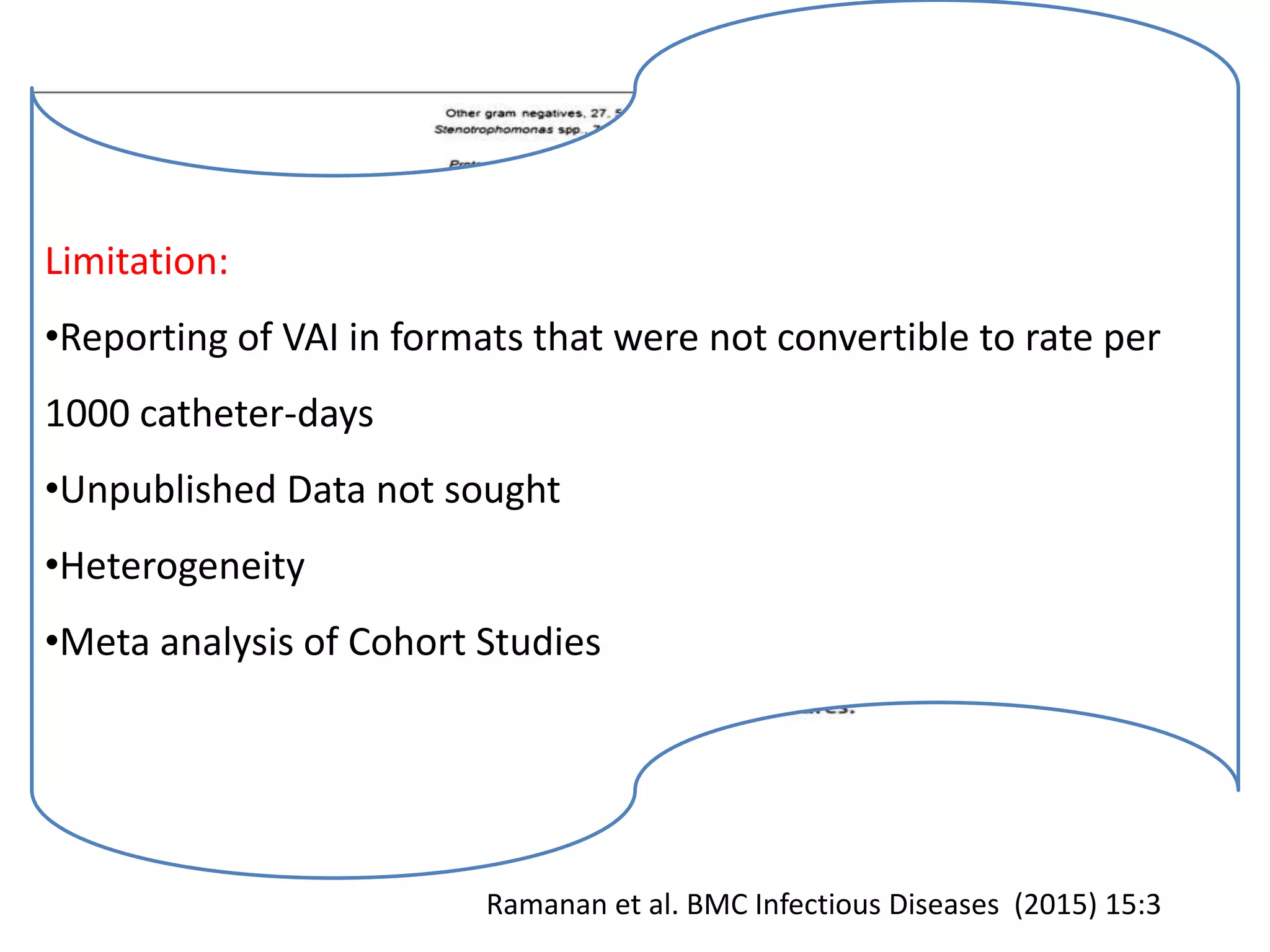
Limitation:
•Reporting of VAI in formats that were not convertible to rate per
1000 catheter-days
•Unpublished Data not sought
•Heterogeneity
•Meta analysis of Cohort Studies
Post Operative Sepsis: Risk Factors
• Implantation of foreign body (50%)
• CSF leakage
• Previous neurosurgical infection
• Absence of antibiotic prophylaxis
• Duration of surgery over 4 h
• Interventions involving nasal sinuses
• Emergency surgeries
• Prior radiation therapy
McClelland CID 2007; 45, 55-59
Intracranial infection following craniotomy
•Diagnosed post op meningitis treated with IV antibiotics
•Cases that involve a bone flap infection, subdural empyema or
cerebral abscess:::::: require a repeated surgery
Goal of surgery:
•To removed and discard infected bone flaps
•To evacuate pus and infected debris as much as possible
• Multiple operations may be required for re accumulation of
subdural or intraprenchymal pus
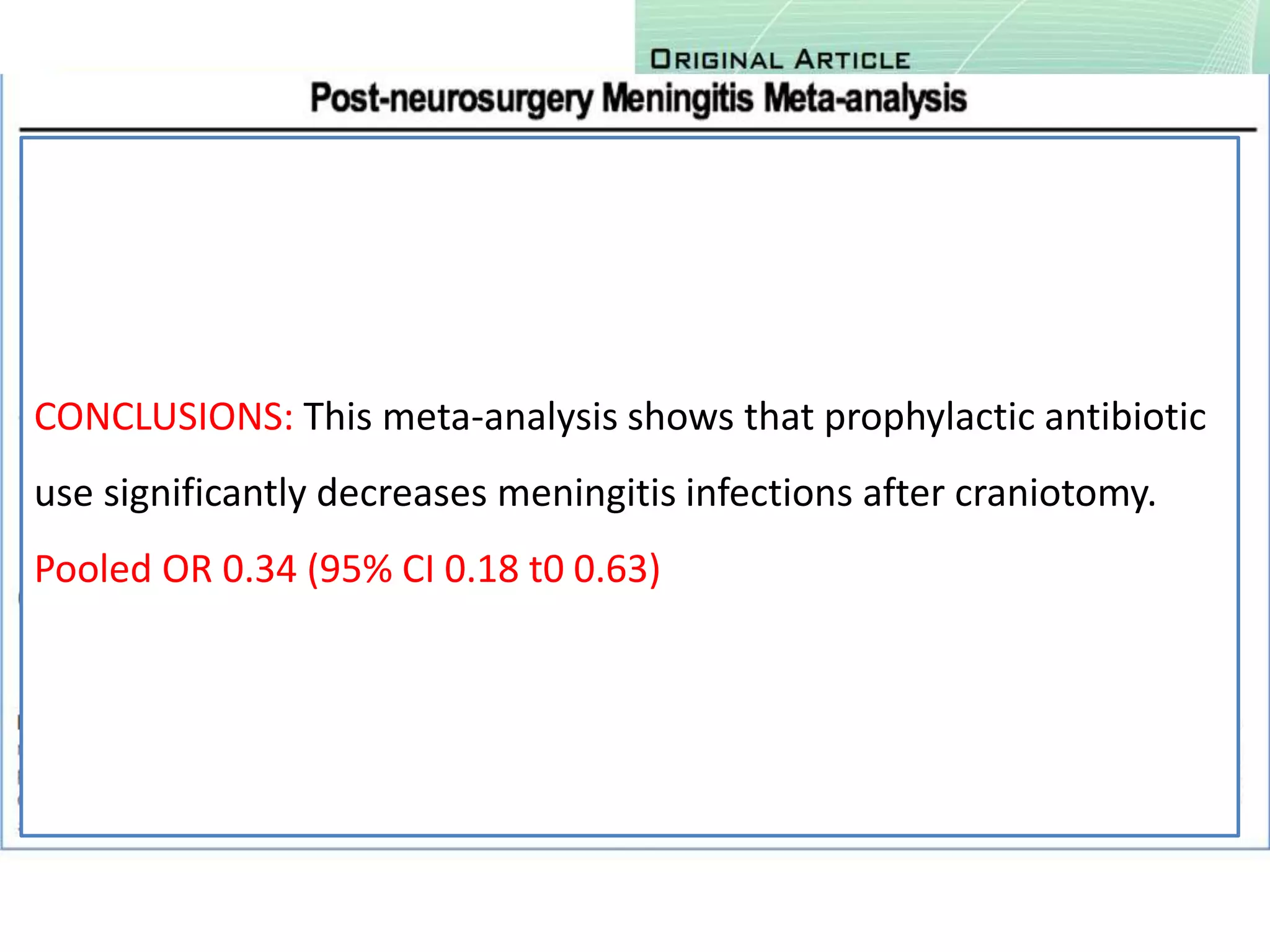
• 7 RCTs
• P: 2365 patients undergoing craniotomy
• I & C : Prophylactic antibiotics Vs Placebo
• O: Rate of meningitis after neurosurgery
CONCLUSIONS: This meta-analysis shows that prophylactic antibiotic
use significantly decreases meningitis infections after craniotomy.
Pooled OR 0.34 (95% CI 0.18 t0 0.63)
Management Of VAI
Antimicrobial therapy for CSF
shunt infections: same principles as acute bacterial meningitis Rx
The optimal duration of antibiotic, after shunt removal
practice variable (10/14 days)(5/7 days if repeated cultures negative)
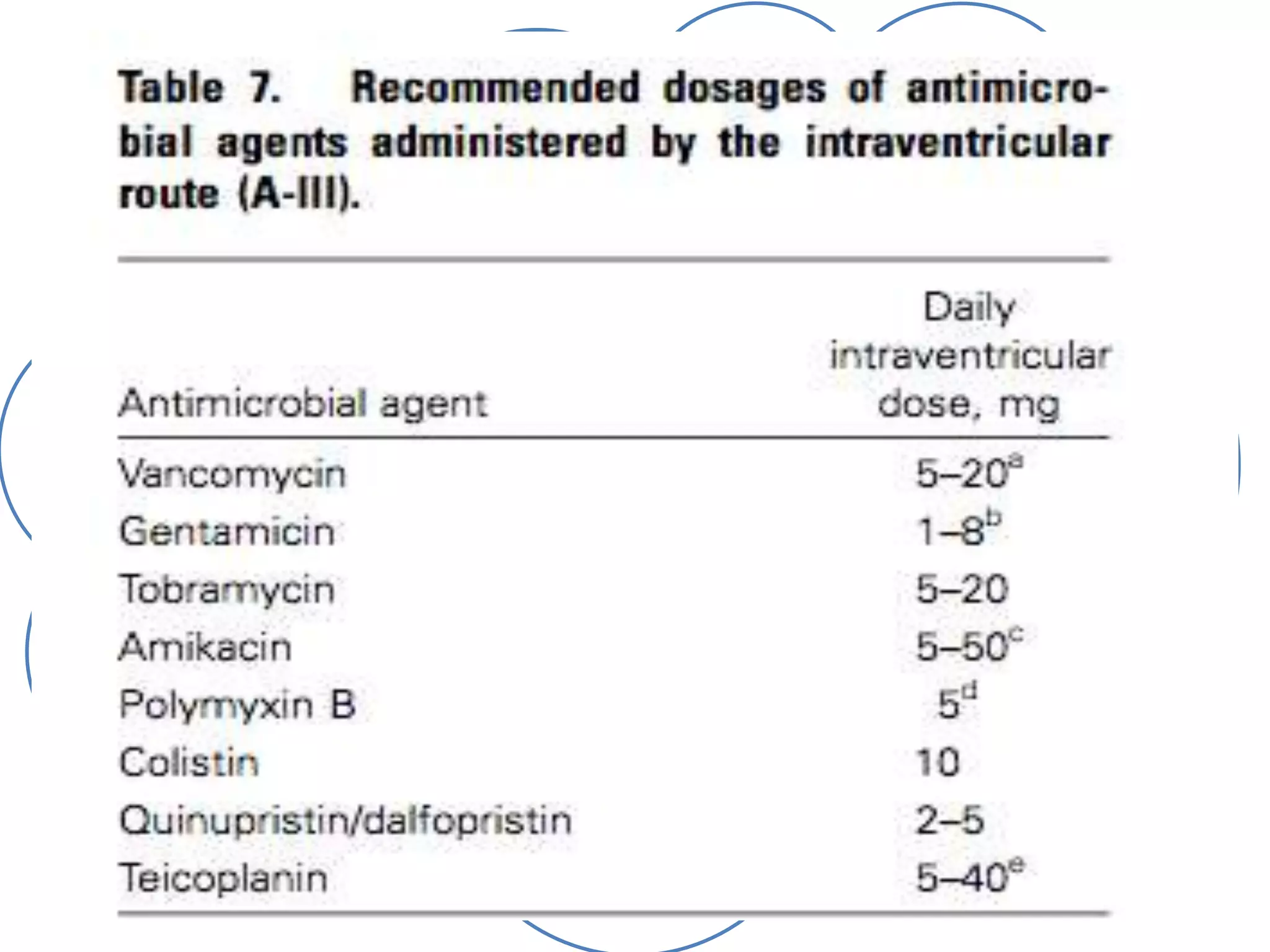
Intra ventricular route
• IN patients who have shunt infections difficult to eradicate or
• Who cannot undergo the surgical components of therapy
J Neurol Neurosurg Psychiatry
2009; 80, 1381-1385
Combined intravenous and intrathecal vancomycin in
treatment of patients with intracranial infections after
craniotomy
• Retrospective study
• P: 60 consecutive Patients with intracranial infections after
cranial operation
• Intravenous injection only (n = 25) and combined intravenous
and intrathecal injection (n = 35)
• Outcome: To explore the efficacy and safety of combined
intravenous and intrathecal vancomycin
Chin Crit Care Med,February 2016,Vol.28,No.2
•In both gps : IV vancomycin & 3rd or 4th gen cephalosporins or
meropenem
•In combined gp, 20 mg vancomycin slowly injected via LP OD
•The recovery rate in the combined group: significantly higher
(94.3% vs. 76.0%, χ2 = 4.220, P = 0.040)
• Lowering of WBC in combined group was significantly earlier
( 8 Vs 13 days)
• The time of recovery in combined in group was significantly
shorter (days: 9.9±0.7 vs. 13.4±1.1, t = -2.716, P = 0.009)
Conclusion: Combined iv and
intrathecal injection of
vancomycin could be a safe and
effective therapy for intracranial
infection after craniotomy
Outcomes in meningitis/ventriculitis treated with
intravenous or intraventricular plus intravenous colistin
• Retrospective case series study
• Patients with nosocomial meningitis/ventriculitis following
neurosurgical interventions
• IV (IVC group) or IV & intrathecal/intraventricular colistin
(ITC group)
• Between 2006 and 2014
• 34 patients, 11 (32.5 %) IVC group, 23 (67.6 %) ITC group
Acta Neurochirurgica March 2016, Volume 158, Issue 3, pp 603–610
•The most frequent isolated bacteria
Acinetobacter
• The mean dose 170,000 (±400) IU
• Duration of intra ventricular treatment
16.0 (±8.3) days
•The duration of iv treatment 16.0 (±8.3)
days in ITC group & 15.3 ± 7.6 days in IVC
group
• Hospital mortality significantly lower in the
ITC group compared with the IVC group
(13 vs. 72.7 %, p = 0.001)
Conclusions
The combination of IV-IVT colistin therapy may
improve outcomes in patients attending with
meningitis/ventriculitis due to multi-drug resistance
infections
Prevention Of VAI
??? Routine prophylactic exchange of EVD
• Elective revision itself causatively associated with increased infection
• Based on literature: little evidence to support the practice of prophylactic
catheter exchange
• Prolonged prophylactic systemic antibiotics: predisposes to infections by
more resistant pathogens with a higher mortality rate
• Antimicrobial-impregnated catheters: reduce the risk of infection
Wang et al. Critical Care 2013, 17:234
• Catheters impregnated with silver: significant reduction of infection rates
J Hosp Infect. 2016 Mar;92(3):263-72
• RCT and Cohort studies
• P: Patients with ischemic/ hemorrhagic stroke with reported
acute infection
• 87 studies, 137817 patients
• Outcome: Overall infection rate, pneumonia, UTI
• The overall pooled infection rate 30% (24-36%)
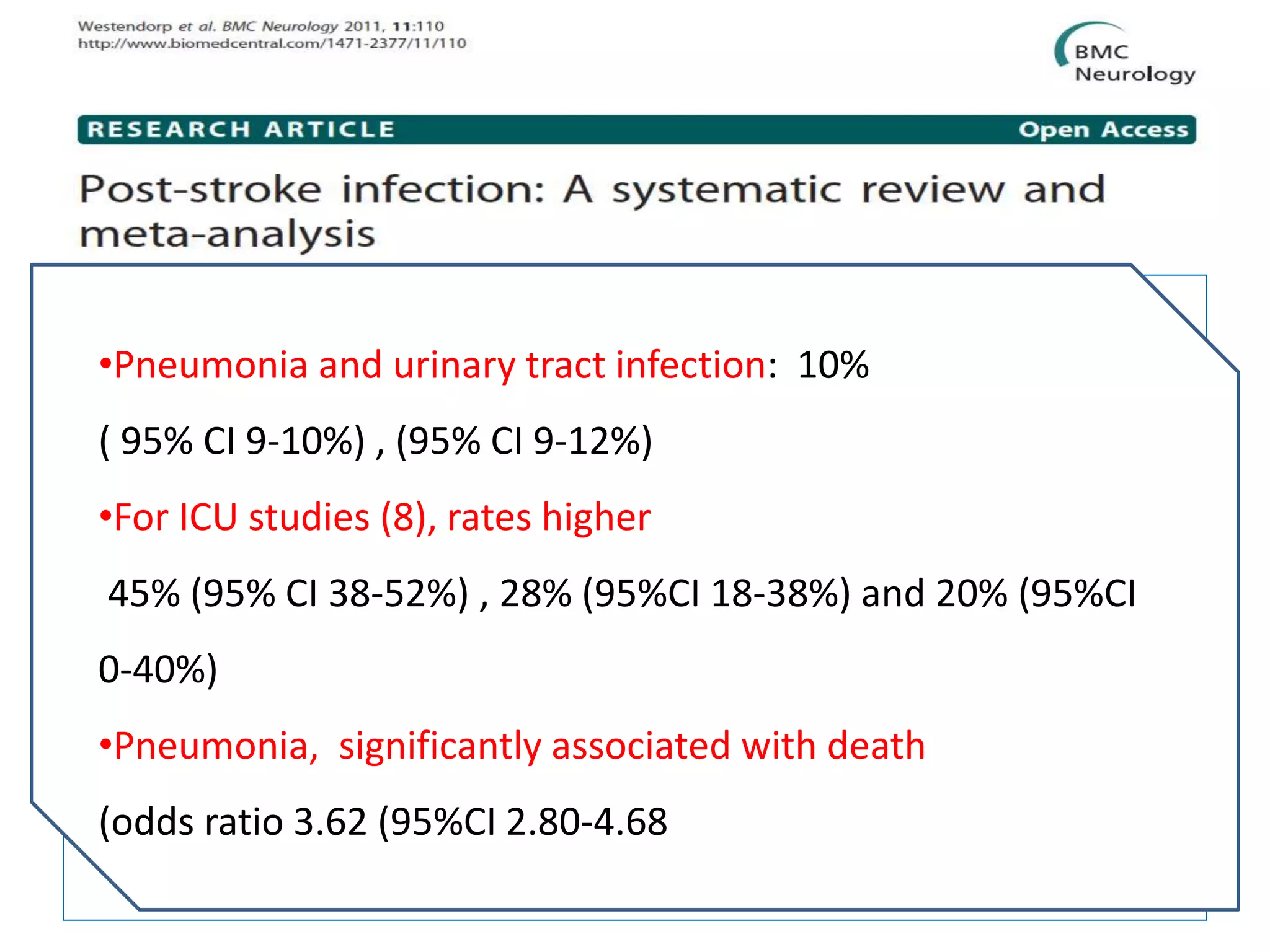
•Pneumonia and urinary tract infection: 10%
( 95% CI 9-10%) , (95% CI 9-12%)
•For ICU studies (8), rates higher
45% (95% CI 38-52%) , 28% (95%CI 18-38%) and 20% (95%CI
0-40%)
•Pneumonia, significantly associated with death
(odds ratio 3.62 (95%CI 2.80-4.68)
Uni variate analysis between study or
population characteristics and reported infection rates
Study/population
characteristic
No. of
studies
No. of evaluated
patients
P value
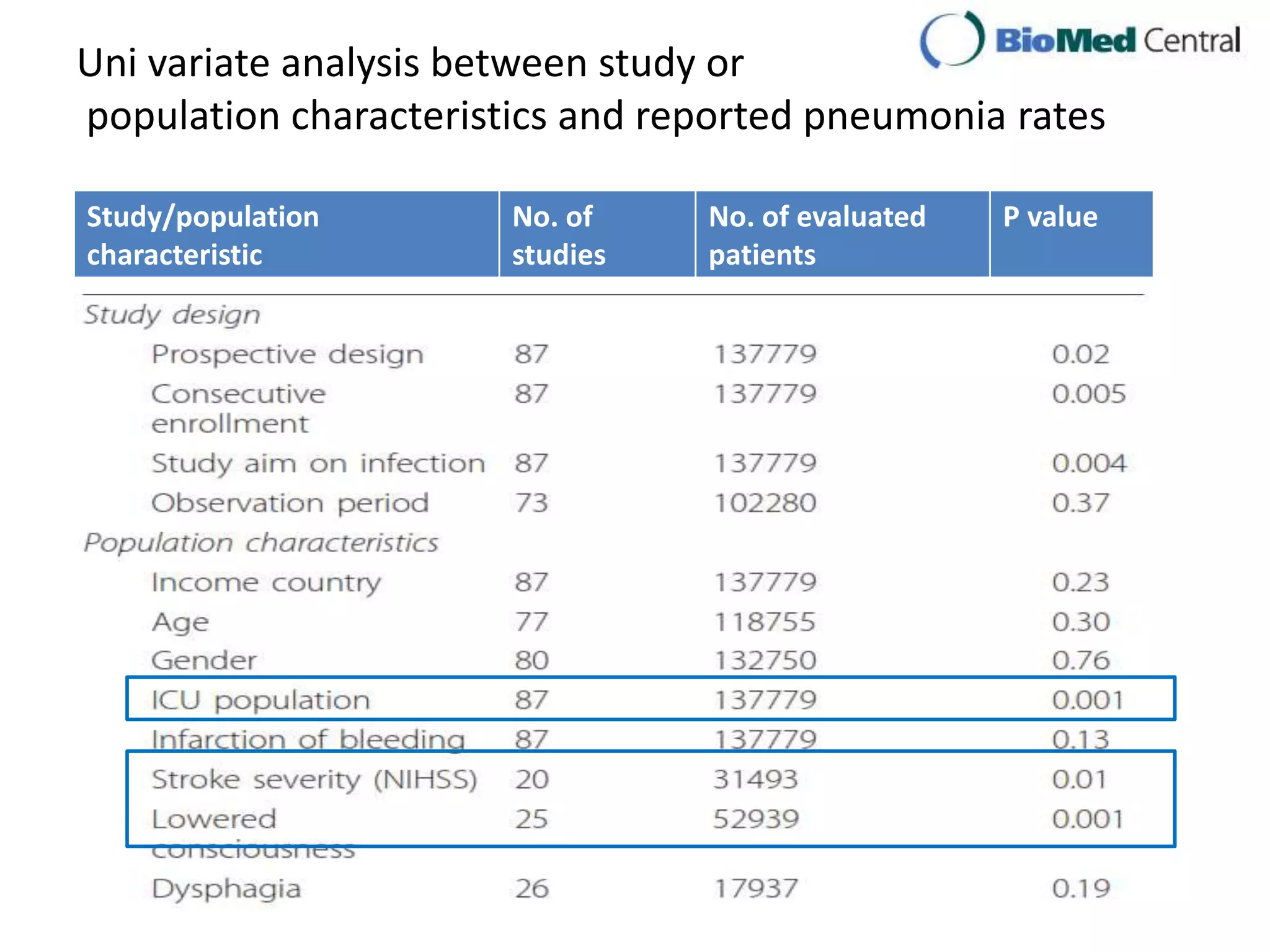
Uni variate analysis between study or
population characteristics and reported pneumonia rates
Study/population
characteristic
No. of
studies
No. of evaluated
patients
P value
Pooled odds ratios: effect of pneumonia on in-
hospital mortality
Limitation :
Publication bias
Heterogeneity of studies
Data on all relevant characteristics not available
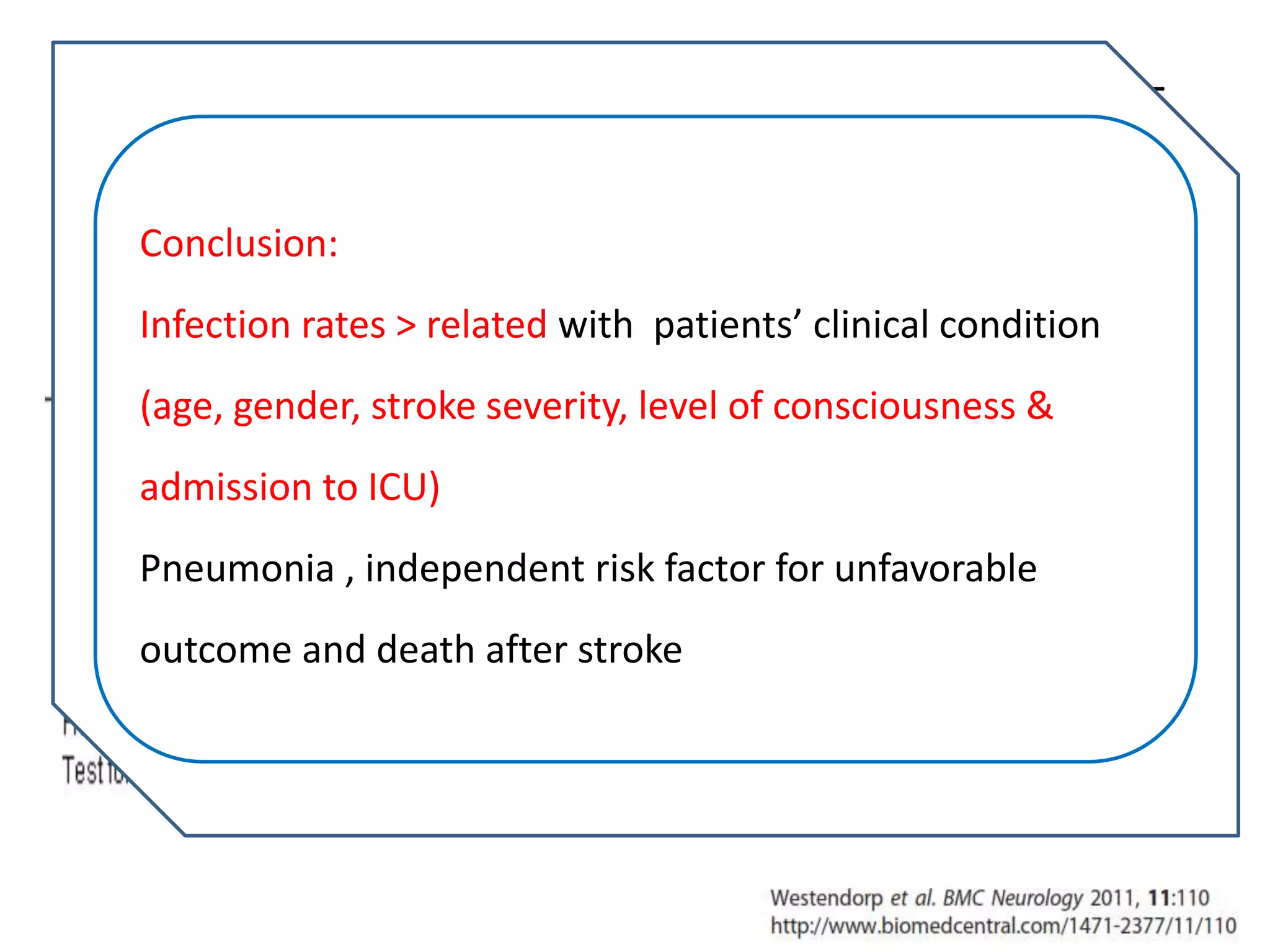
Conclusion:
Infection rates > related with patients’ clinical condition
(age, gender, stroke severity, level of consciousness &
admission to ICU)
Pneumonia , independent risk factor for unfavorable
outcome and death after stroke
Cochrane Database of Systematic Reviews 2012, Issue 1. Art. No.: CD008530.
DOI: 10.1002/14651858.CD008530.pub2.
Objectives
1. To assess whether preventive antibiotic therapy in patients
with acute stroke reduces the risk of dependency and death at
follow-up
2. To assess whether preventive antibiotic therapy in patients
with acute stroke reduces infection rate
•Preventive antibiotic therapy versus control (placebo or open
control)
•5 RCTs, 506 patients
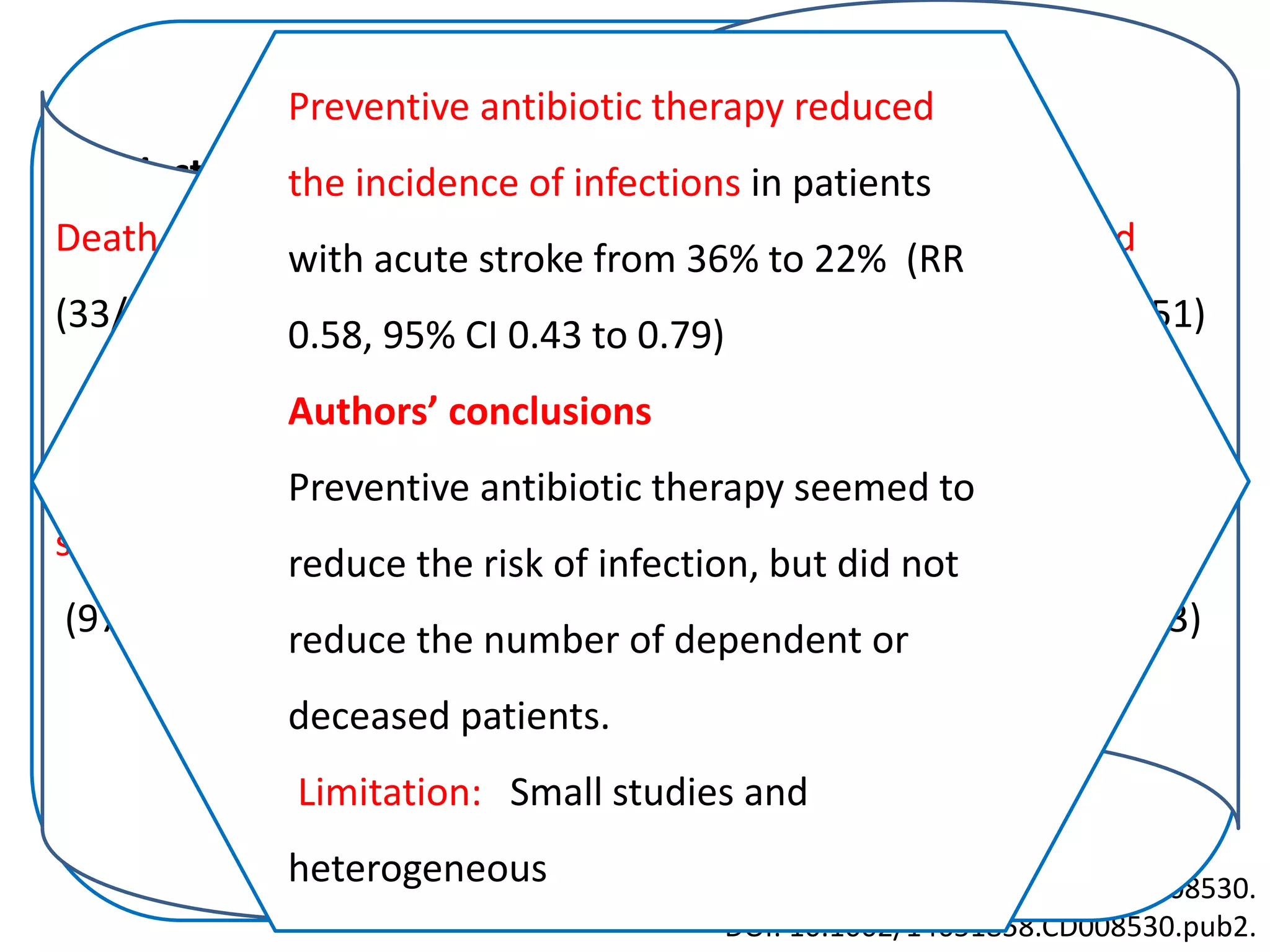
Death in preventive antibiotic group non-significantly reduced
(33/248 (13%) versus 38/258 (15%), RR 0.85, 95% (CI) 0.47 to 1.51)
Dependent patients in the preventive antibiotic group non-
significantly reduced
(97/208 (47%) versus 127/208 (61%), RR 0.67, 95% CI 0.32 to 1.43)
Preventive antibiotic therapy reduced
the incidence of infections in patients
with acute stroke from 36% to 22% (RR
0.58, 95% CI 0.43 to 0.79)
Authors’ conclusions
Preventive antibiotic therapy seemed to
reduce the risk of infection, but did not
reduce the number of dependent or
deceased patients.
Limitation: Small studies and
heterogeneous
Prophylactic antibiotic treatment in severe acute ischemic stroke:
the Antimicrobial chemopRrophylaxis for Ischemic STrokEIn
MaceDonIa–Thrace Study (ARISTEIDIS)
• Prospective multicenter study
• P: Patients of acute ischemic stroke, > 18 years, NIHSS >11
• I: prophylactic antibiotic
• O: infection incidence and short term mortality
• 110 patients, 31 received prophylaxis
Intern Emerg Med (2016). doi:10.1007/s11739-016-1462-2
Results and Conclusion
•Prophylactic antibiotic treatment administered to 51.4 % who
developed infection, and to 16.4 % who did not (p <0.001)
Independent predictors of infection
•NIHSS at admission (RR) 1.16, 95 % (ci) 1.08–1.26, p <0.001
• Prophylactic antibiotic treatment (RR 5.84, 95 % CI 2.03–16.79,
p <0.001)
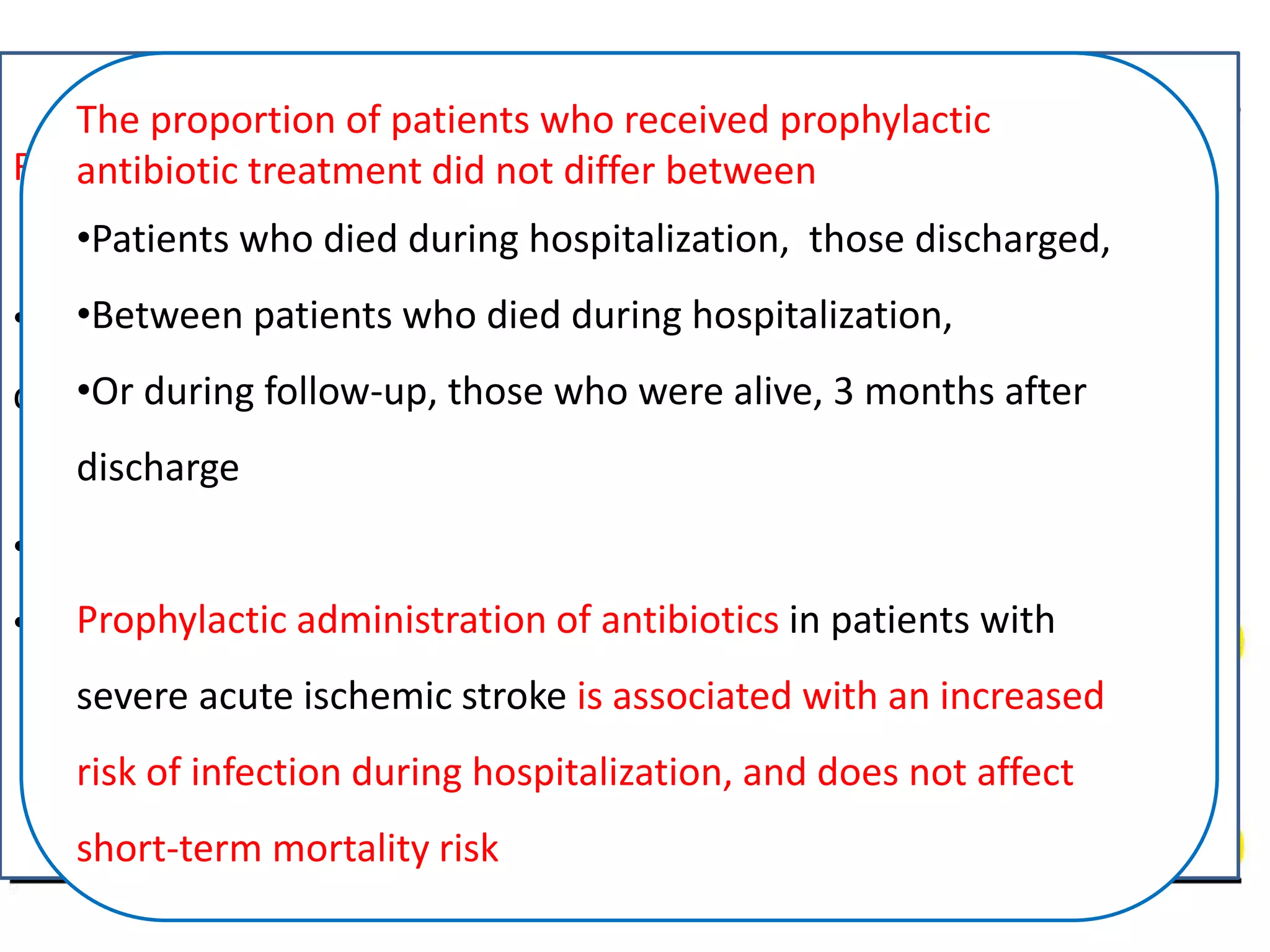
The proportion of patients who received prophylactic
antibiotic treatment did not differ between
•Patients who died during hospitalization, those discharged,
•Between patients who died during hospitalization,
•Or during follow-up, those who were alive, 3 months after
discharge
Prophylactic administration of antibiotics in patients with
severe acute ischemic stroke is associated with an increased
risk of infection during hospitalization, and does not affect
short-term mortality risk
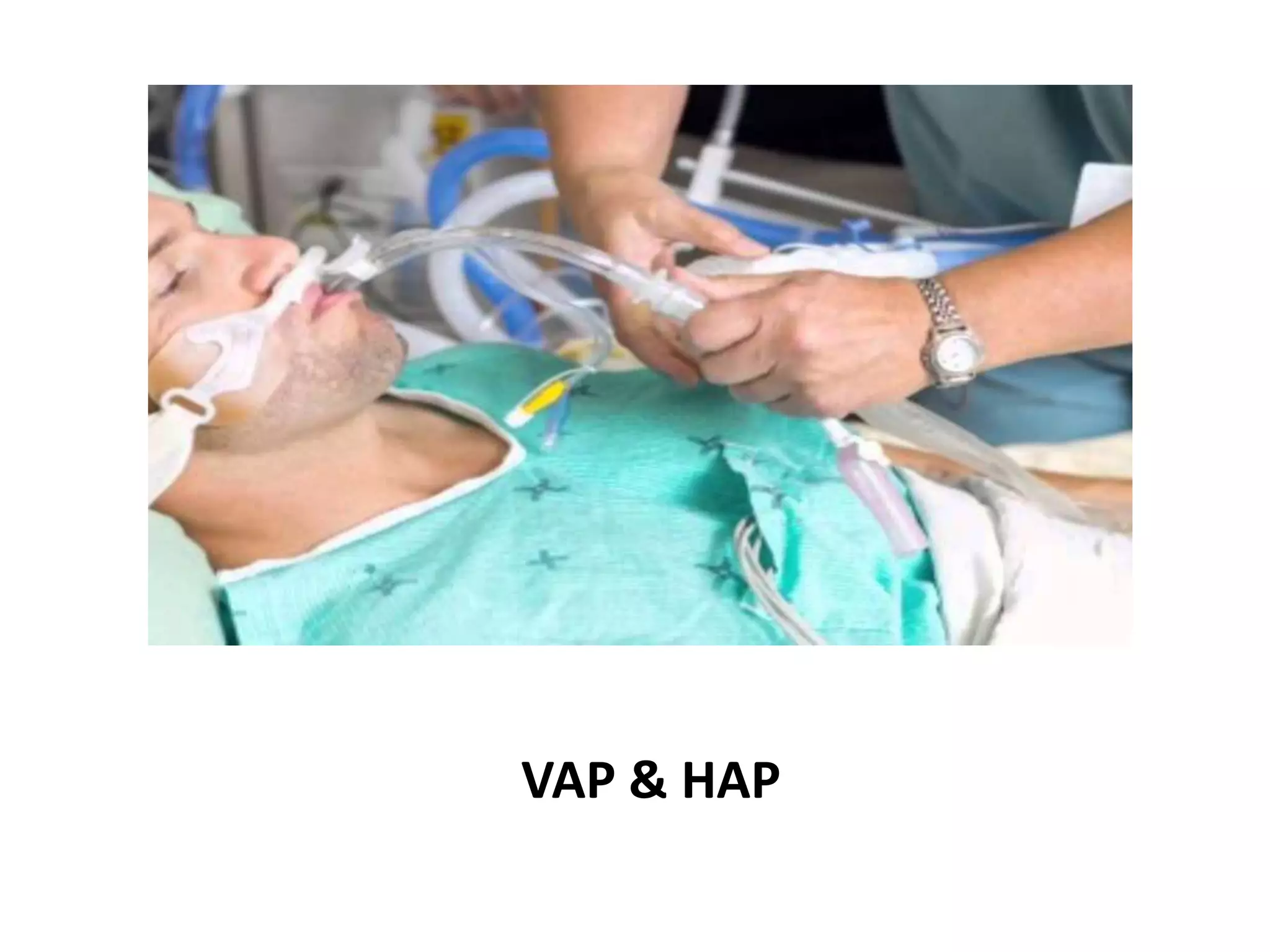
VAP & HAP
• HAP & VAP most common HAI , prevalence 22%
• Incidence: Asian countries: 3.5 to 46 infections/1000 MV days
(INICC 13.6/1000 MV)
• VAP: 10% of patients on mechanical ventilation
All cause of mortality 20 to 50%
Attributable mortality due to VAP 13%
Prolongs
length of mechanical ventilation by 7.6 to 11.5 days &
hospitalization by 11.5 to 13.1 days
N Engl J Med 2014; 370:2542–3 N Engl J Med 2014; 370:341–51
Lancet Infect Dis 2013; 13:665–71 Clin Infect Dis 2010; 51(suppl 1):S120–5
Crit Care Med 2013; 41:2151–61. Am J Infect Control 2008;36 4 Suppl: S93-100.
• ATS/ IDSA guidelines in 2005: HCAP/HAP/VAP
• 2016 clinical practice guideline on Diagnosis and management
of non immuno compromised patients with VAP/HAP
Definition:
Pneumonia: “New lung infiltrates plus clinical evidence that
infiltrate is of an infectious origin, which include the new
onset of fever, purulent sputum, leukocytosis, and decline in
oxygenation.”
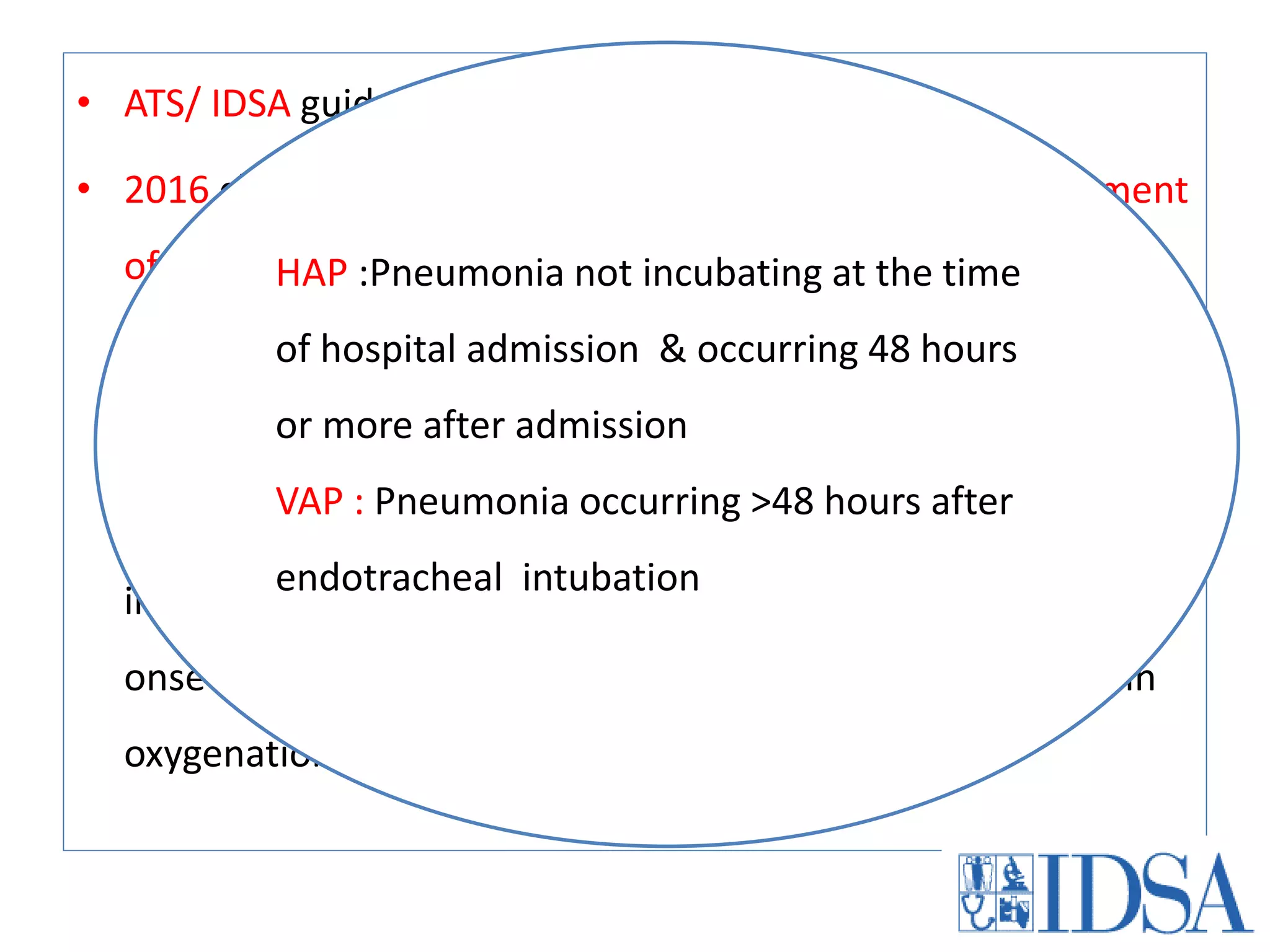
HAP :Pneumonia not incubating at the time
of hospital admission & occurring 48 hours
or more after admission
VAP : Pneumonia occurring >48 hours after
endotracheal intubation
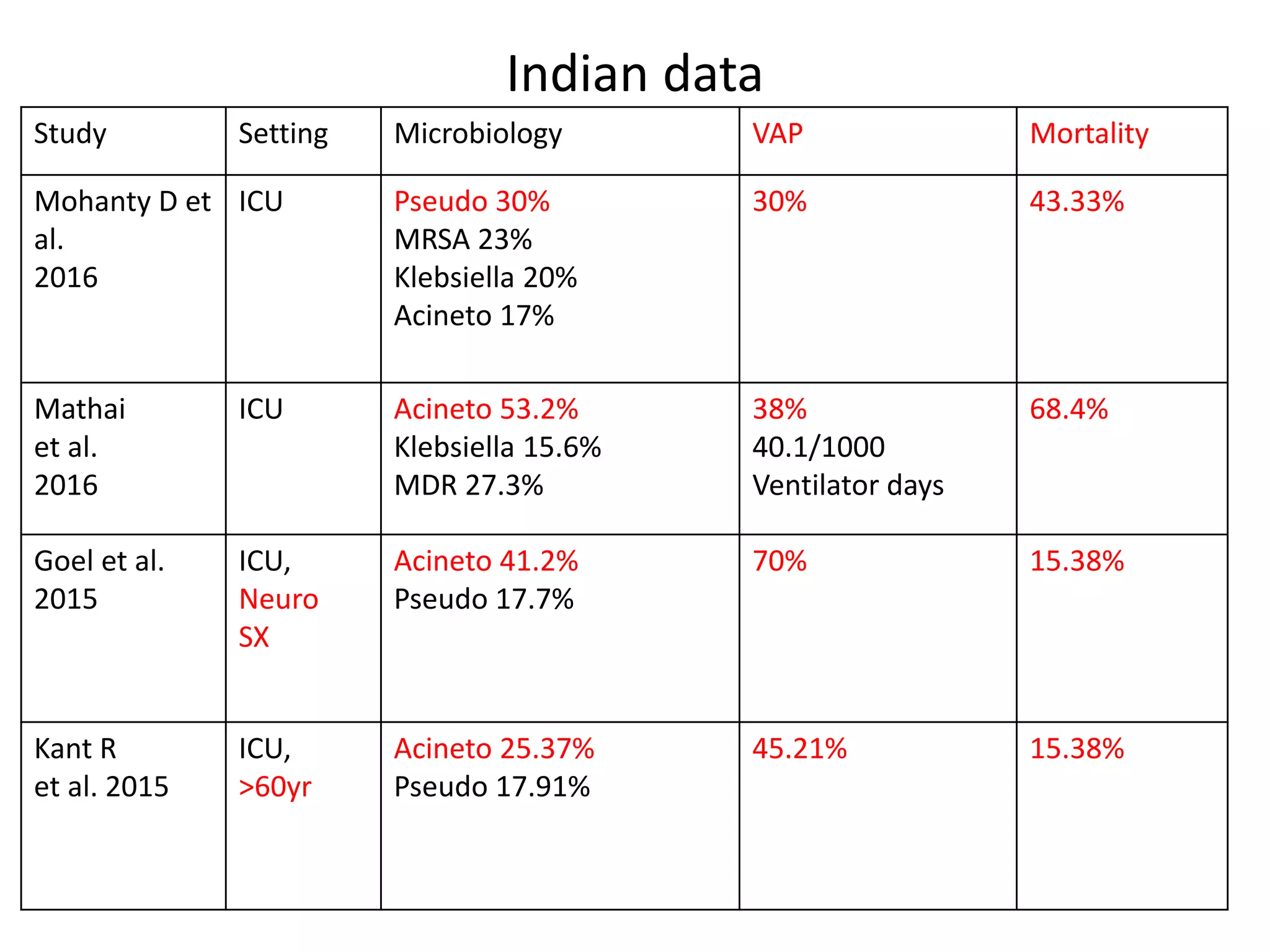
Study Setting Microbiology VAP Mortality
Mohanty D et
al.
2016
ICU Pseudo 30%
MRSA 23%
Klebsiella 20%
Acineto 17%
30% 43.33%
Mathai
et al.
2016
ICU Acineto 53.2%
Klebsiella 15.6%
MDR 27.3%
38%
40.1/1000
Ventilator days
68.4%
Goel et al.
2015
ICU,
Neuro
SX
Acineto 41.2%
Pseudo 17.7%
70% 15.38%
Kant R
et al. 2015
ICU,
>60yr
Acineto 25.37%
Pseudo 17.91%
45.21% 15.38%
Indian data
UTI CLABSI VAP Mortality
Habibi
et al. 2008
AIIMS
ICU,
DAI
11.3/1000
catheter-days
Candida &
Pseudo
3.4/1000
CVP line days
Pseudo
31.4/ 1000
ventilator
days
Acineto &
Pseudo
28.8%
(due to
infection)
Datta P et
al. 2014
Device ass.
Inf
ICU 10.75%
9.08/1000
catheter days
Pseudo
(35.7%)
13.5%
13.86/1000
central line
days
Klebsiella
(29.2%)
6.15%
6.04/1000
Ventilator
days
Acineto
(41.3%)
48.7%
Y. Kasuya
et al 2011
ICU
stroke
28%
24/1000
Ventilator
days
14 %
Risk Factors for Multidrug-Resistant Pathogens
Risk factors for MDR VAP
•Prior intravenous antibiotic use within 90 d
•Septic shock at time of VAP
•ARDS preceding VAP
•5 or more days of hospitalization prior to the VAP
•Acute RRT prior to VAP onset
Risk factors for MDR HAP
•Prior intravenous antibiotic use within 90 d
Risk factors for MRSA & Pseudomonas VAP/HAP
•Prior intravenous antibiotic use within 90 d
What does IDSA 2016 guideline say…
MICROBIOLOGIC METHODS TO DIAGNOSE VAP AND
HAP
 For Suspected VAP, guideline suggests noninvasive
sampling (ETA) with semi quantitative cultures to
make diagnosis
rather than Invasive Sampling With Quantitative
Culture Results or Noninvasive Sampling With
Quantitative Culture Results
(weak recommendation, low quality evidence)
If Invasive quantitative cultures are Performed, in Patients With
Suspected VAP & if Culture results are below the diagnostic
threshold for VAP (PSB With <103CFU/mL, BAL With <104CFU/mL)
guideline suggest their Antibiotics Withheld Rather Than Continued
(weak recommendation, very low quality evidence)
Guideline suggest that patients with suspected HAP (non-VAP) be
treated according to the results of microbiologic studies rather than
being treated empirically
(weak recommendation, very low-quality evidence)
The use of biomarkers and the Clinical Pulmonary Infection Score
to diagnose VAP and HAP
 In Patients With Suspected HAP/VAP, Should Procalcitonin
Plus Clinical Criteria or Clinical Criteria Alone Be Used to
Decide Whether or Not to Initiate Antibiotic Therapy?
1. For patients with suspected HAP/VAP, guideline recommend
using clinical criteria alone
(strong recommendation, moderate-quality evidence)
INITIAL TREATMENT OF VAP AND HAP
 Should Selection of an Empiric Antibiotic Regimen for VAP Be
Guided by Local Antibiotic-Resistance data?
Guideline recommend : all hospitals regularly generate and
disseminate a local antibiogram specific to their ICU
population(s) if possible
 What Antibiotics Are Recommended for Empiric Treatment
of Clinically Suspected VAP?
In patients with suspected VAP, guideline recommend
including coverage for S. aureus, P. aeruginosa, and other GNB
in all empiric regimens (strong recommendation, low-quality
evidence)
i. Guideline suggest including an agent active against
MRSA for the empiric treatment if any of the following
present :
• A risk factor for antimicrobial resistance,
• Patients being treated in units where >10%–20% of
S. aureus are methicillin resistant
• Patients in units where the prevalence of MRSA is not
known
(weak recommendation, very low-quality evidence)
2. If empiric coverage for MRSA is indicated,
guideline recommend either vancomycin or linezolid
(strong recommendation, moderate-quality evidence)
3. When empiric coverage for MSSA (and not MRSA) is indicated,
guideline suggest a regimen including piperacillin-tazobactam,
cefepime, levofloxacin, imipenem, or meropenem
(weak recommendation, very low-quality evidence)
4. Guideline suggest prescribing 2 anti pseudomonal antibiotics
from different classes for the empiric treatment if any of the
following:
•A risk factor for antimicrobial resistance
• Patients in units where >10% of GN isolates are resistant to agent
being considered for monotherapy,
•Patients in an ICU where local antimicrobial susceptibility rates are
not available (weak recommendation, low-quality evidence)
5.Guideline suggest prescribing one antibiotic active against
P. aeruginosa for the empiric treatment
In patients without risk factors for antimicrobial resistance & in ICUs
where <10% of gram-negative isolates are resistant to the agent
being considered for mono therapy
(weak recommendation, low-quality evidence)
6. In patients with suspected VAP, guideline suggest avoiding
amino glycosides if alternative agents available
(weak recommendation, low-quality evidence)
7. In patients with suspected VAP, guideline suggest avoiding
colistin if alternative agents available
(weak recommendation, very low-quality evidence)
Should Patients With VAP Due to GNB Be Treated With a
Combination of? Inhaled and Systemic Antibiotics, or Systemic
Antibiotics Alone?
Recommendation
1. For patients with VAP due to GNB that are susceptible to
only aminoglycosides or polymyxins guideline suggest both
inhaled and systemic antibiotics
(weak recommendation, very low-quality evidence)
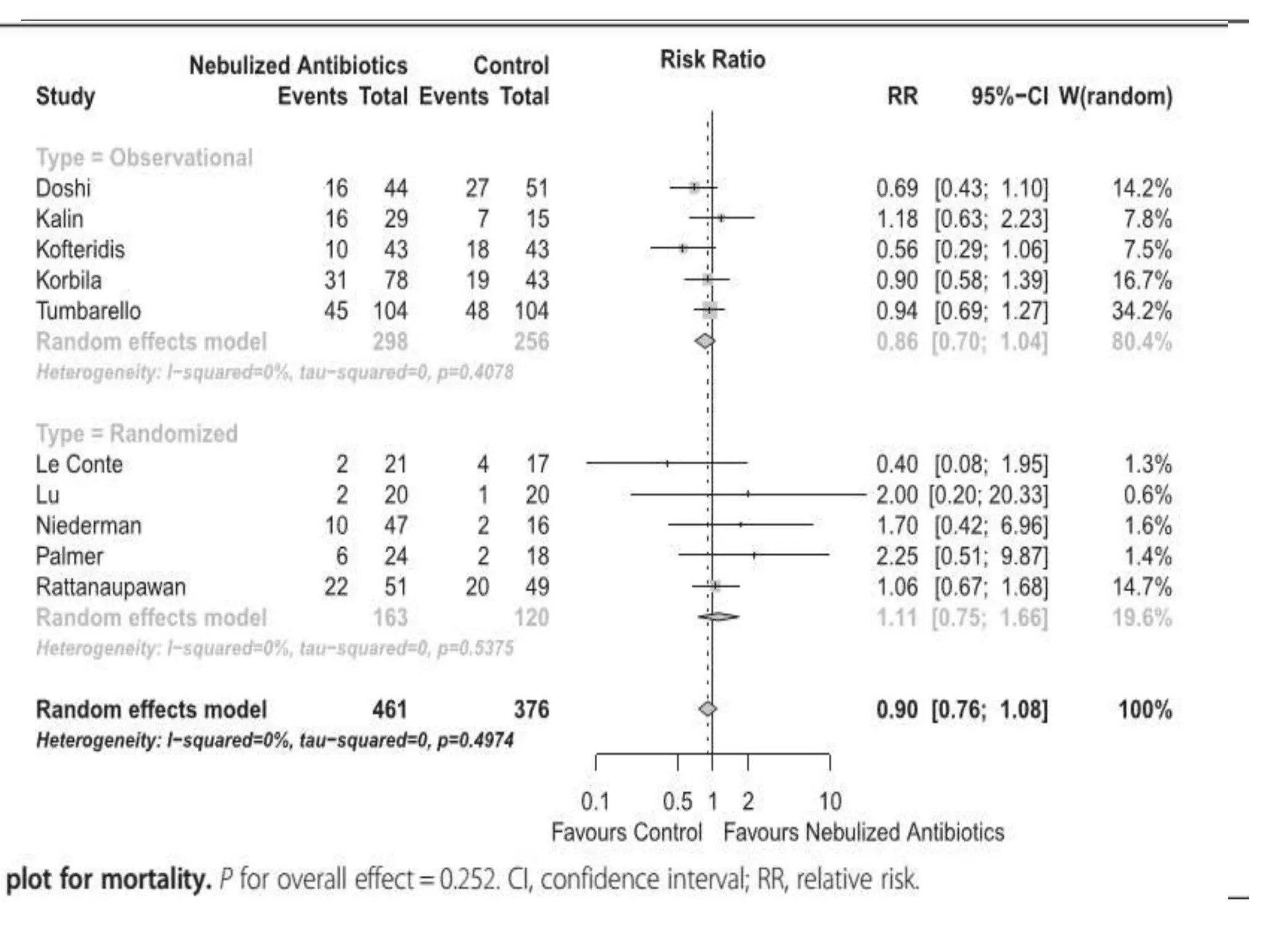
12 studies, 6 RCTs, 812 patients
P: Patients of VAP
I & C: Nebulized antibiotics with or without iv antibiotics with iv
antibiotics only
Primary outcome :clinical cure
Secondary outcomes: microbiological cure, ICU and hospital mortality,
duration of mechanical ventilation, ICU length of stay, adverse events
PATHOGEN-SPECIFIC THERAPY
 What Antibiotics Should Be Used for the Treatment for MRSA
HAP/VAP?
• Recommendation
1. Guideline recommend MRSA HAP/VAP be treated with
either vancomycin or linezolid rather than other antibiotics
or antibiotic combinations
(strong recommendation, moderate-quality evidence)
 Which Antibiotic Should Be Used to Treat Patients With
HAP/VAP Due to P. aeruginosa
1. Guideline recommend that the choice of an antibiotic for
definitive therapy be based upon the results of antimicrobial
susceptibility testing
(strong recommendation, low-quality evidence)
2. But recommend against aminoglycoside monotherapy
(strong recommendation, very low-quality evidence)
 Should Monotherapy or Combination Therapy Be Used to Treat
Patients With HAP/VAP Due to P. aeruginosa?
1. For patients with HAP who are
Not in septic shock or at a high risk for death, and if results of
antibiotic susceptibility testing are known, guideline recommend
mono therapy using an antibiotic to which the isolate is
susceptible
(strong recommendation, low-quality evidence)
• In patients with HAP/VAP caused by Acinetobacter species that
is sensitive only to polymyxins, guideline recommend iv
polymyxin
• (strong recommendation, moderate-quality evidence)
• In patients with HAP/VAP caused by Acinetobacter species,
guideline recommend against the use of Tigecycline
• (strong recommendation, low-quality evidence)
LENGTH OF THERAPY
 Should Patients With VAP Receive 7 Days or 8–15 Days of
Antibiotic Therapy?
1. For patients with VAP, guideline recommend a 7-day course
of antimicrobial therapy rather than a longer duration
(strong recommendation, moderate-quality evidence)
What Is the Optimal Duration of Antibiotic Therapy for HAP (Non-
VAP)?
Recommendation
1. For patients with HAP, guideline recommend a 7-day course of
antimicrobial therapy
(strong recommendation, very low quality evidence)
Should Antibiotic Therapy Be De-escalated or Fixed in Patients
With HAP/VAP?
Recommendation
1. For patients with HAP/VAP, guideline suggest that antibiotic
therapy be de-escalated rather than fixed
(weak recommendation, very low-quality evidence)
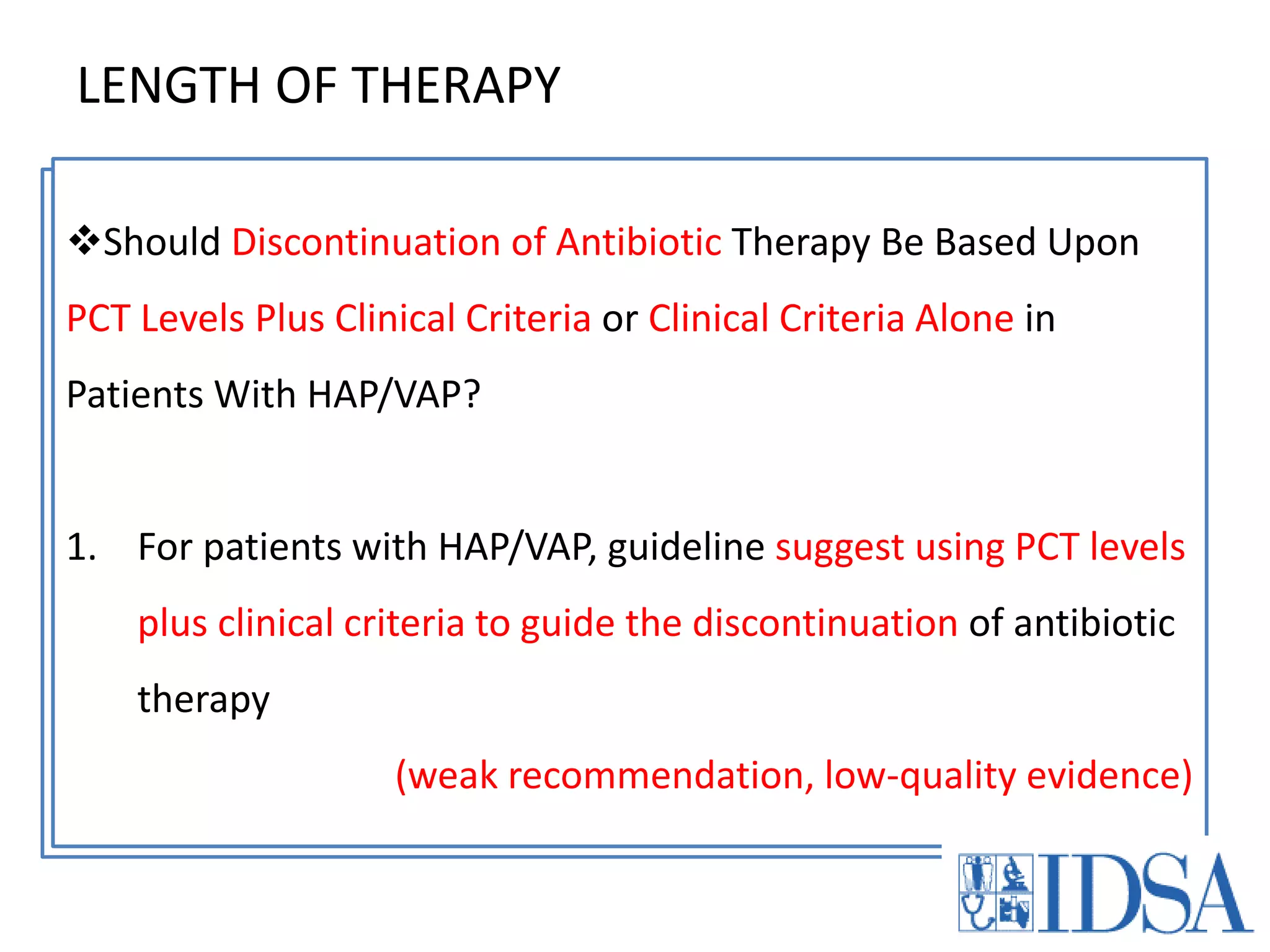
Should Discontinuation of Antibiotic Therapy Be Based Upon
PCT Levels Plus Clinical Criteria or Clinical Criteria Alone in
Patients With HAP/VAP?
1. For patients with HAP/VAP, guideline suggest using PCT levels
plus clinical criteria to guide the discontinuation of antibiotic
therapy
(weak recommendation, low-quality evidence)
Cochrane Database of Systematic Reviews 2012, Issue 9. Art. No.: CD007498DOI:
10.1002/14651858.CD007498.pub2.
Objective : To assess the safety and efficacy of using procalcitonin
for starting or stopping antibiotics
P: adult participants with ARIs who received
I & C: antibiotic treatment either based on a procalcitonin
algorithm or usual care/guidelines
Outcome: All-cause mortality and treatment failure at 30 days
14 RCTs with 4221 participants
Main results
• Procalcitonin groups 118 deaths/ 2085 patients (5.7%)
• Control group: 134 deaths/ 2126 patients (6.3%)
(adjusted OR 0.94, 95%CI 0.71 to 1.23)
• Treatment failure occurred in 398 procalcitonin (19.1%) Vs 466
control patients (21.9%)
• Total antibiotic exposure significantly reduced overall (median
IQR from 8 (5 to 12) to 4 (0 to 8) days
• Adjusted difference in days, -3.47, 95% CI -3.78 to -3.17, across all
the different clinical settings and diagnoses
Authors’ conclusions
Use of procalcitonin to guide initiation and duration
of antibiotic treatment in patients with ARI was not
associated with higher mortality rates or treatment
failure.
Antibiotic consumption was significantly reduced
across different clinical settings and ARI diagnoses.
Cochrane Database Syst Rev 2015; 8:Cd007577.
•Patient or population: HAP including VAP
•Settings: intensive care
•Intervention: short-course antibiotic therapy
•Comparison: prolonged-course antibiotic therapy
•Primary outcomes
1. 28-day mortality
2. Recurrence of pneumonia
3. 28-day antibiotic-free days
•6 RCTS 1088 patients
For patients with VAP, a short 7 or 8 day course of antibiotics
• Increased 28-day antibiotic-free days
(two studies; N= 431; (MD) 4.02 days; 95% CI 2.26 to 5.78)
Reduced recurrence of VAP due to MDR
(one study; N = 110; (OR) 0.44; 95%CI 0.21 to 0.95)
•No A/E on mortality or other outcomes
VAP due to NF GNB greater in short course therapy,
but no mortality difference
( 2studies, N = 176; OR 2.18; 95% CI 1.14 to 4.16)
Limitation:
• Fewer number of studies
• Heterogeneity in definition
• No much data on HAP (non ventilated)
Conclusion
• Use of short-course therapy for VAP is likely
to reduce antibiotic exposure in the critically ill
• Unlikely to be appropriate for all patients with
VAP due to NFGNB
A. GP Antibiotics With
MRSA Activity
B. GN Antibiotics With
Anti pseudomonal Activity:
ß-Lactam–Based Agents
C. GN Antibiotics With Anti
pseudomonal Activity : Non-ß-
Lactam–Based Agents
Glycopeptides
Vancomycin
15 mg/kg IV q8–12h
Anti pseudomonal penicillin
Piperacillin-tazobactam
4.5 g IV q6h
Fluoroquinolones
Ciprofloxacin 400 mg IV q8h
Levofloxacin 750 mg IV q24h
OR OR OR
Oxazolidinones
Linezolid 600 mg IV q12h
Cephalosporins
Cefepime 2 g IV q8h
Ceftazidime 2 g IV q8h
Aminoglycosides
Amikacin 15–20 mg/kg IV q24h
Gentamicin 5–7 mg/kg IV q24h
Tobramycin 5–7 mg/kg IV q24h
TEICOPLANIN OR OR
Carbapenems
Imipenem 500 mg IV q6h
Meropenem 1 g IV q8h
OR
Polymyxins
Colistin
Polymyxin B 2.5–3.0 mg/kg/d
Monobactams
Aztreonam 2 g IV q8h
EMPIRIC TREATMENT FOR SUSPECTED VAP
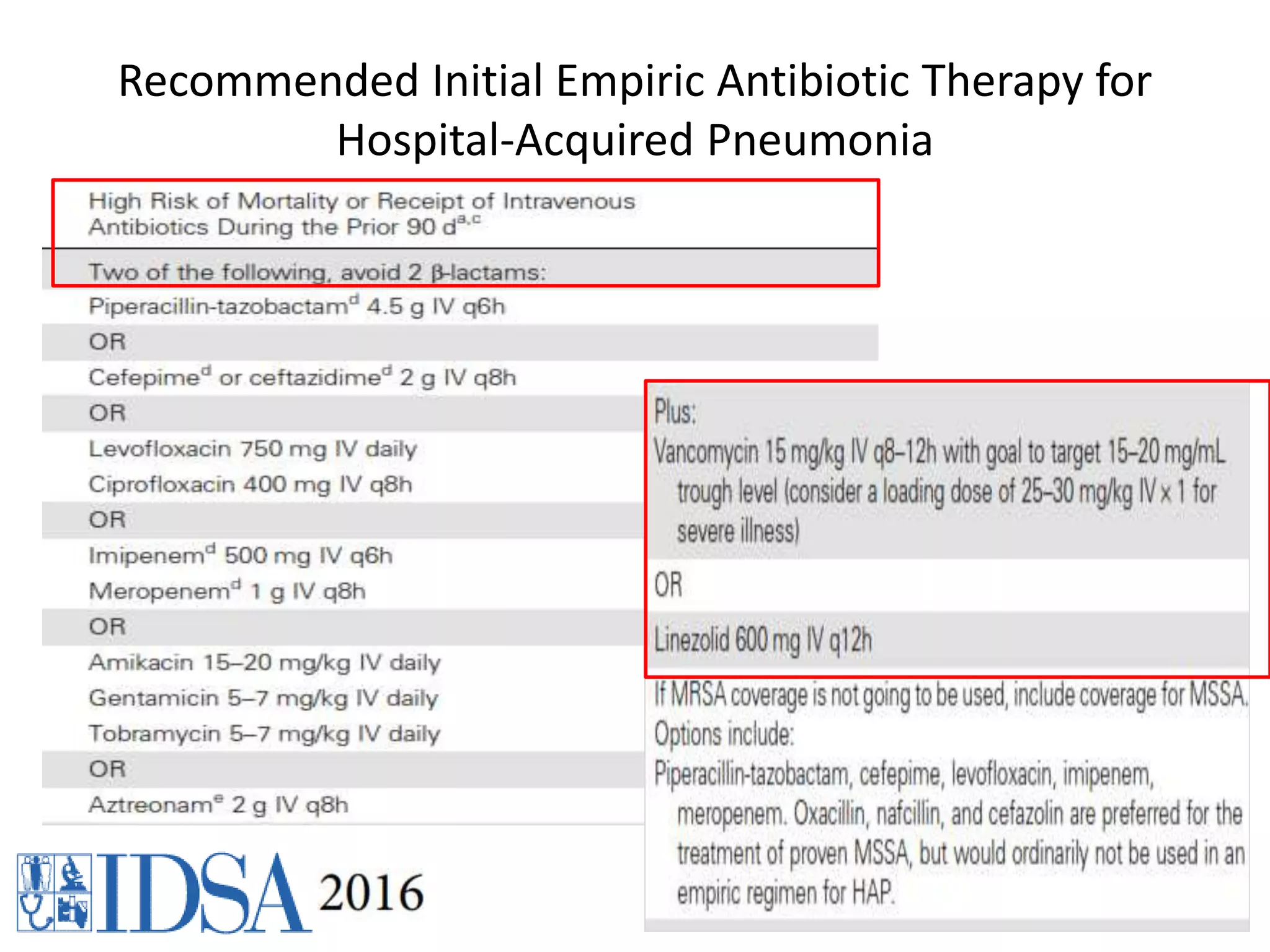
Recommended Initial Empiric Antibiotic Therapy for Hospital-
Acquired Pneumonia
Recommended Initial Empiric Antibiotic Therapy for
Hospital-Acquired Pneumonia
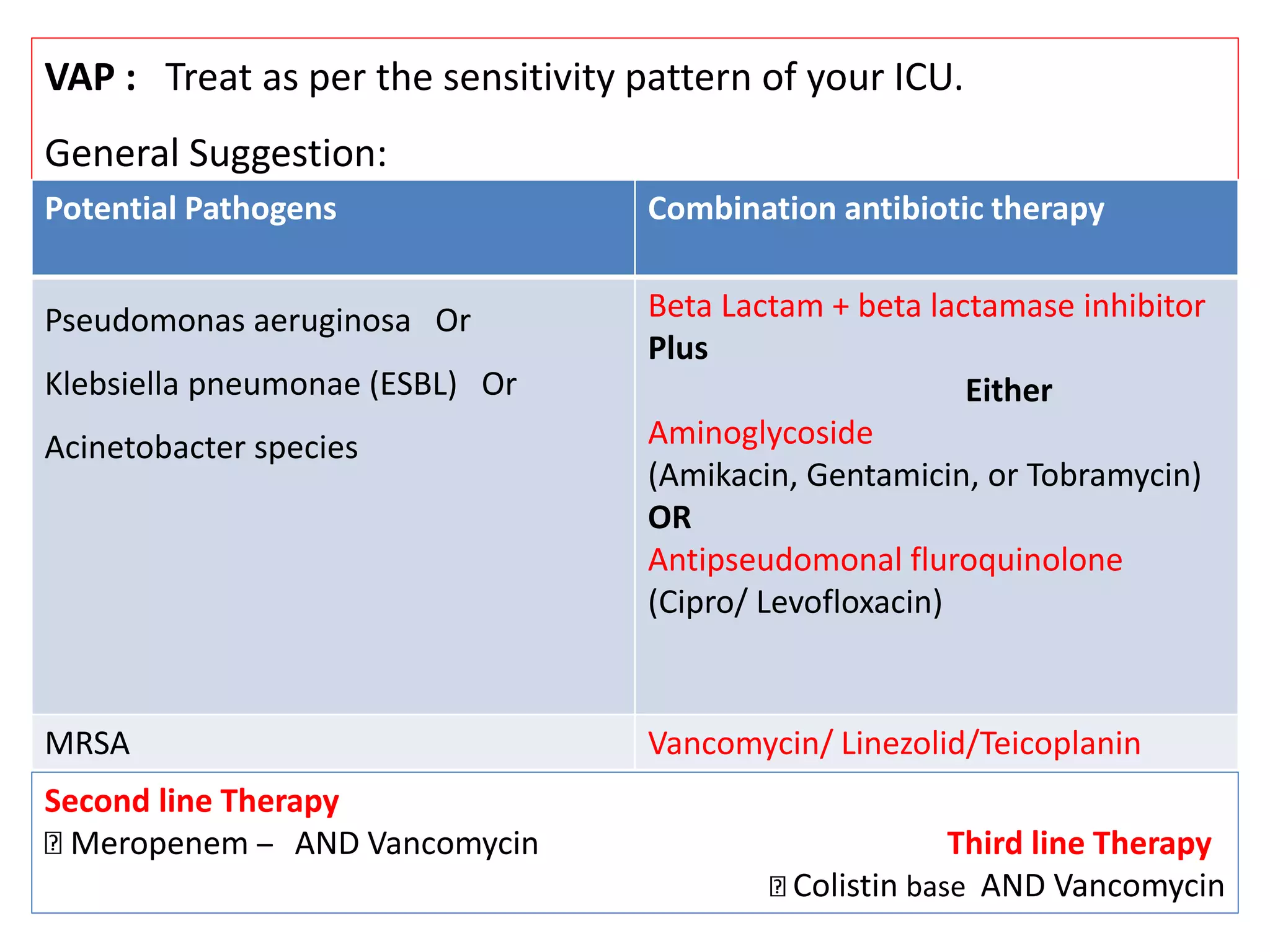
VAP : Treat as per the sensitivity pattern of your ICU.
General Suggestion:
Potential Pathogens Combination antibiotic therapy
Pseudomonas aeruginosa Or
Klebsiella pneumonae (ESBL) Or
Acinetobacter species
Beta Lactam + beta lactamase inhibitor
Plus
Either
Aminoglycoside
(Amikacin, Gentamicin, or Tobramycin)
OR
Antipseudomonal fluroquinolone
(Cipro/ Levofloxacin)
MRSA Vancomycin/ Linezolid/Teicoplanin
Second line Therapy
Meropenem – AND Vancomycin Third line Therapy
Colistin base AND Vancomycin
Strategies to Prevent VAP:
2014 Updates
A. Avoid intubation if possible
Use noninvasive positive pressure ventilation (NIPPV) whenever
feasible (QOE: I).
B. Minimize sedation
1. Manage ventilated patients without sedatives whenever possible
(QOE: II).
2. Interrupt sedation once a day (QOE: I).
3. Assess readiness to extubate once a day (SBT) (QOE I).
4. Pair SBT with spontaneous awakening trials (QOE: I).
C. Maintain and improve physical conditioning
1. Provide early exercise and mobilization (QOE: II).
D. Minimize pooling of secretions above the endotracheal tube
cuff by subglottic secretion drainage ports
(QOE: II).
E. Elevate the head of the bed to 30–45
(QOE: III).
F. Maintain ventilator circuits
Special Approaches:
•Use selective decontamination of the oropharynx (QOE II).
•Perform oral care with chlorhexidine (QOE:II).
•Instill saline before tracheal suctioning (QOE: III).
• Provide mechanical tooth brushing (QOE:III).
ASP
Total Neurology (AIIMS) Healthcare associated
infection (HCAI) data for July 2016
Pathogens
MRSA E.coli Pseudomonas Acinetobacter Enterobacter Total
1, Blood 1, Urine 1, Blood 2, Chest 1, Blood
1, urine
2, chest
9
MRSA E.coli Pseudomonas Acinetobacter Enterobacter
Linezolid (100%)
Vancomycin
(100%)
Netilmycin (100%)
Amikacin
(100%)
Netimycin
(100%)
Amikacin
(100%)
Pip/Taz(100%)
Colistin(100%)
Cef/Sulb
(100%)
Colistin (100%)
Colistin 75%
Cef/sulb 25%
Pip/Taz 25%
Amikacin 25%
Total
admissions
CSF Blood Chest UTI Total
208 0 2 5 2 9 [4.32%]
Sensitivity
Total Neurology (AIIMS) Healthcare associated
infection (HCAI) data for June 2016
Pathogens
E.coli Pseudomonas Acinetobacter Enterococcus Total
1, Urine 1, Chest 1, Chest 1, Blood 1
E.coli Pseudomonas Acinetobacter Enterococcus
Amikacin
Cefotaxime
Ceftazidime
Cef+sulbactum
Nitrofurantoin
Netimycin
Pip+ Tazobactum
Colistin Cef/Sulb
(100%)
Colistin (100%)
Cefotaxim,
Erythromycin,
Linezolid,
Penicillin,
Teicoplanin,
Vancomycin
Total
admissions
CSF Blood Chest UTI Total
213 0 1 2 1 4 [1.87%]
Sensitivity
CRANIOTOMY

Sepsis and antibiotic guidance in neurology wards

  • 1.
    SEPSIS & ANTIBIOTIC GUIDANCEIN NEUROLOGY WARD PRESENTER: DR DIVYA GUIDES: DR DEEPA DASH DR MANISH SONEJA 12/9/2016
  • 2.
    Search Strategy Key Words: Sepsis,septic shock, antibiotic resistance, neurology ward/ICU, Neuro surgery, craniotomy, meningitis, VAI, HAI, HAP, VAP, post stroke infections, guidelines etc Search engine: Pubmed, Google scholar, Embase , Cochrane data base etc Guideline & Recommendation: IDSA, SHEA, CDC etc >50 articles
  • 3.
    One time Surveyin Neurology ward & ICU • 15 patients had sepsis (15/69): 21.73% Sl Patient Diagnosis Urine Blood ETA Pus Catheter tip 1 55/f, ICU stroke Klebsiella Acineto CoNS 2 80/f, ICU stroke Entero bacter 3 60/f, ward stroke Entero bacter 4 40/f, Wd TB, Disse Pseudo(2) Acineto (2) 5 33/M Encepha litis Pseudo (2) 6 25/M GBS Acineto(3) 7 62/M ICU Stroke
  • 4.
    Sl Patient DiagnosisUrine Blood ETA Pus others 8 20/f /Wd TBM Entero coccus(2) Klebsiella (2) 9 70/f,/Wd Diss TB E coli 10 32/M/ Wd Status Epilepticus Pseudo Ecoli Entero coccus Acineto (3) Pseudo (1) 11 57/f, Wd stroke Acineto (1) 12 16/M GBS Pseudo (1) 13 49/M CLD, stroke Acineto(3) 14 17/M Meningo encephalitis Entero bacter 15 25/M Vasculitis Pseudo
  • 5.
    Outline 1. Introduction tosepsis: Definition, Sepsis bundle 2. EVD and Ventriculostomy associated infections, (VAI) & management 4. Post stroke infection & management 5. HAP & VAP 6.IDSA & SHEA, National guidelines 7.AIIMS, HAI surveillance
  • 7.
    •Sepsis: Life-threatening organdysfunction by a dys regulated host response to infection •Organ dysfunction : Acute change in total SOFA score 2 points consequent to the infection • The baseline SOFA assumed to be zero if no preexisting organ dysfunction Septic shock: Sepsis with persisting hypotension requiring vaso pressors to maintain MAP65 mmHg and a serum lactate level >2 mmol/L (18 mg/dL) despite adequate volume resuscitation Q SOFA (Quick SOFA) Criteria •Respiratory rate 22/min •Altered mentation •Systolic blood pressure 100 mmHg
  • 9.
    • To establishthe incidence of HIs in a nICU, and to determine the most prevalent causative agents and risk factors for HIs • Cross-sectional study with nested case-control design • Between 1 July 2009 and 30 June 2010 at an 18-bed ICU, Serbia • P : All adult patients hospitalized for > 24 hrs J Infect Dev Ctries 2012; 6(11):798-805.
  • 10.
    Main characteristics ofpatients in neurological intensive care unit J Infect Dev Ctries 2012; 6(11):798-805. Limitation: Excluded post surgery patients Conclusion: Risk factors for development of HIs in patients staying in the nICU •Co-morbidities, •Surgical interventions, •Urinary catheterization longer than 7 days, •GCS score = 9, •Prolonged hospitalization
  • 11.
    SEPSIS FOLLOWING NEUROSURGICAL INTERVENTION
  • 12.
    Retrospective study AIIM: todetermine typical clinical & laboratory findings & potential early predictors of EVD-associated infection Inclusion: Hospitalized patients aged 18 years with EVD associated infection 1997 to 2008, 48 infections
  • 13.
    Limitation: No Control group Specificity,Sensitivity, PPV, NPV not calculated Conclusions: Fever and increased CSF leukocytes should raise the suspicion of EVD-associated infection, which may occur up to 10 days after removal of EVD
  • 14.
    • Primary Objective:To determine the pooled incidence rate of VAI • Secondary: To explore factors (such as duration of ventriculostomy treatment, age group, CSF infection definition, CSF culture frequency) associated with the incidence rate of VAI • To describe the microbiological findings associated with VAI • Patients with ventriculostomies , regardless of diagnosis •35 Observational studies •752 VAI’s from 66,707 catheter-days •6681 patients from 33 studies • Heterogeneity : Moderate to Significant •Pooled VAI rate : 11.4/1000 catheter-days (95% CI 9.3 to 13.5) •523 positive cultures from 25 studies, 64% Gram Positive •In studies without AIC, GNB 41% (175/425) of positive cultures • With AIC, GNB 10% (9/83)
  • 15.
    Ramanan et al.BMC Infectious Diseases (2015) 15:3 Limitation: •Reporting of VAI in formats that were not convertible to rate per 1000 catheter-days •Unpublished Data not sought •Heterogeneity •Meta analysis of Cohort Studies
  • 16.
    Post Operative Sepsis:Risk Factors • Implantation of foreign body (50%) • CSF leakage • Previous neurosurgical infection • Absence of antibiotic prophylaxis • Duration of surgery over 4 h • Interventions involving nasal sinuses • Emergency surgeries • Prior radiation therapy McClelland CID 2007; 45, 55-59 Intracranial infection following craniotomy •Diagnosed post op meningitis treated with IV antibiotics •Cases that involve a bone flap infection, subdural empyema or cerebral abscess:::::: require a repeated surgery Goal of surgery: •To removed and discard infected bone flaps •To evacuate pus and infected debris as much as possible • Multiple operations may be required for re accumulation of subdural or intraprenchymal pus
  • 17.
    • 7 RCTs •P: 2365 patients undergoing craniotomy • I & C : Prophylactic antibiotics Vs Placebo • O: Rate of meningitis after neurosurgery CONCLUSIONS: This meta-analysis shows that prophylactic antibiotic use significantly decreases meningitis infections after craniotomy. Pooled OR 0.34 (95% CI 0.18 t0 0.63)
  • 18.
    Management Of VAI Antimicrobialtherapy for CSF shunt infections: same principles as acute bacterial meningitis Rx The optimal duration of antibiotic, after shunt removal practice variable (10/14 days)(5/7 days if repeated cultures negative) Intra ventricular route • IN patients who have shunt infections difficult to eradicate or • Who cannot undergo the surgical components of therapy J Neurol Neurosurg Psychiatry 2009; 80, 1381-1385
  • 19.
    Combined intravenous andintrathecal vancomycin in treatment of patients with intracranial infections after craniotomy • Retrospective study • P: 60 consecutive Patients with intracranial infections after cranial operation • Intravenous injection only (n = 25) and combined intravenous and intrathecal injection (n = 35) • Outcome: To explore the efficacy and safety of combined intravenous and intrathecal vancomycin Chin Crit Care Med,February 2016,Vol.28,No.2 •In both gps : IV vancomycin & 3rd or 4th gen cephalosporins or meropenem •In combined gp, 20 mg vancomycin slowly injected via LP OD •The recovery rate in the combined group: significantly higher (94.3% vs. 76.0%, χ2 = 4.220, P = 0.040) • Lowering of WBC in combined group was significantly earlier ( 8 Vs 13 days) • The time of recovery in combined in group was significantly shorter (days: 9.9±0.7 vs. 13.4±1.1, t = -2.716, P = 0.009) Conclusion: Combined iv and intrathecal injection of vancomycin could be a safe and effective therapy for intracranial infection after craniotomy
  • 20.
    Outcomes in meningitis/ventriculitistreated with intravenous or intraventricular plus intravenous colistin • Retrospective case series study • Patients with nosocomial meningitis/ventriculitis following neurosurgical interventions • IV (IVC group) or IV & intrathecal/intraventricular colistin (ITC group) • Between 2006 and 2014 • 34 patients, 11 (32.5 %) IVC group, 23 (67.6 %) ITC group Acta Neurochirurgica March 2016, Volume 158, Issue 3, pp 603–610 •The most frequent isolated bacteria Acinetobacter • The mean dose 170,000 (±400) IU • Duration of intra ventricular treatment 16.0 (±8.3) days •The duration of iv treatment 16.0 (±8.3) days in ITC group & 15.3 ± 7.6 days in IVC group • Hospital mortality significantly lower in the ITC group compared with the IVC group (13 vs. 72.7 %, p = 0.001) Conclusions The combination of IV-IVT colistin therapy may improve outcomes in patients attending with meningitis/ventriculitis due to multi-drug resistance infections
  • 21.
    Prevention Of VAI ???Routine prophylactic exchange of EVD • Elective revision itself causatively associated with increased infection • Based on literature: little evidence to support the practice of prophylactic catheter exchange • Prolonged prophylactic systemic antibiotics: predisposes to infections by more resistant pathogens with a higher mortality rate • Antimicrobial-impregnated catheters: reduce the risk of infection Wang et al. Critical Care 2013, 17:234 • Catheters impregnated with silver: significant reduction of infection rates J Hosp Infect. 2016 Mar;92(3):263-72
  • 22.
    • RCT andCohort studies • P: Patients with ischemic/ hemorrhagic stroke with reported acute infection • 87 studies, 137817 patients • Outcome: Overall infection rate, pneumonia, UTI • The overall pooled infection rate 30% (24-36%) •Pneumonia and urinary tract infection: 10% ( 95% CI 9-10%) , (95% CI 9-12%) •For ICU studies (8), rates higher 45% (95% CI 38-52%) , 28% (95%CI 18-38%) and 20% (95%CI 0-40%) •Pneumonia, significantly associated with death (odds ratio 3.62 (95%CI 2.80-4.68)
  • 23.
    Uni variate analysisbetween study or population characteristics and reported infection rates Study/population characteristic No. of studies No. of evaluated patients P value
  • 24.
    Uni variate analysisbetween study or population characteristics and reported pneumonia rates Study/population characteristic No. of studies No. of evaluated patients P value
  • 25.
    Pooled odds ratios:effect of pneumonia on in- hospital mortality Limitation : Publication bias Heterogeneity of studies Data on all relevant characteristics not available Conclusion: Infection rates > related with patients’ clinical condition (age, gender, stroke severity, level of consciousness & admission to ICU) Pneumonia , independent risk factor for unfavorable outcome and death after stroke
  • 26.
    Cochrane Database ofSystematic Reviews 2012, Issue 1. Art. No.: CD008530. DOI: 10.1002/14651858.CD008530.pub2. Objectives 1. To assess whether preventive antibiotic therapy in patients with acute stroke reduces the risk of dependency and death at follow-up 2. To assess whether preventive antibiotic therapy in patients with acute stroke reduces infection rate •Preventive antibiotic therapy versus control (placebo or open control) •5 RCTs, 506 patients Death in preventive antibiotic group non-significantly reduced (33/248 (13%) versus 38/258 (15%), RR 0.85, 95% (CI) 0.47 to 1.51) Dependent patients in the preventive antibiotic group non- significantly reduced (97/208 (47%) versus 127/208 (61%), RR 0.67, 95% CI 0.32 to 1.43) Preventive antibiotic therapy reduced the incidence of infections in patients with acute stroke from 36% to 22% (RR 0.58, 95% CI 0.43 to 0.79) Authors’ conclusions Preventive antibiotic therapy seemed to reduce the risk of infection, but did not reduce the number of dependent or deceased patients. Limitation: Small studies and heterogeneous
  • 27.
    Prophylactic antibiotic treatmentin severe acute ischemic stroke: the Antimicrobial chemopRrophylaxis for Ischemic STrokEIn MaceDonIa–Thrace Study (ARISTEIDIS) • Prospective multicenter study • P: Patients of acute ischemic stroke, > 18 years, NIHSS >11 • I: prophylactic antibiotic • O: infection incidence and short term mortality • 110 patients, 31 received prophylaxis Intern Emerg Med (2016). doi:10.1007/s11739-016-1462-2 Results and Conclusion •Prophylactic antibiotic treatment administered to 51.4 % who developed infection, and to 16.4 % who did not (p <0.001) Independent predictors of infection •NIHSS at admission (RR) 1.16, 95 % (ci) 1.08–1.26, p <0.001 • Prophylactic antibiotic treatment (RR 5.84, 95 % CI 2.03–16.79, p <0.001) The proportion of patients who received prophylactic antibiotic treatment did not differ between •Patients who died during hospitalization, those discharged, •Between patients who died during hospitalization, •Or during follow-up, those who were alive, 3 months after discharge Prophylactic administration of antibiotics in patients with severe acute ischemic stroke is associated with an increased risk of infection during hospitalization, and does not affect short-term mortality risk
  • 28.
  • 29.
    • HAP &VAP most common HAI , prevalence 22% • Incidence: Asian countries: 3.5 to 46 infections/1000 MV days (INICC 13.6/1000 MV) • VAP: 10% of patients on mechanical ventilation All cause of mortality 20 to 50% Attributable mortality due to VAP 13% Prolongs length of mechanical ventilation by 7.6 to 11.5 days & hospitalization by 11.5 to 13.1 days N Engl J Med 2014; 370:2542–3 N Engl J Med 2014; 370:341–51 Lancet Infect Dis 2013; 13:665–71 Clin Infect Dis 2010; 51(suppl 1):S120–5 Crit Care Med 2013; 41:2151–61. Am J Infect Control 2008;36 4 Suppl: S93-100.
  • 30.
    • ATS/ IDSAguidelines in 2005: HCAP/HAP/VAP • 2016 clinical practice guideline on Diagnosis and management of non immuno compromised patients with VAP/HAP Definition: Pneumonia: “New lung infiltrates plus clinical evidence that infiltrate is of an infectious origin, which include the new onset of fever, purulent sputum, leukocytosis, and decline in oxygenation.” HAP :Pneumonia not incubating at the time of hospital admission & occurring 48 hours or more after admission VAP : Pneumonia occurring >48 hours after endotracheal intubation
  • 31.
    Study Setting MicrobiologyVAP Mortality Mohanty D et al. 2016 ICU Pseudo 30% MRSA 23% Klebsiella 20% Acineto 17% 30% 43.33% Mathai et al. 2016 ICU Acineto 53.2% Klebsiella 15.6% MDR 27.3% 38% 40.1/1000 Ventilator days 68.4% Goel et al. 2015 ICU, Neuro SX Acineto 41.2% Pseudo 17.7% 70% 15.38% Kant R et al. 2015 ICU, >60yr Acineto 25.37% Pseudo 17.91% 45.21% 15.38% Indian data
  • 32.
    UTI CLABSI VAPMortality Habibi et al. 2008 AIIMS ICU, DAI 11.3/1000 catheter-days Candida & Pseudo 3.4/1000 CVP line days Pseudo 31.4/ 1000 ventilator days Acineto & Pseudo 28.8% (due to infection) Datta P et al. 2014 Device ass. Inf ICU 10.75% 9.08/1000 catheter days Pseudo (35.7%) 13.5% 13.86/1000 central line days Klebsiella (29.2%) 6.15% 6.04/1000 Ventilator days Acineto (41.3%) 48.7% Y. Kasuya et al 2011 ICU stroke 28% 24/1000 Ventilator days 14 %
  • 33.
    Risk Factors forMultidrug-Resistant Pathogens Risk factors for MDR VAP •Prior intravenous antibiotic use within 90 d •Septic shock at time of VAP •ARDS preceding VAP •5 or more days of hospitalization prior to the VAP •Acute RRT prior to VAP onset Risk factors for MDR HAP •Prior intravenous antibiotic use within 90 d Risk factors for MRSA & Pseudomonas VAP/HAP •Prior intravenous antibiotic use within 90 d
  • 34.
    What does IDSA2016 guideline say…
  • 35.
    MICROBIOLOGIC METHODS TODIAGNOSE VAP AND HAP  For Suspected VAP, guideline suggests noninvasive sampling (ETA) with semi quantitative cultures to make diagnosis rather than Invasive Sampling With Quantitative Culture Results or Noninvasive Sampling With Quantitative Culture Results (weak recommendation, low quality evidence) If Invasive quantitative cultures are Performed, in Patients With Suspected VAP & if Culture results are below the diagnostic threshold for VAP (PSB With <103CFU/mL, BAL With <104CFU/mL) guideline suggest their Antibiotics Withheld Rather Than Continued (weak recommendation, very low quality evidence) Guideline suggest that patients with suspected HAP (non-VAP) be treated according to the results of microbiologic studies rather than being treated empirically (weak recommendation, very low-quality evidence)
  • 36.
    The use ofbiomarkers and the Clinical Pulmonary Infection Score to diagnose VAP and HAP  In Patients With Suspected HAP/VAP, Should Procalcitonin Plus Clinical Criteria or Clinical Criteria Alone Be Used to Decide Whether or Not to Initiate Antibiotic Therapy? 1. For patients with suspected HAP/VAP, guideline recommend using clinical criteria alone (strong recommendation, moderate-quality evidence)
  • 37.
    INITIAL TREATMENT OFVAP AND HAP  Should Selection of an Empiric Antibiotic Regimen for VAP Be Guided by Local Antibiotic-Resistance data? Guideline recommend : all hospitals regularly generate and disseminate a local antibiogram specific to their ICU population(s) if possible  What Antibiotics Are Recommended for Empiric Treatment of Clinically Suspected VAP? In patients with suspected VAP, guideline recommend including coverage for S. aureus, P. aeruginosa, and other GNB in all empiric regimens (strong recommendation, low-quality evidence) i. Guideline suggest including an agent active against MRSA for the empiric treatment if any of the following present : • A risk factor for antimicrobial resistance, • Patients being treated in units where >10%–20% of S. aureus are methicillin resistant • Patients in units where the prevalence of MRSA is not known (weak recommendation, very low-quality evidence) 2. If empiric coverage for MRSA is indicated, guideline recommend either vancomycin or linezolid (strong recommendation, moderate-quality evidence) 3. When empiric coverage for MSSA (and not MRSA) is indicated, guideline suggest a regimen including piperacillin-tazobactam, cefepime, levofloxacin, imipenem, or meropenem (weak recommendation, very low-quality evidence) 4. Guideline suggest prescribing 2 anti pseudomonal antibiotics from different classes for the empiric treatment if any of the following: •A risk factor for antimicrobial resistance • Patients in units where >10% of GN isolates are resistant to agent being considered for monotherapy, •Patients in an ICU where local antimicrobial susceptibility rates are not available (weak recommendation, low-quality evidence) 5.Guideline suggest prescribing one antibiotic active against P. aeruginosa for the empiric treatment In patients without risk factors for antimicrobial resistance & in ICUs where <10% of gram-negative isolates are resistant to the agent being considered for mono therapy (weak recommendation, low-quality evidence) 6. In patients with suspected VAP, guideline suggest avoiding amino glycosides if alternative agents available (weak recommendation, low-quality evidence) 7. In patients with suspected VAP, guideline suggest avoiding colistin if alternative agents available (weak recommendation, very low-quality evidence) Should Patients With VAP Due to GNB Be Treated With a Combination of? Inhaled and Systemic Antibiotics, or Systemic Antibiotics Alone? Recommendation 1. For patients with VAP due to GNB that are susceptible to only aminoglycosides or polymyxins guideline suggest both inhaled and systemic antibiotics (weak recommendation, very low-quality evidence)
  • 38.
    12 studies, 6RCTs, 812 patients P: Patients of VAP I & C: Nebulized antibiotics with or without iv antibiotics with iv antibiotics only Primary outcome :clinical cure Secondary outcomes: microbiological cure, ICU and hospital mortality, duration of mechanical ventilation, ICU length of stay, adverse events
  • 40.
    PATHOGEN-SPECIFIC THERAPY  WhatAntibiotics Should Be Used for the Treatment for MRSA HAP/VAP? • Recommendation 1. Guideline recommend MRSA HAP/VAP be treated with either vancomycin or linezolid rather than other antibiotics or antibiotic combinations (strong recommendation, moderate-quality evidence)  Which Antibiotic Should Be Used to Treat Patients With HAP/VAP Due to P. aeruginosa 1. Guideline recommend that the choice of an antibiotic for definitive therapy be based upon the results of antimicrobial susceptibility testing (strong recommendation, low-quality evidence) 2. But recommend against aminoglycoside monotherapy (strong recommendation, very low-quality evidence)  Should Monotherapy or Combination Therapy Be Used to Treat Patients With HAP/VAP Due to P. aeruginosa? 1. For patients with HAP who are Not in septic shock or at a high risk for death, and if results of antibiotic susceptibility testing are known, guideline recommend mono therapy using an antibiotic to which the isolate is susceptible (strong recommendation, low-quality evidence) • In patients with HAP/VAP caused by Acinetobacter species that is sensitive only to polymyxins, guideline recommend iv polymyxin • (strong recommendation, moderate-quality evidence) • In patients with HAP/VAP caused by Acinetobacter species, guideline recommend against the use of Tigecycline • (strong recommendation, low-quality evidence)
  • 41.
    LENGTH OF THERAPY Should Patients With VAP Receive 7 Days or 8–15 Days of Antibiotic Therapy? 1. For patients with VAP, guideline recommend a 7-day course of antimicrobial therapy rather than a longer duration (strong recommendation, moderate-quality evidence) What Is the Optimal Duration of Antibiotic Therapy for HAP (Non- VAP)? Recommendation 1. For patients with HAP, guideline recommend a 7-day course of antimicrobial therapy (strong recommendation, very low quality evidence) Should Antibiotic Therapy Be De-escalated or Fixed in Patients With HAP/VAP? Recommendation 1. For patients with HAP/VAP, guideline suggest that antibiotic therapy be de-escalated rather than fixed (weak recommendation, very low-quality evidence) Should Discontinuation of Antibiotic Therapy Be Based Upon PCT Levels Plus Clinical Criteria or Clinical Criteria Alone in Patients With HAP/VAP? 1. For patients with HAP/VAP, guideline suggest using PCT levels plus clinical criteria to guide the discontinuation of antibiotic therapy (weak recommendation, low-quality evidence)
  • 42.
    Cochrane Database ofSystematic Reviews 2012, Issue 9. Art. No.: CD007498DOI: 10.1002/14651858.CD007498.pub2. Objective : To assess the safety and efficacy of using procalcitonin for starting or stopping antibiotics P: adult participants with ARIs who received I & C: antibiotic treatment either based on a procalcitonin algorithm or usual care/guidelines Outcome: All-cause mortality and treatment failure at 30 days 14 RCTs with 4221 participants Main results • Procalcitonin groups 118 deaths/ 2085 patients (5.7%) • Control group: 134 deaths/ 2126 patients (6.3%) (adjusted OR 0.94, 95%CI 0.71 to 1.23) • Treatment failure occurred in 398 procalcitonin (19.1%) Vs 466 control patients (21.9%) • Total antibiotic exposure significantly reduced overall (median IQR from 8 (5 to 12) to 4 (0 to 8) days • Adjusted difference in days, -3.47, 95% CI -3.78 to -3.17, across all the different clinical settings and diagnoses Authors’ conclusions Use of procalcitonin to guide initiation and duration of antibiotic treatment in patients with ARI was not associated with higher mortality rates or treatment failure. Antibiotic consumption was significantly reduced across different clinical settings and ARI diagnoses.
  • 43.
    Cochrane Database SystRev 2015; 8:Cd007577. •Patient or population: HAP including VAP •Settings: intensive care •Intervention: short-course antibiotic therapy •Comparison: prolonged-course antibiotic therapy •Primary outcomes 1. 28-day mortality 2. Recurrence of pneumonia 3. 28-day antibiotic-free days •6 RCTS 1088 patients For patients with VAP, a short 7 or 8 day course of antibiotics • Increased 28-day antibiotic-free days (two studies; N= 431; (MD) 4.02 days; 95% CI 2.26 to 5.78) Reduced recurrence of VAP due to MDR (one study; N = 110; (OR) 0.44; 95%CI 0.21 to 0.95) •No A/E on mortality or other outcomes VAP due to NF GNB greater in short course therapy, but no mortality difference ( 2studies, N = 176; OR 2.18; 95% CI 1.14 to 4.16) Limitation: • Fewer number of studies • Heterogeneity in definition • No much data on HAP (non ventilated) Conclusion • Use of short-course therapy for VAP is likely to reduce antibiotic exposure in the critically ill • Unlikely to be appropriate for all patients with VAP due to NFGNB
  • 45.
    A. GP AntibioticsWith MRSA Activity B. GN Antibiotics With Anti pseudomonal Activity: ß-Lactam–Based Agents C. GN Antibiotics With Anti pseudomonal Activity : Non-ß- Lactam–Based Agents Glycopeptides Vancomycin 15 mg/kg IV q8–12h Anti pseudomonal penicillin Piperacillin-tazobactam 4.5 g IV q6h Fluoroquinolones Ciprofloxacin 400 mg IV q8h Levofloxacin 750 mg IV q24h OR OR OR Oxazolidinones Linezolid 600 mg IV q12h Cephalosporins Cefepime 2 g IV q8h Ceftazidime 2 g IV q8h Aminoglycosides Amikacin 15–20 mg/kg IV q24h Gentamicin 5–7 mg/kg IV q24h Tobramycin 5–7 mg/kg IV q24h TEICOPLANIN OR OR Carbapenems Imipenem 500 mg IV q6h Meropenem 1 g IV q8h OR Polymyxins Colistin Polymyxin B 2.5–3.0 mg/kg/d Monobactams Aztreonam 2 g IV q8h EMPIRIC TREATMENT FOR SUSPECTED VAP
  • 46.
    Recommended Initial EmpiricAntibiotic Therapy for Hospital- Acquired Pneumonia
  • 47.
    Recommended Initial EmpiricAntibiotic Therapy for Hospital-Acquired Pneumonia
  • 49.
    VAP : Treatas per the sensitivity pattern of your ICU. General Suggestion: Potential Pathogens Combination antibiotic therapy Pseudomonas aeruginosa Or Klebsiella pneumonae (ESBL) Or Acinetobacter species Beta Lactam + beta lactamase inhibitor Plus Either Aminoglycoside (Amikacin, Gentamicin, or Tobramycin) OR Antipseudomonal fluroquinolone (Cipro/ Levofloxacin) MRSA Vancomycin/ Linezolid/Teicoplanin Second line Therapy Meropenem – AND Vancomycin Third line Therapy Colistin base AND Vancomycin
  • 50.
    Strategies to PreventVAP: 2014 Updates A. Avoid intubation if possible Use noninvasive positive pressure ventilation (NIPPV) whenever feasible (QOE: I). B. Minimize sedation 1. Manage ventilated patients without sedatives whenever possible (QOE: II). 2. Interrupt sedation once a day (QOE: I). 3. Assess readiness to extubate once a day (SBT) (QOE I). 4. Pair SBT with spontaneous awakening trials (QOE: I). C. Maintain and improve physical conditioning 1. Provide early exercise and mobilization (QOE: II). D. Minimize pooling of secretions above the endotracheal tube cuff by subglottic secretion drainage ports (QOE: II). E. Elevate the head of the bed to 30–45 (QOE: III). F. Maintain ventilator circuits Special Approaches: •Use selective decontamination of the oropharynx (QOE II). •Perform oral care with chlorhexidine (QOE:II). •Instill saline before tracheal suctioning (QOE: III). • Provide mechanical tooth brushing (QOE:III).
  • 51.
  • 52.
    Total Neurology (AIIMS)Healthcare associated infection (HCAI) data for July 2016 Pathogens MRSA E.coli Pseudomonas Acinetobacter Enterobacter Total 1, Blood 1, Urine 1, Blood 2, Chest 1, Blood 1, urine 2, chest 9 MRSA E.coli Pseudomonas Acinetobacter Enterobacter Linezolid (100%) Vancomycin (100%) Netilmycin (100%) Amikacin (100%) Netimycin (100%) Amikacin (100%) Pip/Taz(100%) Colistin(100%) Cef/Sulb (100%) Colistin (100%) Colistin 75% Cef/sulb 25% Pip/Taz 25% Amikacin 25% Total admissions CSF Blood Chest UTI Total 208 0 2 5 2 9 [4.32%] Sensitivity
  • 53.
    Total Neurology (AIIMS)Healthcare associated infection (HCAI) data for June 2016 Pathogens E.coli Pseudomonas Acinetobacter Enterococcus Total 1, Urine 1, Chest 1, Chest 1, Blood 1 E.coli Pseudomonas Acinetobacter Enterococcus Amikacin Cefotaxime Ceftazidime Cef+sulbactum Nitrofurantoin Netimycin Pip+ Tazobactum Colistin Cef/Sulb (100%) Colistin (100%) Cefotaxim, Erythromycin, Linezolid, Penicillin, Teicoplanin, Vancomycin Total admissions CSF Blood Chest UTI Total 213 0 1 2 1 4 [1.87%] Sensitivity
  • 64.

Editor's Notes

  • #10 All patients were followed until final disease outcome, i.e., cure and discharge or death. After discharge from the ICU, patients were followed for an additional 48 hours to determine whether HI development occurred within that period
  • #11 According to the univariate analysis, previous stay in another department (other wards, intensive care units, or other hospitals) (p < 0.001), presence of infection atadmission (p < 0.001), comorbidities (p < 0.001), surgical intervention within the past 30 days (p < 0.002), inserted urinary catheter (p < 0.015), urinary catheterization longer than 7 days (p < 0.001), intubation (p < 0.001), GCS  9 (p <0.001) and prolonged hospital stay (p < 0.001) were significant risk factors for the development of hospital infections.
  • #13 The rate of EVD-associated infection ranges from 5 to 10%, but may reach up to 22% in high-risk patients. Factors associated with increased risk of infection are intraventricular or subarachnoid hemorrhage, cranial fracture with CSF leakage and EVD irrigation
  • #14 At the onset of infection, the EVD has already been removed in 11 patients (23%) with a median duration of 4 days after removal (range, 1e10 days), three of whom grew the organism causing meningitis previously from the CSF or EVD tipThe median CSF leukocyte count was higher at infection than at EVD insertion (175 10 6 /l versus 46 10 / l, p Z 0.021). In contrast, the CSF granulocyte count, total protein and lactate, the CSF/blood glucose ratio and the blood leukocyte counts were not significantly different at EVD insertion and diagnosis of infection. The median serum CRP level was higher (47 mg/l versus 6 mg/l, p < 0.001) and was more often increased >10 mg/l (82% versus 49%, p < 0.01) at the diagnosis of infection than at EVD insertion.
  • #15 The VAI rate in the literature is variable, with individual studies reporting rates from 1% to 45%. Reviews using non-meta-analytic techniques have found that 8.8% and 9.5% of patients with ventriculostomies develop VAI. Patients with intracranial pressure monitors or internalized CSF shunts were excluded.
  • #16 The funnel plot revealed an excess of smaller studies with extreme estimates, both high and low, of VAI rate. There was a paucity of larger studies with extreme estimates of VAI rate. Both observations were consistent with low likelihood of publication bias.
  • #18 Prophylactic antibiotic use reduced the rate of meningitis after neurosurgery, with a pooled Peto odds ratio of 0.34 (95%confidence interval 0.18e0.63). Cochran’s Q test indicated no significant heterogeneity among studies (I - 2 [ 0; P value for heterogeneity [ 0.44). Subgroup analysis based on Gram-negative coverage, blinding design, and study quality demonstrated no statistically significant difference among these groups (P> 0.05 for all). A meta-regression on surgery duration (P [0.52) and on antibiotics duration (P [ 0.59) did not show significant differences in the results among studies.
  • #20 IV vancomycin hydrochloride 500 kU Q 6 hrly
  • #26 Microbiologic data of patients with post-stroke pneumonia shows a pattern of mostly early onset nosocomial pneumonia, or a community acquired aspiration syndrome. Staphylococcus aureus and gram-negative bacteria such as Klebsiella pneumoniae, Pseudomonas aeruginosa, Escherichia coli or Enterobacter spp.were commonly identified; also Streptococcus species are occasionally found. Gram-negative bacteria and Staphylococcus aureus are known to cause pneumonia by aspiration of endogenous material from the colonized oropharynx
  • #28 Patients with infection at admission or during the preceding month, with axillary temperature at admission >37 °C, with chronic inflammatory diseases or under treatment with corticosteroids were excluded from the study.
  • #34 Fifteen potential risk factors were included in the meta-analysis. Factors associated with an increased risk of MDR VAP vs non-MDR VAP were use of intravenous antibiotics in the past 90 days (odds ratio [OR], 12.3; 95% CI, 6.48–23.35) [22–24], =5 days of hospitalization prior to the occurrence of VAP [23, 25– 29], septic shock at the time of VAP (OR, 2.01; 95% CI, 1.12– 3.61) [24, 30], acute respiratory distress syndrome (ARDS) before VAP (OR, 3.1; 95% CI, 1.88–5.1) [22, 24], and renal replace- ment therapy prior to VAP (OR, 2.5; 95% CI, 1.14–5.49)
  • #37 rather than invasive sampling with quantitative cultures and rather than noninvasive sampling with quantitative cultures Remarks: Invasive respiratory sampling includes bronchoscopic techniques (ie, BAL, PSB) and blind bronchial sampling (ie, mini-BAL). Noninvasive respiratory sampling refers to endotracheal aspiration
  • #43 For the primary care setting, treatment failure was defined as death, hospitalisation, ARI-specific complications, recurrent or worsening infection, and patients reporting any symptoms of an ongoing respiratory infection at follow-up. For the ED setting, treatment failure was defined as death, ICU admission, re-hospitalisation after index hospital discharge, ARI-associated complications, and recurrent or worsening infection within 30 days of follow-up. For the ICU setting, treatment failure was defined as death within 30 days of follow-up. The generalizability of these findings is limit by indirectness, as the question is about the discontinuation of antibiotics in patients with VAP, but the trials included patients with any type of acute respiratory infection and evaluated. The evidence is predominantly from patients with VAP, so our recommendations for HAP are mostly based on VAP studies. Taken together, the evidence suggests that discontinuing antibiotics on the basis of PCT levels plus clinical criteria decreases antibiotic exposure compared with using clinical criteria alone; all other outcomes remain unchanged. The panel had low confidence in these results because they derive from a meta-analysis of 14 randomized trials with both a serious risk of bias (the trials were not blinded) and indirectness,
  • #44 it is reasonable to empirically de-escalate the antimicrobial regimen to a single broad-spectrum antibiotic in patients who have a negative sputum culture and are clinically improving, provided that there is ongoing coverage ac- cording to a local HAP antibiogram, or, if not available, for enteric gram-negative bacilli and MSSA. Patients who have not had sputum cultures performed, have factors that diminish the reliability of the sputumculture (eg, antibiotic therapy prior to obtaining the sample or a poor-quality sample), or are at high risk for MDR infections may not be appropriate candidates for de-escalation
  • #45 There were no differences in mortality, recurrent pneumonia, treatment failure, hospital length of stay, or duration of mechanical VentilationIn the subgroup of patients with VAP due to a nonglucose-fermenting gram-negative bacillus, including Pseudomonas and Acinetobacter (33% of patients), short courses of antibiotics were associated with recurrence (41.8% vs 24.7%; OR, 2.18; 95% CI, 1.14–4.16), but no mortality or other clinical differences were found
  • #46 colistin5 mg/kg IV × 1 (loading dose) followed by 2.5 mg × (1.5 × CrCl + 30) IV q12h (maintenance dose)
  • #49 These guidelines list the recommended treatments for common infectious diseases that are based on scientific evidence, literature review and are consistent with the already existing international guidelines and formulated with the collective opinion of a wide group of recognised national experts. The topics covered in this document include empiric treatment choices for different syndromes, infections of specific body sites, and in certain special settings; antimicrobial choices for multi-drug resistant bacterial pathogens; optimizing and monitoring use of antimicrobials; preventive strategies for healthcare associated infections, case definitions and diagnosis of common infections
  • #50 Second line Therapy  Meropenem – 60 mg/kg/day I/V Q 8 hrly AND Vancomycin - 40 mg/kg/day I/V Q 6 - 8 hrly Third line Therapy  Colistin base IV., 2.5 – 5 mg/kg/day I/V Q 6 – 12 hrly AND Vancomycin - 40 mg/kg/day I/V Q 6 - 8 hrly