SEO For
Ecommerce
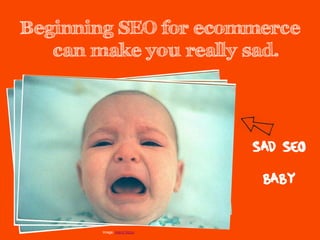
Beginning SEO for ecommerce
   can make you really sad.


                             SAD SEO
                              BABY
       Image: Island Spice
...but once you get going:


                        SEO stream roller


     Image: net_efekt
Resulting in:


                        Search Traffic!


  Image: Lingaraj G J
Introduction
We’ll talk about:
• Easy on-page essentials
• Product pages
• Keyword research & search volume
• Internal link structure
• Categorisation, URLs & duplicate content
• Increasing content
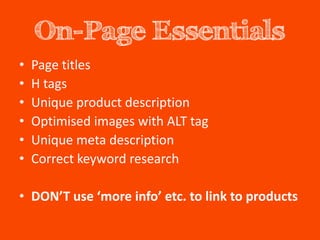
On-Page Essentials
•   Page titles
•   H tags
•   Unique product description
•   Optimised images with ALT tag
•   Unique meta description
•   Correct keyword research

• DON’T use ‘more info’ etc. to link to products
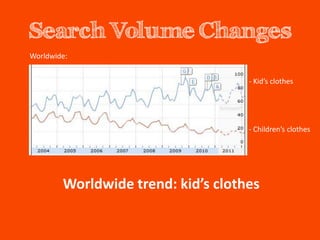
Search Volume Changes
Worldwide:


                                    - Kid’s clothes


                                    - Children’s clothes


        Worldwide trend: kid’s clothes
Search Volume Changes
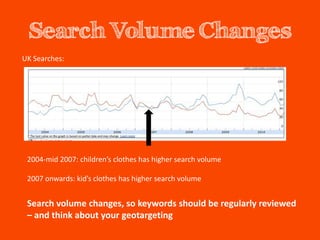
UK Searches:


 2004-mid 2007: children’s clothes has higher search volume

 2007 onwards: kid’s clothes has higher search volume


 Search volume changes, so keywords should be regularly reviewed
 – and think about your geotargeting
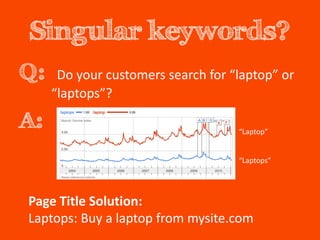
Singular keywords?
Q:    Do your customers search for “laptop” or
     “laptops”?

A:                                  “Laptop”


                                    “Laptops”


Page Title Solution:
Laptops: Buy a laptop from mysite.com
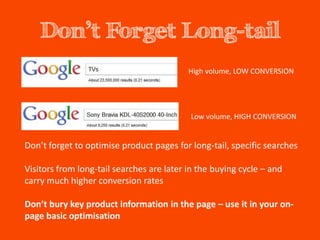
Don’t Forget Long-tail
                                           High volume, LOW CONVERSION


                                           Low volume, HIGH CONVERSION


Don’t forget to optimise product pages for long-tail, specific searches

Visitors from long-tail searches are later in the buying cycle – and
carry much higher conversion rates

Don’t bury key product information in the page – use it in your on-
page basic optimisation
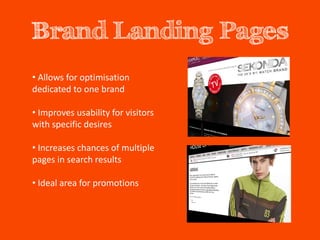
Brand Landing Pages
• Allows for optimisation
dedicated to one brand

• Improves usability for visitors
with specific desires

• Increases chances of multiple
pages in search results

• Ideal area for promotions
Product Descriptions
• Don’t use standard, manufacturer descriptions
• Don’t use second hand descriptions

          = duplicate content

 • User reviews provide fresh content and
 buyer reassurance
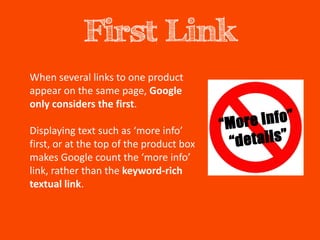
First Link
When several links to one product
appear on the same page, Google
only considers the first.

Displaying text such as ‘more info’
first, or at the top of the product box
makes Google count the ‘more info’
link, rather than the keyword-rich
textual link.
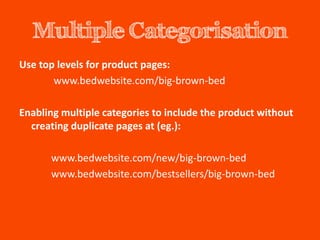
Multiple Categorisation
Use top levels for product pages:
       www.bedwebsite.com/big-brown-bed

Enabling multiple categories to include the product without
  creating duplicate pages at (eg.):

      www.bedwebsite.com/new/big-brown-bed
      www.bedwebsite.com/bestsellers/big-brown-bed
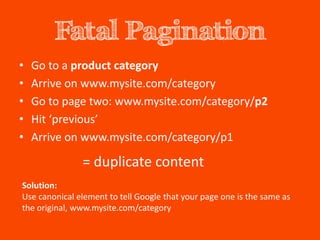
Fatal Pagination
•   Go to a product category
•   Arrive on www.mysite.com/category
•   Go to page two: www.mysite.com/category/p2
•   Hit ‘previous’
•   Arrive on www.mysite.com/category/p1

               = duplicate content
Solution:
Use canonical element to tell Google that your page one is the same as
the original, www.mysite.com/category
Session IDs
...are bad for SEO because:

• They create unique urls for each visit
(including search engines)

• Resulting in huge amounts of duplicated
content, which search engines hate

•Dillutes inbound link building efforts


Solution: Don’t use them! Consider using cookies as an alternative
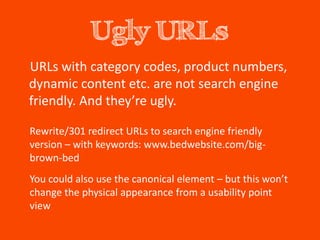
Ugly URLs
URLs with category codes, product numbers,
dynamic content etc. are not search engine
friendly. And they’re ugly.

Rewrite/301 redirect URLs to search engine friendly
version – with keywords: www.bedwebsite.com/big-
brown-bed
You could also use the canonical element – but this won’t
change the physical appearance from a usability point
view
Affiliates
• Don’t let it create duplicate content!
  Eg. www.mysite.com/product/?affid68
• TEST OUT: • Canonical element: rel="canonical“
              • 301 redirect to original page?


NEVER provide identical product
descriptions to third parties. Produce two
data feeds – internal and external.
TALK!
The biggest challenge in ecommerce SEO is creating
enough content – content that isn’t made up of images
and price tags

Solutions:
• Blog, blog, and more blog.
• Social elements
• Reviews
• Advice
• Category write ups/summaries (at top of page one)
• Competitions (also great for linkbuilding)
Tom Cox
www.oxfordonlinemarketing.com
info@oxfordonlinemarketing.com
Twitter: @oxonlinemktg

SEO For Ecommerce

  • 1.
  • 2.
    Beginning SEO forecommerce can make you really sad. SAD SEO BABY Image: Island Spice
  • 3.
    ...but once youget going: SEO stream roller Image: net_efekt
  • 4.
    Resulting in: Search Traffic! Image: Lingaraj G J
  • 5.
    Introduction We’ll talk about: •Easy on-page essentials • Product pages • Keyword research & search volume • Internal link structure • Categorisation, URLs & duplicate content • Increasing content
  • 6.
    On-Page Essentials • Page titles • H tags • Unique product description • Optimised images with ALT tag • Unique meta description • Correct keyword research • DON’T use ‘more info’ etc. to link to products
  • 7.
    Search Volume Changes Worldwide: - Kid’s clothes - Children’s clothes Worldwide trend: kid’s clothes
  • 8.
    Search Volume Changes UKSearches: 2004-mid 2007: children’s clothes has higher search volume 2007 onwards: kid’s clothes has higher search volume Search volume changes, so keywords should be regularly reviewed – and think about your geotargeting
  • 9.
    Singular keywords? Q: Do your customers search for “laptop” or “laptops”? A: “Laptop” “Laptops” Page Title Solution: Laptops: Buy a laptop from mysite.com
  • 10.
    Don’t Forget Long-tail High volume, LOW CONVERSION Low volume, HIGH CONVERSION Don’t forget to optimise product pages for long-tail, specific searches Visitors from long-tail searches are later in the buying cycle – and carry much higher conversion rates Don’t bury key product information in the page – use it in your on- page basic optimisation
  • 11.
    Brand Landing Pages •Allows for optimisation dedicated to one brand • Improves usability for visitors with specific desires • Increases chances of multiple pages in search results • Ideal area for promotions
  • 12.
    Product Descriptions • Don’tuse standard, manufacturer descriptions • Don’t use second hand descriptions = duplicate content • User reviews provide fresh content and buyer reassurance
  • 13.
    First Link When severallinks to one product appear on the same page, Google only considers the first. Displaying text such as ‘more info’ first, or at the top of the product box makes Google count the ‘more info’ link, rather than the keyword-rich textual link.
  • 14.
    Multiple Categorisation Use toplevels for product pages: www.bedwebsite.com/big-brown-bed Enabling multiple categories to include the product without creating duplicate pages at (eg.): www.bedwebsite.com/new/big-brown-bed www.bedwebsite.com/bestsellers/big-brown-bed
  • 15.
    Fatal Pagination • Go to a product category • Arrive on www.mysite.com/category • Go to page two: www.mysite.com/category/p2 • Hit ‘previous’ • Arrive on www.mysite.com/category/p1 = duplicate content Solution: Use canonical element to tell Google that your page one is the same as the original, www.mysite.com/category
  • 16.
    Session IDs ...are badfor SEO because: • They create unique urls for each visit (including search engines) • Resulting in huge amounts of duplicated content, which search engines hate •Dillutes inbound link building efforts Solution: Don’t use them! Consider using cookies as an alternative
  • 17.
    Ugly URLs URLs withcategory codes, product numbers, dynamic content etc. are not search engine friendly. And they’re ugly. Rewrite/301 redirect URLs to search engine friendly version – with keywords: www.bedwebsite.com/big- brown-bed You could also use the canonical element – but this won’t change the physical appearance from a usability point view
  • 18.
    Affiliates • Don’t letit create duplicate content! Eg. www.mysite.com/product/?affid68 • TEST OUT: • Canonical element: rel="canonical“ • 301 redirect to original page? NEVER provide identical product descriptions to third parties. Produce two data feeds – internal and external.
  • 19.
    TALK! The biggest challengein ecommerce SEO is creating enough content – content that isn’t made up of images and price tags Solutions: • Blog, blog, and more blog. • Social elements • Reviews • Advice • Category write ups/summaries (at top of page one) • Competitions (also great for linkbuilding)
  • 20.