SpirOnto:
Semantically Enhanced
Patient Records for Reflective
Learning on Spiritual Care in
Palliative Care
ARTEL Workshop 2013, Paphos, Cyprus
Christine Kunzmann, Traugott Roser,
Andreas Schmidt, Tanja Stiehl
http://spironto.de 2Sep 2013
Motivation
 Palliative care is a multi-professional environment
 Doctors
 Nurses
 Chaplains/Spiritual caregivers
 Social workers
 Patient record as „boundary object“
 Information store and basis for decision making
 Foundation for reflection („Supervision“)
 Gaining evidence and insight into spirtual care
Reflective practice
 Demanding nature of child palliative care
 Regular reflective practice in informal group sessions
 Narratives about individual patients
 Development of a deep and rich understanding of their
work
 At longer time intervals: institutionalized supervision
http://spironto.de 3Sep 2013
Spiritual care
http://spironto.de 4Sep 2013
 Culturally sensitive spiritual care is as important as medical
and care in palliative situation
 Currently, however, spiritual care is not seen as a systematic
approach with observable effects (as medicine or care)
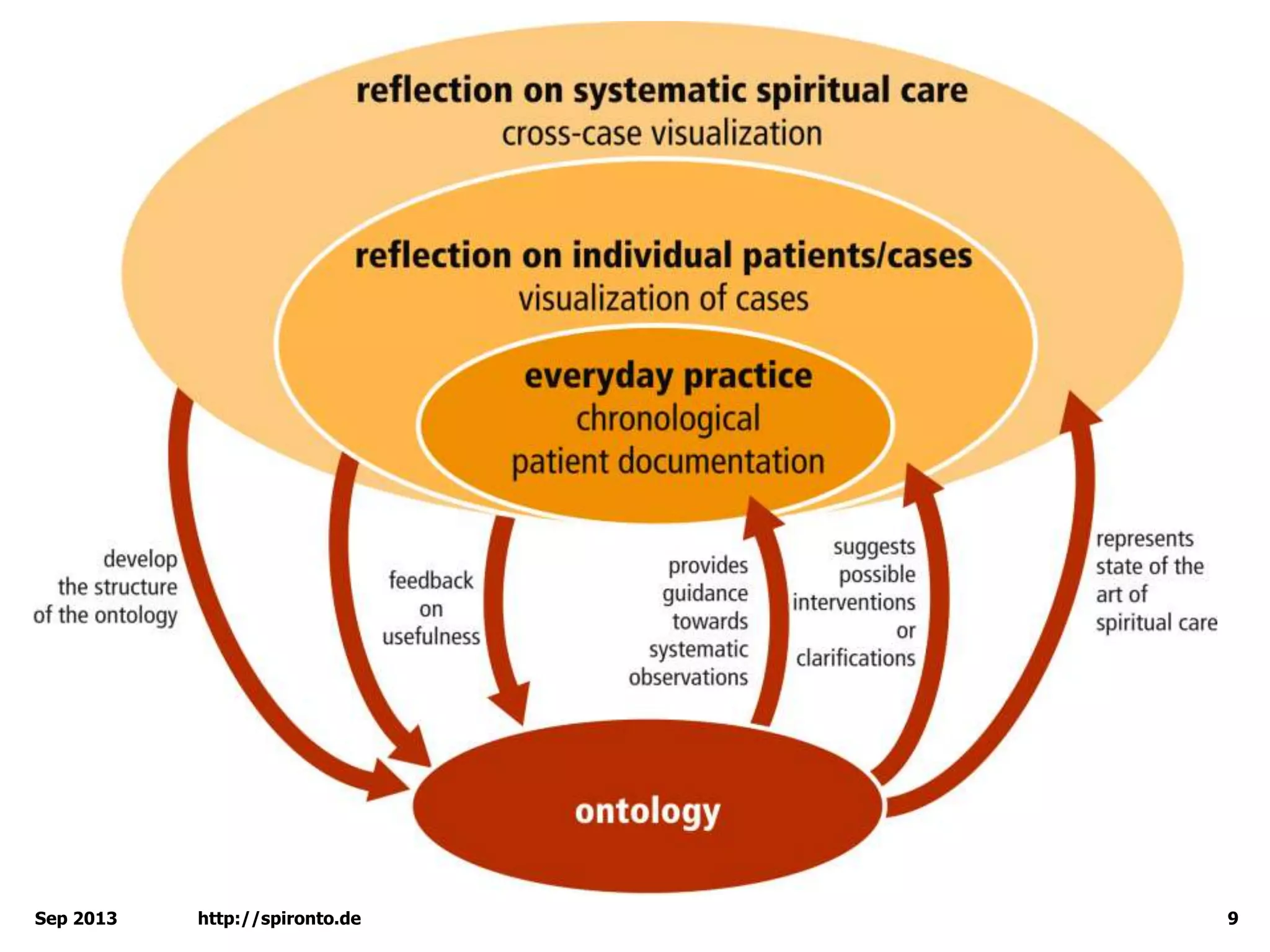
 For a basis for a systematic approach, an concept network
(„ontology“) was created which was derived from existing
documentation
 Facilitates finding gaps and possibilities for action beyond
one‘s own profession
Ontology development
 Ontology developed based on 143 existing patient
records (on paper, years 2004-2009)
 Qualitative analysis
 Formative evaluation of the resulting ontology with staff
members with various backgrounds
http://spironto.de 5Sep 2013
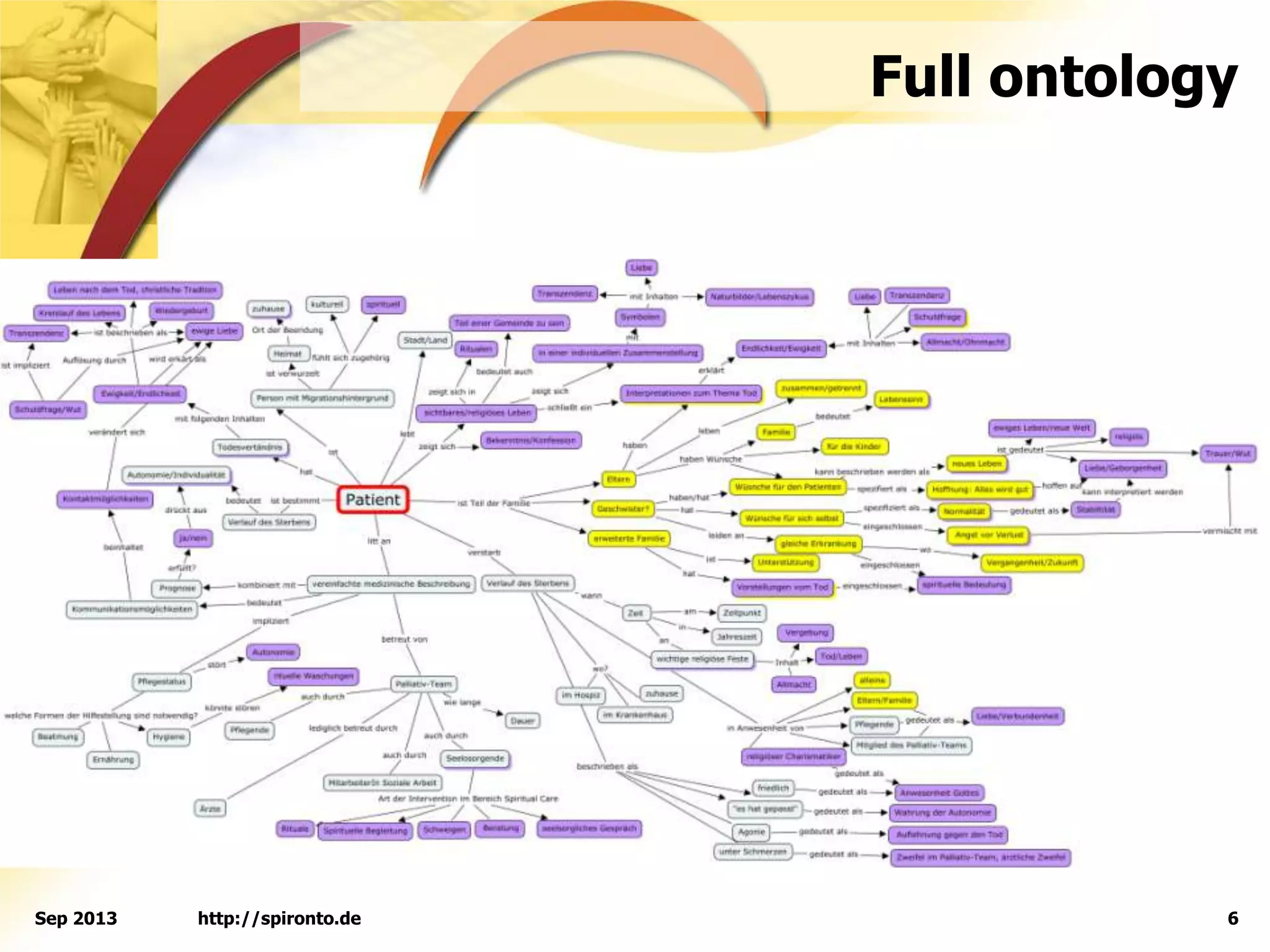
Full ontology
http://spironto.de 6Sep 2013
Ontology
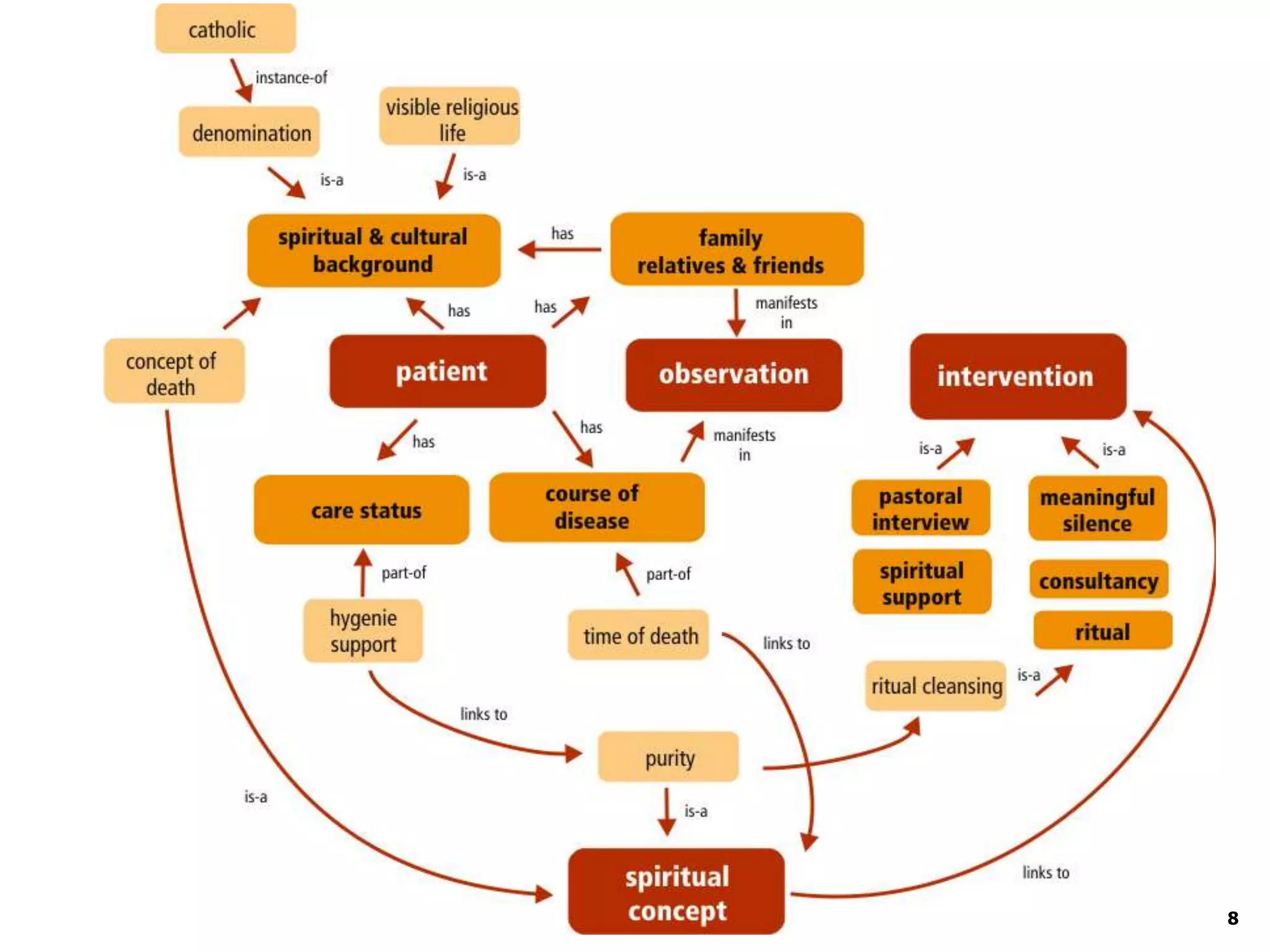
 Facts about a patient or its social environment,
demographics, disease/care status, cultural background
 Observations that led to the identification of the facts
(timestamp and a possibly rich description)
 Spiritual concepts that interpret facts, such as eternity
and finiteness, eternal love, guilt, purity, powerlessness
vs. almightiness, or autonomy
 context-dependent interpretations
 Spiritual interventions are possible spiritual care
activities, e.g., support, meaningful silence, pastoral
interviews, practical consultancy, or rituals.
http://spironto.de 7Sep 2013
http://spironto.de 8
http://spironto.de 9Sep 2013
The System
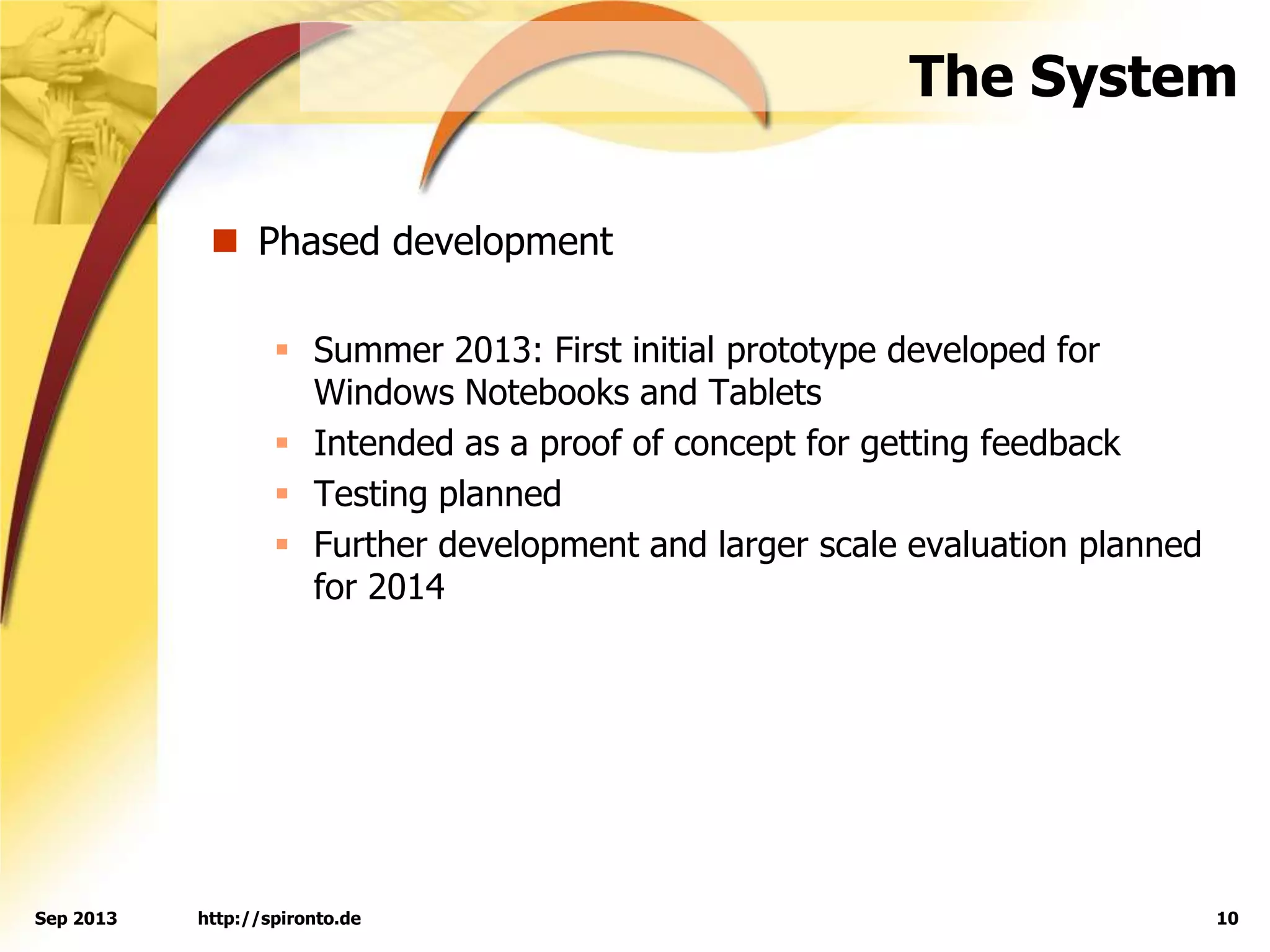
 Phased development
 Summer 2013: First initial prototype developed for
Windows Notebooks and Tablets
 Intended as a proof of concept for getting feedback
 Testing planned
 Further development and larger scale evaluation planned
for 2014
http://spironto.de 10Sep 2013
http://spironto.de 11Sep 2013
http://spironto.de 12Sep 2013
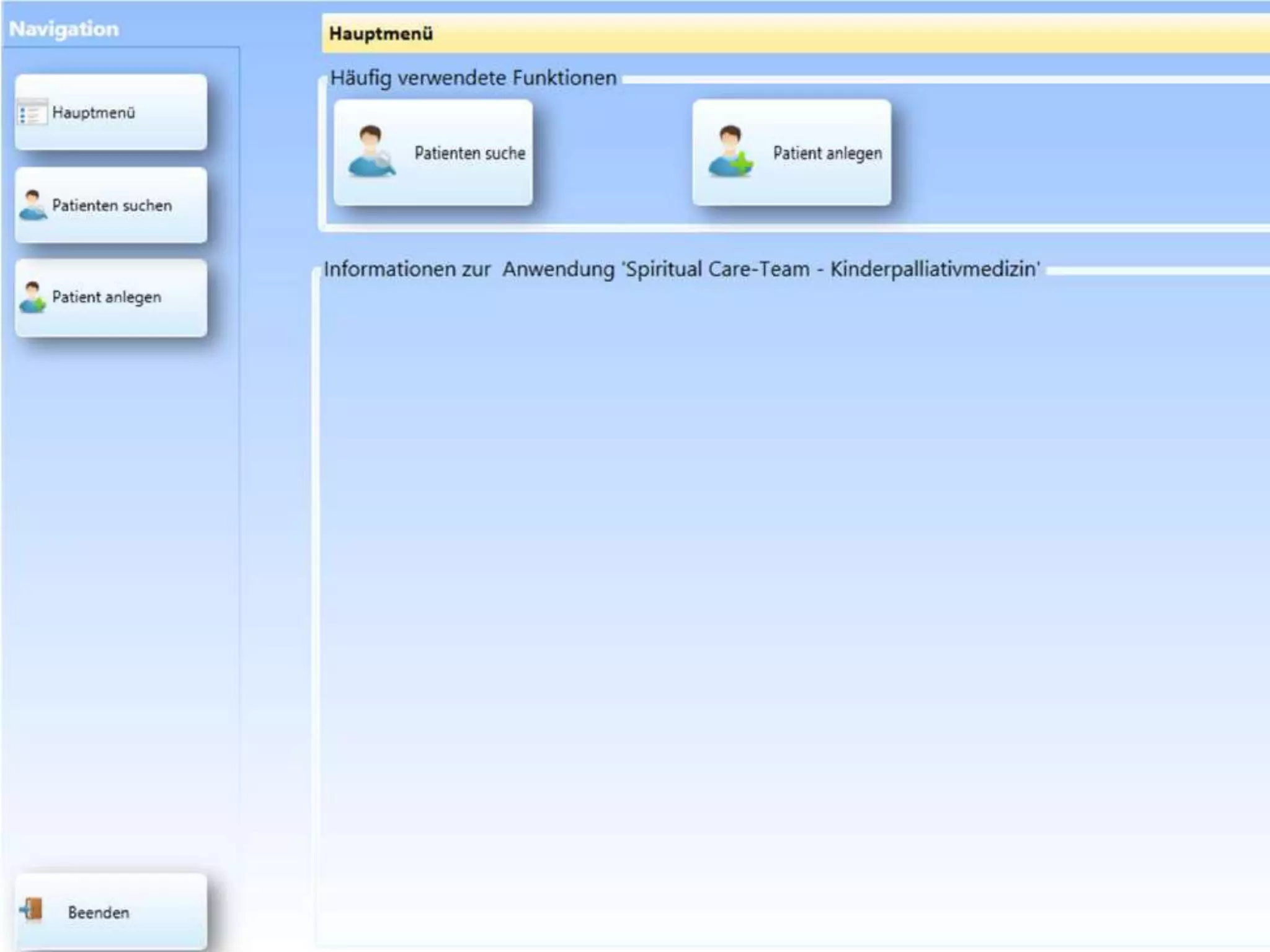
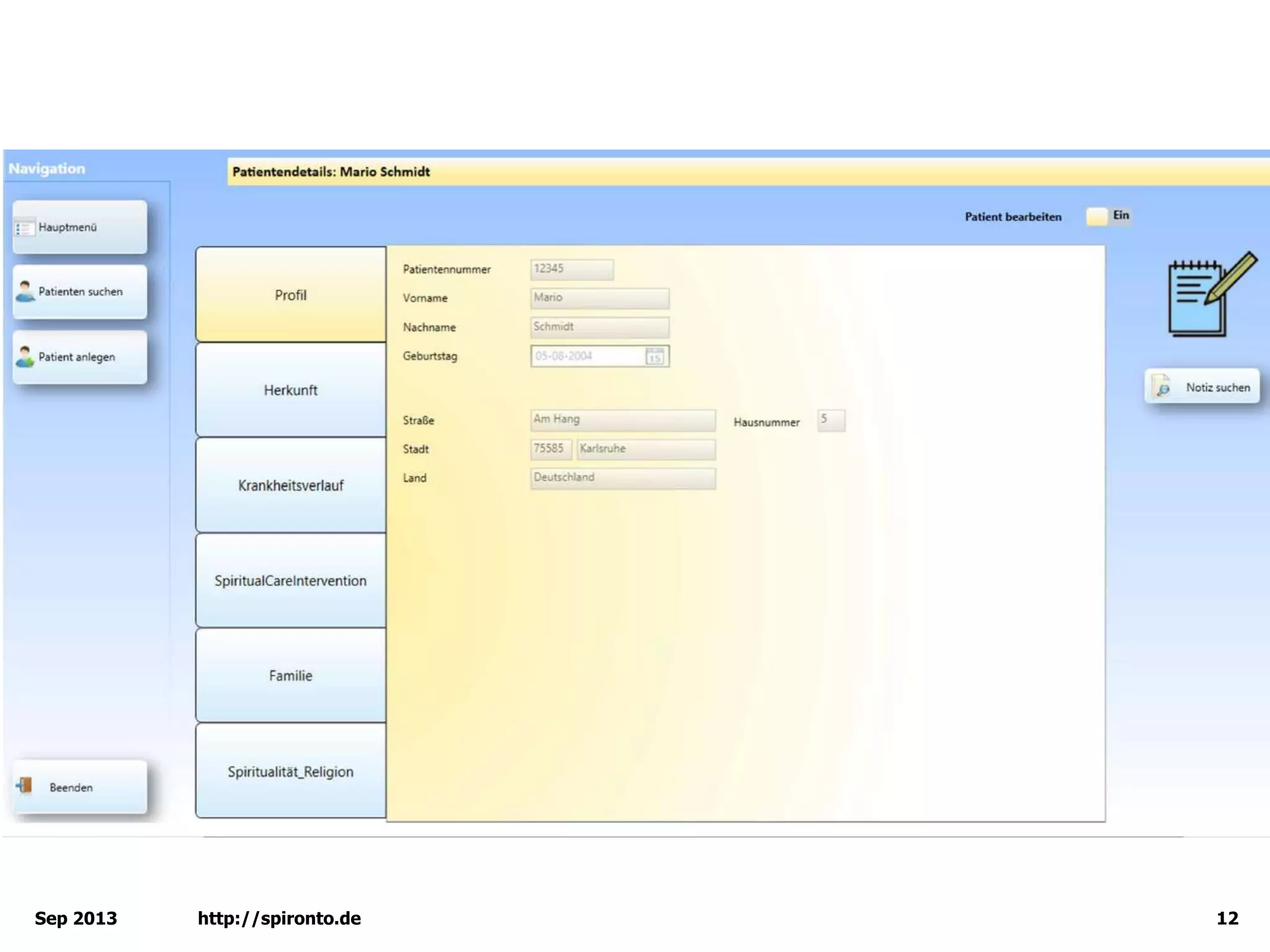
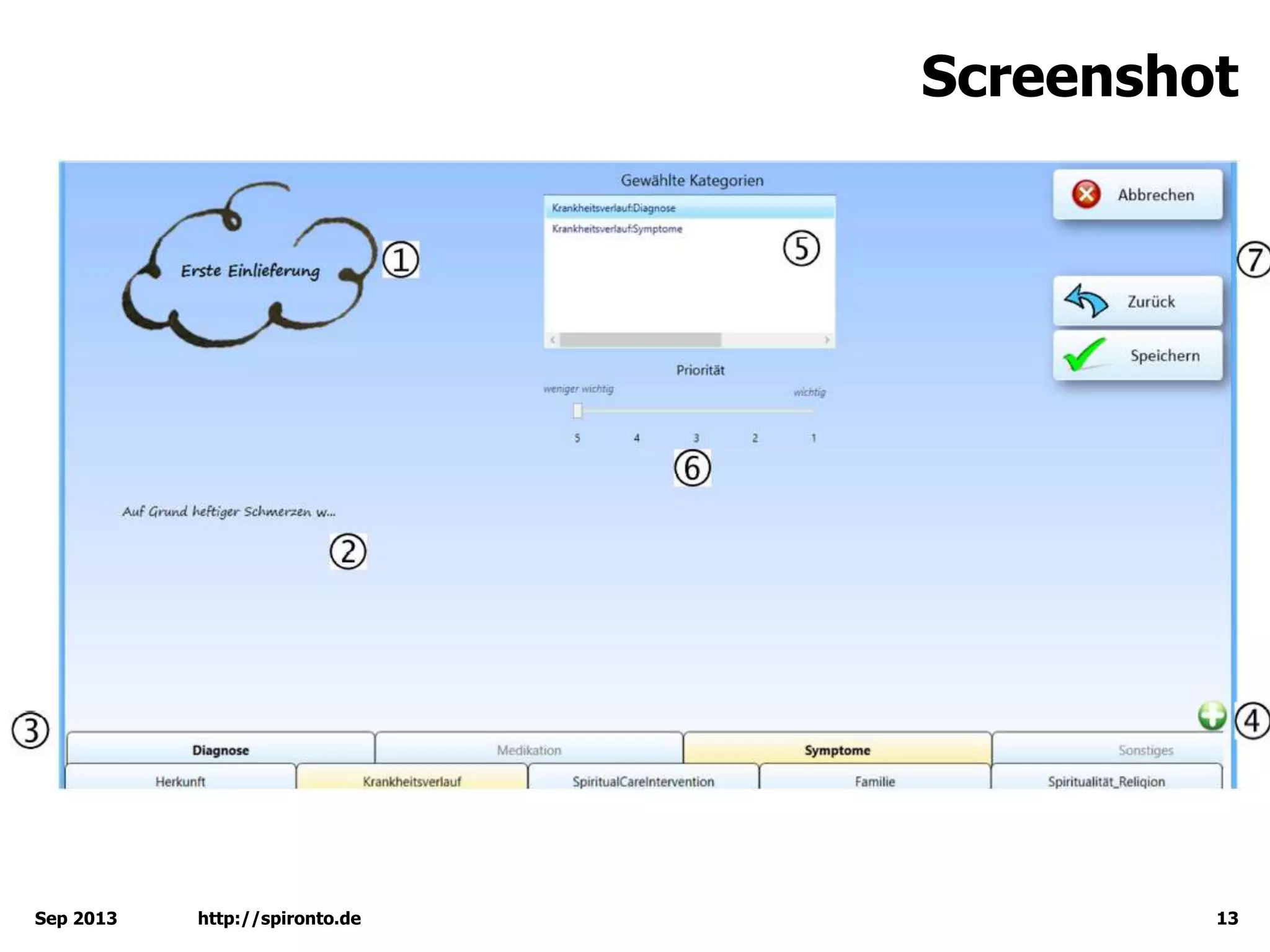
Screenshot
http://spironto.de 13Sep 2013
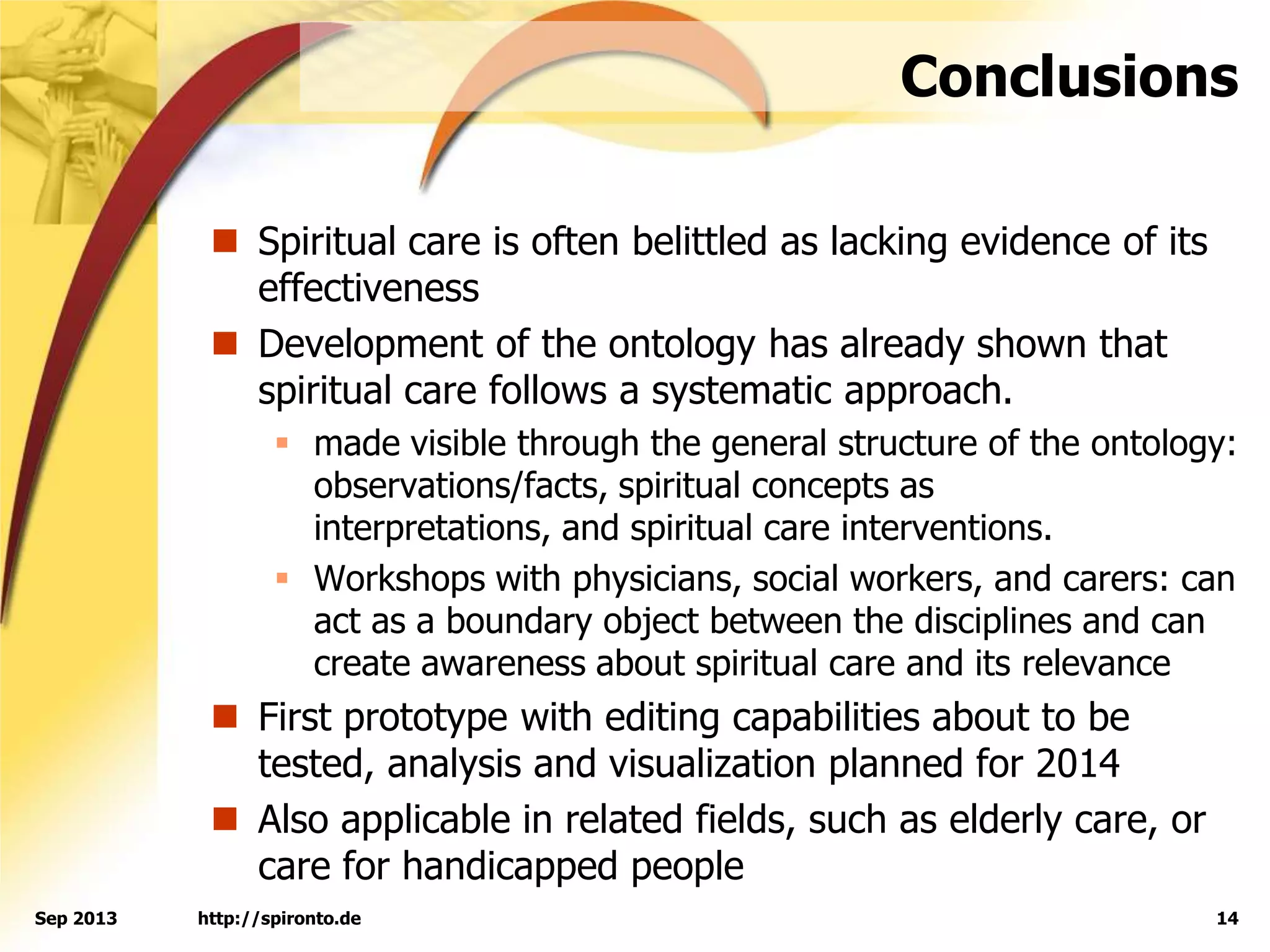
Conclusions
 Spiritual care is often belittled as lacking evidence of its
effectiveness
 Development of the ontology has already shown that
spiritual care follows a systematic approach.
 made visible through the general structure of the ontology:
observations/facts, spiritual concepts as
interpretations, and spiritual care interventions.
 Workshops with physicians, social workers, and carers: can
act as a boundary object between the disciplines and can
create awareness about spiritual care and its relevance
 First prototype with editing capabilities about to be
tested, analysis and visualization planned for 2014
 Also applicable in related fields, such as elderly care, or
care for handicapped people
http://spironto.de 14Sep 2013
Team
 Christine Kunzmann, Pontydysgu, UK
kontakt@christine-kunzmann.de
 Traugott Roser, University of Münster, Germany
traugott.roser@uni-muenster.de
 Andreas P. Schmidt, Karlsruhe University of Applied
Sciences, Germany
andreas_peter.schmidt@hs-karlsruhe.de
 Tanja Stiehl, Center of Pediatric Palliative Care, LMU
Munich, Germany
tanja.stiehl@med.uni-muenchen.de
http://spironto.de 15Sep 2013

SpirOnto: Semantically Enhanced Patient Records for Reflective Learning on Spiritual Care in Palliative Care

  • 1.
    SpirOnto: Semantically Enhanced Patient Recordsfor Reflective Learning on Spiritual Care in Palliative Care ARTEL Workshop 2013, Paphos, Cyprus Christine Kunzmann, Traugott Roser, Andreas Schmidt, Tanja Stiehl
  • 2.
    http://spironto.de 2Sep 2013 Motivation Palliative care is a multi-professional environment  Doctors  Nurses  Chaplains/Spiritual caregivers  Social workers  Patient record as „boundary object“  Information store and basis for decision making  Foundation for reflection („Supervision“)  Gaining evidence and insight into spirtual care
  • 3.
    Reflective practice  Demandingnature of child palliative care  Regular reflective practice in informal group sessions  Narratives about individual patients  Development of a deep and rich understanding of their work  At longer time intervals: institutionalized supervision http://spironto.de 3Sep 2013
  • 4.
    Spiritual care http://spironto.de 4Sep2013  Culturally sensitive spiritual care is as important as medical and care in palliative situation  Currently, however, spiritual care is not seen as a systematic approach with observable effects (as medicine or care)  For a basis for a systematic approach, an concept network („ontology“) was created which was derived from existing documentation  Facilitates finding gaps and possibilities for action beyond one‘s own profession
  • 5.
    Ontology development  Ontologydeveloped based on 143 existing patient records (on paper, years 2004-2009)  Qualitative analysis  Formative evaluation of the resulting ontology with staff members with various backgrounds http://spironto.de 5Sep 2013
  • 6.
  • 7.
    Ontology  Facts abouta patient or its social environment, demographics, disease/care status, cultural background  Observations that led to the identification of the facts (timestamp and a possibly rich description)  Spiritual concepts that interpret facts, such as eternity and finiteness, eternal love, guilt, purity, powerlessness vs. almightiness, or autonomy  context-dependent interpretations  Spiritual interventions are possible spiritual care activities, e.g., support, meaningful silence, pastoral interviews, practical consultancy, or rituals. http://spironto.de 7Sep 2013
  • 8.
  • 9.
  • 10.
    The System  Phaseddevelopment  Summer 2013: First initial prototype developed for Windows Notebooks and Tablets  Intended as a proof of concept for getting feedback  Testing planned  Further development and larger scale evaluation planned for 2014 http://spironto.de 10Sep 2013
  • 11.
  • 12.
  • 13.
  • 14.
    Conclusions  Spiritual careis often belittled as lacking evidence of its effectiveness  Development of the ontology has already shown that spiritual care follows a systematic approach.  made visible through the general structure of the ontology: observations/facts, spiritual concepts as interpretations, and spiritual care interventions.  Workshops with physicians, social workers, and carers: can act as a boundary object between the disciplines and can create awareness about spiritual care and its relevance  First prototype with editing capabilities about to be tested, analysis and visualization planned for 2014  Also applicable in related fields, such as elderly care, or care for handicapped people http://spironto.de 14Sep 2013
  • 15.
    Team  Christine Kunzmann,Pontydysgu, UK kontakt@christine-kunzmann.de  Traugott Roser, University of Münster, Germany traugott.roser@uni-muenster.de  Andreas P. Schmidt, Karlsruhe University of Applied Sciences, Germany andreas_peter.schmidt@hs-karlsruhe.de  Tanja Stiehl, Center of Pediatric Palliative Care, LMU Munich, Germany tanja.stiehl@med.uni-muenchen.de http://spironto.de 15Sep 2013