PHOTOVOLATAIC SYSTEMS
SHAGG ENERGY LTD
www.shaggenergies.com
DEFINITION TO SPV
 Definition: A Photovoltaic (PV) system is an electrical system
consisting of and array of one or more PV modules, conductors,
electrical components, and one or more loads.
 In More descriptive & simple words:
 Solar cells, also called photovoltaic (PV) cells by scientists,
convert sunlight directly into electricity. PV gets its name from the
process of converting light (photons) to electricity (voltage),
which is called the PV effect.
 ----- Grid Tie –Systems
 ----- Off Grid Systems
BASIC COMPONENTS IN SPV
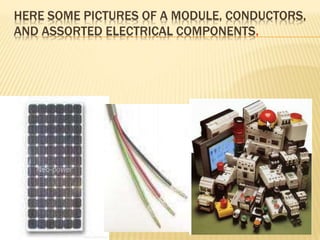
 1. Modules – solar electric collectors. 3 basic types in the marketplace:
Mono crystalline, poly crystalline, thin film
2. Array – modules connected together into a system

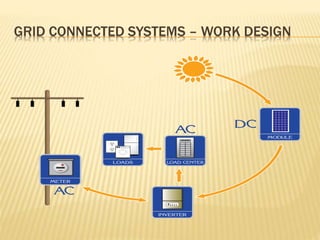
3. Inverter – converts the DC power produced by the modules to A/C
 4. Grid Tie Inverter – converts DC to AC and feeds the utility grid with
the A/C power
 5. Charge Controller – regulates the power going to the batteries
 6. Batteries – stores DC power
HERE SOME PICTURES OF A MODULE, CONDUCTORS,
AND ASSORTED ELECTRICAL COMPONENTS.
GRID TIE- GRID CONNECTED SYSTEMS
 Grid Tie System is the simplest and
most cost effective way to connect
PV modules to regular utility power.
Grid-Connected systems can
supply solar power to your home
and use utility power as a backup.
 As long as there is enough
electricity flowing in from your PV
system, no electricity will flow in
from the utility company.
If your system is generating more
power than you are using, the
excess will flow back into the grid,
turning your meter backwards
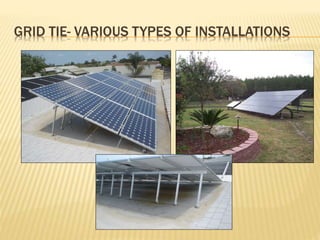
GRID TIE- VARIOUS TYPES OF INSTALLATIONS
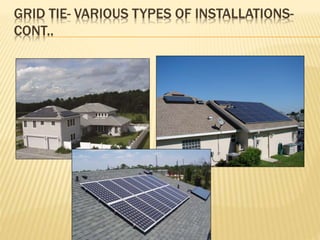
GRID TIE- VARIOUS TYPES OF INSTALLATIONS-
CONT..
GRID CONNECTED SYSTEMS – WORK DESIGN
NET METERING
 With Net Metering you can benefit from laws and regulations that
require "net" electric meter reading.
 How it Works:
The customer is billed for the net electricity purchased from the
utility over the entire billing period—that is, the difference
between the electricity coming from the power grid and the
electricity generated by the PV system.
Through net metering, the customer obtains the full retail
electricity rate—rather than the much lower wholesale rate—for
kilowatt-hours of PV- produced electricity sent to the utility power
grid.
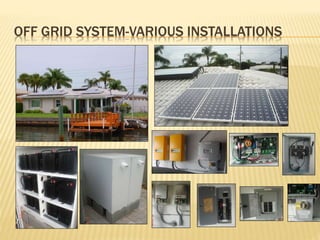
OFF GRID SYSTEM
 Although they are most common in
remote locations without utility service,
off-grid solar-electric systems can work
anywhere. These systems operate
independently from the grid to provide
all of a household’s electricity. These
systems require a battery bank to store
the solar electricity for use during
nighttime or cloudy weather, a charge
controller to protect the battery bank
from overcharge, an inverter to convert
the DC PV array power to AC for use
with AC household appliances, and all
the required disconnects, monitoring, and
associated electrical safety gear.
OFF GRID SYSTEM-VARIOUS INSTALLATIONS
OFF GRID SYSTEM - WORK DESIGN
Do You Have
Any Questions?
Please free to reach us at 0141-5108383,
9024021051

SEL'S- PHOTOVOLATAIC SYSTEMS

  • 1.
    PHOTOVOLATAIC SYSTEMS SHAGG ENERGYLTD www.shaggenergies.com
  • 2.
    DEFINITION TO SPV Definition: A Photovoltaic (PV) system is an electrical system consisting of and array of one or more PV modules, conductors, electrical components, and one or more loads.  In More descriptive & simple words:  Solar cells, also called photovoltaic (PV) cells by scientists, convert sunlight directly into electricity. PV gets its name from the process of converting light (photons) to electricity (voltage), which is called the PV effect.  ----- Grid Tie –Systems  ----- Off Grid Systems
  • 3.
    BASIC COMPONENTS INSPV  1. Modules – solar electric collectors. 3 basic types in the marketplace: Mono crystalline, poly crystalline, thin film 2. Array – modules connected together into a system  3. Inverter – converts the DC power produced by the modules to A/C  4. Grid Tie Inverter – converts DC to AC and feeds the utility grid with the A/C power  5. Charge Controller – regulates the power going to the batteries  6. Batteries – stores DC power
  • 4.
    HERE SOME PICTURESOF A MODULE, CONDUCTORS, AND ASSORTED ELECTRICAL COMPONENTS.
  • 5.
    GRID TIE- GRIDCONNECTED SYSTEMS  Grid Tie System is the simplest and most cost effective way to connect PV modules to regular utility power. Grid-Connected systems can supply solar power to your home and use utility power as a backup.  As long as there is enough electricity flowing in from your PV system, no electricity will flow in from the utility company. If your system is generating more power than you are using, the excess will flow back into the grid, turning your meter backwards
  • 6.
    GRID TIE- VARIOUSTYPES OF INSTALLATIONS
  • 7.
    GRID TIE- VARIOUSTYPES OF INSTALLATIONS- CONT..
  • 8.
    GRID CONNECTED SYSTEMS– WORK DESIGN
  • 9.
    NET METERING  WithNet Metering you can benefit from laws and regulations that require "net" electric meter reading.  How it Works: The customer is billed for the net electricity purchased from the utility over the entire billing period—that is, the difference between the electricity coming from the power grid and the electricity generated by the PV system. Through net metering, the customer obtains the full retail electricity rate—rather than the much lower wholesale rate—for kilowatt-hours of PV- produced electricity sent to the utility power grid.
  • 10.
    OFF GRID SYSTEM Although they are most common in remote locations without utility service, off-grid solar-electric systems can work anywhere. These systems operate independently from the grid to provide all of a household’s electricity. These systems require a battery bank to store the solar electricity for use during nighttime or cloudy weather, a charge controller to protect the battery bank from overcharge, an inverter to convert the DC PV array power to AC for use with AC household appliances, and all the required disconnects, monitoring, and associated electrical safety gear.
  • 11.
  • 12.
  • 13.
    OFF GRID SYSTEM- WORK DESIGN
  • 14.
    Do You Have AnyQuestions? Please free to reach us at 0141-5108383, 9024021051