Selecting & Implementing Interventions – Assignment #4
image1.png
image2.png
image3.png
Behavioral Interventions
Behav. Intervent. 19: 205–228 (2004)
Published online in Wiley InterScience
(www.interscience.wiley.com). DOI: 10.1002/bin.161
MODIFICATIONS TOBASIC FUNCTIONAL
ANALYSIS PROCEDURES IN SCHOOL
SETTINGS: A SELECTIVE REVIEW
Janet Ellis* and Sandy Magee
University of North Texas, Denton, TX, USA
This review describes applied behavioral research involving
functional analyses conducted in public
school settings. Functional analyses in public school settings
often require added conditions. The
modified conditions described herein include changes to
experimental designs, antecedent changes that
include task variation, tasks included, idiosyncratic variables,
physiological conditions, and modified
escape conditions. Finally, consequent modifications cover peer
attention, tangibles, varied attention,
and altered escape. Copyright # 2004 John Wiley & Sons, Ltd.
INTRODUCTION
The primary body of functional analysis (FA) literature has
historically focused on
persons with developmental disabilities in
institutional/residential settings who
engaged in severe self-injurious behavior (SIB). Mace and Lalli
(1991) noted that
interventions based on FAs conducted in experimental settings
under highly
controlled analog conditions may be effective only to the extent
that those analog
conditions match the subject’s natural environment. Johnston
(1993) recommended
that, once a procedure has been experimentally developed, its
value and applicability
should be assessed under practical/natural conditions. Further,
passage of Public Law
105-17, Individuals with Disabilities Education Act (IDEA), in
1997 mandated that a
‘functional behavioral assessment’ be conducted on students
who exhibit significant
behavior and adjustment problems. For at least these reasons,
FA research has moved
beyond the tightly controlled laboratory setting and into more
natural environments
involving more diverse populations. Development of behavioral
assessments of
problem behavior in school settings had empirical roots—for
example, 36 years ago
Thomas, Becker, and Armstrong (1968) noted that classroom
teacher’s disapproval
increased rates of student’s disruptive behavior. These
assessments allowed effective
Copyright # 2004 John Wiley & Sons, Ltd.
*Correspondence to: Janet Ellis, Department of Behavior
Analysis, University of North Texas, P.O. Box 310919,
Denton, TX 76203-0919, USA. E-mail: [email protected]
1099078x, 2004, 3, D
ow
nloaded from
https://onlinelibrary.w
iley.com
/doi/10.1002/bin.161 by B
ehavior A
nalyst C
ertification, W
iley O
nline L
ibrary on [14/11/2022]. See the T
erm
s and C
onditions (https://onlinelibrary.w
iley.com
/term
s-and-conditions) on W
iley O
nline L
ibrary for rules of use; O
A
articles are governed by the applicable C
reative C
om
m
ons L
icense
behavior change procedures to be implemented in the classroom
across a wide range
of student behavior (Thomas et al., 1968; Zimmerman &
Zimmerman, 1962). Not
until the early 1990s did FA procedures begin to proliferate in
various school
environments (Northup et al., 1994; Sasso et al., 1992).
Iwata, Dorsey, Slifer, Bauman, and Richman (1982/1994)
proposed a general
model for analysis of the determinants for problem behavior,
which concurrently
assessed the target responses across four conditions (three tests
and one control)
using the multielement experimental design (Hanley, Iwata, &
McCord, 2003). While
there are two frequently reported types of FA, the antecedent–
behavior (AB) model
(Carr & Durand, 1985) and the antecedent–behavior–
consequence (ABC) model
(Iwata et al., 1982/1994), the preponderance of data reported
(87%) implemented/
involved the ABC model (Hanley et al., 2003). Furthermore,
because potential
reinforcers are not manipulated in the AB FA, and consequences
maintaining
problem behavior must be inferred, the ABC model is said to
provide a more rigorous
demonstration of causation (Hanley et al., 2003). Finally, the
ABC FA model has
evolved through changes to the four conditions initially
described in the Iwata et al.
(1982/1994) seminal study, and implemented in a majority of
the FAs reported (e.g.
alone/ignore condition—59.6%; attention—82.6%; play—
91.7%; demand/
escape—89.2%).
Ellis and Magee (1999) noted that the lack of experimental
control in the
classroom setting, the presence of uncontrolled sources of
reinforcement for aberrant
behavior, and the possible resistance of school personnel to the
remediation process
may necessitate modifications to the analog conditions
described by Iwata et al.
(1982/1994). Sugai, Horner, and Sprague (1999) suggested that
functional analysis
research continue so that the technology will meet the diverse
situations occurring in
our schools, homes, and communities. These authors
recommended increasing ‘the
efficiency of the process within a variety of environments,
especially public school
settings . . . ’ (p. 256). However, Axelrod (1987) warned that
without modification
school personnel may view functional analysis methodology as
complex, time-
consuming or contrived, and thus reject the FA out of hand.
‘Adoption of functional
analysis by teachers almost certainly will be governed by the
complexity of the
analysis and the time it requires’, according to Scruggs and
Mastropieri (1996, p. 70).
Walker and Sprague (1999) point out additional problems with
the functional
behavior analysis approach—i.e. lack of generalizability in
other settings or
situations; the labor intensity involved in establishing such
generalizability via
multiple FAs conducted for individual students; co-occurring
behavioral determi-
nants of problem behavior; restricting participant
characteristics; and artificiality of
many of the settings in which FAs have been conducted. By
modifying the specifics
of various FA conditions or adding new conditions, each of
these issues could be
directly addressed.
206 J. Ellis and S. Magee
Copyright # 2004 John Wiley & Sons, Ltd. Behav. Intervent. 19:
205–228 (2004)
1099078x, 2004, 3, D
ow
nloaded from
https://onlinelibrary.w
iley.com
/doi/10.1002/bin.161 by B
ehavior A
nalyst C
ertification, W
iley O
nline L
ibrary on [14/11/2022]. See the T
erm
s and C
onditions (https://onlinelibrary.w
iley.com
/term
s-and-conditions) on W
iley O
nline L
ibrary for rules of use; O
A
articles are governed by the applicable C
reative C
om
m
ons L
icense
WHY MODIFICATIONS ARE NECESSARY
While the degree of control afforded in laboratory settings may
explain why a
substantial proportion of FAs are not conducted in the client’s
natural setting, specific
topographies of problem behavior may occur exclusively in
particular environments.
Furthermore, interventions based on FAs conducted in those
settings may be more
effective in controlling the problem behavior in those settings
(Mace & Lalli, 1991).
Although this review focuses on FAs conducted in school
environments, the need for
modifiying FA conditions is not limited to academic settings.
FAs conducted in non-
laboratory settings such as hospitals, private homes, group
homes, outpatient clinics,
and supervised employment settings also have necessitated
revisions to the four
standard experimental conditions.
According to Broussard and Northup (1995), since 1985 school
psychologists have
been prevailed upon to emphasize assessment activities that will
directly lead to
effective interventions. Technology for treating behavior
problems has moved from
the traditional approach of selecting interventions from a
textbook list (e.g. time-out,
overcorrection, differential reinforcement of other behavior) to
one that is based
directly on the FA of the problem behavior itself. However,
those attempting to use
FA to assess in-school problem behavior have been met with
several challenges
requiring modifications to standard analog FA procedures.
These challenges include
unwillingness on the part of school administrators and
classroom personnel to allow
experimental analyses that explicitly set the occasion for high
rates of problem
behavior. Likewise, Iwata (1996) noted that, ‘Some clients have
unusual histories that
may require modifications to the [general set of] conditions or
the addition of new
conditions’. Finally, systematic alteration of the analysis
conditions may be needed
‘if initial assessment data are unclear, consistency of
implementation has been
verified, and conditions have been attempted using the reversal
design . . . ’ (p. 2).
Conducting an FA of problem behaviors may require
consideration of a wider array
of antecedent and consequent variables, interacting antecedent
events, and complex
classes of behavior. The goal of modifying the standard methods
is to increase the
confidence that results will generalize outside the analysis
setting and generate a
successful intervention. ‘Evolution of functional analysis
methodologies is inevitable
and is to be encouraged’ (Mace, 1994, p. 385).
Instead of modifying FA procedures in order to perfect the
‘true’ FA procedure,
Horner (1994) encourages the development, improvement, and
systematic compar-
ison of multiple procedures as the technology continues to be
refined. Existing
procedures that focus on a four-part taxonomy of variables that
maintain problem
behaviors (attention, tangible, escape, automatic) may require
modification to
improve the precision with which we identify the variables
controlling problem
behaviors in a specific context.
Modifications to basic functional analysis procedures 207
Copyright # 2004 John Wiley & Sons, Ltd. Behav. Intervent. 19:
205–228 (2004)
1099078x, 2004, 3, D
ow
nloaded from
https://onlinelibrary.w
iley.com
/doi/10.1002/bin.161 by B
ehavior A
nalyst C
ertification, W
iley O
nline L
ibrary on [14/11/2022]. See the T
erm
s and C
onditions (https://onlinelibrary.w
iley.com
/term
s-and-conditions) on W
iley O
nline L
ibrary for rules of use; O
A
articles are governed by the applicable C
reative C
om
m
ons L
icense
Iwata and his associates (1982/1994) developed a single
comprehensive analysis
procedure that tested all three of Carr’s (1977) hypotheses for
the controlling
conditions of SIB (positive reinforcement, negative
reinforcement, and independent
variables). These three hypotheses seemed to account for most
environmentally
based problem behaviors. Repp (1994) noted that, because
Iwata’s analysis procedure
passed tests of systematic replication, his FA model came to be
considered a
standardized approach, which can identify operant functions of
aberrant behavior and
lead to the development of effective interventions. The FA
procedure involves the
actual manipulation of environmental conditions to determine
their influences on
problem behavior. Analog conditions designed to simulate the
contingencies
suspected to maintain problem behaviors in the natural
environment are system-
atically presented and withdrawn while recording problem
behavior occurrences. The
standard analog conditions include alone, attention, play, and
demand conditions.
Conditions are presented in the order listed to limit unwanted
yet maximize desirable
carryover effects and are rapidly alternated in an arrangement
known as a
multielement format. The four standard analysis condition
procedures are described
below.
The basic assessment design of a functional analysis includes
four specific
conditions: alone, which is a condition that tests for automatic
reinforcement in that
there is no programmed source of social reinforcement—such as
attention—and if
the targeted behavior occurs at a high rate there is reason to
speculate that the
behavior itself is producing its own source of reinforcement (as
in self-stimulation);
attention, which is a condition that assesses the role of positive
social reinforcement
in maintaining high rates of targeted behavior; if the target
behavior is higher in this
condition than in others, the indications are that the behavior is
differentially
sensitive to attention as a consequence; play, which is the
control condition for the
other three test conditions because the student is not alone,
attention is available, and
no demands are placed on the student; demand, which tests for
social negative
reinforcement—such as consistently making requests for student
compliance with
the task at hand—in the form of escape from demands; if the
target behavior occurs
most frequently in this condition, it is possible that the behavior
is differentially
sensitive to escape as a reinforcer.
The purpose of this review is to examine the FA as it has been
modified for use in
analyzing variables accounting for problem behavior in school
settings. Based on the
Hanley et al. (2003) best practice recommendation, only
experimental studies that
manipulated potential maintaining consequences were included
in this review. Next,
FAs conducted with significant changes in the aforementioned
standard procedures
were considered modified. Articles that met the preceding
criteria are categorized
according to the specific variable(s) that were altered. In
reviewing this literature FA
modifications were found to fall into three general areas:
changes to experimental
208 J. Ellis and S. Magee
Copyright # 2004 John Wiley & Sons, Ltd. Behav. Intervent. 19:
205–228 (2004)
1099078x, 2004, 3, D
ow
nloaded from
https://onlinelibrary.w
iley.com
/doi/10.1002/bin.161 by B
ehavior A
nalyst C
ertification, W
iley O
nline L
ibrary on [14/11/2022]. See the T
erm
s and C
onditions (https://onlinelibrary.w
iley.com
/term
s-and-conditions) on W
iley O
nline L
ibrary for rules of use; O
A
articles are governed by the applicable C
reative C
om
m
ons L
icense
design, changes to antecedent components and changes to
consequent components
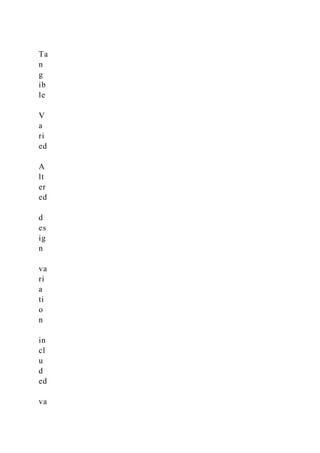
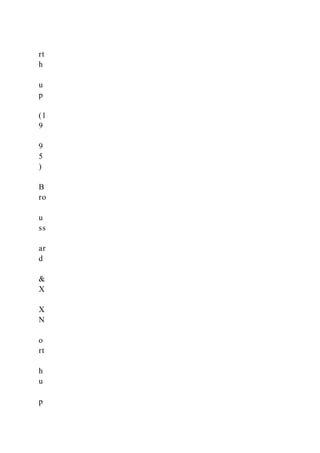
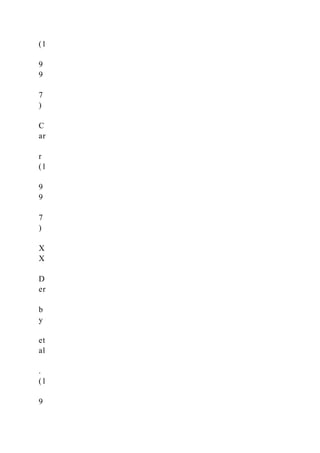
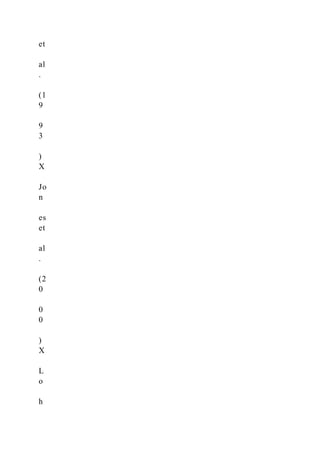
(Table 1). Specific research studies exemplifying each of the
aforementioned
modifications are discussed below.
EXPERIMENTAL DESIGN MODIFICATIONS
The modifications that will be described herein include FAs
using experimental
designs other than multielement/alternating treatment design or
those that conducted
conditions in a non-standard order (other than random or the
alone, attention, play,
demand sequence).
Berg et al. (2000) hypothesized that the sequence of FA
conditions could have a
substantial impact on outcomes—specifically, skewing the
effect of attention as a
reinforcer. These authors modified the order of condition
presentation to examine
sequence effects. They conducted a standard attention condition
following either a
play or a demand condition. They found higher target rates in
attention conditions
that followed demand conditions, versus those following the
play condition,
demonstrating that sequence of conditions can alter FA
outcomes.
Carr et al. (1997) conducted FAs using the Iwata et al.
(1982/1994) protocol, except
that the alone and play conditions were omitted. Because both
interview and natural
observations suggested the problem behavior was socially
motivated, only theattention
and demand conditions were run. Authors specifically state that
a reversal design, rather
than multielement, was used to allow comparison between these
two conditions.
In the work of Magee and Ellis (2000) initial standard initial
FAs resulted in the
occurrence of only one of several targeted problem behaviors.
The analysis condition
with the highest rates of that one target behavior was extended
and extinction applied
in a multiple baseline across target behavior design. This design
modification was
used because multiple behaviors were to be assessed and the
reinforcement of one of
those behaviors appeared to preclude the occurrence and
subsequent analysis of other
target behaviors apparently maintained by the same reinforcer.
Moore, Mueller, Dubard, Roberts, and Sterling-Turner (2002)
omitted the alone
condition from their initial FA at the request of the school.
Because this FA indicated
multiple control and authors suspected a false positive outcome,
the two conditions
with the highest frequency of problem behavior were continued
using a reversal
design. Subsequently, outcomes indicated attention-maintained
problem behavior,
not multiply controlled behavior.
One FA described by Northup et al. (1994) included no play
condition, and the
alone, attention, and escape conditions were conducted only
once each for 10 min.
These design changes (lack of condition replication) were made
due to the severity of
the participant’s self-injury, which often caused both bruising
and lacerations, and
Modifications to basic functional analysis procedures 209
Copyright # 2004 John Wiley & Sons, Ltd. Behav. Intervent. 19:
205–228 (2004)
1099078x, 2004, 3, D
ow
nloaded from
https://onlinelibrary.w
iley.com
/doi/10.1002/bin.161 by B
ehavior A
nalyst C
ertification, W
iley O
nline L
ibrary on [14/11/2022]. See the T
erm
s and C
onditions (https://onlinelibrary.w
iley.com
/term
s-and-conditions) on W
iley O
nline L
ibrary for rules of use; O
A
articles are governed by the applicable C
reative C
om
m
ons L
icense
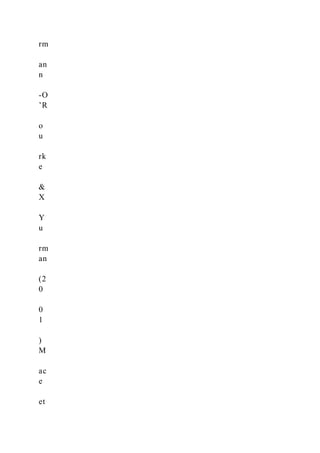
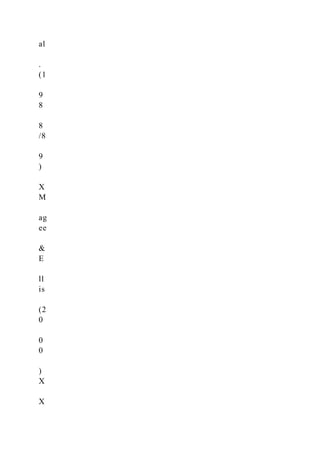
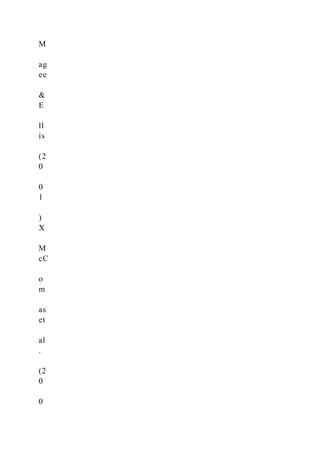
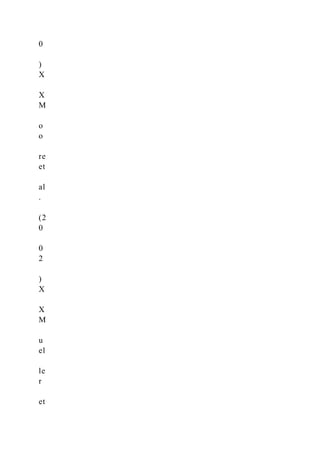
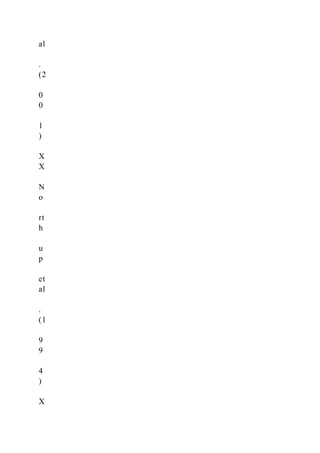
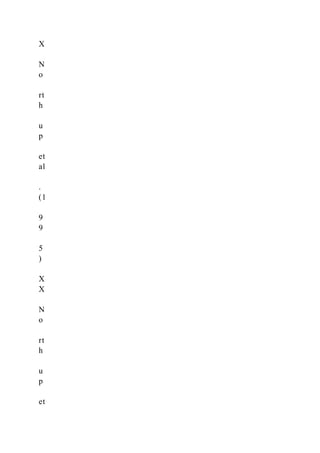
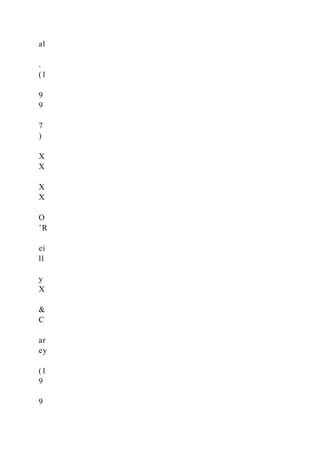
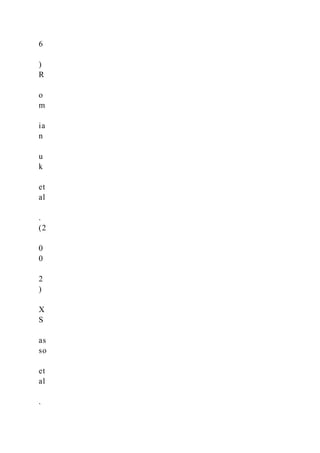
T
ab
le
1
.
S
u
m
m
ar
y
o
f
F
A
re
v
ie
w
ar
ti
cl
es
ca
te
g
o
ri
ze
d
b
y
ty
p
e
o
f
m
o
d
ifi
ca
ti
o
n
.
A
n
te
ce
d
en
t
C
h
a
n
g
es
C
o
n
se
q
u
en
t
ch
a
n
g
es
E
xp
er
im
en
ta
l
T
a
sk
T
a
sk
Id
io
sy
n
cr
a
ti
c
P
h
ys
io
lo
g
ic
a
l
E
sc
a
p
e
P
ee
r
Ta
n
g
ib
le
V
a
ri
ed
A
lt
er
ed
d
es
ig
n
va
ri
a
ti
o
n
in
cl
u
d
ed
va
ri
a
b
le
co
n
d
it
io
n
s
so
ci
a
l
a
tt
en
ti
o
n
a
tt
en
ti
o
n
es
ca
p
e
B
er
g
et
al
.
(2
0
0
0
)
X
B
ro
u
ss
ar
d
&
X
X
X
N
o
rt
h
u
p
(1
9
9
5
)
B
ro
u
ss
ar
d
&
X
X
N
o
rt
h
u
p
(1
9
9
7
)
C
ar
r
(1
9
9
7
)
X
X
D
er
b
y
et
al
.
(1
9
9
4
)
X
F
re
a
&
H
u
g
h
es
(1
9
9
7
)
X
G
u
n
te
r
et
al
.
(1
9
9
3
)
X
Jo
n
es
et
al
.
(2
0
0
0
)
X
L
o
h
rm
an
n
-O
’R
o
u
rk
e
&
X
Y
u
rm
an
(2
0
0
1
)
M
ac
e
et
al
.
(1
9
8
8
/8
9
)
X
M
ag
ee
&
E
ll
is
(2
0
0
0
)
X
X
M
ag
ee
&
E
ll
is
(2
0
0
1
)
X
M
cC
o
m
as
et
al
.
(2
0
0
0
)
X
X
M
o
o
re
et
al
.
(2
0
0
2
)
X
X
M
u
el
le
r
et
al
.
(2
0
0
1
)
X
X
N
o
rt
h
u
p
et
al
.
(1
9
9
4
)
X
X
N
o
rt
h
u
p
et
al
.
(1
9
9
5
)
X
X
N
o
rt
h
u
p
et
al
.
(1
9
9
7
)
X
X
X
X
O
’R
ei
ll
y
X
&
C
ar
ey
(1
9
9
6
)
R
o
m
ia
n
u
k
et
al
.
(2
0
0
2
)
X
S
as
so
et
al
.
(1
9
9
2
)
X
X
T
ay
lo
r
&
X
R
o
m
an
cz
y
k
(1
9
9
4
)
V
an
C
am
p
et
al
.
(2
0
0
0
a)
X
V
an
C
am
p
et
al
.
(2
0
0
0
b
)
X
V
o
ll
m
er
et
al
.
(1
9
9
5
)
X
W
al
la
ce
&
K
n
ig
h
ts
(2
0
0
3
)
X
210 J. Ellis and S. Magee
Copyright # 2004 John Wiley & Sons, Ltd. Behav. Intervent. 19:
205–228 (2004)
1099078x, 2004, 3, D
ow
nloaded from
https://onlinelibrary.w
iley.com
/doi/10.1002/bin.161 by B
ehavior A
nalyst C
ertification, W
iley O
nline L
ibrary on [14/11/2022]. See the T
erm
s and C
onditions (https://onlinelibrary.w
iley.com
/term
s-and-conditions) on W
iley O
nline L
ibrary for rules of use; O
A
articles are governed by the applicable C
reative C
om
m
ons L
icense
because during the course of this analysis corrective surgery
was being completed.
Despite these limitations, the FA findings led to an effective
intervention.
Van Camp et al. (2000b) conducted initial FAs using standard
procedures with
participant 1, but few occurrences of the target behavior were
observed. Anecdotal
observations indicated the target behavior occurred when the
participant interacted
with a specific toy. Authors evaluated the effect of toy presence
by conducting a toy/
no-toy reversal design comparison. Results of this follow-up
reversal suggested that
the target behavior was occasioned by the presence of the toy
and maintained
independent of social consequences.
With a second participant initial FA showed the highest levels
of target behavior
occurring during the play condition. Because the play (control)
condition is expected
to produce differentially low rates of problem behavior, this
atypical finding led
authors to hypothesize the problem behavior was maintained
either automatically or
by escape from stimuli included in this condition. Thus, a
reversal design was used to
compare an escape condition with a no-escape condition.
Results indicated that the
problem behavior was occasioned by the continuous
presentation of attention and
toys; however, the behavior did not appear sensitive to
contingent escape.
To compare brief and extended FAs of disruptive behavior,
Wallace and Knights
(2003) implemented a pairwise design followed by a
multielement design. The initial
pairwise design brief FAwas modified so that the conditions
were alternated as follows:
attention–control, demand–control, ignore–control. This brief
pairwise FA was
followed by an extended FA in which these same conditions
were alternated in the
standard order within a multielement design. This comparison
demonstrated that brief
FAs (i.e. 36 min total) ‘ . . . can be effective [when compared to
extended analyses—i.e.
310 min total] in identifying maintaining variables of disruptive
behavior . . . ’ (p. 126).
ANTECEDENT COMPONENT MODIFICATIONS
Modifications to antecedent components of FA conditions
described herein will
include (i) varying difficulty level of instructions in demand
conditions, (ii) adding
tasks to conditions other than the demand condition, (iii)
encompassing idiosyncratic
objects or events in various FA conditions, (iv) conducting
sessions under differing
physiological conditions, and (v) antecedent conditions
hypothesized to motivate
escape behavior other than demands.
Varying Difficulty Level of Tasks and Task Areas
Broussard and Northup (1995) observed higher rates of
disruptive behavior in the
classroom when difficult tasks versus easy tasks were assigned.
Based on their
Modifications to basic functional analysis procedures 211
Copyright # 2004 John Wiley & Sons, Ltd. Behav. Intervent. 19:
205–228 (2004)
1099078x, 2004, 3, D
ow
nloaded from
https://onlinelibrary.w
iley.com
/doi/10.1002/bin.161 by B
ehavior A
nalyst C
ertification, W
iley O
nline L
ibrary on [14/11/2022]. See the T
erm
s and C
onditions (https://onlinelibrary.w
iley.com
/term
s-and-conditions) on W
iley O
nline L
ibrary for rules of use; O
A
articles are governed by the applicable C
reative C
om
m
ons L
icense
observations, the authors conducted two modified demand
conditions, labeled Escape
from Academic Tasks—difficult and easy. Non-preferred,
difficult academic
worksheets were provided in one of these conditions, in the
other, preferred, easy
academic worksheets. Escape was delivered contingent upon
target occurrences, and
the two conditions differed only in the difficulty level of the
task. When these two
conditions were compared, target occurrence was higher in the
difficult condition
(70%) than in the easy condition (3%). Furthermore, during the
easy condition, all
tasks were 100% accurate and 100% completed. The authors
concluded that their
initial hypothesis (i.e. that target behavior was maintained by
escape from difficult
academic tasks) was supported by the data.
After initial standard FAs indicated that escape from demands
was the controlling
variable for target behavior of three participants, McComas,
Hoch, Paone, and El-
Roy (2000) continued the analysis focusing on establishing
operations (EOs). The
authors modified the conditions to identify those antecedent
events associated with
occurrence of the aforementioned escape-maintained targets.
These modified
conditions, which altered the task aversiveness parameter, were
compared with a
standard escape condition, and although academic demands set
the occasion for the
targets, adding task-related manipulatives, choice of tasks, and
novel non-repetitive
tasks reduced severity and rate for all three participants.
Taylor and Romanczyk (1994) conducted a brief FA that
included a standard play
condition and four modified attention conditions the authors
labeled ‘low-demand,
therapist ignore (LDI); low-demand, therapist attention (LDA);
high-demand,
therapist ignore (HDI); high-demand, therapist attention (HDA)’
(original italics, pp.
257–258). Because escape was not delivered in any of these
conditions, and attention
was delivered contingently in each of these conditions, unlike
the authors, we do not
refer to these as demand conditions but rather as attention
conditions modified to
include tasks.
The LDI condition included an easy task and verbal redirection
contingent on
problem behavior, whereas the LDA condition included an easy
task but attention (in
the form of task assistance) and praise was delivered contingent
on appropriate
behavior. In the HDI condition difficult tasks were presented
and verbal redirection
followed problem behavior; however, in the HDA condition the
difficult task was
accompanied by assistance and praise contingent on appropriate
behavior. Following
this analysis, these authors suggested that the problem behavior
occurring at highest
rates in LDI and HDI conditions was maintained by attention in
the form of
redirection. They also suggested the problem behavior occurring
at the highest
percentages during HDI and HDA was maintained by escape
from demands. One
participant’s problem behavior occurred at the highest rates
during conditions with
low demands (LDI and LDA), which the authors stated could be
indicative of
boredom or an undifferentiated behavior pattern. Although
authors suggested that
212 J. Ellis and S. Magee
Copyright # 2004 John Wiley & Sons, Ltd. Behav. Intervent. 19:
205–228 (2004)
1099078x, 2004, 3, D
ow
nloaded from
https://onlinelibrary.w
iley.com
/doi/10.1002/bin.161 by B
ehavior A
nalyst C
ertification, W
iley O
nline L
ibrary on [14/11/2022]. See the T
erm
s and C
onditions (https://onlinelibrary.w
iley.com
/term
s-and-conditions) on W
iley O
nline L
ibrary for rules of use; O
A
articles are governed by the applicable C
reative C
om
m
ons L
icense
problem behavior occurring at the highest percentages in
conditions involving low
rates of therapist attention could be attention maintained, it is
likely that this outcome
could also be attributed to the verbal attention (redirection)
made contingent on
occurrences of problem behavior. Next, the authors’ conclusion
that problem
behavior exhibited at highest percentages during high demand
conditions was
maintained by escape is problematic, because escape as a
contingent consequence
was not described as having been delivered. Although the
antecedent modifications
made to the conditions could have generated new information,
the lack of differential
consequences for the targeted problem behavior(s) makes
interpretation difficult.
O’Reilly and Carey (1996) hypothesized that the effects of
operations prior to the
analog FA could influence results/outcomes of analog
conditions. In this study two
classroom conditions were conducted prior to the FA: classroom
demand and
classroom attention. During the classroom demand pre-analysis
condition, the teacher
instructed the participant to engage in self-care and hygiene
tasks that were difficult
for her to complete. A 10 s escape period was allowed
contingent on participant’s
aggression, and instructions reinstated following the 10 s escape
period, or when
aggression ceased. A peer included in this condition was given
toys but no instructions
or attention. Next, the pre-FA classroom attention condition was
conducted. This
condition was conducted as described above except now
instructions were delivered to
the peer, while the participant played with toys. Additionally,
the teacher delivered
reprimands for 10 s and redirected the participant to toys
contingent on aggression.
The experimental conditions were conducted over a 10 day
period with classroom
conditions randomly assigned as follows: on five days (days 1,
3, 6, 9 and 10) an
analog analysis was preceded by the classroom demand
condition and on five days
(days 2, 4, 5, 7 and 8) by the classroom attention condition.
Each analog analysis
included two demand, play, and attention conditions. These
were standard Iwata et al.
(1982/1994) procedures except that during the demand
condition two different tasks
were presented in random order by the teacher. This change to
the demand condition
procedures is another antecedent component modification—
varying task areas.
Overall, these modifications resulted in higher levels of
aggression in the attention
condition than in the demand or play conditions. During the
analog analysis
aggression was substantially higher in demand conditions that
followed classroom
attention than those following classroom demand. The authors
concluded that ‘This
study demonstrated a functional relationship between prior
classroom conditions and
performance under analog analysis conditions’ (p. 584).
Adding Tasks to Conditions Other Than the Demand Condition
Broussard and Northup (1995) conducted FAs for three students
referred
for disruptive behavior in regular education classrooms.
Following descriptive
Modifications to basic functional analysis procedures 213
Copyright # 2004 John Wiley & Sons, Ltd. Behav. Intervent. 19:
205–228 (2004)
1099078x, 2004, 3, D
ow
nloaded from
https://onlinelibrary.w
iley.com
/doi/10.1002/bin.161 by B
ehavior A
nalyst C
ertification, W
iley O
nline L
ibrary on [14/11/2022]. See the T
erm
s and C
onditions (https://onlinelibrary.w
iley.com
/term
s-and-conditions) on W
iley O
nline L
ibrary for rules of use; O
A
articles are governed by the applicable C
reative C
om
m
ons L
icense
assessment-based hypotheses, each student was exposed to one
of three experimental
conditions: teacher attention, peer attention, and escape from
demands. All FA
conditions included academic tasks, and in addition to each
student’s problem
behavior, data were collected on each student’s academic
responding. Although
academic tasks are typically included only in the standard
demand condition, these
authors sought to demonstrate the possibility of extending FA
procedures to the
regular education classroom and, therefore, included academic
activities in all
conditions. FA conditions were conducted using a reversal
design, including a
contingency reversal condition to evaluate differential
reinforcement and extinction
as potential intervention components. These modifications
allowed experimenters to
demonstrate contingencies maintaining disruptive behavior in
FA conditions. ‘For all
3 students, contingency reversals resulted in near zero
occurrences of target
behaviors . . . [and] . . . a corresponding increase in academic
work completion and
accuracy . . . ’ (p. 161).
Broussard and Northup (1997) conducted FAs in regular
education classrooms
with four students. Because classroom observations indicated
that teacher attention,
peer attention, and escape from demands were likely to follow
disruptive behavior,
these three conditions were implemented with each student.
Tasks were included in
all three conditions as follows: teacher and peer attention
conditions included
assignments previously completed with at least 90% accuracy,
whereas the escape
condition included assignments previously completed with less
than 50% accuracy.
As this study sought to evaluate the effectiveness of
intervention techniques aimed at
decreasing disruptive behavior and increasing on-task behavior,
data were collected
on both behavioral categories—disruptive and on task. For each
student data
indicated that peer attention maintained disruptive behavior.
Subsequent contingency
reversals resulted in reductions in disruptive behavior to zero,
and ‘substantial
increases in on-task behavior for all participants’ (p. 73). By
modifying the FA so that
all conditions included academic tasks, these researchers were
able to demonstrate
both behavioral topographies (disruptive and on task) were
members of the same
response class and, were, therefore, remediated using a single
contingency reversal.
Because the behavior of interest was hand-raising and a hand-
raise/disruptive
behavior sequence, Gunter, Jack, Shores, Carrell, and Flowers
(1993) conducted all
classroom analysis conditions with the participant engaged in
independent work
activities (language, math, or social studies). Pre-assessment lag
sequential analysis
indicated that the most common antecedent for the 12-year-old
special education
student’s disruptive behavior was hand-raising, while the most
common consequence
for disruptive behavior was teacher attention. Based on data
from the lag sequential
analysis, authors hypothesized that disruptive behavior was
maintained by attention.
Therefore, two conditions were conducted: correction (an
attention condition) and
planned ignoring. During the correction condition teachers
delivered reminders
214 J. Ellis and S. Magee
Copyright # 2004 John Wiley & Sons, Ltd. Behav. Intervent. 19:
205–228 (2004)
1099078x, 2004, 3, D
ow
nloaded from
https://onlinelibrary.w
iley.com
/doi/10.1002/bin.161 by B
ehavior A
nalyst C
ertification, W
iley O
nline L
ibrary on [14/11/2022]. See the T
erm
s and C
onditions (https://onlinelibrary.w
iley.com
/term
s-and-conditions) on W
iley O
nline L
ibrary for rules of use; O
A
articles are governed by the applicable C
reative C
om
m
ons L
icense
contingent on the hand-raise/disruptive sequence and delivered
praise with assis-
tance contingent on hand raises without disruptive behavior.
During the planned
ignoring condition teachers continued the hand-raise-without-
disruption contin-
gency. Although the form of attention could be considered
negative in one instance
and positive in the other, because attention was delivered
contingent on both hand-
raise-with-disruption and hand-raise-without-disruption, there
was no definitive
demonstration of the variable(s) maintaining the target
behavior. However, because
the disruptive behavior decreased in the planned ignoring
condition, it is still possible
to infer that the target behavior was maintained, at least in part,
by attention.
Northup et al. (1995) analyzed out-of-seat behavior and
inappropriate vocaliza-
tions of three students with ADHD. These authors conducted
two analysis conditions:
teacher attention and peer attention. In both conditions students
were given easy math
worksheets and instructed to remain seated and work quietly.
Although these
attention conditions were modified to include tasks normally
assigned only in the
demand condition, these authors do not state a specific rationale
for task inclusion.
However, ‘Contingent peer attention resulted in a substantially
higher percentage of
target behaviors than did teacher attention’ (p. 227).
Northup et al. (1997) examined inappropriate vocalizations, out-
of-seat, and
playing-with-objects behavior of one student diagnosed with
ADHD. These authors
also included tasks in all conditions, explaining that easier tasks
were included in the
attention condition to decrease the probability of escape-
maintained responses.
However, again, the authors do not explain specifically why
tasks were included in all
conditions.
In an experimental analysis conducted by the teacher in an
elementary school self-
contained classroom for students with autism, Sasso et al.
(1992) modified their
attention condition to include a self-help task and their tangible
condition to include
individual class work. Authors explained that these two
conditions were modified
to include tasks so that the teacher could conduct the
experimental analysis during
the ongoing classroom routine. Despite the addition of tasks to
two test conditions,
target behavior occurred at highest rates during the escape
condition for both
students.
Romaniuk et al. (2002) conducted an FA with seven students
with various
diagnoses and problem behaviors. Because teachers suggested
that certain academic
assignments appeared to evoke the problem behavior of these
students, the attention
condition was modified to include tasks. More specifically,
during the attention
condition the therapist worked with each student on one of the
teacher-nominated
tasks. Contingent on target occurrences, the therapist delivered
mild reprimands (e.g.
‘Don’t do that’, ‘That’s not appropriate’, ‘Keep on working’).
In addition to this
change to standard attention condition procedures,
experimenters included the
typical (i.e. demand condition) three-prompt sequence following
noncompliance.
Modifications to basic functional analysis procedures 215
Copyright # 2004 John Wiley & Sons, Ltd. Behav. Intervent. 19:
205–228 (2004)
1099078x, 2004, 3, D
ow
nloaded from
https://onlinelibrary.w
iley.com
/doi/10.1002/bin.161 by B
ehavior A
nalyst C
ertification, W
iley O
nline L
ibrary on [14/11/2022]. See the T
erm
s and C
onditions (https://onlinelibrary.w
iley.com
/term
s-and-conditions) on W
iley O
nline L
ibrary for rules of use; O
A
articles are governed by the applicable C
reative C
om
m
ons L
icense
Results indicated that the three participants’ problem behavior
was maintained by
attention under demand antecedent conditions.
Encompassing Idiosyncratic Objects or Events in Various
Functional
Analysis Conditions
When initial FA for one student did not reflect the high rates of
problem behavior
reported by the teacher, and naturalistic observations revealed
that absence of certain
idiosyncratic variables (small objects) evoked high rates of
target behavior, Carr,
Yarbrough, and Langdon (1997) conducted a second series of
FAs. Although initial
attention and demand conditions, conducted with small objects
included across all
sessions, did not clearly identify the maintaining variable(s),
replicating these
conditions without small objects present resulted in high rates
of targets in the
demand condition. Despite this outcome, authors hypothesized
the target behavior
was motivated by the absence of small objects rather than
escape from demands.
Given this possibility, a third set of modified conditions was
run in which demands
were eliminated and the attention condition conducted with
either small or large balls
present. Outcomes supported the hypothesis in that problem
behavior occurred at low
frequencies in the small-balls sessions and at ‘substantially
higher frequencies’
(p. 680) in the large-balls sessions despite the elimination of
demands.
Derby et al. (1994) suggested the analyzing the outcomes of
FAs conducted to
assess multiple aberrant responses simultaneously could be
problematic. Although it
is generally assumed that separate topographies of a problem
behavior are members
of the same functional response class, this is not always the
case. At least
occasionally, occurrence of multiple topographies of a target
behavior maintained by
different reinforcers may have misrepresented FA outcomes. To
test this possibility,
authors conducted an aggregate analysis [multiple topographies
assessed simulta-
neously] of aberrant behavior, which indicated that both
stereotypy and self-injury
were maintained by sensory reinforcement. However,
subsequent separate analyses
of self-injury and stereotypy indicated these targets were a
function of two different
variables: escape maintained self-injury, whereas sensory
reinforcement accounted
for stereotypy.
FAs included these modified conditions: high sensory, in which
students were
exposed to non-contingent loud and constant noise while target
behavior was
ignored; and escape from high sensory condition, the same as
high sensory except
that all sources of stimulation were terminated for at least 15 s
contingent upon target
behavior. Including noise as an antecedent, hypothesized to be
aversive and,
therefore, to evoke escape behavior, is a modification of the
standard demand
condition. This modification resulted in high rates of target
behavior for some
participants in this study.
216 J. Ellis and S. Magee
Copyright # 2004 John Wiley & Sons, Ltd. Behav. Intervent. 19:
205–228 (2004)
1099078x, 2004, 3, D
ow
nloaded from
https://onlinelibrary.w
iley.com
/doi/10.1002/bin.161 by B
ehavior A
nalyst C
ertification, W
iley O
nline L
ibrary on [14/11/2022]. See the T
erm
s and C
onditions (https://onlinelibrary.w
iley.com
/term
s-and-conditions) on W
iley O
nline L
ibrary for rules of use; O
A
articles are governed by the applicable C
reative C
om
m
ons L
icense
Mace, Yankanich, and West (1988/1989) assessed potential
environmental
components of aberrant classroom behavior, stereotypy. The
authors state that rather
than ‘employing a set of standard conditions for most subjects,
conditions [were]
developed which are idiosyncratic to a given student and his or
her educational
setting’ (p. 74). Student records, medical records, anecdotal
reports, and direct
observations led authors to predict antecedent conditions under
which high rates of
stereotypy would occur. In testing their predictions, four
modified FA conditions
were conducted.
In the playtime–no music condition target rates were measured
during unstructured
play in the classroom, an antecedent situation predicted to
evoke high rates. A second
condition, playtime–music, was identical except that easy
listening music played at a
moderate volume was introduced. This antecedent variable was
added after direct
observation indicated that it was associated with reduced rates
of stereotypy. A third
condition, playtime–music with headphones, was implemented
to determine whether
decreasing background noise while continuing to play music
would result in further
reductions in stereotypy. Finally, the playtime–quiet room
condition was executed to
assess whether the music or the reduction in background noise
was the critical
variable. Although this analysis identified relationships between
naturally occurring
antecedent events in the classroom setting and the problem
behavior of interest, the
maintaining consequence was not identified in this article.
After anecdotal observations indicated that the student engaged
in target
behavior when interacting with a specific toy, a Bumble Ball1,
Van Camp et al.
(2000b) made changes to the FA to evaluate whether the
presence of the ball
differentially affected levels of target behavior. Authors
conducted an alone
condition in which the student had continuous access to the ball
and, for
comparison, an alone condition with no ball. When the target
behavior occurred
only in those conditions with the ball present a second FA was
conducted. Three
conditions—contingent removal (therapist removed ball for 20 s
contingent on
target occurrences), no interaction (ball present), and contingent
access (student
received 20 s access to ball contingent on target occurrence)—
were conducted to
evaluate potential functional relationships.
When undifferentiated levels of target behavior occurred in this
analysis, authors
conducted a microanalysis involving three additional modified
conditions to isolate
the precise component(s) of the ball (vibration, noise, and/or
plastic protrusions) that
actually evoked the target behavior. In a reversal design, three
conditions—intact, no
vibration and no protrusions—were compared. Results of this
component analysis
revealed that vibration was the stimulus feature that was
associated with target
occurrence. ‘Although results of the analysis clearly identified
the functional
antecedents of problem behavior, the precise sources of
reinforcement that
maintained the behavior were not determined’ (p. 219).
Modifications to basic functional analysis procedures 217
Copyright # 2004 John Wiley & Sons, Ltd. Behav. Intervent. 19:
205–228 (2004)
1099078x, 2004, 3, D
ow
nloaded from
https://onlinelibrary.w
iley.com
/doi/10.1002/bin.161 by B
ehavior A
nalyst C
ertification, W
iley O
nline L
ibrary on [14/11/2022]. See the T
erm
s and C
onditions (https://onlinelibrary.w
iley.com
/term
s-and-conditions) on W
iley O
nline L
ibrary for rules of use; O
A
articles are governed by the applicable C
reative C
om
m
ons L
icense
Conducting Sessions Under Differing Physiological Conditions
Lohrmann-O’Rourke and Yurman (2001) analyzed the variables
maintaining hand
and object mouthing of a 6-year-old boy in a self-contained
classroom. When the FA
revealed high rates in all three test conditions compared with
the low rates in the two
control conditions, researchers concluded the behavior was
multiply controlled.
However, because of the boy’s chronic sinus infections authors
suspected presence or
absence of this physical condition might be functionally related
to target behavior
occurrences. Because the first set of conditions was conducted
when symptoms were
present and antibiotics were being administered, an absence-of-
symptoms condition
was carried out. Comparing target rates under these two
antecedent physiological
conditions revealed that mouthing was 21% more likely to occur
when infection
was present.
To assess potential drug–behavior interaction effects Northup et
al. (1997)
performed each of their conditions, teacher reprimand, peer
prompts, and time-out
with both medication (methylphenidate) and placebo. Outcomes
indicated that
‘ . . . (a) disruptive behavior was maintained by positive
reinforcement in the form of
peer attention and (b) methylphenidate functioned to alter
[reduce] either the saliency
of peers as [evocative] antecedent stimuli or the reinforcing
value of peer attention’
(p. 123).
Other Antecedents Evoking Target Behavior
While the standard FA demand condition involves repeated task
presentations,
other antecedent events may also set the occasion for escape. In
fact, Frea and
Hughes (1997) implemented an escape-social condition in their
FAs of inappropriate
social communications of two high-school students. This
condition, in which the
teacher maintained conversation throughout the session but
discontinued conversa-
tion contingent on target occurrences, tested for sensitivity to
escape from social
interaction. Next, the attention condition was modified to
include a peer to whom the
teacher addressed conversation until a target occurred. These
modified conditions
showed that social attention was a reinforcer for student 1’s
perseverative speech;
while for student 2 escape from social attention maintained
inappropriate laughter
and displays of disgust.
ALTERATIONS TO CONSEQUENT COMPONENTS
These modifications describe analyses that included alternate
forms of escape,
attention, or the delivery of tangible items contingent on target
behavior. Broussard
and Northup (1995) state that ‘Current literature suggests three
variables as most
218 J. Ellis and S. Magee
Copyright # 2004 John Wiley & Sons, Ltd. Behav. Intervent. 19:
205–228 (2004)
1099078x, 2004, 3, D
ow
nloaded from
https://onlinelibrary.w
iley.com
/doi/10.1002/bin.161 by B
ehavior A
nalyst C
ertification, W
iley O
nline L
ibrary on [14/11/2022]. See the T
erm
s and C
onditions (https://onlinelibrary.w
iley.com
/term
s-and-conditions) on W
iley O
nline L
ibrary for rules of use; O
A
articles are governed by the applicable C
reative C
om
m
ons L
icense
often related to classroom disruptive behavior: teacher
attention, peer attention, and
escape from academic demands’ (p. 152). Therefore, when
analyzing disruptive
classroom behavior of a student in regular education classes,
these authors added a
contingent peer attention condition to their analysis set. In this
condition two selected
peers joined the student participant in another classroom where
all three were
instructed to ‘Work quietly and complete these [academic]
worksheets’ (p. 157).
Students considered likely to respond to target behavior
occurrences were included,
but were not given instructions on consequence delivery. This
condition produced the
highest percentage of target occurrences and lowest rates of
work completion across
all conditions conducted, indicating that the student
participant’s disruptive behavior
was occasioned by peer attention.
Prior to FA, Broussard and Northup (1997) conducted
descriptive observations in
four student participants’ classrooms. Observations indicated
that teacher attention,
peer attention, and termination or delay of tasks were likely to
follow target behavior
occurrences—off task and out of seat. Based on this, a peer
attention condition was
included in each participant’s FA. In this condition a peer
‘confederate’ was
instructed to provide consequences for the behavior of interest
by speaking to the
student participant if out-of-seat behavior or talking during
work time occurred.
Although no control condition was included, for each of the
four participants the
peer attention condition was associated with highest percentage
of intervals of
target behavior when compared with the other conditions:
teacher attention and
escape.
Jones et al. (2000) noted that direct observation prior to FA
indicated that
disruptive behavior occurred during academic tasks when peers
were present and
interacting with the student participant. A peer attention
condition was included in
their FA in which a peer made statements of disapproval, casual
conversation,
laughed or imitated following target occurrences. The highest
levels of disruptive
behavior were observed during this peer attention condition,
ranging from 60 to
100% of intervals. Although no control condition was included,
these high rates
demonstrated that the problem behavior was maintained by peer
attention when
compared with the escape and teacher attention condition
outcomes. The authors
discussed limitations in drawing conclusions when the peer
attention condition is
the only test condition in which a peer is present, implying that
some disruptive
topographies may be more likely to occur merely as a function
of peer presence.
Northup et al. (1995) included only two test conditions in their
initial FA of
classroom disruptive behavior. Out of seat and inappropriate
vocalizations were
assessed in both teacher and peer attention conditions. During
the peer attention
condition a peer ‘confederate’ was instructed to ‘Say
something’ to the student
participant if that person was out of seat or talked. Participants
were given easy math
worksheets and instructed to remain in their seats and to work
quietly. ‘Contingent
Modifications to basic functional analysis procedures 219
Copyright # 2004 John Wiley & Sons, Ltd. Behav. Intervent. 19:
205–228 (2004)
1099078x, 2004, 3, D
ow
nloaded from
https://onlinelibrary.w
iley.com
/doi/10.1002/bin.161 by B
ehavior A
nalyst C
ertification, W
iley O
nline L
ibrary on [14/11/2022]. See the T
erm
s and C
onditions (https://onlinelibrary.w
iley.com
/term
s-and-conditions) on W
iley O
nline L
ibrary for rules of use; O
A
articles are governed by the applicable C
reative C
om
m
ons L
icense
peer attention resulted in a substantially higher percentage of
target behaviors than
did teacher attention’ (p. 227), indicating that peer attention
was the primary
reinforcer for target occurrences. Authors suggest that, ‘ . . .
peer and teacher attention
may not be functionally equivalent [and] that peer attention can
function as a unique
form of positive reinforcement’ (p. 228).
While assessing drug–behavior interaction effects, Northup et
al. (1997) included
what they referred to as a ‘peer prompts condition’ (p. 123).
Similar to previous peer
attention conditions described above, a peer ‘confederate’ was
instructed to speak to
the student participant if he left his seat or talked. The students
were each given
worksheets and instructed to stay seated and work quietly. The
disruptive behavior
occurred primarily during the peer attention sessions when the
student participant
received placebo. ‘These results are consistent with the
hypothesis that . . . disruptive
behavior was maintained by positive reinforcement in the form
of peer attention . . . ’
(p. 123).
FAs that included a peer attention condition for comparison
with a teacher (adult)
attention condition have demonstrated that (i) peer attention is a
distinctive form of
social positive reinforcement, which (ii) would not have been
identified as a
maintaining variable if the standard FA format had been used.
FA conditions that
have been modified to include nonstandard consequence
delivery are not limited to
peer attention, but may also include tangible access contingent
on occurrence of the
behavior of interest. Although this condition is not typically
considered part of the
standard FA (Iwata et al., 1982/1994), Iwata was the first to
include this condition in
an analysis set.
While the authors do not explain specifically why it was
included, McComas et al.
(2000) conducted a tangible condition with one of their three
participants. Access to
tangible items was restricted and only delivered contingent on
occurrences of
destructive behavior. This condition varied from the Iwata
tangible condition in that
the participant had unlimited access to teacher attention
throughout. However,
destructive behavior occurred almost exclusively during demand
sessions, with little
or no destructive behavior occurring in tangible sessions.
Moore et al. (2002) set out to analyze the variables maintaining
the SIB of a 6-year-
old preschool student. Although the alone condition was omitted
at the request of the
public school elementary administrators, attention, play, and
demand conditions were
supplemented with a tangible condition. Authors describe this
tangible condition as
being preceded by 1 min access to a highly preferred stimulus,
juice. Then juice was
removed, non-contingent access to toys provided, and further
access to juice was
made contingent on SIB. Specifically, following each instance
of SIB the therapist
provided 30 s access to juice, saying ‘You must want your
juice’. Higher rates of SIB
occurred ‘ . . . during attention and tangible conditions than in
the other functional
analysis conditions’. (p. 284). Authors state that this outcome ‘
. . . appear[s] to
220 J. Ellis and S. Magee
Copyright # 2004 John Wiley & Sons, Ltd. Behav. Intervent. 19:
205–228 (2004)
1099078x, 2004, 3, D
ow
nloaded from
https://onlinelibrary.w
iley.com
/doi/10.1002/bin.161 by B
ehavior A
nalyst C
ertification, W
iley O
nline L
ibrary on [14/11/2022]. See the T
erm
s and C
onditions (https://onlinelibrary.w
iley.com
/term
s-and-conditions) on W
iley O
nline L
ibrary for rules of use; O
A
articles are governed by the applicable C
reative C
om
m
ons L
icense
demonstrate multiple functions for . . . SIB’ (p. 284). However,
because verbal
attention was delivered with the juice in tangible sessions, a
follow-up analysis with
conditions further modified compared tangible delivery paired
with verbal attention
to tangible delivery with no verbal attention. Results illustrated
that when verbal
attention accompanied the juice SIB occurred at a much higher
frequency than when
juice alone was delivered, indicating a false positive outcome in
the previous tangible
condition.
In the FA by Mueller et al. (2001), a tangible condition was
implemented instead of
an alone condition. The student participant had 1 min access to
a highly preferred
book that was removed at the onset of the session, when the
experimenter offered
stuffed animals as alternatives. Although these alternatives were
available for the
entire session, each instance of aggression resulted in 30 s
access to the book. Rates
of aggression were highest in the tangible condition in
comparison with the other
conditions, attention, play, and demand, indicating aggression
was maintained by
access to preferred items. Following these results, authors then
systematically
investigated the impact of changes to antecedent variables—
restricting access to
high-, medium- or low-preference items—on FA outcomes.
A stimulus preference assessment confirmed previous teacher
report, placing three
books in the high-preference group (HPG); three spinning
objects in the medium-
preference group (MPG); and three stuffed animals in the low-
preference group
(LPG). This information formed the basis for four subsequent
antecedent
manipulation phases: phase 1—restricted access to items from
the HPG while
offering an alternative item from either the HPG, MPG, or LPG;
phase 2—restricted
access to items from the MPG while offering an alternative item
from the HPG,
MPG, or LPG; phase 3—restricted items from LPG and offered
alternatives from the
HPG, MPG, or LPG. Phase 4 was a replication of phase 1, and
throughout each phase
all possible pairings of restricted and alternative items were
presented at least five
times. Outcomes of this antecedent analysis indicated that the
highest rates of
aggression occurred when HPG items were restricted, regardless
of the alternatives
offered. However, ‘A substantial amount of aggression occurred
even when items
from the LPG were restricted and items from the HPG were
available as alternatives’
(pp. 239–240). The authors suggest three possible explanations
for these results, yet
conclude by saying ‘Further research is needed to delineate
these processes . . . ’
(p. 240). Additional description of the antecedent analysis
including specific
restriction procedures and any consequences delivered
contingent on aggressive
behavior might allow more definitive interpretations of these
outcomes.
In evaluating the feasibility of school personnel conducting FAs
in actual
classroom settings, Northup et al. (1994) examined the severe
problematic behavior
exhibited by five student participants. For one student the
authors included a tangible
condition in the analog set, yet did not specifically describe
those procedures.
Modifications to basic functional analysis procedures 221
Copyright # 2004 John Wiley & Sons, Ltd. Behav. Intervent. 19:
205–228 (2004)
1099078x, 2004, 3, D
ow
nloaded from
https://onlinelibrary.w
iley.com
/doi/10.1002/bin.161 by B
ehavior A
nalyst C
ertification, W
iley O
nline L
ibrary on [14/11/2022]. See the T
erm
s and C
onditions (https://onlinelibrary.w
iley.com
/term
s-and-conditions) on W
iley O
nline L
ibrary for rules of use; O
A
articles are governed by the applicable C
reative C
om
m
ons L
icense
Furthermore, pre-assessment observations of this one student
participant led to their
hypothesis that his SIB was maintained by negative
reinforcement, and actual
outcomes supported this hypothesis. Therefore, the rationale for
modifying the
standard analysis procedures to include this tangible condition
is unclear.
Sasso et al. (1992) included a tangible condition in their
analyses of the aggression
and inappropriate language of two student participants. This
condition was described
as ‘ . . . similar to the attention condition except that a favorite
toy, activity, or edible
was provided contingent upon each emission of the target
behavior’ (p. 812).
Although the authors concluded that escape maintained target
behavior for both
participants, the tangible condition ‘consistently yielded
moderate levels of
aggressive behavior’ (p. 815). Their rationale for including this
condition was not
stated; however, it may have been included because the authors
sought to compare
findings from teacher-conducted classroom analyses with prior
experimenter-
conducted analyses.
Van Camp et al. (2000a) conducted FAs with two student
participants and included
a tangible condition in their analysis of aggression and self-
injury. In this tangible
condition ‘ . . . 20 s of access to leisure materials was delivered
contingent upon each
occurrence of aggression or self-injury, and the participant had
noncontingent
continuous access to attention’ (p. 549). This attention
component differs from prior
descriptions of tangible conditions; however, the authors do not
explicitly state the
reason for its inclusion in their analysis. Results for both
participants indicated that
their problem behavior was maintained by access to leisure
materials.
Vollmer et al. (1995) also employed a tangible test condition in
their FAs of
multiple target behaviors for 20 student participants. In this
condition, ‘The
participant was provided with access to tangible stimuli just
before beginning the
session. When the session began, the tangible stimuli were
removed from reach, but
were in view of the participant. Contingent on occurrences of
target behavior, access
to the tangible stimuli was presented for about 20 s’ (pp. 566–
567). The authors
explained that the tangible condition was conducted only with
those students whose
parents or teachers reported problems with tangible stimuli or
whose aberrant
behavior was observed to be associated with tangible items. Of
the 20 student
participants, six displayed behavioral sensitivity to
reinforcement by tangible stimuli
during the analysis procedures.
Altered Forms of Teacher Attention
When results of naturalistic observations indicated that teachers
used physical
restraint as a consequence for the problem behavior of two male
student participants,
Magee and Ellis (2001) extended the standard analysis set to
include a condition
designed to test the possible reinforcing effects of restraint. For
student participant 1
222 J. Ellis and S. Magee
Copyright # 2004 John Wiley & Sons, Ltd. Behav. Intervent. 19:
205–228 (2004)
1099078x, 2004, 3, D
ow
nloaded from
https://onlinelibrary.w
iley.com
/doi/10.1002/bin.161 by B
ehavior A
nalyst C
ertification, W
iley O
nline L
ibrary on [14/11/2022]. See the T
erm
s and C
onditions (https://onlinelibrary.w
iley.com
/term
s-and-conditions) on W
iley O
nline L
ibrary for rules of use; O
A
articles are governed by the applicable C
reative C
om
m
ons L
icense
this condition was identical to the attention condition except
that instead of making
statements of disapproval, the therapist placed him face down
on the floor, holding
his arms for 10 s contingent on target occurrence(s). For student
participant 2
procedures were identical to the demand condition except that
instead of removing
the task, the therapist folded his arms across his chest and held
his wrists for 10 s
contingent on target occurrences. The problem behavior of both
students was found
to be sensitive to physical restraint as a consequence, indicating
a specific topography
of social positive reinforcement was the maintaining variable.
Altered Forms of Escape
During initial multi-element FAs with two elementary school
students (each at a
different school), Magee and Ellis (2000) implemented standard
FA conditions:
alone, attention, and play. The demand condition, however, was
nonstandard in that
the therapist delivered requests every 10 s, omitted the three-
step prompt procedure,
and instead of removing task materials left the room for 30 s
contingent on target
occurrences. These changes were made following classroom
observations that
indicated that both teachers frequently made repeated verbal
demands for which no
guidance/prompting was offered. Intermittently following the
occurrence of problem
behavior the teachers would leave the room to obtain assistance.
Results indicated
that this form of contingent escape maintained the target
behavior of one of the two
students.
Northup et al. (1997) conducted a time-out (demand) condition
to test for behavior
maintained by escape. The student was asked to complete
difficult math sheets but,
unlike the standard demand condition, was told he would be
placed in time out unless
he remained seated and worked quietly. The specific form of the
escape consequence
involved turning the student’s chair to face away from his desk,
other students, and
ongoing classroom activities. Additionally, the teacher moved
away for 30 s
contingent on the occurrence of disruptive target responses. A
three-stage prompt
procedure was included beginning with verbal prompts,
followed by gestural prompts
and then physical prompts. This prompt sequence, however, was
delivered contingent
on out of seat—a target behavior. Although these modifications
were likely made so
that the condition would be more analogous to classroom
procedures, disruptive
behavior occurred at near zero rates throughout these sessions.
Magee and Ellis (2001) altered the demand condition so that the
escape
consequence in the analog condition replicated that which
occurred in the classroom.
One of the participants was wheelchair bound and following
each target occurrence
(i.e., yelling, self-injury, and aggression) was wheeled into a
small time-out room for
30 s. Frequency of target responses increased across
consecutive demand sessions
while remaining at or near zero in alone, attention and play
conditions.
Modifications to basic functional analysis procedures 223
Copyright # 2004 John Wiley & Sons, Ltd. Behav. Intervent. 19:
205–228 (2004)
1099078x, 2004, 3, D
ow
nloaded from
https://onlinelibrary.w
iley.com
/doi/10.1002/bin.161 by B
ehavior A
nalyst C
ertification, W
iley O
nline L
ibrary on [14/11/2022]. See the T
erm
s and C
onditions (https://onlinelibrary.w
iley.com
/term
s-and-conditions) on W
iley O
nline L
ibrary for rules of use; O
A
articles are governed by the applicable C
reative C
om
m
ons L
icense
DISCUSSION
This review has discussed wide-ranging modifications to
standard FA proce-
dures—one major impetus for these modifications has been the
setting in which the
analyses have been implemented—public and private schools.
Alterations have
included experimental design changes, antecedent variable
modifications, and
delivery of various nonstandard consequences described in the
26 published studies
reviewed herein. This research represents the emerging
‘technology of functional
assessment that meets the full range of situations faced in our
schools, homes, and
communities’ (suggested by Sugai et al., 1999, p. 253).
Future research extending and altering the procedures may
include specific
variables that set the occasion for problem behavior in the
classroom and other school
settings. For example, escape-maintained problem behavior may
occur only during
particular activities (e.g. physical education class) or in the
presence of certain school
staff who have come to function as conditioned aversive
stimuli. Likewise, escape
from the repeated delivery of demands may function as a
reinforcer when escape
from the task, per se, does not. Antecedent conditions (e.g.
academic assignments)
may increase the probability of/set the occasion for attention-
maintained problem
behavior, particularly when the attention involves academic
assistance. Such
consequences as task reduction, in-school suspension, or at-
home suspension may
be powerful reinforcers for targeted problematic behavior.
Challenges such as these
may be unique to school settings, highly idiosyncratic, and
difficult to reproduce
unless FA conditions are modified. Because these modifications
test the roles of
antecedent and consequent events tailored to the student, they
may provide more
practical, applicable options when designing the subsequent
behavior management
intervention. Furthermore, data indicate that attention extinction
for minor problem
behavior may result in the occurrence of more problematic
responses (Magee & Ellis,
2000). Replication research, involving systematic
implementation of extinction
across target responses, that identifies problem behavior
response class hierarchies
could preclude (at least) some of the problematic side-effects
associated with
intervention strategies subsequently implemented.
Involving school personnel in assessment procedures while
making those procedures
more efficient and directly relevant for designing interventions
may promote
acceptance of FA procedures and behavioral technology.
Additional examination of
brief FA procedures may be modified for the purpose of
simplifying and reducing the
time required to implement them. Doing so may not only
encourage wider acceptance
among school personnel, but may also enable other school
professional staff (e.g.
school psychologists, school diagnosticians, etc.) to make use of
these procedures.
Heeding Axelrod’s (1987) warning, and acknowledging that in
some cases school
personnel have neither the time nor the training to carry out
FAs, behavior analysts
224 J. Ellis and S. Magee
Copyright # 2004 John Wiley & Sons, Ltd. Behav. Intervent. 19:
205–228 (2004)
1099078x, 2004, 3, D
ow
nloaded from
https://onlinelibrary.w
iley.com
/doi/10.1002/bin.161 by B
ehavior A
nalyst C
ertification, W
iley O
nline L
ibrary on [14/11/2022]. See the T
erm
s and C
onditions (https://onlinelibrary.w
iley.com
/term
s-and-conditions) on W
iley O
nline L
ibrary for rules of use; O
A
articles are governed by the applicable C
reative C
om
m
ons L
icense
can and should function as a consultative resource. Our role as
behavior analysts will
include conducting the FA (including any necessary
modifications), subsequently
providing an intervention based on the FA outcomes, training
the classroom staff to
implement the intervention, and gradually fading out as school
personnel become
proficient.
While the need exists for individualized FAs conducted in
naturalistic settings,
modified based on direct observation and initial standard FA
outcomes, changing a
well established experimental procedure is not without pitfalls.
Moving beyond
tightly controlled laboratory settings into more chaotic natural
environments exposes
the research to the greater possibility of encountering
uncontrolled/confounding
variables in those settings. What at first may appear to be a
questionable undertaking
inviting criticism, even skepticism, is, in fact, what occurs in
the process of proving
the efficacy, effectiveness, and validity of any new extension of
a recognized
technology.
As the populations we serve expand, so too has our
methodology evolved to
encompass the greater number and complexity of critical
environmental variables.
While applied behavior analysis has as its foundation basic
laboratory research, in all
likelihood these modified FA procedures will someday be
integrated into educational
environments, including special education, alternative
education, and regular
education classrooms. Because of its dynamic properties it is
essential that behavior
analysts retain responsibility for the implementation of this
highly specialized
analysis model.
ACKNOWLEDGEMENT
The authors wish to thank the two un-named reviewers of this
manuscript for their
helpful input.
REFERENCES
Axelrod, S. (1987). Functional and structural analyses of
behavior: Approaches leading to reduced use
of punishment procedures. Research in Developmental
Disabilities, 8, 165–178.
Berg, W. K., Peck, S., Wacker, D. P., Harding, J., McCommas,
J., Richman, D., & Brown, K. (2000). The
effects of presession exposure to attention on the results of
assessments of attention as a reinforcer.
Journal of Applied Behavior Analysis, 33, 463–477.
Broussard, C. D., & Northup, J. (1995). An approach to
functional assessment and analysis of
disruptive behavior in regular education classrooms. School
Psychology Quarterly, 10,
151–164.
Modifications to basic functional analysis procedures 225
Copyright # 2004 John Wiley & Sons, Ltd. Behav. Intervent. 19:
205–228 (2004)
1099078x, 2004, 3, D
ow
nloaded from
https://onlinelibrary.w
iley.com
/doi/10.1002/bin.161 by B
ehavior A
nalyst C
ertification, W
iley O
nline L
ibrary on [14/11/2022]. See the T
erm
s and C
onditions (https://onlinelibrary.w
iley.com
/term
s-and-conditions) on W
iley O
nline L
ibrary for rules of use; O
A
articles are governed by the applicable C
reative C
om
m
ons L
icense
Broussard, C., & Northup, J. (1997). The use of functional
analysis to develop peer interventions for
disruptive classroom behavior. School Psychology Quarterly,
12, 65–76.
Carr, E. G. (1977). The motivation of self-injurious behavior: A
review of some hypotheses.
Psychological Bulletin, 34, 800–816.
Carr, E. G., & Durand, V. M. (1985). Reducing behavior
problems through functional communication
training. Journal of Applied Behavior Analysis, 18, 111–126.
Carr, E. G., Yarbrough, S. C., & Langdon, N. A. (1997). Effects
of idiosyncratic stimulus variables on
functional analysis outcomes. Journal of Applied Behavior
Analysis, 30, 673–686.
Derby, M., Wacker, D. P., Peck, S., Sasso, G., DeRaad, A.,
Berg, W., Asmus, J., & Ulrich, S. (1994).
Functional analysis of separate topographies of aberrant
behavior. Journal of Applied Behavior
Analysis, 27, 267–278.
Ellis, J., & Magee, S. K. (1999). Determination of
environmental correlates of disruptive classroom
behavior: Integration of functional analyses into public school
assessment process. Education and
Treatment of Children, 22, 291–316.
Frea, W. D., & Hughes, C. (1997). Functional analysis and
treatment of social-communicative behavior
of adolescents with developmental disabilities. Journal of
Applied Behavior Analysis, 30,
701–704.
Gunter, P. L., Jack, S. L., Shores, R. E., Carrell, D. E., &
Flowers, J. (1993). Lag sequential analysis as a
tool for functional analysis of student disruptive behavior in
classrooms. Journal of Emotional and
Behavioral Disorders, 1, 138–148.
Hanley, G. P., Iwata, B. A., & McCord, B. E. (2003). Functional
analysis of problem behavior: A review.
Journal of Applied Behavior Analysis, 36, 147–185.
Horner, R. H. (1994). Functional assessment: Contributions and
future directions. Journal of Applied
Behavior Analysis, 27, 401–404.
Iwata, B. A. (1996). Functional analysis assessment of self-
injurious behavior (SIB) workshop
literature. Florida Center on Self-Injury, University of Florida,
Gainesville, FL.
Iwata, B. A., Dorsey, M. F., Slifer, K. J., Bauman, K. E., &
Richman, G. S. (1982/1994). Toward a
functional analysis of self-injury. Journal of Applied Behavior
Analysis, 27, 197–209.
Johnston, J. M. (1993). A model for developing and evaluating
behavioral technology. In R. Van
Houten & S. Axelrod (Eds.), Behavior analysis and treatment
(pp. 323–343). New York: Plenum
Press.
Jones, K. M., Drew, H. A., & Weber, N. L. (2000).
Noncontingent peer attention as a treatment for
disruptive classroom behavior. Journal of Applied Behavior
Analysis, 33, 343–346.
Lohrmann-O’Rourke, S., & Yurman, B. (2001). Naturalistic
assessment of and intervention for
mouthing behaviors influenced by establishing operations.
Journal of Positive Behavioral
Interventions, 3, 19–27.
Mace, F. C. (1994). The significance and future of functional
analysis methodologies. Journal of Applied
Behavior Analysis, 27, 385–392.
Mace, F. C., & Lalli, J. S. (1991). Linking descriptive and
experimental analyses in the treatment of
bizarre speech. Journal of Applied Behavior Analysis, 24, 553–
562.
Mace, F. C., Yankanich, M. A., & West, B. J. (1988/1989).
Toward a methodology of experimental
analysis and treatment of aberrant classroom behaviors. Special
Services in the Schools, 4,
71–88.
Magee, S. K., & Ellis, J. (2000). Extinction effects during the
assessment of multiple problem behaviors.
Journal of Applied Behavior Analysis, 33, 313–316.
Magee, S. K., & Ellis, J. (2001). The detrimental effects of
physical restraint as a consequence for
inappropriate classroom behavior. Journal of Applied Behavior
Analysis, 34, 501–504.
226 J. Ellis and S. Magee
Copyright # 2004 John Wiley & Sons, Ltd. Behav. Intervent. 19:
205–228 (2004)
1099078x, 2004, 3, D
ow
nloaded from
https://onlinelibrary.w
iley.com
/doi/10.1002/bin.161 by B
ehavior A
nalyst C
ertification, W
iley O
nline L
ibrary on [14/11/2022]. See the T
erm
s and C
onditions (https://onlinelibrary.w
iley.com
/term
s-and-conditions) on W
iley O
nline L
ibrary for rules of use; O
A
articles are governed by the applicable C
reative C
om
m
ons L
icense
McComas, J., Hoch, H., Paone, D., & El-Roy, D. (2000). Escape
behavior during academic tasks: A
preliminary analysis of idiosyncratic establishing operations.
Journal of Applied Behavior Analysis,
33, 479–493.
Moore, J. W., Mueller, M. M., Dubard, M., Roberts, D. S., &
Sterling-Turner, H. E. (2002). The
influence of therapist attention on self-injury during a tangible
condition. Journal of Applied Behavior
Analysis, 35, 283–286.
Mueller, M. M., Wilczynski, S. M., Moore, J. W., Fusilier, I., &
Trahant, D. (2001). Antecedent
manipulations in a tangible condition: Effects of stimulus
preference on aggression. Journal of
Applied Behavior Analysis, 34, 237–240.
Northup, J., Broussard, C., Jones, K., George, T., Vollmer, T.
R., & Herring, M. (1995). The differential
effects of teacher and peer attention on the disruptive classroom
behavior of three children with a
diagnosis of attention deficit hyperactivity disorder. Journal of
Applied Behavior Analysis, 28,
227–228.
Northup, J., Jones, K., Broussard, C., DiGiovanni, G., Herring,
M., Fusilier, I., & Hanchey, A. (1997). A
preliminary analysis of interactive effects between common
classroom contingencies and
methylphenidate. Journal of Applied Behavior Analysis, 30,
121–125.
Northup, J., Wacker, D. P., Berg, W. K., Kelly, L., Sasso, G., &
DeRaad, A. (1994). The treatment of
severe behavior problems in school settings using a technical
assistance model. Journal of Applied
Behavior Analysis, 27, 33–48.
O’Reilly, M. F., & Carey, Y. (1996). A preliminary analysis of
the effects of prior classroom conditions
on performance under analogue analysis conditions. Journal of
Applied Behavior Analysis, 29,
581–584.
Repp, A. (1994). Comments on FA procedures for school-based
behavior problems. Journal of Applied
Behavior Analysis, 27, 409–411.
Romaniuk, C., Miltenberger, R., Conyers, C., Jenner, N.,
Jurgens, M., & Ringenberg, C. (2002). The
influence of activity choice on problem behaviors maintained by
escape versus attention. Journal of
Applied Behavior Analysis, 35, 349–362.
Sasso, G. M., Reimers, T. M., Cooper, L. J., Wacker, D., Berg,
W., Steege, M., Kelly, L., & Allaire, A.
(1992). Use of descriptive and experimental analysis to identify
the functional properties of aberrant
behavior in school settings. Journal of Applied Behavior
Analysis, 25, 809–821.
Scruggs, T. E., & Mastropieri, M. A. (1996). Teacher
perceptions of mainstreaming/ inclusion, 1958–
1995: A research synthesis. Exceptional Children, 63, 59–74.
Sugai, G., Horner, R. H., & Sprague, J. R. (1999). Functional-
assessment-based behavioral support
planning: Research to practice to research. Behavioral
Disorders, 24, 253–257.
Taylor, J. C., & Romanczyk, R. G. (1994). Generating
hypotheses about the function of student
problem behavior by observing teacher behavior. Journal of
Applied Behavior Analysis, 27,
251–265.
Thomas, D. R., Becker, W. C., & Armstrong, M. (1968).
Production and elimination of disruptive
classroom behavior by systematically varying teacher’s
behavior. Journal of Applied Behavior
Analysis, 1, 35–45.
Van Camp, C. M., Lerman, D. C., Kelley, M. E., Contrucci, S.
A., & Vorndran, C. M. (2000a). Variable-
time reinforcement schedules in the treatment of socially
maintained problem behavior. Journal of
Applied Behavior Analysis, 33, 545–557.
Van Camp, C. M., Lerman, D. C., Kelley, M. E., Roane, H. S.,
Contrucci, S. A., & Vorndran, C. M.
(2000b). Further analysis of idiosyncratic antecedent influences
during the assessment and treatment
of problem behavior. Journal of Applied Behavior Analysis, 33,
207–221.
Modifications to basic functional analysis procedures 227
Copyright # 2004 John Wiley & Sons, Ltd. Behav. Intervent. 19:
205–228 (2004)
1099078x, 2004, 3, D
ow
nloaded from
https://onlinelibrary.w
iley.com
/doi/10.1002/bin.161 by B
ehavior A
nalyst C
ertification, W
iley O
nline L
ibrary on [14/11/2022]. See the T
erm
s and C
onditions (https://onlinelibrary.w
iley.com
/term
s-and-conditions) on W
iley O
nline L
ibrary for rules of use; O
A
articles are governed by the applicable C
reative C
om
m
ons L
icense
Vollmer, T. R., Marcus, B. A., Ringdahl, J. E., & Roane, H. S.
(1995). Progressing from brief
assessments to extended experimental analyses in the evaluation
of aberrant behavior. Journal of
Applied Behavior Analysis, 28, 561–576.
Wallace, M. D., & Knights, D. J. (2003). An evaluation of a
brief functional analysis format within a
vocational setting. Journal of Applied Behavior Analysis, 36,
125–128.
Walker, M. H., & Sprague, J. R. (1999). Longitudinal research
and functional analysis issues.
Behavioral Disorders, 24, 335–337.
Zimmerman, E. H., & Zimmerman, J. (1962). The alternation of
behavior in a special classroom
situation. Journal of the Experimental Analysis of Behavior, 5,
59–60.
228 J. Ellis and S. Magee
Copyright # 2004 John Wiley & Sons, Ltd. Behav. Intervent. 19:
205–228 (2004)
1099078x, 2004, 3, D
ow
nloaded from
https://onlinelibrary.w
iley.com
/doi/10.1002/bin.161 by B
ehavior A
nalyst C
ertification, W
iley O
nline L
ibrary on [14/11/2022]. See the T
erm
s and C
onditions (https://onlinelibrary.w
iley.com
/term
s-and-conditions) on W
iley O
nline L
ibrary for rules of use; O
A
articles are governed by the applicable C
reative C
om
m
ons L
icense

Selecting & Implementing Interventions – Assignment #4.docx

  • 1.
    Selecting & ImplementingInterventions – Assignment #4 image1.png image2.png image3.png Behavioral Interventions Behav. Intervent. 19: 205–228 (2004) Published online in Wiley InterScience (www.interscience.wiley.com). DOI: 10.1002/bin.161 MODIFICATIONS TOBASIC FUNCTIONAL ANALYSIS PROCEDURES IN SCHOOL SETTINGS: A SELECTIVE REVIEW Janet Ellis* and Sandy Magee University of North Texas, Denton, TX, USA This review describes applied behavioral research involving functional analyses conducted in public school settings. Functional analyses in public school settings often require added conditions. The modified conditions described herein include changes to
  • 2.
    experimental designs, antecedentchanges that include task variation, tasks included, idiosyncratic variables, physiological conditions, and modified escape conditions. Finally, consequent modifications cover peer attention, tangibles, varied attention, and altered escape. Copyright # 2004 John Wiley & Sons, Ltd. INTRODUCTION The primary body of functional analysis (FA) literature has historically focused on persons with developmental disabilities in institutional/residential settings who engaged in severe self-injurious behavior (SIB). Mace and Lalli (1991) noted that interventions based on FAs conducted in experimental settings under highly controlled analog conditions may be effective only to the extent that those analog conditions match the subject’s natural environment. Johnston (1993) recommended that, once a procedure has been experimentally developed, its value and applicability should be assessed under practical/natural conditions. Further, passage of Public Law
  • 3.
    105-17, Individuals withDisabilities Education Act (IDEA), in 1997 mandated that a ‘functional behavioral assessment’ be conducted on students who exhibit significant behavior and adjustment problems. For at least these reasons, FA research has moved beyond the tightly controlled laboratory setting and into more natural environments involving more diverse populations. Development of behavioral assessments of problem behavior in school settings had empirical roots—for example, 36 years ago Thomas, Becker, and Armstrong (1968) noted that classroom teacher’s disapproval increased rates of student’s disruptive behavior. These assessments allowed effective Copyright # 2004 John Wiley & Sons, Ltd. *Correspondence to: Janet Ellis, Department of Behavior Analysis, University of North Texas, P.O. Box 310919, Denton, TX 76203-0919, USA. E-mail: [email protected] 1099078x, 2004, 3, D ow nloaded from https://onlinelibrary.w iley.com
  • 4.
    /doi/10.1002/bin.161 by B ehaviorA nalyst C ertification, W iley O nline L ibrary on [14/11/2022]. See the T erm s and C onditions (https://onlinelibrary.w iley.com /term s-and-conditions) on W iley O nline L ibrary for rules of use; O A articles are governed by the applicable C reative C om m ons L icense
  • 5.
    behavior change proceduresto be implemented in the classroom across a wide range of student behavior (Thomas et al., 1968; Zimmerman & Zimmerman, 1962). Not until the early 1990s did FA procedures begin to proliferate in various school environments (Northup et al., 1994; Sasso et al., 1992). Iwata, Dorsey, Slifer, Bauman, and Richman (1982/1994) proposed a general model for analysis of the determinants for problem behavior, which concurrently assessed the target responses across four conditions (three tests and one control) using the multielement experimental design (Hanley, Iwata, & McCord, 2003). While there are two frequently reported types of FA, the antecedent– behavior (AB) model (Carr & Durand, 1985) and the antecedent–behavior– consequence (ABC) model (Iwata et al., 1982/1994), the preponderance of data reported (87%) implemented/ involved the ABC model (Hanley et al., 2003). Furthermore, because potential
  • 6.
    reinforcers are notmanipulated in the AB FA, and consequences maintaining problem behavior must be inferred, the ABC model is said to provide a more rigorous demonstration of causation (Hanley et al., 2003). Finally, the ABC FA model has evolved through changes to the four conditions initially described in the Iwata et al. (1982/1994) seminal study, and implemented in a majority of the FAs reported (e.g. alone/ignore condition—59.6%; attention—82.6%; play— 91.7%; demand/ escape—89.2%). Ellis and Magee (1999) noted that the lack of experimental control in the classroom setting, the presence of uncontrolled sources of reinforcement for aberrant behavior, and the possible resistance of school personnel to the remediation process may necessitate modifications to the analog conditions described by Iwata et al. (1982/1994). Sugai, Horner, and Sprague (1999) suggested that functional analysis research continue so that the technology will meet the diverse
  • 7.
    situations occurring in ourschools, homes, and communities. These authors recommended increasing ‘the efficiency of the process within a variety of environments, especially public school settings . . . ’ (p. 256). However, Axelrod (1987) warned that without modification school personnel may view functional analysis methodology as complex, time- consuming or contrived, and thus reject the FA out of hand. ‘Adoption of functional analysis by teachers almost certainly will be governed by the complexity of the analysis and the time it requires’, according to Scruggs and Mastropieri (1996, p. 70). Walker and Sprague (1999) point out additional problems with the functional behavior analysis approach—i.e. lack of generalizability in other settings or situations; the labor intensity involved in establishing such generalizability via multiple FAs conducted for individual students; co-occurring behavioral determi- nants of problem behavior; restricting participant
  • 8.
    characteristics; and artificialityof many of the settings in which FAs have been conducted. By modifying the specifics of various FA conditions or adding new conditions, each of these issues could be directly addressed. 206 J. Ellis and S. Magee Copyright # 2004 John Wiley & Sons, Ltd. Behav. Intervent. 19: 205–228 (2004) 1099078x, 2004, 3, D ow nloaded from https://onlinelibrary.w iley.com /doi/10.1002/bin.161 by B ehavior A nalyst C ertification, W iley O nline L ibrary on [14/11/2022]. See the T erm s and C
  • 9.
    onditions (https://onlinelibrary.w iley.com /term s-and-conditions) onW iley O nline L ibrary for rules of use; O A articles are governed by the applicable C reative C om m ons L icense WHY MODIFICATIONS ARE NECESSARY While the degree of control afforded in laboratory settings may explain why a substantial proportion of FAs are not conducted in the client’s natural setting, specific topographies of problem behavior may occur exclusively in particular environments. Furthermore, interventions based on FAs conducted in those settings may be more
  • 10.
    effective in controllingthe problem behavior in those settings (Mace & Lalli, 1991). Although this review focuses on FAs conducted in school environments, the need for modifiying FA conditions is not limited to academic settings. FAs conducted in non- laboratory settings such as hospitals, private homes, group homes, outpatient clinics, and supervised employment settings also have necessitated revisions to the four standard experimental conditions. According to Broussard and Northup (1995), since 1985 school psychologists have been prevailed upon to emphasize assessment activities that will directly lead to effective interventions. Technology for treating behavior problems has moved from the traditional approach of selecting interventions from a textbook list (e.g. time-out, overcorrection, differential reinforcement of other behavior) to one that is based directly on the FA of the problem behavior itself. However, those attempting to use
  • 11.
    FA to assessin-school problem behavior have been met with several challenges requiring modifications to standard analog FA procedures. These challenges include unwillingness on the part of school administrators and classroom personnel to allow experimental analyses that explicitly set the occasion for high rates of problem behavior. Likewise, Iwata (1996) noted that, ‘Some clients have unusual histories that may require modifications to the [general set of] conditions or the addition of new conditions’. Finally, systematic alteration of the analysis conditions may be needed ‘if initial assessment data are unclear, consistency of implementation has been verified, and conditions have been attempted using the reversal design . . . ’ (p. 2). Conducting an FA of problem behaviors may require consideration of a wider array of antecedent and consequent variables, interacting antecedent events, and complex classes of behavior. The goal of modifying the standard methods is to increase the
  • 12.
    confidence that resultswill generalize outside the analysis setting and generate a successful intervention. ‘Evolution of functional analysis methodologies is inevitable and is to be encouraged’ (Mace, 1994, p. 385). Instead of modifying FA procedures in order to perfect the ‘true’ FA procedure, Horner (1994) encourages the development, improvement, and systematic compar- ison of multiple procedures as the technology continues to be refined. Existing procedures that focus on a four-part taxonomy of variables that maintain problem behaviors (attention, tangible, escape, automatic) may require modification to improve the precision with which we identify the variables controlling problem behaviors in a specific context. Modifications to basic functional analysis procedures 207 Copyright # 2004 John Wiley & Sons, Ltd. Behav. Intervent. 19: 205–228 (2004) 1099078x, 2004, 3, D ow
  • 13.
    nloaded from https://onlinelibrary.w iley.com /doi/10.1002/bin.161 byB ehavior A nalyst C ertification, W iley O nline L ibrary on [14/11/2022]. See the T erm s and C onditions (https://onlinelibrary.w iley.com /term s-and-conditions) on W iley O nline L ibrary for rules of use; O A articles are governed by the applicable C reative C om m
  • 14.
    ons L icense Iwata andhis associates (1982/1994) developed a single comprehensive analysis procedure that tested all three of Carr’s (1977) hypotheses for the controlling conditions of SIB (positive reinforcement, negative reinforcement, and independent variables). These three hypotheses seemed to account for most environmentally based problem behaviors. Repp (1994) noted that, because Iwata’s analysis procedure passed tests of systematic replication, his FA model came to be considered a standardized approach, which can identify operant functions of aberrant behavior and lead to the development of effective interventions. The FA procedure involves the actual manipulation of environmental conditions to determine their influences on problem behavior. Analog conditions designed to simulate the contingencies suspected to maintain problem behaviors in the natural
  • 15.
    environment are system- aticallypresented and withdrawn while recording problem behavior occurrences. The standard analog conditions include alone, attention, play, and demand conditions. Conditions are presented in the order listed to limit unwanted yet maximize desirable carryover effects and are rapidly alternated in an arrangement known as a multielement format. The four standard analysis condition procedures are described below. The basic assessment design of a functional analysis includes four specific conditions: alone, which is a condition that tests for automatic reinforcement in that there is no programmed source of social reinforcement—such as attention—and if the targeted behavior occurs at a high rate there is reason to speculate that the behavior itself is producing its own source of reinforcement (as in self-stimulation); attention, which is a condition that assesses the role of positive social reinforcement
  • 16.
    in maintaining highrates of targeted behavior; if the target behavior is higher in this condition than in others, the indications are that the behavior is differentially sensitive to attention as a consequence; play, which is the control condition for the other three test conditions because the student is not alone, attention is available, and no demands are placed on the student; demand, which tests for social negative reinforcement—such as consistently making requests for student compliance with the task at hand—in the form of escape from demands; if the target behavior occurs most frequently in this condition, it is possible that the behavior is differentially sensitive to escape as a reinforcer. The purpose of this review is to examine the FA as it has been modified for use in analyzing variables accounting for problem behavior in school settings. Based on the Hanley et al. (2003) best practice recommendation, only experimental studies that
  • 17.
    manipulated potential maintainingconsequences were included in this review. Next, FAs conducted with significant changes in the aforementioned standard procedures were considered modified. Articles that met the preceding criteria are categorized according to the specific variable(s) that were altered. In reviewing this literature FA modifications were found to fall into three general areas: changes to experimental 208 J. Ellis and S. Magee Copyright # 2004 John Wiley & Sons, Ltd. Behav. Intervent. 19: 205–228 (2004) 1099078x, 2004, 3, D ow nloaded from https://onlinelibrary.w iley.com /doi/10.1002/bin.161 by B ehavior A nalyst C ertification, W iley O nline L
  • 18.
    ibrary on [14/11/2022].See the T erm s and C onditions (https://onlinelibrary.w iley.com /term s-and-conditions) on W iley O nline L ibrary for rules of use; O A articles are governed by the applicable C reative C om m ons L icense design, changes to antecedent components and changes to consequent components (Table 1). Specific research studies exemplifying each of the aforementioned modifications are discussed below.
  • 19.
    EXPERIMENTAL DESIGN MODIFICATIONS Themodifications that will be described herein include FAs using experimental designs other than multielement/alternating treatment design or those that conducted conditions in a non-standard order (other than random or the alone, attention, play, demand sequence). Berg et al. (2000) hypothesized that the sequence of FA conditions could have a substantial impact on outcomes—specifically, skewing the effect of attention as a reinforcer. These authors modified the order of condition presentation to examine sequence effects. They conducted a standard attention condition following either a play or a demand condition. They found higher target rates in attention conditions that followed demand conditions, versus those following the play condition, demonstrating that sequence of conditions can alter FA outcomes. Carr et al. (1997) conducted FAs using the Iwata et al. (1982/1994) protocol, except
  • 20.
    that the aloneand play conditions were omitted. Because both interview and natural observations suggested the problem behavior was socially motivated, only theattention and demand conditions were run. Authors specifically state that a reversal design, rather than multielement, was used to allow comparison between these two conditions. In the work of Magee and Ellis (2000) initial standard initial FAs resulted in the occurrence of only one of several targeted problem behaviors. The analysis condition with the highest rates of that one target behavior was extended and extinction applied in a multiple baseline across target behavior design. This design modification was used because multiple behaviors were to be assessed and the reinforcement of one of those behaviors appeared to preclude the occurrence and subsequent analysis of other target behaviors apparently maintained by the same reinforcer. Moore, Mueller, Dubard, Roberts, and Sterling-Turner (2002) omitted the alone
  • 21.
    condition from theirinitial FA at the request of the school. Because this FA indicated multiple control and authors suspected a false positive outcome, the two conditions with the highest frequency of problem behavior were continued using a reversal design. Subsequently, outcomes indicated attention-maintained problem behavior, not multiply controlled behavior. One FA described by Northup et al. (1994) included no play condition, and the alone, attention, and escape conditions were conducted only once each for 10 min. These design changes (lack of condition replication) were made due to the severity of the participant’s self-injury, which often caused both bruising and lacerations, and Modifications to basic functional analysis procedures 209 Copyright # 2004 John Wiley & Sons, Ltd. Behav. Intervent. 19: 205–228 (2004) 1099078x, 2004, 3, D ow nloaded from https://onlinelibrary.w
  • 22.
    iley.com /doi/10.1002/bin.161 by B ehaviorA nalyst C ertification, W iley O nline L ibrary on [14/11/2022]. See the T erm s and C onditions (https://onlinelibrary.w iley.com /term s-and-conditions) on W iley O nline L ibrary for rules of use; O A articles are governed by the applicable C reative C om m ons L icense
  • 23.
  • 24.
  • 25.
  • 26.
  • 27.
  • 28.
  • 29.
  • 30.
  • 31.
  • 32.
  • 33.
  • 34.
  • 35.
  • 36.
  • 37.
  • 38.
  • 39.
  • 40.
  • 41.
  • 42.
  • 43.
  • 44.
  • 45.
    & K n ig h ts (2 0 0 3 ) X 210 J. Ellisand S. Magee Copyright # 2004 John Wiley & Sons, Ltd. Behav. Intervent. 19: 205–228 (2004) 1099078x, 2004, 3, D ow nloaded from https://onlinelibrary.w iley.com /doi/10.1002/bin.161 by B ehavior A nalyst C
  • 46.
    ertification, W iley O nlineL ibrary on [14/11/2022]. See the T erm s and C onditions (https://onlinelibrary.w iley.com /term s-and-conditions) on W iley O nline L ibrary for rules of use; O A articles are governed by the applicable C reative C om m ons L icense because during the course of this analysis corrective surgery was being completed. Despite these limitations, the FA findings led to an effective
  • 47.
    intervention. Van Camp etal. (2000b) conducted initial FAs using standard procedures with participant 1, but few occurrences of the target behavior were observed. Anecdotal observations indicated the target behavior occurred when the participant interacted with a specific toy. Authors evaluated the effect of toy presence by conducting a toy/ no-toy reversal design comparison. Results of this follow-up reversal suggested that the target behavior was occasioned by the presence of the toy and maintained independent of social consequences. With a second participant initial FA showed the highest levels of target behavior occurring during the play condition. Because the play (control) condition is expected to produce differentially low rates of problem behavior, this atypical finding led authors to hypothesize the problem behavior was maintained either automatically or by escape from stimuli included in this condition. Thus, a reversal design was used to
  • 48.
    compare an escapecondition with a no-escape condition. Results indicated that the problem behavior was occasioned by the continuous presentation of attention and toys; however, the behavior did not appear sensitive to contingent escape. To compare brief and extended FAs of disruptive behavior, Wallace and Knights (2003) implemented a pairwise design followed by a multielement design. The initial pairwise design brief FAwas modified so that the conditions were alternated as follows: attention–control, demand–control, ignore–control. This brief pairwise FA was followed by an extended FA in which these same conditions were alternated in the standard order within a multielement design. This comparison demonstrated that brief FAs (i.e. 36 min total) ‘ . . . can be effective [when compared to extended analyses—i.e. 310 min total] in identifying maintaining variables of disruptive behavior . . . ’ (p. 126). ANTECEDENT COMPONENT MODIFICATIONS
  • 49.
    Modifications to antecedentcomponents of FA conditions described herein will include (i) varying difficulty level of instructions in demand conditions, (ii) adding tasks to conditions other than the demand condition, (iii) encompassing idiosyncratic objects or events in various FA conditions, (iv) conducting sessions under differing physiological conditions, and (v) antecedent conditions hypothesized to motivate escape behavior other than demands. Varying Difficulty Level of Tasks and Task Areas Broussard and Northup (1995) observed higher rates of disruptive behavior in the classroom when difficult tasks versus easy tasks were assigned. Based on their Modifications to basic functional analysis procedures 211 Copyright # 2004 John Wiley & Sons, Ltd. Behav. Intervent. 19: 205–228 (2004) 1099078x, 2004, 3, D ow nloaded from https://onlinelibrary.w
  • 50.
    iley.com /doi/10.1002/bin.161 by B ehaviorA nalyst C ertification, W iley O nline L ibrary on [14/11/2022]. See the T erm s and C onditions (https://onlinelibrary.w iley.com /term s-and-conditions) on W iley O nline L ibrary for rules of use; O A articles are governed by the applicable C reative C om m ons L icense
  • 51.
    observations, the authorsconducted two modified demand conditions, labeled Escape from Academic Tasks—difficult and easy. Non-preferred, difficult academic worksheets were provided in one of these conditions, in the other, preferred, easy academic worksheets. Escape was delivered contingent upon target occurrences, and the two conditions differed only in the difficulty level of the task. When these two conditions were compared, target occurrence was higher in the difficult condition (70%) than in the easy condition (3%). Furthermore, during the easy condition, all tasks were 100% accurate and 100% completed. The authors concluded that their initial hypothesis (i.e. that target behavior was maintained by escape from difficult academic tasks) was supported by the data. After initial standard FAs indicated that escape from demands was the controlling variable for target behavior of three participants, McComas, Hoch, Paone, and El-
  • 52.
    Roy (2000) continuedthe analysis focusing on establishing operations (EOs). The authors modified the conditions to identify those antecedent events associated with occurrence of the aforementioned escape-maintained targets. These modified conditions, which altered the task aversiveness parameter, were compared with a standard escape condition, and although academic demands set the occasion for the targets, adding task-related manipulatives, choice of tasks, and novel non-repetitive tasks reduced severity and rate for all three participants. Taylor and Romanczyk (1994) conducted a brief FA that included a standard play condition and four modified attention conditions the authors labeled ‘low-demand, therapist ignore (LDI); low-demand, therapist attention (LDA); high-demand, therapist ignore (HDI); high-demand, therapist attention (HDA)’ (original italics, pp. 257–258). Because escape was not delivered in any of these conditions, and attention
  • 53.
    was delivered contingentlyin each of these conditions, unlike the authors, we do not refer to these as demand conditions but rather as attention conditions modified to include tasks. The LDI condition included an easy task and verbal redirection contingent on problem behavior, whereas the LDA condition included an easy task but attention (in the form of task assistance) and praise was delivered contingent on appropriate behavior. In the HDI condition difficult tasks were presented and verbal redirection followed problem behavior; however, in the HDA condition the difficult task was accompanied by assistance and praise contingent on appropriate behavior. Following this analysis, these authors suggested that the problem behavior occurring at highest rates in LDI and HDI conditions was maintained by attention in the form of redirection. They also suggested the problem behavior occurring at the highest percentages during HDI and HDA was maintained by escape
  • 54.
    from demands. One participant’sproblem behavior occurred at the highest rates during conditions with low demands (LDI and LDA), which the authors stated could be indicative of boredom or an undifferentiated behavior pattern. Although authors suggested that 212 J. Ellis and S. Magee Copyright # 2004 John Wiley & Sons, Ltd. Behav. Intervent. 19: 205–228 (2004) 1099078x, 2004, 3, D ow nloaded from https://onlinelibrary.w iley.com /doi/10.1002/bin.161 by B ehavior A nalyst C ertification, W iley O nline L ibrary on [14/11/2022]. See the T erm s and C
  • 55.
    onditions (https://onlinelibrary.w iley.com /term s-and-conditions) onW iley O nline L ibrary for rules of use; O A articles are governed by the applicable C reative C om m ons L icense problem behavior occurring at the highest percentages in conditions involving low rates of therapist attention could be attention maintained, it is likely that this outcome could also be attributed to the verbal attention (redirection) made contingent on occurrences of problem behavior. Next, the authors’ conclusion that problem
  • 56.
    behavior exhibited athighest percentages during high demand conditions was maintained by escape is problematic, because escape as a contingent consequence was not described as having been delivered. Although the antecedent modifications made to the conditions could have generated new information, the lack of differential consequences for the targeted problem behavior(s) makes interpretation difficult. O’Reilly and Carey (1996) hypothesized that the effects of operations prior to the analog FA could influence results/outcomes of analog conditions. In this study two classroom conditions were conducted prior to the FA: classroom demand and classroom attention. During the classroom demand pre-analysis condition, the teacher instructed the participant to engage in self-care and hygiene tasks that were difficult for her to complete. A 10 s escape period was allowed contingent on participant’s aggression, and instructions reinstated following the 10 s escape period, or when
  • 57.
    aggression ceased. Apeer included in this condition was given toys but no instructions or attention. Next, the pre-FA classroom attention condition was conducted. This condition was conducted as described above except now instructions were delivered to the peer, while the participant played with toys. Additionally, the teacher delivered reprimands for 10 s and redirected the participant to toys contingent on aggression. The experimental conditions were conducted over a 10 day period with classroom conditions randomly assigned as follows: on five days (days 1, 3, 6, 9 and 10) an analog analysis was preceded by the classroom demand condition and on five days (days 2, 4, 5, 7 and 8) by the classroom attention condition. Each analog analysis included two demand, play, and attention conditions. These were standard Iwata et al. (1982/1994) procedures except that during the demand condition two different tasks were presented in random order by the teacher. This change to the demand condition
  • 58.
    procedures is anotherantecedent component modification— varying task areas. Overall, these modifications resulted in higher levels of aggression in the attention condition than in the demand or play conditions. During the analog analysis aggression was substantially higher in demand conditions that followed classroom attention than those following classroom demand. The authors concluded that ‘This study demonstrated a functional relationship between prior classroom conditions and performance under analog analysis conditions’ (p. 584). Adding Tasks to Conditions Other Than the Demand Condition Broussard and Northup (1995) conducted FAs for three students referred for disruptive behavior in regular education classrooms. Following descriptive Modifications to basic functional analysis procedures 213 Copyright # 2004 John Wiley & Sons, Ltd. Behav. Intervent. 19: 205–228 (2004) 1099078x, 2004, 3, D ow
  • 59.
    nloaded from https://onlinelibrary.w iley.com /doi/10.1002/bin.161 byB ehavior A nalyst C ertification, W iley O nline L ibrary on [14/11/2022]. See the T erm s and C onditions (https://onlinelibrary.w iley.com /term s-and-conditions) on W iley O nline L ibrary for rules of use; O A articles are governed by the applicable C reative C om m
  • 60.
    ons L icense assessment-based hypotheses,each student was exposed to one of three experimental conditions: teacher attention, peer attention, and escape from demands. All FA conditions included academic tasks, and in addition to each student’s problem behavior, data were collected on each student’s academic responding. Although academic tasks are typically included only in the standard demand condition, these authors sought to demonstrate the possibility of extending FA procedures to the regular education classroom and, therefore, included academic activities in all conditions. FA conditions were conducted using a reversal design, including a contingency reversal condition to evaluate differential reinforcement and extinction as potential intervention components. These modifications allowed experimenters to demonstrate contingencies maintaining disruptive behavior in
  • 61.
    FA conditions. ‘Forall 3 students, contingency reversals resulted in near zero occurrences of target behaviors . . . [and] . . . a corresponding increase in academic work completion and accuracy . . . ’ (p. 161). Broussard and Northup (1997) conducted FAs in regular education classrooms with four students. Because classroom observations indicated that teacher attention, peer attention, and escape from demands were likely to follow disruptive behavior, these three conditions were implemented with each student. Tasks were included in all three conditions as follows: teacher and peer attention conditions included assignments previously completed with at least 90% accuracy, whereas the escape condition included assignments previously completed with less than 50% accuracy. As this study sought to evaluate the effectiveness of intervention techniques aimed at decreasing disruptive behavior and increasing on-task behavior, data were collected
  • 62.
    on both behavioralcategories—disruptive and on task. For each student data indicated that peer attention maintained disruptive behavior. Subsequent contingency reversals resulted in reductions in disruptive behavior to zero, and ‘substantial increases in on-task behavior for all participants’ (p. 73). By modifying the FA so that all conditions included academic tasks, these researchers were able to demonstrate both behavioral topographies (disruptive and on task) were members of the same response class and, were, therefore, remediated using a single contingency reversal. Because the behavior of interest was hand-raising and a hand- raise/disruptive behavior sequence, Gunter, Jack, Shores, Carrell, and Flowers (1993) conducted all classroom analysis conditions with the participant engaged in independent work activities (language, math, or social studies). Pre-assessment lag sequential analysis indicated that the most common antecedent for the 12-year-old special education
  • 63.
    student’s disruptive behaviorwas hand-raising, while the most common consequence for disruptive behavior was teacher attention. Based on data from the lag sequential analysis, authors hypothesized that disruptive behavior was maintained by attention. Therefore, two conditions were conducted: correction (an attention condition) and planned ignoring. During the correction condition teachers delivered reminders 214 J. Ellis and S. Magee Copyright # 2004 John Wiley & Sons, Ltd. Behav. Intervent. 19: 205–228 (2004) 1099078x, 2004, 3, D ow nloaded from https://onlinelibrary.w iley.com /doi/10.1002/bin.161 by B ehavior A nalyst C ertification, W iley O
  • 64.
    nline L ibrary on[14/11/2022]. See the T erm s and C onditions (https://onlinelibrary.w iley.com /term s-and-conditions) on W iley O nline L ibrary for rules of use; O A articles are governed by the applicable C reative C om m ons L icense contingent on the hand-raise/disruptive sequence and delivered praise with assis- tance contingent on hand raises without disruptive behavior. During the planned ignoring condition teachers continued the hand-raise-without-
  • 65.
    disruption contin- gency. Althoughthe form of attention could be considered negative in one instance and positive in the other, because attention was delivered contingent on both hand- raise-with-disruption and hand-raise-without-disruption, there was no definitive demonstration of the variable(s) maintaining the target behavior. However, because the disruptive behavior decreased in the planned ignoring condition, it is still possible to infer that the target behavior was maintained, at least in part, by attention. Northup et al. (1995) analyzed out-of-seat behavior and inappropriate vocaliza- tions of three students with ADHD. These authors conducted two analysis conditions: teacher attention and peer attention. In both conditions students were given easy math worksheets and instructed to remain seated and work quietly. Although these attention conditions were modified to include tasks normally assigned only in the demand condition, these authors do not state a specific rationale
  • 66.
    for task inclusion. However,‘Contingent peer attention resulted in a substantially higher percentage of target behaviors than did teacher attention’ (p. 227). Northup et al. (1997) examined inappropriate vocalizations, out- of-seat, and playing-with-objects behavior of one student diagnosed with ADHD. These authors also included tasks in all conditions, explaining that easier tasks were included in the attention condition to decrease the probability of escape- maintained responses. However, again, the authors do not explain specifically why tasks were included in all conditions. In an experimental analysis conducted by the teacher in an elementary school self- contained classroom for students with autism, Sasso et al. (1992) modified their attention condition to include a self-help task and their tangible condition to include individual class work. Authors explained that these two conditions were modified
  • 67.
    to include tasksso that the teacher could conduct the experimental analysis during the ongoing classroom routine. Despite the addition of tasks to two test conditions, target behavior occurred at highest rates during the escape condition for both students. Romaniuk et al. (2002) conducted an FA with seven students with various diagnoses and problem behaviors. Because teachers suggested that certain academic assignments appeared to evoke the problem behavior of these students, the attention condition was modified to include tasks. More specifically, during the attention condition the therapist worked with each student on one of the teacher-nominated tasks. Contingent on target occurrences, the therapist delivered mild reprimands (e.g. ‘Don’t do that’, ‘That’s not appropriate’, ‘Keep on working’). In addition to this change to standard attention condition procedures, experimenters included the typical (i.e. demand condition) three-prompt sequence following
  • 68.
    noncompliance. Modifications to basicfunctional analysis procedures 215 Copyright # 2004 John Wiley & Sons, Ltd. Behav. Intervent. 19: 205–228 (2004) 1099078x, 2004, 3, D ow nloaded from https://onlinelibrary.w iley.com /doi/10.1002/bin.161 by B ehavior A nalyst C ertification, W iley O nline L ibrary on [14/11/2022]. See the T erm s and C onditions (https://onlinelibrary.w iley.com /term s-and-conditions) on W iley O nline L
  • 69.
    ibrary for rulesof use; O A articles are governed by the applicable C reative C om m ons L icense Results indicated that the three participants’ problem behavior was maintained by attention under demand antecedent conditions. Encompassing Idiosyncratic Objects or Events in Various Functional Analysis Conditions When initial FA for one student did not reflect the high rates of problem behavior reported by the teacher, and naturalistic observations revealed that absence of certain idiosyncratic variables (small objects) evoked high rates of target behavior, Carr, Yarbrough, and Langdon (1997) conducted a second series of FAs. Although initial
  • 70.
    attention and demandconditions, conducted with small objects included across all sessions, did not clearly identify the maintaining variable(s), replicating these conditions without small objects present resulted in high rates of targets in the demand condition. Despite this outcome, authors hypothesized the target behavior was motivated by the absence of small objects rather than escape from demands. Given this possibility, a third set of modified conditions was run in which demands were eliminated and the attention condition conducted with either small or large balls present. Outcomes supported the hypothesis in that problem behavior occurred at low frequencies in the small-balls sessions and at ‘substantially higher frequencies’ (p. 680) in the large-balls sessions despite the elimination of demands. Derby et al. (1994) suggested the analyzing the outcomes of FAs conducted to assess multiple aberrant responses simultaneously could be problematic. Although it
  • 71.
    is generally assumedthat separate topographies of a problem behavior are members of the same functional response class, this is not always the case. At least occasionally, occurrence of multiple topographies of a target behavior maintained by different reinforcers may have misrepresented FA outcomes. To test this possibility, authors conducted an aggregate analysis [multiple topographies assessed simulta- neously] of aberrant behavior, which indicated that both stereotypy and self-injury were maintained by sensory reinforcement. However, subsequent separate analyses of self-injury and stereotypy indicated these targets were a function of two different variables: escape maintained self-injury, whereas sensory reinforcement accounted for stereotypy. FAs included these modified conditions: high sensory, in which students were exposed to non-contingent loud and constant noise while target behavior was ignored; and escape from high sensory condition, the same as
  • 72.
    high sensory except thatall sources of stimulation were terminated for at least 15 s contingent upon target behavior. Including noise as an antecedent, hypothesized to be aversive and, therefore, to evoke escape behavior, is a modification of the standard demand condition. This modification resulted in high rates of target behavior for some participants in this study. 216 J. Ellis and S. Magee Copyright # 2004 John Wiley & Sons, Ltd. Behav. Intervent. 19: 205–228 (2004) 1099078x, 2004, 3, D ow nloaded from https://onlinelibrary.w iley.com /doi/10.1002/bin.161 by B ehavior A nalyst C ertification, W iley O
  • 73.
    nline L ibrary on[14/11/2022]. See the T erm s and C onditions (https://onlinelibrary.w iley.com /term s-and-conditions) on W iley O nline L ibrary for rules of use; O A articles are governed by the applicable C reative C om m ons L icense Mace, Yankanich, and West (1988/1989) assessed potential environmental components of aberrant classroom behavior, stereotypy. The authors state that rather than ‘employing a set of standard conditions for most subjects,
  • 74.
    conditions [were] developed whichare idiosyncratic to a given student and his or her educational setting’ (p. 74). Student records, medical records, anecdotal reports, and direct observations led authors to predict antecedent conditions under which high rates of stereotypy would occur. In testing their predictions, four modified FA conditions were conducted. In the playtime–no music condition target rates were measured during unstructured play in the classroom, an antecedent situation predicted to evoke high rates. A second condition, playtime–music, was identical except that easy listening music played at a moderate volume was introduced. This antecedent variable was added after direct observation indicated that it was associated with reduced rates of stereotypy. A third condition, playtime–music with headphones, was implemented to determine whether decreasing background noise while continuing to play music would result in further
  • 75.
    reductions in stereotypy.Finally, the playtime–quiet room condition was executed to assess whether the music or the reduction in background noise was the critical variable. Although this analysis identified relationships between naturally occurring antecedent events in the classroom setting and the problem behavior of interest, the maintaining consequence was not identified in this article. After anecdotal observations indicated that the student engaged in target behavior when interacting with a specific toy, a Bumble Ball1, Van Camp et al. (2000b) made changes to the FA to evaluate whether the presence of the ball differentially affected levels of target behavior. Authors conducted an alone condition in which the student had continuous access to the ball and, for comparison, an alone condition with no ball. When the target behavior occurred only in those conditions with the ball present a second FA was conducted. Three
  • 76.
    conditions—contingent removal (therapistremoved ball for 20 s contingent on target occurrences), no interaction (ball present), and contingent access (student received 20 s access to ball contingent on target occurrence)— were conducted to evaluate potential functional relationships. When undifferentiated levels of target behavior occurred in this analysis, authors conducted a microanalysis involving three additional modified conditions to isolate the precise component(s) of the ball (vibration, noise, and/or plastic protrusions) that actually evoked the target behavior. In a reversal design, three conditions—intact, no vibration and no protrusions—were compared. Results of this component analysis revealed that vibration was the stimulus feature that was associated with target occurrence. ‘Although results of the analysis clearly identified the functional antecedents of problem behavior, the precise sources of reinforcement that maintained the behavior were not determined’ (p. 219).
  • 77.
    Modifications to basicfunctional analysis procedures 217 Copyright # 2004 John Wiley & Sons, Ltd. Behav. Intervent. 19: 205–228 (2004) 1099078x, 2004, 3, D ow nloaded from https://onlinelibrary.w iley.com /doi/10.1002/bin.161 by B ehavior A nalyst C ertification, W iley O nline L ibrary on [14/11/2022]. See the T erm s and C onditions (https://onlinelibrary.w iley.com /term s-and-conditions) on W iley O nline L
  • 78.
    ibrary for rulesof use; O A articles are governed by the applicable C reative C om m ons L icense Conducting Sessions Under Differing Physiological Conditions Lohrmann-O’Rourke and Yurman (2001) analyzed the variables maintaining hand and object mouthing of a 6-year-old boy in a self-contained classroom. When the FA revealed high rates in all three test conditions compared with the low rates in the two control conditions, researchers concluded the behavior was multiply controlled. However, because of the boy’s chronic sinus infections authors suspected presence or absence of this physical condition might be functionally related to target behavior occurrences. Because the first set of conditions was conducted when symptoms were
  • 79.
    present and antibioticswere being administered, an absence-of- symptoms condition was carried out. Comparing target rates under these two antecedent physiological conditions revealed that mouthing was 21% more likely to occur when infection was present. To assess potential drug–behavior interaction effects Northup et al. (1997) performed each of their conditions, teacher reprimand, peer prompts, and time-out with both medication (methylphenidate) and placebo. Outcomes indicated that ‘ . . . (a) disruptive behavior was maintained by positive reinforcement in the form of peer attention and (b) methylphenidate functioned to alter [reduce] either the saliency of peers as [evocative] antecedent stimuli or the reinforcing value of peer attention’ (p. 123). Other Antecedents Evoking Target Behavior While the standard FA demand condition involves repeated task presentations,
  • 80.
    other antecedent eventsmay also set the occasion for escape. In fact, Frea and Hughes (1997) implemented an escape-social condition in their FAs of inappropriate social communications of two high-school students. This condition, in which the teacher maintained conversation throughout the session but discontinued conversa- tion contingent on target occurrences, tested for sensitivity to escape from social interaction. Next, the attention condition was modified to include a peer to whom the teacher addressed conversation until a target occurred. These modified conditions showed that social attention was a reinforcer for student 1’s perseverative speech; while for student 2 escape from social attention maintained inappropriate laughter and displays of disgust. ALTERATIONS TO CONSEQUENT COMPONENTS These modifications describe analyses that included alternate forms of escape, attention, or the delivery of tangible items contingent on target
  • 81.
    behavior. Broussard and Northup(1995) state that ‘Current literature suggests three variables as most 218 J. Ellis and S. Magee Copyright # 2004 John Wiley & Sons, Ltd. Behav. Intervent. 19: 205–228 (2004) 1099078x, 2004, 3, D ow nloaded from https://onlinelibrary.w iley.com /doi/10.1002/bin.161 by B ehavior A nalyst C ertification, W iley O nline L ibrary on [14/11/2022]. See the T erm s and C onditions (https://onlinelibrary.w iley.com /term s-and-conditions) on W
  • 82.
    iley O nline L ibraryfor rules of use; O A articles are governed by the applicable C reative C om m ons L icense often related to classroom disruptive behavior: teacher attention, peer attention, and escape from academic demands’ (p. 152). Therefore, when analyzing disruptive classroom behavior of a student in regular education classes, these authors added a contingent peer attention condition to their analysis set. In this condition two selected peers joined the student participant in another classroom where all three were instructed to ‘Work quietly and complete these [academic] worksheets’ (p. 157).
  • 83.
    Students considered likelyto respond to target behavior occurrences were included, but were not given instructions on consequence delivery. This condition produced the highest percentage of target occurrences and lowest rates of work completion across all conditions conducted, indicating that the student participant’s disruptive behavior was occasioned by peer attention. Prior to FA, Broussard and Northup (1997) conducted descriptive observations in four student participants’ classrooms. Observations indicated that teacher attention, peer attention, and termination or delay of tasks were likely to follow target behavior occurrences—off task and out of seat. Based on this, a peer attention condition was included in each participant’s FA. In this condition a peer ‘confederate’ was instructed to provide consequences for the behavior of interest by speaking to the student participant if out-of-seat behavior or talking during work time occurred. Although no control condition was included, for each of the
  • 84.
    four participants the peerattention condition was associated with highest percentage of intervals of target behavior when compared with the other conditions: teacher attention and escape. Jones et al. (2000) noted that direct observation prior to FA indicated that disruptive behavior occurred during academic tasks when peers were present and interacting with the student participant. A peer attention condition was included in their FA in which a peer made statements of disapproval, casual conversation, laughed or imitated following target occurrences. The highest levels of disruptive behavior were observed during this peer attention condition, ranging from 60 to 100% of intervals. Although no control condition was included, these high rates demonstrated that the problem behavior was maintained by peer attention when compared with the escape and teacher attention condition outcomes. The authors
  • 85.
    discussed limitations indrawing conclusions when the peer attention condition is the only test condition in which a peer is present, implying that some disruptive topographies may be more likely to occur merely as a function of peer presence. Northup et al. (1995) included only two test conditions in their initial FA of classroom disruptive behavior. Out of seat and inappropriate vocalizations were assessed in both teacher and peer attention conditions. During the peer attention condition a peer ‘confederate’ was instructed to ‘Say something’ to the student participant if that person was out of seat or talked. Participants were given easy math worksheets and instructed to remain in their seats and to work quietly. ‘Contingent Modifications to basic functional analysis procedures 219 Copyright # 2004 John Wiley & Sons, Ltd. Behav. Intervent. 19: 205–228 (2004) 1099078x, 2004, 3, D ow
  • 86.
    nloaded from https://onlinelibrary.w iley.com /doi/10.1002/bin.161 byB ehavior A nalyst C ertification, W iley O nline L ibrary on [14/11/2022]. See the T erm s and C onditions (https://onlinelibrary.w iley.com /term s-and-conditions) on W iley O nline L ibrary for rules of use; O A articles are governed by the applicable C reative C om m
  • 87.
    ons L icense peer attentionresulted in a substantially higher percentage of target behaviors than did teacher attention’ (p. 227), indicating that peer attention was the primary reinforcer for target occurrences. Authors suggest that, ‘ . . . peer and teacher attention may not be functionally equivalent [and] that peer attention can function as a unique form of positive reinforcement’ (p. 228). While assessing drug–behavior interaction effects, Northup et al. (1997) included what they referred to as a ‘peer prompts condition’ (p. 123). Similar to previous peer attention conditions described above, a peer ‘confederate’ was instructed to speak to the student participant if he left his seat or talked. The students were each given worksheets and instructed to stay seated and work quietly. The disruptive behavior occurred primarily during the peer attention sessions when the student participant
  • 88.
    received placebo. ‘Theseresults are consistent with the hypothesis that . . . disruptive behavior was maintained by positive reinforcement in the form of peer attention . . . ’ (p. 123). FAs that included a peer attention condition for comparison with a teacher (adult) attention condition have demonstrated that (i) peer attention is a distinctive form of social positive reinforcement, which (ii) would not have been identified as a maintaining variable if the standard FA format had been used. FA conditions that have been modified to include nonstandard consequence delivery are not limited to peer attention, but may also include tangible access contingent on occurrence of the behavior of interest. Although this condition is not typically considered part of the standard FA (Iwata et al., 1982/1994), Iwata was the first to include this condition in an analysis set. While the authors do not explain specifically why it was included, McComas et al.
  • 89.
    (2000) conducted atangible condition with one of their three participants. Access to tangible items was restricted and only delivered contingent on occurrences of destructive behavior. This condition varied from the Iwata tangible condition in that the participant had unlimited access to teacher attention throughout. However, destructive behavior occurred almost exclusively during demand sessions, with little or no destructive behavior occurring in tangible sessions. Moore et al. (2002) set out to analyze the variables maintaining the SIB of a 6-year- old preschool student. Although the alone condition was omitted at the request of the public school elementary administrators, attention, play, and demand conditions were supplemented with a tangible condition. Authors describe this tangible condition as being preceded by 1 min access to a highly preferred stimulus, juice. Then juice was removed, non-contingent access to toys provided, and further access to juice was
  • 90.
    made contingent onSIB. Specifically, following each instance of SIB the therapist provided 30 s access to juice, saying ‘You must want your juice’. Higher rates of SIB occurred ‘ . . . during attention and tangible conditions than in the other functional analysis conditions’. (p. 284). Authors state that this outcome ‘ . . . appear[s] to 220 J. Ellis and S. Magee Copyright # 2004 John Wiley & Sons, Ltd. Behav. Intervent. 19: 205–228 (2004) 1099078x, 2004, 3, D ow nloaded from https://onlinelibrary.w iley.com /doi/10.1002/bin.161 by B ehavior A nalyst C ertification, W iley O nline L ibrary on [14/11/2022]. See the T erm
  • 91.
    s and C onditions(https://onlinelibrary.w iley.com /term s-and-conditions) on W iley O nline L ibrary for rules of use; O A articles are governed by the applicable C reative C om m ons L icense demonstrate multiple functions for . . . SIB’ (p. 284). However, because verbal attention was delivered with the juice in tangible sessions, a follow-up analysis with conditions further modified compared tangible delivery paired with verbal attention to tangible delivery with no verbal attention. Results illustrated that when verbal
  • 92.
    attention accompanied thejuice SIB occurred at a much higher frequency than when juice alone was delivered, indicating a false positive outcome in the previous tangible condition. In the FA by Mueller et al. (2001), a tangible condition was implemented instead of an alone condition. The student participant had 1 min access to a highly preferred book that was removed at the onset of the session, when the experimenter offered stuffed animals as alternatives. Although these alternatives were available for the entire session, each instance of aggression resulted in 30 s access to the book. Rates of aggression were highest in the tangible condition in comparison with the other conditions, attention, play, and demand, indicating aggression was maintained by access to preferred items. Following these results, authors then systematically investigated the impact of changes to antecedent variables— restricting access to
  • 93.
    high-, medium- orlow-preference items—on FA outcomes. A stimulus preference assessment confirmed previous teacher report, placing three books in the high-preference group (HPG); three spinning objects in the medium- preference group (MPG); and three stuffed animals in the low- preference group (LPG). This information formed the basis for four subsequent antecedent manipulation phases: phase 1—restricted access to items from the HPG while offering an alternative item from either the HPG, MPG, or LPG; phase 2—restricted access to items from the MPG while offering an alternative item from the HPG, MPG, or LPG; phase 3—restricted items from LPG and offered alternatives from the HPG, MPG, or LPG. Phase 4 was a replication of phase 1, and throughout each phase all possible pairings of restricted and alternative items were presented at least five times. Outcomes of this antecedent analysis indicated that the highest rates of aggression occurred when HPG items were restricted, regardless
  • 94.
    of the alternatives offered.However, ‘A substantial amount of aggression occurred even when items from the LPG were restricted and items from the HPG were available as alternatives’ (pp. 239–240). The authors suggest three possible explanations for these results, yet conclude by saying ‘Further research is needed to delineate these processes . . . ’ (p. 240). Additional description of the antecedent analysis including specific restriction procedures and any consequences delivered contingent on aggressive behavior might allow more definitive interpretations of these outcomes. In evaluating the feasibility of school personnel conducting FAs in actual classroom settings, Northup et al. (1994) examined the severe problematic behavior exhibited by five student participants. For one student the authors included a tangible condition in the analog set, yet did not specifically describe those procedures. Modifications to basic functional analysis procedures 221
  • 95.
    Copyright # 2004John Wiley & Sons, Ltd. Behav. Intervent. 19: 205–228 (2004) 1099078x, 2004, 3, D ow nloaded from https://onlinelibrary.w iley.com /doi/10.1002/bin.161 by B ehavior A nalyst C ertification, W iley O nline L ibrary on [14/11/2022]. See the T erm s and C onditions (https://onlinelibrary.w iley.com /term s-and-conditions) on W iley O nline L ibrary for rules of use; O A
  • 96.
    articles are governedby the applicable C reative C om m ons L icense Furthermore, pre-assessment observations of this one student participant led to their hypothesis that his SIB was maintained by negative reinforcement, and actual outcomes supported this hypothesis. Therefore, the rationale for modifying the standard analysis procedures to include this tangible condition is unclear. Sasso et al. (1992) included a tangible condition in their analyses of the aggression and inappropriate language of two student participants. This condition was described as ‘ . . . similar to the attention condition except that a favorite toy, activity, or edible was provided contingent upon each emission of the target behavior’ (p. 812).
  • 97.
    Although the authorsconcluded that escape maintained target behavior for both participants, the tangible condition ‘consistently yielded moderate levels of aggressive behavior’ (p. 815). Their rationale for including this condition was not stated; however, it may have been included because the authors sought to compare findings from teacher-conducted classroom analyses with prior experimenter- conducted analyses. Van Camp et al. (2000a) conducted FAs with two student participants and included a tangible condition in their analysis of aggression and self- injury. In this tangible condition ‘ . . . 20 s of access to leisure materials was delivered contingent upon each occurrence of aggression or self-injury, and the participant had noncontingent continuous access to attention’ (p. 549). This attention component differs from prior descriptions of tangible conditions; however, the authors do not explicitly state the reason for its inclusion in their analysis. Results for both
  • 98.
    participants indicated that theirproblem behavior was maintained by access to leisure materials. Vollmer et al. (1995) also employed a tangible test condition in their FAs of multiple target behaviors for 20 student participants. In this condition, ‘The participant was provided with access to tangible stimuli just before beginning the session. When the session began, the tangible stimuli were removed from reach, but were in view of the participant. Contingent on occurrences of target behavior, access to the tangible stimuli was presented for about 20 s’ (pp. 566– 567). The authors explained that the tangible condition was conducted only with those students whose parents or teachers reported problems with tangible stimuli or whose aberrant behavior was observed to be associated with tangible items. Of the 20 student participants, six displayed behavioral sensitivity to reinforcement by tangible stimuli during the analysis procedures.
  • 99.
    Altered Forms ofTeacher Attention When results of naturalistic observations indicated that teachers used physical restraint as a consequence for the problem behavior of two male student participants, Magee and Ellis (2001) extended the standard analysis set to include a condition designed to test the possible reinforcing effects of restraint. For student participant 1 222 J. Ellis and S. Magee Copyright # 2004 John Wiley & Sons, Ltd. Behav. Intervent. 19: 205–228 (2004) 1099078x, 2004, 3, D ow nloaded from https://onlinelibrary.w iley.com /doi/10.1002/bin.161 by B ehavior A nalyst C ertification, W iley O nline L
  • 100.
    ibrary on [14/11/2022].See the T erm s and C onditions (https://onlinelibrary.w iley.com /term s-and-conditions) on W iley O nline L ibrary for rules of use; O A articles are governed by the applicable C reative C om m ons L icense this condition was identical to the attention condition except that instead of making statements of disapproval, the therapist placed him face down on the floor, holding his arms for 10 s contingent on target occurrence(s). For student participant 2
  • 101.
    procedures were identicalto the demand condition except that instead of removing the task, the therapist folded his arms across his chest and held his wrists for 10 s contingent on target occurrences. The problem behavior of both students was found to be sensitive to physical restraint as a consequence, indicating a specific topography of social positive reinforcement was the maintaining variable. Altered Forms of Escape During initial multi-element FAs with two elementary school students (each at a different school), Magee and Ellis (2000) implemented standard FA conditions: alone, attention, and play. The demand condition, however, was nonstandard in that the therapist delivered requests every 10 s, omitted the three- step prompt procedure, and instead of removing task materials left the room for 30 s contingent on target occurrences. These changes were made following classroom observations that indicated that both teachers frequently made repeated verbal
  • 102.
    demands for whichno guidance/prompting was offered. Intermittently following the occurrence of problem behavior the teachers would leave the room to obtain assistance. Results indicated that this form of contingent escape maintained the target behavior of one of the two students. Northup et al. (1997) conducted a time-out (demand) condition to test for behavior maintained by escape. The student was asked to complete difficult math sheets but, unlike the standard demand condition, was told he would be placed in time out unless he remained seated and worked quietly. The specific form of the escape consequence involved turning the student’s chair to face away from his desk, other students, and ongoing classroom activities. Additionally, the teacher moved away for 30 s contingent on the occurrence of disruptive target responses. A three-stage prompt procedure was included beginning with verbal prompts, followed by gestural prompts
  • 103.
    and then physicalprompts. This prompt sequence, however, was delivered contingent on out of seat—a target behavior. Although these modifications were likely made so that the condition would be more analogous to classroom procedures, disruptive behavior occurred at near zero rates throughout these sessions. Magee and Ellis (2001) altered the demand condition so that the escape consequence in the analog condition replicated that which occurred in the classroom. One of the participants was wheelchair bound and following each target occurrence (i.e., yelling, self-injury, and aggression) was wheeled into a small time-out room for 30 s. Frequency of target responses increased across consecutive demand sessions while remaining at or near zero in alone, attention and play conditions. Modifications to basic functional analysis procedures 223 Copyright # 2004 John Wiley & Sons, Ltd. Behav. Intervent. 19: 205–228 (2004) 1099078x, 2004, 3, D
  • 104.
    ow nloaded from https://onlinelibrary.w iley.com /doi/10.1002/bin.161 byB ehavior A nalyst C ertification, W iley O nline L ibrary on [14/11/2022]. See the T erm s and C onditions (https://onlinelibrary.w iley.com /term s-and-conditions) on W iley O nline L ibrary for rules of use; O A articles are governed by the applicable C reative C om
  • 105.
    m ons L icense DISCUSSION This reviewhas discussed wide-ranging modifications to standard FA proce- dures—one major impetus for these modifications has been the setting in which the analyses have been implemented—public and private schools. Alterations have included experimental design changes, antecedent variable modifications, and delivery of various nonstandard consequences described in the 26 published studies reviewed herein. This research represents the emerging ‘technology of functional assessment that meets the full range of situations faced in our schools, homes, and communities’ (suggested by Sugai et al., 1999, p. 253). Future research extending and altering the procedures may include specific variables that set the occasion for problem behavior in the
  • 106.
    classroom and otherschool settings. For example, escape-maintained problem behavior may occur only during particular activities (e.g. physical education class) or in the presence of certain school staff who have come to function as conditioned aversive stimuli. Likewise, escape from the repeated delivery of demands may function as a reinforcer when escape from the task, per se, does not. Antecedent conditions (e.g. academic assignments) may increase the probability of/set the occasion for attention- maintained problem behavior, particularly when the attention involves academic assistance. Such consequences as task reduction, in-school suspension, or at- home suspension may be powerful reinforcers for targeted problematic behavior. Challenges such as these may be unique to school settings, highly idiosyncratic, and difficult to reproduce unless FA conditions are modified. Because these modifications test the roles of antecedent and consequent events tailored to the student, they
  • 107.
    may provide more practical,applicable options when designing the subsequent behavior management intervention. Furthermore, data indicate that attention extinction for minor problem behavior may result in the occurrence of more problematic responses (Magee & Ellis, 2000). Replication research, involving systematic implementation of extinction across target responses, that identifies problem behavior response class hierarchies could preclude (at least) some of the problematic side-effects associated with intervention strategies subsequently implemented. Involving school personnel in assessment procedures while making those procedures more efficient and directly relevant for designing interventions may promote acceptance of FA procedures and behavioral technology. Additional examination of brief FA procedures may be modified for the purpose of simplifying and reducing the time required to implement them. Doing so may not only encourage wider acceptance
  • 108.
    among school personnel,but may also enable other school professional staff (e.g. school psychologists, school diagnosticians, etc.) to make use of these procedures. Heeding Axelrod’s (1987) warning, and acknowledging that in some cases school personnel have neither the time nor the training to carry out FAs, behavior analysts 224 J. Ellis and S. Magee Copyright # 2004 John Wiley & Sons, Ltd. Behav. Intervent. 19: 205–228 (2004) 1099078x, 2004, 3, D ow nloaded from https://onlinelibrary.w iley.com /doi/10.1002/bin.161 by B ehavior A nalyst C ertification, W iley O nline L ibrary on [14/11/2022]. See the T
  • 109.
    erm s and C onditions(https://onlinelibrary.w iley.com /term s-and-conditions) on W iley O nline L ibrary for rules of use; O A articles are governed by the applicable C reative C om m ons L icense can and should function as a consultative resource. Our role as behavior analysts will include conducting the FA (including any necessary modifications), subsequently providing an intervention based on the FA outcomes, training the classroom staff to implement the intervention, and gradually fading out as school
  • 110.
    personnel become proficient. While theneed exists for individualized FAs conducted in naturalistic settings, modified based on direct observation and initial standard FA outcomes, changing a well established experimental procedure is not without pitfalls. Moving beyond tightly controlled laboratory settings into more chaotic natural environments exposes the research to the greater possibility of encountering uncontrolled/confounding variables in those settings. What at first may appear to be a questionable undertaking inviting criticism, even skepticism, is, in fact, what occurs in the process of proving the efficacy, effectiveness, and validity of any new extension of a recognized technology. As the populations we serve expand, so too has our methodology evolved to encompass the greater number and complexity of critical environmental variables.
  • 111.
    While applied behavioranalysis has as its foundation basic laboratory research, in all likelihood these modified FA procedures will someday be integrated into educational environments, including special education, alternative education, and regular education classrooms. Because of its dynamic properties it is essential that behavior analysts retain responsibility for the implementation of this highly specialized analysis model. ACKNOWLEDGEMENT The authors wish to thank the two un-named reviewers of this manuscript for their helpful input. REFERENCES Axelrod, S. (1987). Functional and structural analyses of behavior: Approaches leading to reduced use of punishment procedures. Research in Developmental Disabilities, 8, 165–178. Berg, W. K., Peck, S., Wacker, D. P., Harding, J., McCommas, J., Richman, D., & Brown, K. (2000). The effects of presession exposure to attention on the results of
  • 112.
    assessments of attentionas a reinforcer. Journal of Applied Behavior Analysis, 33, 463–477. Broussard, C. D., & Northup, J. (1995). An approach to functional assessment and analysis of disruptive behavior in regular education classrooms. School Psychology Quarterly, 10, 151–164. Modifications to basic functional analysis procedures 225 Copyright # 2004 John Wiley & Sons, Ltd. Behav. Intervent. 19: 205–228 (2004) 1099078x, 2004, 3, D ow nloaded from https://onlinelibrary.w iley.com /doi/10.1002/bin.161 by B ehavior A nalyst C ertification, W iley O nline L ibrary on [14/11/2022]. See the T erm
  • 113.
    s and C onditions(https://onlinelibrary.w iley.com /term s-and-conditions) on W iley O nline L ibrary for rules of use; O A articles are governed by the applicable C reative C om m ons L icense Broussard, C., & Northup, J. (1997). The use of functional analysis to develop peer interventions for disruptive classroom behavior. School Psychology Quarterly, 12, 65–76. Carr, E. G. (1977). The motivation of self-injurious behavior: A review of some hypotheses. Psychological Bulletin, 34, 800–816.
  • 114.
    Carr, E. G.,& Durand, V. M. (1985). Reducing behavior problems through functional communication training. Journal of Applied Behavior Analysis, 18, 111–126. Carr, E. G., Yarbrough, S. C., & Langdon, N. A. (1997). Effects of idiosyncratic stimulus variables on functional analysis outcomes. Journal of Applied Behavior Analysis, 30, 673–686. Derby, M., Wacker, D. P., Peck, S., Sasso, G., DeRaad, A., Berg, W., Asmus, J., & Ulrich, S. (1994). Functional analysis of separate topographies of aberrant behavior. Journal of Applied Behavior Analysis, 27, 267–278. Ellis, J., & Magee, S. K. (1999). Determination of environmental correlates of disruptive classroom behavior: Integration of functional analyses into public school assessment process. Education and Treatment of Children, 22, 291–316. Frea, W. D., & Hughes, C. (1997). Functional analysis and treatment of social-communicative behavior of adolescents with developmental disabilities. Journal of Applied Behavior Analysis, 30, 701–704. Gunter, P. L., Jack, S. L., Shores, R. E., Carrell, D. E., &
  • 115.
    Flowers, J. (1993).Lag sequential analysis as a tool for functional analysis of student disruptive behavior in classrooms. Journal of Emotional and Behavioral Disorders, 1, 138–148. Hanley, G. P., Iwata, B. A., & McCord, B. E. (2003). Functional analysis of problem behavior: A review. Journal of Applied Behavior Analysis, 36, 147–185. Horner, R. H. (1994). Functional assessment: Contributions and future directions. Journal of Applied Behavior Analysis, 27, 401–404. Iwata, B. A. (1996). Functional analysis assessment of self- injurious behavior (SIB) workshop literature. Florida Center on Self-Injury, University of Florida, Gainesville, FL. Iwata, B. A., Dorsey, M. F., Slifer, K. J., Bauman, K. E., & Richman, G. S. (1982/1994). Toward a functional analysis of self-injury. Journal of Applied Behavior Analysis, 27, 197–209. Johnston, J. M. (1993). A model for developing and evaluating behavioral technology. In R. Van Houten & S. Axelrod (Eds.), Behavior analysis and treatment (pp. 323–343). New York: Plenum Press.
  • 116.
    Jones, K. M.,Drew, H. A., & Weber, N. L. (2000). Noncontingent peer attention as a treatment for disruptive classroom behavior. Journal of Applied Behavior Analysis, 33, 343–346. Lohrmann-O’Rourke, S., & Yurman, B. (2001). Naturalistic assessment of and intervention for mouthing behaviors influenced by establishing operations. Journal of Positive Behavioral Interventions, 3, 19–27. Mace, F. C. (1994). The significance and future of functional analysis methodologies. Journal of Applied Behavior Analysis, 27, 385–392. Mace, F. C., & Lalli, J. S. (1991). Linking descriptive and experimental analyses in the treatment of bizarre speech. Journal of Applied Behavior Analysis, 24, 553– 562. Mace, F. C., Yankanich, M. A., & West, B. J. (1988/1989). Toward a methodology of experimental analysis and treatment of aberrant classroom behaviors. Special Services in the Schools, 4, 71–88. Magee, S. K., & Ellis, J. (2000). Extinction effects during the assessment of multiple problem behaviors.
  • 117.
    Journal of AppliedBehavior Analysis, 33, 313–316. Magee, S. K., & Ellis, J. (2001). The detrimental effects of physical restraint as a consequence for inappropriate classroom behavior. Journal of Applied Behavior Analysis, 34, 501–504. 226 J. Ellis and S. Magee Copyright # 2004 John Wiley & Sons, Ltd. Behav. Intervent. 19: 205–228 (2004) 1099078x, 2004, 3, D ow nloaded from https://onlinelibrary.w iley.com /doi/10.1002/bin.161 by B ehavior A nalyst C ertification, W iley O nline L ibrary on [14/11/2022]. See the T erm s and C onditions (https://onlinelibrary.w
  • 118.
    iley.com /term s-and-conditions) on W ileyO nline L ibrary for rules of use; O A articles are governed by the applicable C reative C om m ons L icense McComas, J., Hoch, H., Paone, D., & El-Roy, D. (2000). Escape behavior during academic tasks: A preliminary analysis of idiosyncratic establishing operations. Journal of Applied Behavior Analysis, 33, 479–493. Moore, J. W., Mueller, M. M., Dubard, M., Roberts, D. S., & Sterling-Turner, H. E. (2002). The influence of therapist attention on self-injury during a tangible condition. Journal of Applied Behavior
  • 119.
    Analysis, 35, 283–286. Mueller,M. M., Wilczynski, S. M., Moore, J. W., Fusilier, I., & Trahant, D. (2001). Antecedent manipulations in a tangible condition: Effects of stimulus preference on aggression. Journal of Applied Behavior Analysis, 34, 237–240. Northup, J., Broussard, C., Jones, K., George, T., Vollmer, T. R., & Herring, M. (1995). The differential effects of teacher and peer attention on the disruptive classroom behavior of three children with a diagnosis of attention deficit hyperactivity disorder. Journal of Applied Behavior Analysis, 28, 227–228. Northup, J., Jones, K., Broussard, C., DiGiovanni, G., Herring, M., Fusilier, I., & Hanchey, A. (1997). A preliminary analysis of interactive effects between common classroom contingencies and methylphenidate. Journal of Applied Behavior Analysis, 30, 121–125. Northup, J., Wacker, D. P., Berg, W. K., Kelly, L., Sasso, G., & DeRaad, A. (1994). The treatment of severe behavior problems in school settings using a technical assistance model. Journal of Applied
  • 120.
    Behavior Analysis, 27,33–48. O’Reilly, M. F., & Carey, Y. (1996). A preliminary analysis of the effects of prior classroom conditions on performance under analogue analysis conditions. Journal of Applied Behavior Analysis, 29, 581–584. Repp, A. (1994). Comments on FA procedures for school-based behavior problems. Journal of Applied Behavior Analysis, 27, 409–411. Romaniuk, C., Miltenberger, R., Conyers, C., Jenner, N., Jurgens, M., & Ringenberg, C. (2002). The influence of activity choice on problem behaviors maintained by escape versus attention. Journal of Applied Behavior Analysis, 35, 349–362. Sasso, G. M., Reimers, T. M., Cooper, L. J., Wacker, D., Berg, W., Steege, M., Kelly, L., & Allaire, A. (1992). Use of descriptive and experimental analysis to identify the functional properties of aberrant behavior in school settings. Journal of Applied Behavior Analysis, 25, 809–821. Scruggs, T. E., & Mastropieri, M. A. (1996). Teacher perceptions of mainstreaming/ inclusion, 1958– 1995: A research synthesis. Exceptional Children, 63, 59–74.
  • 121.
    Sugai, G., Horner,R. H., & Sprague, J. R. (1999). Functional- assessment-based behavioral support planning: Research to practice to research. Behavioral Disorders, 24, 253–257. Taylor, J. C., & Romanczyk, R. G. (1994). Generating hypotheses about the function of student problem behavior by observing teacher behavior. Journal of Applied Behavior Analysis, 27, 251–265. Thomas, D. R., Becker, W. C., & Armstrong, M. (1968). Production and elimination of disruptive classroom behavior by systematically varying teacher’s behavior. Journal of Applied Behavior Analysis, 1, 35–45. Van Camp, C. M., Lerman, D. C., Kelley, M. E., Contrucci, S. A., & Vorndran, C. M. (2000a). Variable- time reinforcement schedules in the treatment of socially maintained problem behavior. Journal of Applied Behavior Analysis, 33, 545–557. Van Camp, C. M., Lerman, D. C., Kelley, M. E., Roane, H. S., Contrucci, S. A., & Vorndran, C. M. (2000b). Further analysis of idiosyncratic antecedent influences during the assessment and treatment
  • 122.
    of problem behavior.Journal of Applied Behavior Analysis, 33, 207–221. Modifications to basic functional analysis procedures 227 Copyright # 2004 John Wiley & Sons, Ltd. Behav. Intervent. 19: 205–228 (2004) 1099078x, 2004, 3, D ow nloaded from https://onlinelibrary.w iley.com /doi/10.1002/bin.161 by B ehavior A nalyst C ertification, W iley O nline L ibrary on [14/11/2022]. See the T erm s and C onditions (https://onlinelibrary.w iley.com /term s-and-conditions) on W
  • 123.
    iley O nline L ibraryfor rules of use; O A articles are governed by the applicable C reative C om m ons L icense Vollmer, T. R., Marcus, B. A., Ringdahl, J. E., & Roane, H. S. (1995). Progressing from brief assessments to extended experimental analyses in the evaluation of aberrant behavior. Journal of Applied Behavior Analysis, 28, 561–576. Wallace, M. D., & Knights, D. J. (2003). An evaluation of a brief functional analysis format within a vocational setting. Journal of Applied Behavior Analysis, 36, 125–128. Walker, M. H., & Sprague, J. R. (1999). Longitudinal research and functional analysis issues. Behavioral Disorders, 24, 335–337.
  • 124.
    Zimmerman, E. H.,& Zimmerman, J. (1962). The alternation of behavior in a special classroom situation. Journal of the Experimental Analysis of Behavior, 5, 59–60. 228 J. Ellis and S. Magee Copyright # 2004 John Wiley & Sons, Ltd. Behav. Intervent. 19: 205–228 (2004) 1099078x, 2004, 3, D ow nloaded from https://onlinelibrary.w iley.com /doi/10.1002/bin.161 by B ehavior A nalyst C ertification, W iley O nline L ibrary on [14/11/2022]. See the T erm s and C onditions (https://onlinelibrary.w iley.com /term
  • 125.
    s-and-conditions) on W ileyO nline L ibrary for rules of use; O A articles are governed by the applicable C reative C om m ons L icense