Anticipating Hidden Risk in the Supply Chain
Using Advanced Analytics and Reducing Losses
with Supplier Insurance Coverage
SEEING BENEATH THE SURFACE
Today’s Presenters
JON BALL
Senior Global Director, Analytic Consulting
Dun & Bradstreet
NICKWILDGOOSE
Global Supply Chain Product Leader
Zurich Insurance
AGENDA
Causes and Frequency of Supply Chain Disruption
Development of Risk Transfer Solutions
Prioritizing Actions Around “Tier N“ Analysis
Causes and Frequency of
Supply Chain Disruptions
5
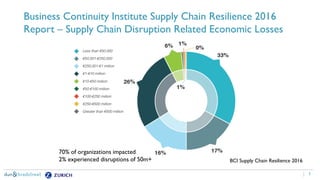
Business Continuity Institute Supply Chain Resilience 2016
Report – Supply Chain Disruption Related Economic Losses
70% of organizations impacted
2% experienced disruptions of 50m+ BCI Supply Chain Resilience 2016
6
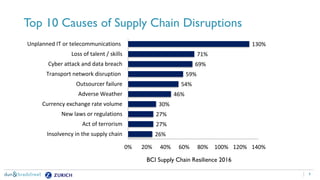
Top 10 Causes of Supply Chain Disruptions
26%
27%
27%
30%
46%
54%
59%
69%
71%
130%
0% 20% 40% 60% 80% 100% 120% 140%
Insolvency in the supply chain
Act of terrorism
New laws or regulations
Currency exchange rate volume
Adverse Weather
Outsourcer failure
Transport network disruption
Cyber attack and data breach
Loss of talent / skills
Unplanned IT or telecommunications
BCI Supply Chain Resilience 2016
7
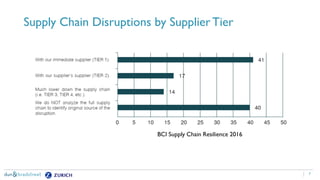
Supply Chain Disruptions by Supplier Tier
BCI Supply Chain Resilience 2016
8
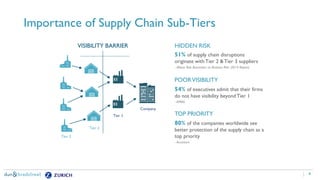
Importance of Supply Chain Sub-Tiers
HIDDEN RISK
51% of supply chain disruptions
originate with Tier 2 & Tier 3 suppliers
- Allianz Risk Barometer on Business Risk (2014 Report)
POORVISIBILITY
54% of executives admit that their firms
do not have visibility beyondTier 1
- KPMG
TOP PRIORITY
80% of the companies worldwide see
better protection of the supply chain as a
top priority
- Accenture
Tier 3
Company
Tier 1
Tier 2
VISIBILITY BARRIER
9
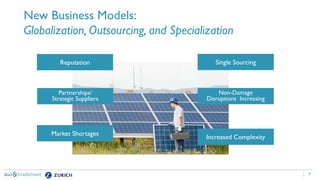
Reputation
Partnerships/
Strategic Suppliers
Single Sourcing
Non-Damage
Disruptions Increasing
Market Shortages
Increased Complexity
New Business Models:
Globalization, Outsourcing, and Specialization
Development of Risk
Transfer Solutions
11
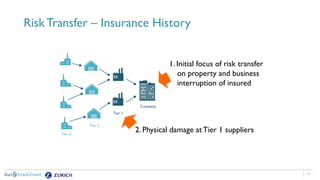
RiskTransfer – Insurance History
Tier 3
Company
Tier 1
Tier 2
1. Initial focus of risk transfer
on property and business
interruption of insured
2. Physical damage atTier 1 suppliers
12
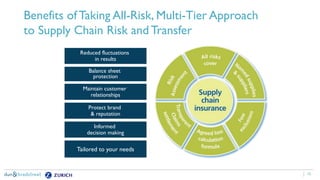
Reduced fluctuations
in results
Balance sheet
protection
Protect brand
& reputation
Informed
decision making
Maintain customer
relationships
Tailored to your needs
Benefits of Taking All-Risk, Multi-Tier Approach
to Supply Chain Risk and Transfer
13
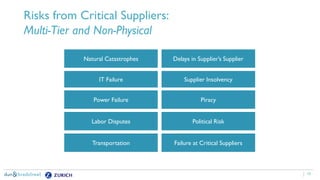
Risks from Critical Suppliers:
Multi-Tier and Non-Physical
Natural Catastrophes
IT Failure
Labor Disputes
Transportation
Power Failure
Delays in Supplier’s Supplier
Supplier Insolvency
Political Risk
Failure at Critical Suppliers
Piracy
14
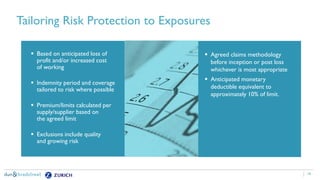
 Based on anticipated loss of
profit and/or increased cost
of working
 Indemnity period and coverage
tailored to risk where possible
 Premium/limits calculated per
supply/supplier based on
the agreed limit
 Exclusions include quality
and growing risk
Tailoring Risk Protection to Exposures
 Agreed claims methodology
before inception or post loss
whichever is most appropriate
 Anticipated monetary
deductible equivalent to
approximately 10% of limit.
15
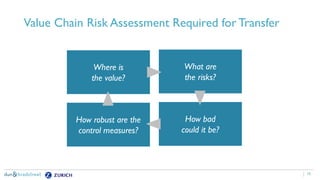
Value Chain Risk Assessment Required for Transfer
Where is
the value?
What are
the risks?
How robust are the
control measures?
How bad
could it be?
16
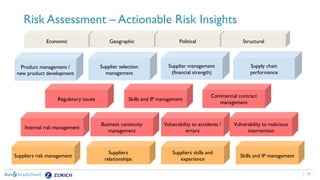
Suppliers risk management
Suppliers
relationships
Suppliers skills and
experience
Skills and IP management
Internal risk management
Business continuity
management
Vulnerability to accidents /
errors
Vulnerability to malicious
intervention
Regulatory issues Skills and IP management
Commercial contract
management
Product management /
new product development
Supplier selection
management
Supplier management
(financial strength)
Supply chain
performance
Economic Geographic Political Structural
Risk Assessment – Actionable Risk Insights
Prioritizing Actions Around
“Tier N“ Analysis
18
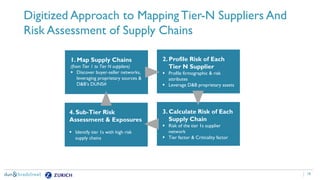
Digitized Approach to Mapping Tier-N Suppliers And
Risk Assessment of Supply Chains
1. Map Supply Chains
(from Tier 1 to Tier N suppliers)
 Discover buyer-seller networks,
leveraging proprietary sources &
D&B’s DUNS#
2. Profile Risk of Each
Tier N Supplier
 Profile firmographic & risk
attributes
 Leverage D&B proprietary assets
4. Sub-Tier Risk
Assessment & Exposures
 Identify tier 1s with high risk
supply chains
3. Calculate Risk of Each
Supply Chain
 Risk of the tier 1s supplier
network
 Tier factor & Criticality factor
19
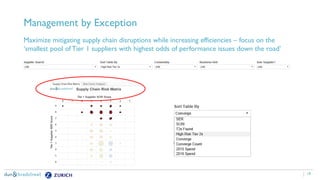
Management by Exception
Maximize mitigating supply chain disruptions while increasing efficiencies – focus on the
‘smallest pool of Tier 1 suppliers with highest odds of performance issues down the road’
20
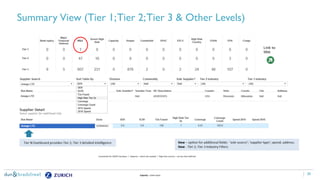
Summary View (Tier 1;Tier 2;Tier 3 & Other Levels)
Capacity – client input
21
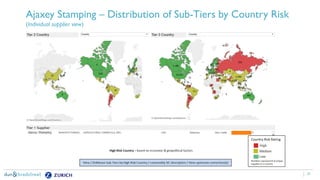
Ajaxey Stamping – Distribution of Sub-Tiers by Country Risk
(Individual supplier view)
22
Takeaways
 Your company’s performance is being impacted by supply chain disruption costs.
 Need to be proactive and prioritized in your approach to critical suppliers on a
multi-tier basis.
 Technology and risk transfer innovations are starting to be adopted by your
competitors.
Presenter Contact Information
JON BALL
Senior Global Director,Analytic Consulting
Dun & Bradstreet
ballj@dnb.com
+1-516-462-2417
NICKWILDGOOSE
Global Supply Chain Product Leader
Zurich Insurance
nick.wildgoose@uk.zurich.com
+44-787-588-6068
ThankYou!

Seeing Beneath The Surface - Understand Supply Chain Disruption

  • 1.
    Anticipating Hidden Riskin the Supply Chain Using Advanced Analytics and Reducing Losses with Supplier Insurance Coverage SEEING BENEATH THE SURFACE
  • 2.
    Today’s Presenters JON BALL SeniorGlobal Director, Analytic Consulting Dun & Bradstreet NICKWILDGOOSE Global Supply Chain Product Leader Zurich Insurance
  • 3.
    AGENDA Causes and Frequencyof Supply Chain Disruption Development of Risk Transfer Solutions Prioritizing Actions Around “Tier N“ Analysis
  • 4.
    Causes and Frequencyof Supply Chain Disruptions
  • 5.
    5 Business Continuity InstituteSupply Chain Resilience 2016 Report – Supply Chain Disruption Related Economic Losses 70% of organizations impacted 2% experienced disruptions of 50m+ BCI Supply Chain Resilience 2016
  • 6.
    6 Top 10 Causesof Supply Chain Disruptions 26% 27% 27% 30% 46% 54% 59% 69% 71% 130% 0% 20% 40% 60% 80% 100% 120% 140% Insolvency in the supply chain Act of terrorism New laws or regulations Currency exchange rate volume Adverse Weather Outsourcer failure Transport network disruption Cyber attack and data breach Loss of talent / skills Unplanned IT or telecommunications BCI Supply Chain Resilience 2016
  • 7.
    7 Supply Chain Disruptionsby Supplier Tier BCI Supply Chain Resilience 2016
  • 8.
    8 Importance of SupplyChain Sub-Tiers HIDDEN RISK 51% of supply chain disruptions originate with Tier 2 & Tier 3 suppliers - Allianz Risk Barometer on Business Risk (2014 Report) POORVISIBILITY 54% of executives admit that their firms do not have visibility beyondTier 1 - KPMG TOP PRIORITY 80% of the companies worldwide see better protection of the supply chain as a top priority - Accenture Tier 3 Company Tier 1 Tier 2 VISIBILITY BARRIER
  • 9.
    9 Reputation Partnerships/ Strategic Suppliers Single Sourcing Non-Damage DisruptionsIncreasing Market Shortages Increased Complexity New Business Models: Globalization, Outsourcing, and Specialization
  • 10.
  • 11.
    11 RiskTransfer – InsuranceHistory Tier 3 Company Tier 1 Tier 2 1. Initial focus of risk transfer on property and business interruption of insured 2. Physical damage atTier 1 suppliers
  • 12.
    12 Reduced fluctuations in results Balancesheet protection Protect brand & reputation Informed decision making Maintain customer relationships Tailored to your needs Benefits of Taking All-Risk, Multi-Tier Approach to Supply Chain Risk and Transfer
  • 13.
    13 Risks from CriticalSuppliers: Multi-Tier and Non-Physical Natural Catastrophes IT Failure Labor Disputes Transportation Power Failure Delays in Supplier’s Supplier Supplier Insolvency Political Risk Failure at Critical Suppliers Piracy
  • 14.
    14  Based onanticipated loss of profit and/or increased cost of working  Indemnity period and coverage tailored to risk where possible  Premium/limits calculated per supply/supplier based on the agreed limit  Exclusions include quality and growing risk Tailoring Risk Protection to Exposures  Agreed claims methodology before inception or post loss whichever is most appropriate  Anticipated monetary deductible equivalent to approximately 10% of limit.
  • 15.
    15 Value Chain RiskAssessment Required for Transfer Where is the value? What are the risks? How robust are the control measures? How bad could it be?
  • 16.
    16 Suppliers risk management Suppliers relationships Suppliersskills and experience Skills and IP management Internal risk management Business continuity management Vulnerability to accidents / errors Vulnerability to malicious intervention Regulatory issues Skills and IP management Commercial contract management Product management / new product development Supplier selection management Supplier management (financial strength) Supply chain performance Economic Geographic Political Structural Risk Assessment – Actionable Risk Insights
  • 17.
  • 18.
    18 Digitized Approach toMapping Tier-N Suppliers And Risk Assessment of Supply Chains 1. Map Supply Chains (from Tier 1 to Tier N suppliers)  Discover buyer-seller networks, leveraging proprietary sources & D&B’s DUNS# 2. Profile Risk of Each Tier N Supplier  Profile firmographic & risk attributes  Leverage D&B proprietary assets 4. Sub-Tier Risk Assessment & Exposures  Identify tier 1s with high risk supply chains 3. Calculate Risk of Each Supply Chain  Risk of the tier 1s supplier network  Tier factor & Criticality factor
  • 19.
    19 Management by Exception Maximizemitigating supply chain disruptions while increasing efficiencies – focus on the ‘smallest pool of Tier 1 suppliers with highest odds of performance issues down the road’
  • 20.
    20 Summary View (Tier1;Tier 2;Tier 3 & Other Levels) Capacity – client input
  • 21.
    21 Ajaxey Stamping –Distribution of Sub-Tiers by Country Risk (Individual supplier view)
  • 22.
    22 Takeaways  Your company’sperformance is being impacted by supply chain disruption costs.  Need to be proactive and prioritized in your approach to critical suppliers on a multi-tier basis.  Technology and risk transfer innovations are starting to be adopted by your competitors.
  • 23.
    Presenter Contact Information JONBALL Senior Global Director,Analytic Consulting Dun & Bradstreet ballj@dnb.com +1-516-462-2417 NICKWILDGOOSE Global Supply Chain Product Leader Zurich Insurance nick.wildgoose@uk.zurich.com +44-787-588-6068
  • 24.