Greens
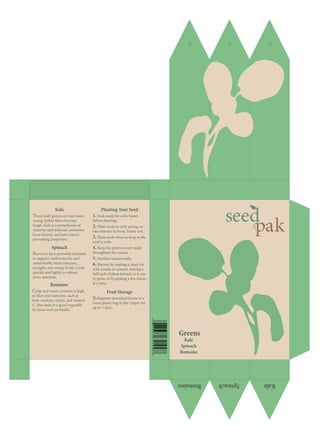
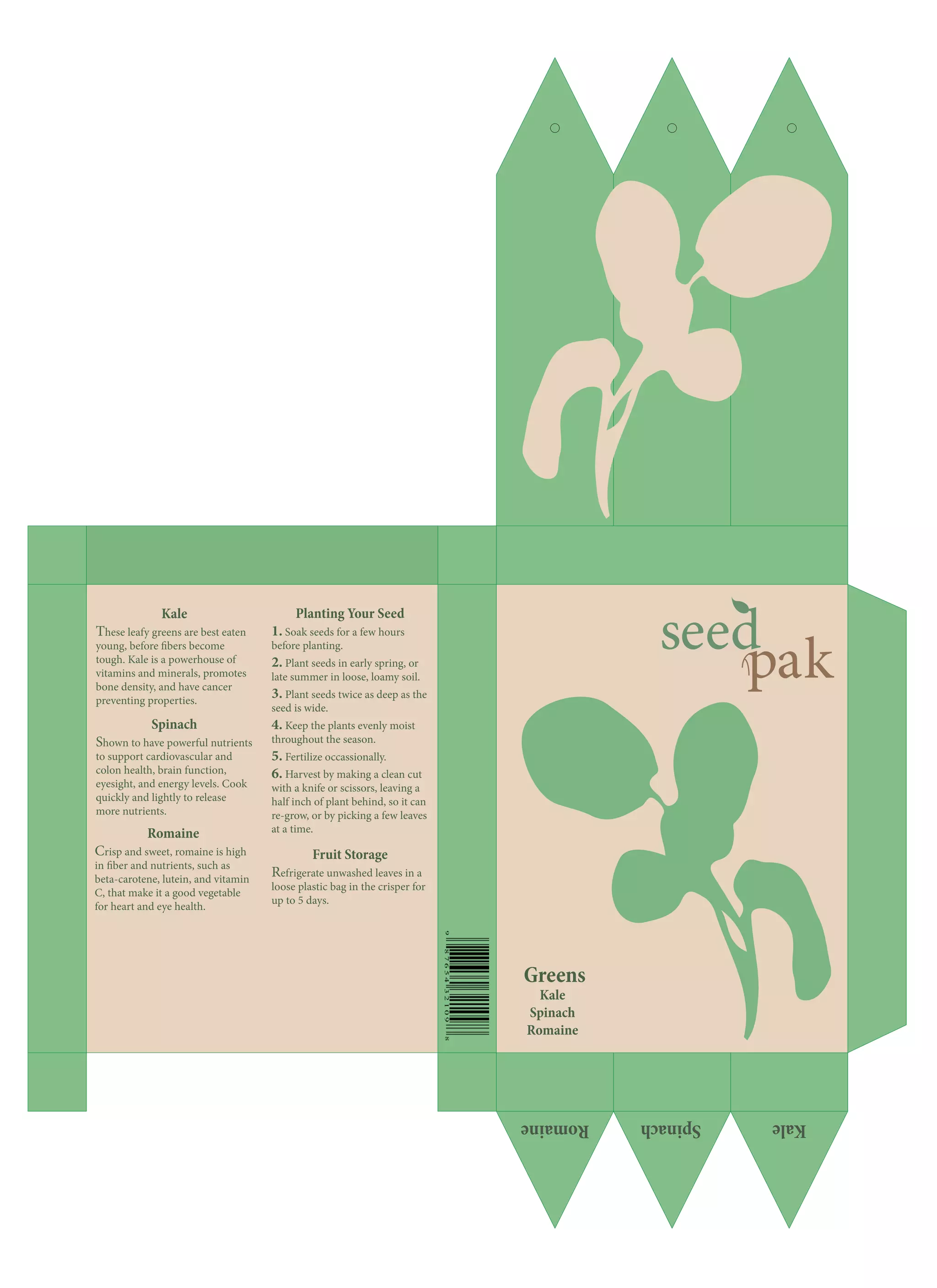
Kale
Spinach
Romaine
Planting Your Seed
1. Soak seeds for a few hours
before planting.
2. Plant seeds in early spring, or
late summer in loose, loamy soil.
3. Plant seeds twice as deep as the
seed is wide.
4. Keep the plants evenly moist
throughout the season.
5. Fertilize occassionally.
6. Harvest by making a clean cut
with a knife or scissors, leaving a
half inch of plant behind, so it can
re-grow, or by picking a few leaves
at a time.
Kale
These leafy greens are best eaten
young, before fibers become
tough. Kale is a powerhouse of
vitamins and minerals, promotes
bone density, and have cancer
preventing properties.
Spinach
Shown to have powerful nutrients
to support cardiovascular and
colon health, brain function,
eyesight, and energy levels. Cook
quickly and lightly to release
more nutrients.
Romaine
Crisp and sweet, romaine is high
in fiber and nutrients, such as
beta-carotene, lutein, and vitamin
C, that make it a good vegetable
for heart and eye health.
Fruit Storage
Refrigerate unwashed leaves in a
loose plastic bag in the crisper for
up to 5 days.
Peppers
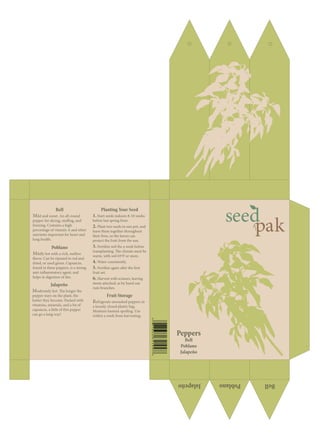
Bell
Poblano
Jalapeño
Planting Your Seed
1. Start seeds indoors 8-10 weeks
before last spring frost.
2. Plant two seeds in one pot, and
leave them together throughout
their lives, so the leaves can
protect the fruit from the sun.
3. Fertilize soil the a week before
transplanting. The climate must be
warm, with soil 65ºF or more.
4. Water consistently.
5. Fertilize again after the first
fruit set.
6. Harvest with scissors, leaving
stems attached, as by hand can
ruin branches.
Bell
Mild and sweet. An all-round
pepper for slicing, stuffing, and
freezing. Contains a high
percentage of vitamin A and other
nutrients important for heart and
lung health.
Poblano
Mildly hot with a rich, mellow
flavor. Can be ripened to red and
dried, or used green. Capsaicin,
found in these peppers, is a strong
anti-inflammatory agent, and
helps in digestion of fats.
Jalapeño
Moderately hot. The longer the
pepper stays on the plant, the
hotter they become. Packed with
vitamins, minerals, and a lot of
capsaicin, a little of this pepper
can go a long way!
Fruit Storage
Refrigerate unwashed peppers in
a loosely closed plastic bag.
Moisture hastens spoiling. Use
within a week from harvesting.
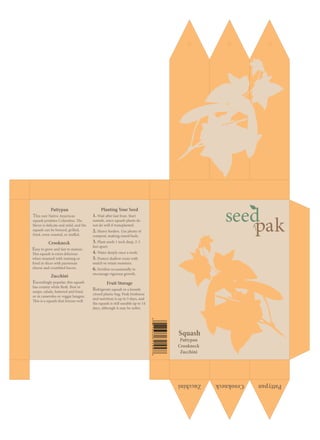
Squash
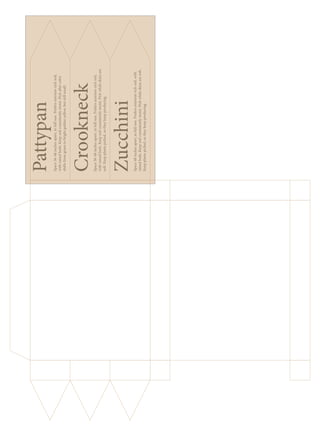
Pattypan
Crookneck
Zucchini
Planting Your Seed
1. Wait after last frost. Start
outside, since squash plants do
not do well if transplanted.
2. Heavy feeders. Use plenty of
compost, making raised beds.
3. Plant seeds 1 inch deep, 2-3
feet apart.
4. Water deeply once a week.
5. Protect shallow roots with
mulch to retain moisture.
6. Fertilize occassionally to
encourage vigorous growth.
Pattypan
This rare Native American
squash predates Columbus. The
flavor is delicate and mild, and the
squash can be braised, grilled,
fried, oven-roasted, or stuffed.
Crookneck
Easy to grow and fast to mature.
This squash is extra delicious
when steamed with nutmeg or
fried in slices with parmesan
cheese and crumbled bacon.
Zucchini
Exceedingly popular, this squash
has creamy white flesh. Best in
soups, salads, battered and fried,
or in casseroles or veggie lasagna.
This is a squash that freezes well.
Fruit Storage
Refrigerate squash in a loosely
closed plastic bag. Peak freshness
and nutrition is up to 5 days, and
the squash is still useable up to 14
days, although it may be softer.
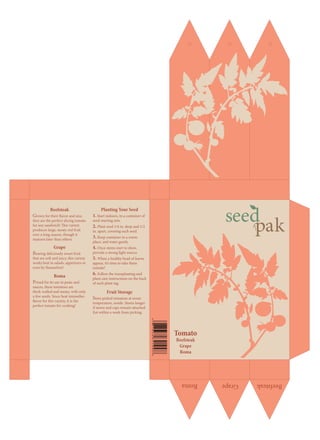
Tomato
Beefsteak
Grape
Roma
Planting Your Seed
1. Start indoors, in a container of
seed-starting mix.
2. Plant seed 1/4 in. deep and 1/2
in. apart, covering each seed.
3. Keep container in a warm
place, and water gently.
4. Once stems start to show,
provide a strong light source.
5. When a healthy head of leaves
appear, it’s time to take them
outside!
6. Follow the transplanting and
plant care instructions on the back
of each plant tag.
Beefsteak
Grown for their flavor and size,
they are the perfect slicing tomato
for any sandwich! This variety
produces large, meaty red fruit
over a long season, though it
matures later than others.
Grape
Bearing deliciously sweet fruit
that are soft and juicy, this variety
works best in salads, appetizers or
even by themselves!
Roma
Prized for its use in paste and
sauces, these tomatoes are
thick-walled and meaty, with only
a few seeds. Since heat intensifies
flavor for this variety, it is the
perfect tomato for cooking!
Fruit Storage
Store picked tomatoes at room
temperature, inside. Stores longer
if stems and caps remain attached.
Eat within a week from picking.
seedpak packaging

seedpak packaging

  • 1.
    Greens Kale Spinach Romaine Planting Your Seed 1.Soak seeds for a few hours before planting. 2. Plant seeds in early spring, or late summer in loose, loamy soil. 3. Plant seeds twice as deep as the seed is wide. 4. Keep the plants evenly moist throughout the season. 5. Fertilize occassionally. 6. Harvest by making a clean cut with a knife or scissors, leaving a half inch of plant behind, so it can re-grow, or by picking a few leaves at a time. Kale These leafy greens are best eaten young, before fibers become tough. Kale is a powerhouse of vitamins and minerals, promotes bone density, and have cancer preventing properties. Spinach Shown to have powerful nutrients to support cardiovascular and colon health, brain function, eyesight, and energy levels. Cook quickly and lightly to release more nutrients. Romaine Crisp and sweet, romaine is high in fiber and nutrients, such as beta-carotene, lutein, and vitamin C, that make it a good vegetable for heart and eye health. Fruit Storage Refrigerate unwashed leaves in a loose plastic bag in the crisper for up to 5 days.
  • 3.
    Peppers Bell Poblano Jalapeño Planting Your Seed 1.Start seeds indoors 8-10 weeks before last spring frost. 2. Plant two seeds in one pot, and leave them together throughout their lives, so the leaves can protect the fruit from the sun. 3. Fertilize soil the a week before transplanting. The climate must be warm, with soil 65ºF or more. 4. Water consistently. 5. Fertilize again after the first fruit set. 6. Harvest with scissors, leaving stems attached, as by hand can ruin branches. Bell Mild and sweet. An all-round pepper for slicing, stuffing, and freezing. Contains a high percentage of vitamin A and other nutrients important for heart and lung health. Poblano Mildly hot with a rich, mellow flavor. Can be ripened to red and dried, or used green. Capsaicin, found in these peppers, is a strong anti-inflammatory agent, and helps in digestion of fats. Jalapeño Moderately hot. The longer the pepper stays on the plant, the hotter they become. Packed with vitamins, minerals, and a lot of capsaicin, a little of this pepper can go a long way! Fruit Storage Refrigerate unwashed peppers in a loosely closed plastic bag. Moisture hastens spoiling. Use within a week from harvesting.
  • 5.
    Squash Pattypan Crookneck Zucchini Planting Your Seed 1.Wait after last frost. Start outside, since squash plants do not do well if transplanted. 2. Heavy feeders. Use plenty of compost, making raised beds. 3. Plant seeds 1 inch deep, 2-3 feet apart. 4. Water deeply once a week. 5. Protect shallow roots with mulch to retain moisture. 6. Fertilize occassionally to encourage vigorous growth. Pattypan This rare Native American squash predates Columbus. The flavor is delicate and mild, and the squash can be braised, grilled, fried, oven-roasted, or stuffed. Crookneck Easy to grow and fast to mature. This squash is extra delicious when steamed with nutmeg or fried in slices with parmesan cheese and crumbled bacon. Zucchini Exceedingly popular, this squash has creamy white flesh. Best in soups, salads, battered and fried, or in casseroles or veggie lasagna. This is a squash that freezes well. Fruit Storage Refrigerate squash in a loosely closed plastic bag. Peak freshness and nutrition is up to 5 days, and the squash is still useable up to 14 days, although it may be softer.
  • 7.
    Tomato Beefsteak Grape Roma Planting Your Seed 1.Start indoors, in a container of seed-starting mix. 2. Plant seed 1/4 in. deep and 1/2 in. apart, covering each seed. 3. Keep container in a warm place, and water gently. 4. Once stems start to show, provide a strong light source. 5. When a healthy head of leaves appear, it’s time to take them outside! 6. Follow the transplanting and plant care instructions on the back of each plant tag. Beefsteak Grown for their flavor and size, they are the perfect slicing tomato for any sandwich! This variety produces large, meaty red fruit over a long season, though it matures later than others. Grape Bearing deliciously sweet fruit that are soft and juicy, this variety works best in salads, appetizers or even by themselves! Roma Prized for its use in paste and sauces, these tomatoes are thick-walled and meaty, with only a few seeds. Since heat intensifies flavor for this variety, it is the perfect tomato for cooking! Fruit Storage Store picked tomatoes at room temperature, inside. Stores longer if stems and caps remain attached. Eat within a week from picking.