Section 377
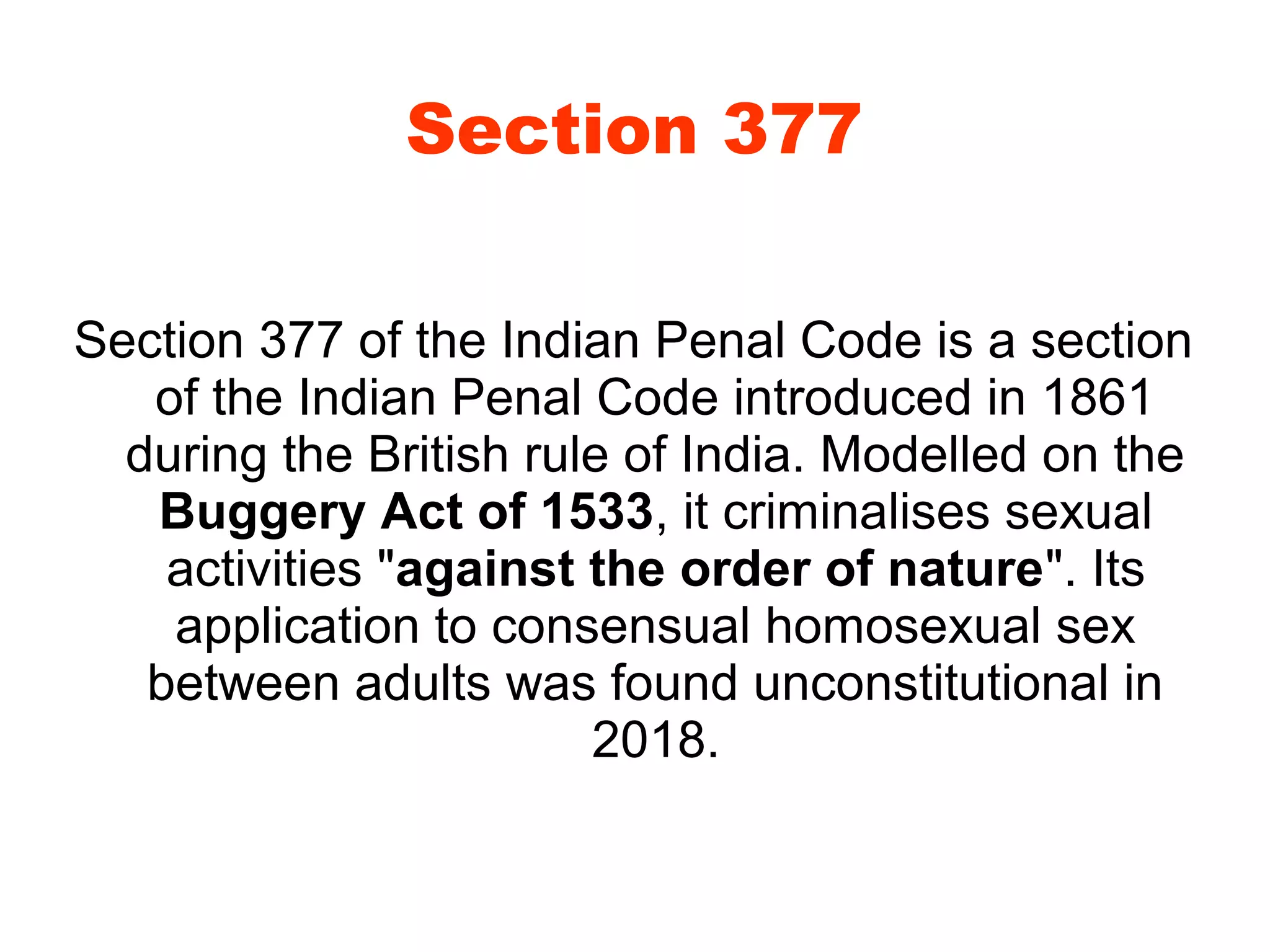
Section 377 of the Indian Penal Code is a section
of the Indian Penal Code introduced in 1861
during the British rule of India. Modelled on the
Buggery Act of 1533, it criminalises sexual
activities "against the order of nature". Its
application to consensual homosexual sex
between adults was found unconstitutional in
2018.
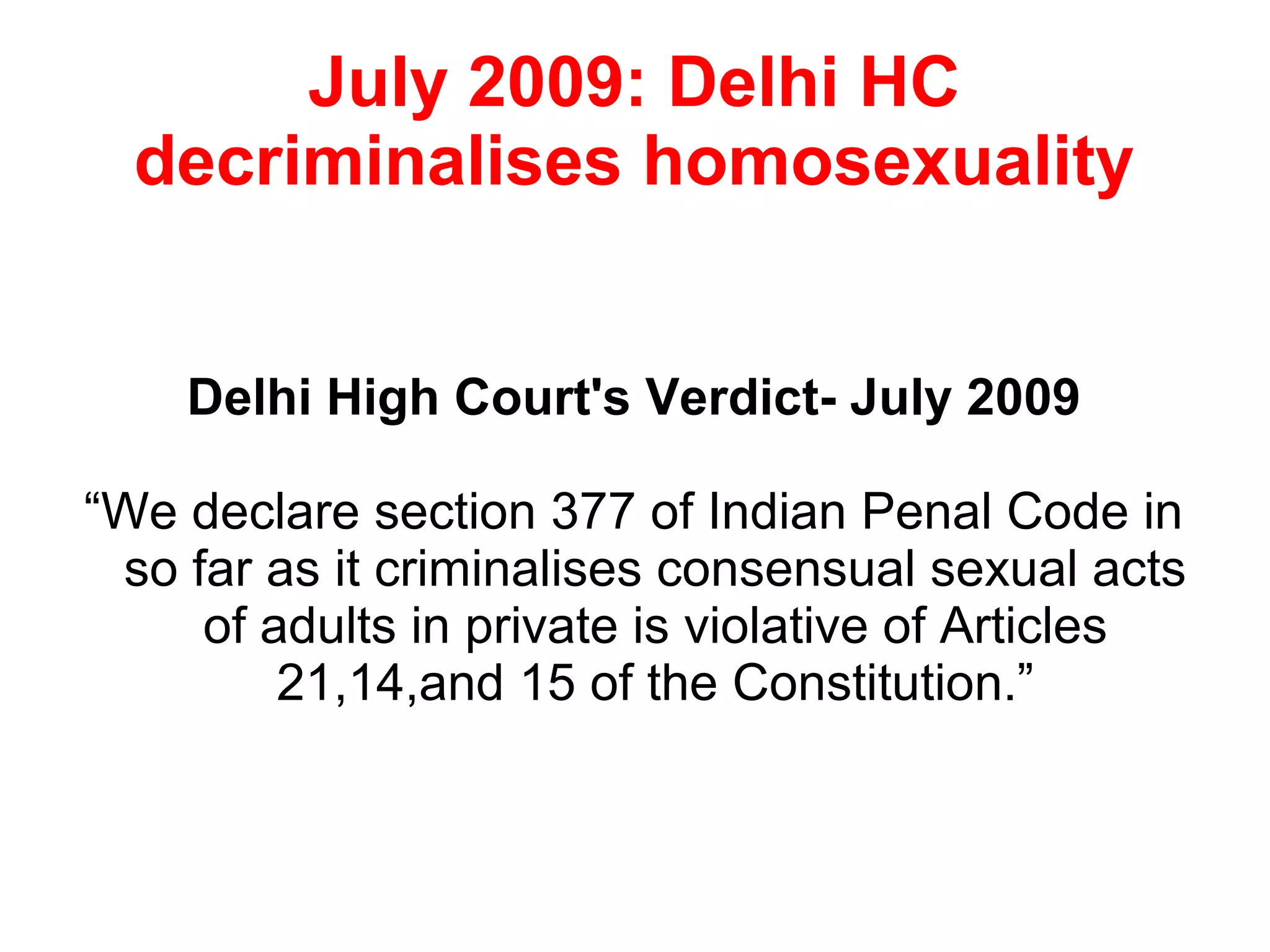
July 2009: Delhi HC
decriminalises homosexuality
Delhi High Court's Verdict- July 2009
“We declare section 377 of Indian Penal Code in
so far as it criminalises consensual sexual acts
of adults in private is violative of Articles
21,14,and 15 of the Constitution.”
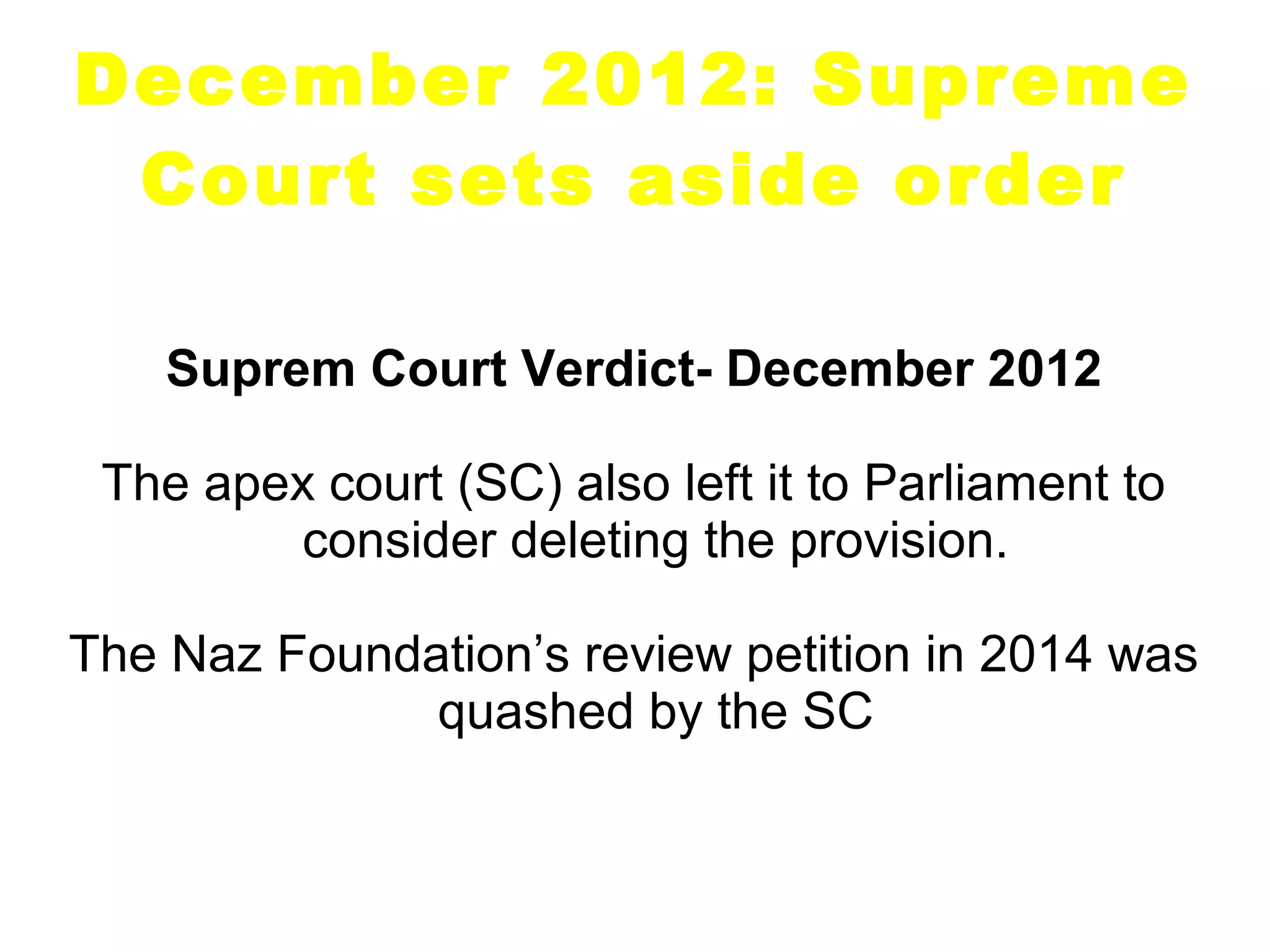
December 2012: Supreme
Court sets aside order
Suprem Court Verdict- December 2012
The apex court (SC) also left it to Parliament to
consider deleting the provision.
The Naz Foundation’s review petition in 2014 was
quashed by the SC
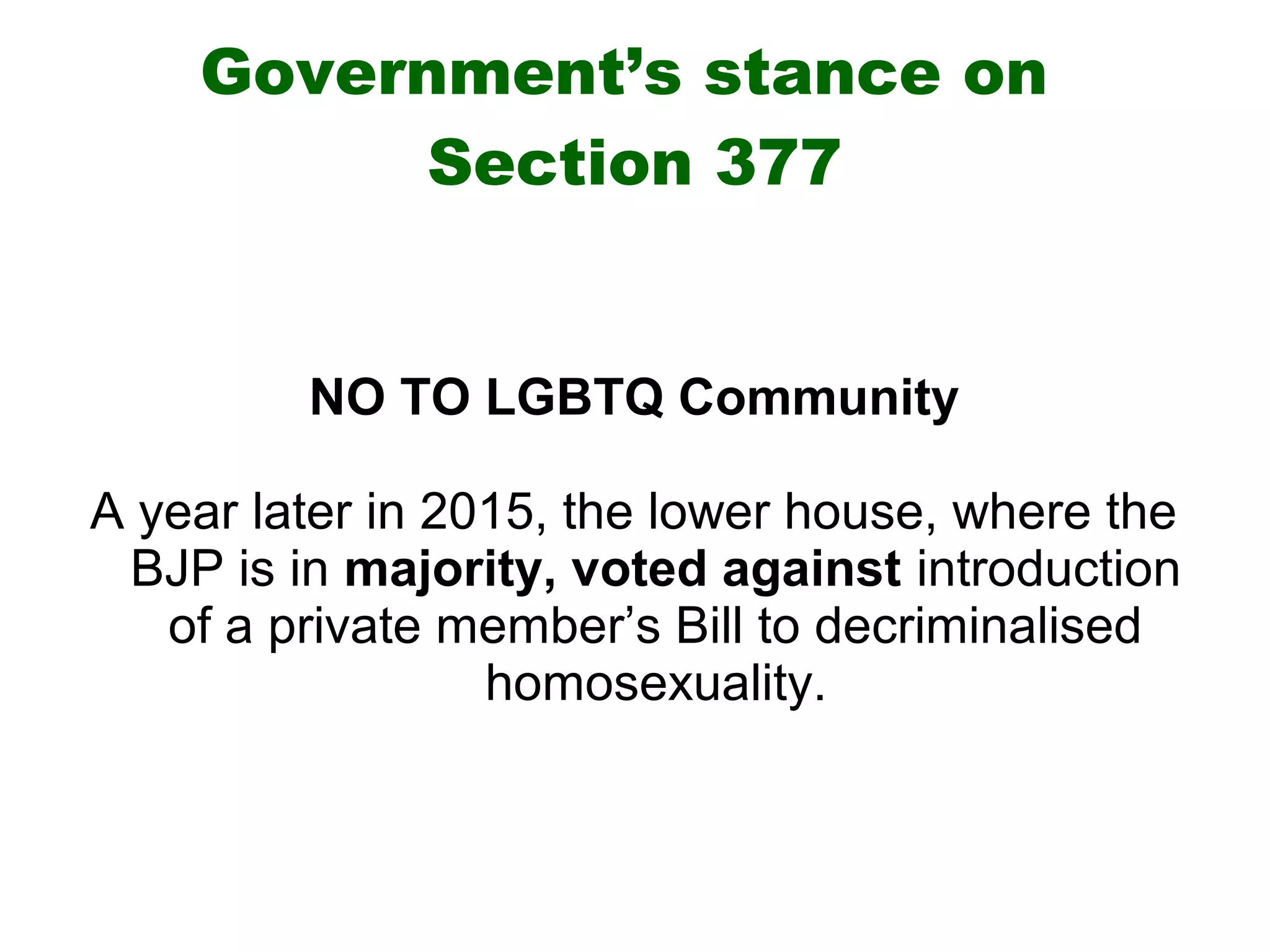
Government’s stance on
Section 377
NO TO LGBTQ Community
A year later in 2015, the lower house, where the
BJP is in majority, voted against introduction
of a private member’s Bill to decriminalised
homosexuality.
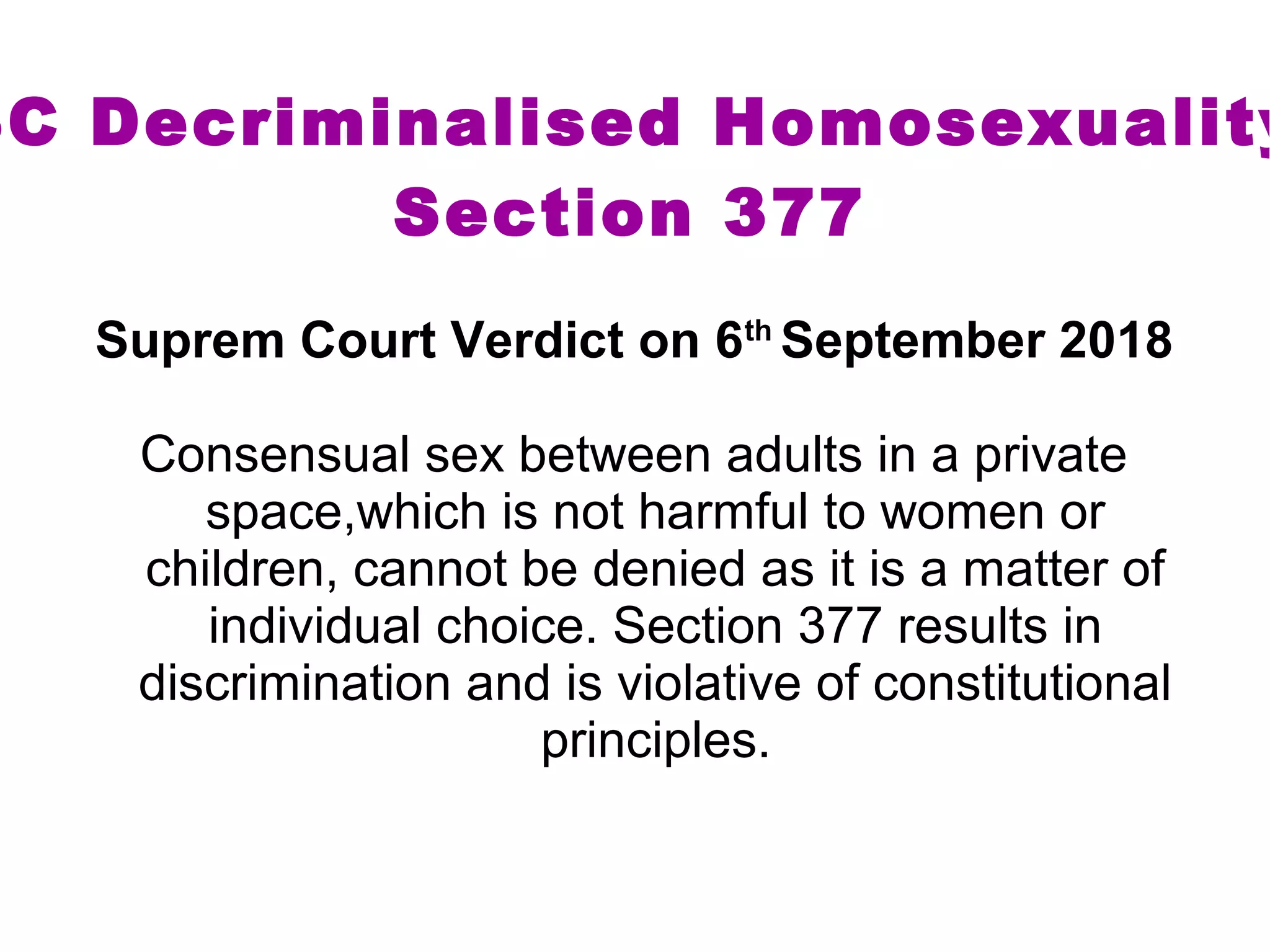
SC Decriminalised Homosexuality
Section 377
Suprem Court Verdict on 6th
September 2018
Consensual sex between adults in a private
space,which is not harmful to women or
children, cannot be denied as it is a matter of
individual choice. Section 377 results in
discrimination and is violative of constitutional
principles.
SC Decriminalised Homosexuality
Section 377
Suprem Court Verdict on 6th
September 2018
Consensual sex between adults in a private
space,which is not harmful to women or
children, cannot be denied as it is a matter of
individual choice. Section 377 results in
discrimination and is violative of constitutional
principles.

Section 377 of Indian Penal Code.

  • 1.
    Section 377 Section 377of the Indian Penal Code is a section of the Indian Penal Code introduced in 1861 during the British rule of India. Modelled on the Buggery Act of 1533, it criminalises sexual activities "against the order of nature". Its application to consensual homosexual sex between adults was found unconstitutional in 2018.
  • 2.
    July 2009: DelhiHC decriminalises homosexuality Delhi High Court's Verdict- July 2009 “We declare section 377 of Indian Penal Code in so far as it criminalises consensual sexual acts of adults in private is violative of Articles 21,14,and 15 of the Constitution.”
  • 3.
    December 2012: Supreme Courtsets aside order Suprem Court Verdict- December 2012 The apex court (SC) also left it to Parliament to consider deleting the provision. The Naz Foundation’s review petition in 2014 was quashed by the SC
  • 4.
    Government’s stance on Section377 NO TO LGBTQ Community A year later in 2015, the lower house, where the BJP is in majority, voted against introduction of a private member’s Bill to decriminalised homosexuality.
  • 5.
    SC Decriminalised Homosexuality Section377 Suprem Court Verdict on 6th September 2018 Consensual sex between adults in a private space,which is not harmful to women or children, cannot be denied as it is a matter of individual choice. Section 377 results in discrimination and is violative of constitutional principles.
  • 6.
    SC Decriminalised Homosexuality Section377 Suprem Court Verdict on 6th September 2018 Consensual sex between adults in a private space,which is not harmful to women or children, cannot be denied as it is a matter of individual choice. Section 377 results in discrimination and is violative of constitutional principles.