International District: Earthquake Risk June 2, 2008
Thank You Carol Dunn  Emergency Services Department Community Disaster Education  American Red Cross
Goals Learn About the Earthquake Risk to Our Area Factors that Influence Outcome: Ground Composition  Building Construction Decisions and Preparation
The Earth is Like a Lava Lamp
Hot  Cold
 
 
Faults  Pressure Created Crumples in the Crust That are Weakness—as pressure builds, The Crumples are the easiest places to  Release  Pressure Builds and Creates Faults— Areas in the ground that crumpled and bent Once crumpled, the creases (faults) are  where the ground is most likely to move  again when pressure builds up enough.
Here’s where we know the earth has crumpled and creased in the Seattle  area.  There are also  faults deep under ground that we can’t see.
The ground we walk on Soil Types Rock Rock/Water/etc
A lot of soil in Seattle is more similar to red dean pudding than rock—and when shaken,  can act more like water that stone
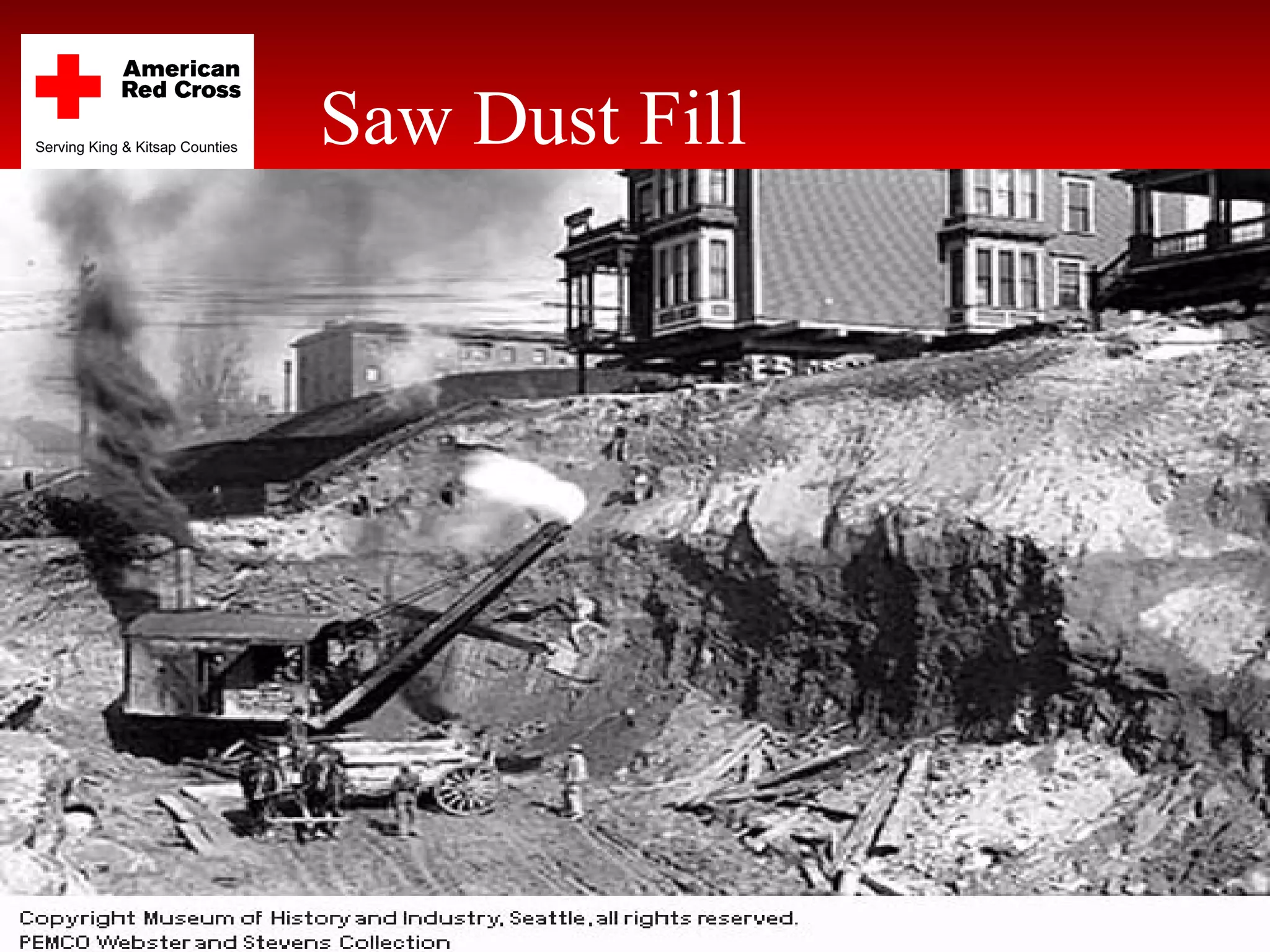
Seattle pre-1889
Uninformed Decisions in 1889
Saw Dust Fill
Liquefaction Maps
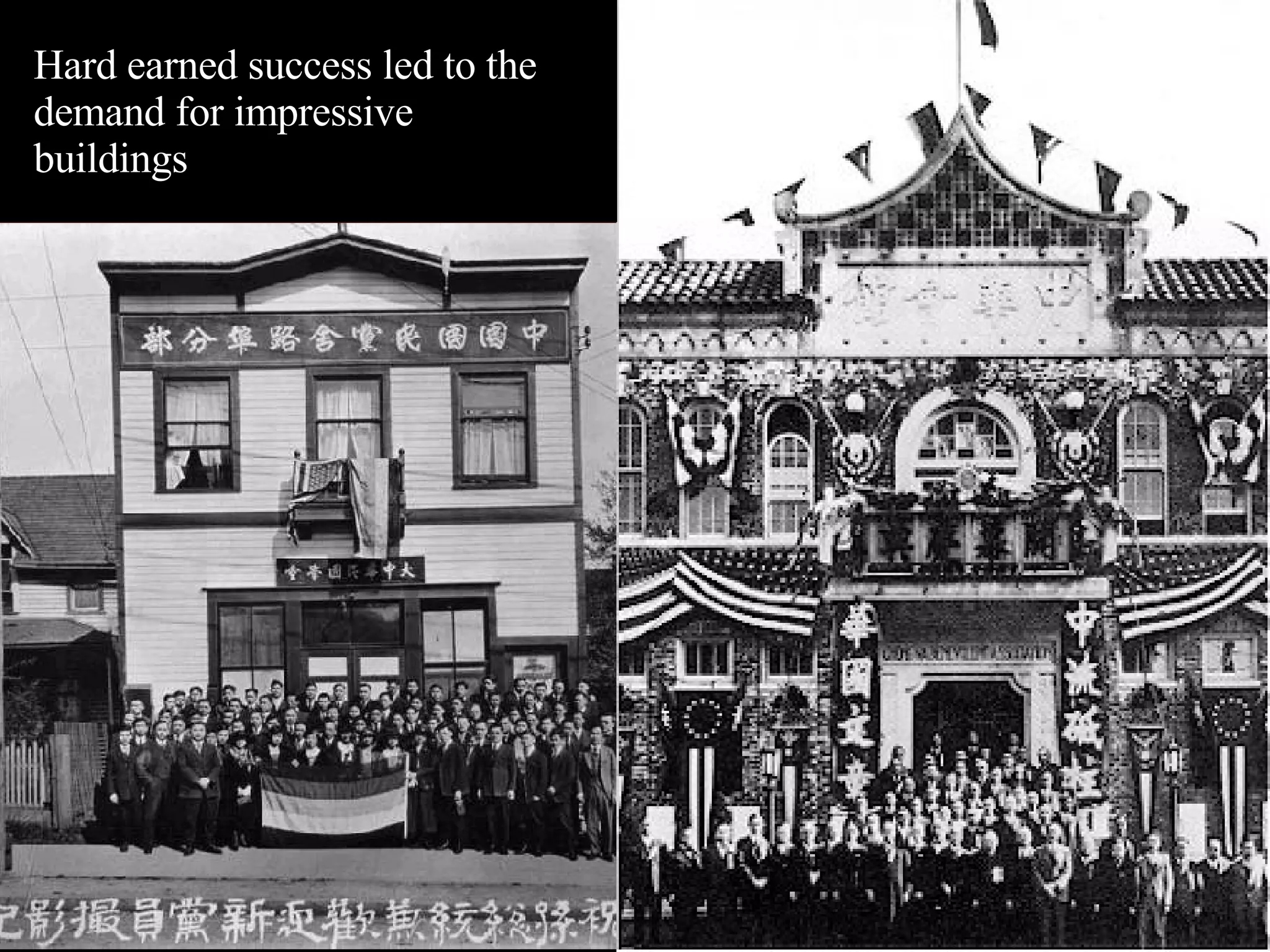
The stories and histories that have grown with the International District are the stories of overcoming challenges, finding ways to support each other and creating and building lasting legacies
Hard earned success led to the demand for impressive buildings
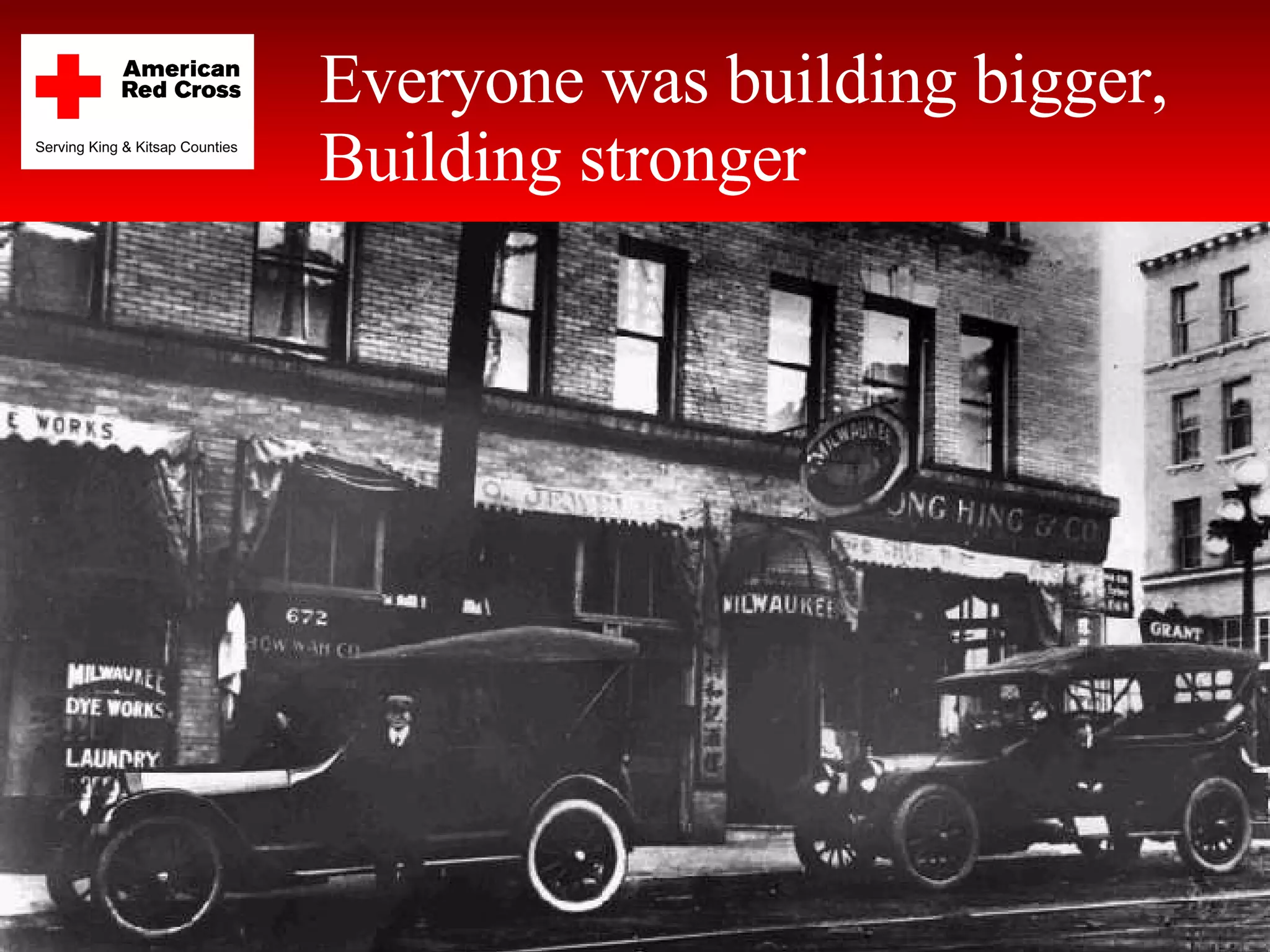
Everyone was building bigger, Building stronger
Unfortunately: almost the worst building type for earthquake resistance 大丈夫能屈能伸  For Earthquakes:  Buildings are like people—flexible is better
Best: low,  wood --Bolted to Foundation
OK:  Steel and  reinforced concrete:
Bad for Quakes: Soft Structures
 
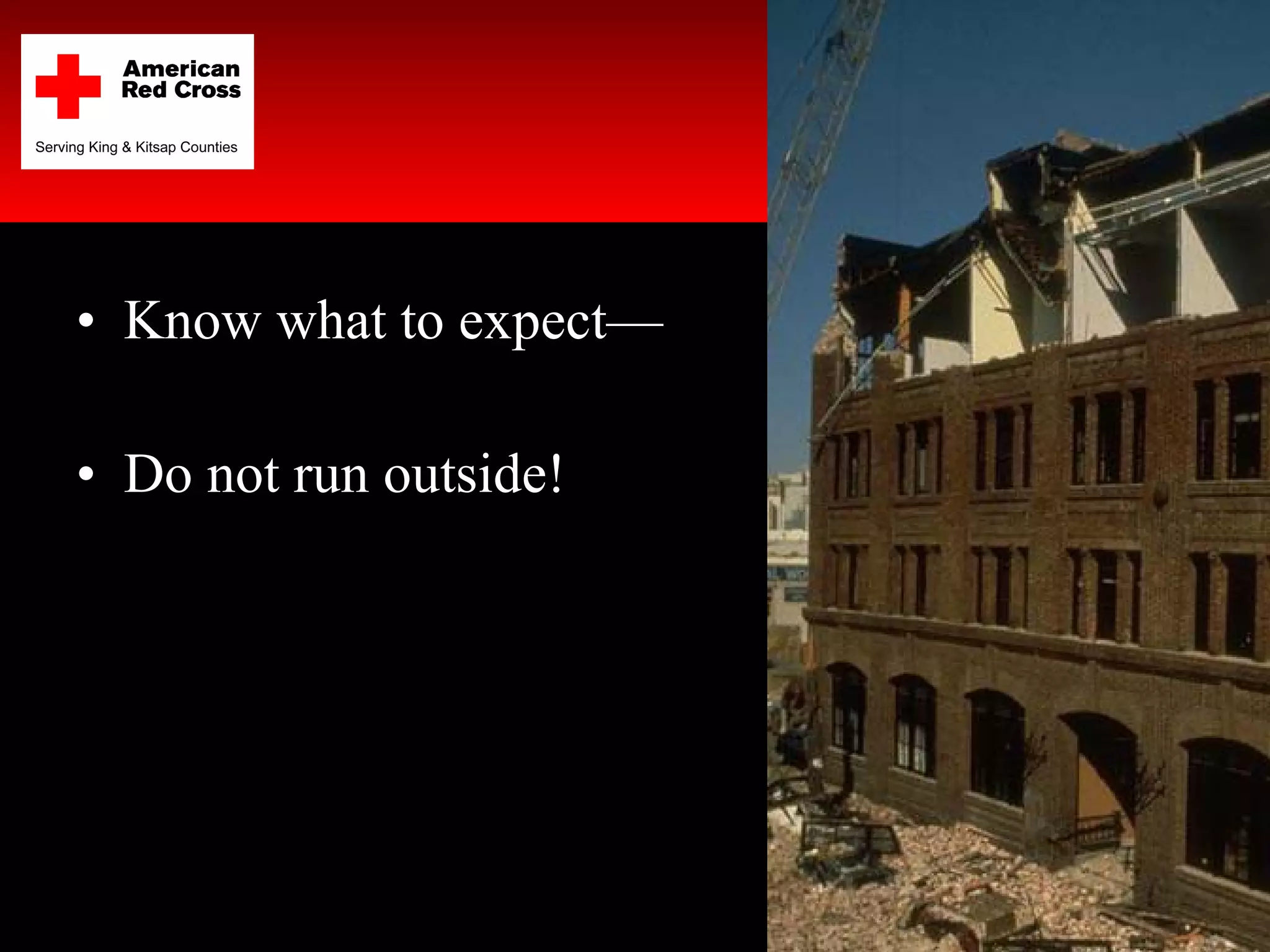
Worst for earthquakes Worst: Un-reinforced brick (recognized by levels of brick ends) Not very good: reinforced bricks (recognized when all bricks show their sides) Not very good: Retrofitted masonry (recognized by the added bolts) 5 out of 6 were damaged during the 2001 Nisqually Quake
Unreinforced Masonry
Options Retrofit Anchor masonry to wood Add Framing Still will be risks Rebuild Create a new safer building Lose character and feeling of history Relocate Currently located in one of the most dangerous parts of the city Lose character and history
On line Data Sources
Buildings that received funding for retrofitting in 2001 Historic Seattle Save the Buildings Fund  Milwaukee and Alps Hotels   Hong Kong Building   Hip Sing Building   The Bing Kung Building The Bush Hotel
Because of Jolt Be Sure to Bolt
Know what to expect— Do not run outside!
 
Be prepared for disruption
Stay Healthy 1 gallon per person per day for a min 3 days
Best: Non Perishable No need for heating Limited water
Stay healthy
Brrrrrr Maintain the right Body temperature
Information Important Documents
Get through debris
Coping Be aware that unusual events cause unusual and intense emotions Talk about your feelings Include Comfort Items in your supplies
Have a back up care plan
Not just for people
The challenges of family care providers are greater than almost any other group in our community- We need to help make connections
The ability to communicate is crucial Calls to another area  may work when local calls don’t. Agree on an out of area contact. Text messaging may work Talking with her  Out of area contact
9-1-1 9-1-1 calls from pay phones are free.  May be overwhelmed in a disaster Over 100 Languages: “ Fire, Mandarin/Cantonese/etc” “ Police, Mandarin/Cantonese/etc” Medical, Mandarin/Cantonese/etc” Stay on the line!
211—Language Support American Red Cross:  206-323-2345 Information
AM 710  AM 1000  TV: 7 In English Puget Sound Area
Thank You For more information contact: Carol Dunn The American Red Cross  Community Disaster Education Department [email_address]   206.709.4528 Language Bank: 206-323-2345

Seattle International District Earthquake Risks

  • 1.
  • 2.
    Thank You CarolDunn Emergency Services Department Community Disaster Education American Red Cross
  • 3.
    Goals Learn Aboutthe Earthquake Risk to Our Area Factors that Influence Outcome: Ground Composition Building Construction Decisions and Preparation
  • 4.
    The Earth isLike a Lava Lamp
  • 5.
  • 6.
  • 7.
  • 8.
    Faults PressureCreated Crumples in the Crust That are Weakness—as pressure builds, The Crumples are the easiest places to Release Pressure Builds and Creates Faults— Areas in the ground that crumpled and bent Once crumpled, the creases (faults) are where the ground is most likely to move again when pressure builds up enough.
  • 9.
    Here’s where weknow the earth has crumpled and creased in the Seattle area. There are also faults deep under ground that we can’t see.
  • 10.
    The ground wewalk on Soil Types Rock Rock/Water/etc
  • 11.
    A lot ofsoil in Seattle is more similar to red dean pudding than rock—and when shaken, can act more like water that stone
  • 12.
  • 13.
  • 14.
  • 15.
  • 16.
    The stories andhistories that have grown with the International District are the stories of overcoming challenges, finding ways to support each other and creating and building lasting legacies
  • 17.
    Hard earned successled to the demand for impressive buildings
  • 18.
    Everyone was buildingbigger, Building stronger
  • 19.
    Unfortunately: almost theworst building type for earthquake resistance 大丈夫能屈能伸 For Earthquakes: Buildings are like people—flexible is better
  • 20.
    Best: low, wood --Bolted to Foundation
  • 21.
    OK: Steeland reinforced concrete:
  • 22.
    Bad for Quakes:Soft Structures
  • 23.
  • 24.
    Worst for earthquakesWorst: Un-reinforced brick (recognized by levels of brick ends) Not very good: reinforced bricks (recognized when all bricks show their sides) Not very good: Retrofitted masonry (recognized by the added bolts) 5 out of 6 were damaged during the 2001 Nisqually Quake
  • 25.
  • 26.
    Options Retrofit Anchormasonry to wood Add Framing Still will be risks Rebuild Create a new safer building Lose character and feeling of history Relocate Currently located in one of the most dangerous parts of the city Lose character and history
  • 27.
    On line DataSources
  • 28.
    Buildings that receivedfunding for retrofitting in 2001 Historic Seattle Save the Buildings Fund Milwaukee and Alps Hotels Hong Kong Building Hip Sing Building The Bing Kung Building The Bush Hotel
  • 29.
    Because of JoltBe Sure to Bolt
  • 30.
    Know what toexpect— Do not run outside!
  • 31.
  • 32.
    Be prepared fordisruption
  • 33.
    Stay Healthy 1gallon per person per day for a min 3 days
  • 34.
    Best: Non PerishableNo need for heating Limited water
  • 35.
  • 36.
    Brrrrrr Maintain theright Body temperature
  • 37.
  • 38.
  • 39.
    Coping Be awarethat unusual events cause unusual and intense emotions Talk about your feelings Include Comfort Items in your supplies
  • 40.
    Have a backup care plan
  • 41.
  • 42.
    The challenges offamily care providers are greater than almost any other group in our community- We need to help make connections
  • 43.
    The ability tocommunicate is crucial Calls to another area may work when local calls don’t. Agree on an out of area contact. Text messaging may work Talking with her Out of area contact
  • 44.
    9-1-1 9-1-1 callsfrom pay phones are free. May be overwhelmed in a disaster Over 100 Languages: “ Fire, Mandarin/Cantonese/etc” “ Police, Mandarin/Cantonese/etc” Medical, Mandarin/Cantonese/etc” Stay on the line!
  • 45.
    211—Language Support AmericanRed Cross: 206-323-2345 Information
  • 46.
    AM 710 AM 1000 TV: 7 In English Puget Sound Area
  • 47.
    Thank You Formore information contact: Carol Dunn The American Red Cross Community Disaster Education Department [email_address] 206.709.4528 Language Bank: 206-323-2345