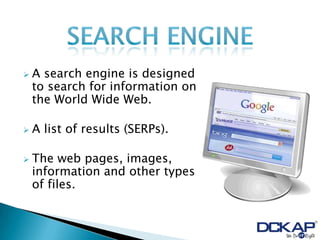
   A search engine is designed
    to search for information on
    the World Wide Web.

   A list of results (SERPs).

   The web pages, images,
    information and other types
    of files.
   Spider, Indexer, Database, Algorithm.

   Find matching documents and display them
    according to relevance.

   Frequent updates to documents searched and
    ranking algorithm.

   Strive to produce “better”, more relevant
    results than competitors.
   SEO provides a high ROI.
   SEO will help people to find your website
   SEO builds trust
   SEO helps build your brand
   SEO is a long-term strategy
   SEO attracts relevant traffic with high conversion potential
   SEO is cost effective
   SEO beats paid traffic
   Your SEO person is a „Secret Weapon‟
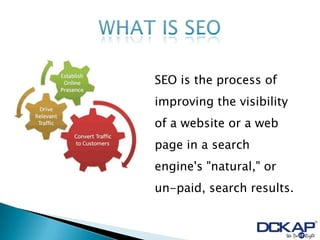
SEO is the process of
improving the visibility
of a website or a web
page in a search
engine's "natural," or
un-paid, search results.
   Identify target audience
    (research)

   Do on-page and off-page
    tasks to increase search
    engine rankings

   Track progress and adjust as
    necessary.
SEO has traditionally divided into two main
 categories.

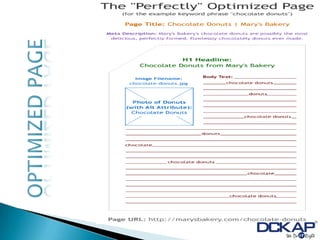
   On-Page Optimization
      what can be done on the pages of the
      website itself.

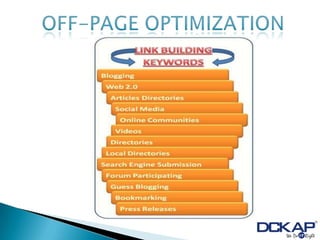
   Off-Page Optimization
       what can be done elsewhere not in the
       page.
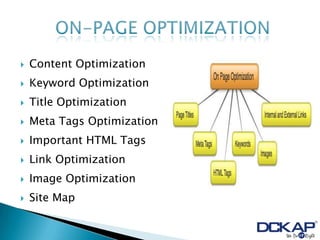
   Content Optimization
   Keyword Optimization
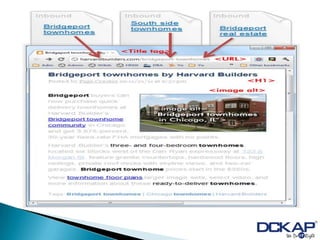
   Title Optimization
   Meta Tags Optimization
   Important HTML Tags
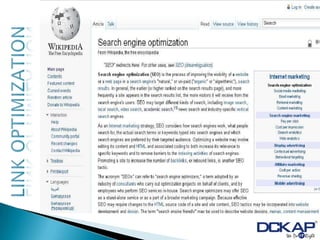
   Link Optimization
   Image Optimization
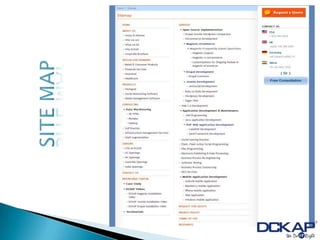
   Site Map
Step 1: Discuss Business objectives.
Step 2: Conduct initial keyword analysis.
Step 3: Identify the keyword/landing page combinations.
Step 4: Interim Client Approval for Keyword/Landing Pages.
Step 5: Baseline Ranking & Traffic reports.
Step 6: On-Page & Off-Page Optimization.
Step 7: Detailed Recommendation documents.
Step 8: Implementation.
Step 9: Monitoring and Optimizing.
   Keyword Ranking
   Website Traffic
   Popularity among competitors
   Increase in "Share of Traffic" per keyword
   Increased Revenue per keyword
   Increase in Impressions
   Increase in Google Pagerank
   Lower dependence on Paid Search
Basic Of Search Engine Optimization

Basic Of Search Engine Optimization

  • 2.
    A search engine is designed to search for information on the World Wide Web.  A list of results (SERPs).  The web pages, images, information and other types of files.
  • 4.
    Spider, Indexer, Database, Algorithm.  Find matching documents and display them according to relevance.  Frequent updates to documents searched and ranking algorithm.  Strive to produce “better”, more relevant results than competitors.
  • 6.
    SEO provides a high ROI.  SEO will help people to find your website  SEO builds trust  SEO helps build your brand  SEO is a long-term strategy  SEO attracts relevant traffic with high conversion potential  SEO is cost effective  SEO beats paid traffic  Your SEO person is a „Secret Weapon‟
  • 7.
    SEO is theprocess of improving the visibility of a website or a web page in a search engine's "natural," or un-paid, search results.
  • 8.
    Identify target audience (research)  Do on-page and off-page tasks to increase search engine rankings  Track progress and adjust as necessary.
  • 9.
    SEO has traditionallydivided into two main categories.  On-Page Optimization what can be done on the pages of the website itself.  Off-Page Optimization what can be done elsewhere not in the page.
  • 10.
    Content Optimization  Keyword Optimization  Title Optimization  Meta Tags Optimization  Important HTML Tags  Link Optimization  Image Optimization  Site Map
  • 16.
    Step 1: DiscussBusiness objectives. Step 2: Conduct initial keyword analysis. Step 3: Identify the keyword/landing page combinations. Step 4: Interim Client Approval for Keyword/Landing Pages. Step 5: Baseline Ranking & Traffic reports. Step 6: On-Page & Off-Page Optimization. Step 7: Detailed Recommendation documents. Step 8: Implementation. Step 9: Monitoring and Optimizing.
  • 17.
    Keyword Ranking  Website Traffic  Popularity among competitors  Increase in "Share of Traffic" per keyword  Increased Revenue per keyword  Increase in Impressions  Increase in Google Pagerank  Lower dependence on Paid Search

Editor's Notes

  • #7 http://searchengineland.com/the-ultimate-list-of-reasons-why-you-need-search-engine-optimization-121215
  • #11 http://www.searchenginejournal.com/on-page-optimization-a-complete-walkthrough/6746/