Subtitle
 Coastalgeology
 Introduction
 Coastal environments are the interface between 3
natural systems: Atmosphere, Ocean, Land
 Coastal zone refers to an area influenced by proximity
to the coast
 introduction
 Offshore zone refers to the portion of the profile where there is no
significant transport of sediment by wave action
 Littoral zone refers to the portion of the coastal profile where
sediment can be transported
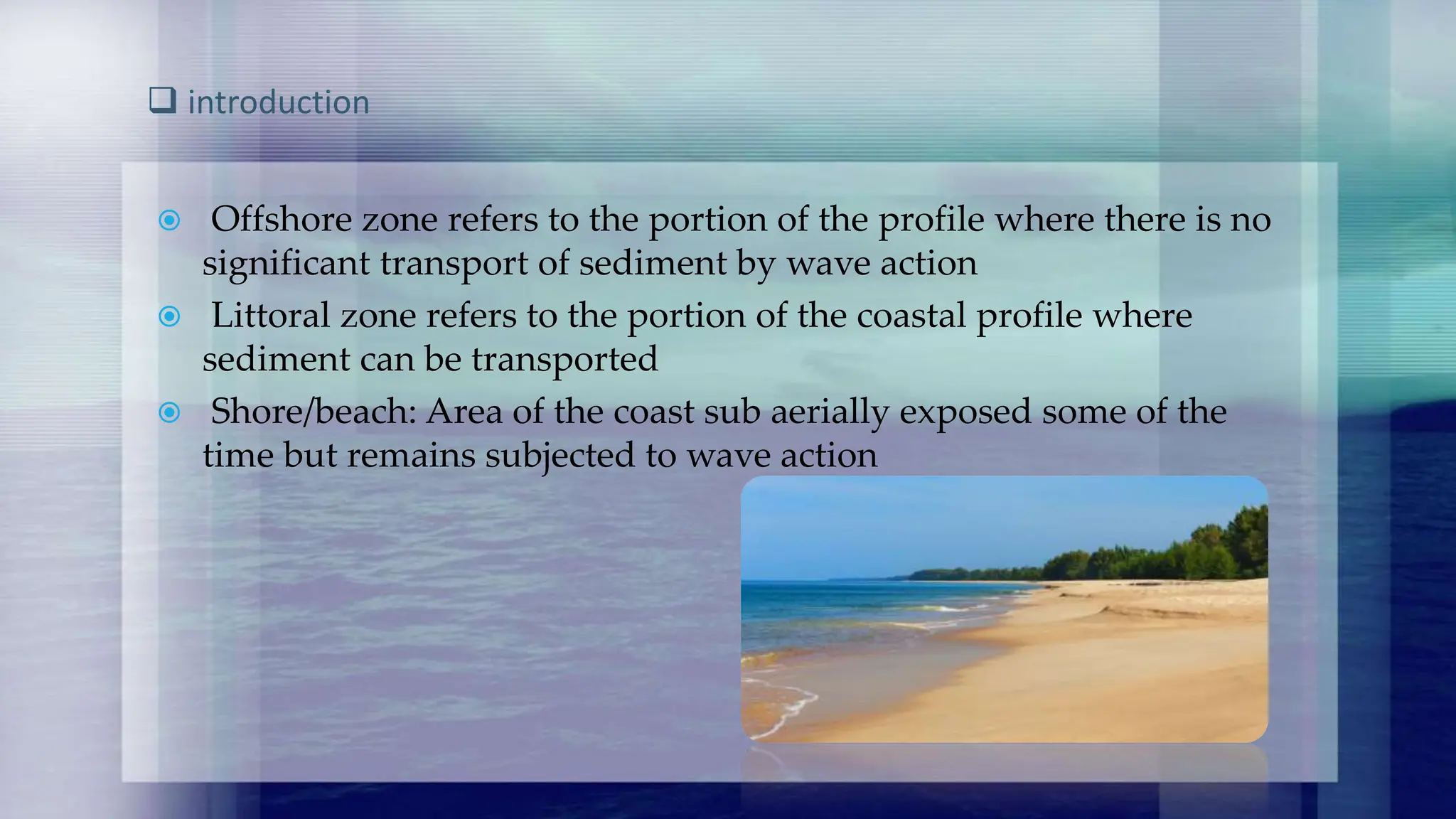
 Shore/beach: Area of the coast sub aerially exposed some of the
time but remains subjected to wave action
 Lithology
 Hard rocks-
Granite, Basalt-
Rugged landscape
 Soft rocks
Sands/ gravels
Flatter landscape
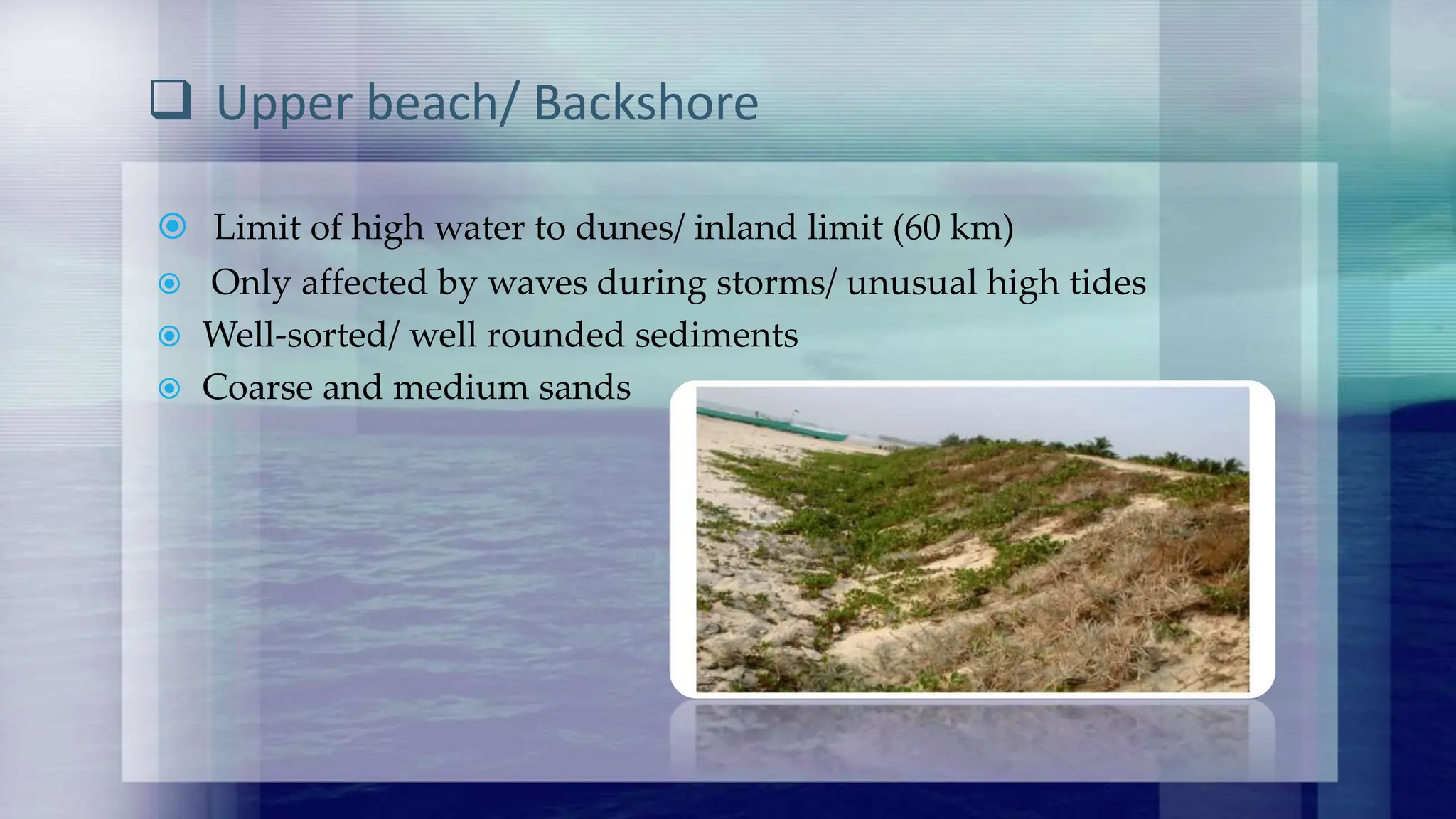
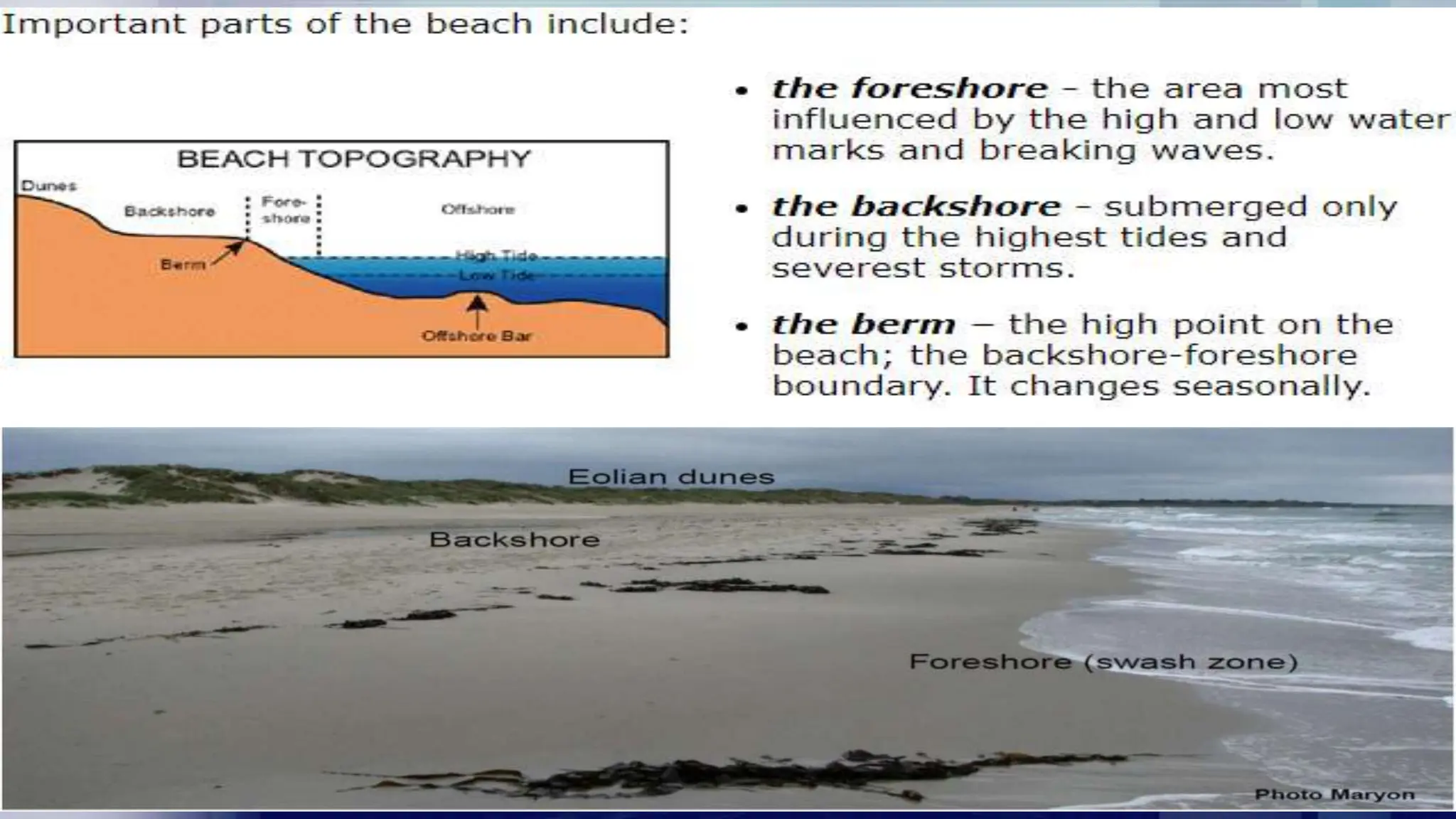
 Upper beach/ Backshore
 Limit of high water to dunes/ inland limit (60 km)
 Only affected by waves during storms/ unusual high tides
 Well-sorted/ well rounded sediments
 Coarse and medium sands
 Foreshore
• Region between the high and low water marks
• Sediments may include:
• Soft, mobile/ semi mobile sediments (sand, mud,
shingle)
• A different case for rocky shores
 Sealevelchanges
What is sea level?
The level of the sea's surface, used in reckoning the height of
geographical features such as hills and as a barometric standard
What is Mean sea level?
Mean sea level (MSL) is an average level of the surface of one or
more of Earth's oceans from which heights such as elevations
may be measured
What is Sea level rise?
A sea level rise is an increase in global mean sea level as a result
of an increase in the volume of water in the world's oceans.
Causesofsealevelrise
 Ocean warming (thermal expansion)
 Eustasy
 Isostasy
 Melting of Glaciers & Ice sheets
 Decline in water storage on land
 Ice loss from Greenland and West Antarctica
 Global warming
 Causes of sea level rise
 Ocean warming (Thermal expansion)
happens when water gets warmer, which causes the volume of the water to
increase. About half of the measured global sea level rise on Earth is from
warming waters and thermal expansion.
 Eustas
Any uniformly global change of sea level that may reflect a change in the
quantity of water in the ocean, or a change in the shape and capacity of the
ocean basins that results in change in sea level.
 Isostas
Changes in Earth's geology. The tectonic plates of the Earth are moving in a
slow pace constantly. This changes the structure of the Earth and increases
or decreases the height of land above and below sea level
 Human activities are at the root of this phenomenon. Specifically,
since the industrial revolution, carbon dioxide and other greenhouse
gas emissions have raised temperatures, even higher in the poles,
and as a result, glaciers are rapidly melting, calving off into the sea
and retreating on land
 Melting of glacier and ice land
 Impacts of Sea level rise
 Coastal erosion
 Salt water intrusion
 Loss of habitats of fish,birds & plants
 Contamination of agricultural soil
 Loss of mangroves & coral reefs
 Loss of low lying lands
 Ecological imbalance
 Powerful storm surges

sea level changes and coastal geology.pptx

  • 1.
  • 2.
     Coastalgeology  Introduction Coastal environments are the interface between 3 natural systems: Atmosphere, Ocean, Land  Coastal zone refers to an area influenced by proximity to the coast
  • 3.
     introduction  Offshorezone refers to the portion of the profile where there is no significant transport of sediment by wave action  Littoral zone refers to the portion of the coastal profile where sediment can be transported  Shore/beach: Area of the coast sub aerially exposed some of the time but remains subjected to wave action
  • 4.
     Lithology  Hardrocks- Granite, Basalt- Rugged landscape  Soft rocks Sands/ gravels Flatter landscape
  • 5.
     Upper beach/Backshore  Limit of high water to dunes/ inland limit (60 km)  Only affected by waves during storms/ unusual high tides  Well-sorted/ well rounded sediments  Coarse and medium sands
  • 6.
     Foreshore • Regionbetween the high and low water marks • Sediments may include: • Soft, mobile/ semi mobile sediments (sand, mud, shingle) • A different case for rocky shores
  • 8.
     Sealevelchanges What issea level? The level of the sea's surface, used in reckoning the height of geographical features such as hills and as a barometric standard What is Mean sea level? Mean sea level (MSL) is an average level of the surface of one or more of Earth's oceans from which heights such as elevations may be measured What is Sea level rise? A sea level rise is an increase in global mean sea level as a result of an increase in the volume of water in the world's oceans.
  • 9.
    Causesofsealevelrise  Ocean warming(thermal expansion)  Eustasy  Isostasy  Melting of Glaciers & Ice sheets  Decline in water storage on land  Ice loss from Greenland and West Antarctica  Global warming
  • 12.
     Causes ofsea level rise  Ocean warming (Thermal expansion) happens when water gets warmer, which causes the volume of the water to increase. About half of the measured global sea level rise on Earth is from warming waters and thermal expansion.  Eustas Any uniformly global change of sea level that may reflect a change in the quantity of water in the ocean, or a change in the shape and capacity of the ocean basins that results in change in sea level.  Isostas Changes in Earth's geology. The tectonic plates of the Earth are moving in a slow pace constantly. This changes the structure of the Earth and increases or decreases the height of land above and below sea level
  • 15.
     Human activitiesare at the root of this phenomenon. Specifically, since the industrial revolution, carbon dioxide and other greenhouse gas emissions have raised temperatures, even higher in the poles, and as a result, glaciers are rapidly melting, calving off into the sea and retreating on land  Melting of glacier and ice land
  • 16.
     Impacts ofSea level rise  Coastal erosion  Salt water intrusion  Loss of habitats of fish,birds & plants  Contamination of agricultural soil  Loss of mangroves & coral reefs  Loss of low lying lands  Ecological imbalance  Powerful storm surges