SDG 12:
RESPONSIBLE
CONSUMPTION AND
PRODUCTION
OVERVIEW
Sustainable Development Goal 12 (SDG 12) aims to ensure sustainable consumption and production
patterns. It focuses on promoting resource efficiency, reducing waste, and encouraging sustainable
practices across industries to minimize environmental impact and support economic development.
DATA &
STATISTICS
• Approximately one-third of all food produced globally (about 1.3 billion tons) is wasted each year,
contributing to environmental degradation and economic loss.
• The global material footprint has been rising, reaching about 92 billion tons in 2017, which is an
increase of over 70% since 2000.
• The tourism sector accounts for about 10% of global GDP, and sustainable practices in this sector can
significantly reduce its environmental impact, especially in terms of resource use and waste
generation.
• Global plastic production has increased dramatically, from 2 million tons in 1950 to over 400 million
tons in recent years, leading to serious environmental challenges, including ocean pollution.
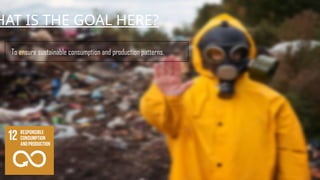
HAT IS THE GOAL HERE?
To ensure sustainable consumption and production patterns.
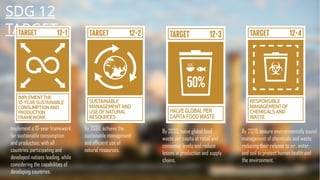
SDG 12
TARGET
Implement a 10-year framework
for sustainable consumption
and production, with all
countries participating and
developed nations leading, while
considering the capabilities of
developing countries.
By 2030, achieve the
sustainable management
and efficient use of
natural resources.
By 2030, halve global food
waste per capita at retail and
consumer levels and reduce
losses in production and supply
chains.
By 2020, ensure environmentally sound
management of chemicals and waste,
reducing their release to air, water,
and soil to protect human health and
the environment.`
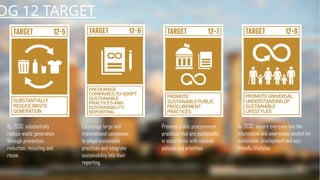
DG 12 TARGET
By 2030, substantially
reduce waste generation
through prevention,
reduction, recycling and
reuse.
Encourage large and
transnational companies
to adopt sustainable
practices and integrate
sustainability into their
reporting.
Promote public procurement
practices that are sustainable,
in accordance with national
policies and priorities.
By 2030, ensure everyone has the
information and awareness needed for
sustainable development and eco-
friendly lifestyles.
CHALLENGES
• Overconsumption: The increasing demand for goods and services has led to over-exploitation
of natural resources.
• Waste generation: Many countries lack efficient waste management systems.
• Resource-intensive industries: Many industries rely on non-renewable resources and
unsustainable production methods.
• Lack of awareness: Public and corporate understanding of sustainable practices is still limited
in many regions.
SOLUTION
• Promoting Circular Economy: Reuse, reduce, and recycle materials to limit resource
depletion.
• Sustainable supply chains: Encourage companies to develop greener supply chains and
support local production.
• Waste Management Systems: Invest in better recycling and waste treatment infrastructure.
• Consumer Education: Educate people on the impact of their consumption choices and
promote responsible consumer behavior.
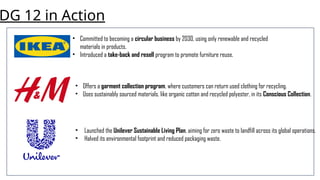
DG 12 in Action
• Committed to becoming a circular business by 2030, using only renewable and recycled
materials in products.
• Introduced a take-back and resell program to promote furniture reuse.
• Offers a garment collection program, where customers can return used clothing for recycling.
• Uses sustainably sourced materials, like organic cotton and recycled polyester, in its Conscious Collection.
• Launched the Unilever Sustainable Living Plan, aiming for zero waste to landfill across its global operations.
• Halved its environmental footprint and reduced packaging waste.
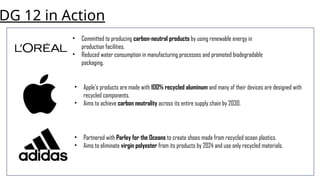
DG 12 in Action
• Committed to producing carbon-neutral products by using renewable energy in
production facilities.
• Reduced water consumption in manufacturing processes and promoted biodegradable
packaging.
• Apple's products are made with 100% recycled aluminum and many of their devices are designed with
recycled components.
• Aims to achieve carbon neutrality across its entire supply chain by 2030.
• Partnered with Parley for the Oceans to create shoes made from recycled ocean plastics.
• Aims to eliminate virgin polyester from its products by 2024 and use only recycled materials.
DIVIDUAL’S ROLE
• Mindful Consumption: Choosing eco-friendly and sustainable products.
• Waste Reduction: Reducing personal waste by using reusable items and recycling.
• Supporting Sustainable Businesses: Opting for products from companies that follow sustainable
practices.
• Awareness and Advocacy: Educating others about the importance of responsible consumption and
advocating for policies that promote sustainability.
CONCLUSION
• SDG 12 is essential for ensuring a healthy planet for future generations.
• Achieving responsible consumption and production requires a collaborative effort between
governments, businesses, and individuals.
• Sustainable practices will lead to a balanced, prosperous, and equitable future.
THAN
K
YOU!
Harsh Kumar Dhir 2K21CSUN01118

SDG 12 Responsible Consumption & Production.pptx

  • 1.
  • 2.
    OVERVIEW Sustainable Development Goal12 (SDG 12) aims to ensure sustainable consumption and production patterns. It focuses on promoting resource efficiency, reducing waste, and encouraging sustainable practices across industries to minimize environmental impact and support economic development.
  • 3.
    DATA & STATISTICS • Approximatelyone-third of all food produced globally (about 1.3 billion tons) is wasted each year, contributing to environmental degradation and economic loss. • The global material footprint has been rising, reaching about 92 billion tons in 2017, which is an increase of over 70% since 2000. • The tourism sector accounts for about 10% of global GDP, and sustainable practices in this sector can significantly reduce its environmental impact, especially in terms of resource use and waste generation. • Global plastic production has increased dramatically, from 2 million tons in 1950 to over 400 million tons in recent years, leading to serious environmental challenges, including ocean pollution.
  • 4.
    HAT IS THEGOAL HERE? To ensure sustainable consumption and production patterns.
  • 6.
    SDG 12 TARGET Implement a10-year framework for sustainable consumption and production, with all countries participating and developed nations leading, while considering the capabilities of developing countries. By 2030, achieve the sustainable management and efficient use of natural resources. By 2030, halve global food waste per capita at retail and consumer levels and reduce losses in production and supply chains. By 2020, ensure environmentally sound management of chemicals and waste, reducing their release to air, water, and soil to protect human health and the environment.`
  • 7.
    DG 12 TARGET By2030, substantially reduce waste generation through prevention, reduction, recycling and reuse. Encourage large and transnational companies to adopt sustainable practices and integrate sustainability into their reporting. Promote public procurement practices that are sustainable, in accordance with national policies and priorities. By 2030, ensure everyone has the information and awareness needed for sustainable development and eco- friendly lifestyles.
  • 8.
    CHALLENGES • Overconsumption: Theincreasing demand for goods and services has led to over-exploitation of natural resources. • Waste generation: Many countries lack efficient waste management systems. • Resource-intensive industries: Many industries rely on non-renewable resources and unsustainable production methods. • Lack of awareness: Public and corporate understanding of sustainable practices is still limited in many regions.
  • 9.
    SOLUTION • Promoting CircularEconomy: Reuse, reduce, and recycle materials to limit resource depletion. • Sustainable supply chains: Encourage companies to develop greener supply chains and support local production. • Waste Management Systems: Invest in better recycling and waste treatment infrastructure. • Consumer Education: Educate people on the impact of their consumption choices and promote responsible consumer behavior.
  • 10.
    DG 12 inAction • Committed to becoming a circular business by 2030, using only renewable and recycled materials in products. • Introduced a take-back and resell program to promote furniture reuse. • Offers a garment collection program, where customers can return used clothing for recycling. • Uses sustainably sourced materials, like organic cotton and recycled polyester, in its Conscious Collection. • Launched the Unilever Sustainable Living Plan, aiming for zero waste to landfill across its global operations. • Halved its environmental footprint and reduced packaging waste.
  • 11.
    DG 12 inAction • Committed to producing carbon-neutral products by using renewable energy in production facilities. • Reduced water consumption in manufacturing processes and promoted biodegradable packaging. • Apple's products are made with 100% recycled aluminum and many of their devices are designed with recycled components. • Aims to achieve carbon neutrality across its entire supply chain by 2030. • Partnered with Parley for the Oceans to create shoes made from recycled ocean plastics. • Aims to eliminate virgin polyester from its products by 2024 and use only recycled materials.
  • 12.
    DIVIDUAL’S ROLE • MindfulConsumption: Choosing eco-friendly and sustainable products. • Waste Reduction: Reducing personal waste by using reusable items and recycling. • Supporting Sustainable Businesses: Opting for products from companies that follow sustainable practices. • Awareness and Advocacy: Educating others about the importance of responsible consumption and advocating for policies that promote sustainability.
  • 13.
    CONCLUSION • SDG 12is essential for ensuring a healthy planet for future generations. • Achieving responsible consumption and production requires a collaborative effort between governments, businesses, and individuals. • Sustainable practices will lead to a balanced, prosperous, and equitable future.
  • 14.